










So how do you know if your child is getting enough iron in their diet? Well firstly it is important to explain that there are two types of iron in food. Iron in foods that come from animals is easily absorbed into the body when we eat it. And the darker the meat, the more iron in there. So, this means that beef and lamb have more iron than chicken – but the iron from both of these meats is easily absorbed by the body.

Iron found in plant foods such as broccoli and nuts is harder for the body to absorb. But help is at hand in the form of Iron’s sidekick, Vitamin C. Vitamin C increases the absorption of all iron in food that we eat. Fortunately for broccoli (and most fruits and vegetables), they contain a decent amount of Vitamin C to go with the iron.
Even if you are not intentionally vegetarian, many kids don’t like eating meat in the early years as it can be harder to chew. Although eating and chewing is second nature to us, for kids it can require some sophisticated co-ordination. So understandably it is easier to refuse it. So, if you have a reluctant meat eater – go for mince and soft meats like fish. And start using more legumes and lentils in dishes. I always wish I gave my kids legumes from 6 months of age.. I think I would have had less years of them meticulously picking them out!! But I eventually won that battle and they now happily shovel them in with the rest of the meal.
Written by: Anna D’Arcy, Accredited Practising Dietitian at My Nutrition Clinic. Anna is a mum to two children under 10 years and has 20 years of experience working as a dietitian and helping families reach their health potential.
The amount of sleep a child needs will depend on their age, with infants (4-12-month-olds) needing roughly 12-16 hours a day, toddlers (1-2-year-olds) requiring 11 to 14 hours a day, pre-schoolers (3-5-year-olds) needing 10 to 13 hours, grade schoolers (6-12-year-olds) needing 9 to 11 hours, and teens needing roughly 8 to 10 hours, on average, according to Queensland Health.
With that out the way, let’s look at this a little more closely as well as why sleep is so important to a child’s development, how to tell if your child isn’t getting enough sleep, and some tips and tricks to help your child fall asleep just that little bit easier.
Getting enough sleep is crucial for the overall health and well-being of children. It plays a fundamental role in many essential physiological and cognitive processes, including growth, immunity, learning, and memory. When children are sleeping, their bodies release growth hormones that help them develop and build the muscle mass they need. Additionally, sleep strengthens the immune system, which helps children fight off infections and diseases.
Furthermore, sleep has a critical impact on cognitive functioning, especially in the areas of learning and memory. During sleep, the brain processes and consolidates information learned during the day, which is important for memory formation and retention. Adequate sleep also enhances children’s ability to focus, pay attention, and regulate their emotions, leading to better academic performance and social interactions.
However, it is not just the quantity of sleep that matters, but also the quality. Good quality sleep means uninterrupted, restful sleep that allows the body to go through all the necessary sleep stages. These sleep stages include non-rapid eye movement (NREM) and rapid eye movement (REM) sleep, which are essential for physical and mental restoration. A regular sleep routine that allows children to go to bed and wake up at consistent times can help establish healthy sleep patterns.
Inadequate sleep can significantly impact a child’s physical and mental health. When a child doesn’t get enough sleep, they may exhibit a range of symptoms that can affect their daily life.
One of the most common signs of sleep deprivation in children is daytime sleepiness. The child may fall asleep at odd times, such as during class or while watching television. This could affect their ability to participate in activities, learn lessons, or complete tasks.
Additionally, and counter-intuitively, sleep-deprived children may also sometimes appear more hyperactive, especially in younger children. They may have difficulty sitting still, fidgeting, or constantly moving around. This hyperactivity can make it challenging for them to pay attention in class, affecting their learning and academic performance.
Sleep deprivation can also cause behavioural problems in children. They may become more irritable, moody, or cranky than usual. They may have a shorter temper and be more prone to outbursts or tantrums.
Moreover, the lack of sleep can impact their overall mood and ability to regulate their emotions. As a result, they may struggle with social interactions and have difficulty making friends. When a child is sleep-deprived, it can have a significant impact on their daily life, including their behaviour, academic performance, and overall well-being.
If you believe your child isn’t getting enough sleep, it’s important to garner a comprehensive understanding of the situation through careful observation. This helps to identify the various factors contributing to the problem. When trying to improve your child’s sleep, you should take into consideration the child’s age and what might be the underlying causes of their sleep difficulties. It’s also important to involve the child in the treatment process. This ensures that everyone is on the same page and working together towards a solution that works best for the child.
As we mentioned earlier the amount of sleep your child needs depends on their age, with infants needing roughly 12-16 hours a day, toddlers 11 to 14 hours a day, pre-schoolers 10 to 13, grade schoolers 9 to 11 hours, and teens needing roughly 8 to 10 hours, on average. But what other factors can affect how much and the quality of sleep your child gets?
There are various elements that impact the quality of sleep in children, including genetic factors, sleep habits, medical conditions, caregiver factors, screen time, and environmental factors. Be cautious of what might be going on both within your child and in their environment in order to optimise their sleep quality.
By implementing healthy sleep habits and addressing any potential sleep disorders, you can help your child get the restful and restorative sleep they need for optimal growth and development!
At Little Scholars, we ensure a calming routine to get children ready for rest time. That includes calm down activities, such as mindful breathing, quiet stories, relaxing music and more. If you’d like to learn more about how we introduce rest time activities, and how we can help by mirroring what you do in your family, please let us know.
If you’re a parent or caregiver to a young child, you have probably noticed that putting a screen in front of them at mealtimes keeps them sitting in their chair. But is it bad to eat while watching TV? Well, unfortunately, the disadvantages of watching TV while eating might outweigh the benefits.
Little Scholars provides an attractive and safe environment to children on the Gold Coast while giving you total peace of mind while your children are in our care. Learning areas include well-equipped playrooms and landscaped outdoor spaces for maximum learning opportunities. Book a tour today if you are looking for a childcare centre in South East Queensland.
A 2019 study found that about 70% of children in the UK watch TV during at least one meal a day. And while the UK is not Australia, it’s safe to say that the same might be true here!
But what happens when you eat in front of a screen? There are several disadvantages to watching TV while eating. Starting this habit at an early age could set a child up for negative health effects in the future. The following side effects indicate why eating while watching television could be a bad idea.
Eating in front of the TV or tablet can make children eat more. Research shows that children and adults eat more than they usually would when distracted. This increases the risk of obesity because of the excess calories that are consumed.
But eating while distracted by screens also leads to obesity as it prevents children from listening to the signals that tell them when they’re full. Over time, mealtime distraction can reduce sensitivity to hunger and fullness cues. This often leads to emotional eating, consuming unhealthy foods and snacking out of boredom.
Eating while watching TV may cause your child to become so fixated on what they’re watching that they pay no attention to the food on their plate.
Moreover, the digestive system is stimulated by the routines surrounding mealtimes. As you prepare food, set the table and smell the meal’s aromas, your body gets into gear to digest what you’re about to eat. Encouraging children to experience all of the sensations that come with nourishing themselves will promote healthy digestion and help them absorb nutrients properly.
Mealtimes are important to a child’s development. While they eat, children work on their fine and gross motor skills, explore new textures and learn about social and interpersonal interactions. They tend to multitask throughout the day, so it’s important for children to quieten down and focus on the meal instead of a moving image on a screen.
Sitting on the sofa may burn fewer calories than sitting at a table. That’s right, watching TV may lower your metabolic rate more than simply resting without watching screens.
If children often eat in front of the TV, they’re spending less energy. Therefore, they will burn fewer calories than they might otherwise.
Have you ever felt the need to keep snacking while watching TV? You may feel full but wonder why you’re still rummaging through the fridge for a treat.
When children eat in front of a screen, they may not feel satisfied. The central nervous system needs to connect the dots between hunger, the desire to eat, the act of eating, the feeling of fullness and the satisfaction that comes from consuming good food. Screen distractions challenge the sensory system, putting obstacles in these pathways. If the act of eating is merely treated as an afterthought, children may continue to seek out snacks past the point of physical fullness.
It’s never too late to be more intentional about mealtimes. However, implementing changes surrounding screens and food can feel challenging if your child is addicted to gadgets, electronics or screens.
Start by setting up a communal mealtime. Eat with your child whenever possible. Children pick up on cues from their surroundings. Making mealtimes a pleasant, stress-free and interactive experience can help children create a healthy relationship with food. Creating this routine can lead to healthier eating habits for you and your child.
Involving your child in the process can also help them look forward to mealtimes without screens. Ask for help in age-appropriate ways. Younger children can attempt to feed themselves using a spoon. Toddlers can hand out napkins or lunch boxes. Older children can help with some of the preparation.
If you have trouble getting a child to eat without watching a screen, you may have to remove the distraction gradually. Wean children off of screens during meals by taking the following steps:
Not exactly. This habit doesn’t necessarily impair the health of the neurons. However, it does reinforce neural pathways that link eating with watching TV. This makes it harder to get through a meal without the distraction. It also promotes unhealthy eating patterns and habits throughout life.
At Little Scholars, we provide quality early learning and care services for children in South East Queensland in a warm and loving environment. We encourage healthy eating and provide freshly cooked, nutritious and allergen-aware meals for all of our children. We also sit together and talk while we eat, encouraging meaningful connections and conversation with children and educators while we sit down to a healthy meal.
We aim to be an extension of your family while fostering nurturing relationships between our educators and children, as well as the relationships between the children who attend our program. Valuing all our relationships is important to us – with you as the parent or guardian, your child, and other loved ones in your life. Book a tour today.
Wondering what to look for in an early learning campus? Finding the right one can be tricky and may even stir up anxiety in some parents. While this may come as no surprise to some, it does not have to be this way.
A childcare centre is a special place that should nurture and enhance your child’s development through play and socialisation. You will need to find one suitable for your child within your budget, and that can accommodate your working hours.
Little Scholars is a privately-owned and operated early learning provider with 14 campuses across South East Queensland. We offer you and your child the very best facilities, resources, and early educational play-based programs. Our curriculum is underpinned by a thorough and well tested early years learning framework. As a result, we believe that we can encourage, assist, and support the entire family through quality education and childcare.
Read on to find out some of the facets you should consider before enrolling your child in a childcare centre.
Every child needs a stimulating environment to interact and develop alongside other children. Try to assess whether there is extensive verbal and physical interaction between the kids and also the caregivers.
You should also check for age-appropriate toys that are in good condition. Finally, feel free to ask for a rundown of the daily activities, which might include talking, reading, dancing, singing, and more.
Most well-run childcare centres will spell out their health and safety rules for everyone to follow. Some to look out for are:
The childcare provider should seem genuinely interested in caring for children – pay close attention to how they interact with the other children when you visit. For example, you can ask whether they partake in sensory play.
The childcare centre needs to be a safe environment for your child. Here are some of the safety precautions they should be taking:
Many other safety measures can be taken to guarantee that your child is well looked after, so ask what specific steps each centre takes. If you’re looking for a childcare in Brisbane or the Gold Coast, at Little Scholars, your child’s safety and well-being are our utmost priority.
If you need to pick up your child but can not make it on time, try and call as soon as possible to inform the childcare providers that you will be running late or sending someone else. If you give them enough notice, they should try and accommodate you. However, it is essential to note that your childcare subsidy may be affected if your child stays past their allowable hours.
Having a good feeling about your childcare provider will add a layer of reassurance and peace to your day that you may not even have noticed missing prior. Being open and communicative with your chosen provider will allow you to guarantee the best possible experience for you and your child, and at Little Scholars, communication and relationship building is at the core of what we do.
It’s essential to pay attention whenever you visit a childcare centre, especially in regards to how the staff interact with the children. In an ideal situation, a childcare provider should be playing with the children on their level.
Young children are very receptive; they need affection, closeness, love, and interactive relationships with adults to thrive in later life. Therefore, you must pay close attention to ensure that your child’s caregivers are warm and responsive and can have healthy one-on-one interactions with children and others, allowing your child to become the best they can be.
A good childcare provider should have similar parenting philosophies as you on feeding, discipline, sleeping, and television watching. On top of this, they should have policies in place in case of an emergency, child safeguarding and more. The more info you can ascertain concerning these enquiries, the less likely you will be surprised later, and the more secure the childcare environment for your child.
Until your child comes to the age where they can talk, you will have to depend on what the childcare provider tells you about your child and their day. This is another reason why open and honest communication is critical.
Of course, you will want to know every detail of your child’s day, including the number of times their nappies were changed and if they took a proper nap (if only to know whether you are taking a happy or grumpy child back with you!). It’s best to communicate with the caregiver in person; however, you can always ask for a convenient time to call if this is not possible.
As a parent, it’s good to trust your instincts when something does seem quite right, and, sometimes, you may not be so pleased with a particular campus. In such cases, don’t lose hope; just look for other options. Your child deserves to grow under good and nurturing care, and there are plenty of great early learning centres out there!
As a busy parent with your child’s best interest at heart, finding a caregiver on the Gold Coast or Brisbane for your child’s overall growth is essential. Little Scholars provides parents with peace of mind by letting them know they’re leaving their children in safe hands. Our campuses are a home away from home where your child will grow and flourish. Contact us today.

“So overall my wants, my wishes, my dreams, my hopes and ambitions of my two little people are that they are happy. simply happy ..”
– Ashley
In 2036 your 2 year old will be 18 and your 4 year old will be 20… What does this world look like for you and your child?
I was asked an important question about what I see for my children in the future. it’s funny how one simple question can bring up so much emotion surrounding what the future holds for my child. When you live in a time that is changing so much , it’s tough to think about what their little futures hold, will time heal the world or will it damage the world further!
The world is forever changing, as are the directions we choose to go. What are my hopes and dreams for them ?, Well that question is simple to answer, yet I feel the need to elaborate on what I truly want, see, hope and dream of.
I hope for happiness and health, for love and wellbeing. I hope that life is fair to them, That they surround themselves with people who see their worth, men that respect them, friends that cherish them, and work jobs that inspire them to be the best they can be, whilst fulfilling their inner strengths. I hope they dream of all the possibilities and ways they can contribute to changing the world, and work to fulfil their own dreams and ambitions along the way. I hope that they give to the world and never expect anything in return. I hope they be kind to the older generation, understanding of the disabled, lend a hand to the poor and be fulfilled in knowing they made a difference. I Dream of a world for them where there is no fear in being you, if your gay be gay, if you want pink hair, dye it pink. if you want to own 50 dogs then invite me over to play with them.
As for dreams. Dreams are dreams. Most of the time they are things we know we can never achieve yet spend a life trying to. I dream of world peace, call me Mrs. universe. I dream for them that they live in a safe world, As a parent you want to protect them from harm, from bad, I dream that I won’t need to, that they will never endure the worst of what is out there.
Let’s talk skills and Qualities, I believe both my children have a bright fire in their soul, one full of passion, cheekiness, creativity and love. If I could see them be anything I’d want them to be what I am and more. I may not have had the best education, be the sharpest tool in the shed, but my values , my skills, and qualities all surround CARE. I want my girls to be carers, nurses, doctors, disability workers, counsellors, great mothers, wives. I want them to CARE for people, because caring for someone is such a selfless act. My favourite memory behind my skills of caring is of a dear old lady Maybe, I spent more time than allocated, doing her hair, dressing her in her finest clothes, putting her in her favourite position in the dining room of the nursing home. Id paint her nails, read her books, drink cups of tea with her on my tea break, all because seeing her happy made me feel that the skill of caring was where I was meant to be the day she died she took part of my soul with her. If my children want to be scientist, designers work in the supermarket stacking shelves, then ill support them with their growth, As long as what drives them is caring about the people they work with or for. I could sit here and tell you I want my girls to be CEOs, be rich, be famous, but in my eyes money doesn’t make you happy, okay it makes life easier But happiness comes from being surrounded by health, love and other caring people, by all means if you can achieve the above and be fulfilled in all aspects of your life and be happy along the way, then be my guest , I’d love a cabana on the water in the Maldives when you’re rich enough to afford it.
So overall my wants, my wishes, my dreams, my hopes and ambitions of my two little people are that they are happy. Simply happy.
Love Ashley
Little Scholars mum
Lactation cookies are a great way to help increase your milk supply! The key ingredient is the brewer’s yeast. It’s not recommended to substitute this for any other kind of yeast. This can be generally found in natural sections of supermarkets. Make sure the label says Brewer’s Yeast. When we asked a few store clerks they pointed me to other yeast which is not the same. The flax and oats are also great supply boosters too which is why they are included in the recipe.

You might also be wondering, can anyone eat lactation cookies? Yes! All of these ingredients are safe for anyone to eat. Be mindful that consuming lactation cookies before birth may not be helpful in boosting your milk supply.
These oatmeal raisin lactation cookies recipe are loaded with healthy ingredients. We added whole flaxseed for additional health and milk-producing benefits. We have coconut oil in place of butter to get the benefits of coconut oil. If you don’t have coconut oil, you can still make them with butter.
This is really going to depend on your body and your own personal milk supply. Typically eating 2-3 a day should be enough to notice a boost in your milk supply.
It can depend on the individual, but typically you should see results within 1-2 days. Moms will typically notice an immediate boost in my supply. So hang in there, you should be producing more in no time!
You might be wondering also if you can make this lactation cookies recipe without brewers yeast. You can, but you won’t see the same effects in your milk supply boost as you would if you included the brewer’s yeast. If you’re looking for a brewers yeast substitute for baking these cookies, it’s important you do not substitute the brewers yeast for other yeast as you will not see the same results (and they may not taste good).
Prep Time: 20 MINS Cook Time: 12 MINS Total Time: 32 MINS
An easy to make oatmeal lactation cookie recipe.
Instructions
Recipe Notes
The whole flaxseed is optional. You can substitute the whole wheat flour for regular white flour. You can also substitute the coconut oil for butter.
The short answer is yes but more about that later.
I think it is fair to say that one of our jobs as parents is to raise children who bounce. And by bounce we mean have resilience – to be able to take some of the knocks and scrapes that happen in life.
Good food and nutrition is a pretty big part of being resilient. The food and eating habits that children develop in the first 1000 days of life are instrumental in their future health and well-being. What children eat in those early years can impact on the development of food allergies, gut health, immunity, taste preferences, adult weight, adult height, risk of chronic diseases, mood, brain development (IQ) and their relationship with food.
This is why Little Scholars have invited myself and our team of Dietitians at My Nutrition Clinic to update their menu to ensure that it provides at least 50% of your child’s daily nutrient requirements. This is the minimum amounts needed to ensure children have the opportunity to meet all of their nutrition requirements for optimum growth and development.
However, we know that making nutritious and wholesome food is only half the battle. We are only all too familiar with those sweet and high-pitched words ‘I don’t like it’. Which is why over the coming months, we will be providing lots of practical information through this blog on how to keep children eating healthy while keeping mealtimes stress free!
I believe there is a golden opportunity when children are toddlers to teach them all the good eating habits they will need to last them a lifetime. The power of peer learning and role modelling is extremely strong at this age and if we succumb to pester power and limit the variety of food in their diet early on then this will become the story of their lives. I see plenty of teenagers and adults in my line of work who hardly eat any vegetables and rely heavily on processed foods. It takes great will power to change these habits after 3-4 decades rather than change them when you are only 3 or 4 years of age.
There is lots of research to back up this claim, but I have also seen it first hand with my own children. It was only to be expected that a dietitian would have children who were fussy eaters. My son (first born) wouldn’t eat meat that wasn’t minced, didn’t like many vegetables and LOVED carbs. My daughter (2nd born) seemed to only eat meat, was fussy with vegetables and dislikes all carbs (except chips). They were sent to test me!!
I know first-hand how stressful it can be trying to give your children very carefully prepared meals for them only to be rejected. I remember the envy I felt watching my friend’s children happily munch on tomatoes and cucumber while mine did not. But there is a solution! Watch this space for tips, food ideas and guidance on this and a range of topics related to food and healthy little scholars!
Happy munching
Anna D’ArcyAccredited Practising Dietitian
www.mynutritionclinic.com.au
Dietitian for 20 years and mum for 8 years

You pile the children into the car, late as per usual, and do the panicked drive to your local Little Scholars campus.
Upon entering your Little Scholars campus, you’re suddenly enveloped into an atmosphere of calm. There’s coffee and croissants waiting for you next to a sign-up list for take-home dinners that evening. (Do you write your name down? You bet you do!) Friendly, caring educators help lighten your load and immediately engage your children with interesting, exciting activities. Your morning stressors lighten, you stand up a little straighter and you charge confidently back out into the carpark, ready to face your busy day.
But what happens once you leave? Here’s what!
Little Scholars campuses have extracurricular activities like Japanese, art, cooking and sport that are perfectly positioned to help develop your little learner. They’re cognitively engaged as they learn new skills, emotionally intelligent as they negotiate relationships with peers and teachers and they’re socially satisfied by engaging, exciting and interesting lessons. There is no ‘plonking them down in front of an iPad’ to be had here – if technology is used, it’s used well. This is the campus that’s backed by pedagogical understanding of what makes children tick and how they can be challenged to be the best they can be.
Every single Little Scholars is built on the tenements of imaginative and sustainable play. There is an ethos here that encourages children to become active learners, rather than passive children who wait to be told exactly what to do. There is a culture of calculated risk here as little scholars become citizens in the world of knowledge.
A sustainable lifestyle is encouraged wherein all children learn about recycling, reusing and repurposing materials to lessen our carbon footprints and respect the beautiful world that’s around us. The buildings and landscapes themselves often inspire the children to be more and to do more in terms of sustaining an environmentally sound future.
That hard day at the office is a little less awful knowing that your children are happy, safe and engaged in learning.
No matter your age, communication is an important skill. For pre-schoolers though, their ability to communicate and listen to instructions is a steep learning curve in their development. At times, it can be frustrating if an adult can’t understand what the child is saying or the child can’t use words to share what they mean. Learning effective communication is a crucial part of child development. During the preschool years, a child will have enough vocabulary to engage in simple conversations as well as share how they feel. To encourage positive communication with children, here are some powerful tips.
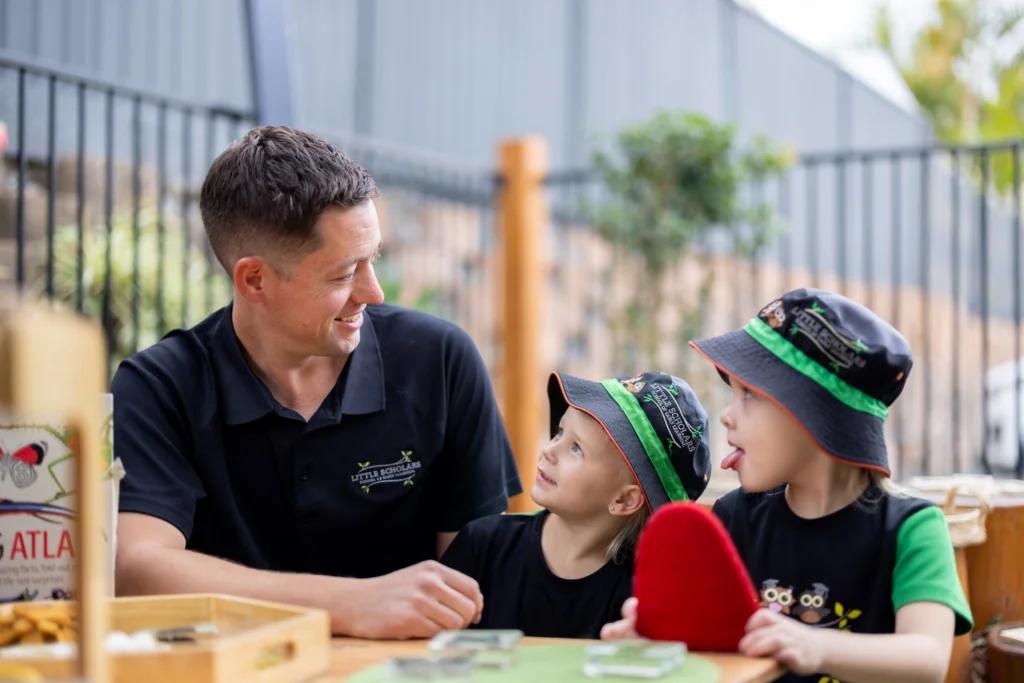
A preschool child will either share in detail what they know when re-sharing a story or they may only give basic information about the event. To keep the lines of communication open between a child and adult, rather than listen to respond, listen to understand. Your child wants to know you understand them, no matter how significant or insignificant the event may seem to you. It’s important that children feel free to speak as this can build their confidence and esteem when communicating. This can also be foundational to future conversations as the child gets older.
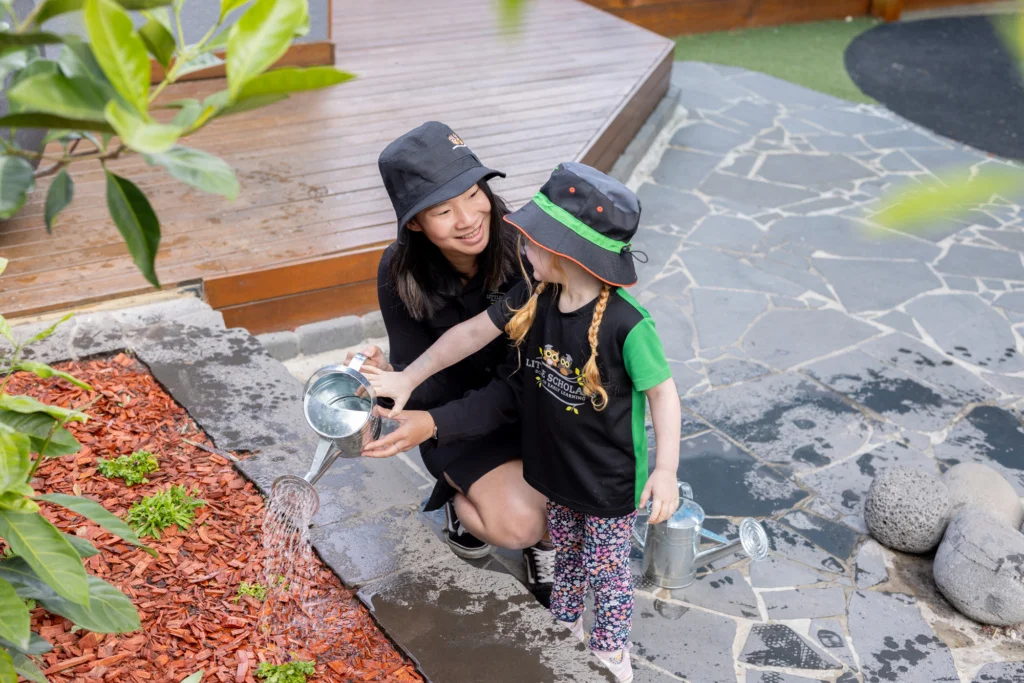
To help children feel more comfortable when communicating with you, bend so that you are at their eye level. This proactively shows you are listening to what they are saying and are paying attention. It also builds the connection between adults and children.
There will be times when challenging behaviour by the child will need to be addressed but it is important to deliver negative feedback in a way that leaves the child with a positive outlook. This is important for a child to experience as it prepares them for how they manage negative conversations in the future. Bending and speaking calmly to a child about their behaviour can help the child feel less intimidated so they can comprehend what is being said to them. Giving them some gentle guidance about how they could make a better choice next time helps them to feel positive about the interaction.
Communication is developed through expressing how one feels. When a child opens up about how they feel, they want to be acknowledged. Don’t dismiss what they share by saying ‘stop crying’, or ‘you’re being silly’. These can make the child feel invalidated and is a surefire way for them to conceal how they feel in the future. Crying is a human emotion and to a child, whatever they’re upset about is important to them. We want children to feel comfortable sharing their feelings and emotions. ‘It seems like you’re feeling really _____, that must feel hard.’
You could also show you’re curious about their emotions, which may open up the communication with your child. “You seem mad, I wonder why you’re feeling mad at mummy?’
Keep the lines of communication open by offering empathy. Respond with something like, ‘I want you to know you can share anything with me, I will love you no matter what. I’m here for you.’ This will help them share how they feel with no fear of judgement so they don’t feel unheard or misunderstood.
Children can say and do things that can provoke an emotional response from you. Positive communication with children relies a lot on how you control your emotions. Refrain from saying words that you may regret later. Control strong outbursts and try to remain calm – especially when bad behaviour occurs. Counting to 10 before responding to a child can be a great way to help diffuse emotions, before speaking them out.
When talking to children, be clear with instructions and confident when delivering them. If a child can sense a lack of confidence in the way you speak to them, they will often do the opposite of what has been asked. The delivery of communication is important for mutual respect to occur.
The best way for your child to understand positive communication skills is to practice them! Whether it’s talking about a book you’re reading together, or role playing as you play together, there are lots of subtle activities to help your child improve his or her communications in a positive way.
The way you speak to children not only reflects your character, but also leads by example. Children will imitate the behaviour they see. Be assertive when communicating, so your child can learn to be assertive when communicating with others.
At Little Scholars, we pride ourselves on maintaining respectful and positive communication with children at all times. Discover how we can help your little one express their full potential. Contact Us.
Colouring in activities are not only great fun but there are some wonderful benefits for your toddler to gain via this simple activity. Colouring in is an easy and largely mess-free activity to implement at home and is also a great way to keep toddlers busy when out and about.
Children simply love to share their artistic talents with everyone. See their self-confidence grow with some beautiful colouring in! It’s a wonderfully fun past-time and is also a very convenient and inexpensive way of learning and developing some lifelong skills!
It’s so advantageous to develop and practise fine motor skills before your child starts formal schooling. Colouring in will help develop some of these key skills such as muscle development in their fingers, hands and wrists. Showing your child how to hold a pencil or crayon correctly will help them develop the correct gripping technique and controls.
Cognitive skills will develop with colouring in such as paying attention to the task. The ability to calmly sit and focus on a task is an essential skill for your child to learn. Your child will learn (and then remember) how to hold the pencil or crayon as well as noticing what happens when they press hard or light with their crayon or texta.
It can be tempting to try and ‘correct’ how your little one is colouring in but give your toddler freedom. Let them be creative and use their imagination. There’s nothing wrong with pink sky and rainbow spotted grass! They will soon recognise and use the correct colours but for now, just let them explore. Colouring in on different textures will also help with their learning skills and it can encourage more creative exploration. Try using different coloured paper, cardboard or even sandpaper.
Helping your child with their colouring in is easy. Just sit with them and do your own colouring in. They will visually develop their skills simply by sitting with you and observing what you do! You’ll be modelling how you sit, hold your texta, and staying inside the lines. It’s also a great opportunity for your child to learn their colours too, so be sure to chat about which colour you’re using and ask them to name theirs.
You can pick up colouring in books very cheaply from discount stores and supermarkets. If you have a printer at home, there are also loads of free colouring in printables to download. Try and find a variety of shapes and themes for your child to colour as this will keep their interest and attention longer. Be sure to encourage and praise your child on their creative colouring in skills.
Looking for a childcare centre that offers a unique and engaging curriculum to foster your child’s natural abilities? Contact Little Scholars today to arrange a tour.
Let us hold your hand and help looking for a child care centre. Leave your details with us and we’ll be in contact to arrange a time for a ‘Campus Tour’ and we will answer any questions you might have!
"*" indicates required fields
Let us hold your hand and help looking for a child care centre. Leave your details with us and we’ll be in contact to arrange a time for a ‘Campus Tour’ and we will answer any questions you might have!
"*" indicates required fields
Fill in the form to join your local Pram Pals mums and bubs walk
