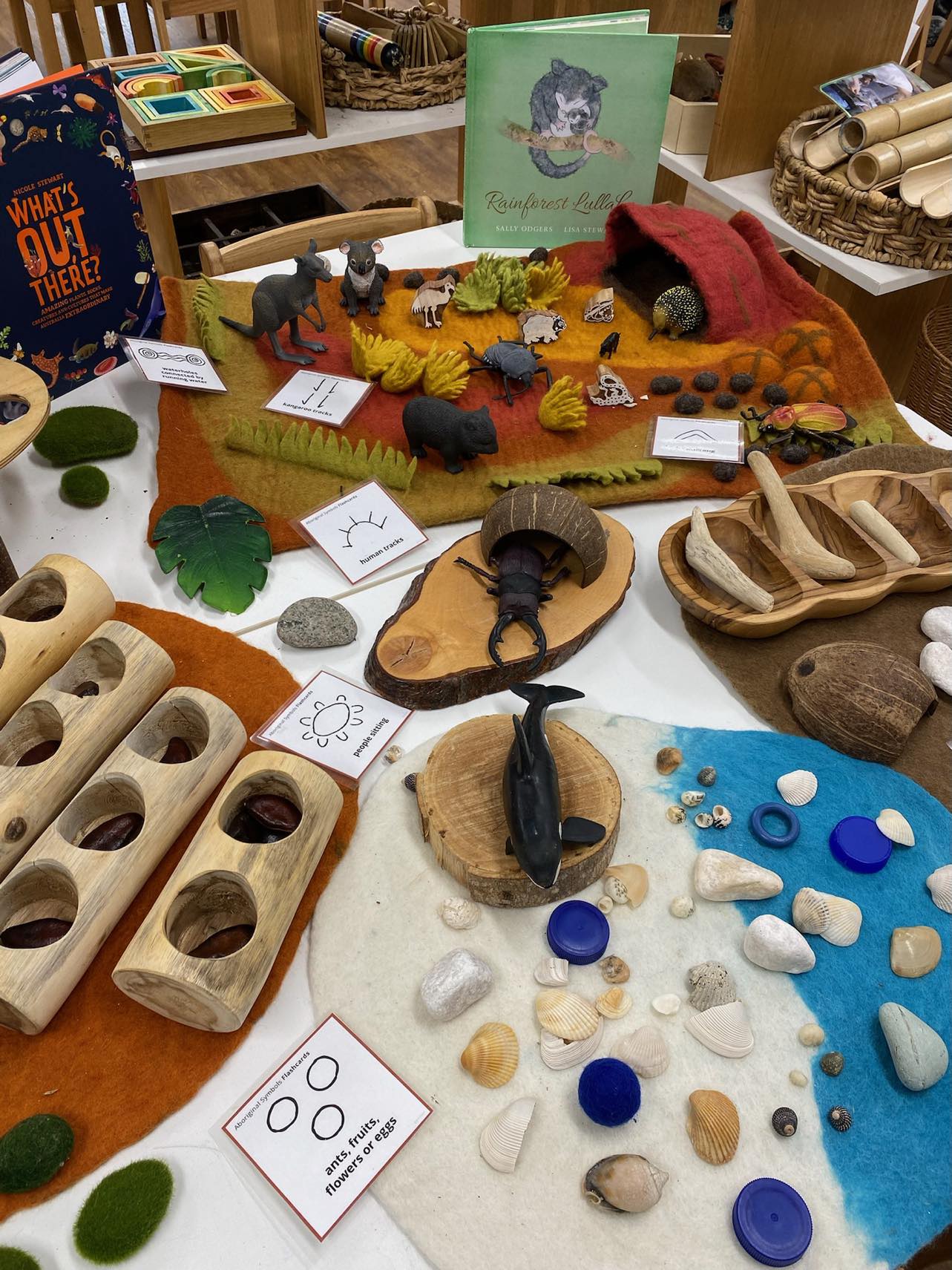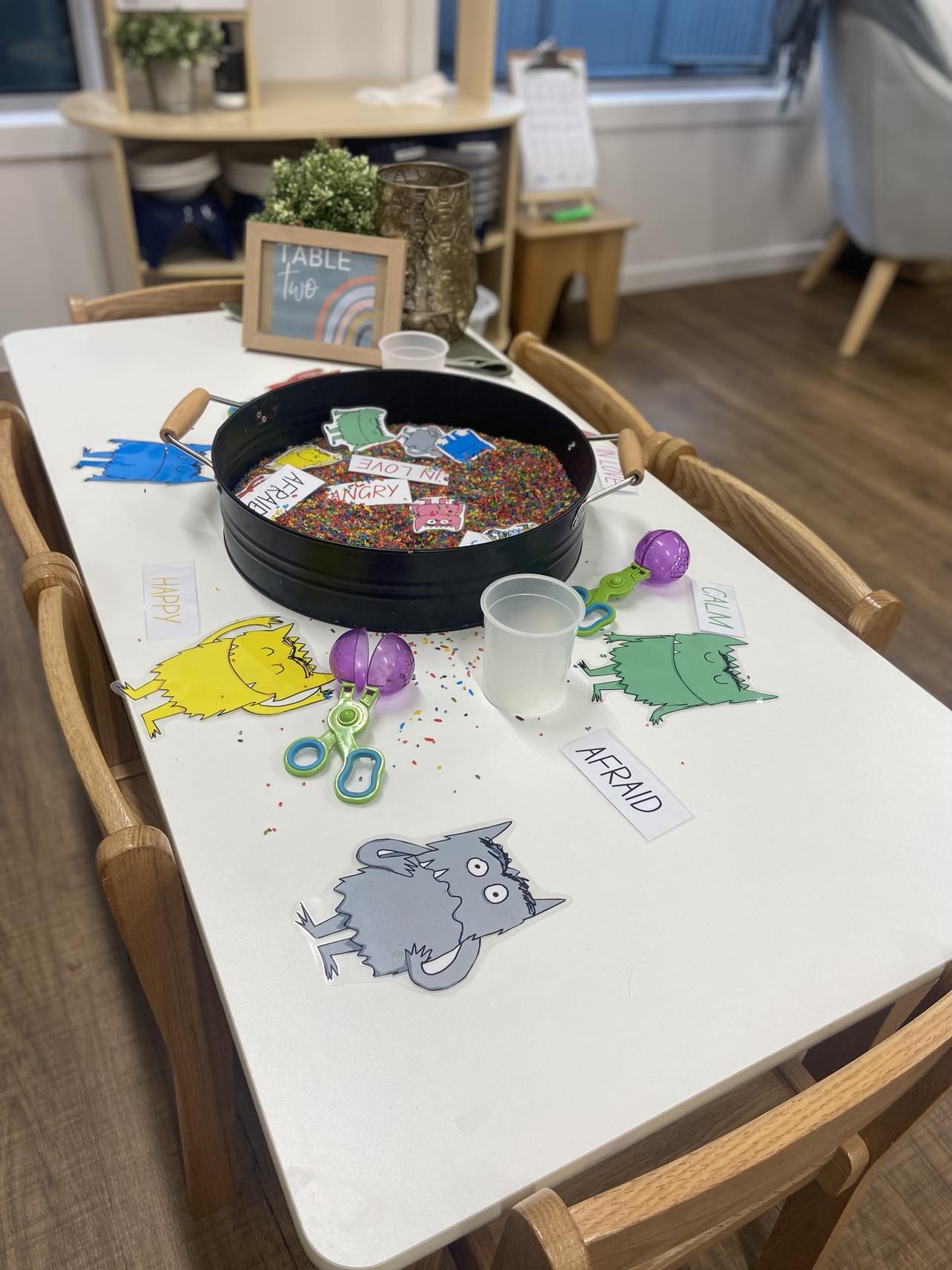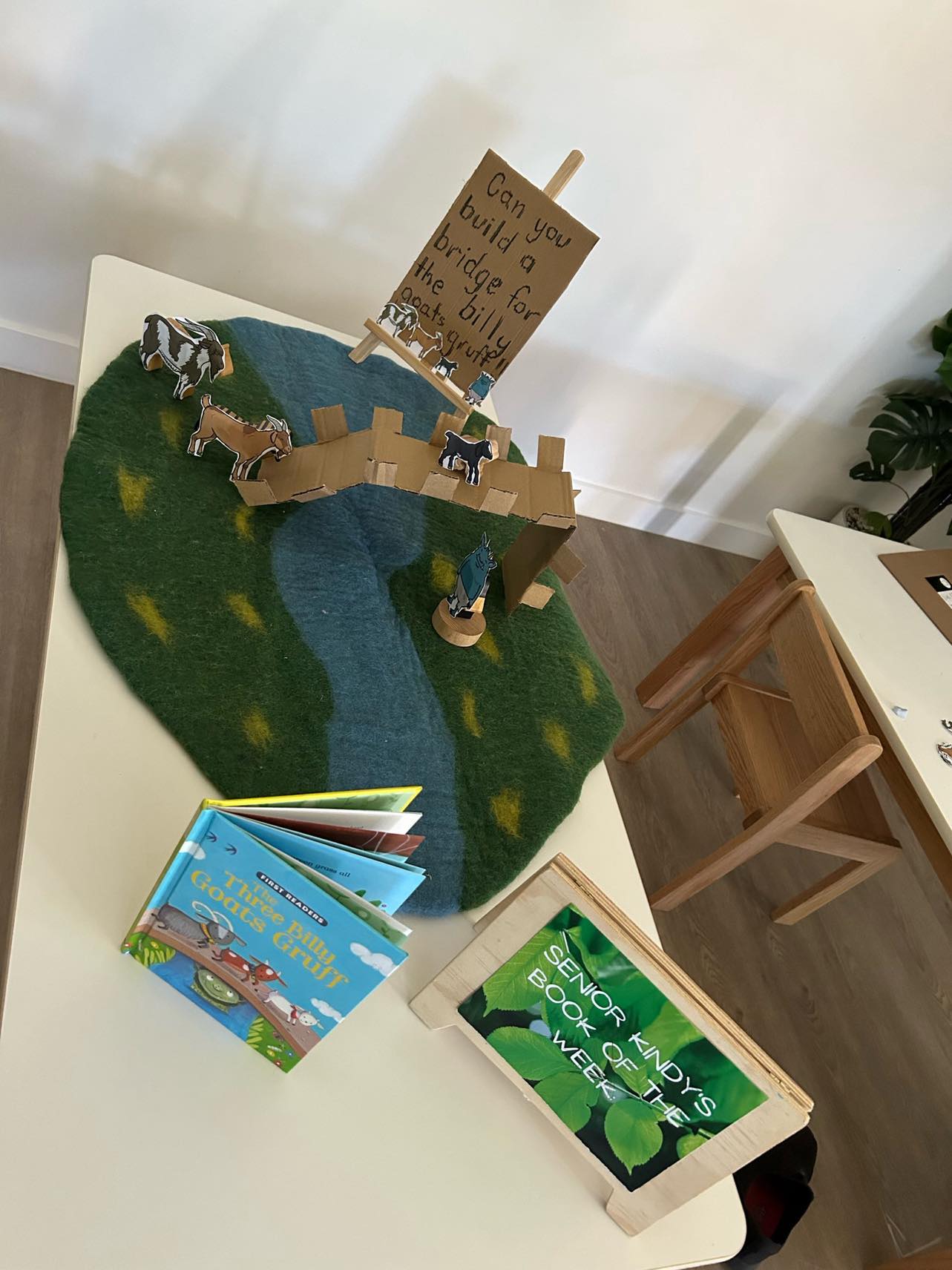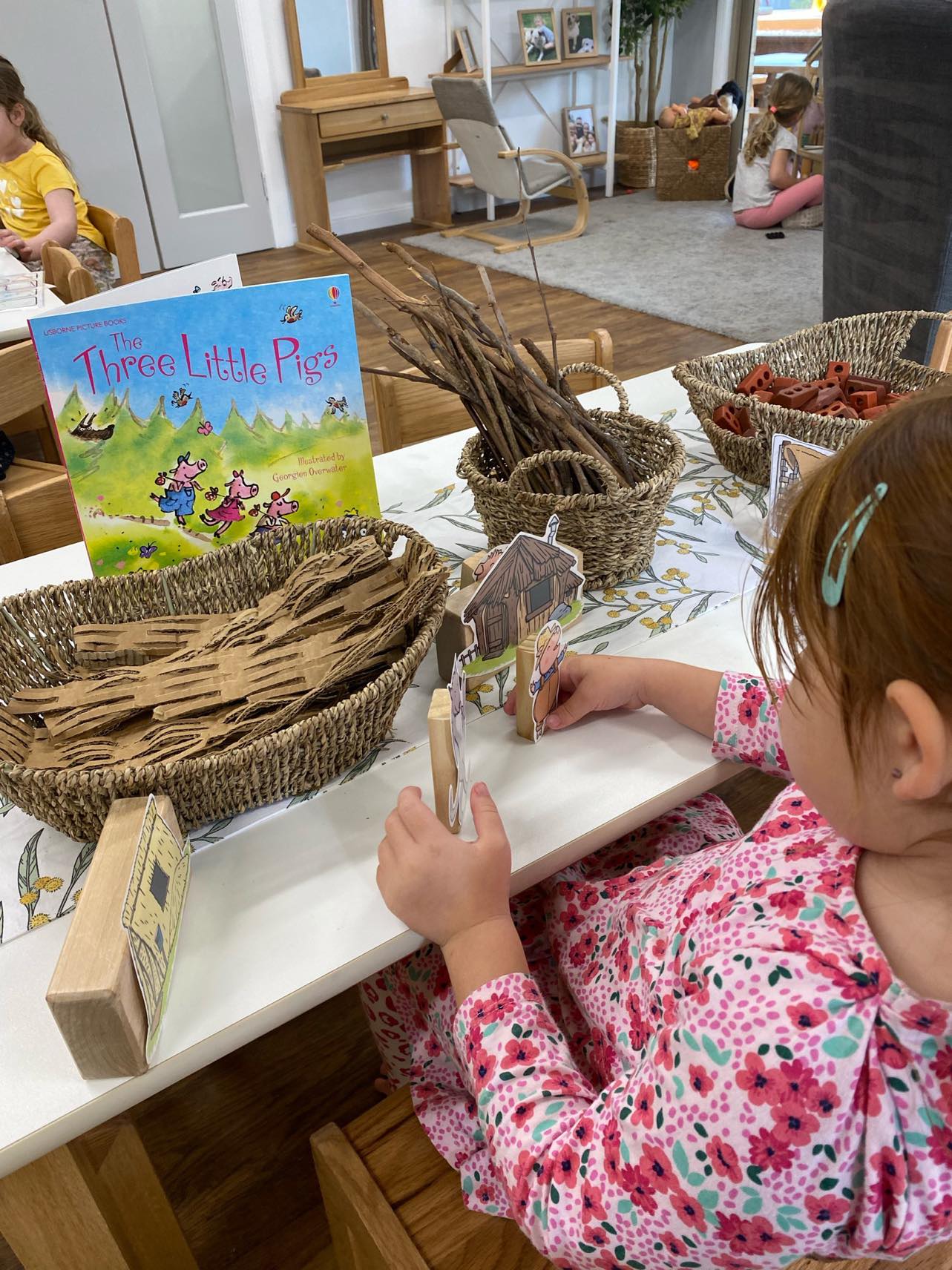
We all know that in life, we have to deal with some pretty heavy issues, and sometimes your children have to deal with them as well. At Little Scholars, we’re here for your family and will do what we can to help children identify hard feelings, confusion about events and offer a big cuddle when needed. By letting educators know what’s going on at home, they can help by ensuring your child has the attention he or she needs especially at this time, or they can help facilitate activities or learning exercises to support feelings your child may be experiencing.
We’ve compiled a list of children’s books that can support what children are going through, because we know children can do amazing things with the right information.
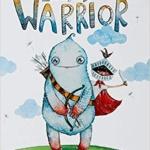 Hey Warrior: A book for kids about anxiety
City of Gold Coast Libraries & Brisbane Library
Babies are a mysterious bunch. For many months, their main forms of communication are cries, squeaks, gestures and coos. Parents fall madly in love with these little humans without knowing what they’re thinking and feeling, often just guessing at best.
How babies play, how and what they’re learning, and what they’re interested in can be a mystery to many. Many parents have seen their baby pull out every book off a shelf, for example, watch it fall, then grab another, while that parent scratches his or her head and says ‘why?’
There’s an answer. It’s a schema. A schema is both a category of knowledge as well as the process of acquiring that knowledge. In play, babies are often involved in repeated actions or certain behaviours as they explore the world around them and try to find out how things work. Those repetitive actions, such as a baby pulling out book after book, allows a child to practice and construct meaning to something, until they’ve understood that schema. Then they find something else to focus on and lather, rinse, repeat!
As Yvette, educational lead from our Burleigh campus says, it’s children’s development making sense.
“All of those little things that you see children do that seem a bit cute, or frustrating even, like throwing, it’s a schema, a child’s pathway of development for making sense of the world,” Yvette says.
The repetitive action of a schema allows a child to practice and construct meaning until they have mastered the understanding of the schema. Being aware of play schemas helps in two ways:
There are a number of types of schemas when it comes to babies.
Trajectory schema – The trajectory schema is one of the earliest schemas observed in babies. They are fascinated with how they, and objects move. Children will often throw objects or food from their pram or highchair. They climb and jump in puddles and enjoy exploring running water.
Transporting schema – Little ones enjoy repeatedly moving resources around, from one place to another. They will carry many items at a time using their hands, pockets, containers,
baskets, bags, or anything else that will hold their newfound treasures.
Enclosing schema – Children show an interest in enclosed spaces. They may want to sit (and hide in) boxes or laundry baskets. Or they may show interest constructing fences and barricades to enclose toy animals or themselves.
Rotational schema – Children showing a rotational schema may display a preference for turning taps on and off, winding and unwinding string, and playing with
hoops. They may also be fascinated with the physical experience of twirling and twisting their body, spinning around on the spot, or rolling themselves down a hill. They have an interest in things that turn, such as wheels and windmills. They enjoy rolling tyres around, turning lids and watching the washing machine on a spin cycle.
Enveloping schema – Children with an enveloping schema are interested in covering and hiding items, including themselves. They will enjoy dressing up, and filling and emptying bags and containers with different objects.
Connecting schema – Children displaying the connecting schema want to join items together. They find resources like string to tie things. They connect and disconnect toys such as rail tracks.
They enjoy construction toys, and doing arts and crafts where they can glue and stick pieces together.
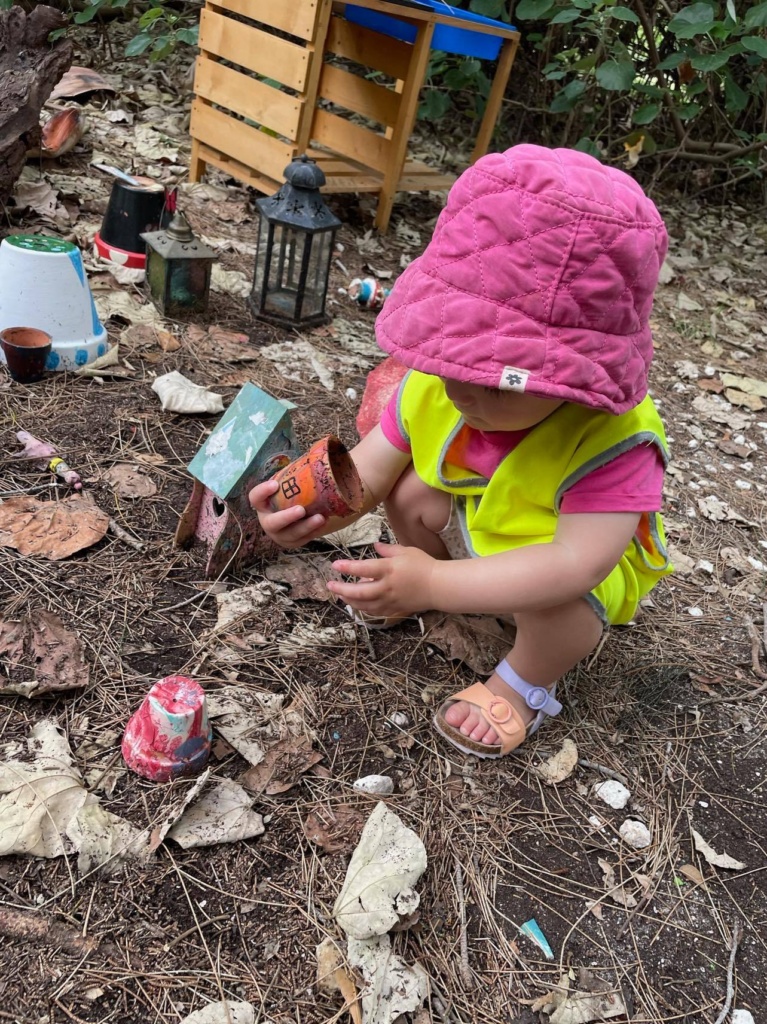
Orientation schema – Children like to turn objects and themselves around and upside down, to get a view from under the table or from the branch of a tree. They may bend over and look at the world backwards through their legs. They enjoy seeing things from a different view when exploring using cardboard tubes, binoculars or a magnifying glass.
By adapting this theory, we have been able to slow down and become more in tune to the children and noticing their behaviour patterns in play. It is now so important to us that we allow our babies and young children the time to explore the repetitive actions of schematic play.
-Jodie, lead educator
Jean Piaget was one of the first to use the term “schema” back in 1923. Piaget was an important child development theorist and his Theory of Cognitive Development was and still is read and followed today by early childhood specialists. He was one of the first who believed children think differently than adults and that they have an innate desire to learn and actively build up their knowledge about the world. They are not passive creatures waiting for someone to teach them.
Susan, our group pedagogical leader, is bringing her schema knowledge across our campuses to the lead educators in the nursery and toddler studios in 2023. Learn a bit more below about how we use schema theory, and how one educator has taken it on in her nursery.
Schematic Pedagogy
Through our collective curriculum, our educators are guided through a ‘schematic lens’, meaning they can plan for children’s thinking, not just activities. This has a strong link to our Collective Curriculum, our educational program for children.
The learning environment
Our educators apply teaching methodologies to design their play spaces and are intentional in the resources offered.
Observing and planning for children’s thinking
Through our collective curriculum, our educators observe the children through their play, to determine schemas explored through the children’s engagement to an activity or resource. Through observing patterns of learning, our trained educators can plan forward to scaffold their cognitive capabilities.
Partnering with children in play
Through ongoing mentoring and coaching, our educators are able use their knowledge of schemas and plan effectively. Our educators are encouraged to partner with children in their play and observe behaviours explored through schemas.
“Schemas are an intrinsic part of child development, knowledge to schemas provide our team of educators an opportunity to identify and encourage independence in children as they explore patterns of movement, often related to schemas,” Susan says. “Supporting assessing through a schematic lens, provides our educators with a framework which can be used to analyse children’s learning, supporting the planning process within our curriculum.”
You may be wondering if you have a baby or a small toddler in one of our campuses, how we use schemas to help their development. We talked to one of the educators at our Deception Bay campus about using schemas for educational programming. Deception Bay Little Scholars was recently rated as Exceeding the National Quality Standard (NQS) after it was assessed by the Department of Education. The NQS sets a high national benchmark for early childhood education and care in Australia. Jodie, lead educator in the nursery studio, says learning about schemas was a game-changer.
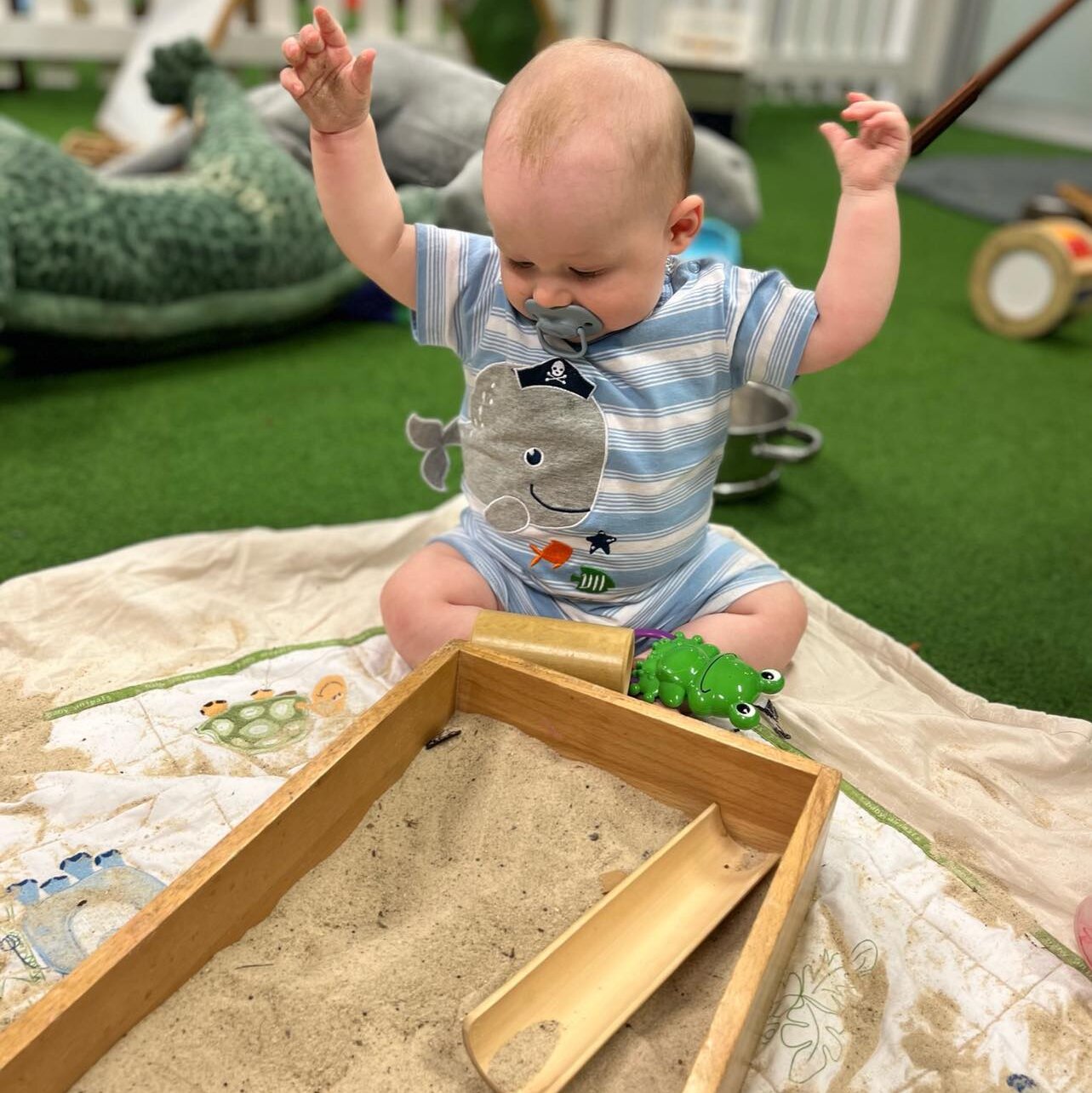
Both our younger babies and older babies really enjoy dropping objects or putting things in and out of containers (vertical trajectory). Using old formula tins and cutting an opening in the top with lids from jar foods a milk bottle lids, is a big favourite.
Our older babies are seen continuing with trajectory and begin to start exploring other forms of schematic play like, transporting, rotation, connecting and this can lead to a disconnecting schema where the child builds something that they can demolish or through [activities like] untying knots, as well as enclosing, positioning, enveloping and orientation, such as looking at things from different viewpoints like hanging upside down, looking through their legs, looking at things upside down. No wonder our little people are so busy and on the go all the time!
Thanks, Jodie!
Related:
Pedagogical Practices: Bringing new learning techniques to Little Scholars
When a baby or toddler is ready to reduce the number of naps they have each day, or even drop naps altogether, this can be an equally challenging transition for parents!
Daytime naps naturally lessen in length and frequency as a child gets older because they can tolerate more awake time, from both a physiological and neurological perspective as they grow. Circadian rhythms – your 24-hour body clock that helps control your daily schedule for sleep and wakefulness – also mature as sleep begins to consolidate, particularly at night.
Especially for new parents, you may be wondering what some of the signs are that your child is ready to drop a nap. Dropping a nap is a transition that happens over time. Babies need to decrease their number of naps incrementally, but that won’t happen on its own, babies and toddlers still need your guidance to help ease these changes. And our educators are here to help.
Since our educators spend a few days a week with your little one, they have the knowledge of what to look for in signs of tiredness, or readiness to stay awake just a little longer! It’s important to remember that each child is different. What works for one, won’t work for another exactly the same age or way, and this is not a process to rush, small people need their rest!
Here are some signs that may show your little one is ready to drop a nap:
“For some children, cutting down their bottles or altering their times they have bottles (obviously age-appropriate) may help with stretching wake windows,” says Hayley, an educator with our Deception Bay campus.
“We aim to wake the child through gentle means, such as hustle and bustle around them to help them wake more naturally, which can help too.”
Hayley says looking at wake windows as a guide for your child can help and you can find free resources and blogs by sleep experts online. But she says keep in mind small children going through leaps and teething may have more difficulty with their sleep, but these adjustments are usually temporary.
Keeara, an educator in the nursery at our Yatala campus says they’ve had some parents request help in stretching their child’s nap to one sleep to transition in the toddler room.
They find play in an outdoor environment during the morning keeps little ones occupied enough to stay awake – but says if their children did fall asleep, it was obviously needed, and educators will try for a short afternoon nap to make up for it.
Fresh air and active fun like sensory activities are a great way to stretch that wake time out a little longer for little ones. Maybe for your child, it’s making music or playing with different textures that will keep him or her engaged and interested just a little longer.
Our Facebook and Instagram channels offer ideas on creative activities our educators do across our campuses to entertain little ones, which can really help stretch out those wake windows.
Like Hayley, Keeara and her fellow educators have also found works is having lunch around 11:30 and putting bottles on the warmer at the same time so they’re ready to go when lunch is finished.

“We’ve found most of the children would have their bottle then self-settle in their cots as they were so exhausted at this point,” Keeara says. “Surprisingly, it worked really well and made the transition smoother, they even slept for a longer period of time having just the one sleep.”
Then comes the (often dreaded by parents) time when children are ready to drop naps completely.
“We have a fair few two-three-year-olds in our room who have dropped sleep,” says Skye, an educator at our Yatala campus. “The most common sign for them was becoming upset at rest time, moving around a lot and getting up for drinks, toilet and to just tell us something.”
She says even if educators suspect a child is ready to drop naps, they start off with still giving the child a bed, but giving them a quiet activity like books, puzzles, or drawing supplies.
“That way they still have the option to fall asleep if they want to, if they haven’t slept the whole week, we then move them to an activity mat that we keep clear of beds, again for quiet activities while their peers sleep,” Skye says.
Independent play is also important for your child’s development, and it’s central to effective quiet time, so it’s worthwhile implementing it into your older toddler’s daily routine. Quiet time is a time during the day where your child has an opportunity to rest their busy little bodies and minds. The length of quiet time can range anywhere from 45 minutes to 2 hours, depending upon the child, but consistency in this new quiet time will work wonders for the whole family.
Skye says dropping naps is something they talk to parents about, and from those discussions, they work together on a plan to help the child adjust.
Do you have a child who’s struggling with separation anxiety, especially at when being dropped off at school or early education? Perhaps they’re going through a developmental milestone that makes them need Mum or Dad a bit more than before. This is common starting around six months of age, peaks at 14-18 months, then can happen again when your child hits preschool and school-age. Or maybe your child is new to our service or has recently transitioned studios. The transition from home to early education is a milestone for both children and families. Separation anxiety can even happen for children who’ve been in Little Scholars for a while. It can be hard moving into a new studio where she or he doesn’t yet know new routines, where things are kept and spending time with different educators with different ways of doing things can be overwhelming for the child. This is all normal.
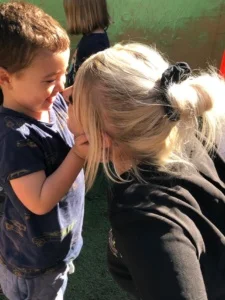
If you’re at a loss on how to make things easier on your little one, and yourself, we have some ideas.
Acknowledge and validate their feelings by saying something like “I know goodbyes can be hard, but I always come back. I will see you later today. I love you.” Give a big hug, a smile and a wink.
Then at home, if your child is old enough, have a chat about why she/he is having a hard time at drop-off, and think about what you can do to alleviate it. Ask him or her what make things easier. Perhaps it’s including a comfort toy, blanket or family photo. Maybe you each have a special bracelet that you can touch when you’re missing each other. Make a plan for something special together when you pick him or her up, like a walk or playing a game together, which will give your child something to look forward to through the day.
If you’re preparing your child to go to early education or school, it’s best they understand what their days will look like. So the conversation could look something like ‘we’ll all have breakfast together and get ready for the day. Then we’ll get in the car and first we’ll stop at Little Scholars. I’ll walk you in, give you a big hug, and you’ll go off to have a day of play while I go to work. When I finish work, I’ll jump in the car and come right over to pick you up, then we’ll go _____” These conversations may have to happen several times for it to sink in.
Also, if you’re pondering signing your child up for early education, this is why we offer play dates to children newly enroled but yet to start – this allows them to begin to become familiar with their new educators and studios.
Remember, you can always chat with your educator or campus manager about how to help. We’re always available, and we’ve been through this before, we can offer ideas or reassurances everyone will be OK!
We also know separation anxiety can be a two-way street, especially for new parents, or returning to work after maternity leave. Don’t forget we have our Little Scholars app so you can see pictures of your child, and be reassured that if there were tears from your child, they likely didn’t last long and they’re busy having fun and learning while you’re at work.
Related links:
Elizabeth Stone, an award-winning essayist and journalist, once captured the essence of parenthood with a poignant quote, ‘Making the decision to have a child – it is momentous. It is to decide forever to have your heart go walking around outside your body.’ This statement resonates deeply with many parents, astutely capturing the feelings of boundless love and the inevitable vulnerability that comes with bringing a child into the world.
This overwhelming surge of emotion is particularly intense during those initial moments and first days of separation from your child, often experienced when that child is entrusted to the care of someone else for the first time. It’s a milestone filled with mixed emotions for parents – pride in their growing independence, yet a deep longing to keep them close forever.
While the focus in the first few weeks at early learning facilities is generally on the children and how they’re settling in, an often-forgotten topic is the separation anxiety parents also can feel when they drop their little ones in care for the first time.
In childcare, we offer families tips on how to help children settle in, from suggestions such as: ‘don’t sneak away’, ‘keep goodbyes short’, and ‘maintain calm and confidence’, but what if the child is just fine, but the parents are struggling from the separation?
It’s understandable. If you’re coming off maternity or paternity leave, or perhaps you’ve been the primary parent at home for the last few years, change can be profoundly hard.
What we’re talking about is parental separation anxiety, and it’s more common than you think.
“I experienced separation anxiety with both my children when I dropped them into care for the first time, but I was much more surprised with my feelings the second time around,” says Christina, a communications professional who has two children. “I had to go back to work much earlier the second time around, and I felt a lot of grief for not getting to continue to bond with my son the way I had been, knowing he was my last baby. I also experienced some fears around him attaching to his educators more than me.”
A 2016 study by Pacey UK (the professional association for childcare and early years) reported that out of 1,000 mothers, 70% of mums said they worried about the extent they would miss their children, 90% reported feeling anxious about returning to work after having a child, while nearly half of mums admitted being very anxious.
How can parental separation anxiety manifest itself? Some of the more obvious signs are tears. Anxious feelings. Moodiness. While others you may not notice until they start affecting your life and mental health.
Here are some common indicators of more serious separation anxiety to be aware of:
Ask yourself, what is your biggest fear or worry in separating from your child? The initial step in overcoming these feelings is to acknowledge and understand them. If you’re experiencing heightened anxiety about being apart from your child, it’s important to explore the origins of these feelings. Perhaps they stem from experiences in your life in childhood, or birth trauma, the loss of pregnancy or another child, perinatal or postnatal anxiety/depression and existing anxiety issues, or it may simply be triggered by the act of becoming a parent.
“How does a parent reconcile these feelings of separating from their child? I think what’s important about that one is that often it’s around guilt,” says Sarah Bergman, a clinical psychotherapist at Counselling on the Coast who has more than three decades of experience in emotionally-focused therapy.
“Guilt is really an emotion that comes up when we have like an idealised sense of a situation or who we are. So we feel guilty when we don’t feel we’ve reached what we want to be reaching or we haven’t done what we want to do. I would say to explore those feelings of guilt, what they are, what you feel like you’re not doing for your child or getting right for your child.”
Sarah says those guilty feelings in parents often link back to situations in their own childhood where they felt like their own parents let them down. But the concern is also passing down those guilty or anxious feelings to your child.
“Their own wounds start to muddy the waters of the child’s experience. So the child’s just going to school, but then they feel their parents anxiety and then they also think that something’s wrong then too, which can make them anxious. So if the parents have a good look at themselves around, ‘what was it that my parents got wrong for me? or what was it that wounded me? and how does that now play across on my child?’ So the parents will often work hard to do the things that they don’t want that their children to experience themselves.”
While Sarah says often the guilty feelings stem from what they missed in their own childhood, the opposite could be true.
“Maybe [parents feel they’re] not meeting the ideals of what your parent did for you or what things that you really loved about your parent and now you feel like you’re not getting that right.”
Wherever the feelings stem from, Sarah says, parents may be trying to heal themselves through their relationship with their child. But, she says, a child doesn’t have those wounds. They don’t experience their parents in that same way that perhaps you did. So she surmises parents could be overcompensating for their own childhood pain.
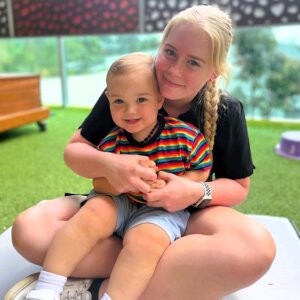
“Those kind of parents are very anxious at feeling like they have to attend to everything with their children because they don’t ever want their children to feel the way that they did,” Sarah summarises.
Consider jotting down your feelings or discussing them with a sympathetic friend or even a colleague who could relate with what you’re currently experiencing. Regardless of how trivial or illogical they might seem, allowing yourself to express and discuss these fears can aid in releasing them.
Making the decision to have a child – it is momentous. It is to decide forever to have your heart go walking around outside your body.
Elizabeth Stone
Sarah also suggests parents educate themselves on secure attachment, a theory first proposed by the British psychologist, psychiatrist, and psychoanalyst John Bowlby. For children, secure attachment to someone like a mum or dad allows them the secure base necessary to explore, learn and relate, and the well-being, motivation, and opportunity to do so. It’s important for safety, stress regulation, adaptability, and resilience and ultimately can help produce a happy, healthy well-adjusted child.
“If you are securely attached, you will feel less anxious because you will feel comfortable that you can trust, you have a positive view of other people and a positive view of self,” Sarah says. “So you think to yourself, ‘it’s okay. My child is in safe hands. They will let me know. I trust the daycare centre. And I trust myself that I’m doing the right thing by my child and it’s going to be okay and I need to go to work and this is just the way it is.’ Whereas someone who is more anxiously attached sometimes have a bit of a negative view of themself and possibly a bit of negative view of others so they don’t totally trust others, so it’s about trying to move into being more securely attached.”
She also says to have an honest conversation with educators or your campus manager.
“You know, that is actually good secure relating as well, that a parent can actually say, ‘I’m feeling a bit nervous’, or ‘I’m a bit worried about that,’ because they’re asking then, they’re not coping alone.”
Sarah recommends in that conversation, have a chat with educators or your campus manager about what might help to alleviate those anxious feelings, whether it’s a phone call or a text, a few extra pictures – whatever it is, having clear communication can help everyone.
“What helped me was an honest discussion with my son’s lead educator during a playdate. She asked me thoughtful questions about why I was having a hard time, asked how she could help alleviate those feelings for me, and was very mindful to update with lots of pictures, and even checked in on me at pick-up over the next few weeks. It was really helpful, and gave me feelings of trust in leaving my baby with her and her team,” Christina adds.
Those secure attachments we want children to have means we also want them to have bonds with others, such as loving educators.
A child who has had a secure attachment with her parent or another safe adult is more likely to be able to develop lasting successful relationships as an adult. In fact, a New York University study recently found positive, warm relationships between caregivers and children were associated with higher odds of attaining ideal heart health at multiple points across a 20-year span of adulthood, so developing these bonds is good for their health!
Part of early childhood training for educators is understand various child development theories such as attachment theory, so trust that your educators understand what secure attachments – both to parents and others children can trust – mean for children’s development and they work hard to ensure these bonds with your child.
Research has found our adult relationships are shaped by our early patterns of attachment and the ways we learn to deal with closeness and separation.
“Children are very attached to their parents and they love their parents very much. And that is who they want to be with. And if they create an attachment with someone else, that’s lovely. However, ultimately it’s important to keep in mind they will want to be with their parents,” Sarah says.
Sarah also says some of these feelings may be pressure we put on ourselves as parents.
“We don’t actually have to be perfect parents and I think a lot of people are really trying to be perfect parents and wrapping their children in bubble wrap. You just have to be good enough. I think from memory it’s only like around 60 or 70 per cent strike rate of meeting the child’s needs.”
Sarah is referring to the Winnicott theory.
“The good-enough mother is one who makes active adaptation to the infant’s needs, an active adaptation that gradually lessens, according to the infant’s growing ability to account for failure of adaptation and to tolerate the results of frustration.” – D. W. Winnicott, paediatrician and parent-infant therapist.
“We all have to learn that sometimes our needs aren’t going to be met. And that’s actually where we build resilience and we build understanding around that other people have things they need to do as well,” Sarah says. “You don’t have to drop everything to be there for your kids. It’s okay to have ruptures with your children. It’s actually okay because that is a realistic expectation on relationships. We all have ruptures and then we get to learn how to repair those ruptures. But of course, if the child’s fallen over or they’ve hurt themselves or they’re scared at night, you want your strike rate on those things needs to be closer to 100 per cent.
“But otherwise, we don’t have to be so hard on ourselves, we can get it wrong sometimes. We just go back and say, ‘Hey, I’m sorry I got that wrong.’ And then the child also learns that they’re going to get things wrong sometimes, too. They can come to their parent and say, ‘Hey, Mum, sorry about that.’”
If we can offer some advice, it’s what we also suggest to parents when children are having a hard time with separating. Find an activity you can do together outside of care hours that you can look forward to, so you can cherish your time together. Maybe after pick-up, you take your child for a walk or to the park, maybe it’s grabbing a sneaky ice cream after dinner, maybe it’s a game night or story time when you get home. Find ways to really connect with your child in the time you’re together may make the time you’re apart easier to deal with.
Sarah says mindful activities can help in easing anxious feelings. But, she says, if these feelings are taking over, it might be worth talking to a professional as soon as possible. You can talk to your GP about a referral to see a psychologist, or you can book in to a specialist practice such as Sarah’s Counselling on the Coast to have a chat with a psychotherapist.
Please remember, if Little Scholars can help in any way, we will, from offering a listening ear, to phone calls to whatever would help your family, we will. We’re not just here for children, we’re here for the whole family.
Teaching children emotional awareness, in themselves and recognising emotions in others, is an important part of children’s growth and wellbeing. Understanding emotions is also not something ingrained, and not necessarily an easy thing to teach or grasp, especially as these small humans’ brains are rapidly developing in all areas.
In children, all kinds of changes are happening at the same time, and some areas, such as children’s language skills, develop before their self-regulation skills. This means that while your child may have a broad vocabulary, they still may not be able to put into words how they’re feeling. A toddler’s capacity to regulate their emotional state and emotional reactions can affect everyone around them, and can carry on to academic performance, long-term mental health, and their ability to thrive in a complex world.
Helping children to identify and label emotions is an important first step and something Little Scholars focuses on in our educational programming. Small children do not yet have the vocabulary to identify feeling words like angry or frustrated, or have the skills to “read” facial cues or to interpret body language.
Even the littlest Scholars are learning emotional intelligence by communicating how they feel, according to Jodie, a lead educator in the nursery studio at Deception Bay.
“If a child is expressing an emotion or a behaviour, [we question] is it because they need something from us? ‘I can see you’re feeling sad, how come you’re feeling sad?'” Jodie says. “If we begin to speak to the babies about what they’re feeling, information I’ve learned from [child psychologist] Justin Coulson, it will relate to five things, either them being hungry, angry, lonely, tired or stressed. It’s often one of those things that will cause big emotions.
“They’re obviously not able to completely communicate with us on what their needs are. I’ve learned not to ask the children what they want, but what do they need?” she says. “Maybe they’re feeling hungry and frustrated, so offering them an apple could work, where they can get some of that anger out through crunching. Maybe they’re feeling tired, but they need a little more comfort first. What other feelings are they feeling?”
At our Burleigh campus, children and educators have feelings chats as part of their morning routine. In the Toddler studio, children ask their educators questions such as ‘why is she angry?’ providing a great opportunity for further conversation. Educators support the children in understanding their emotions through discussions as part of their morning routine.
“During the morning, we will sit down for our morning meeting [with children] so when we come inside, we’ll ask how they’re feeling, they’ll express how they’re feeling – happy, sad, ‘good’, and throughout the day we’ll do activities and they’ve gotten really good at recognising and showing those emotions,” says Sasha, lead educator in the Toddler 2 studio. “It’s crazy to see how much they can take in and understand.
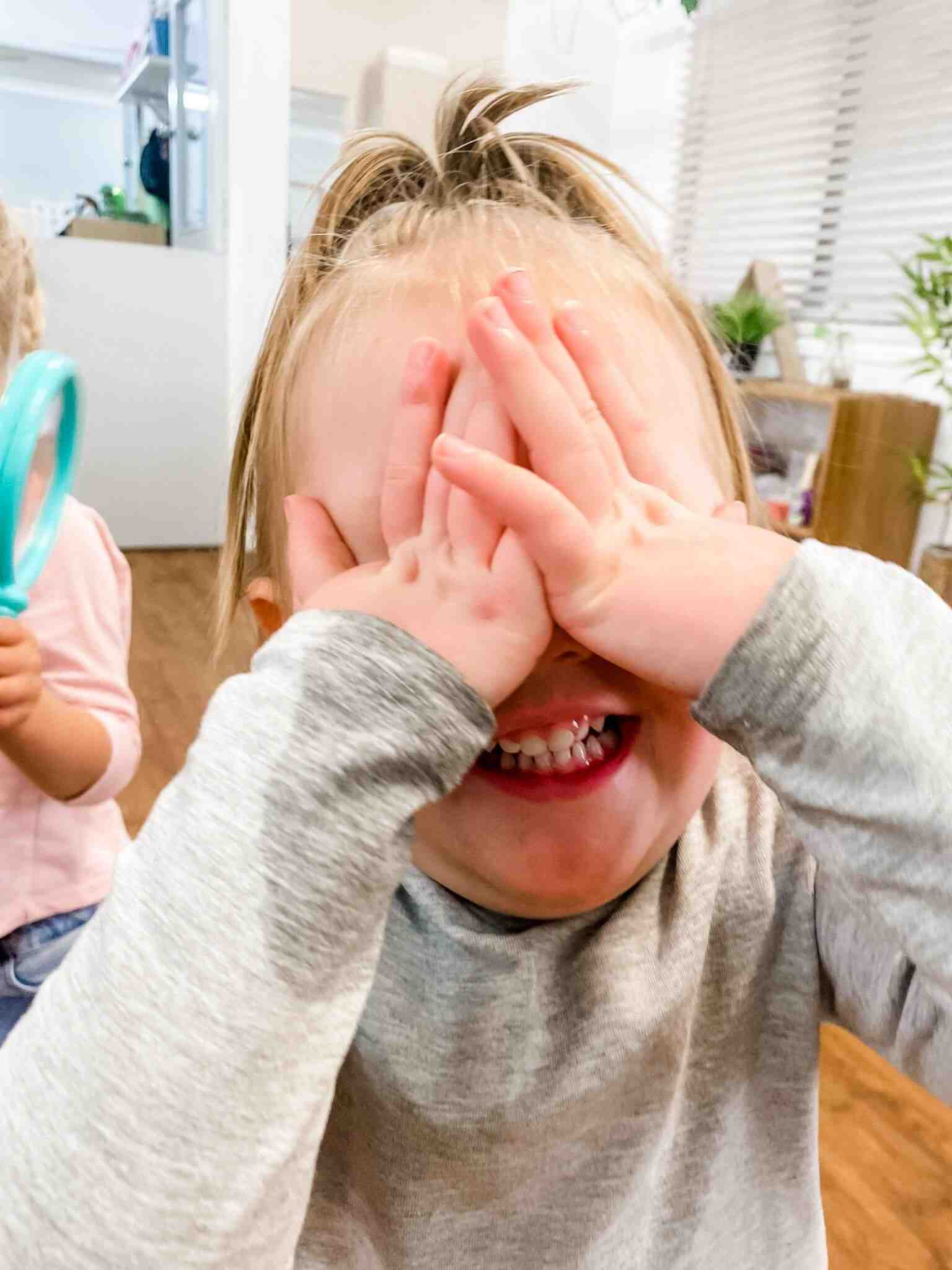
“It’s harder for some of the younger ones [to grasp], but we still try to get them involved by asking ‘how do you think that person looks in the photo?’ or ‘how could we make that person feel better?’ and get them to try to understand how others may be feeling,” Sasha continues. “They’re getting really good at being able to understand their own emotions, and we try to support them in how they can support themselves if they are feeling sad, or feeling overwhelmed and need space. Next year they’ll be learning more about how others feel and how we can help them.”
Raylene, an educator in the senior kindy studio at our Yatala campus, says the benefits of exploring emotions, all emotions including the hard ones, allows children to not only identify them but develop the skills to go through them.
“One child mentioned that she would cry all day if she couldn’t see her mummy again. Mr J mentioned that he gets angry when he can’t find his treasures. Mr T doesn’t like when Mummy drops him off etc which led to a discussion about developing strategies to cope with these emotions when they occur. [It’s] so powerful. Mr J said that he could take a big breath and then think about where he put his treasures. Miss K said that she would give her sister a big hug if she couldn’t hug Mummy. Mr T said he could come with Miss Ray,” says Raylene. “Ensuring educators create opportunities for children to communicate their feelings and then giving children the tools to not only identify them, but develop strategies to manage them, rather than saying ‘you’re OK’ is the power moment.”
Tori, an educator at the same campus agrees.
Jodie is right. Research shows that children who learn how to understand emotions in themselves and others are better able to regulate their own responses to strong emotions. Helping children to identify and label emotions is an important first step, and this is supported by the Early Years Framework in helping children develop a strong sense of identity.
Further information
Because we offer a transition to school program through our kindy and pre-kindy studios, from time to time, our educators and early childhood teachers are asked, ‘when are you going to teach my child to read?’ to which our answer is, we already are! But perhaps, not in the way parents expect.
The expectation from parents sometimes seems to be that your child will finish their time with Little Scholars and walk into prep knowing how to read, but that’s not exactly our aim.
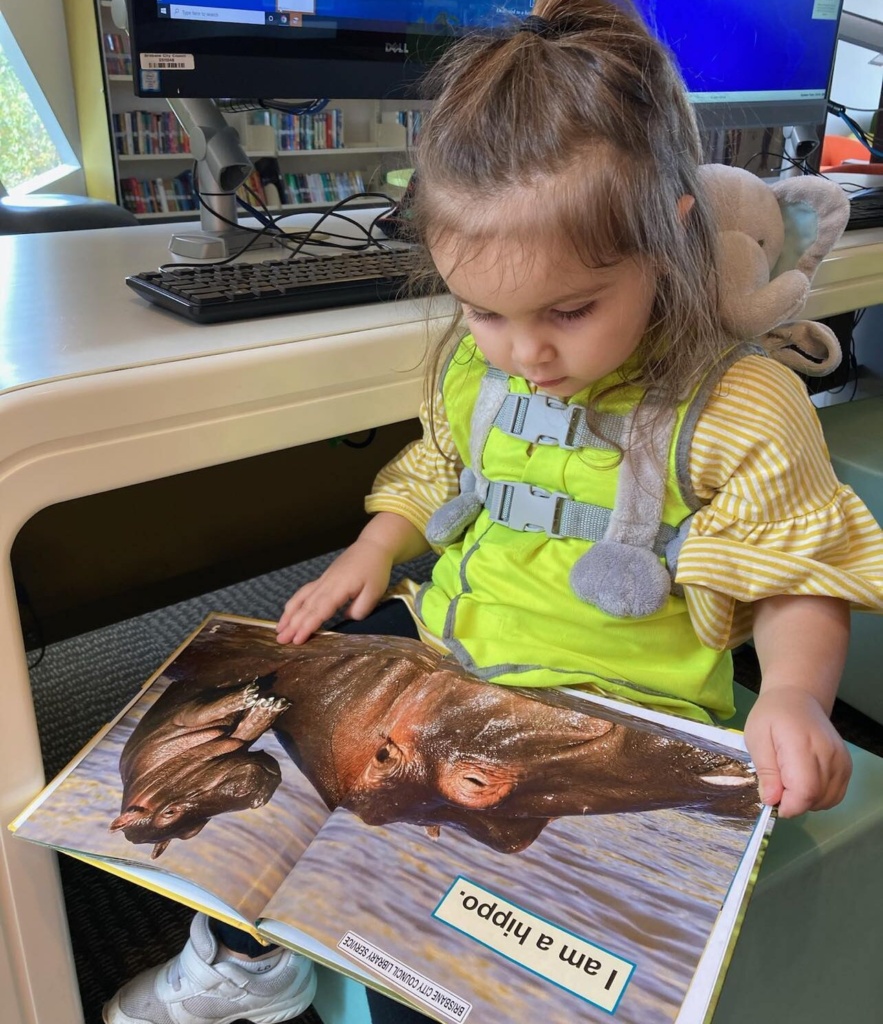
Learning to read really starts from infanthood, and is a big process. In fact, research has found newborns’ brains are prewired to be receptive to seeing words and letters. This means babies are already getting ready to read at birth. The relevant part of the brain, known as the “visual word form area” (VWFA), is connected to the language network of the brain, and was discovered by researchers at Ohio State University, who analysed the brain scans of 40 one-week-old babies, as part of the Developing Human Connectome Project.
Researchers compared these to similar scans from 40 adults who participated in a separate Human Connectome Project. The VWFA is next to another part of visual cortex that processes faces, and it was reasonable to believe that there wasn’t any difference in these parts of the brain in newborns. Because as visual objects, faces have some of the same properties as words do, such as needing high spatial resolution for humans to see them correctly.
But the researchers found that even in newborns, the VWFA was different from the part of the visual cortex that recognises faces, primarily because of that connection to the language processing part of the brain.
Lead researcher Zeynep M. Saygin’s team is now scanning the brains of three and four-year-old children to learn more about what the VWFA does before children learn to read.
Research has also showed babies can differentiate their native language from another language when they’re only hours old, which means they begin processing language in the womb. And, amazingly, studies have also found that at birth, the infant brain can perceive the full set of 800 or so sounds, called phonemes. Phonemes form every word in every language.
People can’t learn to read without understanding language, so your child has been working on learning to read since birth!
We encourage language development in many ways understanding that oral language is a significant aspect of early literacy, educators engage in song, rhyming and make use of picture books, to tell a story. Through our discussions and interactions with the children, and observations watching children play and what they’re interested in, we extend on their interests as part of our educational and intentional approach. So, for example, if educators see two children playing with toy dinosaurs, they may chat with them about why they’re interested. Then, they may have a conversation with the class about who else might be interested in dinosaurs. Based on the conversation, if many of the children are, they may set up sensory experiences, art opportunities and get relevant books on the topic of dinosaurs and read them together.
We also use words visually for many of our activities, even if they aren’t book-related, so that children begin to recognise words and associate them. Our environments place great emphasis to embed literacy print across all play spaces, this supports rich language experiences. Educators model words through children’s play, for example, when a child is engaged in block play, the educator will discuss the activity with them, exposing children to words, such as ‘you are putting a block on the top,’ (or underneath, or on the side.) These elements of language are also known as ‘positional language’ and introduce children to literacy and elements of numeracy at the same time.
At Little Scholars, we have a specific approach to learning to read. It’s called the 3a Abecedarian Approach Australia to reading. This is where children are active in conversational reading.
A long 1970s study in the US was the basis for the now well-adapted approach. The Abecedarian Project was a controlled scientific study of the potential benefits of early childhood education for disadvantaged children. Children born between 1972 and 1977 were randomly assigned as babies to either the early educational intervention group or the control group.
Children in the experimental group received full-time, high-quality educational intervention in an early learning setting from infancy through age five.
At the age 30 follow-up study, the treated group was more likely to hold a bachelor degree, hold a job, and delay parenthood, among other positive differences from their peers.
The 3a Approach encourages the adult and child to go ‘back and forth’ in conversation. There are three main levels to try – the first level is seeing, then showing, then saying.
Make it a conversation by asking your child to do something and not always following the words in a book.
“Can you see an owl? “Can you say owl?” “Can you show me an owl?”
At Little Scholars, we start with comprehension when looking at books – the thinking and talking about and enjoying the books we read together either in a group or one-on-one. Once children have a connection to books and reading, that’s when we can start teaching the ‘word parts’ of being a reader.
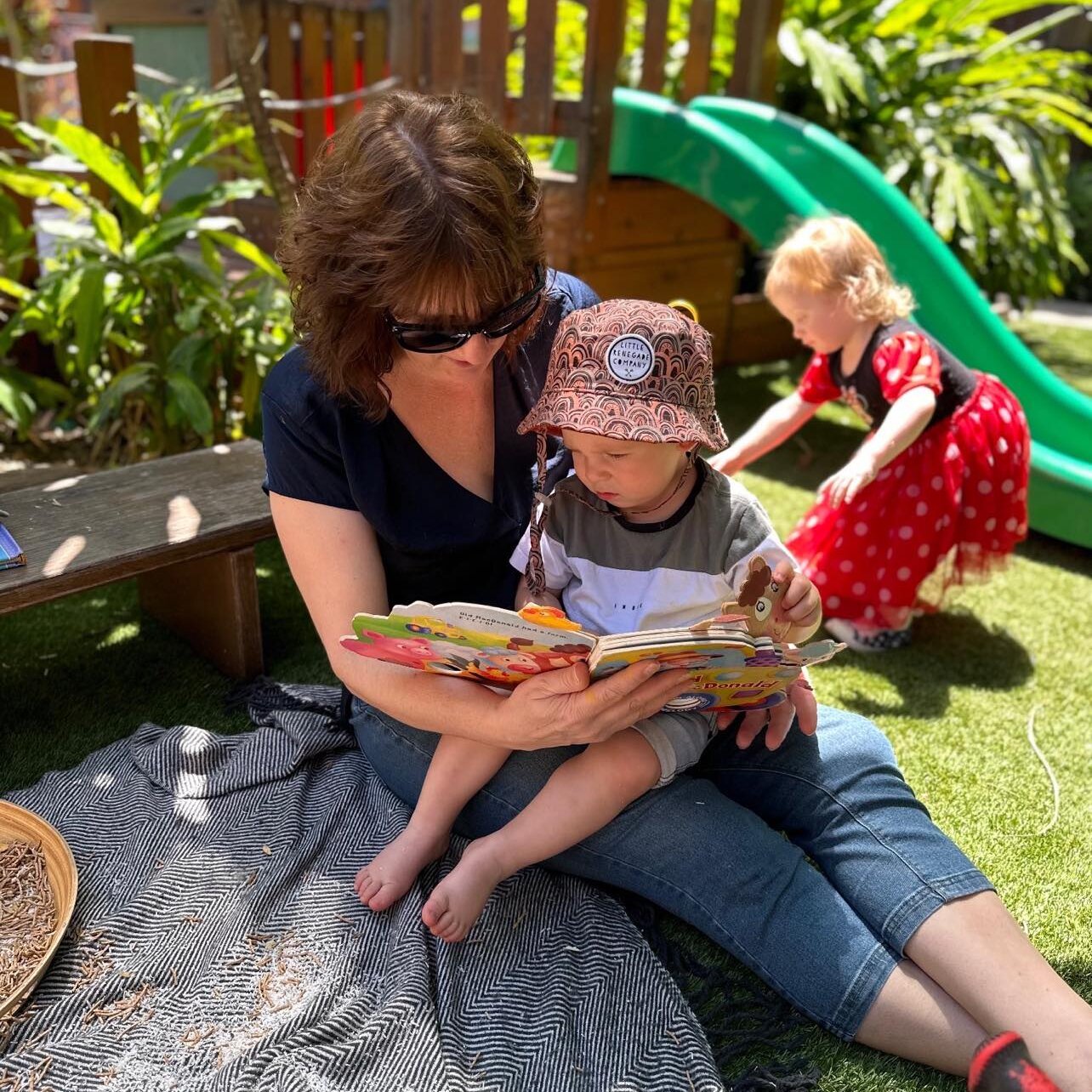
This is also something parents can and should do at home. Working with families is a core part of the Abecedarian approach! Parents are their children’s first educators, so we believe it’s to support families to grow in confidence as their children’s first educator, and reading together daily supports successful young readers. If you’d like to learn more, talk to your children’s educators or your campus manager for more information.
Read more:
We adore the endless stream of questions that little ones bring to us every day! From an early education standpoint, we want children to learn at every opportunity. Children are inquisitive beings, and they have lots to learn! At Little Scholars, we cherish this innate curiosity in children and strive to foster a lifelong passion for learning.
As parents and educators, we understand that some questions from our little ones can catch us off guard, leaving us searching for the right words to provide age-appropriate answers. We’re here to lend a helping hand, so let’s tackle a few of these tough questions together!
How are babies made/how did a baby get in a mummy’s belly?
Children at this age are curious about the beginning of life. You can answer simply, “A tiny seed, called sperm, from the daddy joins with a special egg from the mummy, and that’s how a baby starts to grow inside the mummy’s belly.” They may understand it like a fruit grows from a seed. For young children, this should satisfy the question. You may want to explain it’s not the same kind of egg we eat for breakfast!
What does dying mean?
The concept of death can be challenging for young children to grasp. We think it’s important to be honest here. You can say, “Dying means that a person’s body stops working, and they don’t feel pain anymore. They don’t breathe, eat, feel hungry or cold. It’s a natural part of life’s cycle, like when leaves fall from a tree in the autumn.” This is a topic that may be followed up with further questions, such as ‘will I die or will you die?’ and be honest. “Yes, we all die. But I hope to be around for a really long time. I have no serious illnesses that could change that.”
What happens to us when we die?
For toddlers and preschoolers, you can offer a comforting response like, “When someone dies, they become like a beautiful memory in our hearts. We remember all the happy times we shared with them, and they will always be a part of us.” If your family has cultural or religious beliefs around death, this may be the place to share, “in our family and our culture/religion, we believe when the body dies ______.” Your child may work through this further through their play, but just be there for them and prepared to revisit this topic.
How come Louis has two dads?
Children may notice different family structures. You can say, “Families come in all shapes and sizes. Louis is very lucky to have two dads who love and care for him just like your mummy and daddy love you.”
Why does Ashley’s mum live in a different house from her dad?
When answering a small child’s question about why a couple has divorced, we think a simple, honest, and age-appropriate response that takes their emotional well-being into consideration works best. Here’s one way to address the question: “Sometimes, mummies and daddies decide to live separately because they have found they feel happier when they have some space. It’s like when friends need some time apart.
If it’s your separation, your child will need a lot of reassurance from you. “Even though mummy and daddy won’t be living in the same house, we both still love you very much, and we will always be there for you. You will have special time with both of them, and we will continue to love and care for you in different homes.”
Young children may have a limited understanding of complex situations like divorce, so keeping the explanation simple and reassuring them of their parents’ love is crucial. Encourage them to share their feelings and questions, and assure them that it’s okay to talk about their emotions. Creating a supportive and open environment helps children navigate through changes and emotions in a healthy way.
What happened in the news that’s making everyone so sad?
Addressing sad news can be tricky. Open the discussion by asking your child what they know about what’s happened in the news. This is a good opportunity to correct false information and provide context. Remember to use age-appropriate language. Check your child’s understanding throughout the conversation and allow them to ask questions. You can say, “Sometimes, sad things happen in the world, and it can make people feel upset. It’s okay to feel sad or worried, and we can always talk about our feelings with someone we trust. You can always talk to me about anything.”
I’m scared, why is the weather so bad?
Living in Queensland, while wonderful most of the time, also means we face all kinds of weather events, such as flooding, bush fires and extreme heat, and cyclones. Unusual weather can be scary for young children, so it’s important to stay calm and make sure the information you give them is age-appropriate and simple to understand.
It’s natural for children to feel scared, so reassure them with calm and simple words. Acknowledge their feelings and let them know they are safe. You might say:
“I can see that you’re worried, and that makes sense. These weather events can be scary, but we are safe. People are working hard to protect us, and we keep learning how to stay even safer in the future.”
Thunderstorms
Thunderstorms occur when warm, moist air rises rapidly into cooler parts of the atmosphere. As the air cools, clouds and rain form. Inside the clouds, lightning, a form of electricity, builds up. When lightning strikes, it heats the surrounding air, causing it to expand quickly and create the sound of thunder – BOOM! At the same time, cooler air sinks toward the ground, leading to strong winds.
Cyclones
A cyclone happens when warm air over the ocean rises up, creating a low-pressure area that pulls in cooler air, making it spin around like a whirlpool, and as the air gets higher, it cools down and forms clouds, bringing heavy rain and strong winds; basically, it’s like a big spinning dance of hot and cold air over the sea! These winds and rain can cause damage, but this is why we have emergency services to help keep us safe, and life will eventually go back to normal.
Flooding
Floods happen when it rains heavily for a long time, causing rivers, canals, creeks and oceans to overflow and water to spread onto land that is normally dry. It’s a natural event, and not anyone’s fault, and that while sometimes scary, there are ways to stay safe and prepared!
Bush fires
Bushfires happen when dry conditions, high temperatures, and strong winds cause trees and grass to catch fire. Sometimes, they start naturally, like from lightning, and other times, they are caused by people. Firefighters and experts work hard to prevent and control them to keep people and animals safe.
Why is the sky blue?
The secret behind the blue sky lies in something called “Rayleigh scattering”. It’s a fancy scientific term, but it’s a super interesting phenomenon that helps us understand why the sky is blue. When sunlight enters the Earth’s atmosphere, it interacts with tiny particles like dust, water vapour, and pollen. This mixing causes the sunlight to scatter, or spread out, in all directions. When light waves hit these particles, they bounce off and scatter in different directions, just like water droplets scatter after you throw a rock into a pond.
Now you might ask, “Why is the sky blue and not another colour?” That’s because blue light has a shorter wavelength than other colours of light, like red or yellow. Shorter wavelengths scatter more easily when they interact with the tiny particles in the atmosphere. So, when we look up at the sky, we see more blue light than other colours.
But guess what? The sky isn’t always blue! Sunrises and sunsets are not only beautiful but also full of science. The colours we see during these times depend on the angle of the sun and the distance its light travels through the atmosphere. The lower the sun is in the sky, the more atmosphere the light has to pass through. This causes shorter wavelengths, like blue and green, to scatter more, leaving the longer wavelengths, like red and orange, to dominate the sky. That’s why we see those breathtaking colours during sunrises and sunsets!
Clouds, pollution, and weather can also change the sky’s colour, making it look grey, white, hazy, or yellow.
Where do birds go at night?
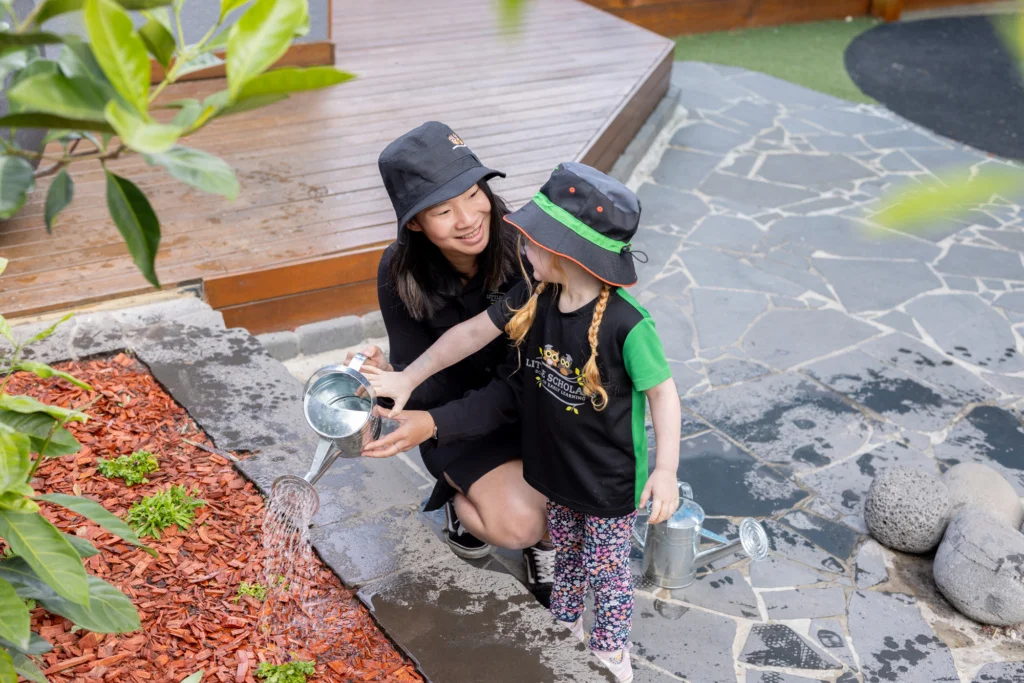
Children might wonder where birds go when it gets dark. You can say, “Birds have special nests or cozy spots where they rest at night, just like we have our beds to sleep in.
How do plants grow?
Children might be fascinated by the growth of plants and flowers. You can say, “The plants have roots at the bottom that absorb water and minerals in the ground, and then the stem starts growing. With the help of the sunlight, the stem grows in branches. Green leaves start growing out of the branches. The five things plants need to grow are sunlight, water, minerals, and food..
Why do we have seasons?
Seasons happen because the Earth goes around the sun. The Earth travels around the sun, called an orbit, once a year or every 365 days. As the Earth orbits the sun, the amount of sunlight each location on the planet gets every day changes slightly. This change causes the seasons. When it’s closer to the sun, it’s warmer, and when it’s farther away, it’s cooler.
Where does rain come from?
Children may be curious about rain and weather. Sunlight heats up water on Earth’s surface. The heat causes the water to evaporate/dry up into the sky, or to turn into water vapor. This water vapor rises into the air and makes up clouds. As the water vapor cools, it turns back into water, in the form of droplets or rain drops.
How do airplanes fly?
Little ones might be fascinated by airplanes in the sky. “Airplanes have special wings that help lift them into the air. When they move forward, the air goes over and under the wings, which creates lift and allows the airplane to fly.”
If they have follow-up questions, we liked the answers from Britannica Kids.
Why do I have to go to bed early?
Children may question bedtime rules. You can say, “Going to bed early helps our bodies and minds rest and get ready for a new day of fun and learning.”
Why do I have to eat vegetables?
Answer with something like, “Vegetables have special nutrients that help our bodies grow strong and healthy. They are like superhero foods for our bodies! We need a variety of food that have different types of nutrients so our bodies can get everything they need to be the best they can be.
How come your body doesn’t look like mine?
We bet you thought the puberty question would come later! But nope, your child has noticed there’s a slight difference between their bodies and their parents’ bodies. We know this can feel awkward to answer, but your child doesn’t understand why it could be hard for their parents to explain, so use proper words and keep it simple.
It’s okay not to have all the answers, and it’s perfectly fine to keep explanations simple and age-appropriate. If you don’t have the answers, you can look it up together. By embracing your child’s questions and engaging in open conversations, you’re nurturing their curiosity and building a strong foundation for their learning journey. Be sure to let your lead educator know you’re having these conversations at home. Your child is likely not the only one wondering some of these questions, and your educators can find ways to help them understand life’s curiosities!
Everything you need to know about how Australia’s early childhood framework guides the way your child learns, grows, and thrives, explained in plain English.
The Early Years Learning Framework or EYLF is Australia’s national standard for early childhood education and care. Its full name is Belonging, Being and Becoming: The Early Years Learning Framework for Australia.
Developed by the Australian Government and released in 2009 (with a major update to V2.0 in 2022), the EYLF applies to all approved childcare and early education settings for children from birth to five years of age. It sits under Australia’s National Quality Framework (NQF) and is the foundation against which services are assessed by ACECQA.
The framework doesn’t dictate a specific program or curriculum. Instead, it gives educators a shared foundation of principles, practices, and learning outcomes to guide the experiences, environments, and relationships they create for children. The goal is a consistent, high-quality early education across every approved childcare centre in Australia.
The 2022 update expanded the EYLF's principles from 5 to 8, strengthened language around sustainability, critical reflection, and collaborative leadership, and updated practices to reflect contemporary research in early childhood pedagogy. If your child's centre was enrolled before 2023, their approach has been updated to reflect V2.0.
At the heart of the EYLF are three interconnected concepts that describe how children experience the world. These pillars aren’t stages, they exist simultaneously in every child’s life.
Children develop a sense of belonging through their relationships — with family, educators, peers, and the broader community. When children feel they belong, they feel secure, confident, and connected enough to learn and explore. Belonging is the foundation all other development is built on.
Being recognises that childhood is a valuable time in its own right — not just preparation for school. Children deserve time to simply be: to play, to wonder, to form friendships, and to experience the present moment fully. High-quality early childhood education honours this.
Becoming is about growth, change, and the development of identity over time. Every experience a child has — every relationship, challenge, and discovery — shapes who they are becoming. The EYLF asks educators to see and support each child’s unique developmental journey.
EYLF principles are the core beliefs that underpin everything educators do. They reflect contemporary research, ethical practice, and what we know about how children learn best. EYLF V2.0 expanded these from 5 to 8 principles.
Children learn best when they feel safe, valued, and emotionally connected. Warm, consistent relationships with educators are the single most important factor in quality early learning. This principle places relationship-building at the centre of every interaction.
Educators and families share responsibility for children’s learning and development. Genuine partnerships — built on communication, trust, and mutual respect — strengthen outcomes for children. Parents are considered the first and most important educators in a child’s life.
Every child has the capacity to succeed. This principle calls on educators to hold high expectations for all children regardless of background, ability, or circumstance, and to actively work to remove barriers to participation and achievement.
Australia’s children come from diverse families, cultures, and communities. Educators respect and value this diversity including Aboriginal and Torres Strait Islander ways of knowing and being, and reflect it in their programs and environments.
High-quality educators are always learning. This principle commits educators to continuous professional development, critical self-reflection, and staying current with early childhood research. It’s what separates good care from exceptional early education.
Added in EYLF V2.0, this principle encourages educators to examine their own assumptions, values, and practices with rigour. Critical reflection goes beyond routine self-assessment — it challenges educators to question why they do what they do and whether it truly serves every child.
Also new in V2.0, this principle recognises that children’s futures are shaped by the health of the planet and their communities. Educators integrate sustainability into everyday learning — helping children develop a sense of environmental responsibility from the earliest years.
Quality early education is a shared endeavour. This principle values leadership at every level — from the director to each educator — and recognises that when teams learn and grow together, children’s outcomes improve. A collaborative culture underpins a high-performing centre.
If principles describe what educators believe, practices describe what they do. These are the pedagogical strategies and teaching approaches that bring the EYLF to life in the learning environment every day.
Children’s development across physical, social, emotional, and cognitive domains can’t be separated. Educators take a whole-child approach — recognising that a child who feels loved and safe learns more than one who doesn’t, and that physical play builds cognitive skills as much as desk-based activities.
Skilled educators read children closely — their moods, interests, cues, and emerging ideas — and adapt in real time. Responsiveness builds trust, deepens engagement, and ensures each child’s experience is attuned to who they are right now, not a one-size-fits-all program.
Play is the primary vehicle for learning in the early years. Through play, children experiment, imagine, problem-solve, build social skills, and develop language. The EYLF recognises both structured and unstructured play as essential — leisure and downtime are as valuable as directed learning.
Great early childhood educators don’t just supervise — they teach with purpose. Intentional teaching means making deliberate decisions about experiences, language, questions, and provocations to extend children’s thinking and scaffold their development toward meaningful goals.
The physical and emotional environment of a centre is itself a teacher. Educators design spaces — indoors and outdoors — that invite curiosity, support risk-taking, reflect children’s identities, and promote independence. A well-designed learning environment makes quality learning happen more naturally
Educators actively incorporate children’s cultural backgrounds, languages, and family practices into their programs. Cultural responsiveness goes beyond celebrating events — it means genuinely embedding diverse ways of knowing, being, and doing into everyday learning experiences.
Transitions — between rooms, between services, and into school — can be unsettling for children. Educators work proactively to ensure these transitions are smooth, supported, and built on shared knowledge of each child’s learning journey, reducing disruption and building confidence.
Ongoing observation, documentation, and assessment help educators understand where each child is in their learning, what’s working, and where to go next. Assessment in the EYLF is not about testing, it’s a reflective practice that informs planning and celebrates children’s progress.
Learning outcomes are the broad goals that the EYLF guides educators toward for every child aged birth to 5. They’re not milestones or checklists — they’re holistic developmental destinations that shape how educators plan, observe, and document learning.
Children develop confidence in who they are their strengths, their feelings, their family, and their place in the world. This outcome includes developing resilience, a positive sense of self, and the ability to make choices and act with increasing independence.
Children develop a sense of connection to their communities, the natural environment, and the wider world. They learn about their rights and responsibilities, develop empathy, and begin to understand their role as active participants in society.
Physical health, emotional wellbeing, and a sense of safety and comfort all contribute to this outcome. Children who feel well are better equipped to learn, form relationships, and navigate challenge. Wellbeing is both an outcome and a precondition for all other learning.
Children develop dispositions for learning, curiosity, creativity, persistence, and enthusiasm. They become willing to take on challenges, try new things, and engage deeply with experiences. This outcome lays the cognitive and motivational foundations for lifelong learning.
Communication encompasses verbal language, non-verbal expression, literacy, numeracy, and digital literacy. Children learn to express themselves, listen and respond, engage with stories and symbols, and use a growing range of tools and technologies to communicate and create.
Common questions about the EYLF from parents, educators, and childcare students.
At Little Scholars, the EYLF isn’t just compliance — it’s the foundation of everything we do across our 17 South East Queensland campuses. Our educators are trained to bring all 8 principles and 8 practices to life every day, in environments designed for children to genuinely thrive.
Everything you need to know about how Australia's early childhood framework guides the way your child learns, grows, and thrives — explained in plain English.
Quick Reference
The Early Years Learning Framework — or EYLF — is Australia's national standard for early childhood education and care. Its full name is Belonging, Being and Becoming: The Early Years Learning Framework for Australia.
Developed by the Australian Government and released in 2009 (with a major update to V2.0 in 2022), the EYLF applies to all approved childcare and early education settings for children from birth to five years of age. It sits under Australia's National Quality Framework (NQF) and is the foundation against which services are assessed by ACECQA.
The framework doesn't dictate a specific program or curriculum. Instead, it gives educators a shared foundation of principles, practices, and learning outcomes to guide the experiences, environments, and relationships they create for children. The goal is a consistent, high-quality early education across every approved childcare centre in Australia.
At the heart of the EYLF are three interconnected concepts that describe how children experience the world. These pillars aren't stages — they exist simultaneously in every child's life.
Children develop a sense of belonging through their relationships — with family, educators, peers, and the broader community. When children feel they belong, they feel secure, confident, and connected enough to learn and explore. Belonging is the foundation all other development is built on.
Being recognises that childhood is a valuable time in its own right — not just preparation for school. Children deserve time to simply be: to play, to wonder, to form friendships, and to experience the present moment fully. High-quality early childhood education honours this.
Becoming is about growth, change, and the development of identity over time. Every experience a child has — every relationship, challenge, and discovery — shapes who they are becoming. The EYLF asks educators to see and support each child's unique developmental journey.
EYLF principles are the core beliefs that underpin everything educators do. They reflect contemporary research, ethical practice, and what we know about how children learn best. EYLF V2.0 expanded these from 5 to 8 principles.
Children learn best when they feel safe, valued, and emotionally connected. Warm, consistent relationships with educators are the single most important factor in quality early learning. This principle places relationship-building at the centre of every interaction.
Educators and families share responsibility for children's learning and development. Genuine partnerships — built on communication, trust, and mutual respect — strengthen outcomes for children. Parents are considered the first and most important educators in a child's life.
Every child has the capacity to succeed. This principle calls on educators to hold high expectations for all children — regardless of background, ability, or circumstance — and to actively work to remove barriers to participation and achievement.
Australia's children come from diverse families, cultures, and communities. Educators respect and value this diversity — including Aboriginal and Torres Strait Islander ways of knowing and being — and reflect it in their programs and environments.
High-quality educators are always learning. This principle commits educators to continuous professional development, critical self-reflection, and staying current with early childhood research. It's what separates good care from exceptional early education.
Added in EYLF V2.0, this principle encourages educators to examine their own assumptions, values, and practices with rigour. Critical reflection challenges educators to question why they do what they do and whether it truly serves every child.
Also new in V2.0, this principle recognises that children's futures are shaped by the health of the planet and their communities. Educators integrate sustainability into everyday learning — helping children develop environmental responsibility from the earliest years.
Quality early education is a shared endeavour. This principle values leadership at every level — from the director to each educator — and recognises that when teams learn and grow together, children's outcomes improve.
Want to see these principles in action? Visit one of our 17 South East Queensland campuses.
Book a tourIf principles describe what educators believe, practices describe what they do. These are the pedagogical strategies and teaching approaches that bring the EYLF to life in the learning environment every day.
Children's development across physical, social, emotional, and cognitive domains can't be separated. Educators take a whole-child approach — recognising that a child who feels loved and safe learns more, and that physical play builds cognitive skills as much as anything else.
Skilled educators read children closely — their moods, interests, cues, and emerging ideas — and adapt in real time. Responsiveness builds trust, deepens engagement, and ensures each child's experience is attuned to who they are right now.
Play is how young children learn best, through experimenting, imagining, problem-solving, and building social skills. Skilled educators pair this with intentional teaching, making deliberate choices about experiences, questions, and provocations to extend children's thinking, while still valuing unstructured play and downtime.
The physical and emotional environment of a centre is itself a teacher. Educators design spaces — indoors and outdoors — that invite curiosity, support risk-taking, reflect children's identities, and promote independence.
Educators actively incorporate children's cultural backgrounds, languages, and family practices into programs. This means genuinely embedding diverse ways of knowing, being, and doing into everyday learning experiences.
Transitions — between rooms, services, and into school — can unsettle children. Educators work proactively to ensure transitions are smooth and built on shared knowledge of each child's learning journey.
Ongoing observation, documentation, and assessment help educators understand where each child is and where to go next. Assessment in the EYLF is not about testing — it's a reflective practice that informs planning and celebrates children's progress.
Learning outcomes are the broad goals that the EYLF guides educators toward for every child aged birth to 5. They're not milestones or checklists — they're holistic developmental destinations that shape how educators plan, observe, and document learning.
Children develop confidence in who they are — their strengths, their feelings, their family, and their place in the world. This includes developing resilience, a positive sense of self, and the ability to make choices and act with increasing independence.
Children develop a sense of connection to their communities, the natural environment, and the wider world. They learn about their rights and responsibilities, develop empathy, and begin to understand their role as active participants in society.
Physical health, emotional wellbeing, and a sense of safety and comfort all contribute to this outcome. Children who feel well are better equipped to learn, form relationships, and navigate challenges. Wellbeing is both an outcome and a precondition for all other learning.
Children develop dispositions for learning — curiosity, creativity, persistence, and enthusiasm. They become willing to take on challenges, try new things, and engage deeply with experiences. This outcome lays the cognitive and motivational foundations for lifelong learning.
Communication encompasses verbal language, non-verbal expression, literacy, numeracy, and digital literacy. Children learn to express themselves, listen and respond, engage with stories and symbols, and use a growing range of tools to communicate and create.
Common questions about the EYLF from parents, educators, and childcare students.
At Little Scholars, the EYLF isn't just compliance — it's the foundation of everything we do across our 17 South East Queensland campuses. Our educators bring all 8 principles and 7 practices to life every day, in environments designed for children to genuinely thrive.
Are you a local looking for some new children’s activities on the Gold Coast, or here on holiday trying to plan some fun family outings? We can help!
Apart from the beautiful beaches to explore, playgrounds to climb, and the hinterland to hike in, there are plenty of other entertaining and engaging activities for your little ones on the Gold Coast. At Little Scholars, we understand that finding a variety of fun, safe, and educational experiences is vital for your child’s growth and development.
Let us guide you on a journey through some of the Gold Coast’s top spots for family fun!
A visit to the Gold Coast isn’t complete without exploring its fantastic wildlife offerings. Each of these wildlife spots provides an opportunity for your children to connect with nature and learn about the importance of protecting our environment.
The David Fleay Wildlife Park is a wonderful place for your little ones to meet cuddly koalas, hopping kangaroos, and other unique Queensland animals in their cosy homes. You can become a member and get special access to an Animal Care training program at David Fleay’s Wildlife Park while helping David Flea’s dream alive.
Visit Paradise Country, an authentic Aussie farm experience where children can feed kangaroos, snuggle with koalas, and see a range of farmyard friends. You can even become a ranger for a day!
Just past the Gold Coast in Northern NSW, Tropical Fruit World is a colourful and tasty adventure where children can go on a tractor ride to taste and discover exotic fruits, learn fun facts, and enjoy exciting farm games. It’s a vibrant and colourful day!
The Currumbin Wildlife Sanctuary is a magical place where children can see and learn about Australia’s unique animals, feed kangaroos, learn how animals are looked after in the Currumbin Wildlife Hospital, hold koalas, and watch amazing bird shows.
This National Park is a great place for little explorers to follow trails, look at colourful birds and butterflies, and learn about the Gold Coast’s wonderful nature and Indigenous history. Make sure to stop by the Jellurgal Aboriginal Cultural Centre while you’re there!
Fun-filled and bustling with excitement, theme parks offer a range of interactive and entertaining experiences for the whole family that promote learning through play.
A dream-come-true for movie-loving children! Warner Bros. Movie World offers thrilling rides, amazing shows, and chances to meet beloved film characters.
Visit Sea World, an underwater adventure where children can touch dolphins, watch entertaining shows, and enjoy exciting rides.
The Gold Coast offers plenty of indoor fun for days when outdoor activities are less appealing. Whether it’s a rainy day or you’re seeking a break from the sun, these indoor activities allow for a fun-filled time.
Timezone is a classic, fun-filled zone full of arcade games, bowling, and many more indoor delights that your children will love. This is one of the most popular kids activities for tourists and residents alike for a good reason!
Stepping into a world reminiscent of an old school New York hotel, the Hijinx Hotel interactive gaming adventure offers a blend of nostalgia and innovation perfect for older children (with a minimum age of 5). In a series of themed Challenge Rooms, teams of 2 – 6 face various collaborative puzzles, from navigating adult-sized ball pits to engaging in supersized scrabble challenges.
For families with a sense of adventure, the Gold Coast does not disappoint. As we guide our children towards bravery and resilience, trying out some of these adventurous activities can be a stepping stone towards their personal growth.
Fun and safe surf lessons that introduce children to the joy of surfing, under the watchful eye of professional instructors. You can find surf lessons all across the beaches of the Gold Coast, so keep an eye out for one near you!
Hopefully this list has given you some ideas on how to keep your children busy with fun and enriching activities on the Gold Coast, whether you live here or are just visiting. Each adventure, be it observing wildlife, venturing into a theme park, or participating in unique and educational activities, will contribute to your child’s development and growth. After all, every moment is an opportunity to learn, play, and create beautiful memories!
If you’re looking for a childcare centre on the Gold Coast, contact us today!

Let us hold your hand and help looking for a child care centre. Leave your details with us and we’ll be in contact to arrange a time for a ‘Campus Tour’ and we will answer any questions you might have!
"*" indicates required fields
Let us hold your hand and help looking for a child care centre. Leave your details with us and we’ll be in contact to arrange a time for a ‘Campus Tour’ and we will answer any questions you might have!
"*" indicates required fields
Fill in the form to join your local Pram Pals mums and bubs walk