
We are excited to welcome Susan Cooper, our new group Pedagogical Leader for Little Scholars School of Early Learning.

Susan will support educators to guide and influence children’s love of learning by fostering family engagement, ensuring fidelity to Little Scholars curricular philosophy, using data to evaluate the effectiveness of the learning program, and ensure we are exceeding standards to optimise learning environments and prepare children for successful futures.
Through pedagogical leadership, Susan hopes to raise the benchmark to overall quality of teaching and recognises that providing children with strong foundations for ongoing learning and development is underpinned by a strong pedagogical practice.
Pedagogy is a form of teaching strategies in the practice of educating. It is the techniques, strategies and approach taken by educators to let learning and development to take place. Pedagogy refers to the interactive process between the teacher, the learner and the learning environment and provides reason to the design of learning spaces, materials, and resources on offer. Pedagogical Leadership supports educators in relating their pedagogy to content knowledge and educational theories.
Susan’s primary role will be to provide leadership to pedagogy and support educators in relating their pedagogy to content knowledge and educational theories. Susan will be working across the 13 Little Scholars Early Learning Campuses mentoring and coaching our educational leaders to implement curriculum delivery. Susan will inspire educators to employ new approaches to their teaching against up-to-date research, which will shape the quality of experiences and interactions across our campuses.
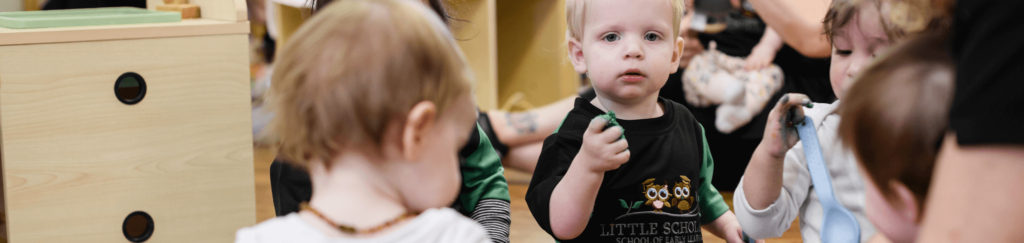
Susan has worked in the Early Childhood Sector for more than 16 years and has extensive knowledge in the field of Pedagogical Practices. Having worked in many fields within the Education sector, from operating a family day care, to being an educator within long day care sector as well as outside school hour care services, through to management and leadership.
“To take on this role is exciting as I can share my passion, influencing pedagogy approaches and practices and place emphasis on children’s play to promote continuous child development and quality outcomes for children,” she says.
Susan is passionate about advocating for children’s rights and is a firm believer of a child-centred approach and that the quality of interactions between adults and children play a fundamental role in stimulating early learning.
According to Jae Fraser, founder of Little Scholars School of Early Learning, pedagogical leadership is about leading or guiding pedagogical practice, supporting Little Scholars educators in their work with children and families, and translating the Little Scholars values and principles into practice.
Have you heard the term ‘frustration tolerance’ before? If you have a small child or work with them, you certainly know all about children struggling with frustrating emotions. Frustration tolerance is the ability to work through a problem, breathe, and figure out a solution.
You see your child trying out a task and not be able to get it to work the way they want to. They get frustrated and ask for help. You oblige because you just hate to see them mad at themselves.
When you see a baby getting frustrated and crying, you want to jump to her rescue and give her that item she’s trying to reach for. When your toddler is working to solve a puzzle, we want the child to get it done and get it done right on the first go. If not, we jump in to fix it for them.
But what is the underlying message we are giving the child every time we do a task for them?
‘I can do it for you, faster than you can, more efficiently than you can.’
How do they learn to do something on their own if they always have help? How do they have a sense of accomplishment if they never go through the trial-and-error process while learning to do something.
The next time the child struggles with something, they’ll just get you to do it for them. That frustration tolerance will dissipate, and they won’t struggle to get to an answer. They will look for instant gratification, instant solutions and that doesn’t come easily and quickly, they won’t mind quitting.
How does that baby learn to move her body to get that item closer to her if you’ll just pass it to her? How does always doing something for your toddler help him when he gets to school and there are several children who need the educator’s attention?
So much in society is already done for us thanks to technology. We don’t need to know basic math because our devices have calculators, or we can just ask the question in the search bar. We don’t need spatial awareness or how to read maps, because Google and Apple have taken away that need. But for your children, where there’s an opportunity to learn frustration tolerance, we should give it to them.
Patience and persistence are two components we all need to deal with frustration, and a certain amount of both will help your child stick with a problem or challenge to find a solution.
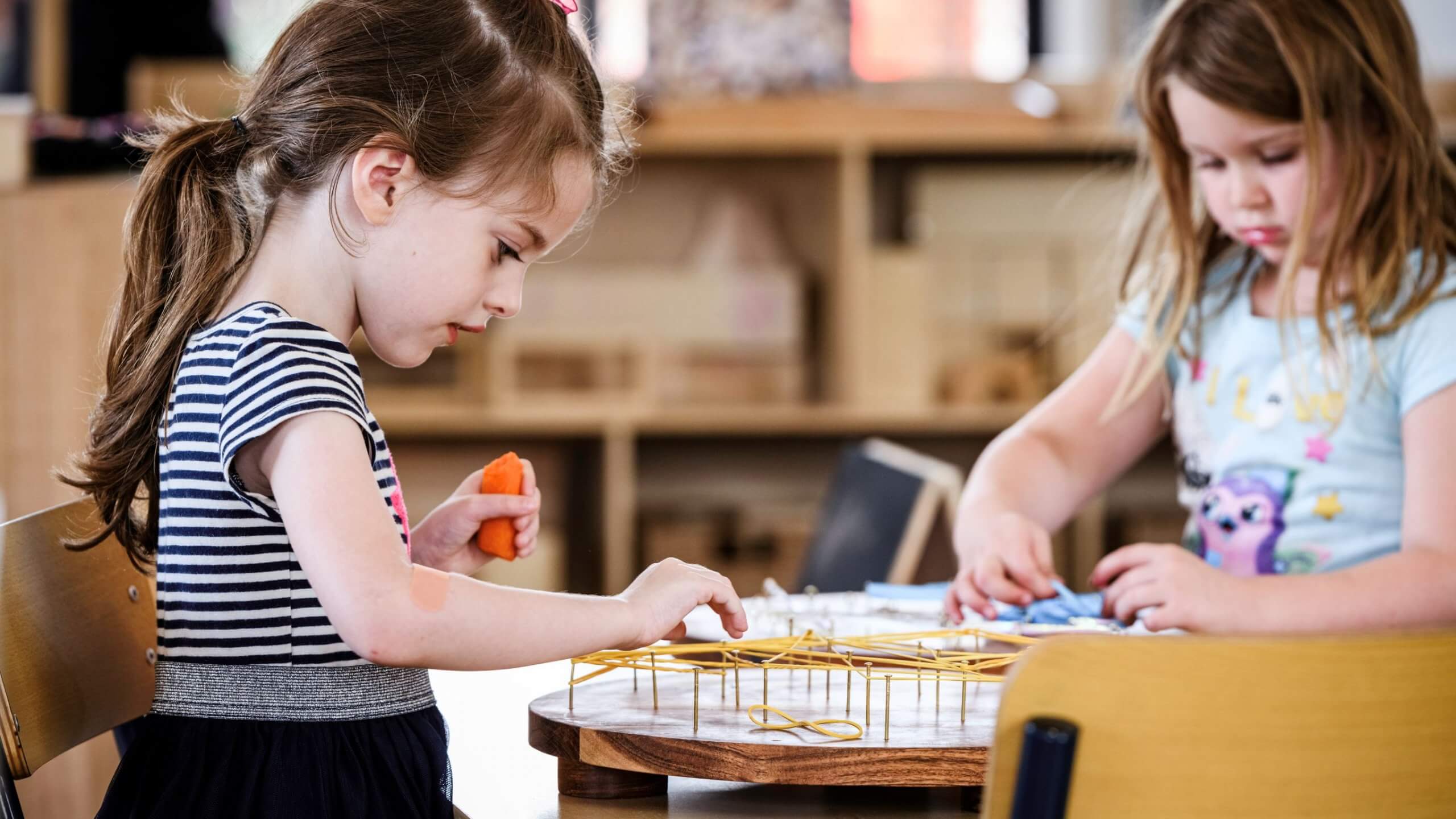
At our Stapylton campus, educator Holly Medbury teaches Senior Kindy, where there’s a lot of focus on independence, self-help skills, regulating and becoming aware of emotions, and providing risky and challenging experiences for the children to enable critical thinking and problem-solving skills.
There’s a yard at Stapylton called ‘The Natural Yard’ which has a cubby house, two large tunnels, and a musical xylophone wall. It’s mostly just surrounded by beautiful nature, just for a change where they can explore their imagination.
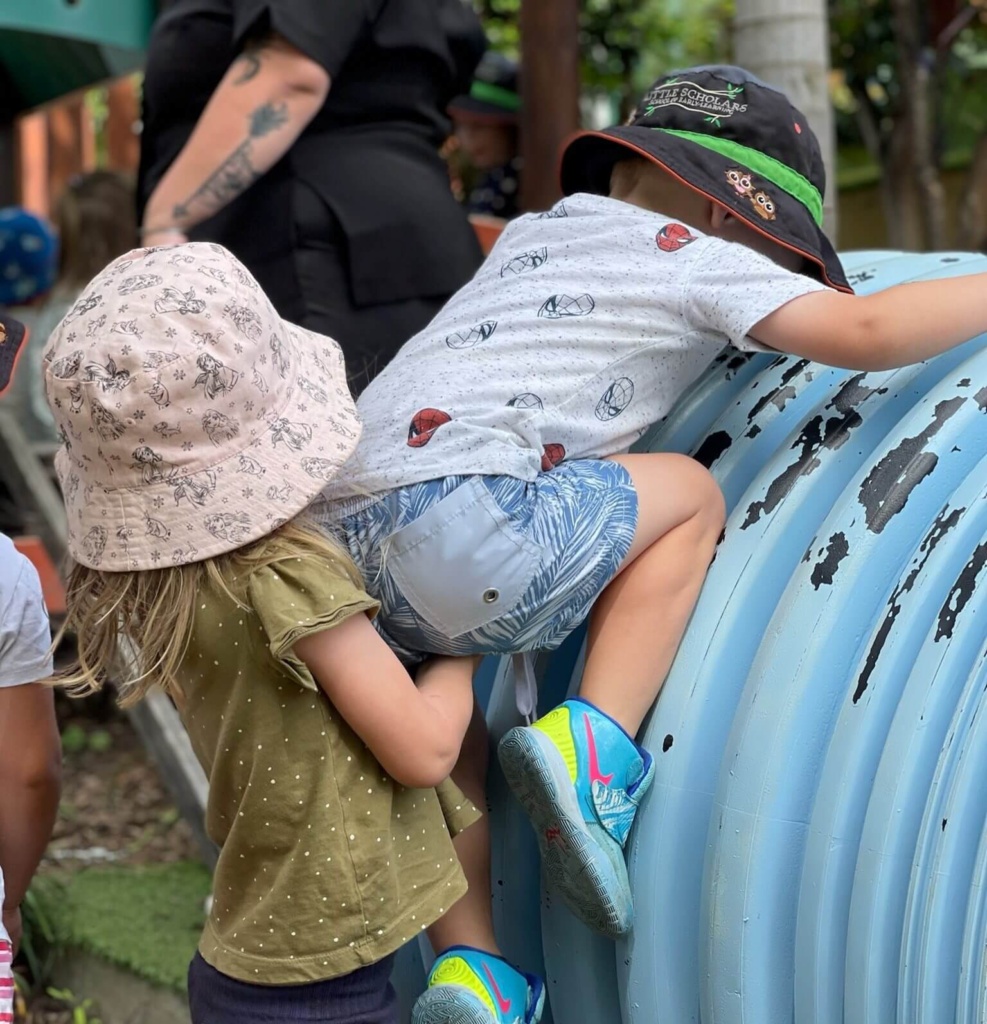
“With the two tunnels we encourage two children at a time to climb up the tunnel and sit up the top, which is a big achievement,” Holly says. “This is a challenging/risky play task that we enforce and provide lots of praise, encouragement, strategies if they are struggling to climb up.
Here are some of Holly’s encouraging words she provides with experiences like this:
“You are doing so well! I can see it looks quite tricky, how else do you think you can get up there?”
“Have a look around you and see if there is anything that can help you.”
“You’re doing your best and I’m so proud of you! Maybe you could use your knees going up the tunnel, as I can see there is room for your knees which might make it easier?”
By teaching our children that we can try again and that it’s okay to not get it right away takes some modelling from a parent and educator perspective. By adults modelling frustration in tasks and trying again in front of our children, by saying, “Oh no! It’s not working for me. Let me try again,’ normalises frustration tolerance and tells them that they can try again too. Children with greater frustration tolerance have been shown to grow up to be happier and more successful.

So how do we teach children to be more patient and persistent when it comes to tasks?
Learning patience
It’s never too late to encourage your child to try more, do more for themselves, which in turn builds their self-confidence, trust in their own abilities, and sense of self-efficacy.
So, the questions that pop up often for a parent when their little ones are in their last year of kindergarten is; is my child ready for school, or what do I need to do to make sure my child is equipped for their transition to school? These are all totally normal thoughts to have as a parent, but we can happily reassure you that at Little Scholars, we offer an extensive Transition to School Program that will give your child the life skills they need and confidence to have a successful transition to big school!
What we believe makes a successful transition to school is our Little Scholars School of Early Learning service and educators working in collaboration with local schools and our community to make sure we are assisting children and families with this transition. Our Transition to School Program is based on the National Early Years Learning Framework and Queensland Kindergarten Learning Guidelines, as well as we have wonderful early childhood teachers (also known as ECTs) who teach the children and support their learning and development hugely.
School readiness is about the development of the whole child – their social and emotional skills, physical skills, communication skills, and cognitive skills. For children to thrive at school, they need to learn important skills like following instructions, communicating their needs, and getting along with other children. At Little Scholars, we are truly committed to ensuring that our little scholars are supported and motivated in all aspects of their learning and development so that our children in their last year of Kindy are ready for that next stage of their lives.
Some key points involved in getting your child ready for their school transition and that make up our Transition School Program are the following:
These are all fundamental steps we teach our children in kindergarten so that they can learn a comfortable school routine and most importantly, so they can adapt to this new transition period. At Little Scholars, we want their routine to feel as normal and as exciting as possible, rather than something daunting. It is important to support the children in every way imaginable during their Transition to School program, and the most rewarding part for us is watching our little scholars go confidently into their next chapter, blossoming and becoming a positive contribution to our futures.
Our Little Scholars’ Kindergarten studios integrate some small but very useful routines for the children which assist in getting them ready for school. We bring in programs for the children that start at 8:30 am, so we encourage you and your child to arrive before this time so they can become used to big school starts!
We focus on teaching age-appropriate independent skills in the kindergarten studio – such as packing their bag, carrying their own bag, opening lunch boxes and food containers, dressing as well as emotional regulation skills.
At Little Scholars, we offer a range of stimulating extra-curricular activities that give the children a firsthand experience into the diverse range of subjects they would learn at school. These extracurriculars include our Intergenerational program, swimming, sports and fitness program, languages program, yoga, and dance programs weekly, Lab Kids’ STEM, Bush and Beach Kinder programs, and excursions and incursions.
Wondering what else you can do with your child at home to assist in preparing them for big school? We can help with this! You can help your child develop a basic awareness of numbers by helping around the house – they could set a table and count the plates, match socks from the clothing line, or measure ingredients for baking.
It is beneficial to read with your child as often as possible, and try talking to them about the story, point out new words and ask questions – this will help with their comprehension, vocabulary, and language skills.
Let’s say you have some free time in the afternoons, or even on the weekends, you can play games with your child like Snakes and Ladders or Go Fish! These simple games are great for practicing developing basic numeracy, turn-taking, sharing, waiting, and learning to cope with not winning.
Finally, encourage your child to have conversations with you – ask them questions, listen to their answers, and encourage them to talk about what they think and feel so they can express themselves with new friends and teachers.
We are extremely happy to have you with us, if at any time you feel there is more we can do, please let us know as we are here to encourage and support your child to learn and grow in a fun, exciting, and stimulating environment.
We all know that the sky is blue, but many of us take this fact for granted. Have you ever wondered why the sky is blue? Well, you’re not alone! It’s a question that lots of children and adults have (and one that has left many a parent stumped…).
In this blog, we take a close look at one of the most fascinating and beautiful natural phenomena – the blue sky. Think of it as a cheat sheet for when your little one starts asking what is a difficult and somewhat scientific question! From the science behind its colour to the different ways it can change, we’ll explore the many mysteries of the sky and how it has captivated people for centuries. So why is the sky blue? How does it change colour? And is the sky the same colour everywhere in the world? Let’s find out!
Little Scholars provides an attractive and safe environment to children in South East Queensland while giving you total peace of mind while your children are in our care. Learning areas include well-equipped playrooms and landscaped outdoor spaces for maximum learning opportunities. Book a tour today if you are looking for a childcare centre in South East Queensland.
Have you ever heard of something called “Rayleigh scattering”? It’s a fancy scientific word, but it’s actually a really cool phenomenon that helps explain why the sky is blue!
Rayleigh scattering is a type of light scattering that happens when light waves hit very small particles, like the tiny particles in the Earth’s atmosphere. The Earth’s atmosphere is made up of different things, like water vapour and tiny dust particles and pollen. When sunlight hits these particles, the light is scattered, or spread out, in all directions.
What is a particle? Well, a particle is just a really, really small piece of something, like air, dust, or water. When light waves hit these particles, they can bounce off in different directions. This is called “scattering” – think of rolling a marble into a group of other marbles. They all bounce off of each other and go every which way.
Did you know that this is also similar to how blue eyes get their colour? That’s right, blue eyes don’t have any blue colour in them at all. Instead, they get their colour from the way they reflect light. Just like the sky and the ocean look blue because they reflect blue light!
So, as you can see, Rayleigh scattering is a really cool scientific phenomenon that helps explain why the sky is blue and why our eyes are blue. It’s just one of the many fascinating things about light and the world around us.
But the sky isn’t always blue! Sometimes, it can be other colours, like orange, pink, or red. This can happen at sunrise or sunset, or just when the sun is low in the sky. Depending on where the sun is in the sky its light might have to travel through more of the Earth’s atmosphere to get to us, which means it has more time to be scattered. This can make the sky look orange, pink, or red. Have you ever seen a beautiful sunrise or sunset? Those colours in the sky are caused by the same process that makes the sky blue.
The sky can also change colour because of things like clouds, pollution, and even the weather. Clouds can block the sunlight, making the sky look grey or white. Pollution can also make the sky look hazy or yellow. And different types of weather, like thunderstorms or dust storms, can change the colour of the sky too.
According to an article by National Geographic Kids, the sky was actually orange until about 2.5 billion years ago. This is because the Earth’s atmosphere was very different back then, and it was filled with a lot of methane and other gases that made the sky look orange.
But about 2.5 billion years ago, something called the “Great Oxygenation Event” happened. This was when the Earth’s atmosphere started to fill up with oxygen, which is a gas that most animals need to breathe. The oxygen in the atmosphere caused methane and other gases to disappear, and this made the sky start to look blue like it does today.
One interesting example to look at is the Northern Lights, also known as the Aurora Borealis. The Northern Lights are a beautiful light show that can be seen in the sky in the Northern Hemisphere, near the North Pole. They are caused by charged particles from the sun that enter the Earth’s atmosphere and collide with gases like oxygen and nitrogen. These collisions create colourful light displays in the sky. The Northern Lights can be different colours, like green, red, yellow, and even purple.
You can also see something similar right here in Australia! These are called the Southern Lights, or Aurora Australis, which can be seen in the sky near the South Pole in places like Tasmania. Just like the Northern Lights, the Southern Lights are caused by charged particles from the sun colliding with the Earth’s atmosphere.
So, as you can see, the sky can be different colours in different parts of the world because of the different gases and particles in the Earth’s atmosphere. But no matter where you are, the sky is always an amazing and beautiful thing to look at.
At Little Scholars, located on the Gold Coast, we prioritise creating a warm and welcoming environment for children to grow and thrive. Since opening in 2014, we have offered educational programs and activities in a fun and nurturing atmosphere, including access to a spacious outdoor play area.
Our early learning campuses are designed to be both attractive and safe, with well-equipped playrooms and landscaped outdoor areas that provide ample opportunities for learning and exploration. We aim to give parents peace of mind while their children are in our care. Book a tour today to find out more.
Many of you might be familiar with the Abecedarian approach if you are a parent, however, if you’re not that’s okay, because we are here to share everything we know about this incredible learning approach. There are countless benefits of this learning approach which is what led us to adopting the Abecedarian approach at all our campuses. In fact, we have a qualified coach on our team, so it made sense to bring this approach into Little Scholars’ learning lives.
Did you know that a research study found children who participate in the Abecedarian approach have a brain capacity 30-40% greater? Pretty amazing right? One of the main focuses of the Abecedarian approach is language, because it gives children a way to structure their thoughts and explain their ideas, and the opportunity to express their feelings and the tools required when interacting with peers and adults. One of the obvious benefits that come with the Abecedarian approach is children gain more interaction and have a chance to widen their use and understanding of vocabulary. They also develop memory, understand number concepts, and learn shapes and colours.
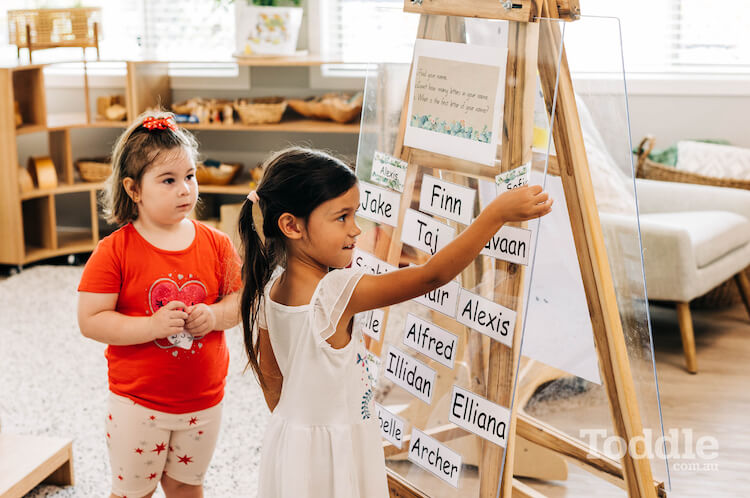
There are four main elements that make up the Abecedarian approach and these are language priority, conversational reading, enriched caregiving and learning games. If you want to incorporate any of these strategies at home with your little one(s), there are many simple ways you can do this. To build on the language you use language priority or conversational reading strategies with your child. Conversational reading could be pointing out an object in a book, asking your child if they can show you that object, and then asking what it is called? Or during story time, for example, you can talk to your child and say ‘I can see a red ball on this page, can you point to the red ball? Amazing, what is this next to the ball?’
When it comes to language priority, this approach presents an opportunity to show your child what words mean, as well gives parents or educators a chance to use rich and interesting language when talking with a child. You can use numbers when you talk and play and say something like ‘I notice you’re looking at the green stem’. It is incredible what your language can tell a child, whether it’s telling a child about feelings, time, colours, shapes, textures, tastes, and honestly, so much more.
With enriched caregiving, you can simply add educational content around routine times. Bath time would be the perfect time to take on this approach because rather than just sitting and supervising, you can talk to your child about objects in the bath. This could be colours, shapes, objects they see, body parts and anything that your child can visualize.
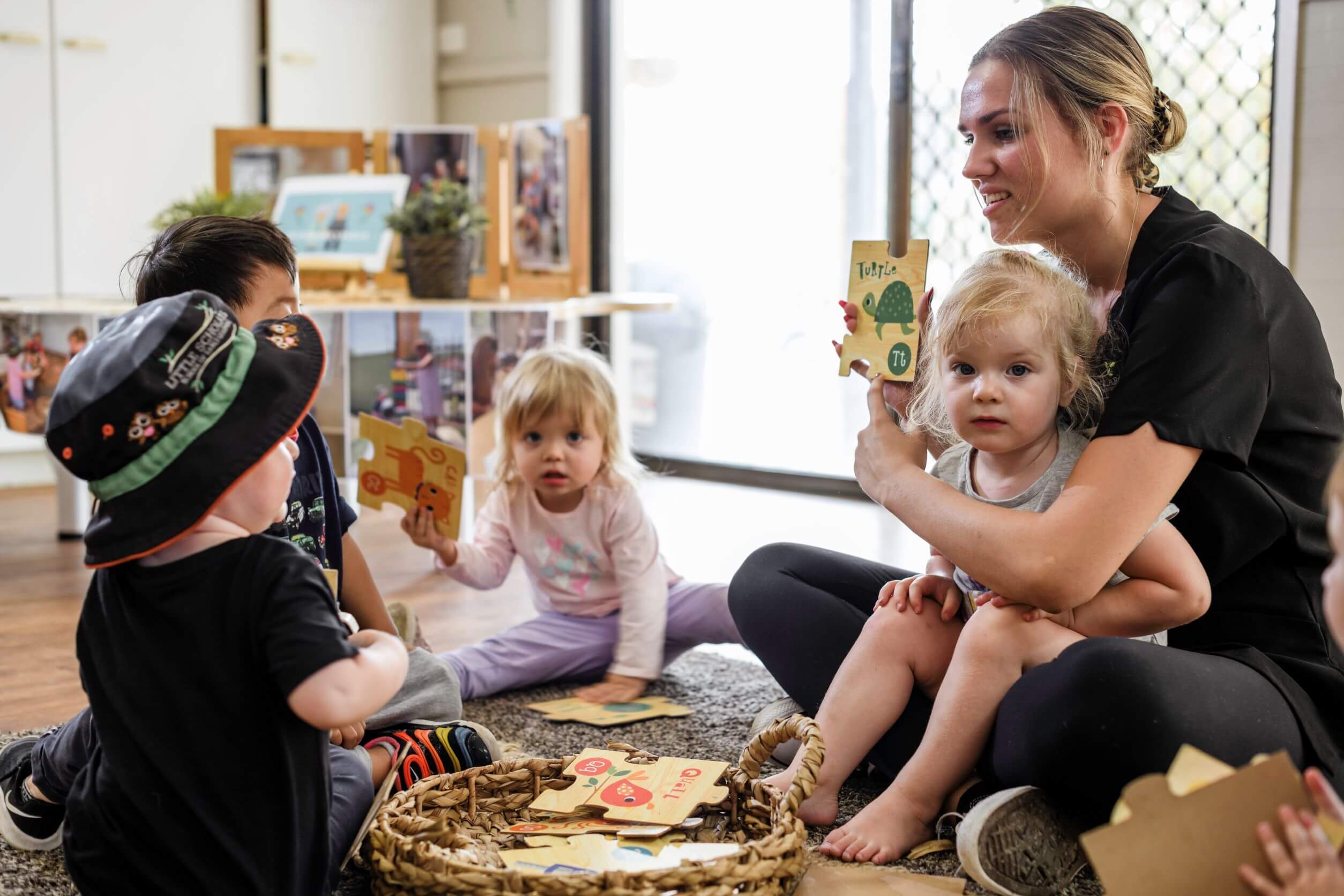
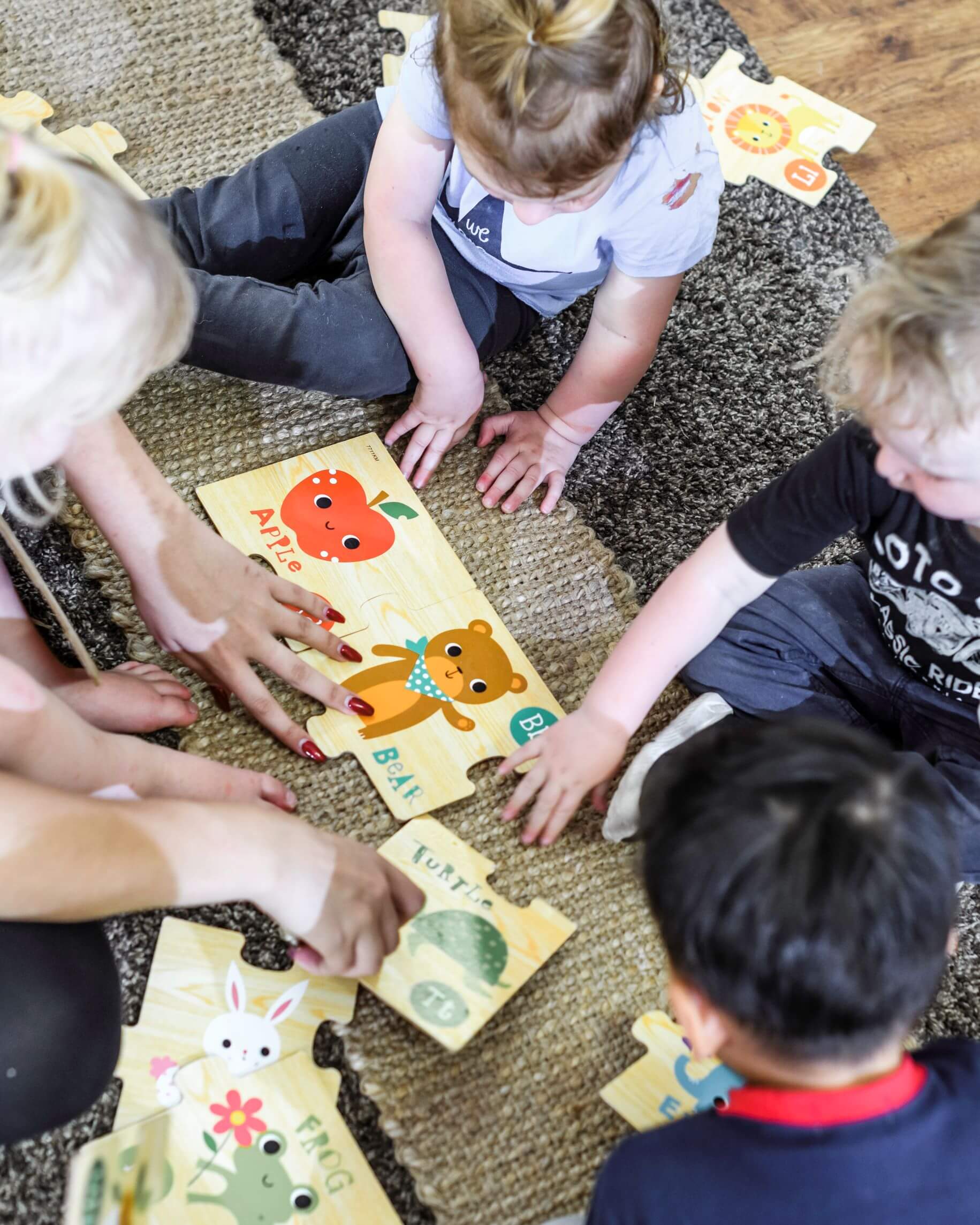
Okay, finally there are learning games! There is a wide list of simple games you can use with your child, to teach them about ideas and concepts. These games may include letting your child match colours or shapes and colours, the list of games is endless and at Little Scholars we have a vast range of games available at all our campuses which are available to borrow for all our families.
All the strategies from the abecedarian approach work best with individual children or maybe just two children at a time – not large groups, which is why is it beneficial for families to use. At Little Scholars we send out several family booklets to promote these strategies, so if you are a parent at one of our campuses and you want to learn more about the abecedarian approach, please feel free to contact any of our wonderful educators.
To read more about why Little Scholars adopts The Abecedarian approach, go to Little Scholars adopts Abecedarian approach to increase children’s brain development (thesector.com.au)
So how do you know if your child is getting enough iron in their diet? Well firstly it is important to explain that there are two types of iron in food. Iron in foods that come from animals is easily absorbed into the body when we eat it. And the darker the meat, the more iron in there. So, this means that beef and lamb have more iron than chicken – but the iron from both of these meats is easily absorbed by the body.
Iron found in plant foods such as broccoli and nuts is harder for the body to absorb. But help is at hand in the form of Iron’s sidekick, Vitamin C. Vitamin C increases the absorption of all iron in food that we eat. Fortunately for broccoli (and most fruits and vegetables), they contain a decent amount of Vitamin C to go with the iron.
Even if you are not intentionally vegetarian, many kids don’t like eating meat in the early years as it can be harder to chew. Although eating and chewing is second nature to us, for kids it can require some sophisticated co-ordination. So understandably it is easier to refuse it. So, if you have a reluctant meat eater – go for mince and soft meats like fish. And start using more legumes and lentils in dishes. I always wish I gave my kids legumes from 6 months of age.. I think I would have had less years of them meticulously picking them out!! But I eventually won that battle and they now happily shovel them in with the rest of the meal.
Written by: Anna D’Arcy, Accredited Practising Dietitian at My Nutrition Clinic. Anna is a mum to two children under 10 years and has 20 years of experience working as a dietitian and helping families reach their health potential.
Looking for play ideas for your little one? There are many ways for your two year old to play, explore and learn that don’t involve store-bought toys. With creative use of everyday things around the home, you can inspire your toddler to use their imagination, develop their curiosity and learn through simple, inexpensive fun!
Items around your home that you use every day can make wonderful toys for toddler play. Your kitchen holds lots of fun for your two year old (but lots of potential danger too so always supervise and ensure the items they choose to play with are appropriate). Pots and bowls, plastic or wooden spoons, colanders, cups and even dried pasta can be lots of fun. Show your two year old how these household items could be used to make music, stack up or collect things in. Watching you have fun and be silly will inspire them to do the same.
You can include ‘loose parts’ in your child’s play to encourage early learning. These are items that are often found around the home. New sponges, scrap fabric, paper, cardboard and empty boxes and bottles of different sizes. Often items that are in your recycling box are perfect for loose parts play. Go through and find some suitably safe and clean pieces then sit with your two year old with some masking tape and create something special.
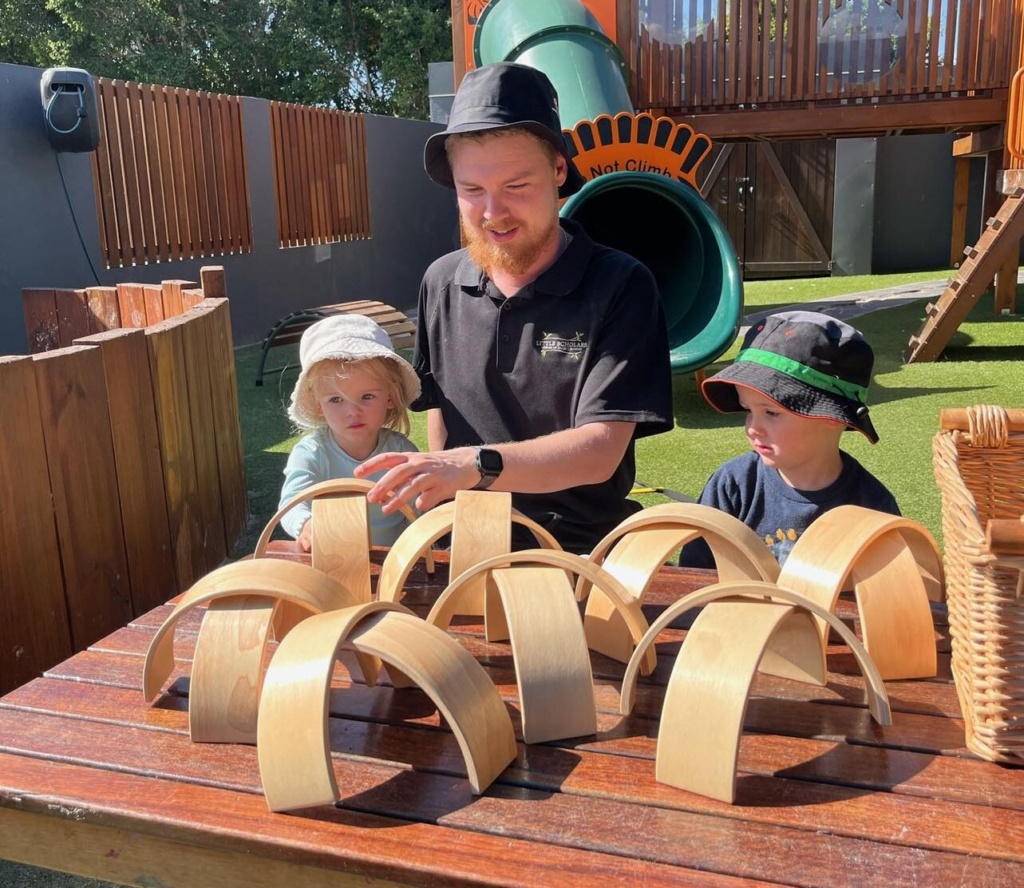
What about toys for two year old greenies? Nature provides a wonderful sensory world for you to explore with your toddler – no batteries required! Leaves, rocks, shells and sand can be used to make patterns with, or why not collect and compare colours and sizes. Try painting your nature play items or gluing them into a collage.
Sensory fun is great for toddlers. Your two year old will delight in exploring new smells, textures, sights and sound with you.
Why not try playing with sand together? Whether you’re at the beach or simply at home with a small container of sand, there are so many opportunities to engage your little one. Add some water and build a castle or make sand pies for pretend eating! Even the simple feeling of scooping up the grains of sand in their little hands can keep a toddler entertained for an extended period. Rice or pasta can be used as a substitute for sand. Filling up a cup with rice and then pouring it back out again is great fun!

Water is another easy way to play together. Try washing some plastic dishes together or give some toys a bath. But prepare to get soaked – that’s half the fun!
There are many ways to teach your child to play and explore without toys – and you are the most important part! You are your child’s first teacher and everything is more fun when you’re involved. Take some time to sit in the sand, bang on a pot with a spoon or go for a walk and collect leaves with your child. Guide, explore and inspire your child to play with the world around you. You’ll both have lots of fun!
Looking for quality childcare for your two year old? Our unique and engaging curriculum is designed to bring the best out of every child. Contact Little Scholars today! Contact Us
The decision to enrol children in a reputable, high-quality childcare environment is no longer just to do with the working life of their parents. Increasingly, it’s become an active choice for fostering child development, socialisation and the gathering of real-world practical skills that will positively impact a child’s future academic pathways.
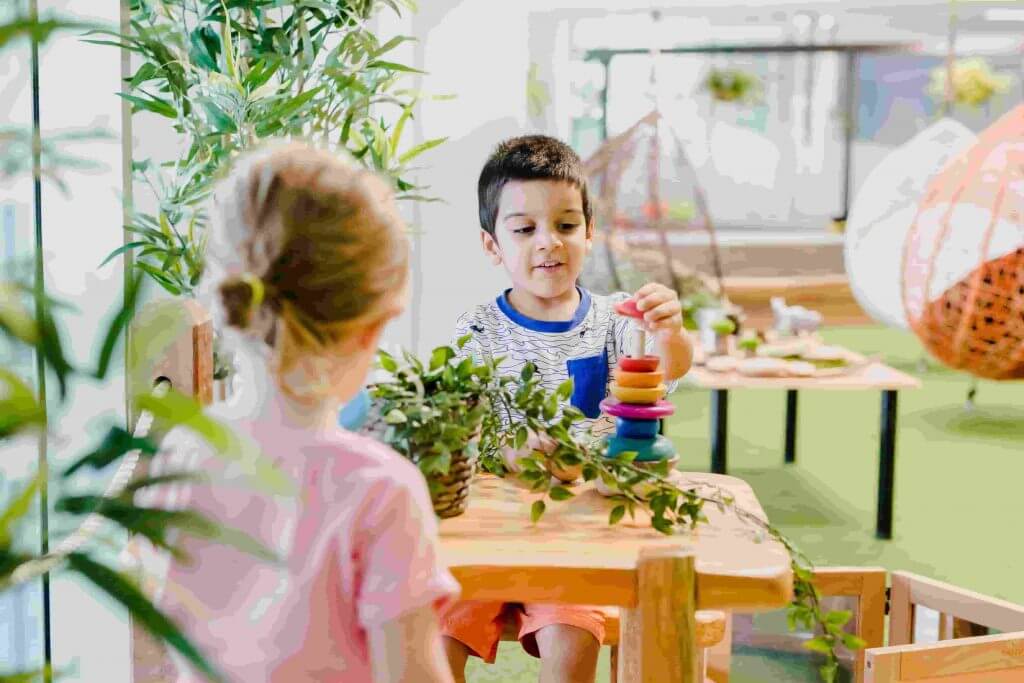
Good early learning and pre-school programs encourage babies and toddlers to become active participants in the world around them. A kindergarten program school transition that follows a set of academic standards, supported by carefully chosen resources and highly-trained staff, has statistically demonstrated increased levels of numeracy and literacy by the time children reach formal schooling. Early childhood care that is lovingly and thoughtfully crafted to ensure best possible outcomes for children provides them with a stepping stone into their primary school education (and beyond) that may not be possible if they were taught purely in a home environment.
”{Childcare} offers long-lasting social, economic and academic benefits for kids and their parents. Studies have shown that children, including babies and infants from the ages of 6 months to 4 years, benefit from the {childcare} environment, including its quality instruction, structure and social lessons.”
– 6 Benefits of Daycare for Young Children, The Childcare Advantage.
Not only is child development enhanced by attending childcare but securing children into an excellent childcare and kindergarten environment can also increase the social support network for parents themselves. The ability to speak to, empathise and make connections with like-minded parents not only provides children with weekend play-date opportunities but the parents themselves are given a much-needed social lifeline.
The Raising Children Network offers parents a glimpse at typical child development milestones. As with any resource, these should be read as a guide instead of a prescriptive map of behaviour.
Many of these milestones can be developed at a greater rate by engagement with highly trained childcare professional educators supported by an innovative and exciting early years learning program. Little Scholars prides itself on delivering the utmost care to the young people who attend its centres across South-East Queensland.
Babies will be encouraged to develop their movement, vision, speech and language and social behaviour through a gentle, compassionate early years program.
Toddlers will work on their emotional development under the watchful eye of trained educators. Their speech development, cognitive leaps and play-based learning will be encouraged through a curriculum designed to promote each child’s abilities.
Children embarking on their kindergarten program will be presented with a range of activities, including key extra-curricular involvement, that will allow them to be learners who question and interact with the world around them rather than passive engagement.
If you’d like to know more about how Little Scholars benefits child development and learning, book a tour today to see our unique curriculum in action.
We do things differently at Little Scholars. Our early learning philosophy is unique and we’re proud of it.
Our focus incorporates the whole family as opposed to just the child attending our campus. We understand that your child is your entire world and that, by reflection, you are the world for your child. It’s important to us, therefore, to ensure that each and every member of your family is catered for regardless of whether they attend the campus or not.
Interested? Here’s how that works.
We provide quality early learning and care at affordable rates so that families can access skilled, highly trained educators and educational programs. Our philosophy is to create and promote supportive environments in which each and every child can grow.
This means that our learning activities, extra-curricular programs, appreciation of the environment and innovative kindergarten program are tailored and catered so that each and every child can experience success and achievement.
That’s the learning covered. But what sets us apart in terms of our philosophy?
Our difference lies in our dedication to improving the lives of the families who attend our numerous centres.
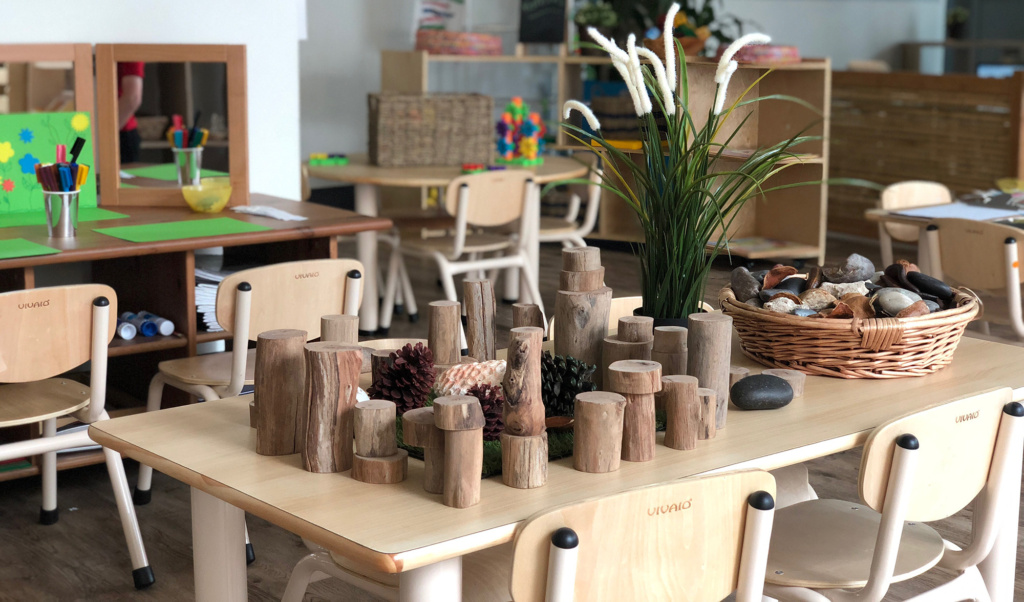
Purely and simply, we believe in your family. We believe that quality family time is of the utmost importance and is your child’s stepping stone to a happy and successful future education. If providing these extra services means that you can slow down and enjoy your children’s childhood then it’s worth every penny and every ounce of effort we have to put in.
Why do we do it?
Because you’re part of our family now, too.
Contact Little Scholars today and discover how our childcare philosophy can help your family.
Hell hath no fury like a toddler whose cup is orange when he really wanted blue. Ah yes, three-year-old tantrums. It’s a rite of passage that no parent can ever truly prepare for.
It’s like something out of a horror film. There you are, minding your own business in the canned vegetables aisle. Suddenly, a high pitched droning noise fills your ears. Everything around you slows down until that noise, that haunting noise, is all you can hear. The tiny demon shakes uncontrollably on the floor and innocent bystanders cower in terror. The horror… the horror
I was there. I was once like you. I speak to you with the wisdom of a mother of a slightly older child (he’s four). I know the pain of being requested to make toast and then shouted at for making said toast. I know the humiliation of getting your pants pulled down in the post office by a tiny version of yourself. I know the torture of never being able to use your phone in the eye line of a tiny human who will not stop yelling about Peppa Pig.
I can tell you, hand on heart, that this anxiety you are feeling will fade. Slowly and in increments. The sentences will become more intelligible, the ability to reason will start to emerge and you’ll begin to be afforded some clarity instead of this ‘what the hell is going on’ mindset you’re in at the moment.
For me, the answer was providing my son with extra stimulation. When children are this age, they’re like sponges. Always filthy and in the sink. And also the way they, you know, soak up all knowledge around them.
As a mum, there were just certain things that I couldn’t provide. I didn’t have the patience or time to be endlessly doing craft. I’m not the sportiest of mamas (unless putting on makeup is a sport, in which case, I am a gold medallist) and I’m just not that into nature. I get sunburned easily and am scared of most birds – they’re unpredictable, alright? Back off.
What I do have lots of, though, is intense love for my child. I want the best and I want him to have as many experiences as possible. I found that when I placed him in situations where his mind was stimulated and his creativity was tapped into, his tantrums and frustrations became easier to deal with. I felt less defeated and I felt like I had more of myself to give him than I did before.
Finding a workable solution is important because there is no return policy on children – even with a receipt! And selling things you made on Etsy does not extend to adorable and small people who sometimes get very angry. No, engaging their brains can be a circuit-breaker for those intense feelings that your little one is having. It’s worth exploring all your options – and maybe childcare is the right answer for your family.
How can your child benefit from learning in a new environment? Contact us to discover how Little Scholars is changing the lives of families.

Let us hold your hand and help looking for a child care centre. Leave your details with us and we’ll be in contact to arrange a time for a ‘Campus Tour’ and we will answer any questions you might have!
"*" indicates required fields
Let us hold your hand and help looking for a child care centre. Leave your details with us and we’ll be in contact to arrange a time for a ‘Campus Tour’ and we will answer any questions you might have!
"*" indicates required fields
Fill in the form to join your local Pram Pals mums and bubs walk