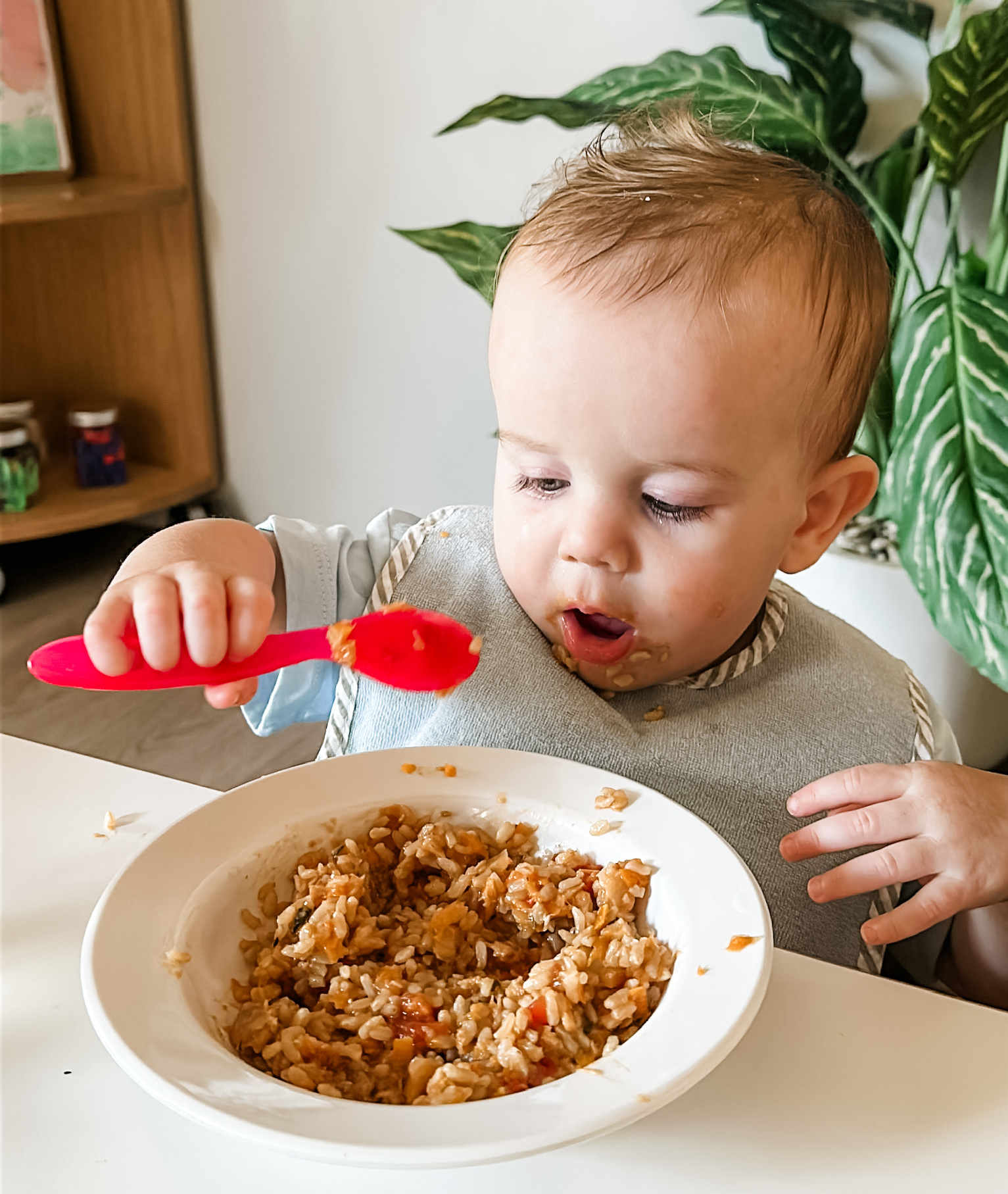
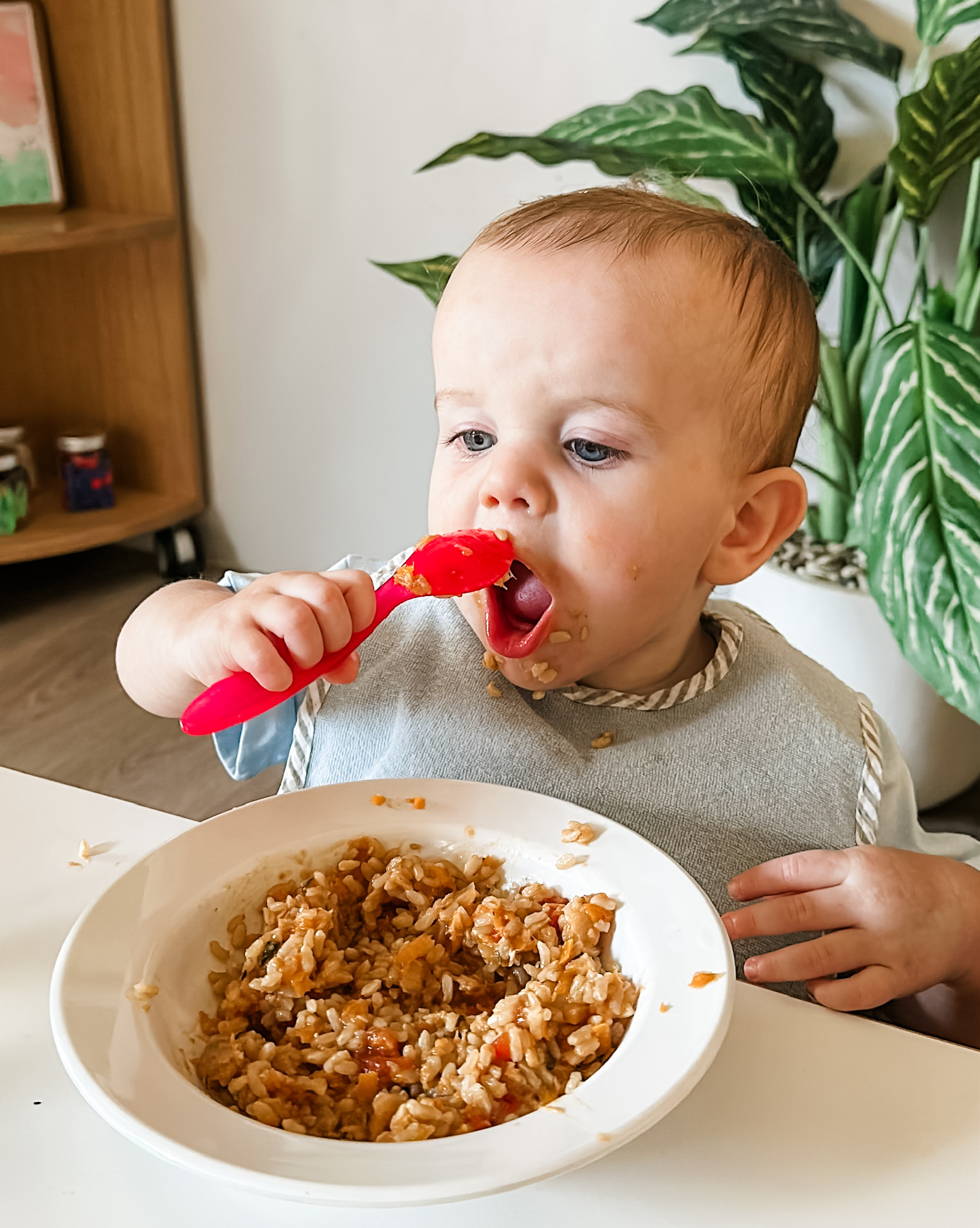
Wondering how to start your baby on solids? Introducing solids is an exciting milestone for you and your baby! Around six months of age, most babies are ready to explore new tastes and textures alongside breastmilk or formula. At Little Scholars, we support families through this journey, whether you choose purees or baby-led weaning with soft whole foods.
Most babies show signs of readiness for solids around six months. Look for these cues:
Sitting up with minimal support
Showing interest in your food
Opening their mouth for a spoon or reaching for food
Losing the tongue-thrust reflex (pushing food out of their mouth automatically) Though as babies begin to take in food, this instinct may remain until they get used to it.
Whatever way you approach the first tastes, go slow and offer just a couple of teaspoon-sized portions at first. Hand them a spoon to let them hold, though they’ll likely just eat (squish) with their fingers
You can start by offering food once a day alongside their normal amount of breast milk or formula, then work your way up over the coming weeks to three or more feedings a day.
To help babies adjust to the unique tastes of foods, one approach we like starting with vegetables for the first 14 days, one new, iron-rich vegetable each day. This helps develop a taste for nutritious foods before introducing fruit or other sweet flavours, as they’re already accustomed to sweet flavours through formula or breast milk.
Queensland Health recommends including iron-rich foods every day to help baby grow well, such as lean meat and legumes, baby cereal with iron, and green leafy vegetables. Of course, you’ll need to work up to these denser foods. It’s also recommended to introduce nuts into diets soon, as this can help reduce allergies. However please note we do not offer nut products at our campuses.
We support both traditional purees and baby-led weaning (BLW). Here’s how they differ:
Purees: Smooth textures, spoon-fed by a parent or educator, with gradually thicker consistencies over time.
Baby-led weaning: Soft, whole foods in safe shapes that babies can pick up and feed themselves, encouraging independence and coordination.
Regardless of your approach, always supervise your baby while they eat and offer soft, easy-to-swallow foods. At our campuses, babies are closely supervised during meals and snacks, but we also use these as opportunities to bond, having lots of fun interactions and conversations with our little ones while they eat!
Offer solids when your baby is alert and in a good mood
Start with small amounts. A teaspoon or two is plenty at first
Encourage exploration. Expect mess, it’s part of the learning process!
Be patient. Some babies take time to adjust to new textures
Watch for allergies. Introduce new foods one at a time, leaving a few days in between common allergens like eggs, dairy, or nuts.
At Little Scholars, we help families introduce solids in a way that works for them. Our educators can support your baby with purees or baby-led weaning while ensuring meals are safe, nutritious, and enjoyable. We work closely with families to understand preferences and keep you informed about your baby’s progress.
Starting solids is an exciting step in your baby’s development. With patience, variety, and support, mealtimes can be a wonderful experience for both of you!
We aim to be an extension of your family and are here to support you and your child during those important childhood milestones. If you’re in need of high quality early childhood education for your little ones in South East Queensland, book a tour today.
We’re sure approximately 96.3 per cent of parents deal with a child who, let’s say, is choosey about what they want to eat. So choosey, in fact, they may choose to eat almost nothing you put in front of them. The amount of stress that puts on parents can be surprisingly strong. After all, as adults, we eat what we want, we understand benefits and consequences of what we put in our bodies, we understand when we’re famished and when we’re just not that hungry. But for some reason, when it comes to the little humans we’ve created, their diet can become a massive focus of parenting-what-did-we-do-wrong. You want so badly to make all the right decisions in parenting, to ensure your child is well-fed from a variety of nutritious sources so they can grow to be the healthiest, best version of themselves.
So how do we handle this picky phase – (though the term phase suggests it’s a short period of time when in fact it can be years or even a lifetime of challenging food preferences)?
We brought the village together and came up with some suggestions to ease the stress mealtime puts on everyone.


19. If you have the creativity and the time, present the food into characters, scenes or animals your child likes. Search for ideas on Pinterest or Instagram!
20. Don’t answer the question ‘what’s for dinner’. Come up with a silly answer such as “bugs and onions”, or something obvious ‘food’, but don’t give them time to dread dinner.
21. In Piaget’s developmental stages, there’s a phase known as the preoperational stage, where a child’s understanding of conservation is still developing. For example, if you pour juice from a short, wide glass into a tall, narrow one, they might believe the tall glass contains more juice because it looks “bigger,” even when they see the pouring happen. This concept can be cleverly applied to serving vegetables to children. By arranging the veggies closer together, they seem “smaller” to the child, giving the impression that they’re eating less. Conversely, spreading out items like chicken nuggets can create the illusion of a larger portion, making mealtime a bit more appealing to them
22. Everyone at the table eats the same meal, but try to include one item everyone likes. No alternatives, or if you have to, make the alternative something like veggie sticks and hummus. Eating together as a family is also a great way to bond and create lasting memories.
23. The one-bite rule: say something like, “Remember the time you didn’t think you’d like cherries, but you did? Let’s try this sweet potato now, because you might like it. Once you try it you can say, “No thank you!” but you have to at least try it! Then that food is no thank you food.”
24. The ‘silver bowl snack’ to expand their palate, one tiny taste at a time. If your child doesn’t like something, say something like, “well your tastebuds must not be grown up enough for that yet, let’s see what happens next time you try it.” Since children often want to be more “grown up” they may willingly try the offending food again the next time it was offered. If the child decides to try it, make a big deal about how grown up your child is getting.
25. Keep pre-cut vegetables and fruits in a bowl or clear Tupperware container, front and centre in the fridge and — important — then place some on a platter on the kitchen counter in your child’s line of vision all afternoon.
26. Do your children like mashed potatoes? Get more veggies in there! If the mashed potatoes turn green? Well, they’re Hulk potatoes obviously. Are they orange? Then they’re Nemo or insert-your-child’s-favourite-orange-character-here.
27. “We get our children to pick a meal they want to eat for dinner for the week and we buy the ingredients then they all get a night to cook dinner for us, makes them interested in wanting to eat the meal they make for us, and they need to choose something with a minimum of two veggies.” Jess, enrolments officer.
28. Sprinkles also go a long way. Yes, actual sprinkles, or foods that they can shake on like sprinkles. Think seasonings, herbs and chia seeds. If a child doesn’t like the food presented, ask what you can add to make it more exciting. And let them do the sprinkling. Sometimes, it really is as simple as that.
29. While it’s easy to use a smartphone or TV to occupy your child’s attention and you might even see your child mindlessly eat, that’s actually not what you want. You want children to be focused on the food, but also focused on family time and conversation.
30. Relax! Try not to put pressure on them to eat. You wouldn’t want someone constantly commenting on your plate choices and habits. Mel, operations manager of Little Scholars, said her son has been picky since he was two years old. When she spoke to a nutritionist, she said “as long as he was eating 20-25 different foods throughout the week he would be OK.” While it can feel stressful, your child is likely getting the nutrients they need, whether you’re offering fresh, frozen, tinned foods, you’re trying your best, your child is flourishing, and one day, this will just be a memory!
It’s no mystery that food plays a vital role in a child’s growth, and healthy eating makes a healthy child. While eating a small number of unhealthy foods like sugary sweets and processed snacks won’t cause much harm, a balanced diet filled with fruits and vegetables is best. The foundations of a healthy diet contain nutrient-rich foods that improve your child’s physical health and promote their mental capabilities, keeping them alert and energised throughout the day.
At Little Scholars, we understand the importance of a healthy diet in enabling a child to thrive and meet their fullest potential. We have a healthy four-week menu rotation made by our fabulous chefs who prepare fresh, nutritionally balanced meals for your children.
So if you want to guarantee the health and success of your child, be sure to book a tour today.
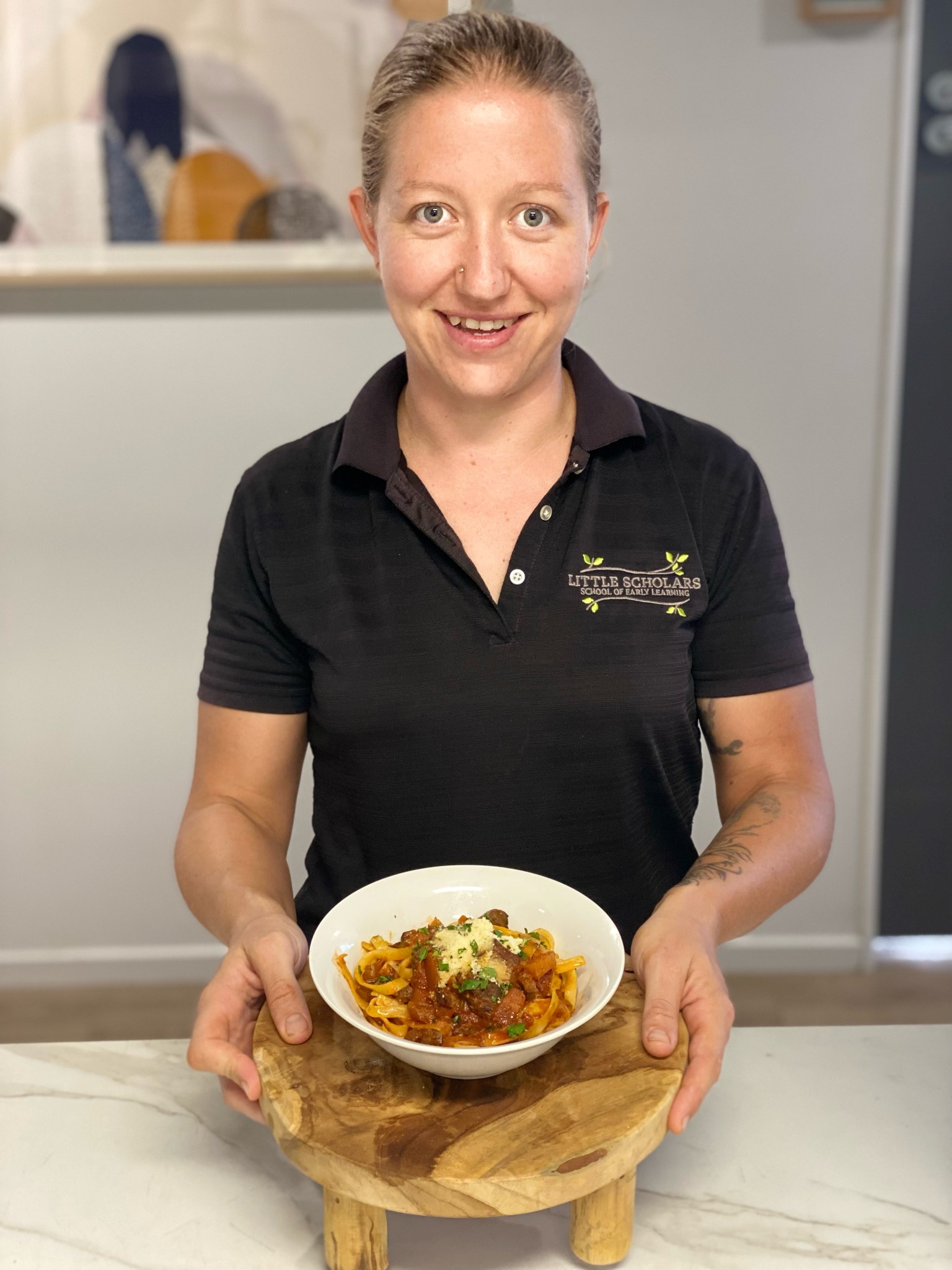

A key to healthy eating for children is ensuring they enjoy a wide variety of nutritious foods. The Australian Guide to Healthy Eating recognises five core food groups for complete nutrition. These groups are divided into proportions to help you understand how to help your child eat healthily throughout the day. Each food group in the correct amount gives your child an excellent chance to get the right amount of nutrients and vitamins their body needs to function well.
Based on the five food groups in the Australian Guide to Healthy Eating, let’s look at what food your child needs to stay healthy.
There are many benefits of healthy eating for children in early childhood, and they include:
Every child has a different natural body composition, but healthy eating helps keep your child’s weight within the appropriate range. However, you shouldn’t focus too much on your child’s weight as it might communicate unhealthy eating habits.
As your child grows, they will need the right amount of food and adequate nutrition to ensure normal growth and development. For example, sufficient calcium and vitamin D in their meals will give them strong and healthy bones. Children aged 4 to 8 need up to 700 milligrams of calcium for healthy bone development, according to the Queensland Government’s calcium for children’s guidelines.
One of the best ways to incorporate these nutrients into their diet is through foods such as low-fat dairy products. In addition, fortified cereals, salmon, and leafy greens are also excellent sources of calcium.
Children need to have robust immune systems to be able to fight off ailments like colds and the flu. The right proportion of fruits and vegetables helps boost their immune system.
Children need a healthy diet to optimise their brain activity as they grow, making them perform and focus well at school. Some essential foods that can help improve brain functioning include fish, eggs, nuts, and seeds, all great sources of vitamin E and healthy fats.
Here are 3 great ways to improve your children’s healthy eating habits:
Involving the little ones in the cooking process can be a fun way to help them learn about food. For example, you can get them to mix up a salad or help peel some vegetables, ensuring that everything is done safely and responsibly. Our staff regularly plan cooking activities such as making fruit sticks, fruit yoghurt iceblocks and other yummy healthy treats.
Another idea is to allow them to occasionally choose what the family will eat for dinner or lunch – although set some ground rules so you don’t end up having ice cream for dinner!
These pizza scrolls are a guaranteed favourite for everyone! Whether you are after a super easy lunchbox snack, dinner for your little ones or even afternoon tea, these pizza scrolls will definitely be a favourite for kids and parents!
Looking for an easy snack to make with ingredients from home? Here is one of our delicious snack items from our Little Scholars menu. We had to share this recipe as it is super easy to make and you can add whatever toppings you want! You probably already have these ingredients in your kitchen!
This recipe makes approximately six scones. You can double this recipe if you wish to freeze them for later or to feed more people!
Serve with your favourite toppings like Jam and Cream for an extra yummy treat!
Everyone knows or has a fussy eater. Whether it’s a two-year-old who won’t try new foods, a 10-year-old who is stuck on plain pasta or a ‘whitearian’ who only eats shades of beige, feeding children can become a real struggle. A period of fussiness is a normal part of a toddler’s development and is a sign that they are becoming more independent, but left unchecked, fussy eating can take over mealtimes making them stressful and unenjoyable for everyone.
Most fussy eating is behavioural, but it is important to check that there aren’t other reasons for your child’s fussiness. A really easy way to do this is to think about whether your child is fussy across different environments. For example, if they won’t eat this and that at home, but they will eat it at daycare, it’s a good indication that their fussiness is behavioural. Often, when a child is taken out of their usual environment, given a routine that they are expected to follow, and sit with other children, they will eat things that parents never thought possible. Are you struggling with a fussy eater? Contact our Little Scholars Day Care Centre to learn how we combat fussy eating during daycare.
Well firstly, the most important step no matter what the origin, is to take the pressure off. Although this may feel like a leap of faith, you won’t get anywhere while mealtimes are fraught with tension. Make sure that there are one or two foods you know your child will eat at each meal, but for the rest of the meal – make it something that you enjoy. The best way to get your child interested in a new food is to sit at the table with them and enjoy it yourself.
It can also help to let them know what is expected. For example, the mealtime routine might be to wash hands, come and sit at the table, stay at the table until the meal is finished, take the plate to the bench, leave the table and wash hands. This is exactly what happens at daycare and is an example of how routines work. It is important not to drag it out – a reasonable amount of time to expect your child to sit at the table is about 20- 25 minutes, beyond this, it gets really tiring for them and they won’t likely eat a lot more with extra time.
You can also help your child become a little more adventurous by breaking it down into manageable steps. Making small changes to their favourite foods such as cutting them differently, making them slightly crunchier, or changing the colour (eg. beetroot hummus) is a good place to start.

Interested in Child Care that assists with fussy eating and other areas of concern? Contact us today or book a campus tour.
AUTHOR: JACQUI PALMER, PAEDIATRIC DIETITIAN FROM MY NUTRITION CLINIC
Jacqui is paediatric dietitian who would like all children to have the opportunity to become ‘good eaters’ with the right support and guidance. Jacqui teaches parents and children these daily habits and strategies through her Fussy Eaters Therapy program. Jacqui welcomes children with sensory and developmental issues such as Autism to join the program.
Super delicious and super healthy. Perfect to freeze. Here is one of our yummy morning tea items from our Summer Menu at Little Scholars. We wanted to share the recipe so you can try it at home. These are super tasty and packed full of healthy goodies.
Super simple to make and the little ones will love it. Here is one of our scrumptious lunches from our Summer Menu at Little Scholars. We wanted to share the recipe so you can try it at home. It’s a great interactive dish that will see the children eating vegetables so easily.
Before we get into your child’s healthy eating habits. Let’s reflect for a moment on your own relationship with food. Did you have to finish all the food on your plate when you were a child? Were sweets offered as a reward for good behaviour? Were there starving children in Africa always ready to take your left-over dinner when you were growing up? Do you give foods the title ‘good’ or ‘bad’? Have you ever felt ‘bad’ for eating a certain food? If you are human and living on planet Earth, then you will have most likely answered yes to at least one (if not all) of those questions.
Your relationship with food as an adult very much begins in childhood. So, as a parent you have an opportunity to shape how your children relate to food. No pressure then!
Here are some key tips that you can start using straight away at home to foster healthy eating habits:
There are no good or bad foods out there. Just food. One massive bowl of broccoli or a single bar of chocolate isn’t going to make you instantly healthy or unhealthy. Likewise, you are neither a better nor worse person for eating it (if only it were that easy!). For sure there are unhealthy eating patterns which, if you keep them up then over time leave you feeling a bit blah and may lead to looks of disappointment from your GP. This leads me to the next tip:
As a parent myself I know how very frustrating it is to use desserts and lollies as a bargaining tool. By using food as a reward, we are sending a very strong message to our children that these foods are more special than the rest. It teaches them to use food as a way of dealing with hurt or difficult feelings. And we all know where that leads! Instead look for non-food ways to feel better – sing, cuddle, talk about our feelings. Anything but food.
Children are born with a magical power called intuitive eating. This power allows them to eat when they are hungry and stop eating when they are not. Amazing huh! Most adults I see later in life with concerns about their weight have lost this skill and no longer trust in their own bodies natural hunger and fullness signals and find themselves overeating or feel a lack of control around certain foods. To foster your child’s natural gift, let them dictate when and how much to eat. Sounds scary I know. Giving gentle reminders to eat is ok (as we know children can get distracted) and let children tell you when they have had enough to eat. Their body clock may be on a slightly different time zone to yours. My daughter’s eating patterns were completely out of sync with the rest of the family and by the time dinner rolled around she was exhausted and had very little interest in food. Breakfast however was a completely different story!
These three tips are only the beginning of forming a healthy interdependent relationship with food but are a great foundation for many happy mealtimes ahead! Wanting to learn more about healthy eating habits? Contact us today and talk to our Little Scholars team.
Written by: Anna D’Arcy, Accredited Practising Dietitian at My Nutrition Clinic. Anna is a mum to two children under 10 years and has 20 years of experience working as a dietitian and helping families reach their health potential.
Lactation cookies are a great way to help increase your milk supply! The key ingredient is the brewer’s yeast. It’s not recommended to substitute this for any other kind of yeast. This can be generally found in natural sections of supermarkets. Make sure the label says Brewer’s Yeast. When we asked a few store clerks they pointed me to other yeast which is not the same. The flax and oats are also great supply boosters too which is why they are included in the recipe.

You might also be wondering, can anyone eat lactation cookies? Yes! All of these ingredients are safe for anyone to eat. Be mindful that consuming lactation cookies before birth may not be helpful in boosting your milk supply.
These oatmeal raisin lactation cookies recipe are loaded with healthy ingredients. We added whole flaxseed for additional health and milk-producing benefits. We have coconut oil in place of butter to get the benefits of coconut oil. If you don’t have coconut oil, you can still make them with butter.
This is really going to depend on your body and your own personal milk supply. Typically eating 2-3 a day should be enough to notice a boost in your milk supply.
It can depend on the individual, but typically you should see results within 1-2 days. Moms will typically notice an immediate boost in my supply. So hang in there, you should be producing more in no time!
You might be wondering also if you can make this lactation cookies recipe without brewers yeast. You can, but you won’t see the same effects in your milk supply boost as you would if you included the brewer’s yeast. If you’re looking for a brewers yeast substitute for baking these cookies, it’s important you do not substitute the brewers yeast for other yeast as you will not see the same results (and they may not taste good).
Prep Time: 20 MINS Cook Time: 12 MINS Total Time: 32 MINS
An easy to make oatmeal lactation cookie recipe.
Instructions
Recipe Notes
The whole flaxseed is optional. You can substitute the whole wheat flour for regular white flour. You can also substitute the coconut oil for butter.

Let us hold your hand and help looking for a child care centre. Leave your details with us and we’ll be in contact to arrange a time for a ‘Campus Tour’ and we will answer any questions you might have!
"*" indicates required fields
Let us hold your hand and help looking for a child care centre. Leave your details with us and we’ll be in contact to arrange a time for a ‘Campus Tour’ and we will answer any questions you might have!
"*" indicates required fields
Fill in the form to join your local Pram Pals mums and bubs walk