






While many Gold Coasters head to the southern suburbs on the weekend, the northern suburbs should not be overlooked for family-friendly weekend adventures! Starting in Stapylton and reaching to Pimpama, the most northerly suburbs of the Gold Coast also include Yatala, Alberton, Steiglitz, Gilberton, Norwell, Ormeau and Jacobs Well. Here you will find unique family activities, a range of family-friendly dining options, and some of the Gold Coast’s most unique play spaces. Here is your guide to getting the most out of a day in the Northern most parts of the Gold Coast.
South-east Queensland’s last original open-air Drive-In Cinema is located in Yatala, and boasts three massive screens accommodating up to 700 cars each night. Bring your camp chairs and sit out the back of your car to watch a movie, or bundle up the blankets, pillows and sleeping bags to make yourself comfortable in the back of your van, ute or car. Perfect for wriggly children, the privacy of sitting in your own vehicle means there is no need to worry if their bouncing around is bothering other cinema patrons. Movies screen every night of the week and they often host special event screenings too.

If your family is feeling creative, or looking to get messy, a workshop at DIY Invasion is sure to tick the box. Located at Staplyton, DIY Invasion run craft workshops ranging from resin art to painting, macrame and slime making – with their School Holiday Workshops always extremely popular for children. Another unique feature is their Splatter and Splash Room, which families can book for a private experience! Choose your own dance music, while letting your creativity run wild as you fling, flick, and splash paint around the room and over your fellow participants! This is a great space to unwind and tap into creativity.
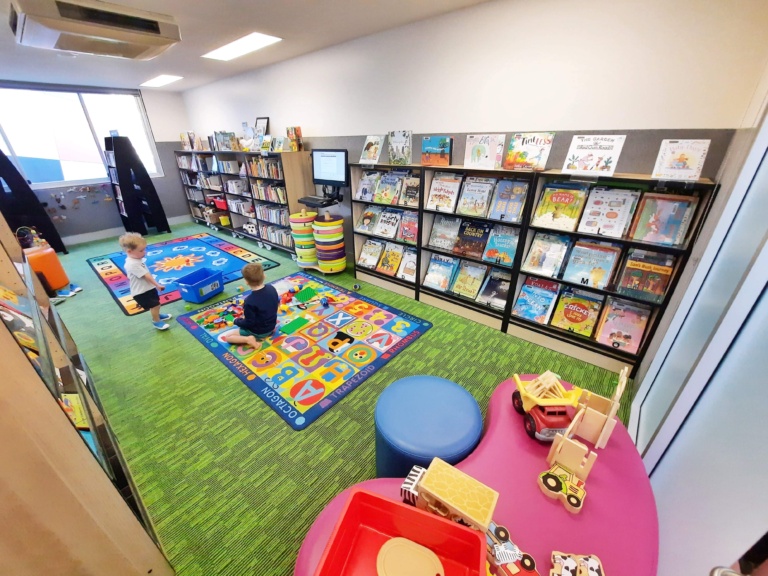
The only library located in the far northern suburbs, the Ormeau Community Lounge & Library is a hidden gem. Here you can visit the Gold Coast’s only Book Box corner, an early year’s library and play-based learning space delivered in partnership with Queensland State Library’s First 5 Forever program. Here children do not have to worry about being quiet, and they are actively encouraged to play with the many games and play resources available. Open six days a week, families can join in Story Time on Friday and Saturday mornings, or participate in Baby Rhyme Time and Toddler Time sessions during the week.

Distillery Road Market is a fresh and exciting new venue located in Eagleby, home to The F.E.D, a 2000-person food and entertainment space. Here you’ll find an expansive indoor/outdoor dining area, with a range of on-site eateries to choose from. Open Thursday – Sunday, the venue is family friendly with live music each evening and long beerhall-style tables to choose from. The best part is that diners can choose meals from six different food outlets, meaning that all tastes and dietary requirements can be catered for! The casual vibe of this venue is perfect for an early dinner with the family, where children and parents can relax, move around, dance and enjoy a great meal together.

Yatala Pies has been a landmark in the Yatala area for more than 130 years, these days selling around 3,500 pies daily! Well known as a halfway stop on the journey between Brisbane and the Gold Coast, northern Gold Coast locals are lucky to have this icon right here in their backyard. Selling some of the best pies on the Gold Coast, the quality is exceptional and the range delicious. Choose from dine in or takeaway, you can grab a hot, ready-to-eat snack pie, or take-home, oven-ready family pies and snack pie packs. With something for everyone, the family will love a stop in at Yatala Pies any time of the day.

The Norfolk Tavern has got to be the most family-friendly dining option in the northern Gold Coast. Indoors you will find a bright and spacious dining room, while outside there is a wraparound veranda with ample space for dining, opening on to a huge children’s playground. The award-winning Bistro has menu options to suit every taste, from fresh seafood to steaks, pastas, salads and all the traditional pub fare. Extremely popular on weekends, be sure to book a spot on the deck if you are dining with children for easy line of sight from your table to the playground.
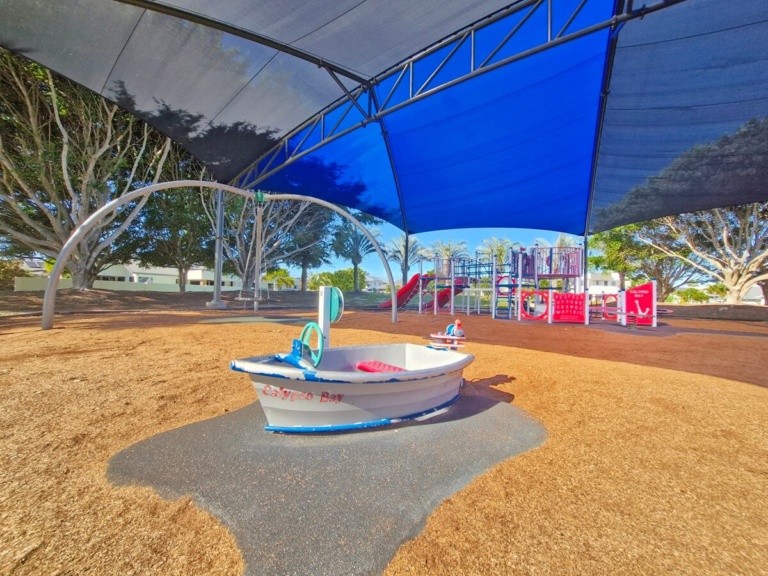
A nautical themed playground appropriate for its position by the water and close by the Calypso Bay Marina, here you’ll find a pirate ship brimming with bridges, wheels, slides and nets – be careful, you might even be asked to walk the plank! Underneath the pirate ship the imaginative play space is further extended, with a small shop counter set up, tunnel frames and other interactive game panels. The swing set with all abilities swing is always popular, as is the spinners and hammock swing. There’s also a little boat for children to pretend to fish or start the engine!

While many think the most northern beach area for children to swim is at Paradise Point, there is a lesser-known spot at the very northern edge of the Gold Coast – Lions Park at Jacobs Well. With easy access from the carpark, you are at a small, shaded beach in just a few steps. The swimming enclosure here has a small sandy beach, a large shade sail over the sand, and few waves, making it ideal for toddlers and younger children gaining confidence in the ocean. Parents will love the ability to sit on a blanket under the shade and still be close enough to their children in the water.

While the playground at Outlook Park, Ormeau may be tiny, pack the bicycles and prepare yourselves for the surprise bike tracks that make this a fabulous spot to visit! Set on a steep slope, Outlook Park is laid out over three levels. At the top you’ll find a small playground best suited for toddlers, and then on the middle and lower level there are two bike tracks, perfect for racing on. While the playground is very small, the bike tracks are great for bicycles, skateboards or scooters, and children will love lining up at the start line and racing the loops to the finish. Celebrate with some pretend play medal ceremonies on the dais at the track!

Hilltop Park in Ormeau is an older park, but still delivers a great time. Split into two sections, toddlers will love the smaller, shady play area with a car, climbing frame and mini playground with slide and swing. The main playground space is better suited for children over five, with a larger playground and slide, large climbing net, balance beams, spinners and swings. Children can also climb the ramp up to the old water tower, which has been converted into a play structure.
The northern Gold Coast offers a variety of unique and exciting activities for the whole family. From classic drive-in movies to hands-on creative workshops, scenic playgrounds, and delicious dining options, these suburbs have something for everyone. Whether you’re looking for a relaxing day by the water or a more adventurous outing, there’s no shortage of fun to be had. Next time you’re planning a family day out, consider exploring the hidden gems of Stapylton, Ormeau, Yatala, and beyond—you might just discover your new favourite weekend spot!
Little Scholars provides quality early education and care for children across South East Queensland, including five early learning campuses in Stapylton, Yatala and Ormeau.
We offer your child the very best facilities, resources and early educational, play-based programs available, which are underpinned by the early years learning framework. We believe that through quality education and care for children, we can also encourage, assist, and support the entire family.
Our dedicated team of educators are committed to the individual needs and interests of children and their families, and thus we encourage and welcome family input and involvement.
Find Lara’s recommendations at her website Mrs. Lardeedah.com, and follow her socials Facebook and Instagram
The Gold Coast is known for its abundance of good food and stunning dining options, but when you have young children in tow – often the thought of dining out can be daunting. Thankfully, many local restauranteurs have heard the call of parents seeking family-friendly dining options. We’re now seeing dining venues with amazing menus, family-friendly fit outs and features to help keep the children occupied while you enjoy a hot meal. Whether it be a playground, a simple children’s corner, or open spaces to move around safely, there are plenty of choices for you to enjoy your next meal out. Here are my top six family-friendly dining venues on the Gold Coast that you should be sure to visit!
This shopping centre café is a hidden gem, saving the sanity of parents for many years now. With opening hours stretching from 5.30am – 9pm, you can often find those parents with early-risers enjoying a hot coffee at Café 63 in the early hours. Located in the incredible “Backyard” precinct at Westfield Coomera, the outdoor dining area overlooks a fun-filled obstacle course with adventure play suited to four-eight year olds. For the youngest children, a nearby splash pad and toddler sensory zone also serve as great spaces to stretch the legs while waiting for your meals to be served. The menu here is extensive and well-priced, including a fabulous children’s menu that will please everyone.

Here you will find a huge indoor children’s playground for four-12 year olds, with a family specific dining space attached. Separate from the rest of The Wattle Hotel’s restaurant, this glassed-off dining room overlooks the playground and contains about 15 tables. Here children can easily move back and forth between the playground and the table while their parents can see them at all times. There is a great children’s menu and delicious daily specials to enjoy, this is modern bistro dining that can be enjoyed by all the family.

A café best known amongst the Coast’s cyclists thanks to its location near the Velodrome and bike shops, Cadence Café also caters beautifully to families seeking great food. Set across three terraced levels, the venue is connected by a central path and steps – at the top is the café, the middle level has plenty of dining tables and chairs, and the lower level is home to high bar tables overlooking a fenced children’s play space. All levels are shaded by a beautiful fig tree, have ramp access, and dogs are also welcome in the outdoor areas. Serving breakfast and lunch, the menu caters well to families, and you are sure to enjoy a delicious meal.
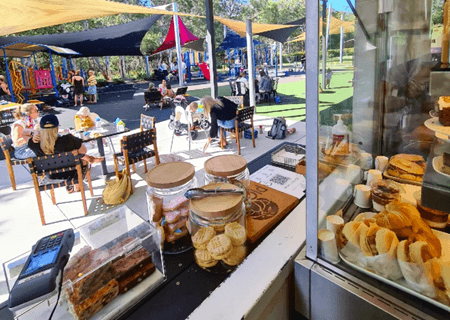
Just off the hustle and bustle of Olsen Avenue sits the Latte Lounge, a family-friendly oasis amongst the gum trees. Here you will find house-roasted specialty coffee and a delectable brunch menu, plus one of the best children’s menus you will find at a café. The open-air café is almost the second-best attraction, when you see the large, easily accessible playground right in the middle of the café. Designed for all ages, this fenced café and playground is covered by large shade sails and offers plenty of shady spots to enjoy your meal. With its central Gold Coast location, this is also an extremely popular spot for birthday parties and play dates. Thankfully, due to the size of the café and playground it never feels overly busy or crowded and is always a delightful outing.
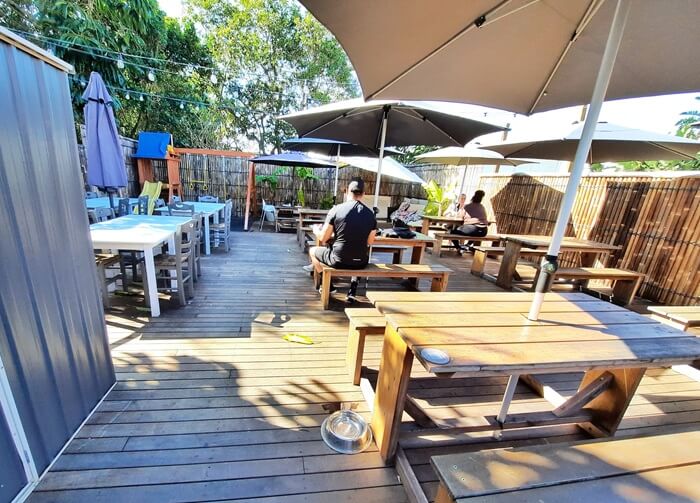
This hidden gem on the southern end at first appears to be a juice bar, but venture inside and you will find a breezy indoor/outdoor café with children’s playground! Popular with the locals, this unassuming little spot is filled with sunshine, great food and service with a smile. This is a family-run café with its roots in healthy superfoods that taste phenomenal. Dog friendly, the outdoor deck is the place to be, with easy line of site to the children’s playground. The café kitchen is only open Thursday – Monday, but the juice and smoothie bar is open 7 days.

With beautiful coastal vibes, indoor/outdoor dining is essential on the Gold Coast, and BSKT serves it up perfectly. Located just steps away from the beach, BSKT has delicious food, ample seating and a fenced children’s play area. Pronounced biscuit, this menu is packed with vibrant colours and bold flavours, but also caters well to children. BSKT doesn’t take books and this spot is extremely popular on the weekend, but wait times are usually short. Be sure to grab a spot outside under the patio to have easy access to the play area! Why not pack the swimwear and walk over to the beach afterwards!
Find Lara’s recommendations at her website Mrs. Lardeedah.com, and follow her socials Facebook and Instagram
Children’s positive views of themselves as learners are more important than being told they are clever.
This insight from Nathan Wallis’s talk at the Australian Childcare Alliance (ACA) conference resonated with us, and we believe it’s valuable for parents to hear. Our intention isn’t to make parents feel guilty for praising their children’s intelligence. We understand that parents aim to foster a strong sense of self and ability in their children, and we fully support this. However, Wallis emphasises that before the age of seven, children don’t need to prove their intelligence. Instead, they need to develop learning skills through play and believe in their ability to learn. According to Wallis, more play and less structured learning before age seven leads to better outcomes in adulthood.
“To put it simply, before seven, it doesn’t matter how clever your child is. What matters is how clever your child feels and their disposition towards themselves as learners,” Wallis, an educator who focuses on neuroscience, explained on the Future Focus podcast.
“You’re better off having a six-year-old who can only count to 20 but thinks they’re a good learner than a six-year-old who can count to 100 but doubts their cleverness.”
Wallis highlights that free play boosts creativity and problem-solving, which are essential for intelligence. Letting children freely build, create, and explore supports flexible thinking and a positive learning mindset.
At the conference, which attracted hundreds of early childhood educators, Wallis offered advice on how to support children in their confidence and ability to learn:
Experts at Early Childhood Australia agree that children learn about themselves, others, and the world around them through play.
“If you provide your child with plenty of opportunities for playing, exploring, discovering their interests, solving problems, and tackling challenges, then you’ll be laying a strong foundation for building self-confidence,” says David Lyons, CEO of Nido Early School, in a post on ECA’s The Spoke blog.

According to Be You, the national mental health and wellbeing initiative for learning communities in Australia, praise is most effective when adults are mindful of how and when they use it.
When praising children, Be You suggests focusing on their efforts and achievements.
“Praise that’s specific and acknowledges the process of completing an activity or solving a problem helps develop children’s learning and motivation. For example, you might say, ‘You put away your toys so nicely,’ ‘I noticed you were really trying hard at building that block tower,’ or ‘You’ve used so many bright colours in your painting.’ Children can then use this learning when they have similar experiences in the future.”
Lyons agrees and cautions against overpraising.
“Children need to discover and learn those things that give them personal enjoyment and fulfilment, not just do things to please their parents. Similarly, comparing a child to others can be detrimental to their confidence and self-esteem.”
Dealing with disappointment is also crucial for developing confidence.
“Everyone fails to achieve their goals sometimes – and this isn’t a bad thing. You can build children’s ability to deal with challenges by responding sympathetically and with encouragement, helping children focus on what they can change, and challenging ‘I can’t’ thinking by showing and saying you believe in them and reminding them of their achievements,” says Be You.
Wallis reinforces that play enables children to develop social, cognitive, and emotional skills through their own interests and in creative and innovative ways.
“Play-based learning teaches creativity, which is fundamental to growing intelligence and the ability to problem-solve. When children can take their time and make multiple attempts before achieving success, they build resilience and other important skills needed later in life,” says Wallis.
Supporting children in developing a positive self-view as learners is crucial, especially in their early years. Emphasising the importance of play over structured learning fosters creativity, problem-solving, and resilience. By providing nurturing relationships, paying attention to their efforts, and creating flexible learning environments, we can help children build the confidence they need to thrive.
As Nathan Wallis and other experts highlight, the goal is to make children feel capable and enthusiastic about learning. This foundation will benefit them not only in school but throughout their lives. At Little Scholars, we encourage our little ones to play, explore, and believe in themselves – because how they see themselves as learners today will shape their success tomorrow.
Early childhood education has far-reaching benefits, not just for children, but for society as a whole. By investing in the early years, we create a foundation that supports the well-being of families, strengthens communities, and drives economic growth.
Here’s why:
It creates a happier and healthier workforce. Early education supports parents, reducing absenteeism and turnover by improving overall wellbeing and mental health. This leads to a more stable and productive workforce.
It establishes a future-ready workforce. Children who receive early education develop crucial social and emotional skills, preparing them to handle future complexities and challenges.
There are huge economic benefits. Early childhood education contributes significantly to the economy. It generates $313M in immediate tax revenue and an additional $495M in future tax revenue. This is because parents of children in early education can work more, and these children grow up to earn higher qualifications and wages.
It actually has the potential to reduce public spending. How? There’s a $1,194M reduction in health, welfare, and crime costs. Early education leads to lower rates of obesity and smoking, more people entering the workforce, and fewer involved in the justice system.
It can increase household Incomes. While costs are incurred in childcare fees, overall families benefit significantly, with household incomes increasing by $1,463M. Many parents can work more hours or re-enter the workforce thanks to early childhood education.
It enhances lifetime earnings. Early education boosts lifetime earnings by $997M due to higher academic achievement and qualifications.
It leads to healthier lives! Each year, 8,500 children are less likely to face obesity-related health issues, 2,300 are less likely to become smokers, and 763 are less likely to be incarcerated as adults.
It improves productivity. There’s a $319M increase in productivity from a more educated workforce. Additionally, 4,000 fewer children drop out of school each year because early education provides them with the foundational skills they need to succeed, and often leads to a lifetime love of learning.
These benefits underscore the critical importance of early childhood education for everyone. Investing in our youngest learners is an investment in our future.
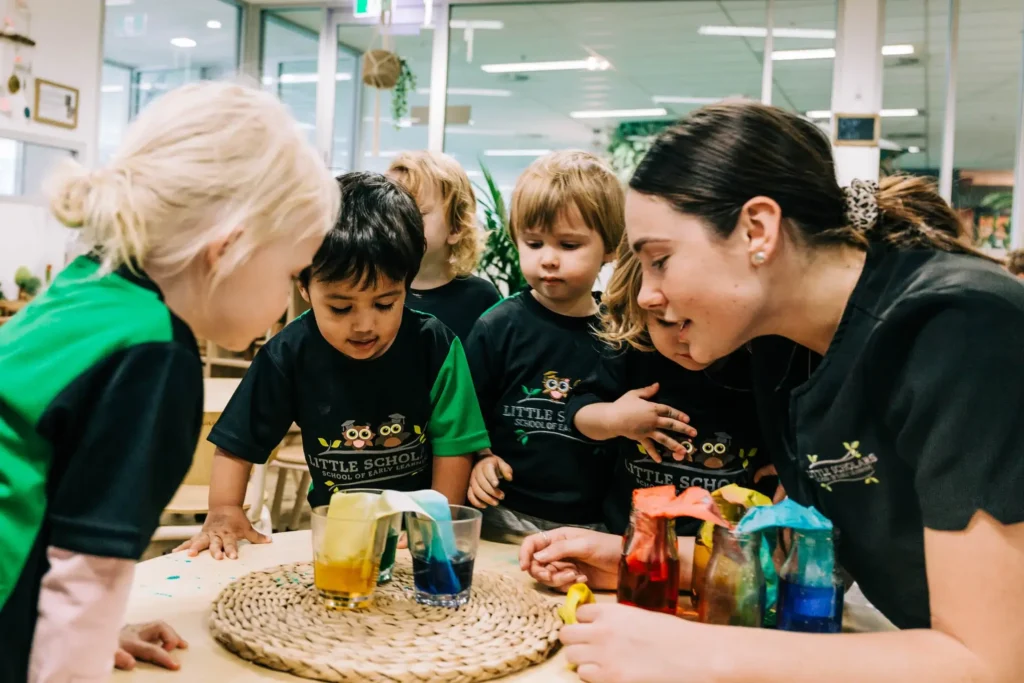
At Little Scholars, we are committed to supporting not just the incredible children we have the privilege of educating, but their families.
Through initiatives like our Family Time program, which includes haircuts, quarterly date nights, take-home meals for the children and parents. We also arrange specialist appointments on-site which include optometrist, podiatrist, speech pathologist visits, dentist, and child health nurse appointments.
We believe that by nurturing these relationships and providing high-quality early education, we can help create a brighter future for all.
Book a tour today to see firsthand how Little Scholars can support your family. Visit www.mylittlescholars.com.au to learn more.
Families who live in South East Queensland, a truly beautiful part of the world, are fortunate to enjoy pleasant weather most of the time. But, like anywhere, we get our (small) share of rainy or cooler days. And while one or two days of weather-related downtime can be welcome, our corner of the Earth can sometimes see days on end of rain, something we’re not quite used to, which mean our little ones may be bouncing off the walls if we don’t find some weather-appropriate things to do for them.
Since Little Scholars is in the business of small humans, we’ve gathered some activity ideas for parents we know children will love in any weather!
Images and information courtesy of the organisations listed in this article. You can find their websites by clicking on each title.
With its plethora of beaches and hiking trails, most people associate the Gold Coast with sunshine and heat, a near-perfect holiday destination, but what can families do if it’s cool, cloudy or raining? The answer is, there’s still plenty to do!
We’ve selected some of the most fun, unique indoor activities families with young children can do on the Gold Coast, the Redlands and in the state capitol, Brisbane.
This creative hub offers plenty of rainy day entertainment options. Wander through five levels of thought provoking and inspiring displays, exhibits and artworks at the incredible HOTA Gallery. There’s a Children’s Gallery on Level 1 where little ones can do craft activities and interact with creative displays.

The Gold Coast Motor Museum in Upper Coomera is a fantastic option for rainy days, featuring over 80 cars and memorabilia. Opened in October 2020 by brothers Carl and Grant Amor, the museum is a tribute to their parents’ love for cars. Located in the scenic Gold Coast hinterland, adjacent to Stanley’s Barn Restaurant & Bar, it’s a perfect destination for family fun and nostalgia.
Only closed Mondays and Tuesdays, children under 13 enter for free, and they’ll love exploring the eclectic range of vehicles spanning the years 1900 to 1988.

Looking to entertain your children and use up some of that endless energy? EMF Junior caters for children ages two to 13, with massive ball bits, slides, tunnels, climbing apparatuses, giant blocks and more. There is a separate zoned toddler area that caters to their specific abilities and needs.
Parents can also book their children in for the creche at Nerang and supervised drop and shop sessions at Pacific Fair, which comes in particularly handy for parents who need a bit of time to themselves!
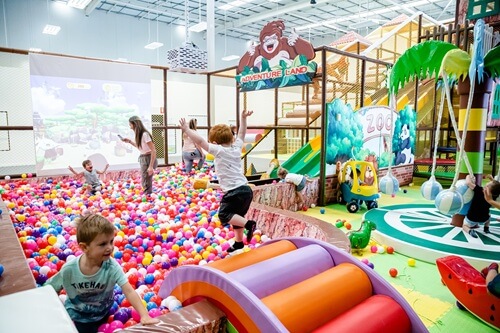
A classic rainy day activity! But the 13 locations of Gold Coast City Libraries are not your grandmother’s library! They offer a ton of benefits besides an incredible array of books!
Join your library for fun times as the friendly librarians help build pre-literacy, communication, language and social skills for your babies, toddlers and preschoolers.
Baby Rhyme Time – Giggle, coo and cuddle with favourite rhymes and songs. Ideal for children from birth to two years.
Toddler Time – Sing, move and groove, learn new words and make new friends. Ideal for toddlers aged two to four years.
Storytime – Listen, laugh and roar with favourite stories old and new. Ideal for children from three to five years.
These are offered seven days a week across all locations. For your closest library’s schedule, or to find nearest availability for these programs when they suit your schedule, click this link.

Grab the family and head over to Paradise Resort Gold Coast for an experience rare to the southern hemisphere – ice skating!
Planet Chill is suitable for anyone over three years, and to make it a little easier for beginners to stay on their feet, Planet Chill has fibreglass penguins to help make your ‘icecapades’ more bump-free.
Your family will be gliding to popular music, a disco ball and under-ice lighting to light up your session.

IMAGINATOR is a multisensory, walk-through experience that houses a series of immersive art installations that celebrate imagination, technology and play.
There are 15 immersive, one-of-a-kind experiences under one roof that have been created by a talented team of architects, audio-visual artists, futurists, renderers and sound designers. The rooms feature multi-sensory installations like AI projections, sensor-triggered LED waves, giant silk parachute canopies, cosmic gardens, an anti-gravity sunset, an electronic hall of mirrors, a digital wishing well and a whole heap more.
Suitable for all ages, and is generally safe for people with sensory sensitivities, epilepsy or neurodiverse persons.

Marvel at hundreds of rare and unusual artifacts and get hands-on with unbelievable interactives at Ripley’s Believe It or Not! Surfers Paradise. Play your way through! Shatter your senses in the Vortex Tunnel, where illusions and a colourful light show transport visitors into a mind-bending dimension, or let curiosity be your guide in the Funplex, filled with hands-on interactives.
Families can add on fun by purchasing an experience at the Ripley’s Mirror Maze Surfers Paradise
Charming Redland Bay has a real country feel despite being a growing bayside residential community. For its residents, the conservation areas and places for sport lead the activities, but that doesn’t mean rainy days mean families need to stay home.
The IndigiScapes Centre is Redland City Council’s environment education centre. Situated on 14.5 hectares of serene natural bushland, IndigiScapes offers native botanical gardens, a native nursery, bush trails, a nature playground. But while a lot of its appeal is focused on the outdoors, it does have an indoor environment that visitors can access in less desirable weather.
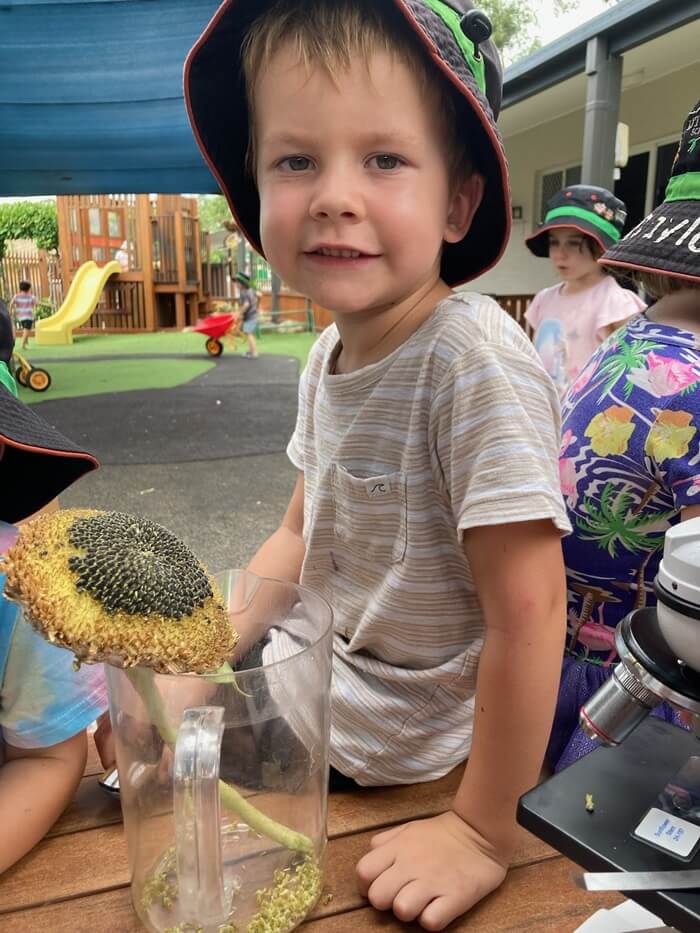
The Discovery Centre is full of information, displays and hands-on learning opportunities for visitors of all ages! With interactive environmental education areas, microscopes, lookout window, and touch screen activities, everyone will love learning more about the natural world.
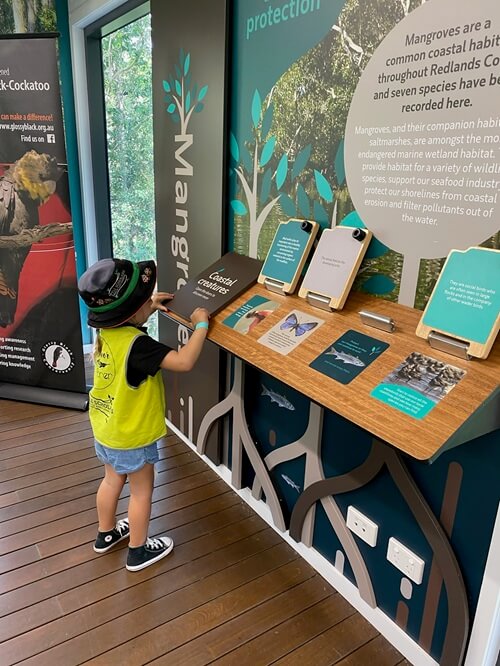
After exploring the Discovery Centre, you may have worked up a hearty appetite, so check out the IndigiCafe and enjoy local cuisine with a bushtucker twist while overlooking beautiful Coolnwynpin Creek tributary on Redlands Coast. You’ll love the food so much, you’ll want to take some of the bush flavours and spices home with you.
Check out the Redland Museum! Step inside the Museum and discover a treasure trove of historic artefacts and fascinating stories about the people, places and events that helped to shape the Redlands Coast.
The museum even has a toy hall of fame, where children can see unusual toys from the past, play with the interactive model railway, wind the handle and make calls on 100 year old telephones and see a collection of 100 dolls in handmade costumes.
They can also climb aboard and ‘drive’ the Redlander railmotor and even see how children learned at school in the past.
Open seven days a week from 10am to 3.30pm, the museum is great for families. Admission prices are $10 adults, $6 concession, children are FREE.
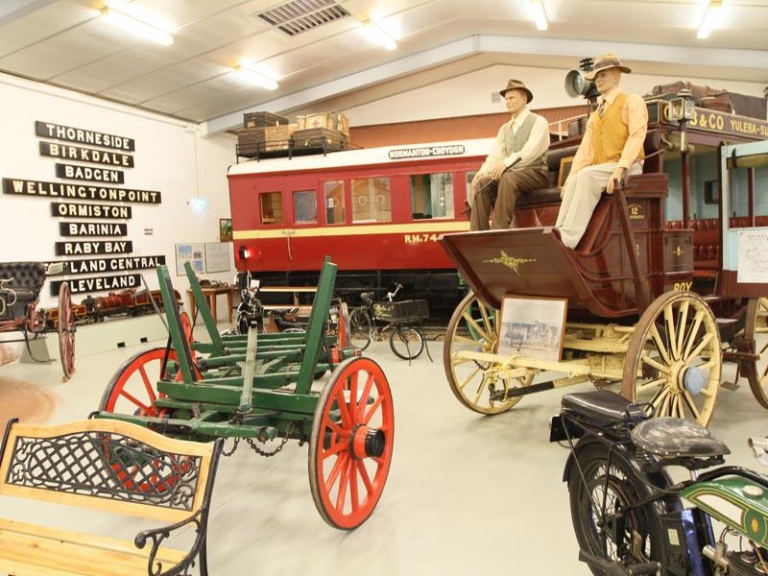
This award-winning gallery offers ‘Family Sundays at the Gallery’ once per month at RAG, Cleveland. These sessions offer families a chance to create together exploring a variety of techniques themed to compliment the gallery’s latest exhibitions. It is a great chance to connect with each other while enjoying some hands on creative fun. The gallery also offers a Parents and Prams session one Wednesday a month as an opportunity to explore the latest exhibitions, socialise and get arty.


Called a ‘hidden gem’ on Tripadvisor, we’re bringing this charming museum out of hiding to share with our families. The museum represents the 65,000 years or so of Aboriginal history, the British invasion and colonisation and a complex shared history of less than 200 years.
If your little artist wants to try something new, why not visit Colour My Pot, a pottery painting and clay studio that provides a fun and creative environment where people of all ages can come together and make memories and some beautiful art.
Colour My Pot also caters to children for birthday parties and school holiday activities.

If families are looking for something completely different to do, or have a locomotive-obsessed little ones, check out the Queensland Pioneer Steam Railway in Ipswich!
Experience a ride on vintage steam trains from the early 1900s and learn about Queensland’s railway history as you travel along historic tracks. Enjoy beautiful countryside views and grab a bite to eat or drink onboard. Check their website for dates and times.

Queens Park Environmental Education Centre offers locals, visitors (and especially families) the chance to learn more about Ipswich’s unique natural environment, waterways, and sustainability themes at no cost. Located in the heart of the city’s beloved Queens Park, children can get hands-on with this delightful, interactive, playful learning environment.
The Centre has many environmental education exhibits that showcase Ipswich’s unique natural environment, waterways, and sustainability themes. The interactive displays connect visitors with nature in the home and around the city. Families will love visiting the giant fig ‘growing’ inside the centre and explore the variety of ecosystems and wonderful wildlife that can be found in the Ipswich area.
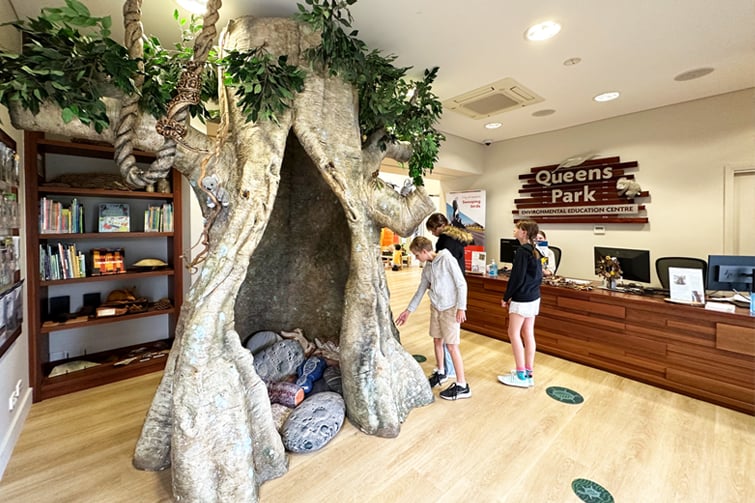
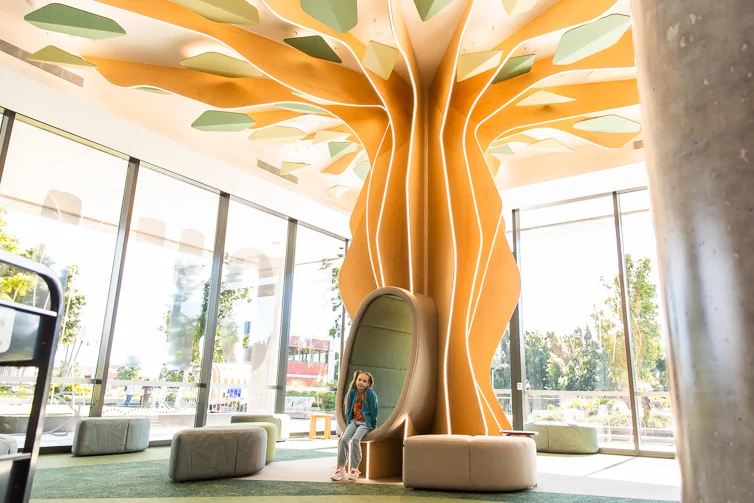
Did you know Ipswich has Australia’s only public library dedicated to children? It features a specially designed catalogue with over 35,000 books just for children, and unique multi-reality interactive experiences.
The Ipswich Children’s Library is designed to be an interactive and engaging space for children. It features various zones with elements that encourage exploration and active participation. Highlights include a series of colourful tubes where children can send fabric pieces flying through the air, large interactive screens, and colouring tables where children can scan and watch their decorated fish swim on a screen. The library also offers cosy reading nooks, a gaming touch screen with STEAM-based puzzles, and a unique Reading Tree with a cushioned tunnel for reading. The space is filled with natural light, thanks to its floor-to-ceiling windows overlooking the Nicholas Street Precinct and landscaped gardens.
The library is open seven days a week and hosts regular, child-focussed programs and events and special tech adventures just for little ones!
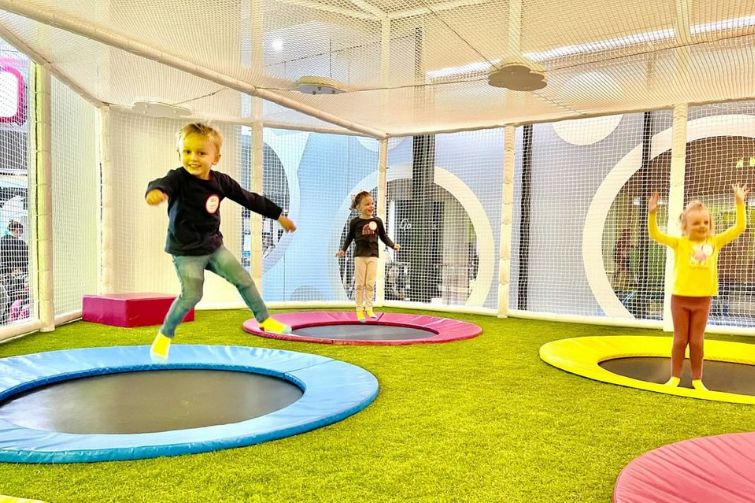
Head over to Carindale to exert some of your little ones’ boundless energy where you’ll find this active adventure-play centre specially designed for pre-school children, offering fun, active-play experiences that help develop a positive relationship with physical activity.
Hologram Zoo is a family-friendly entertainment centre that operates like a traditional zoo, but with a twist – all the animals are holographic projections created using laser light technology. Suitable for children aged three and above, there are different country based shows like Africa, North Pole, Asia, and Australia. The zoo even allows guests to travel back in time and visit the dinosaurs.

Area 51 Brisbane is Australia’s largest indoor playground, occupying an incredible total space of 10,000 square metres of endless fun for all ages.
For babies to small toddlers there’s Astrotots Wonderland and Cosmo’s Inflatable Wonderland. For children aged three to four, they can explore Mini Rovers, which includes Trampoline Park, Cosmo’s Inflatable Wonderland and Gizmo’s Galaxy. Children ages five and up can explore Universe, which includes High Ropes, Bouldering, Trampoline Park, Gizmo’s Galaxy, Mega Slides, Parkour X or Ninja Park.
Adults are very welcome to supervise for free or play for the price of a ticket.
Area 51 also has four different eateries, including iDumplings, Night Market, Mollis and the Area 51 Cafe.

At Little Scholars, with locations across South East Queensland, we understand that rainy days are opportunities for unique and engaging learning experiences. Our early learning service is dedicated to providing the highest quality early education and care, making every day, rainy or sunny, a chance for exploration, learning and fun.
Our beautiful campuses, best of the best resources and sector-leading curriculum, including play-based programs underpinned by the Early Years Learning Framework, ensure that your child won’t miss a beat in their development, even when it’s pouring outside.
Our team of dedicated educators tailors activities to the individual needs and interests of each child, making every day an adventure in learning. We cherish the deep, nurturing relationships our educators build with each child and celebrate the friendships they form with their peers.
Why not see for yourself how we transform rainy days into super fun learning experiences? Book a tour today and join our Little Scholars family!
We hear a lot about how important the first five years are for children’s brain development, and it’s a time when children’s curiosity is at a lifetime high, so it’s the perfect time to embrace their curious minds by extending these interests and keeping those little minds active and absorbed, and a new study out of Queensland explores this in further detail.
Griffith University researchers recently concluded a three-year study investigating the progression of curiosity into enduring interests and its role in fostering a continuous learning culture. The study involved 57 children aged four to five from south east Queensland, participating in two-week enrichment programs covering 15 diverse topics. This research sheds light on the developmental journey of young children as they cultivate interest in various subjects.
This research looked into how young children start to take an interest in different subjects and how this interest affects their learning. The study aimed to find out the best ways to spark interest in children, how interest fits into their learning, and what effects it has.
To tackle this, the study, led by Ellie Christoffina van Aswegen, introduced special programs filled with topics aimed at getting children excited about learning. These programs included a variety of subjects not typically taught to young children but are essential for a well-rounded education. This approach is based on the idea that children should be exposed to a wide range of knowledge to help them understand new information better and build on what they already know.
The chosen subjects ranged from plants and animals to famous artworks and space exploration, divided into three sets. The first set included topics like reptiles and continents; the second set covered the human body and insects; and the third set introduced children to religions and dinosaurs, among others. These topics were selected to broaden the children’s knowledge and provide a solid foundation for further learning.
The enrichment programs were delivered with a mixed approach of direct instruction, explicit instruction, play-based learning, group reading, and take-home activity booklets.
The underlying principle of the study was that a broad knowledge base is crucial for children’s learning because it helps them connect new information with what they already know, making it easier for them to understand and learn new things.
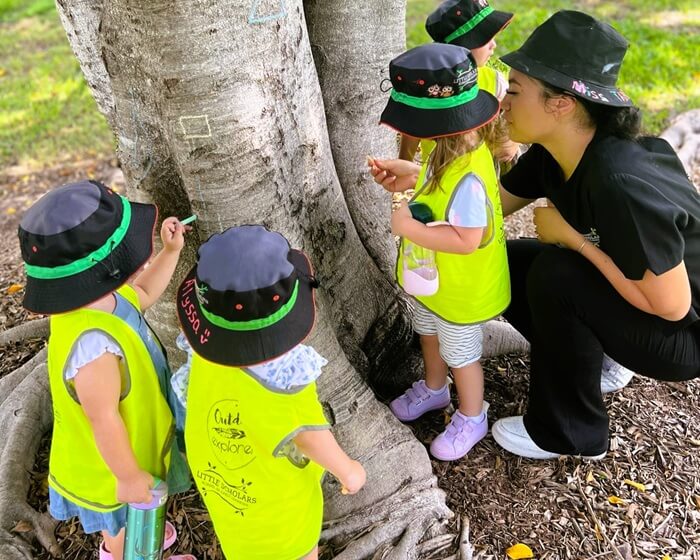
The study reviews the nuanced distinction between curiosity and interest in children, drawing on insights from Renninger and Hidi. It suggests that curiosity is the spark ignited by a specific question, a momentary engagement, as Dewey describes, that captures a child’s attention briefly. In contrast, interest is portrayed as a deeper, more sustained engagement with a subject, driven by a desire to gather extensive information and maintain engagement over time.
The research looks into the dynamics of how curiosity evolves into interest. Initially, a child’s curiosity prompts a flurry of questions about a topic. This questioning phase deepens their interest as they uncover new knowledge, fueling a continuous cycle of inquiry and discovery. Interest is described as encompassing three interconnected facets: actions, thoughts, and emotions. Together, these elements foster a rich learning environment in early childhood, where knowledge acquisition is intertwined with emotional engagement.
Researchers highlight the critical role of emotional connections and perceived competence in sustaining interest. When children develop a strong emotional attachment to a topic, their eagerness to explore and learn intensifies. Similarly, feeling adept in a certain area enhances their interest, propelling them to pursue further learning.

One example mentioned in the study was building on children’s interests of flowers. Educators led a two-minute activity during which the children pretended to be flowers. Two children showed some disengagement towards the end of the activity. Comments made by the researcher and thoughts on possible reasons for disengagement were included in notes. Each component of the session was similarly identified and analysed providing a snapshot of engagement during the session.
Before and after participating in a two-week program focused on flowers, children’s knowledge about flowers and their parts, such as stems, leaves, and roots, was evaluated. Initially, although all children were familiar with the concept of a flower, many lacked knowledge of its basic parts. However, by the end of the program, there was a significant increase in the number of children who could accurately illustrate these parts on a flower diagram. For instance, the ability to draw a stem improved from three to 17 children.
Similarly, the program enhanced children’s recognition of different types of flowers. Prior to the program, only a few children could name any flowers. Following the program, a substantial improvement was noted in their ability to identify common flowers like roses and dandelions. For example, the number of children identifying a rose increased from two to 16.
Observations of the children’s play and interactions during the program indicated a deep engagement with the topic of flowers. Activities ranged from drawing and painting flowers to hands-on exploration and pretend gardening activities. This engagement suggested a high level of cognitive involvement with the flower program.
The researchers observed data on the behavioural and emotive component of interest through video, notes, and feedback provided by both the early childhood teacher and the classroom educators.
Feedback from parents provided through a post-program questionnaire offered additional insights into the children’s growing interest in flowers. Parents reported behaviors indicating an increased awareness and curiosity about flowers in their environment, such as noticing or wanting to pick flowers. This parental feedback supported the observations made during the program, confirming a heightened interest and engagement with the subject of flowers among the children.
The researchers concluded that social interaction was key to developing interest. Social interaction, between teacher and child, their peers and at home, formed the basis of developing interest in the various topics of the enrichment program.
Each component of the program was delivered through images, interesting facts, stories, music, and drama. Researchers found engagement increased as the teacher showed more enthusiasm and modelled curiosity. The study noted that it became clear that the teacher didn’t know all the answers to children’s questions as their interest took them in a variety of directions, and the teacher became a learning partner motivated to research the topic further. The children also motivated each other to learn more, creating art, playing games, bouncing ideas off each other, solving problems and exploring nature together. Familial involvement was identified as another factor impacting curiosity and interest development in a positive way, such as parents working with children to collect or observe flowers or plants in nature to support their learning and working on take-home activity books together. The children brought in their completed take-home activity booklets, to share with the class as well as any ‘treasures’ they had found such as a feather, a flower, a leaf, etc. which stimulated conversation.
The study also examined how children emotionally connected with different subjects, aiming to spark feelings of wonder and awe. This approach occasionally led to feelings of empathy and compassion, or simply brought about joy and delight. Certain subjects allowed children to marvel at the wonders of nature, feel empathy towards animals, or experience the simple pleasure of discovering delightful things.
The study did not shy away from challenging emotions, such as the sadness children felt watching a whale get untangled from fishing nets. Children were provided a supportive environment to discuss their feelings, helping them expand their emotional vocabulary. This is important because understanding different emotions can assist children in managing their feelings better, as they learn various strategies for emotional regulation. Additionally, engaging in music, art, drama (role-play), and free play allowed children to further process their emotions, aiding their emotional growth.
The research also revealed a strong connection between emotional and cognitive engagement. Children became more inquisitive and sought additional information on topics that touched them emotionally.
At Little Scholars, our educational program, The Collective, is based on the premise that children are most successful at learning when curriculum experiences account for children’s interests, strengths, and individual needs. The Collective encompass all aspects of Little Scholars, including a collaborative approach with our children, families, educators, and community.
Our weekly programs, which can be seen in our studios, are responsive to the evolving interests and needs of the children and allow for flexibility and extended periods of play and research to test theories.
Renninger, K.A., & Hidi, S. (2017). The Power of Interest for Motivation and Engagement (1st ed.). Routledge. https://doi.org/10.4324/9781315771045
Harackiewicz, Judith M., Jessi L. Smith, and Stacy J. Priniski. (2016) Interest matters: The importance of promoting interest in education. https://journals.sagepub.com/doi/10.1177/2372732216655542
Babies are not born knowing how to control their emotions, nor are adults necessarily well-versed in how to regulate their emotions, even after decades experiencing them. While modern society is making way and space for people to feel and name emotions such as sadness, anxiety, anger, embarrassment, stress and more, some of us hadn’t learned how to allow ourselves to be vulnerable and express these emotions in a healthy way.
At Little Scholars, emotional regulation skills are as important as every other lesson children learn during their time with us. We’re hoping to break generations of cycles of mental health stigmas by teaching children to name and work through their emotions, but we also recognise this must happen at home, on the sports field, and anywhere else they may need to have access to a range of tools to cope and work through tough situations and feelings.
As parents and caregivers, we understand that not all of us were raised with the emotional intelligence to guide a young person in developing theirs. There’s also the possibility that children in our care have experienced more traumatic or negative experiences than we’ve had to deal with, so it might be something we don’t know yet how to navigate. More on that later.

When emotional states are high, it’s helpful to recognise the behaviours we see, and the emotional states we may not see.
The behaviours can be aggression, screaming, crying, avoidance, refusal, hiding, running, threatening and loss of self-control, for example.
What we may not be seeing in our children are feelings of: nervousness, exhaustion, guilt, fear, disappointment, overwhelmed, anger, rejected, embarrassed, judged, unloved, depressed, anxious, worried, shame, disrespected, helplessness, offended, sad, and attacked, amongst other feelings.
When a child is displaying any of the above behaviours, what do you think the feeling behind it could be?
1. Stay tuned and recognise signs – Keep a close eye on behavioural cues that indicate your child is experiencing strong or challenging emotions. Be aware of these signals when they arise. Of course, the strength of the emotion is normal, it’s how they deal with it that’s important. This is a step in which you’re helping to create a safe haven for the child, one of trust and acceptance. For the adult, this is recognising and understanding that all emotions are natural and normal.
2. Turn challenges into teaching moments – See difficult situations as opportunities to connect with your child and help them learn valuable emotional regulation skills. Helping children to label their emotion encourages the regulatory process to engage and reconnect the thinking brain with their limbic system. In other words, name it to tame it!
3. Listen with empathy and validate their feelings – Before reacting with discipline, keep in mind the phrases ‘Connect before you correct‘ and ‘Stay calm and curious, not quick to anger.’ Ask open-ended questions to help your child identify and express their emotions, like “I noticed you seem to be feeling ___. Could it be that you’re feeling ___?’ or ‘I’m sorry that happened to you, you must be feeling very ___’
4. Establish boundaries – Clearly communicate expectations for behaviour, reinforcing positive actions such as using kind words and explaining consequences for inappropriate behaviour like hitting. Setting these boundaries helps maintain safety of the child and those around her/him. It’s important not to make the child feel shame, and ensure the child maintains self-dignity. ‘It’s ok to feel like that, but it’s not ok to behave like that’ or ‘we don’t deal with our emotions by ___’
5. Problem-solve together – Encourage your child to brainstorm possible solutions or strategies to improve future outcomes. Provide support tailored to their age and comprehension level, using visual aids or suggesting choices when helpful. So to restore and repair, you might explore the situation first: ‘how were you feeling when that happened?’ and ‘have you felt that way before?’ then show your child you’re in this together brainstorming ‘let’s think of what you could have done instead’ or ‘can you think of two more ways you can deal with your feelings?’ the work together to come up with solutions ‘let’s decide what you will do next time you feel like this’ or ‘do you think that ____ would be more helpful next time?’
How trauma can influence behaviour in children
Zoe Lowe is a teacher and mentor who guides educators and parents through early education, behavioural support and trauma-informed practices. She recently spoke to Little Scholars educators at our annual Learning & Development Day.
Her talk helped our educators understand trauma-informed practice, how to recognise the different types of trauma people can experience, and how to work with children who might have experiences of trauma. In Australia, upwards of 5 million adults are affected by childhood trauma.
The types of trauma include:
· Simple trauma, which stems from often a single incident that was life threatening or have the potential to cause serious injury.
· Complex trauma involves interpersonal threat, violence and violation, in contrast to simple trauma, complex trauma involves multiple incidents and is therefore longer in duration.
· Developmental trauma is used to describe the impact of early, repeated trauma and loss which happens within a child’s important relationships, generally early in life.
Children who have experienced any of these traumas can be affected in many ways in their development, she says, because their mental capacity to learn may be eclipsed by having to cope with these negative circumstances.
“This is correlated with developmental trauma,” Zoe says. “Surviving the situation. So [a child’s] survival system becomes overdeveloped. Everything else is underdeveloped.”
“What also happens with trauma, the hippocampus, the part of the brain that’s responsible for your memory [learning and emotion] and the ability to differentiate between the past and the present. So, with persistent exposure to trauma, it can shrink in size, so it won’t pull on what it can to differentiate between the past and present, which is why our past experiences can have such a profound impact on us, even if we’re no longer in danger,” Zoe continues.
So why does this matter?
Because trauma can present itself in many ways in children. Perhaps they’re tired all the time, they startle easily, children who perceive educators or other trusted adults as angry and perceiving them as authoritarians with whom they can’t connect or feel safe, struggling to understand concepts easily, not coping well with transitions, friendship issues, over or under-eating, and, aggression.
However, she says, trauma can explain the behaviour, but it does not excuse the behaviour.
And these symptoms that can present in children may not necessarily be trauma, so Zoe warns not to be quick to diagnose children.
Whether the child has experienced an adverse life event or not, if there’s a behaviour exhibited that we don’t want to see, Zoe says this is where we question what’s behind the behaviour, and find out what a child might need to cease the behaviour.
“As educators, we are going to make a paradigm shift. We’re moving away from ‘what is wrong with you?’ to ‘what happened to you? What is this behaviour that I am seeing right now communicating to me? What need is needing to be met by me?’ says Zoe.
This shift also helps adults calm down and regulate their own reactions to the behaviour in question.
“We expect children to self-regulate, they can’t. They need co-regulation, we need to be with them, supporting them, holding space for them, and teaching them how to regulate.”
While children may not be born knowing how to regulate their emotions, at Little Scholars, we believe they deserve a safe space to learn and grow. We understand that emotional regulation skills are crucial for all aspects of life, and we’re committed to working alongside parents and caregivers to build a supportive community where every child feels empowered to express themselves healthily.
Our educators are extensively trained in recognising emotional cues and guiding children through challenging situations. We encourage you to stay tuned for further resources, and remember, you’re not alone, we’re here to support your child, your family and our greater community in creating a generation equipped with the emotional intelligence to navigate life’s ups and downs with confidence and compassion.
What an incredible asset online media has become when it comes to raising or educating children. From YouTube to Instagram, there’s a wealth of expert information at your fingertips that previous generations simply didn’t have. Thanks to online media, parents and educators can now access an array of information, tips, and tricks on child development, parenting, and education.
And of course, podcasts are an excellent way to learn while on the go. You can listen to them while commuting, during your daily walk, or even before bed. Here we have compiled a list of our favorite parenting and child development podcasts, divided into categories for parents and educators. Check them out!

A podcast about parenting, alternative education and stepping into the wilderness with children. Each week, Nicki Farrell and Vicci Oliver interview experts who inspire them to answer questions about parenting and education. They also share stories from families who took the leap, and are taking the road less travelled.
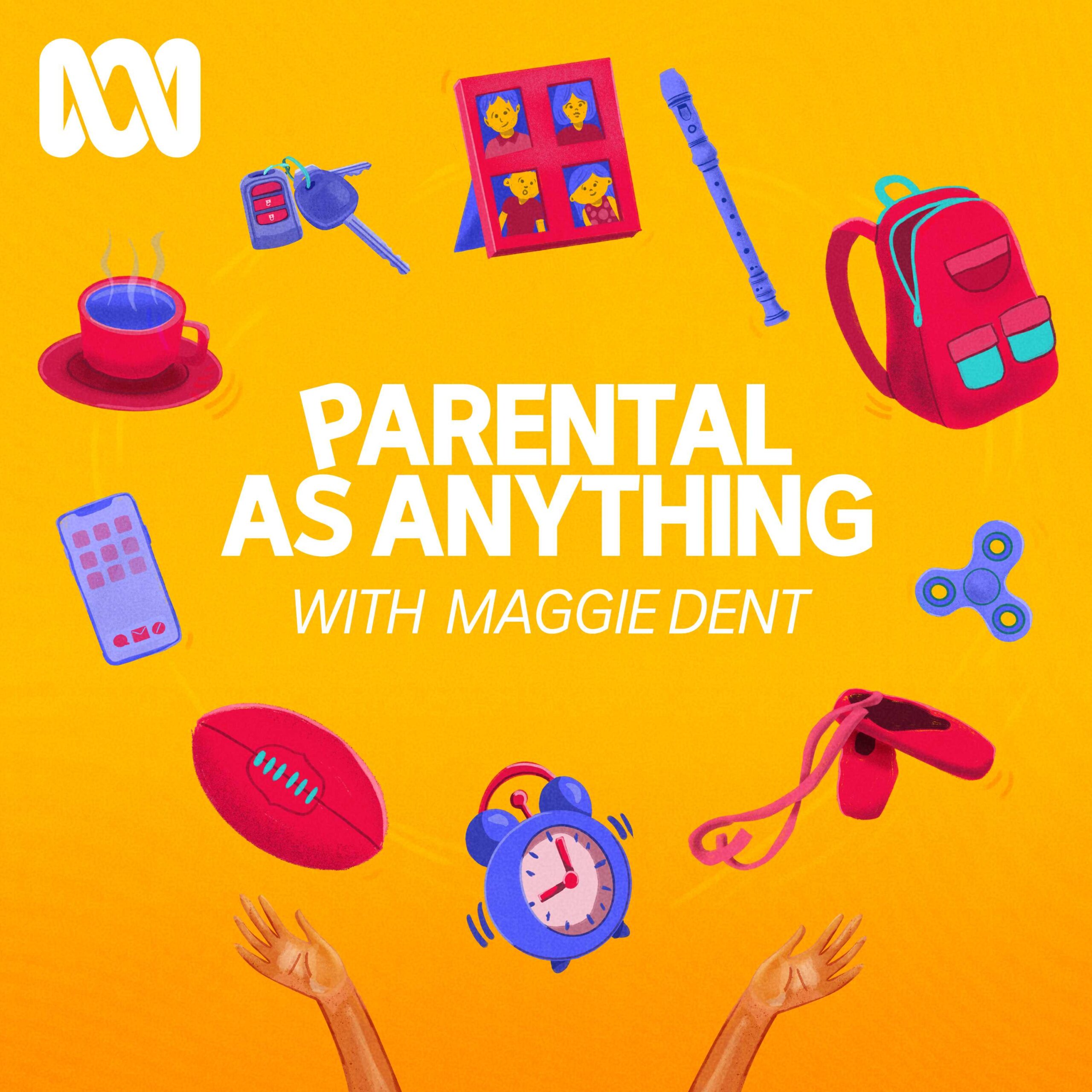
Maggie Dent, one of Australia’s favourite parenting authors and educators gives you practical tips and answers to your real-world parenting dilemmas.
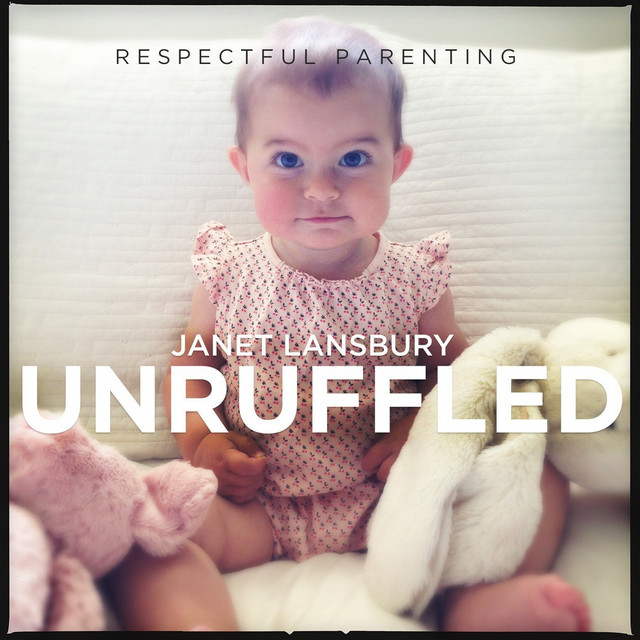
Each episode of Unruffled addresses a reader’s parenting issue through the lens of Janet’s respectful parenting philosophy, consistently offering a perspective shift that ultimately frees parents of the need for scripts, strategies, tricks, and tactics.
Listen to conversations with experts on a variety of topics related to children’s mental health. Episodes offer practice wisdom from experts in the field and will give you an insight into the work and values of the National Workforce Centre for Child Mental Health.

Based on the popular RCH Kids Health Info fact sheets, the Kids Health Info podcast explores common topics and concerns with experts in children’s health. Hosts Margie Danchin, Lexi Frydenberg and Anthea Rhodes are all paediatricians and mums, so they know first-hand what keeps parents up at night. Every episode features guest experts in a range of child and adolescent health specialties, and lots of practical tips and advice.
Hamish Blake chats with other dads he really admires about their approach to ‘dadding’, and in the process hopefully learn a little, steal some of their hard earned wisdom and help dads dad a tiny bit better.
All humans learn through play. Join Kristen RB Peterson of Learning Wild as she chats all things early childhood education, preschool, nature and forest school, homeschool and parenting.

Hosted by international keynote speaker, educator and founder of Wearthy; Lukas Ritson, Play it Forward is an educational podcast about the importance of play. With the increase of technological advancement, it has never been harder to get kids playing outside

Early Childhood perspectives is a fortnightly podcast devoted to exploring the often overlooked concepts and issues of the Australian Early Years Sector.
This podcast covers meaningful topics in early childhood education with some of the sector’s most experienced educators and subject matter experts. With each short episode, its aim is to provoke minds and inspire excellence in early childhood education.

Barbi Clendining from Firefly HR and Saurubh Malviya from We Belong Education have teamed up to bring to you a fun and informative conversation and talk about every aspect of the Out of School Hours profession.
OK, we fibbed. It’s not JUST Australian podcasts. Here’s a few international podcasts that are quite popular with the kids these days. (and by kids, we don’t mean baby goats, or children really, but we’re just trying to sound cool)
Building creativity one leaf and bolt at a time. Join Dr. Carla Gull, American educator and mother of four boys, as she talks about getting outside and exploring loose parts.

A funny take on parenting with UK hosts Rob & Josh as they share their tales of parenting woe and chat to celebrity parents about how they’re coping, or not coping.


Join American clinical psychologist and mother of three Dr. Becky Kennedy on her weekly podcast, as she takes on tough parenting questions and delivers actionable guidance—all in short episodes, because we know time is hard to find as a parent. Her breakthrough approach has enabled thousands of people to get more comfortable in discomfort, make repairs after mistakes, and always see the good inside.

Each episode discusses issues today’s fathers face navigating work, parenthood, relationships and play. We share stories of dads who are active and engaged in the decisions, the drudgery, and the pains and the joys of parenthood. Our parenting podcast not only brings modern dads into the conversation, but also – regardless of gender – our spouses and partners, friends and colleagues, and leaders in business, entertainment and media.
Let us hold your hand and help looking for a child care centre. Leave your details with us and we’ll be in contact to arrange a time for a ‘Campus Tour’ and we will answer any questions you might have!
"*" indicates required fields
Let us hold your hand and help looking for a child care centre. Leave your details with us and we’ll be in contact to arrange a time for a ‘Campus Tour’ and we will answer any questions you might have!
"*" indicates required fields
Fill in the form to join your local Pram Pals mums and bubs walk