
Everything you need to know about how Australia’s early childhood framework guides the way your child learns, grows, and thrives, explained in plain English.
The Early Years Learning Framework or EYLF is Australia’s national standard for early childhood education and care. Its full name is Belonging, Being and Becoming: The Early Years Learning Framework for Australia.
Developed by the Australian Government and released in 2009 (with a major update to V2.0 in 2022), the EYLF applies to all approved childcare and early education settings for children from birth to five years of age. It sits under Australia’s National Quality Framework (NQF) and is the foundation against which services are assessed by ACECQA.
The framework doesn’t dictate a specific program or curriculum. Instead, it gives educators a shared foundation of principles, practices, and learning outcomes to guide the experiences, environments, and relationships they create for children. The goal is a consistent, high-quality early education across every approved childcare centre in Australia.
The 2022 update expanded the EYLF's principles from 5 to 8, strengthened language around sustainability, critical reflection, and collaborative leadership, and updated practices to reflect contemporary research in early childhood pedagogy. If your child's centre was enrolled before 2023, their approach has been updated to reflect V2.0.
At the heart of the EYLF are three interconnected concepts that describe how children experience the world. These pillars aren’t stages, they exist simultaneously in every child’s life.
Children develop a sense of belonging through their relationships — with family, educators, peers, and the broader community. When children feel they belong, they feel secure, confident, and connected enough to learn and explore. Belonging is the foundation all other development is built on.
Being recognises that childhood is a valuable time in its own right — not just preparation for school. Children deserve time to simply be: to play, to wonder, to form friendships, and to experience the present moment fully. High-quality early childhood education honours this.
Becoming is about growth, change, and the development of identity over time. Every experience a child has — every relationship, challenge, and discovery — shapes who they are becoming. The EYLF asks educators to see and support each child’s unique developmental journey.
EYLF principles are the core beliefs that underpin everything educators do. They reflect contemporary research, ethical practice, and what we know about how children learn best. EYLF V2.0 expanded these from 5 to 8 principles.
Children learn best when they feel safe, valued, and emotionally connected. Warm, consistent relationships with educators are the single most important factor in quality early learning. This principle places relationship-building at the centre of every interaction.
Educators and families share responsibility for children’s learning and development. Genuine partnerships — built on communication, trust, and mutual respect — strengthen outcomes for children. Parents are considered the first and most important educators in a child’s life.
Every child has the capacity to succeed. This principle calls on educators to hold high expectations for all children regardless of background, ability, or circumstance, and to actively work to remove barriers to participation and achievement.
Australia’s children come from diverse families, cultures, and communities. Educators respect and value this diversity including Aboriginal and Torres Strait Islander ways of knowing and being, and reflect it in their programs and environments.
High-quality educators are always learning. This principle commits educators to continuous professional development, critical self-reflection, and staying current with early childhood research. It’s what separates good care from exceptional early education.
Added in EYLF V2.0, this principle encourages educators to examine their own assumptions, values, and practices with rigour. Critical reflection goes beyond routine self-assessment — it challenges educators to question why they do what they do and whether it truly serves every child.
Also new in V2.0, this principle recognises that children’s futures are shaped by the health of the planet and their communities. Educators integrate sustainability into everyday learning — helping children develop a sense of environmental responsibility from the earliest years.
Quality early education is a shared endeavour. This principle values leadership at every level — from the director to each educator — and recognises that when teams learn and grow together, children’s outcomes improve. A collaborative culture underpins a high-performing centre.
If principles describe what educators believe, practices describe what they do. These are the pedagogical strategies and teaching approaches that bring the EYLF to life in the learning environment every day.
Children’s development across physical, social, emotional, and cognitive domains can’t be separated. Educators take a whole-child approach — recognising that a child who feels loved and safe learns more than one who doesn’t, and that physical play builds cognitive skills as much as desk-based activities.
Skilled educators read children closely — their moods, interests, cues, and emerging ideas — and adapt in real time. Responsiveness builds trust, deepens engagement, and ensures each child’s experience is attuned to who they are right now, not a one-size-fits-all program.
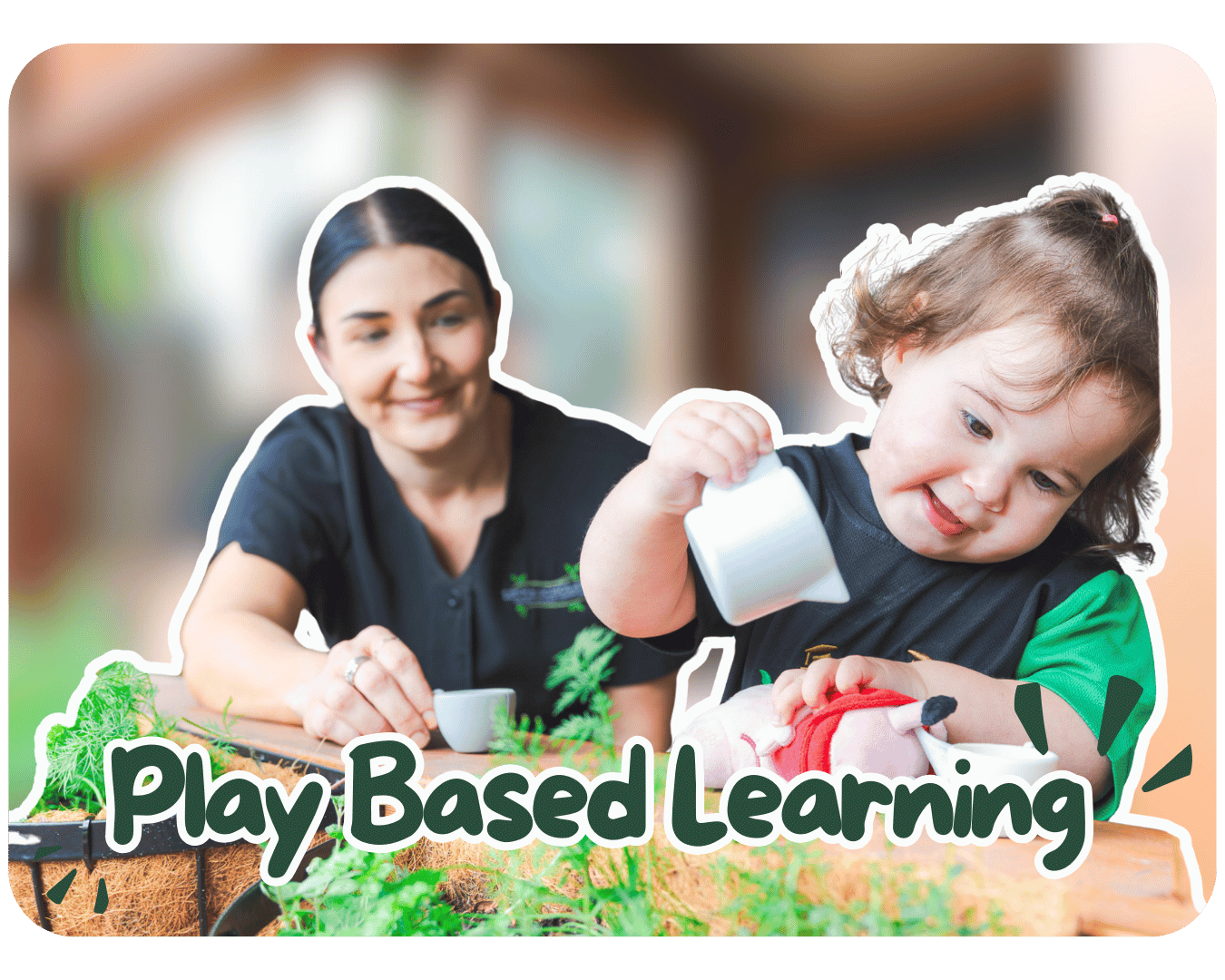
Play is the primary vehicle for learning in the early years. Through play, children experiment, imagine, problem-solve, build social skills, and develop language. The EYLF recognises both structured and unstructured play as essential — leisure and downtime are as valuable as directed learning.
Great early childhood educators don’t just supervise — they teach with purpose. Intentional teaching means making deliberate decisions about experiences, language, questions, and provocations to extend children’s thinking and scaffold their development toward meaningful goals.
The physical and emotional environment of a centre is itself a teacher. Educators design spaces — indoors and outdoors — that invite curiosity, support risk-taking, reflect children’s identities, and promote independence. A well-designed learning environment makes quality learning happen more naturally
Educators actively incorporate children’s cultural backgrounds, languages, and family practices into their programs. Cultural responsiveness goes beyond celebrating events — it means genuinely embedding diverse ways of knowing, being, and doing into everyday learning experiences.
Transitions — between rooms, between services, and into school — can be unsettling for children. Educators work proactively to ensure these transitions are smooth, supported, and built on shared knowledge of each child’s learning journey, reducing disruption and building confidence.
Ongoing observation, documentation, and assessment help educators understand where each child is in their learning, what’s working, and where to go next. Assessment in the EYLF is not about testing, it’s a reflective practice that informs planning and celebrates children’s progress.
Learning outcomes are the broad goals that the EYLF guides educators toward for every child aged birth to 5. They’re not milestones or checklists — they’re holistic developmental destinations that shape how educators plan, observe, and document learning.
Children develop confidence in who they are their strengths, their feelings, their family, and their place in the world. This outcome includes developing resilience, a positive sense of self, and the ability to make choices and act with increasing independence.
Children develop a sense of connection to their communities, the natural environment, and the wider world. They learn about their rights and responsibilities, develop empathy, and begin to understand their role as active participants in society.
Physical health, emotional wellbeing, and a sense of safety and comfort all contribute to this outcome. Children who feel well are better equipped to learn, form relationships, and navigate challenge. Wellbeing is both an outcome and a precondition for all other learning.
Children develop dispositions for learning, curiosity, creativity, persistence, and enthusiasm. They become willing to take on challenges, try new things, and engage deeply with experiences. This outcome lays the cognitive and motivational foundations for lifelong learning.
Communication encompasses verbal language, non-verbal expression, literacy, numeracy, and digital literacy. Children learn to express themselves, listen and respond, engage with stories and symbols, and use a growing range of tools and technologies to communicate and create.
Common questions about the EYLF from parents, educators, and childcare students.
At Little Scholars, the EYLF isn’t just compliance — it’s the foundation of everything we do across our 17 South East Queensland campuses. Our educators are trained to bring all 8 principles and 8 practices to life every day, in environments designed for children to genuinely thrive.
Everything you need to know about how Australia's early childhood framework guides the way your child learns, grows, and thrives — explained in plain English.
Quick Reference
The Early Years Learning Framework — or EYLF — is Australia's national standard for early childhood education and care. Its full name is Belonging, Being and Becoming: The Early Years Learning Framework for Australia.
Developed by the Australian Government and released in 2009 (with a major update to V2.0 in 2022), the EYLF applies to all approved childcare and early education settings for children from birth to five years of age. It sits under Australia's National Quality Framework (NQF) and is the foundation against which services are assessed by ACECQA.
The framework doesn't dictate a specific program or curriculum. Instead, it gives educators a shared foundation of principles, practices, and learning outcomes to guide the experiences, environments, and relationships they create for children. The goal is a consistent, high-quality early education across every approved childcare centre in Australia.
At the heart of the EYLF are three interconnected concepts that describe how children experience the world. These pillars aren't stages — they exist simultaneously in every child's life.
Children develop a sense of belonging through their relationships — with family, educators, peers, and the broader community. When children feel they belong, they feel secure, confident, and connected enough to learn and explore. Belonging is the foundation all other development is built on.
Being recognises that childhood is a valuable time in its own right — not just preparation for school. Children deserve time to simply be: to play, to wonder, to form friendships, and to experience the present moment fully. High-quality early childhood education honours this.
Becoming is about growth, change, and the development of identity over time. Every experience a child has — every relationship, challenge, and discovery — shapes who they are becoming. The EYLF asks educators to see and support each child's unique developmental journey.
EYLF principles are the core beliefs that underpin everything educators do. They reflect contemporary research, ethical practice, and what we know about how children learn best. EYLF V2.0 expanded these from 5 to 8 principles.
Children learn best when they feel safe, valued, and emotionally connected. Warm, consistent relationships with educators are the single most important factor in quality early learning. This principle places relationship-building at the centre of every interaction.
Educators and families share responsibility for children's learning and development. Genuine partnerships — built on communication, trust, and mutual respect — strengthen outcomes for children. Parents are considered the first and most important educators in a child's life.
Every child has the capacity to succeed. This principle calls on educators to hold high expectations for all children — regardless of background, ability, or circumstance — and to actively work to remove barriers to participation and achievement.
Australia's children come from diverse families, cultures, and communities. Educators respect and value this diversity — including Aboriginal and Torres Strait Islander ways of knowing and being — and reflect it in their programs and environments.
High-quality educators are always learning. This principle commits educators to continuous professional development, critical self-reflection, and staying current with early childhood research. It's what separates good care from exceptional early education.
Added in EYLF V2.0, this principle encourages educators to examine their own assumptions, values, and practices with rigour. Critical reflection challenges educators to question why they do what they do and whether it truly serves every child.
Also new in V2.0, this principle recognises that children's futures are shaped by the health of the planet and their communities. Educators integrate sustainability into everyday learning — helping children develop environmental responsibility from the earliest years.
Quality early education is a shared endeavour. This principle values leadership at every level — from the director to each educator — and recognises that when teams learn and grow together, children's outcomes improve.
Want to see these principles in action? Visit one of our 17 South East Queensland campuses.
Book a tourIf principles describe what educators believe, practices describe what they do. These are the pedagogical strategies and teaching approaches that bring the EYLF to life in the learning environment every day.
Children's development across physical, social, emotional, and cognitive domains can't be separated. Educators take a whole-child approach — recognising that a child who feels loved and safe learns more, and that physical play builds cognitive skills as much as anything else.
Skilled educators read children closely — their moods, interests, cues, and emerging ideas — and adapt in real time. Responsiveness builds trust, deepens engagement, and ensures each child's experience is attuned to who they are right now.
Play is the primary vehicle for learning in the early years. Through play, children experiment, imagine, problem-solve, and build social skills. Both structured and unstructured play are essential — leisure and downtime are as valuable as directed learning.
Great early childhood educators teach with purpose. Intentional teaching means making deliberate decisions about experiences, language, questions, and provocations to extend children's thinking and scaffold development toward meaningful goals.
The physical and emotional environment of a centre is itself a teacher. Educators design spaces — indoors and outdoors — that invite curiosity, support risk-taking, reflect children's identities, and promote independence.
Educators actively incorporate children's cultural backgrounds, languages, and family practices into programs. This means genuinely embedding diverse ways of knowing, being, and doing into everyday learning experiences.
Transitions — between rooms, services, and into school — can unsettle children. Educators work proactively to ensure transitions are smooth and built on shared knowledge of each child's learning journey.
Ongoing observation, documentation, and assessment help educators understand where each child is and where to go next. Assessment in the EYLF is not about testing — it's a reflective practice that informs planning and celebrates children's progress.
Learning outcomes are the broad goals that the EYLF guides educators toward for every child aged birth to 5. They're not milestones or checklists — they're holistic developmental destinations that shape how educators plan, observe, and document learning.
Children develop confidence in who they are — their strengths, their feelings, their family, and their place in the world. This includes developing resilience, a positive sense of self, and the ability to make choices and act with increasing independence.
Children develop a sense of connection to their communities, the natural environment, and the wider world. They learn about their rights and responsibilities, develop empathy, and begin to understand their role as active participants in society.
Physical health, emotional wellbeing, and a sense of safety and comfort all contribute to this outcome. Children who feel well are better equipped to learn, form relationships, and navigate challenges. Wellbeing is both an outcome and a precondition for all other learning.
Children develop dispositions for learning — curiosity, creativity, persistence, and enthusiasm. They become willing to take on challenges, try new things, and engage deeply with experiences. This outcome lays the cognitive and motivational foundations for lifelong learning.
Communication encompasses verbal language, non-verbal expression, literacy, numeracy, and digital literacy. Children learn to express themselves, listen and respond, engage with stories and symbols, and use a growing range of tools to communicate and create.
Common questions about the EYLF from parents, educators, and childcare students.
At Little Scholars, the EYLF isn't just compliance — it's the foundation of everything we do across our 17 South East Queensland campuses. Our educators bring all 8 principles and 8 practices to life every day, in environments designed for children to genuinely thrive.
Let us hold your hand and help looking for a child care centre. Leave your details with us and we’ll be in contact to arrange a time for a ‘Campus Tour’ and we will answer any questions you might have!
"*" indicates required fields
Let us hold your hand and help looking for a child care centre. Leave your details with us and we’ll be in contact to arrange a time for a ‘Campus Tour’ and we will answer any questions you might have!
"*" indicates required fields
Fill in the form to join your local Pram Pals mums and bubs walk
