

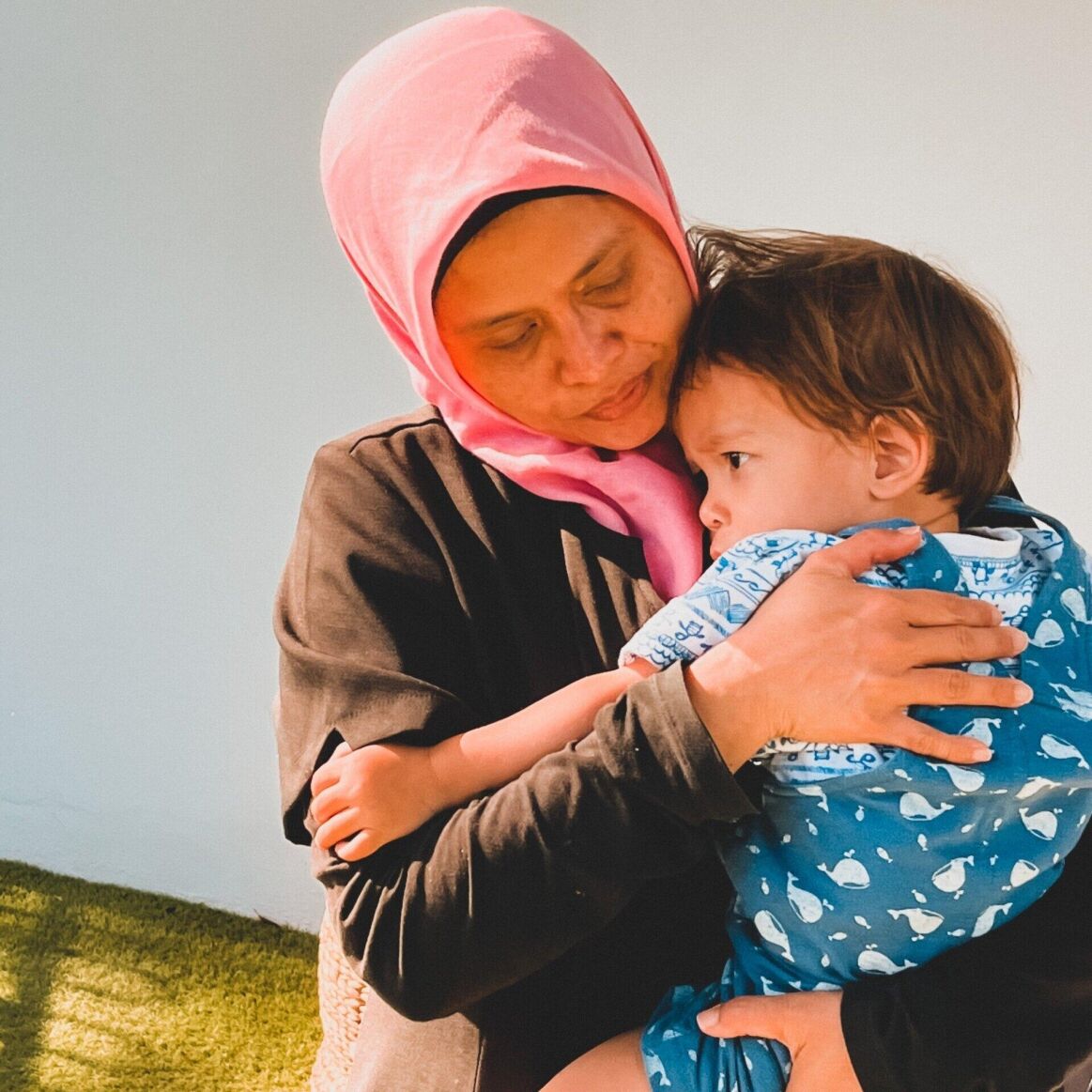
A slow-to-warm-up child needs time to watch before joining in with new people and places. It is a way of being, not a problem. With patience, a bit of preparation and adults who don't rush them, these children settle and join in at their own pace.
Every child comes into the world with their own temperament, their own way of meeting new things. Some children run straight into a room full of strangers. Others hang back, watch from a safe distance and only step in once they've worked out how things go.
You might notice your child go quiet when someone new says hello, or stay close to you at a family gathering, a birthday party or on their first visit to a new place. It's easy to call this "shy" or "standoffish", but those labels can stick and suggest something is wrong. Usually nothing is. Your child simply needs time to observe, time to work out how things work, space to decide whether they feel comfortable with someone, and respect for their right to move at their own speed.
The idea of a slow-to-warm-up temperament comes from psychiatrists Alexander Thomas and Stella Chess, who described temperament through nine traits, including how a child first reacts to new people and situations. Penn State Extension's Better Kid Care has a plain-language summary if you'd like to read more.
Feeling safe matters for every child, and it matters most for a cautious one. Australia's Early Years Learning Framework puts it simply: when children have sound wellbeing and feel safe, they have the confidence to experiment, explore and try out new ideas (Early Years Learning Framework V2.0, Learning Outcome 4).
Preparing for situations with your child
Children who are slow to warm up feel more at ease when they know what's coming, whether it's a friend's birthday party, a visit to the dentist or a new childcare. You can help them get ready by:
- showing them photos or short clips of where you're going or what you'll be doing
- using pretend play to practise the activity at home before you go
- visiting the place before the real event, if you can. For childcare, that's what orientation visits before your child starts are for. When you book a tour, ask your Campus Manager how they work at your campus
- going over the day's plan so they know what's happening and what's expected, even small things like changing into sport clothes before sport
- reading books or watching videos that show similar experiences
- practising beforehand with role play, so when the day comes they've had a dress rehearsal.
Before a situation you think might be hard, tell your child what they can do when they get there. For example: "When we walk in, there might be lots of people. If everyone comes to say hi and you're not ready, you can smile and wave."
In the moment, while your child is still sizing things up, you could try: "You don't have to answer, but here's a game. If you're having a good time, touch your nose. If you're not, stomp your feet." It lets your child join in without having to speak, which can help them past the feeling of freezing up. You might even get a smile.
The strengths of the slow-to-warm-up child
Being a little more gradual in building comfort around others is not a negative trait, and it shouldn't be treated as one. Children who are slow to warm up are often keen observers who notice things others miss, and they tend to think before they act.
There's a chance to lift up your cautious child as you watch them in new situations. Tell them you admire how they read the room before they move forward, or point out when they took a big step, like approaching someone first, then ask how they felt afterwards. It shows your child you're always in their corner and helps them build feelings of safety and confidence.

Building relationships at Little Scholars
Kristen, a lead educator at Little Scholars Pacific Pines, says building relationships through play is the key, especially when a child first starts with us.
"Play is the language of children. We are always on the child's level offering support and companionship without expecting them to return or respond immediately. Through observations and learning stories we share how we celebrate even the smallest achievements such as a child engaging in a group activity alongside peers."
Kristen, lead educator, Little Scholars Pacific PinesKristen says family involvement matters just as much, because families know their children best. "We work closely with families to bring children's interests and special talents from home into their Little Scholars environment."
Raylene, lead educator at Little Scholars Yatala, agrees.
"One of the most useful, however overlooked strategies that I've used in my time as an educator is to build strong relationships with parents. When children see their parents positively engaging with a person, they begin to see that person as someone they too can connect with."
"As educators it's crucial to ensure that we are attuning to the children in our care at every stage of their life so they feel recognised and supported to become the capable little humans they were born to be at a pace that is natural for them."
Raylene, lead educator, Little Scholars YatalaQuiet spaces when the room gets busy
A busy room can be a lot for a cautious child, so our studios include quiet areas where a child can retreat to and watch from until they're ready to join in. Our learning environments include quiet, calm areas indoors and cosy reading spaces outside. That follows the Early Years Learning Framework, which asks educators to plan both active and calming spaces, and times in the day for active and quiet play.

Why a cautious child may take longer to settle
Every child settles into childcare at their own pace. As Raising Children Network puts it, some children take longer or need more help to settle in at child care, and that's normal for a slow-to-warm-up child. Some children seem fine for the first few days, then get upset later, once the newness wears off and they realise this is now part of their week.
A few things tend to help: the same days each week, a familiar educator to connect with, visits before they start, and a quiet corner to go to when they need a break. Changes at home, like an illness or a move, can slow settling down for a while, so let your child's educators know if something has changed.
Our guide to your child's first day of childcare covers what to pack and the signs that your child is starting to settle.
Why does my cautious child cry at drop-off?
Tears at drop-off are common, and they don't always mean the same thing. A cautious temperament means your child needs time with new people and places. Being upset at goodbye is about separating from you, and many children who are happy all day still cry for a minute when you leave. Our post on separation anxiety has practical ideas for the goodbye itself.
If you're worried that the upset is lasting a long time, getting worse, or showing up in other parts of your child's life, talk with your child's educator first. Your GP or child health nurse can also help.
Tips for your child's first weeks at Little Scholars
- Come to the orientation visits. Short visits together before your child starts mean the studio, the yard and the faces are already a little familiar.
- Keep drop-off the same each day. The same time, the same steps and the same goodbye help your child know what comes next.
- Allow plenty of time. Arriving relaxed rather than rushed helps you both. Arriving early can help too, so your child walks into a calmer room rather than one already full of noise.
- Let your child come in gradually. You might sit together in the yard for a while before they decide to play.
- Give them time to answer. If an educator greets your child or asks a question, try not to answer for them or push them to respond.
- Talk to the educator first. Before the first day, away from your child's hearing, let the educator know your child is slow to warm up and what seems to help.
- Don't apologise for your child. If your child often hears "sorry, he's shy", they may start to act the way that summary expects.
- Check the daily portfolio. Your child's day is shared in a daily digital portfolio in our parent app, so you can see how they're going and talk about it at home.
Questions parents ask
What does slow to warm up mean?
It describes a child who needs time to watch and get comfortable before joining in with new people, places or activities. It's a temperament, a natural way of meeting the world, not a problem to fix. Given time and no pressure, these children usually join in happily.
How do I help a shy child settle into childcare?
Prepare them for what's coming, visit before they start, and keep drop-offs short, predictable and on the same days each week. Tell their educator what helps your child, and give them time to join in rather than pushing. Every child settles at their own pace.
Understanding a slow-to-warm-up child is a shared effort between families and educators. Rather than treating your child's temperament as something to excuse, celebrate the careful, observant child they are, and give them the time they need. You can read more about how we work with children in our childcare philosophy.
Come and see a studio for yourself
Visit your nearest campus, meet the educators and see the quiet spaces your child could use. Ask us anything about settling in.
Updated 27 November 2026. Sources read 12 and 15 November 2026:
- ACECQA: Early Years Learning Framework V2.0 (Learning Outcome 4; Practices: learning environments, and continuity of learning and transitions)
- Raising Children Network: Your child isn't settling (reviewed 10 April 2025)
- Penn State Extension, Better Kid Care: Temperament, what is it?
General information only. If you're concerned about your child's wellbeing or development, talk with your GP or child health nurse.
