


In today’s fast-paced world, science, technology, engineering, and mathematics (STEM) are the driving forces behind innovation and progress. To equip the next generation with the skills they need to thrive in this exciting landscape, we have to recognise the incredible impact of early childhood education. A recent study conducted by researchers at the University of California Irvine has revealed the transformative power of high-quality early childhood education and care (ECEC) in nurturing children’s STEM achievements throughout their educational journey.
The study’s findings are both exhilarating and promising. They show that children who have access to top-notch ECEC before starting school are more likely to excel in STEM subjects as they progress into high school. This underscores the vital role of investing in early education and providing children with the necessary tools and support to build a strong educational foundation.
The researchers identified two key factors that contribute to the success of early childhood education in fostering STEM abilities. Firstly, igniting children’s curiosity through cognitive stimulation has a profound impact on their problem-solving skills and overall STEM performance. Early childhood educators who create engaging learning environments and incorporate hands-on experiences play a pivotal role in nurturing children’s passion for STEM. Secondly, the study emphasised the crucial role of educator sensitivity and responsiveness. When educators demonstrate empathy, attentiveness, and genuine care for children’s needs, it not only supports their overall development but also significantly influences their STEM achievements. The emotional connection established during these early years lays the foundation for children’s social-emotional skills, which are closely intertwined with cognitive development.
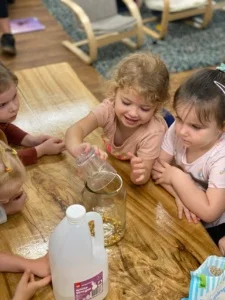
Interestingly, the study also revealed that sensitive and responsive caregiving in early childhood has an even greater impact on STEM performance for children from low-income families compared to their peers from higher-income backgrounds. This finding highlights the importance of addressing equity in early education and ensuring that all children, regardless of their socioeconomic status, have equal access to high-quality early learning that fosters STEM engagement. Speaking of STEM, did you know that Little Scholars offers an exciting STEM program for our kindergarten children? In collaboration with our friends at Lab Kids, we provide an incredible educational STEM program that aligns with the Early Years Learning Framework and the Australian National Curriculum. From exploring motion and states of matter to learning about light, sound, and chemical reactions, our curious little scholars embark on an exciting journey of STEM discovery!
Finally, the University of California Irvine study reinforces the immense value of early childhood education in nurturing STEM success. By providing high-quality early learning that fosters curiosity, responsive caregiving, and an inclusive learning environment, we begin to realise the full potential of our Little Scholars. Book a tour at Little Scholars.
If you follow our social media posts, you know we’re passionate about getting our Little Scholars outside. Have you ever wondered why outdoor play is such a vital part of our early educational program?
Imagine the fresh air brushing against your face, the satisfying crunch of leaves under your feet, or the soothing sound of a nearby burbling stream. Picture the invigorating scent of freshly cut grass or the refreshing breeze of the salty sea air. Envision the tactile sensation of rough bark or smooth stones. And finally, visualise the breathtaking beauty of greenery, rivers, streams, and oceans.
In essence, being outdoors offers the ultimate sensory experience that simply cannot be replicated in a studio.
Many of us cherish childhood memories filled with boundless hours spent exploring the great outdoors. However, as life has grown busier for families, children today are spending less time engaging in unrestricted play outside. A recent study by Royal Children’s Hospital national child health poll found that 45% of Australian children play outdoors most days, and 80% of parents would like their children to spend more time outdoors. At Little Scholars, we want children to rediscover the joy of unstructured play in nature.
One study found that children who engage in just one third more outdoor activities than their peers grow up to be happier adults.
Outdoor learning should be an integral part of children’s everyday lives, providing fun and enjoyment while also serving as a stimulus and extension of their indoor learning. If your child attends Little Scholars, outdoor play is a key component of their daily experience on our campus.
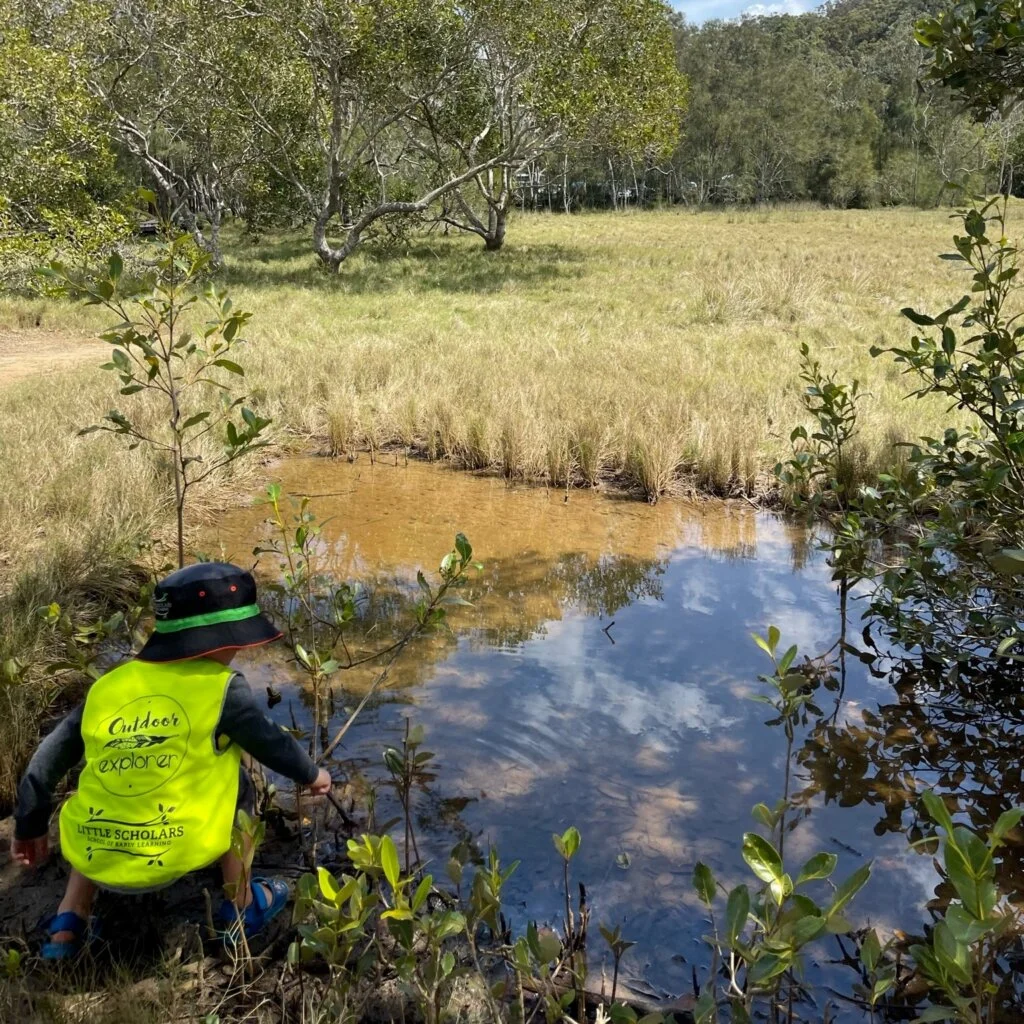
At Little Scholars, our educational programming places a strong emphasis on the natural environment. We have developed the Little Scholars’ Bush Kinder program, an innovative outdoor education experience for children of all ages, fostering exploration, discovery, and learning in nature.
During our Bush Kinder adventures, children engage in a range of activities, including nature walks, wildlife watching, building shelters, and learning about indigenous culture. They climb, scramble, jump, and fully immerse themselves in nature’s playground.
Our outdoor teachers are highly experienced and qualified in outdoor education and child development. They understand the significance of outdoor and nature play in fostering children’s development and well-being. By cultivating a love for nature and the environment, as well as a connection to all living things, they help fulfill children’s basic needs for freedom, adventure, experimentation, risk-taking, and simply being children.
At Little Scholars, the safety and security of our children are of utmost importance. Our Bush Kinder program is conducted in a safe and secure outdoor environment, with strict protocols in place to ensure the well-being of all participants. Our educators are passionate about providing children with meaningful learning experiences in a safe and supportive setting. Extensive risk assessments are conducted prior to excursions, but children are also advised and included in risk assessing while on their adventures so they can begin to think about safe risk taking while enjoying being outside. Our Bush Kinder program is designed to be fun, engaging, and educational, and there are plenty of benefits for children while they’re out on their adventures.
Children have the opportunity to explore and discover the wonders of the natural environment, learning about plants, animals, and ecosystems firsthand.
Through hands-on experiences, children develop critical thinking and problem-solving skills. They learn to navigate challenges and find creative solutions.
Outdoor play provides ample opportunities for children to interact with their peers, fostering the development of social skills and the formation of new friendships.
Engaging in outdoor activities helps children develop their physical skills, such as coordination, balance, and strength.
During bush kinder, we engage in Dadirri, an Aboriginal word meaning ‘inner deep listening and quiet still awareness and waiting’. So while out enjoying nature, the children and educators sit with a bit of space from each other and pay close attention to what they can hear, see, smell and feel. Bush kinder also provides an opportunity to learn, acknowledge, and celebrate the history and traditions of the people who were the traditional owners of the land they love to spend time exploring.
Finally, spending time in nature cultivates a sense of wonder and deepens children’s appreciation for the natural world around them.
While we take pride in our learning programs that prioritise outdoor play, it’s important to acknowledge the foundations upon which these programs were built. Our teams have conducted extensive research and drawn from the following theories:

Friedrich Froebel (1782-1852): Froebel’s approach emphasises holistic development and creativity in early childhood education. He recognised the importance of outdoor learning, nature walks, and gardening.
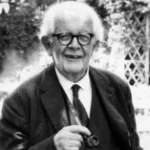
Jean Piaget (1896-1980): Piaget’s theory of cognitive development highlights the role of play in intelligence development. He believed that children’s play and environment should encourage cognitive and language growth.

Lev Vygotsky (1896-1934): Vygotsky emphasised the importance of children’s interaction with the environment and their peers. He believed that learning is enhanced through social interaction and scaffolding from a more knowledgeable other person.
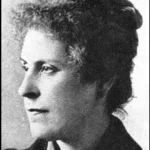
Margaret McMillan (1860-1931): McMillan, along with her sister Rachel, played a pivotal role in nursery education. They advocated for open-air nurseries and opened Britain’s first open-air nursery, and unlimited outdoor play, recognising the benefits of hands-on experience and active learning.
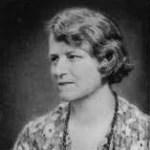
Susan Sutherland Isaacs (1885-1948): Isaacs, an educational psychologist, believed in the central role of play in a child’s education. She emphasised the importance of outdoor exploration and community engagement to support children’s emotional and cognitive needs.
While our Bush Kinder program is a significant aspect of Little Scholars, outdoor play doesn’t always require leaving the campus. Our yards are purposefully designed as extensions of our studios, providing space for learning, relaxation, and play. From play forts to bike tracks, gardens to sensory paths, and water play areas, our outdoor environments offer open and less structured spaces for children to explore, overcome challenges, and grow.
By encouraging children to spend time outdoors, whether through Bush Kinder or within our incredible yards, we aim to provide them with a well-rounded early education. Outdoor play nurtures essential skills such as resilience, teamwork, creativity, mindfulness, and risk assessment in a safe and supervised environment.
Now that you understand why outdoor play is such an integral part of the Little Scholars experience, it’s time to discover how nature play can bring out the best in your child. Find out more by booking a tour and seeing firsthand our commitment to supporting children’s growth and development.
Welcoming a new addition to your family is an extraordinary blessing. Along with the joy and love that fills your home, there are practical matters to consider, such as childcare. When you entrust your precious little ones into the hands of capable, nurturing early childhood educators, it’s an investment into their growth, development, and well-being.
Investing in quality childcare is more than just a financial decision; it’s about providing your child with an enriching environment that promotes their cognitive, social, and emotional development. Recognising this important investment, parents often wonder, “Is childcare tax deductible?”. We understand that childcare can be a significant portion of the family budget, which is why many families are interested in learning about the financial aids, tax benefits and deductions associated with childcare in Australia.
The short answer is no, childcare is not tax-deductible in Australia. The Australian Taxation Office (ATO) does not view childcare as a work-related expense. This is because the decision to incur childcare costs does not come directly from the necessities of an individual’s job but from personal circumstances. Even though many parents need to arrange childcare to maintain their employment, the ATO has made it clear that it does not qualify as a deductible expense.
While this might initially seem disheartening, it’s important to remember that there are various financial support options available to families, such as the Child Care Subsidy, to help offset these costs. The Australian Government recognises the importance of accessible, high-quality childcare and offers a range of subsidies and benefits to eligible families.
The Parenting Payment is an income support payment for parents or guardians to help with the costs of raising children. It is available to single parents with at least one child aged under 8, or partnered parents with at least one child aged under 6. Eligibility criteria also include income and assets tests. To apply, individuals should create a Centrelink account through the Department of Human Services.
The Family Tax Benefit is a payment to help eligible families with the cost of raising children. It is made up of two parts – Family Tax Benefit Part A, which is paid per child, and Family Tax Benefit Part B, which is paid per family. The eligibility and payment amounts depend on the family’s income, the number of children and their ages, and other factors. Applications can be completed online through myGov by linking to Centrelink.
Remember, investing in your child’s early education is a significant decision, and every dollar spent contributes to their growth and development. By staying informed and planning ahead, you can ensure you’re making the most of your investment.
At Little Scholars, we understand the financial commitments that come with providing your child with high-quality care and education. We believe that each child deserves the best start in life, regardless of their family’s financial situation, and we work diligently to uphold this principle in all aspects of our work.
If you have any questions regarding our childcare fees or if you’d like to learn more about our campuses, please do not hesitate to reach out to us. We’re more than happy to arrange a tour or discuss the individual needs of your family.
For parents leaving their babies or young toddlers in care for the first time, it can be a stressful experience. When the paid maternity leave ends, parents must make the decision of whether or not both parents will work outside the home. The choice to leave their young child in early learning and care can create a number of concerns, one big one being how their relationship with their young child will be affected if the parent is not spending the majority of the child’s time with them. These are valid concerns, but research has suggested infant attachment to their parents is not generally affected by being in care, so long as the parents have a strong bond with the child when they are with them.
Understanding Attachment Theory
Attachment theory was first introduced by John Bowlby, a British psychoanalyst and psychiatrist in the 20th Century. Bowlby observed that early attachments could significantly affect a child’s emotional development and adult relationships in later life. He concluded that children between six and 30 months were very likely to form emotional attachments to familiar caregivers, especially if the adults are sensitive and responsive to child communications. This led him to propose the Attachment Theory after he studied the negative impact of maternal deprivation on young children.
Mary Ainsworth, an American psychologist who worked under Bowlby early in her career, later devised an assessment technique called the Strange Situation Classification (SSC) to investigate how attachments might vary between children. Her research in Uganda, then her well-known Baltimore Study in the 1960s, in which she noticed distinct individual differences in the quality of mother-infant interactions over time, led her to categorise these different attachment styles into three types: secure attachment styles, insecure attachment styles, and not-yet attached. She found a connection between maternal sensitivity and secure attachments. Sensitive mothers were familiar with their babies, provided spontaneous and specific detail about their children, and babies of sensitive mothers cried less and felt free to explore in the presence of their mother. Generally, she concluded that babies of sensitive mothers have secure attachments.
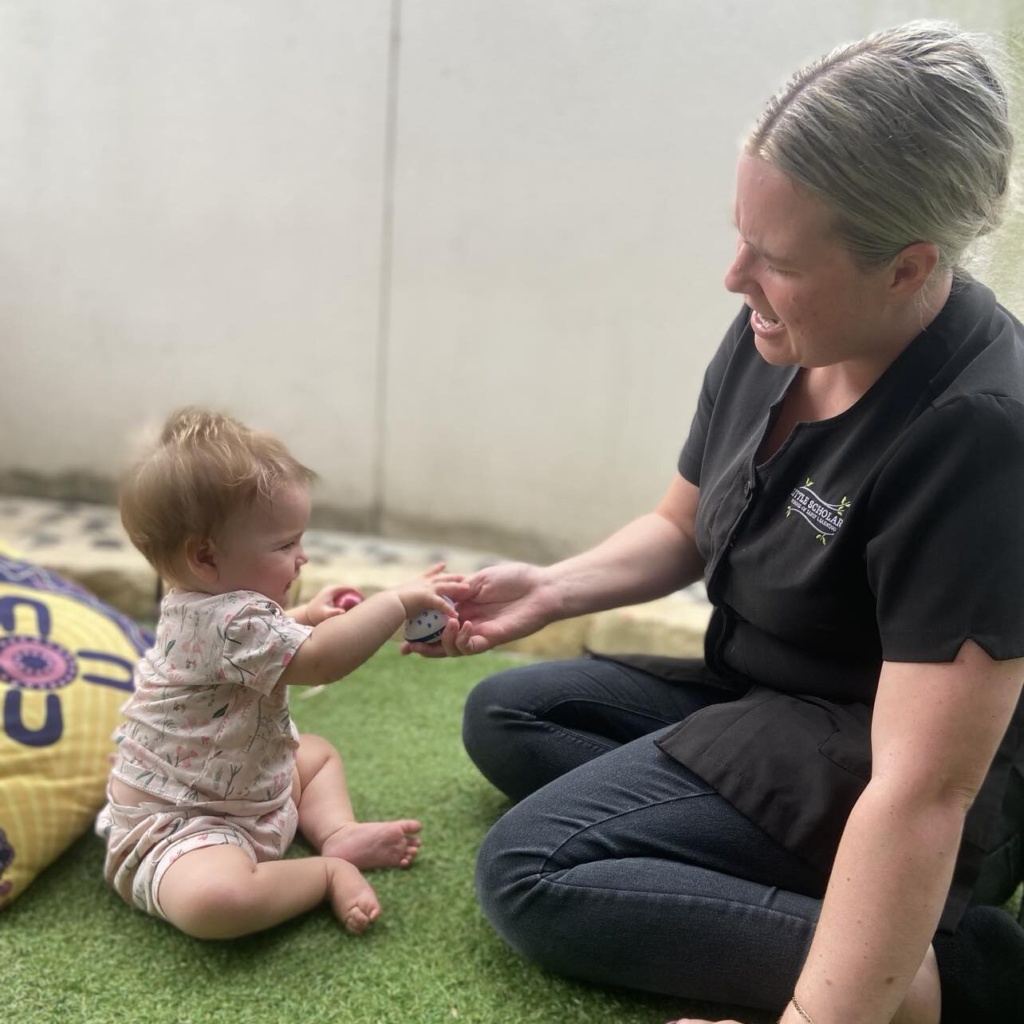
While Bowlby’s initial findings focused on maternal deprivation, later studies have contradicted his emphasis. Schaffer & Emerson (1964) found that specific attachments started at about eight months and shortly thereafter, the infants became attached to other people. By 18 months, very few (13%) were attached to only one person, and some had five or more attachments. Rutter (1972) noted that several indicators of attachment, such as protest or distress when an attached person leaves, have been shown for various attachment figures – fathers, siblings, peers, and even inanimate objects. Weisner, & Gallimore (1977) found that mothers are the exclusive carers in only a very small percentage of human societies, and often there are a number of people involved in the care of children, such as relations and friends. Van Ijzendoorn, & Tavecchio (1987) argue that a stable network of attachment figures is more important than the number of figures.
It’s no mystery that food plays a vital role in a child’s growth, and healthy eating makes a healthy child. While eating a small number of unhealthy foods like sugary sweets and processed snacks won’t cause much harm, a balanced diet filled with fruits and vegetables is best. The foundations of a healthy diet contain nutrient-rich foods that improve your child’s physical health and promote their mental capabilities, keeping them alert and energised throughout the day.
At Little Scholars, we understand the importance of a healthy diet in enabling a child to thrive and meet their fullest potential. We have a healthy four-week menu rotation made by our fabulous chefs who prepare fresh, nutritionally balanced meals for your children.
So if you want to guarantee the health and success of your child, be sure to book a tour today.


A key to healthy eating for children is ensuring they enjoy a wide variety of nutritious foods. The Australian Guide to Healthy Eating recognises five core food groups for complete nutrition. These groups are divided into proportions to help you understand how to help your child eat healthily throughout the day. Each food group in the correct amount gives your child an excellent chance to get the right amount of nutrients and vitamins their body needs to function well.
Based on the five food groups in the Australian Guide to Healthy Eating, let’s look at what food your child needs to stay healthy.
There are many benefits of healthy eating for children in early childhood, and they include:
Every child has a different natural body composition, but healthy eating helps keep your child’s weight within the appropriate range. However, you shouldn’t focus too much on your child’s weight as it might communicate unhealthy eating habits.
As your child grows, they will need the right amount of food and adequate nutrition to ensure normal growth and development. For example, sufficient calcium and vitamin D in their meals will give them strong and healthy bones. Children aged 4 to 8 need up to 700 milligrams of calcium for healthy bone development, according to the Queensland Government’s calcium for children’s guidelines.
One of the best ways to incorporate these nutrients into their diet is through foods such as low-fat dairy products. In addition, fortified cereals, salmon, and leafy greens are also excellent sources of calcium.
Children need to have robust immune systems to be able to fight off ailments like colds and the flu. The right proportion of fruits and vegetables helps boost their immune system.
Children need a healthy diet to optimise their brain activity as they grow, making them perform and focus well at school. Some essential foods that can help improve brain functioning include fish, eggs, nuts, and seeds, all great sources of vitamin E and healthy fats.
Here are 3 great ways to improve your children’s healthy eating habits:
Involving the little ones in the cooking process can be a fun way to help them learn about food. For example, you can get them to mix up a salad or help peel some vegetables, ensuring that everything is done safely and responsibly. Our staff regularly plan cooking activities such as making fruit sticks, fruit yoghurt iceblocks and other yummy healthy treats.
Another idea is to allow them to occasionally choose what the family will eat for dinner or lunch – although set some ground rules so you don’t end up having ice cream for dinner!
When you think of childcare, you might not necessarily think of early education, but that’s precisely what Little Scholars is doing; providing high calibre early education for the critical first five years of a child’s life, and at the same time, changing society’s perception of what childcare, or early education, is.
Little Scholars has always considered itself as a leader in the sector, but we elevated the quality of education with the addition of Susan Cooper, our group pedagogical leader one year ago.
Pedagogy is a form of teaching strategies in the practice of educating. It’s the techniques, strategies and approach taken by educators to let learning and development to take place. Pedagogy refers to the interactive process between the educator, the learner and the learning environment and provides reason to the design of learning spaces, materials, and resources on offer. Pedagogical leadership supports educators in relating their pedagogy to content knowledge and educational theories.
My aim is to support educators in entering the child’s world, enabling them to reflect on their practices and build capacity to support the child’s development.
– Susan Cooper, group pedagogical leader for Little Scholars
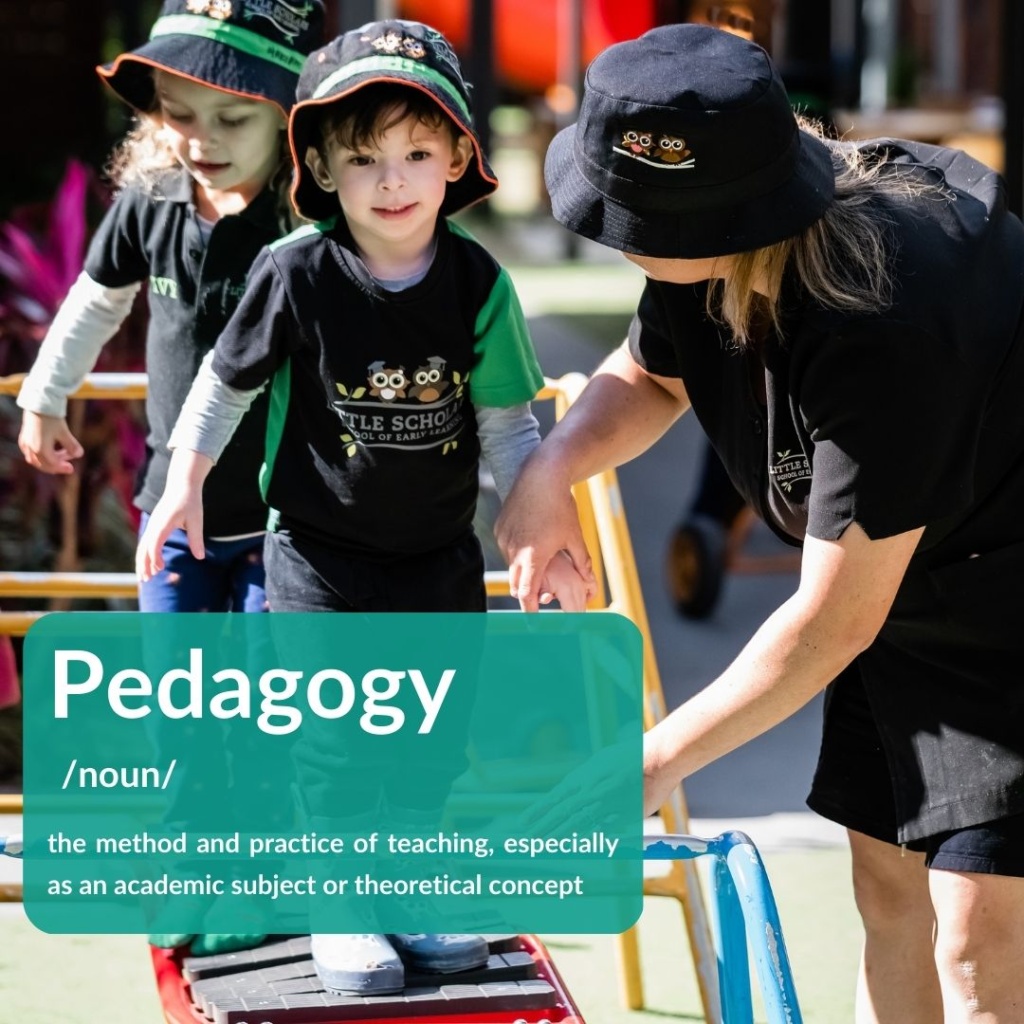
In the year since Susan joined us, she’s gone above and beyond to support our educators. Through her pedagogical leadership, Little Scholars has raised the benchmark of its overall quality of teaching, and recognises that providing children with strong foundations for ongoing learning and development is underpinned by a strong pedagogical practice. She inspires educators to employ new approaches to their teaching against up-to-date research, has helped translate the Little Scholars values and principles into practice and has without a doubt increased the quality of experiences and interactions across our campuses.
But the role was daunting at first, according to Susan.
“Having come with approximately 16 years’ experience in having been in varied roles across the sector within early childhood, my love of sharing knowledge and inspiring others drew me to apply to this role,” Susan says. “My experience in playwork allows me to see the true value in children’s play, the need to create spaces and support the learning and approach to working with children to support and facilitate play in its true essence. What really resonated with The Scholars Group and my own personal values and beliefs, was placing children as the core and central to all that we do.
“I see myself as an advocate for children’s rights, being the voice for many and striving to excel toward quality outcomes.”
The group pedagogical role is focused on mentoring and guiding teams in their practices and challenging new ways of working, to support innovative curriculum ideas, while supporting children’s learning across all Little Scholars campuses.
“I found the team to be so supportive and receptive to change, which has allowed me to share my vision, passion, and skillset,” Susan says.
With Susan’s support, our Deception Bay campus was rated exceeding against the National Quality Standards (NQS) in late 2022. A thrilling result, but not without a lot of preparation. Susan guided Nat, the campus manager, and her team, in the Assessment and Rating Process.
“It was critical that the team worked collaboratively toward a shared goal. This involved building strong relations with the team to build trust and mutual respect. This partnership saw me engage with all stakeholders, while we worked toward targeted goals and worked through evidence-based data to the exceeding themes,” Susan says.
Strong knowledge of theory and pedagogy underpinned the quality outcomes, according to Susan. Another great achievement Susan says, was the team being ranked 3rd out of 3,126 early learning centres across the state.
“My role is to take an active role in the development of pedagogy in the early childhood context. I primarily work alongside teams, across our 13 campuses to provide the opportunity to share pedagogical practice, leading knowledge to research and child development,” Susan says. “Not only does pedagogy inform direct work of teaching, but also the more indirect work of leadership. This develops a community of practice, where professional educators can share ideas and knowledge and engage in peer learning.”

“Little Scholars has always been a leader in our field, due to our commitment and passion to the early years. With the addition of our Group Pedagogical Leader, the effectiveness of our educational program and practice has been elevated to a level we didn’t think was possible,” says Jae Fraser, founder of Little Scholars.
“In Susan’s role she is supporting and mentoring the team to influence children’s learning by fostering family engagement, ensuring fidelity to the Little Scholars curricular philosophy, using data to evaluate the effectiveness of our learning program, and exceeding standards established to optimise learning effective environments,” says Jae. “We couldn’t be happier with the results of this new role just after one year, and we are so excited to see the future.”
Susan’s goals for her role are simple: to continue to strive toward excellence, raising the benchmark in early childhood and placing children at the forefront of everything Little Scholars does.
“I take great pride in the relationships I’ve developed, the partnerships I have established, creating a safe space for the children and educators I work with,” Susan says reflecting on the past year. “Our impact is significant, and I’m thrilled to witness the progress in both the children and educators. I feel grateful to be part of such meaningful work, knowing that we’re making a real difference in the lives of these children.”
Are you planning a family camping trip near Brisbane? Camping with children can be a fun and rewarding experience, but it requires some extra planning and preparation. From choosing the right campsite to packing the essentials, there are a few things you’ll want to keep in mind to ensure a successful and enjoyable trip.
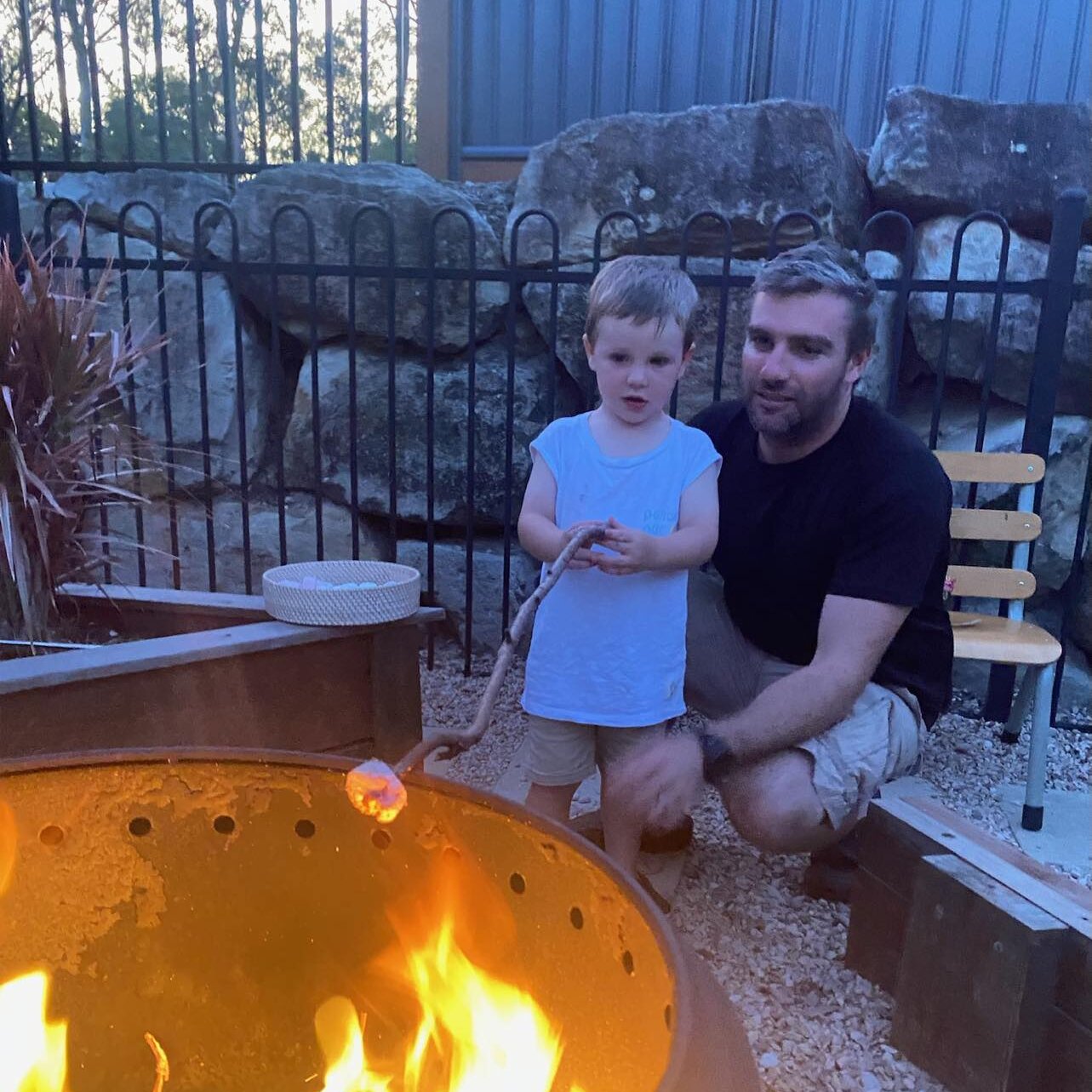
They say that there are two types of people. Those who love camping and those who don’t know they love it yet. If you fall into the first camp, you’ll be well aware of the incredible impact that camping can have on you. It’s a time to emotionally and spiritually recharge. You’re disconnected from the minutiae of urban and suburban life and immersed in a setting where all of your modern day needs and concerns are stripped away.
And if you’re planning a family camping trip near Brisbane, there’s no better time to experience the joys of camping with your loved ones. Camping is bliss. If you don’t know that yet, you’re about to. Let’s take a look at what to pack for your family camping trip and offer some suggestions for the best camping spots near Brisbane. We’ll also provide tips for choosing a family-friendly campsite, so you can relax and enjoy the great outdoors with your loved ones. So, grab your tent, pack your bags, and get ready for an adventure!
If you’re looking for childcare centres in Brisbane or the Gold Coast, look no further. At Little Scholars, our goal is to be an extension of your family. Our first priority is the growth and development of your child; we nurture, teach and guide your child to developing all the skills that will allow them to succeed in life. Find a campus near you today.
Camping can be a magical experience, regardless of the season. In winter, watching your children marvel at the way their breath forms shapes in front of their faces as you pitch your tent can be truly delightful (if a little cold). And during the summer, camping is a great way for children to spend their childhood, despite the heat and humidity.
More than just a fun activity, camping can also teach our children valuable life skills. Through camping, they can learn to appreciate nature, become more responsible and mature, develop a strong work ethic, and understand the importance of safety and getting along with others. Along the way, you might even meet fascinating characters and make lifelong friends.
Camping is truly what childhood memories are made of. If you think you can do without the conveniences of the big city for a couple of nights, pack up your tent, hit the road, and say a cheerful “coo-ee” to your fellow campers. You might just find a home away from home in nature.
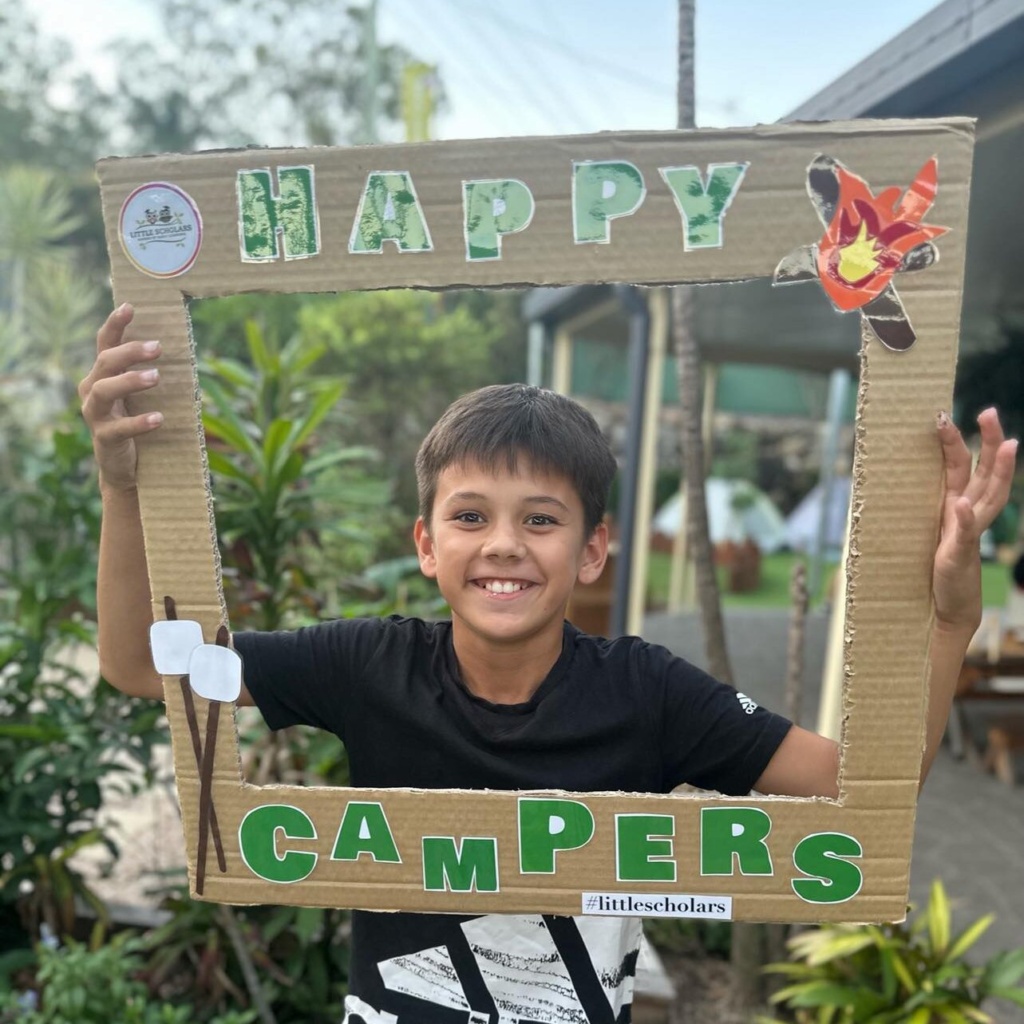
If you’re planning a family camping trip near Brisbane, there are a few essential items that you’ll want to make sure you take camping for you and your little ones.
First and foremost, you’ll need a safe and sturdy tent. Look for a tent that’s appropriate for the size of your family and that has enough room for everyone to sleep comfortably. You’ll also want to invest in quality sleeping bags and mats to ensure that everyone gets a good night’s sleep. When camping with children, it’s important to prioritise comfort to avoid any meltdowns or sleepless nights.
Appropriate shoes and clothes are also vital when camping. Well gripped shoes are a must when using communal toilets and showers to avoid any slips or falls. During the day, sturdy closed-toe shoes will also protect your child’s feet from rocks and other hazards when adventuring. Pack clothes that are suitable for the weather conditions, including rain gear and warm layers for cooler evenings.
Pack some favourite snacks. Camping can be an active and adventurous experience, so you’ll want to make sure you have plenty of snacks on hand to keep your little ones fueled up. Pack some of their easy ready-to-go favourite treats, such as granola bars, trail mix, or fruit snacks. And don’t forget the marshmallows for roasting over the campfire!
Pack one of their books. Camping can be a great opportunity to unplug and enjoy the natural world around you, but it’s also nice to have some quiet downtime. Bring along a book that your child loves or pick up a new one before you leave. Reading can be a great way to wind down before bed or to relax in a hammock during the day.
Camping is all about spending time outdoors and having fun, so make sure you bring along some activities to keep your children entertained. Outdoor games like frisbee, catch, or a soccer ball can be a great way to burn off some energy and get active. Board games or a deck of cards are also great for rainy days or quiet evenings around the campfire. And if you’re looking for a more immersive experience, try bringing a scavenger hunt or nature bingo game to help your children explore the natural world around them
In addition to the above essentials, you’ll want to bring along a few other key items. Torches will be essential for nighttime bathroom trips and navigating around the campsite in the dark. A first aid kit is also a must-have in case of any minor injuries or accidents. And don’t forget your sunscreen and bug spray!
Lastly, make sure you have food storage containers and a rubbish bin to keep your campsite clean and free of any critters.
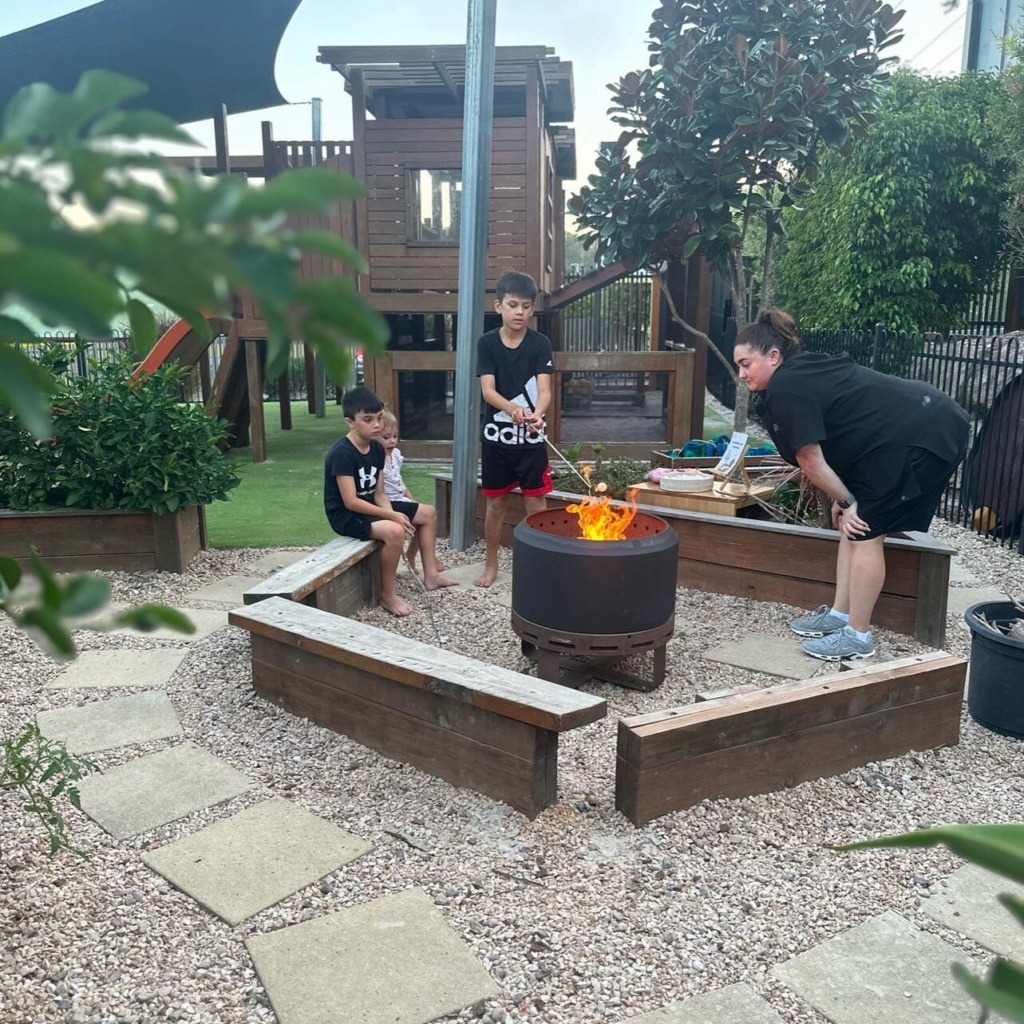
Your family will have a set of criteria when it comes to selecting the best possible campsite for your holiday. This will depend on the number of children you have with you, their ages, their physical abilities and your attachment to modern conveniences.
Here are some important factors to consider when selecting a family-friendly campsite:
Toilets and Shower Facilities:
When camping with little ones, it’s important to have access to clean and convenient toilet and shower facilities. Look for campsites that offer modern amenities such as flushing toilets and hot showers. It’s also worth checking whether there are family-friendly facilities like baby changing stations or accessible bathrooms for those with special needs.
Popularity of the Campsite:
Consider the popularity of the campsite you’re considering, especially if you’re camping during peak season. If the campsite is known for being a party spot or a popular destination for rowdy groups, it might not be the peaceful retreat you’re looking for. Look for quieter campsites that cater to families with young children.
Items of Interest for Young Children:
Choose a campsite that has nearby attractions that your small humans will enjoy, such as beaches, parks, bush walks, or open spaces. This will give your children the opportunity to explore and play, and will help keep them entertained throughout the trip.
Family-Friendly Facilities:
Make sure the campsite has family-friendly facilities like playgrounds, BBQs, and picnic tables. These amenities will help make your trip more comfortable and enjoyable for everyone. If your family likes to fish, look for a campsite with fishing spots or other outdoor activities.
Proximity to Unfenced Potential Hazards:
Be aware of any unfenced potential hazards like bodies of water near your campsite. This is especially important if you have young children who may be at risk of wandering off. Look for campsites that are fenced or have safety measures in place to ensure that your family stays safe.
Reputation and Rating of the Campsite:
Do some research on the campsite’s reputation and rating before booking your trip. Check online reviews on sites like Tripadvisor or Google to get an idea of what other families have experienced at the campsite. This will help you make an informed decision and choose a campsite that meets your family’s needs.
By considering these factors when choosing a family-friendly campsite, you’ll be able to find the perfect spot for your family to enjoy the great outdoors
Now that you’re in the mood to spread out a swag, here are some of the best campground spots near Brisbane to go camping with children.
The scenic rim is one of the most spectacular places in South-East Queensland. The gorgeous, untouched hinterlands blend seamlessly into picturesque, quaint farm lands. The camping opportunities at Bigriggen mean that families can easily access this hidden wonderland. Powered or non-powered sites mean you can choose the level of comfort you desire.
There is opportunity to go fishing and bushwalking, 4WD tracks, bike riding and swimming. Amenities are plentiful with showers, bathrooms and drinkable water all available onsite. You can even bring the dog! A perfect first-time experience for camping with the whole family.
Visit the Bigriggen Campground website today!
Heading about 30 km south of the Tweed will bring you to the beautiful Hastings Point area. There are lots of different campsites around here – some of them even offering Surfari (glamping) tents for the travellers who enjoy the finer things in life! There are lots of things to see and do in the township and the winding river tributaries are perfect for exploration and kayaking.
Check out Hastings Point campsites.
This is a camping-with-children hotspot and for good reason. Toddlers and young children NEED space to get physical and run around. These camp sites are grassy and spacious. There is plenty of room to ride bikes and climb trees. The nearby water is peaceful and calm and perfect for a splash about. Gentle walking trails pepper the nearby areas offering plenty of opportunities for exercise and stretching the old (and young!) legs.
Visit Habitat Noosa’s website today!
Borumba Deer Park camping is about two hours from Brisbane. It offers creek side camping with the promise of swimming, fishing and kayaking. This is a peaceful spot for reflection and contemplation. It is well appointed for families with facilities like toilets, kitchens, laundries and a little shop (with coffee!).
Visit Borumba Deer Park website today!
The above listed sites are but the tip of the iceberg when it comes to idyllic camping spots near Brisbane. There are fabulous spots for families throughout the Gold Coast region, Toowoomba, Ipswich and further afield.
Now that you’ve discovered the best spots for camping near Brisbane, it’s time to discover how nature play can bring out the best in your child. Find out at Little Scholars.
When choosing a childcare centre for your little one, it can be exciting yet overwhelming at the same time. There are endless options out there, but the question we often hear is, where do I even begin? Well, at Little Scholars, we’re here to guide you through with our professional childcare expertise and we guarantee after this, you will feel at utmost ease when it comes to choosing the right childcare centre for your child.
We promise if you consider the below key points, it will make your decision process a whole lot simpler because once you know what it is you are looking for, you will start to get an understanding of which of your requirements each childcare centre tick off or perhaps ‘don’t’ tick off.
We would suggest thinking about the following key points when choosing a childcare centre:
1. Qualified and Trustworthy Staff
It’s essential to ensure that the childcare provider has a team of qualified and experienced staff who can provide a safe and nurturing environment for your child. Look for staff with relevant qualifications, certifications, and experience in early childhood education.
2. Focus on Education and Learning
A good childcare centre should offer a well-rounded curriculum that includes learning opportunities throughout the day. Look for a centre that offers a balance of academic and non-academic activities, such as art, music, and physical exercise, to promote cognitive, social, and emotional development.
3. Emphasis on Social Skills and Interaction
Social interaction is critical for children’s growth and development. Look for a childcare centre that promotes social skills development and offers opportunities for children to engage in group activities, such as circle time, story time, and free play.
4. Play and Exploration
Play is a crucial component of early childhood development. Look for a childcare centre that provides plenty of opportunities for children to play, explore, and have fun. The centre should offer age-appropriate games, toys, and learning tools that stimulate children’s creativity and imagination.
5. Philosophy on Education
Every childcare provider has its own philosophy on education. It’s important to find a centre that shares your values and beliefs on how children learn and develop. Look for a provider whose philosophy on education aligns with your own and offers an environment that supports your child’s learning and growth.
6. Age-Appropriate Resources
Children of different ages have different needs and interests. Look for a childcare centre that offers age-appropriate games, toys, and learning tools that cater to your child’s developmental stage and learning style.
7. Positive Atmosphere
A positive atmosphere is essential for a child’s emotional well-being. Look for a centre that feels warm, welcoming, and cheerful. The centre should be clean, well-maintained, and have a pleasant and safe environment for children to learn and play.
8. Safety and Security
Safety and security are paramount when it comes to selecting a childcare centre. Look for a centre that has adequate safety measures, such as a secure entrance, fenced outdoor play area, and policies for illness and emergencies.
9. Parental Involvement
Parental involvement is crucial in a child’s development. Look for a childcare centre that encourages parent-teacher collaboration and provides opportunities for parental involvement, such as parent-teacher conferences, family events, and volunteer opportunities.
10. Flexibility
Flexibility is another crucial factor to consider when selecting a childcare provider. Look for a centre that can accommodate your schedule and budget. The centre should offer flexible hours, payment plans, and holiday arrangements to suit your needs.
If we could give you some valuable (and helpful) advice when choosing a childcare provider, it would be to not just think about what is best for your child now – but think about the needs of your now AND the needs they will have in the future.
Do some research on the learning programs and extracurricular programs the childcare centres offer so you are totally aware of what learning opportunities your child is offered in order to learn and grow to their fullest potential. These programs will inspire and teach your child daily, so it is pivotal to find the best programs for your child.
At Little Scholars, we offer an early learning curriculum that allows every child to experience a world of creative engagement through movement, play and physical activities. Our extracurricular programs are a key focus, and all activities are conducted by expert teachers and educators children expect from childcare and early education.
One of our most adored programs by parents (and children) is Bush Kinder and you will find that most parents these days want their child to be outdoors in the natural environment. This, however, is only just a taste of what Little Scholars programs offers, but as childcare experts, we truly understand that each child is unique and thrives differently, so you need to ensure the programs really suit your child’s needs individually. We would really emphasise taking note of what programs these Early Learning Centres offer will really help shape your decision.
When interviewing potential childcare centres, it is important to ask how they meet the children’s changing developmental needs in their care or offer enrichment programs for different age groups. Ask how they create positive learning environments for the children and do they create positive social interactions between students.
You can never ask too many questions when it comes to interviewing your childcare providers because we know how IMPORTANT this decision is. This is the second place in which your child is going to spend a big majority of their time, apart from home, so there is a lot to ask in order to feel like you are making the ‘right’ decisions and feel secure.
Of course, when it comes to choosing an early learning centre, you want what is best for your child. You want them to be in an environment where they are comfortable, safe, and stimulated. You want them to be in an environment where they will learn and grow, and an environment where they will thrive and be inspired daily. So, one last piece of advice we could give you is to involve your child in the choosing process!
Seeing as they are going to be spending so much time with their childcare provider, it is important they meet the educators and explore the environment before you make your final decision so you can see your child is genuinely happy and comfortable in this environment. This will work out in the long run and will make choosing the right early learning centre journey a whole lot smoother for not just your child, but the family.
We hope our expert guide has helped give you some direction on what to consider when choosing the right early learning centre. We truly know how IMPORTANT it is to find the right environment for your child and hope to have given you comfort when making these final decisions. Get in touch to find out more about our programs and how they might be a fit for you and your family. We would love to learn more about your future Little Scholar.
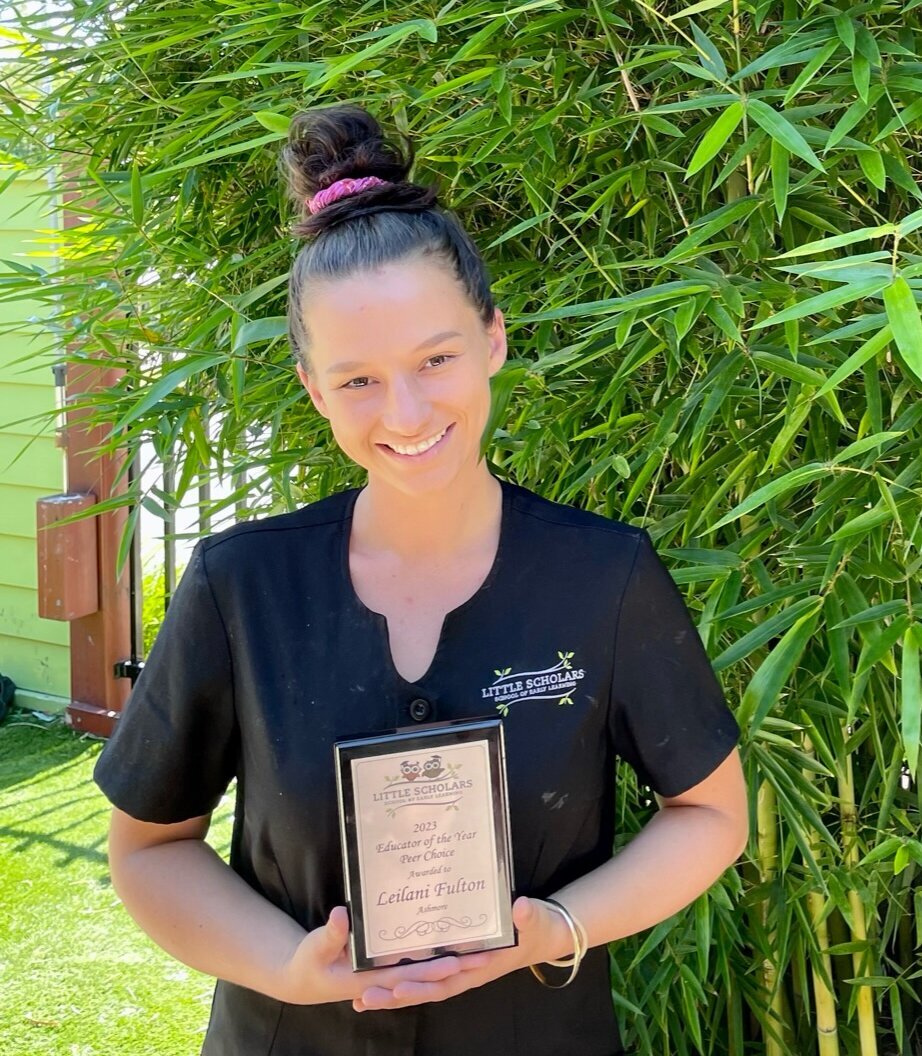
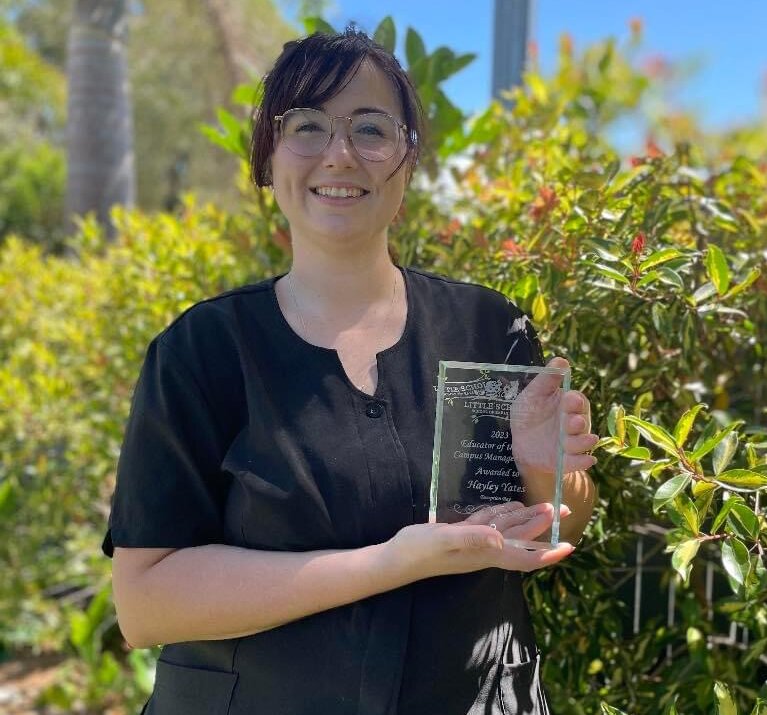
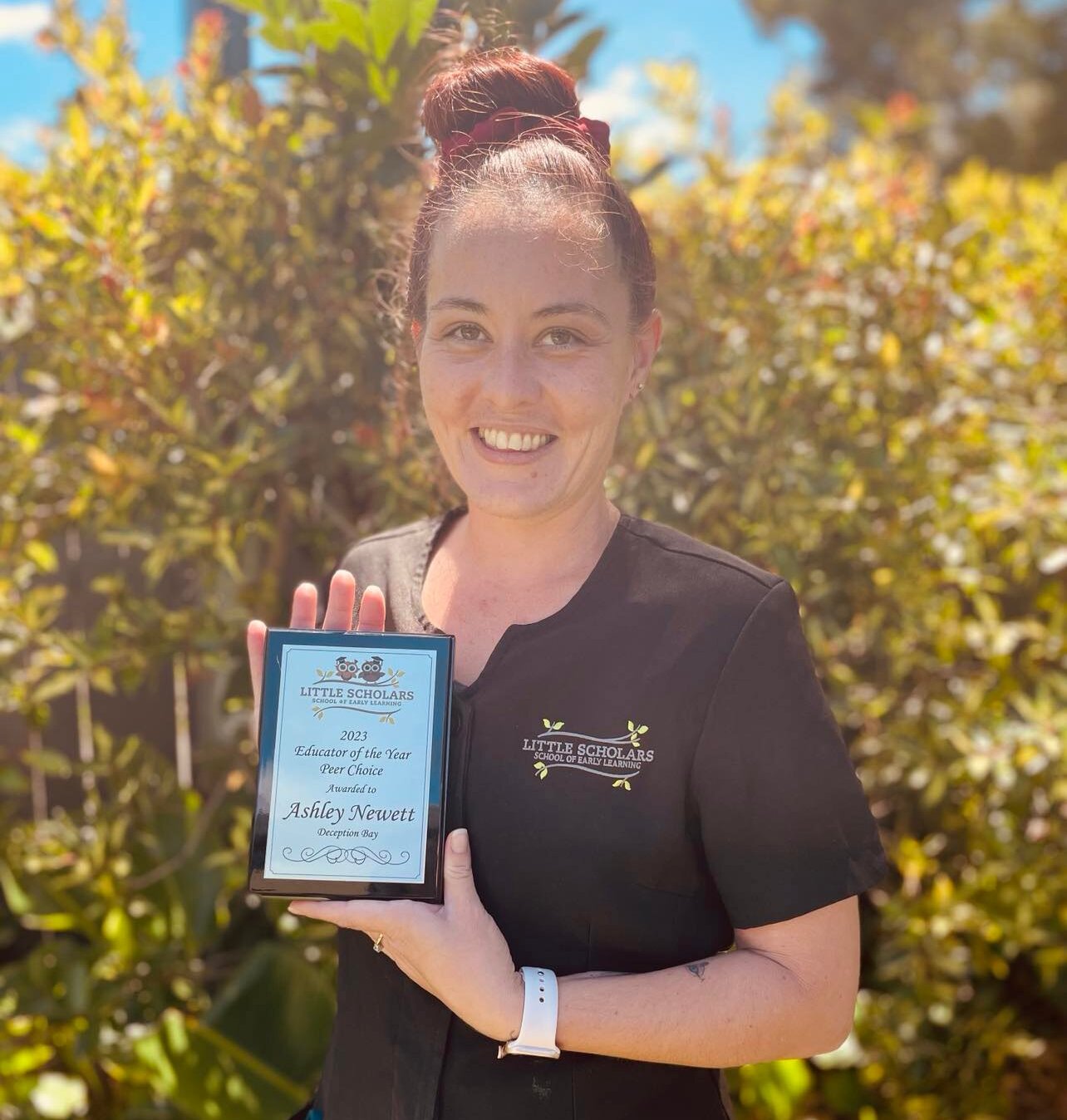
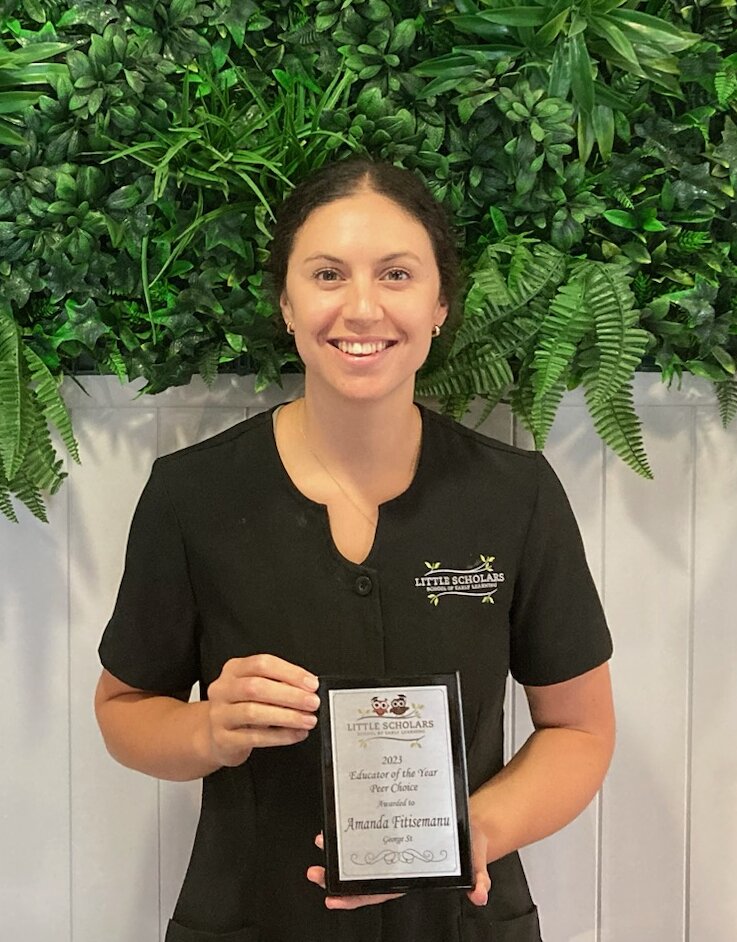
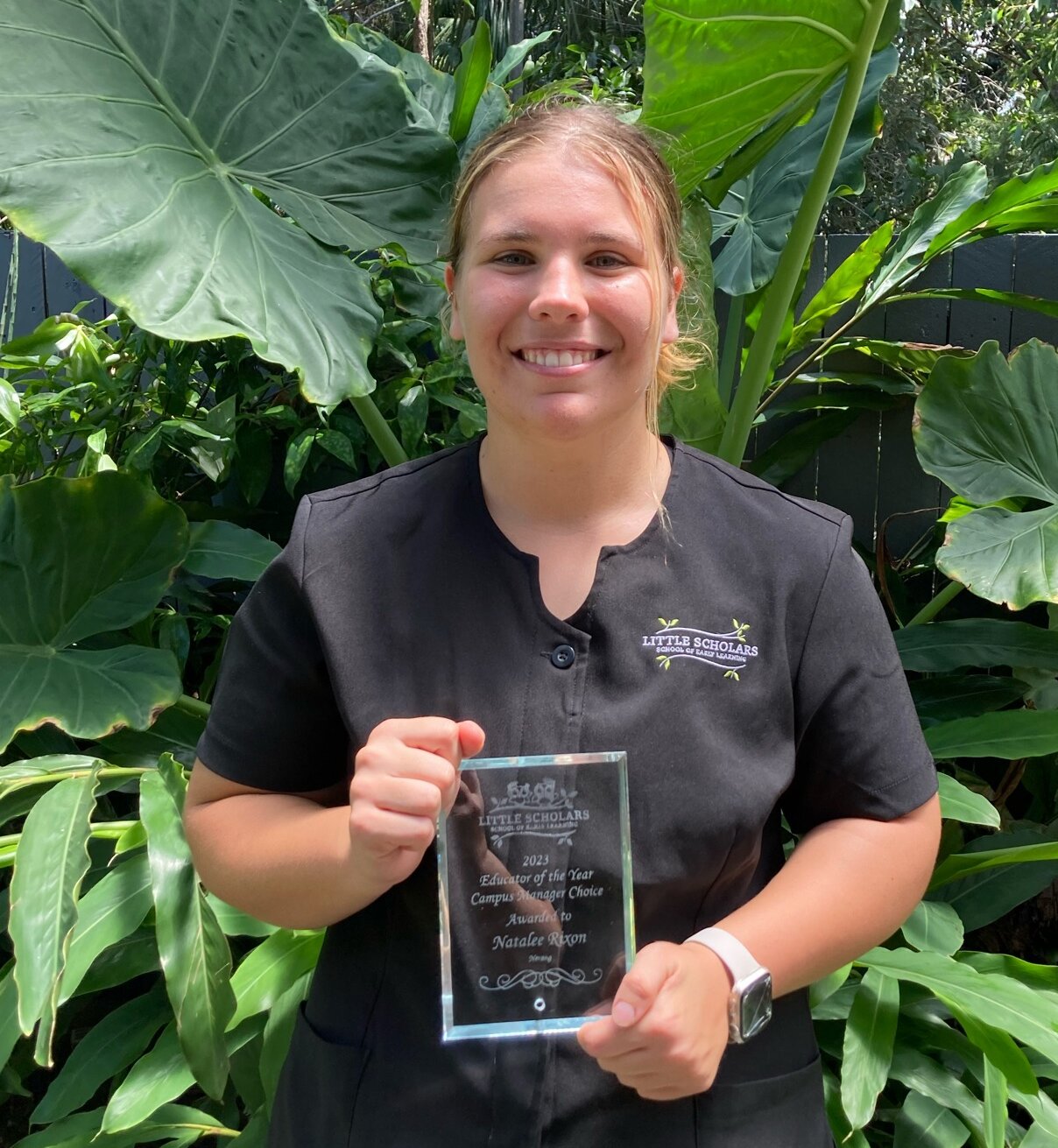
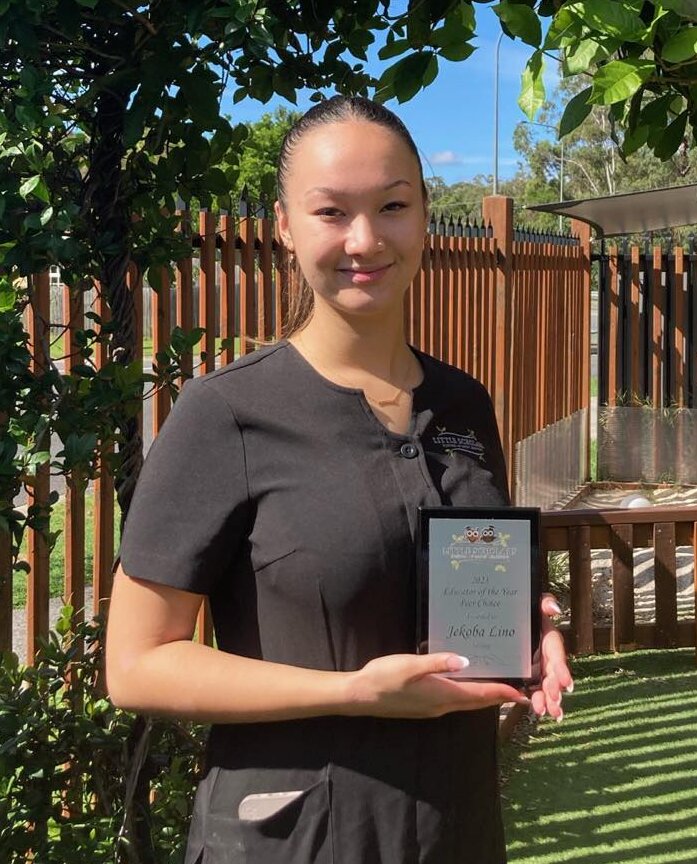
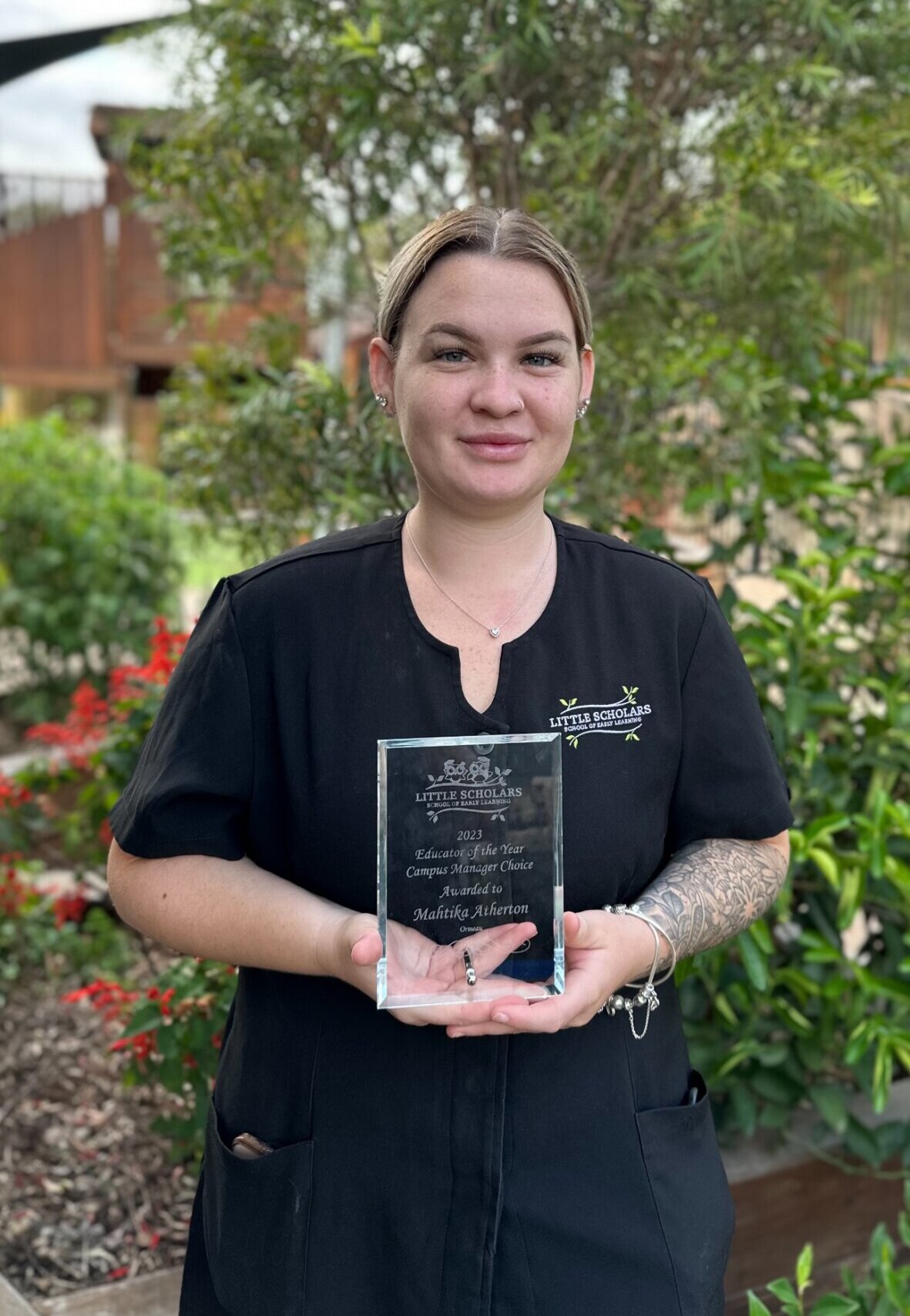
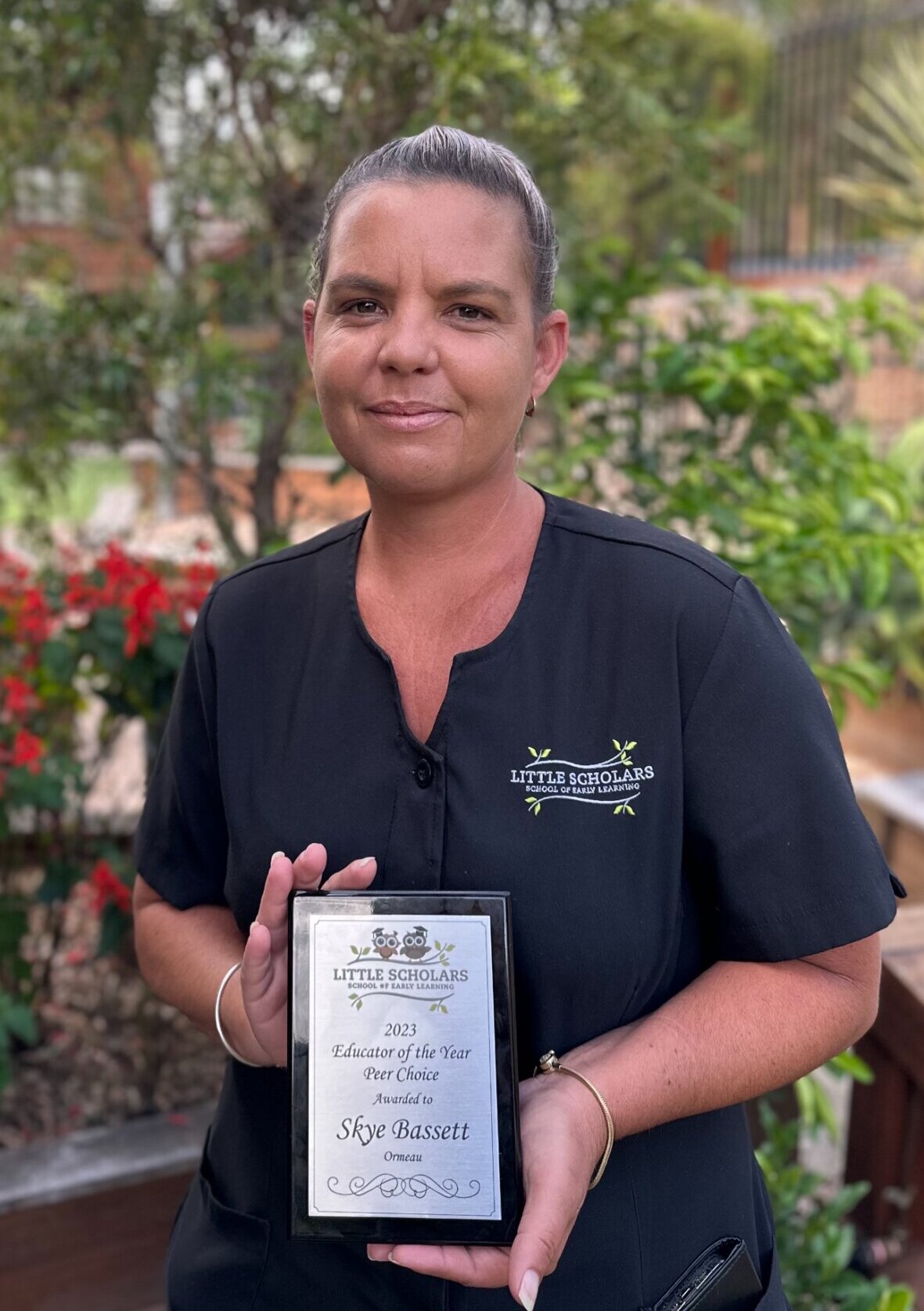
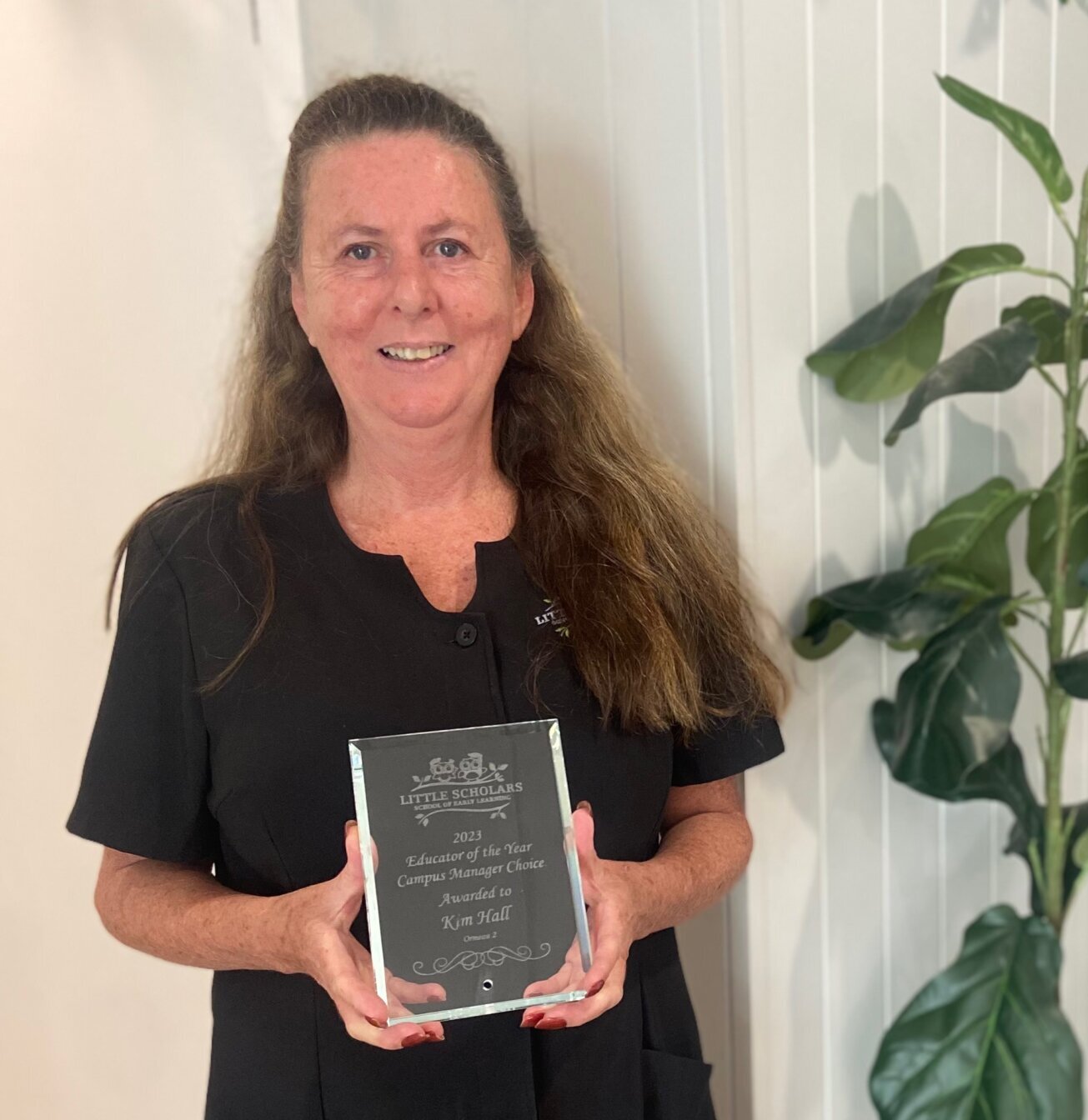
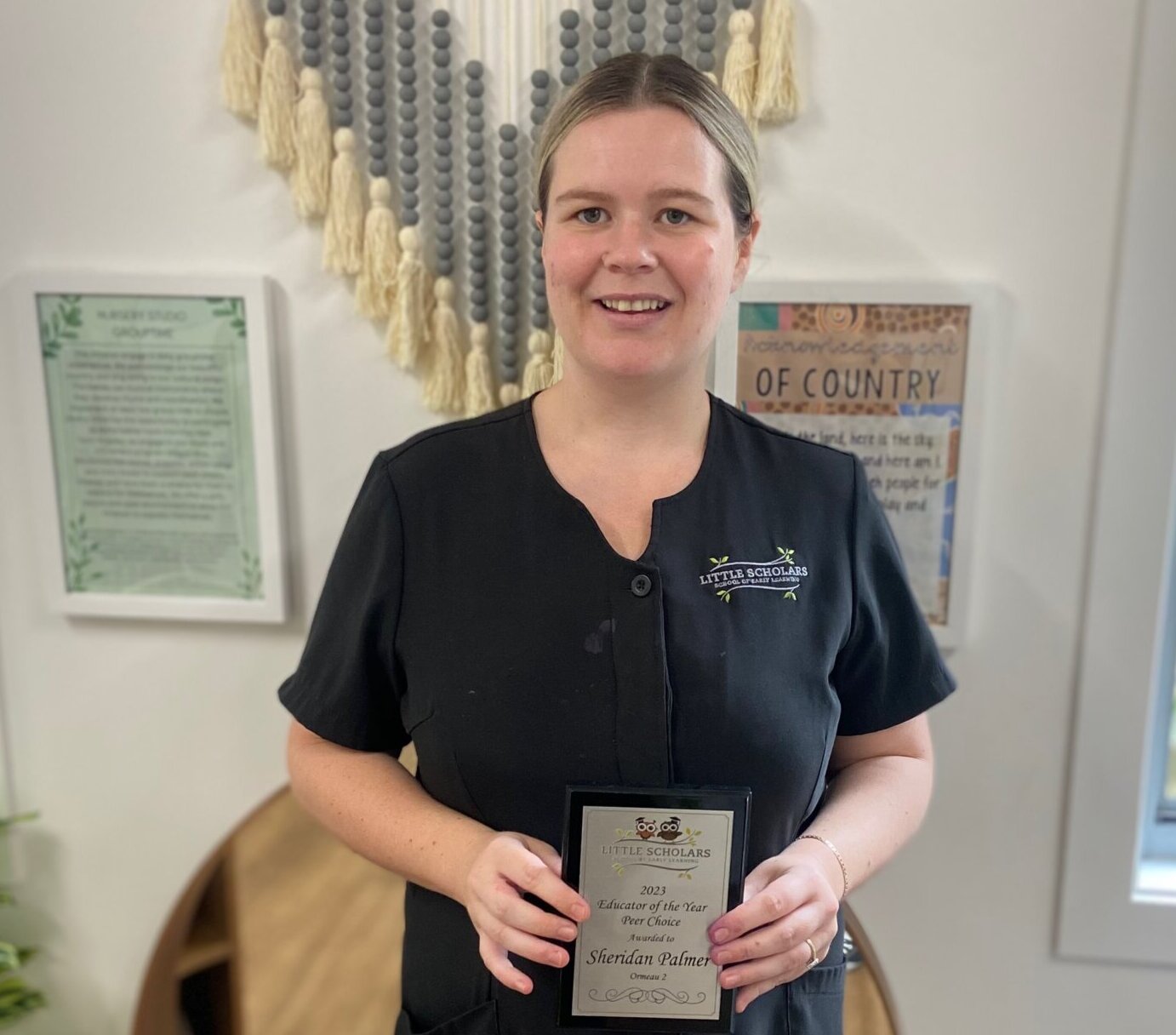
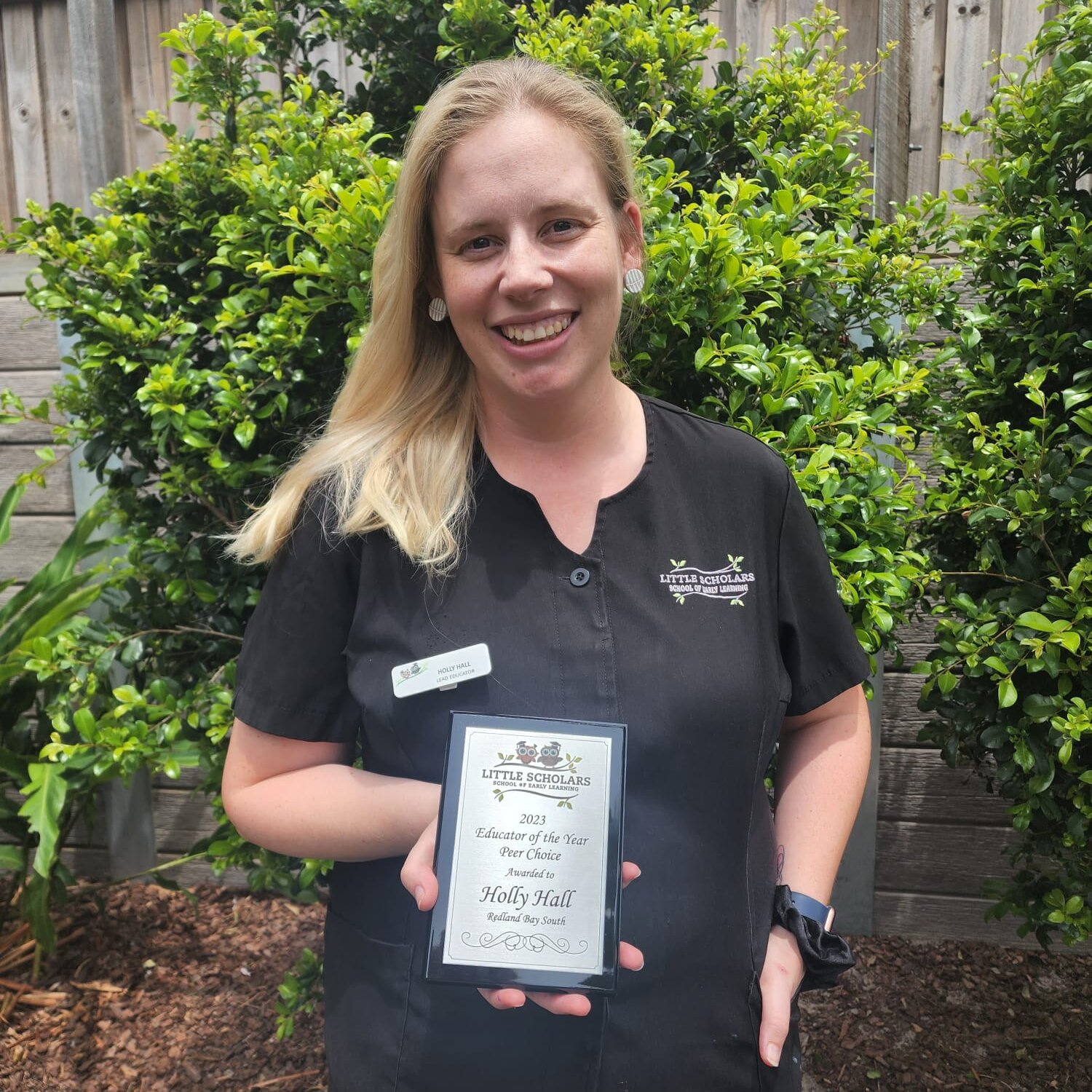
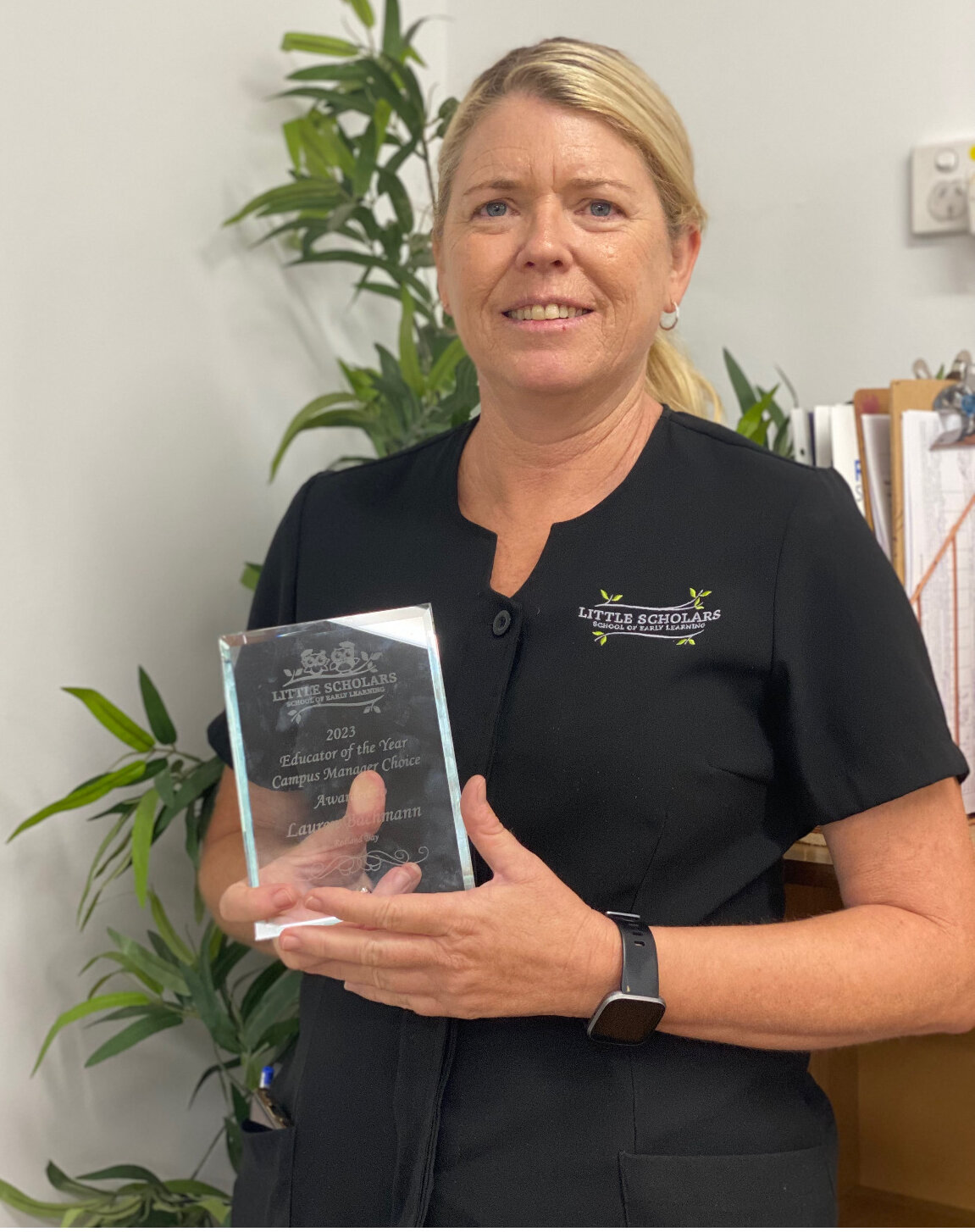
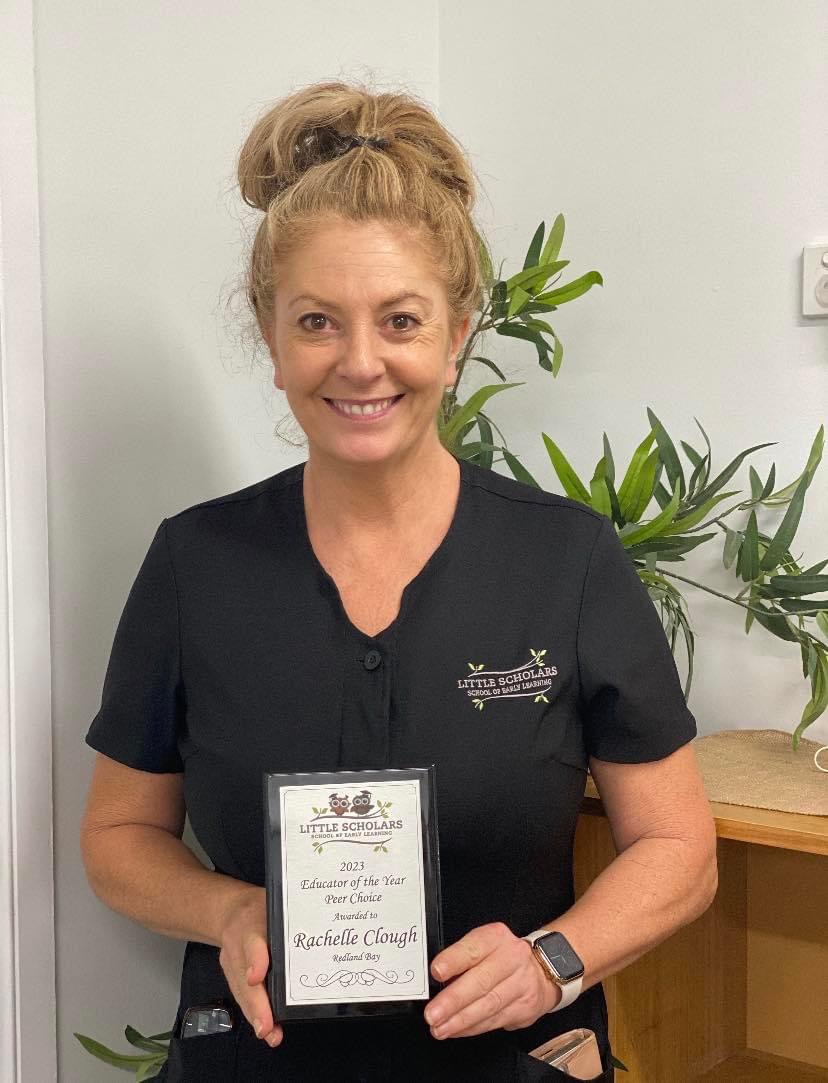
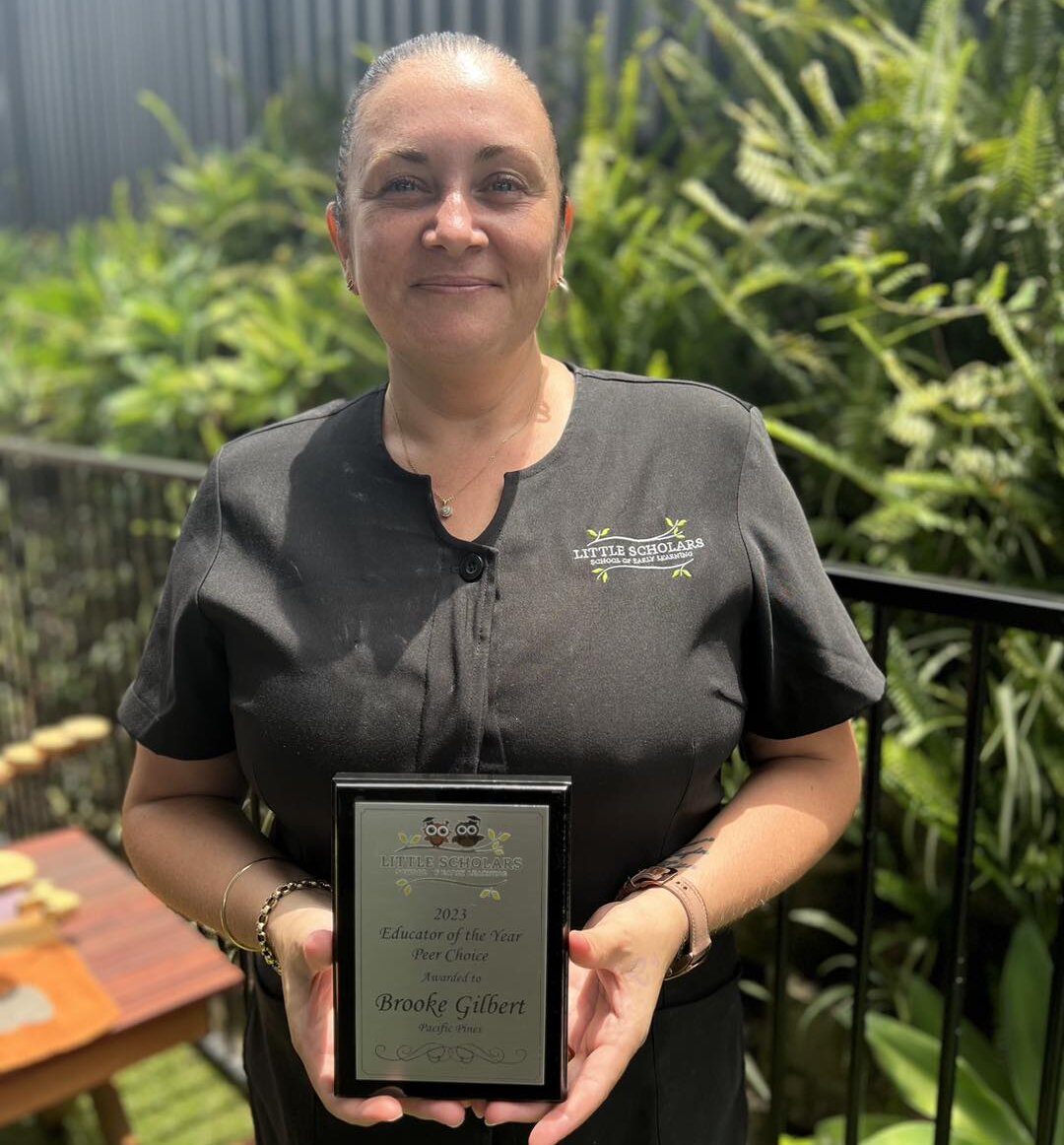
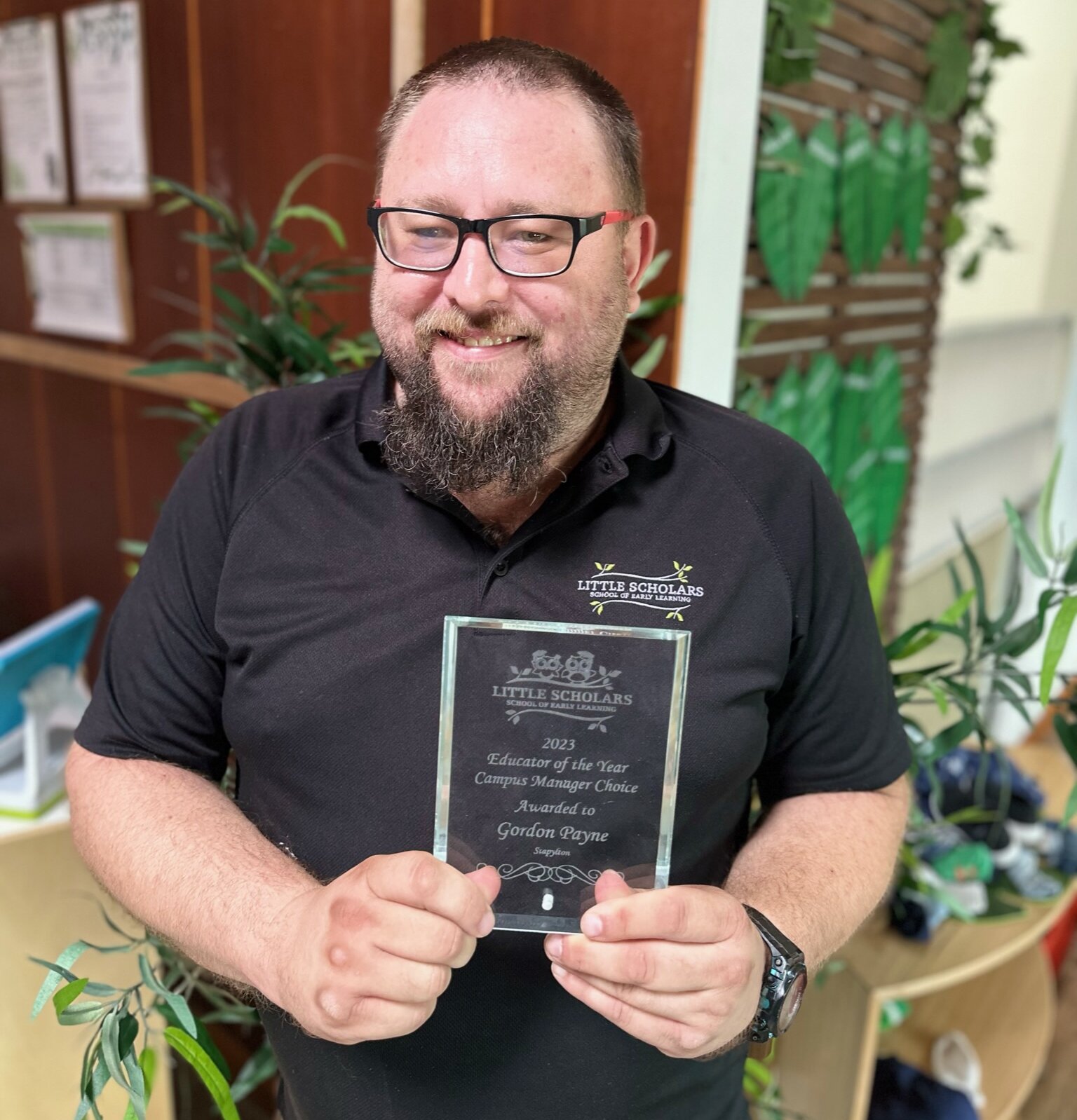
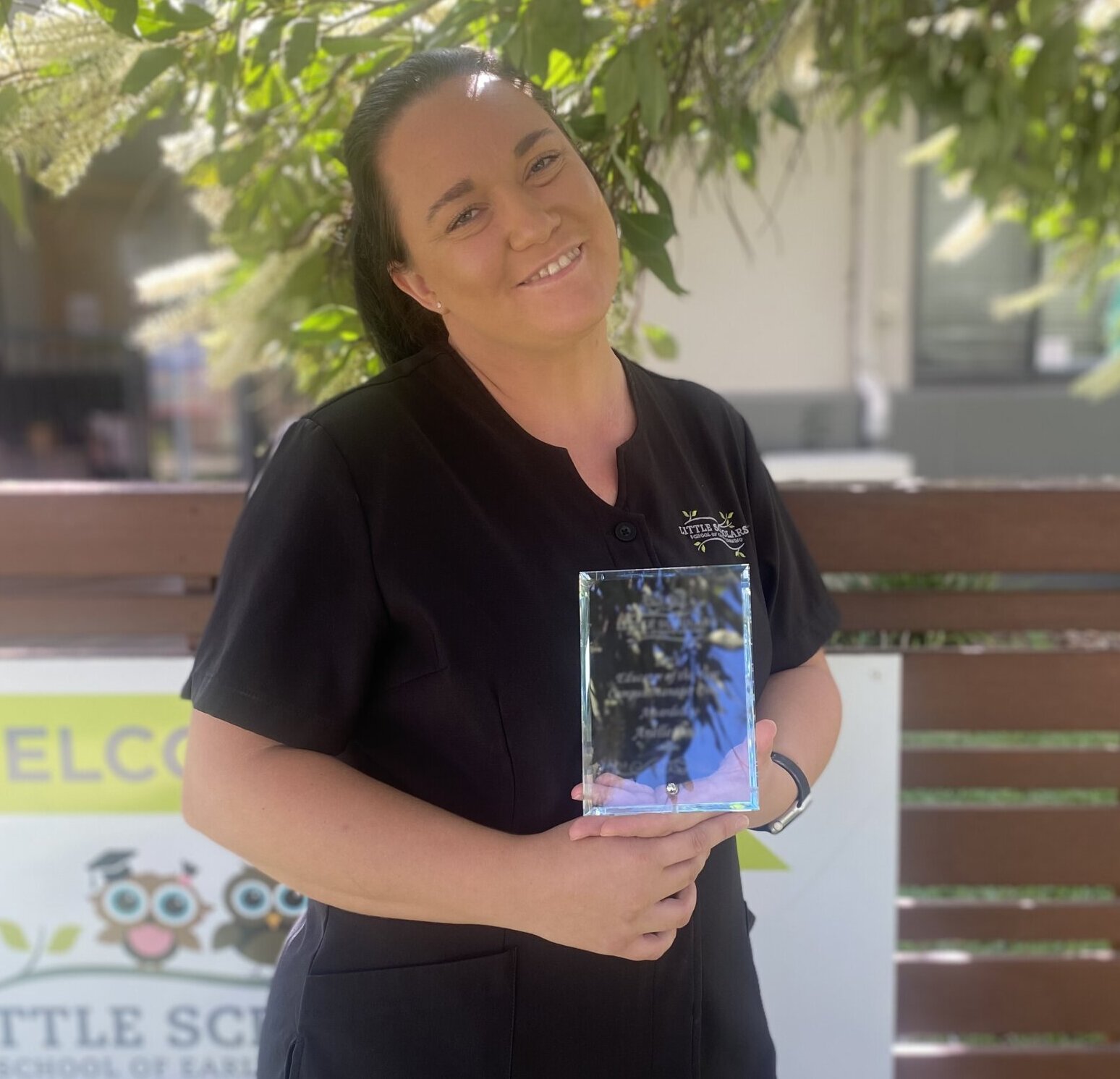
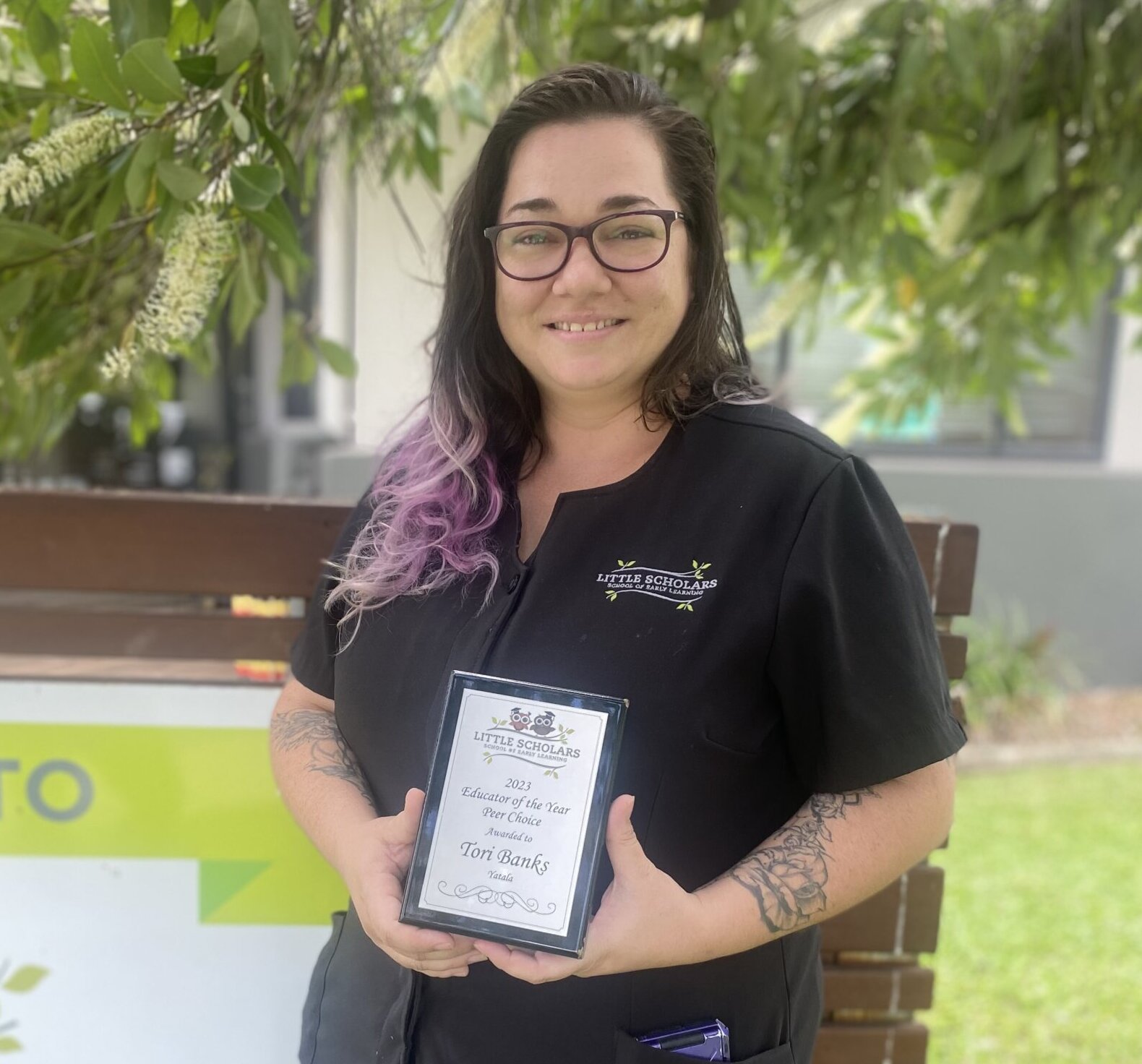
We have the very best early education educators at Little Scholars School of Early Learning. It’s our great honour to present our 2023 Little Scholars Employee Award winners. 🎖
These outstanding recipients, through some challenging times, have demonstrated their dedication, commitment and have gone above and beyond this year with fellow educators, children, and parents. Time and time again they show us, their peers and the families who they have the privilege of looking after their enthusiasm, their eagerness to learn and grow, and their unfaltering dedication to educating and developing small humans.
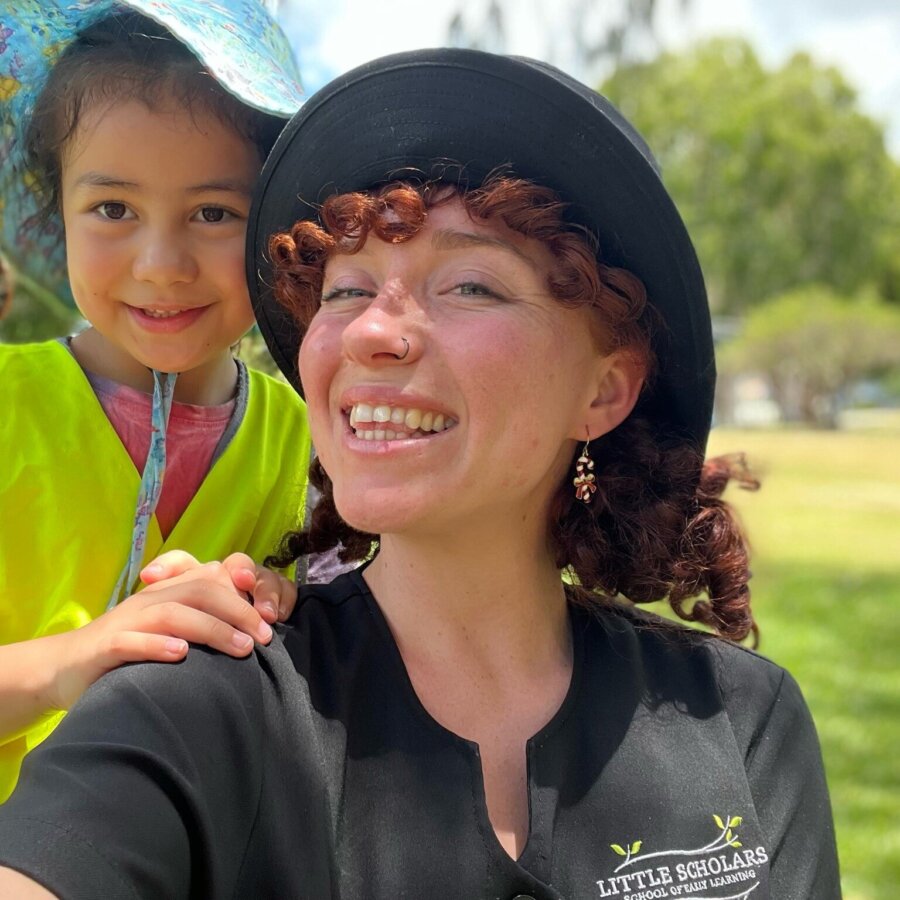
Inspire – Little Scholars Pillar Award 2023
Learn more about Ella
How long have you been an educator, Ella?
I have been an educator for four years now, and with Little Scholars since my placement when I began my certificate 3 at TAFE.
How did you start your career?
I had been looking at Little Scholars as a centre for my daughter since I was pregnant and fell in love with it from the get-go. Since beginning to have my daughter at the centre, I saw the love and care that the educators gave the children. Working with children had always been on my agenda as I used to study to be a music teacher and knew I could do so much more as an early childhood educator to assist the children in excelling in all areas before beginning “big school.”
What did being recognised for the inspire award mean to you?
The award completely blindsighted me as I turn up to work each day just to do my best for these little humans so to be recognised for my relationship with the children in my centre was so special to me and really instilled my role within the company and the importance I hold alongside my other educators in this industry.
Ella’s nomination
Ella is an educator with the Little Scholars Deception Bay campus, which recently was assessed Exceeding under the National Quality Framework for Early Childhood Education and Care.
In Ella’s nomination to us, it said, “Ella is an inspiration for all in the Deception Bay community. We had some outstanding feedback from the department through our assessment and rating process. Before the process even started, the assessor had mentioned the passion and authenticity observed in Ella’s interactions with our children, families and community. In the assessor’s words – ‘she could sit and watch Ella all day long.’ From one of Ella’s colleagues, ‘the educator she is, is who I aspire to be in my future teaching career. She is strong, but also so caring to each individual child.’
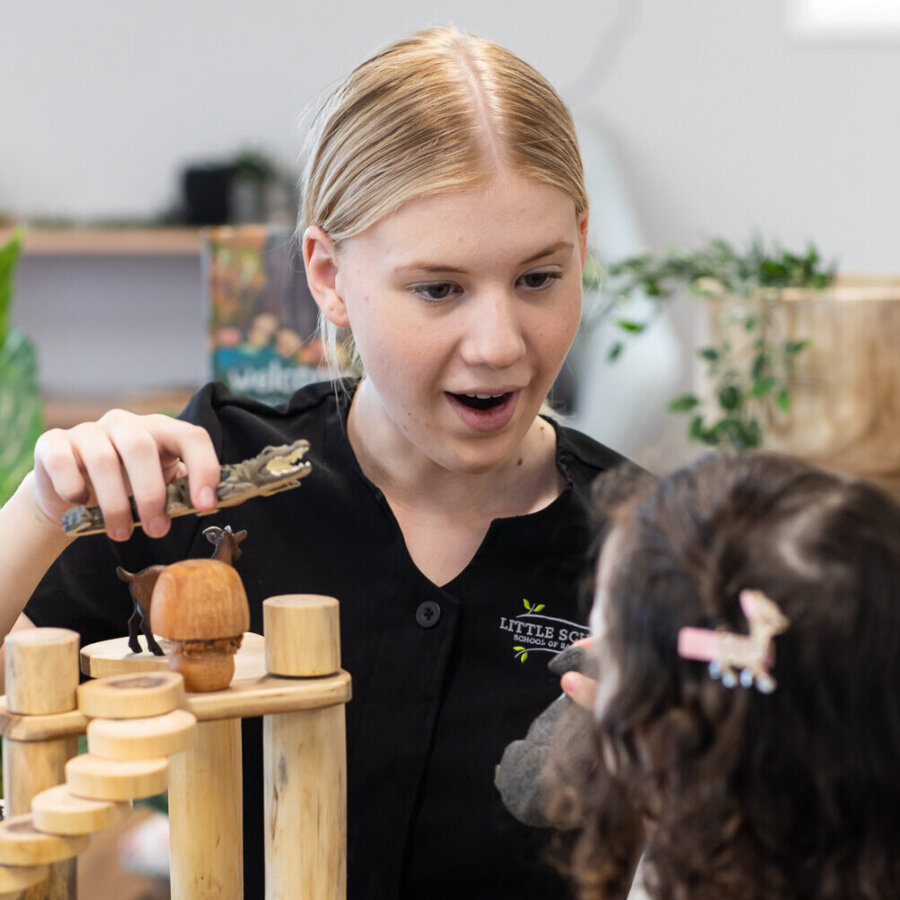
Learn – Little Scholars Pillar Award 2023
Learn more about Ellissa
Ellissa is a lead educator at our Ormeau Village campus. She was named winner of the Pillar Award in the Learn category because she stepped up to become a lead educator, and we’re told she is always happy to keep learning from her peers and further her education in the sector.
How long have you been an educator?
I’ve been an educator since I was 16, but even younger I was at my mum’s centre helping out wherever I could.
How long have you been with Little Scholars?
I’ve been with Little Scholars for about 18 months, since Ormeau Village opened.
What made you want to become an educator?
I think just having the inspiration of my mum being in that environment, seeing what she does, seeing how she helped shape the children, it made me want to do it as well. Just seeing how I could help children as well.
What did winning the award mean to you?
I’m always trying my absolute best to do the best possible work I can do, so it meant that someone else was seeing that, that it was appreciated. It’s made it feel worth it!
What do you like about working with Little Scholars?
Just the support and having the creative freedom to do things that I couldn’t do at other places. Like taking them on Bush Kinder adventures and all these other fun things they get to do that they may not have the opportunity to do anywhere else. And everyone at head office as well, like Susan, Mel and Jae-them being so active in our centre, that’s something I really appreciate as well.
On the quick move from an assistant educator to lead educator, Ellissa says:
The support I had helped me to grow so fast, because if I was somewhere else and didn’t have the support, I probably wouldn’t have become lead, but the support from everyone about what I could do, what I would have to do, really helped when I stepped up.
Ellissa is finishing up her studies with her Cert III, then she’ll be moving onto her Graduate Diploma.
From the award submission: Ellissa has stepped up into her Lead role during last year and we have watched her grow from assistant to well-deserved Lead and take charge in her space, leading her colleagues while taking feedback on board and striving to excel.
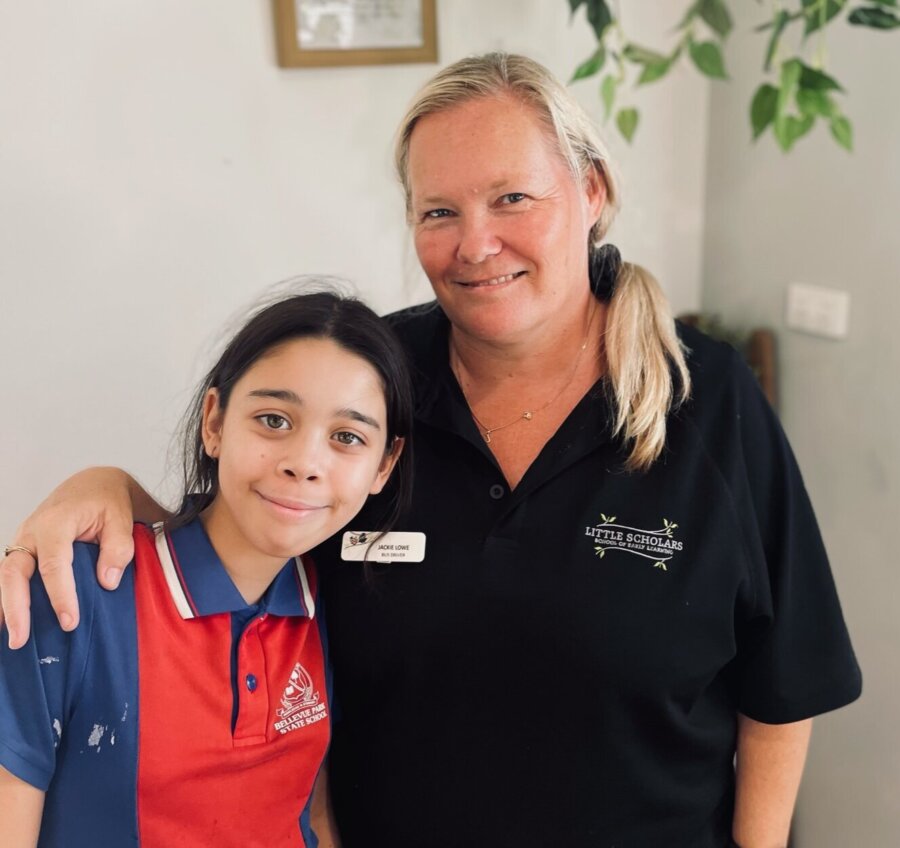
Contribute – Little Scholars Pillar Award 2023
Learn more about Jackie
How long have you been in educator?
I’ve been an educator on and off for about 20 years. I’ve been with Little Scholars for a year now.
Hey that’s pretty good to get recognised in your first year!
I know it was so good!
What’s made you want to become an educator?
Just from being young and starting off babysitting, which I loved, and then Year 12 back then we had work experience and that was just going to a centre and from that first day I knew what I wanted to do. I just fell in love with it, and from then it was my goal to finish school and become an early childhood teacher
What is it now, 20 years on, that you still love about working in this sector?
It’s just the love of being around children, i’m just being with a team of educators, and I missed that like when I went away from it and did my business, I just missed it so much. It’s just working children just gives me so much joy.
All my children are older, are grown up, and it was just not a grandmother yet or anything it was just that feeling, it just going back into a centre and it just makes me so happy.
You won the Pillar Award for ‘contribute’ and you’re known as a ‘jack of all trades’, what do you do?
No job is too big or too small! I do the bus, I’m the after-school care educator, I can work in the kitchen, I can listen to other team members, there’s nothing that I won’t try! That’s just who I am, when I’m needed, I’ll do anything to help the team out.
Especially your first year at Little Scholars, what did winning an award mean to you?
My goodness, it was just so good, firstly I was surprised, but it was then good to know that the little things that I’m doing are noticed, I felt like, ‘Wow I am noticed!’ It just made me feel so happy knowing that all the jobs that I am doing people have recognised it, so yeah so then makes you feel like you are doing a great job!
I love working for Little Scholars. It’s an amazing company, I’ve worked with the other centres before, Little Scholars is just amazing and I’m happy to be there and helping out.
In Jackie’s nomination, campus manager Elise said, ‘Jackie is our jack of all trades! Jackie fits many hats at our campus. From driving the bus to being in the studios to going on vacation care, she wears her many hats with a smile on her face. Her bubbly nature and willingness to help the team wherever needed is admirable. We appreciate her dedication and consistent contribution to the campus.
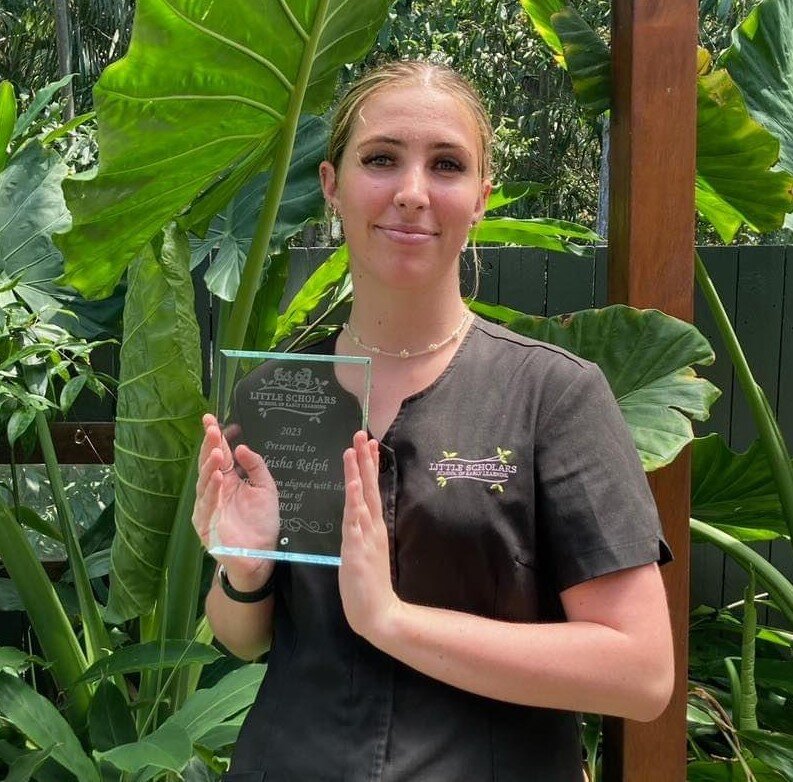
Grow – Little Scholars Pillar Award 2023
Learn more about Aleisha
Ellissa is a lead educator at our Ormeau Village campus. She was named winner of the Pillar Award in the Learn category because she stepped up to become a lead educator, and we’re told she is always happy to keep learning from her peers and further her education in the sector.
How long have you been an educator?
I’ve been an educator since I was 16, but even younger I was at my mum’s centre helping out wherever I could.
How long have you been with Little Scholars?
I’ve been with Little Scholars for about 18 months, since Ormeau Village opened.
What made you want to become an educator?
I think just having the inspiration of my mum being in that environment, seeing what she does, seeing how she helped shape the children, it made me want to do it as well. Just seeing how I could help children as well.
What did winning the award mean to you?
I’m always trying my absolute best to do the best possible work I can do, so it meant that someone else was seeing that, that it was appreciated. It’s made it feel worth it!
What do you like about working with Little Scholars?
Just the support and having the creative freedom to do things that I couldn’t do at other places. Like taking them on Bush Kinder adventures and all these other fun things they get to do that they may not have the opportunity to do anywhere else. And everyone at head office as well, like Susan, Mel and Jae-them being so active in our centre, that’s something I really appreciate as well.
On the quick move from an assistant educator to lead educator, Ellissa says:
The support I had helped me to grow so fast, because if I was somewhere else and didn’t have the support, I probably wouldn’t have become lead, but the support from everyone about what I could do, what I would have to do, really helped when I stepped up.
Ellissa is finishing up her studies with her Cert III, then she’ll be moving onto her Graduate Diploma.
From the award submission: Ellissa has stepped up into her Lead role during last year and we have watched her grow from assistant to well-deserved Lead and take charge in her space, leading her colleagues while taking feedback on board and striving to excel.
What an incredible asset online media has become when it comes to raising or educating children. From YouTube to Instagram, there’s a wealth of expert information at your fingertips that previous generations simply didn’t have. Thanks to online media, parents and educators can now access an array of information, tips, and tricks on child development, parenting, and education.
And of course, podcasts are an excellent way to learn while on the go. You can listen to them while commuting, during your daily walk, or even before bed. Here we have compiled a list of our favorite parenting and child development podcasts, divided into categories for parents and educators. Check them out!
A podcast about parenting, alternative education and stepping into the wilderness with children. Each week, Nicki Farrell and Vicci Oliver interview experts who inspire them to answer questions about parenting and education. They also share stories from families who took the leap, and are taking the road less travelled.
Maggie Dent, one of Australia’s favourite parenting authors and educators gives you practical tips and answers to your real-world parenting dilemmas.
Each episode of Unruffled addresses a reader’s parenting issue through the lens of Janet’s respectful parenting philosophy, consistently offering a perspective shift that ultimately frees parents of the need for scripts, strategies, tricks, and tactics.
Listen to conversations with experts on a variety of topics related to children’s mental health. Episodes offer practice wisdom from experts in the field and will give you an insight into the work and values of the National Workforce Centre for Child Mental Health.
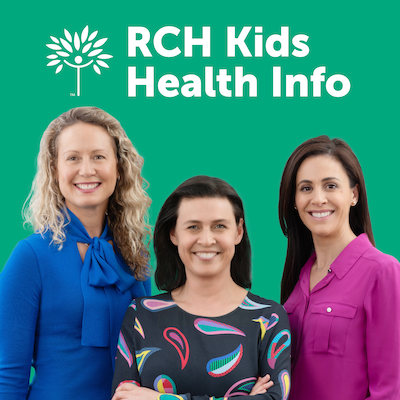
Based on the popular RCH Kids Health Info fact sheets, the Kids Health Info podcast explores common topics and concerns with experts in children’s health. Hosts Margie Danchin, Lexi Frydenberg and Anthea Rhodes are all paediatricians and mums, so they know first-hand what keeps parents up at night. Every episode features guest experts in a range of child and adolescent health specialties, and lots of practical tips and advice.
Hamish Blake chats with other dads he really admires about their approach to ‘dadding’, and in the process hopefully learn a little, steal some of their hard earned wisdom and help dads dad a tiny bit better.
All humans learn through play. Join Kristen RB Peterson of Learning Wild as she chats all things early childhood education, preschool, nature and forest school, homeschool and parenting.

Hosted by international keynote speaker, educator and founder of Wearthy; Lukas Ritson, Play it Forward is an educational podcast about the importance of play. With the increase of technological advancement, it has never been harder to get kids playing outside

Early Childhood perspectives is a fortnightly podcast devoted to exploring the often overlooked concepts and issues of the Australian Early Years Sector.
This podcast covers meaningful topics in early childhood education with some of the sector’s most experienced educators and subject matter experts. With each short episode, its aim is to provoke minds and inspire excellence in early childhood education.
Barbi Clendining from Firefly HR and Saurubh Malviya from We Belong Education have teamed up to bring to you a fun and informative conversation and talk about every aspect of the Out of School Hours profession.
OK, we fibbed. It’s not JUST Australian podcasts. Here’s a few international podcasts that are quite popular with the kids these days. (and by kids, we don’t mean baby goats, or children really, but we’re just trying to sound cool)
Building creativity one leaf and bolt at a time. Join Dr. Carla Gull, American educator and mother of four boys, as she talks about getting outside and exploring loose parts.

A funny take on parenting with UK hosts Rob & Josh as they share their tales of parenting woe and chat to celebrity parents about how they’re coping, or not coping.
Join American clinical psychologist and mother of three Dr. Becky Kennedy on her weekly podcast, as she takes on tough parenting questions and delivers actionable guidance—all in short episodes, because we know time is hard to find as a parent. Her breakthrough approach has enabled thousands of people to get more comfortable in discomfort, make repairs after mistakes, and always see the good inside.

Each episode discusses issues today’s fathers face navigating work, parenthood, relationships and play. We share stories of dads who are active and engaged in the decisions, the drudgery, and the pains and the joys of parenthood. Our parenting podcast not only brings modern dads into the conversation, but also – regardless of gender – our spouses and partners, friends and colleagues, and leaders in business, entertainment and media.
Let us hold your hand and help looking for a child care centre. Leave your details with us and we’ll be in contact to arrange a time for a ‘Campus Tour’ and we will answer any questions you might have!
"*" indicates required fields
Let us hold your hand and help looking for a child care centre. Leave your details with us and we’ll be in contact to arrange a time for a ‘Campus Tour’ and we will answer any questions you might have!
"*" indicates required fields
Fill in the form to join your local Pram Pals mums and bubs walk