





For anyone who’s ever tried to learn a new language, you can probably attest to the fact it’s challenging. You think in one language and translate into another. There are new tenses, jargon, sentence structures, plurals versus singular words, never mind having the muscular movement necessary to form words with your mouth, the confidence to speak – we could go on and on. Now imagine what it could be like for a baby or small toddler?
There are benefits of course for children learning their mother tongue, or even a second language compared to adults learning language. According to German researchers, the melody of newborn babies’ cries is shaped by the sounds of their native language, which they hear in utero. Babies even babble in their first language. Wait, what? Meaning, from a very young age, they start copying the sounds and rhythms of the language they hear around them. This means they begin to use the same ups and downs in their voice (intonation) and the same timing as the language spoken at home. Plus, when babies babble, they often use the most common sounds (like consonants and vowels) from their family’s language. As babies continue to develop, their babbling starts to sound more like conversation, referred to as jargon, with a rhythm and tone resembling adult speech.
Fascinating, isn’t it?
So, how can you help your baby learn to speak? First, remember babies all develop at different ages and stages, so while some of their peers may be speaking, others may be more focused on movement, fine motor skills or something completely different.
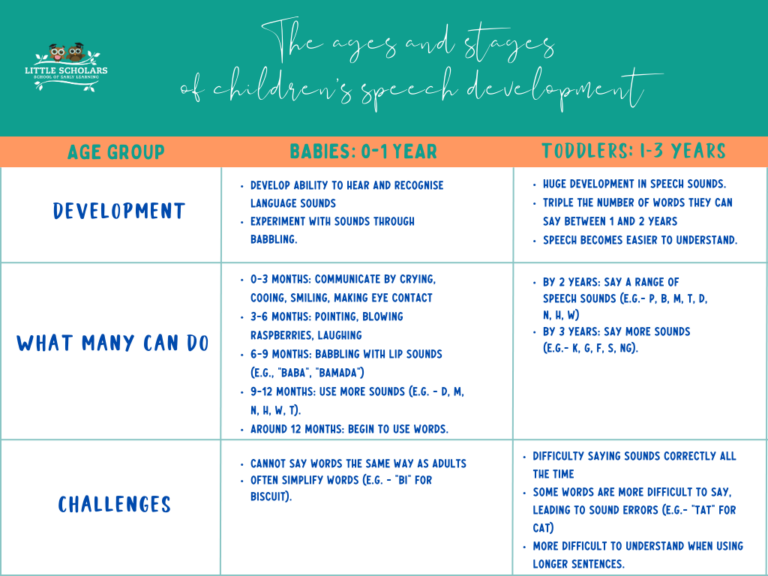
Babies learn to communicate by listening to the people around them, especially their parents. They will:
Chatting with your baby is important, and it’s even better when it’s just the two of you. When it’s just parent and baby, without other adults or children around, baby talk can really work its magic. And when your little one tries to chat back, give them your full attention – it shows them you’re interested in what they have to say, and they’ll be encouraged to keep going.
It’s important to note that too much screen time isn’t great for babies’ language development. Australian and international guidelines suggest that children under two should ideally have no screen time, except maybe for a bit of video chatting. After all, your baby will find you way more interesting than any screen!
It’s great to use that sing-song baby talk voice, as babies love it. But don’t forget to mix in some regular, adult conversation too. Hearing how words are used in everyday talk is a big part of how your baby learns language.
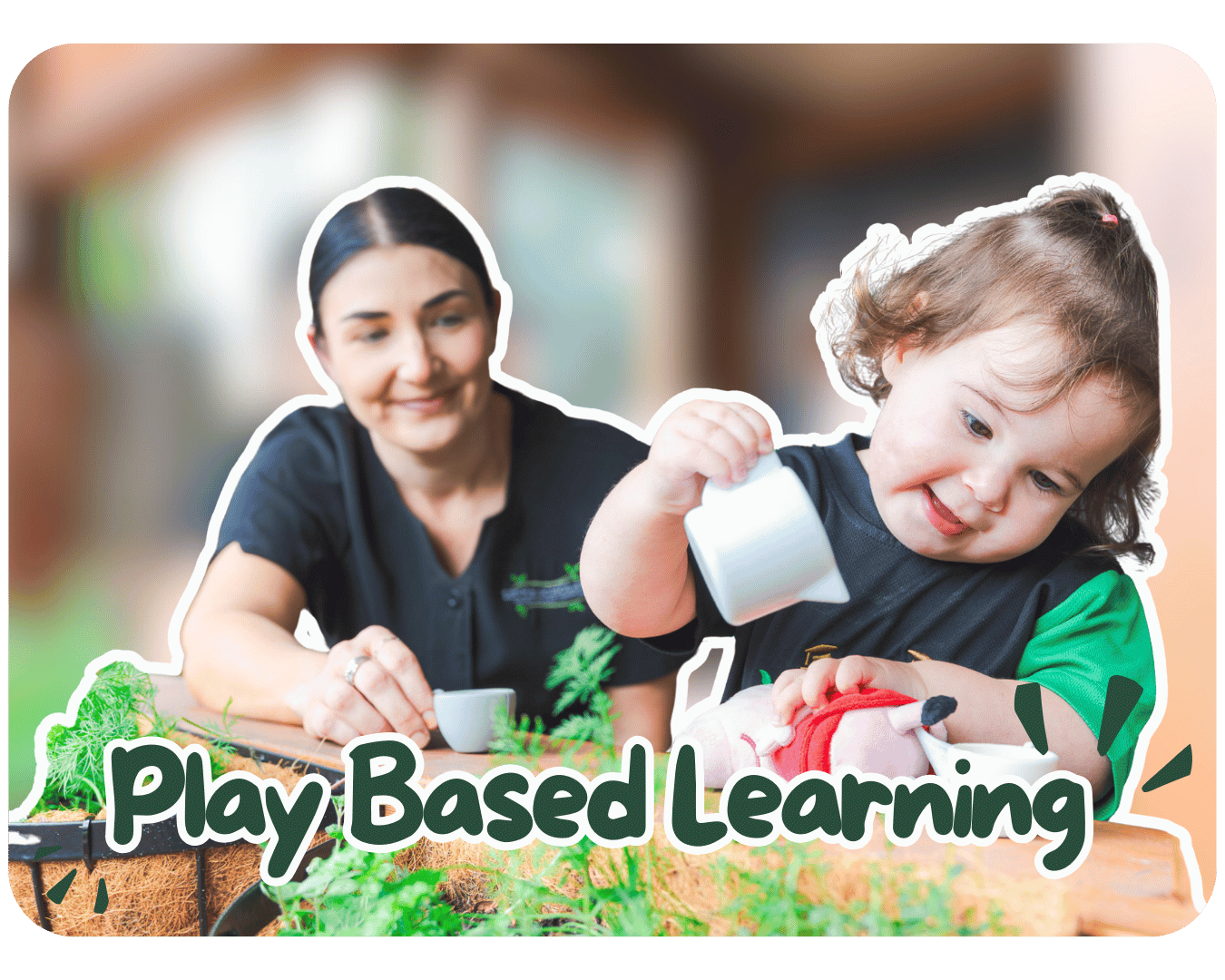
You might know by now that it’s Little Scholars philosophy that children learn best through play. So with that in mind, we had some ideas about how you can play with your baby and help him or her learn to speak at the same time.

Sasha is a lead educator in one of the toddler studios at Little Scholars Burleigh. She says the Abecedarian Approach is one of her favourite tactics for supporting language development, especially when she’s reading with just one or two children.
“It’s a great way to have back and fourth conversation, for example ‘I can see a horse, can you show me where the horse is?’ or ‘I can see you’re pointing to a monkey, can you find anymore monkeys?’ another one could be ‘I can see you’re point to a dog, what noise does a dog make?’
“It’s not only conversational reading,” Sasha continues. “But also just communicating throughout experiences, if a child is stacking a block on top of another block communicating that action that the child is doing.”
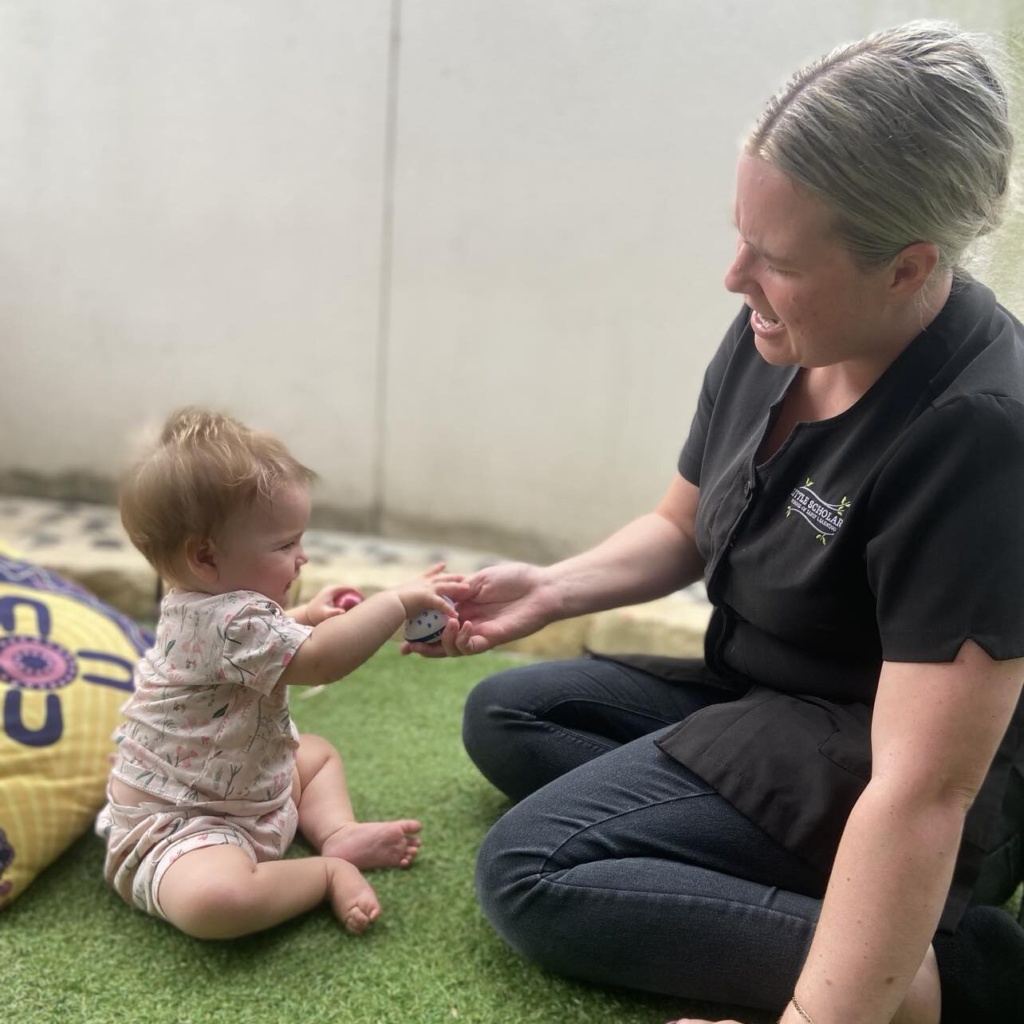
Nikki, the lead educator in the nursery also at our Burleigh campus, says utilising one-on-one periods during routines and rituals, such as nappy changes, washing hands and faces, sunscreen times, are a great time to be talking to the children about what they have been and are doing, ‘we are putting our sunscreen and hats on so we are sun-safe to go outside,’ for example. They also name body parts during the process.
“We always warn the children if we are about to touch their bodies in order to help them, like for nappy changes or sunscreen application, and dictate what is happening to them, so we are verbalising every step,” Nikki says.
“We also talk through the steps at rest times as we place the children in their cots or walk into the cot room, saying ‘we are going to rest our bodies and have some sleep now, I will see you when we wake up and we will do ___’. Basically, we are constantly narrating to the children their every move,” Nikki says.
At our Deception campus, Hayley, lead educator of the toddler studio, does the same thing, but adds a little twist.
“I do a lot of singing, and turning things into songs!” says Hayley. We think that’s a great idea, research shows that singing can help with language development, memory, and even emotional regulation. Singing also has many physical benefits, like improving breathing and posture, and help with early literacy.
“I also think it’s important to be at the child’s level. Talking clearly, and using simple sentences, as well as showing interest when they are speaking to you,” Hayley adds.
Social media can be a great source for parents, so when it comes to baby speech, we’ve got a few we recommend.
Firstly, for all things child-development and early learning, @littlescholarsearlylearning
Then specific for children’s speech development tips, tricks and support, we like these Instagram accounts:
Remember, if you’re worried about your child’s speech development, talk to your GP who can advise or help you with next steps to support your child.
Speech development chart information from Speech Pathology Australia
If you’re a parent of more than one child, or spend time with children of varying ages, you may already see the benefits of those children interacting with each other. In early learning, while we arrange for children of similar ages or development together most of the time, we do make time and space for children to spend time with older and younger children. Why? There’s a lot of research supporting children of various ages and abilities spending time together. We’ll look at a few of these studies and hear from some of our Little Scholars educators who can attest to the advantages of mixing things up!
As an early education provider, we tend to group children together who share similar abilities, who are at similar stages of development or of similar ages. The benefits of this include:
Keeping children together of similar also means they’re stimulated appropriately at each age. Educators can tailor the curriculum to meet the specific developmental needs and milestones common to that age group, making learning more targeted.
As well, being with peers at the same developmental stage allows for more accurate assessment of a child’s progress and needs, aiding in early identification of any learning or developmental challenges, and children of the same age often share similar interests and play preferences, making it easier to form friendships and social bonds.
With a narrower age range, the skill gap between the most and least advanced children in the class is reduced, making group activities more cohesive, and children may feel more at ease and less intimidated when surrounded by peers who are at the same developmental stage, boosting their confidence in social and learning situations.
It also allows educators to be able to use age-appropriate language and teaching methods that resonate with the entire room, making instructions and lessons more effective.
It’s of course true that within ages of studios, for example the nursery, the milestone range can be large – a six month old infant isn’t at the same place a 12-month-old is, and even a 15 month old, but they’re similar enough in their needs that it makes sense to group them together. Our educators plan experiences that focus on movement skills, language development, fine motor development, and strengthening of developmental milestones based on the interests of the babies and research.
For toddlers, who are roughly 18 months to three years old, most are walking by this stage, some of them are learning to speak, sharing with other children and becoming potty trained. For toddlers, the curriculum includes a lot of opportunities for little ones to move their bodies and expel some of that endless energy, but a big focus is on communication and language development, which is why we help your child get to know sounds, words and language, including early literacy and numeracy and social and emotional development.
Then of course, there are our three to five-year-olds, who are further developing their language and literacy skills, fine and gross motor development and more. They are learning to work together in groups as well as individually, all in the build-up to formal schooling.
This is all to say there’s important reasons why our little scholars generally are grouped within similar ages and abilities in their studios. But this does not mean we don’t want them interacting with other children! The opposite, in fact.
The idea to mix aged groups in early learning is of course not a new concept. Here’s two of many theorists of early childhood who supported the idea of bringing children together of mixed age and abilities.
Maria Montessori, the founder of the Montessori method, was a strong advocate for mixed-age classrooms. She believed that older children could serve as role models for younger ones, fostering a sense of community and collaborative learning.
“One of the most important aspects of our education system is the use of the mixed age group which allows all the children to find what is suitable for them, irrespective of their age, and which allows the younger children a graded series of models for imitation, and the older ones the opportunity to reinforce their own knowledge by teaching what they know.”
Now, Montessori classrooms often have children of varying ages working together, which she believed promoted social and emotional development.
Lev Vygotsky, a Russian psychologist, also supported the idea of mixed-age play through his theory of the Zone of Proximal Development (ZPD). According to Vygotsky, children can learn more when they interact with peers who are slightly more advanced than they are. This aligns well with the concept of mixed-age play, where older children can guide younger ones, helping them to reach higher levels of understanding and skill.
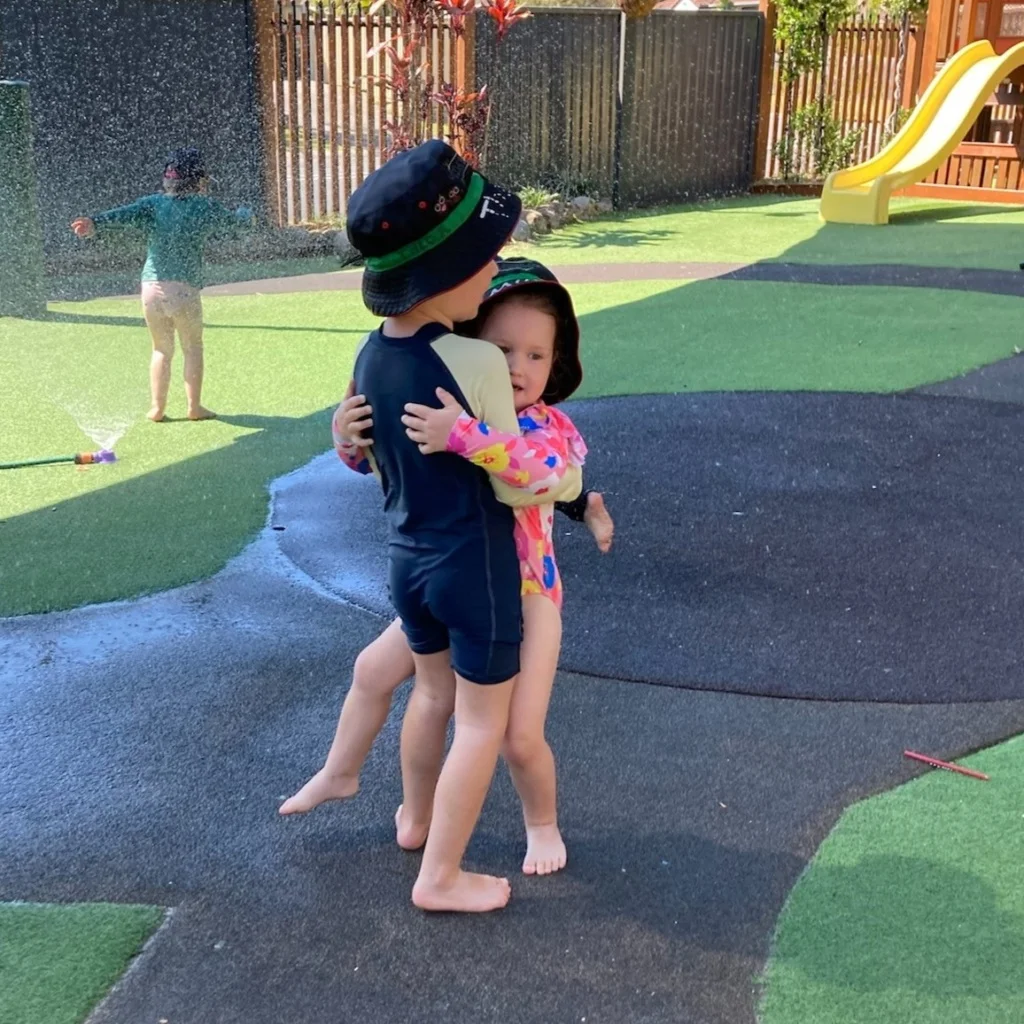
Theo (5) and little sister Mila (3) often get to spend time with each other at our Nerang campus, despite their age difference!
The benefits to having children visit with different age groups are plentiful.
Older children provide leadership and support to younger ones, enhancing skills and confidence for both.
At all of our campuses, there are several sets of siblings. By allowing siblings to interact, it can help younger ones adjust to the care environment.
Even if children don’t have siblings at their campus, mixing with younger children gives them the chance to take on ‘big sibling’ roles.
The benefits also include:
Fosters tolerance and diversity, benefiting children with developmental delays as well.
“I believe that children should have the ability to socialise with children of various age groups,” says Claire, the educational leader at Little Scholars Nerang. “Allowing opportunities for siblings to group together while at the service can assist children to feel a sense of belonging and ease separation anxiety throughout the day.”
For younger children, they can learn from a peer more knowledgeable than themselves, it teaches them problem solving skills and more, says Claire. For the older children, it teaches them nurturing, patience and understanding.
Claire shared a story of one mixed age grouping of two children who weren’t related.

Jacob and Finn are six years apart, share a birthday and have a unique bond at Little Scholars Nerang
“Jacob and Finn are six years apart. Finn began his Little Scholars journey at four months old and took an immediate liking to Jacob aged six at the time. Throughout their friendship, Jacob has assisted Finn to learn how to talk, build and walk. Finn shows great excitement to see Jacob each day by looking for him and can now ask where he is. Finn and Jacob spend time reading and playing together. Jacob uses the abecedarian approach of see, show, say when reading to Finn to build his cognitive skills more specifically language. Each morning and afternoon they spend time together and Finn continues to develop his skill set.
Mixed age grouping for children struggling socially
In 1990, a study in the United States looked at how being in a group with children of different ages could help preschoolers who were having a hard time making friends. The study had 24 children who were either acting out or keeping to themselves. These little ones were put into one of three groups:
The results showed that the children who played with younger, socially skilled children improved the most. They were more likely to make friends and were less likely to act out or keep to themselves.
So, this study tells us that mixing children of different ages can really help those who are struggling to make friends. It can boost their social skills and help them get along better with others.
Complex play in mixed age groups
Another American study found that children in mixed-age classrooms were more likely to engage in complex play modes than children in same-age classrooms.
Over a course of 18 months, there were 47 children who participated. The researchers, from George Mason University, used a variety of methods to collect data, including direct observation, parent questionnaires, and teacher reports.
One of the key findings of the study was that children in mixed-age classrooms interacted more with their same-age peers over time. The researchers suggest that this is because children learn from each other. For example, older children may teach younger children new skills, and younger children may help older children to develop their social skills.
The study also found that older children in mixed-age classrooms became more like younger children, and younger children became more like older children. This is known as bidirectional socialisation. The researchers suggest that bidirectional socialisation may benefit both older and younger children. For example, older children may learn to be more patient and nurturing, and younger children may learn to be more independent and self-reliant.
Overall, the study provides evidence that mixed-age classrooms can have a positive impact on children’s social and behavioral development.
Vocabulary growth in mixed-age groups
A Danish study found that children in mixed-age classrooms had greater gains in vocabulary growth than children in same-age classrooms.
The researchers followed the same group of children over time. The study began when the children were two years and nine months old and ended when they were six years and 11 months old.
The researchers didn’t specify how many trials they conducted, but they did report that the study included 2,743 children. The minimum age difference between children in the same classroom was six months, and the maximum age difference was 24 months. The researchers found classrooms with a maximum age range of 24 months were associated with the greatest gains in vocabulary growth.
To measure children’s vocabulary development, the researchers used a standardised vocabulary test. They gave this test to the children at the beginning of the study and again at the end of the study.
The researchers did not directly observe how the children interacted with each other. However, they did collect data on children’s social interactions through teacher reports and parent questionnaires.
Overall, the study provides evidence that mixed-age classrooms can support children’s language development. However, more research is needed to understand the specific mechanisms through which mixed-age grouping benefits children.
How teachers support mixed age groups
Another study, this time from Sweden in 2022, focused on how preschool teachers implement curricula in different age group settings. The study involved 3,340 children between the ages of two years and nine months and six years and eleven months, from multiple preschools and was based on interviews with teachers.
The study aimed to answer two main questions:
In age-homogeneous groups, teachers felt they could focus on specific age-related goals, whereas in mixed-age groups, the curriculum was more flexible, allowing children to learn at their own pace. The study concluded that both age-homogeneous and mixed-age groups have their own sets of advantages and challenges when it comes to implementing the curriculum.
Researchers focused on the impact of mixed-age groups on children’s development, particularly in vocabulary. The study found that mixed-age groups could be positively linked to individual children’s development, especially in vocabulary.
Advantages of mixed-age groups:
Disadvantages or challenges:
The study suggests that mixed-age groups can be beneficial for children’s development, but they require a specific type of teaching approach.
As you have now read, the benefits of mixed-age play in early learning are plentiful and supported by a wealth of research and educational theories. While it’s common to group children by age or developmental stage, there’s undeniable value in allowing children of different ages to interact. Studies have shown that this kind of grouping can enhance social skills, encourage more complex play, and even boost vocabulary development. Our educators at Little Scholars witness these benefits daily and incorporate mixed-age interactions into our curriculum.
However, it’s not just about mixing ages for the sake of it; it’s about creating a dynamic learning environment that caters to the individual needs of each child. Whether it’s older children mentoring the younger ones or everyone learning to communicate at different levels, the advantages are clear. But it’s not without its challenges; it requires a nuanced approach from educators to ensure that each child’s developmental needs are met. So, while there’s no one-size-fits-all approach to early education, the evidence points towards the value of a mixed-age setting in helping our little scholars grow into well-rounded individuals.
The Case for Mixed-Age Grouping in Early Education (1990) by Lilian G. Katz, Demetra Evangelou, and Jeanette Allison Hartman
The social and behavioral ecology of mixed-age and same-age preschool classrooms: A natural experiment (2002) by Sarah Caverly and Adam Winsler.
Does mixing age groups in early childhood education settings support children’s language development? (2017) by Nina S. Mounts, Jaipaul L. Roopnarine, and Peter B. Smith.
Teaching and learning in age-homogeneous groups versus mixed-age groups in the preschool (2022) by Lena O Magnusson and Kerstin Bäckman
The Little Scholars School of Early Learning recently joined forces with Southern Cross University for an innovative project, looking at how children engage and interact with social robots. NAO is a social robot that has been programmed to interact socially with people and this digital tool has the potential to serve as an educational aide in early learning settings.
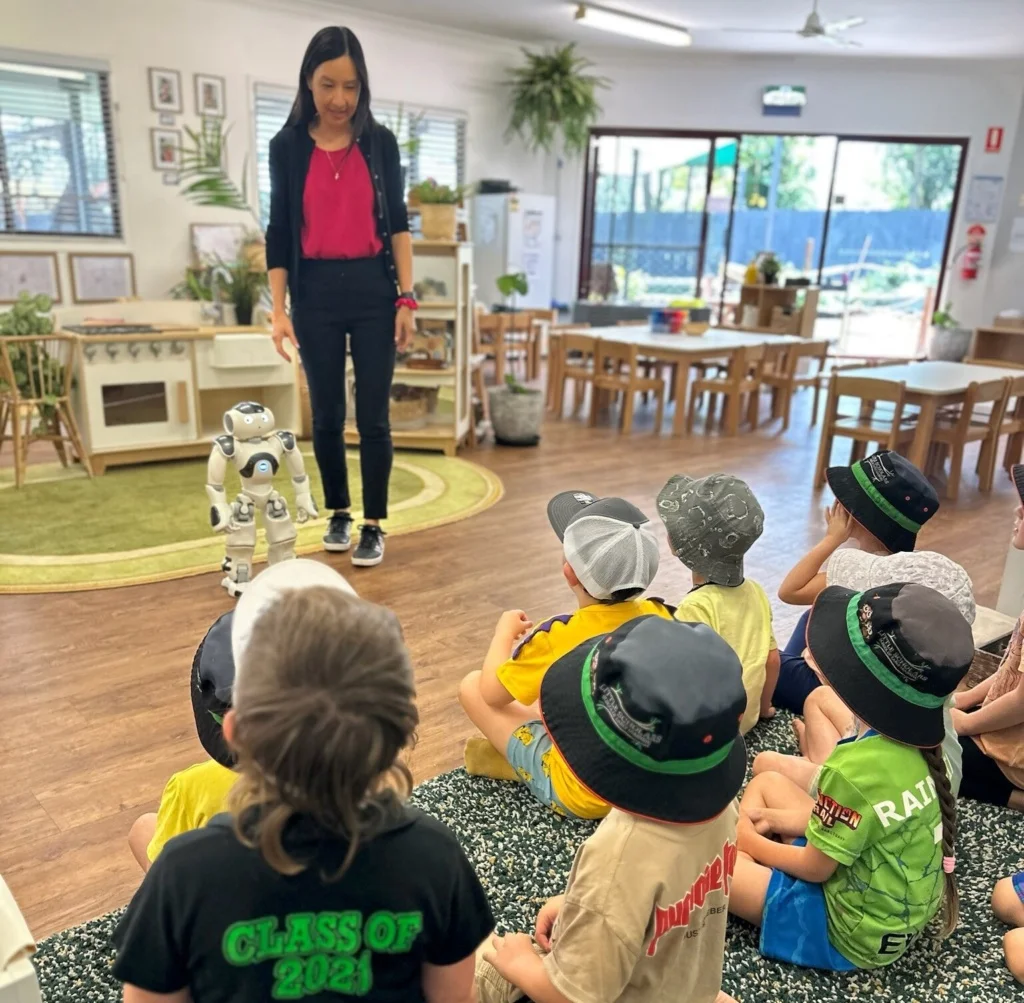
Little Scholars’ Yatala campus was buzzing with excitement as it welcomed Dr Michelle Neumann, Research Assistant Ruby-Jane Barry, and of course, NAO. The visits were part of an educational initiative that captivated the preschool and kindergarten children, as well as educators. The children couldn’t wait to see if Dr. Neumann and NAO had arrived and would dash to the parent lounge to check, educators reported.
The children had the opportunity for one-on-one interactions with NAO, participating in games like ‘Simon Says’, Q&A sessions, and activities focused on literacy.
Dr. Neumann, who leads the project, is an associate professor in early childhood education at Southern Cross University. She believes that this is a frontier that early learning is just starting to venture into.
Interestingly, Dr. Neumann’s journey into early childhood education began after becoming a mum to five children. With an honours degree in science, she decided to pivot her career towards education and early learning. She went back to university, earned her Graduate Diploma in Education, Bachelor of Primary Education, and then completed her PhD focusing on early literacy development. Her dedication has earned her a recent award for research excellence from Southern Cross University, recognising her work in early literacy, digital technologies (tablets, apps, social robots), child development, parent-child interaction.
While NAO has been used to support children’s learning about STEM (Science, Technology, Engineering, Maths) and coding, social robots also have the potential to be used to support language, literacy and social learning in the classroom, according to Michelle
“As a physically embodied version of a screen, a social robot may help young children from a range of diverse backgrounds develop their language and social skills,” Michelle said.
“Michelle and Ruby were so approachable and more than willing to let our little scholars meet NAO,” says Raylene, lead educator in the senior kindergarten room. “I was fascinated with NAO’s abilities, and the potential social robots could have in a classroom setting. As a lead educator, the benefits of having an additional learning assistant was something I was happy to advocate for, so I was quick to start drumming up more families to participate in the visits.”
Raylene said she had a lot of conversations with children preparing them for NAO’s visit, even conversations that maybe one day, the children might have robot friends to help their teachers in the classrooms.
“This was super exciting for the children. I did have to remind them and to the families that it wasn’t happening straight away, but the concept was well received. Families enjoyed the debates of whether it would take jobs from educators, and I enjoyed discussing this with them. By day two, Michelle and Ruby were needing to organise additional days to attend the service due to the influx of families wanting to participate,” Raylene said.
Raylene said on the first day, it was evident that although the children were excited, there were also plenty of nerves. Most of the children participated well, with a small handful quite shy, she said. As the program continued, the children got used to seeing Michelle, Ruby and NAO in the parent lounge, those children who were a little shy to begin with looked eager to have another turn.
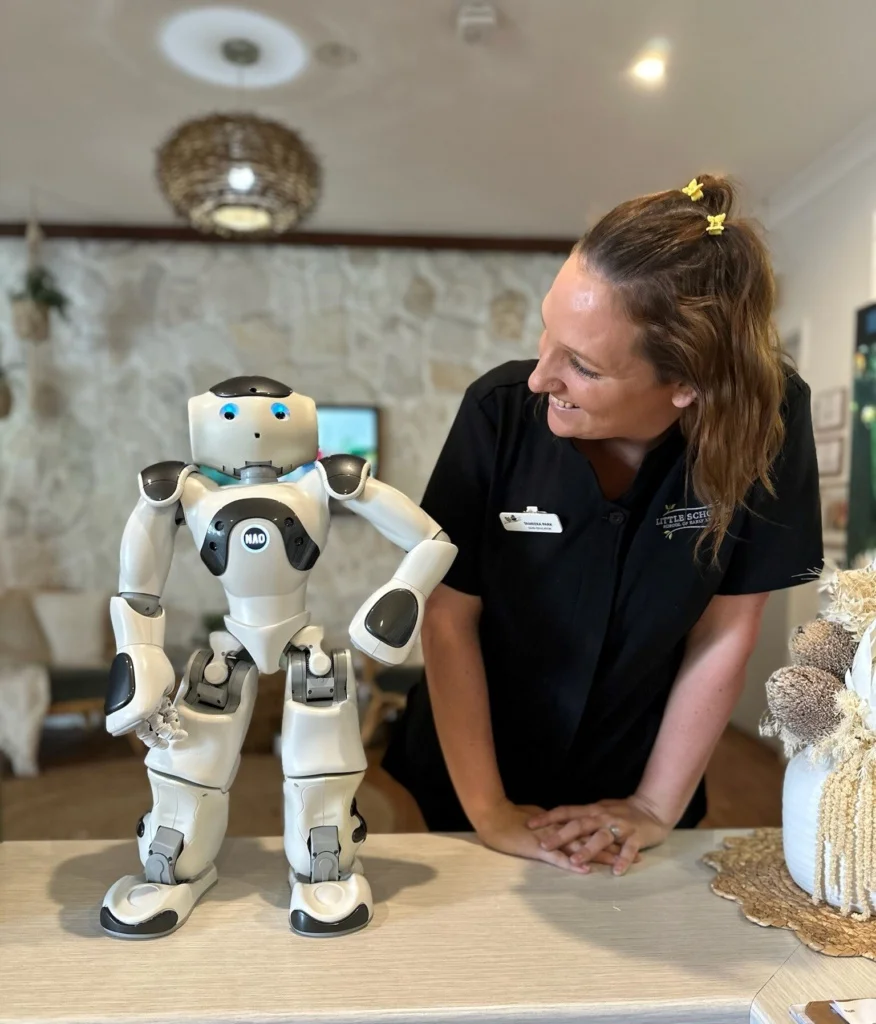
“This was obvious in my own son Tannen. Tannen was one of the few who participated on day one. The whole lead up was a confident ‘I’m having a robot friend’ until he got his robot friend,” Raylene said. “After his turn he told me he didn’t like it a lot because it was scary, however as the days went on, and more friends started to participate, and NAO became a familiar face, all of a sudden he was eager to come to the door to see if they were there yet, and talk to other children on the way in to see if they were going to go and play games with NAO that day. This is the way it unfolded for several children,” Raylene said.
After a few one-on-one visits to introduce NAO to children, Michelle made a final visit to introduce more campus children to NAO and play some games.
“You could see the comfort of the children who were already familiar with NAO, and it acted like a scaffold for the children who hadn’t had the chance yet to interact with him. Comments from children like ‘Oh, that’s just NAO’ and ‘I already played this game and it’s really fun’ to encourage peers along were incredible to hear because it was listening to four- to five-year-olds comforting each other and being confident with the experiences they had just had,” Raylene said.
Michelle said one day she’d love to introduce a full program which sees social robots in more early learning classrooms. But, she says, these are still relatively early days. Social robots are a work in progress, and she acknowledges they’re limited in what they can currently do. She’d love to also work with children who would benefit from additional language and literacy support. For that to work, NAO’s voice recognition needs development as it would need to have the ability to understand a spectrum of language milestones, she said.
“It would take a lot of time, guidance and professional development for educators… and a lot of support to be able to use the social robot in its current form,” she said. “But they’re working on AI generated social robots and these innovative opportunities may make using social robots more usable in the classroom.”
And, the robots are not cheap. NAO can cost up to $20,000 AUD, which she acknowledges would be financially prohibitive to many early learning settings. Michelle says her hope is that more research to can be done to better understand the role that social robots could play in supporting young children’s early learning experiences. With emerging advances in robotics, it may be possible that the production costs of these devices could one day become a more affordable educational tool.
The collaboration between Little Scholars and Southern Cross University has opened up new avenues for early learning, showcasing the potential of integrating social robots like NAO into educational settings. The overwhelmingly positive response from both children and educators alike underscores the limitless possibilities this technology could offer. As we look to the future, the hope is that advancements in AI and robotics will make these educational tools more accessible and tailored to the unique needs of early learners. This pioneering initiative serves as a testament to the boundless curiosity and adaptability of children, and the commitment of educators like Michelle and Raylene to push the boundaries of what’s possible in early education.
Jae Fraser, founder of Little Scholars, wholeheartedly supports the NAO project with Little Scholars.
“This is such an exciting project for our little scholars to engage in,” he says. “Introducing social robots to Little Scholars, isn’t just a leap in technology; it’s a giant step in nurturing young minds.
“We look forward to where this will go, and how we can use resources like this to continue the learning journey for Little Scholars.”
Additional information
The potential of social robots in early learning includes:
Potential barriers and obstacles for social robots in early learning:
Everyday life is full of risks and challenges, and at Little Scholars, we believe children need opportunities to develop the skills associated with managing risk and making informed judgements about risks from a very young age. Risky play helps to develop important life skill learnings such as; building resilience and persistence, critical-thinking skills, self-confidence and even extends their frustration tolerance.
We get it—no one wants to see little ones get hurt. It’s almost instinctual to hover nearby in case they stumble or to call out ‘be careful!’ when they’re taking risks. But could this actually be sending the message that we don’t trust their capabilities or instincts? Historical trends show that since the 1960s, there’s been a shift in how we view children. Once considered competent, responsible, and resilient, the modern perspective leans more towards constant supervision and protection. What used to be unrestricted and often unsupervised outdoor play has transitioned to structured, closely watched, and frequently indoor activities.
A lot of research has been devoted around the world to risky or adventurous play, and how parental attitudes as well as other factors played a part in children’s activities.
By participating in adventurous play, children are more likely to engage in activities that elevate their heart rate and breathing, leading to increased energy expenditure. This can help children meet the recommended guidelines for MVPA, which is at least 60 minutes of moderate-to-vigorous physical activity daily.
‘Educators facilitate gradual exposure to controlled risks, allowing children to develop confidence and judgment, ultimately empowering them to make informed decisions when navigating different situations.’
-Kristen Guymer
Adventurous play also offers opportunities for children to develop and enhance their motor skills, coordination, balance, and strength. These physical skills are essential for overall physical development and can contribute to improved physical fitness.
Furthermore, adventurous play provides children with opportunities to explore their environment, take risks, and challenge themselves. This type of play promotes creativity, problem-solving, and decision-making skills, as children navigate and overcome obstacles. It also fosters a sense of adventure, independence, and self-confidence.
Overall, adventurous play can be a fun and engaging way for children to meet their daily MVPA requirements while promoting physical fitness, skill development, and personal growth.
“We emphasise the importance of careful observation, encouraging children to identify potential hazards by looking, listening, and even touching when safe,” she says. “Educators also foster critical thinking by asking questions that prompt risk assessment, such as, ‘What could go wrong if…?’ We promote collaboration and communication, allowing children to discuss and share their perceptions of risk.”
Furthermore, Kristen shares, educators facilitate gradual exposure to controlled risks, allowing children to develop confidence and judgment, ultimately empowering them to make informed decisions when navigating different situations.
Before embarking on Bush Kinder experiences or similar activities, educators guide children through risk assessments:
Hayley Yates, a lead educator at our Yatala campus agrees that discussions with children previously help prepare for and mitigate risk.
“We support risky play through our discussions with the children,” Hayley says. “If it’s something that has a big risk, example climbing trees, we talk about what we should look out for when climbing, how big the branches need to be to be safe and things of that nature. For both the younger and older children we use language like ‘Notice how this is this? Another example would be walking on slippery rocks, I would say ‘notice how that rock is wet? That might be slippery’, then giving them the option to continue to that rock or a different one.”
Hayley says through important discussions educators are guiding children by asking questions and role modelling safe behaviours.
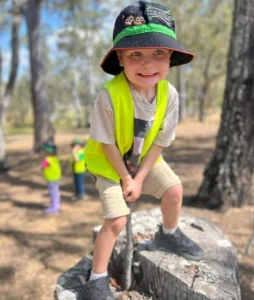
At Little Scholars, we believe that spending time in nature has numerous benefits for children, including improved physical health and strength, enhanced cognitive development, and better emotional regulation. Through our Bush Kinder program, children have the opportunity to connect with nature on a deep level, learn about the environment, be challenged beyond the classroom, and engage in meaningful, hands-on experiences.
During our Bush Kinder sessions, children have the opportunity to engage in a range of activities, from nature walks and bird watching to building shelters and learning about indigenous culture. Children climb, scramble, jump and more in nature’s playground.
In this natural environment, children encounter diversity, novelty, challenges, and even some calculated risks. Their senses come alive as they engage with sticks, tree holes, water, rocks, sand, and dirt—nature’s abundant toys.
Our Bush Kinder educators are highly experienced and qualified in outdoor education and child development. They are passionate about providing children with meaningful learning experiences in a safe and supportive environment. We take the safety and security of our children very seriously. Our Bush Kinder program is conducted in a safe and secure outdoor environment, with strict protocols in place to ensure the well-being of all children.
But risky play is not limited to bush kinder.
Our outdoor areas are thoughtfully designed, including forts and equipment, all with intention of helping children navigate risk, endure challenges and build motor and fine motor skills.
Helena Vairy, an educator at our Ormeau Village campus, shares an example of how she helps children assess risk and how to complete ‘risky’ tasks safely.
“The way I like to teach children to access risk are by providing them with the materials which are needed and seeing how the children act on these,” Helena says. “
“The other week myself and a couple of the Kindergarten children set up the sandpit I placed the crates in a line and stacked one on top of the other. One child Mahli said ‘this looks like a runway maybe we can walk and then jump off the crates.’ What a great idea this was, the children were nervous at first but I stood right next to them to help. I asked the children, ‘do you think you can jump off the crated and land with your feet flat?’ I then demonstrated and the children too were off jumping.
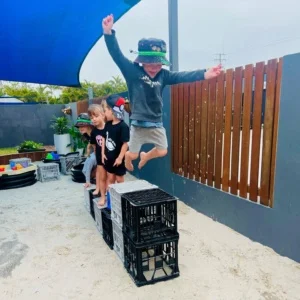
We love this story because it shares how children lead their own learning experience, consider risks, and support and encourage each other.
All of our campuses have recently introduced woodworking stations, designed to help children exercise their creative and critical thinking skills. It allows them to express their ideas and figure out solutions to their projects. It’s also a great way to introduce risky play, as the risks are managed and educators are actively supervising, but woodworking teaches children about safety and understanding risk.
“As they pick up their hammers, they’re getting ready to work on their pincer grip,” says Katie, educational leader at our Parkwood campus. “Things like that prepare them for school. In order to prepare to help the children use these safely, we’ve been having group discussions and asking them different questions about how to use the tools, what they think the tools do and what they can make in the future.”
It’s clear that risky play isn’t just about letting children run wild; it’s a calculated approach to help them develop essential life skills. At Little Scholars, we’re not just about keeping your little ones safe; we’re about preparing them for life. Our educators are trained to guide children in assessing risks, making it a learning experience that builds confidence and safe judgment. So, parents, it might be time to loosen the reins a bit. Let’s trust our children to make informed decisions, even if it means resisting the urge to shout, ‘Be careful!’ every so often. After all, life is full of risks and challenges, and what better time to learn how to navigate them than in the formative early years? You’ll be amazed at what they can achieve when given the freedom to explore, assess, and conquer.
We know you want to give your child the best possible start in life. We foster nurturing relationships between our educators and your child, building and gaining their trust so we can support your child as they take on risks and challenges safely and confidently. Book a tour today to get started!
Further reading:
As early childhood educators, we encounter a variety of situations on a daily basis, ranging from ordinary to interesting (to say the least!). Reflective practice in early learning is about taking a step back and critically examining these experiences to better understand what happened and why. By reflecting on our practice, we can learn from our experiences, improve our approach, and ultimately provide better care for the children in our campuses.
Little Scholars provides an attractive and safe environment to children on the Gold Coast while giving you total peace of mind while your children are in our care. Learning areas include well-equipped playrooms and landscaped outdoor spaces for maximum learning opportunities. Book a tour today if you are looking for an early learning campus in South East Queensland.
Reflective practice is a process of critical examination and evaluation of experiences, situations, and decisions to learn from them and improve future practice. It involves actively seeking out information, analysing and interpreting it, and using it to guide decision-making and improve outcomes. Reflective practice is not just about what happened, but also about why it happened and how it can be improved.
We apply reflective practice to various aspects of our work, such as planning, teaching, assessing, and communicating with children and families. It helps us identify the rationale behind our practices and evaluate whether they are consistent with our beliefs, values, and core philosophy.
Little Scholars School of Early Learning’s The Collective is a service-wide, multi-faceted educational initiative, designed to enhance each child’s learning and development and best support educators’ time spent with children.
There are different types of reflective practice, including reflection-in-action, reflection-on-action, and reflection-for-action.
Reflection-in-action occurs spontaneously as we make decisions in response to what is happening in the moment.
Reflection-on-action involves thinking about experiences after the event and questioning how and why a specific practice contributed to or detracted from a child’s learning or relationships with families.
Reflection-for-action is a proactive way of thinking about future action and involves considering different approaches and refining inclusive practices and communication strategies to improve outcomes.
We view reflective practice as an essential component of developing a culture of learning that drives continuous improvement and focuses attention on quality outcomes for children and families. It helps us to enrich children’s learning, build our own knowledge and skills, and affirm and challenge our colleagues.
To engage in reflective practice, we take time to observe children closely, foster relationships and gain insights into their thinking and learning. Here are some strategies we employ to engage in reflective practice in early learning:
Reflective practice in early childhood education is important as it ensures educators regularly reflect on what they do, why they do it, and how this knowledge can improve their practice.
Studies show that high-quality early childhood settings positively affect children’s development, and reflective practice is a feature of such environments. This practice allows early childhood professionals to develop a critical understanding of our own practice and continually develop the necessary skills, knowledge and approaches to achieve the best outcomes for children.
Reflective practice also helps us create real opportunities for children to express their own thoughts and feelings and actively influence what happens in their lives. In addition, reflective practice helps professionals to develop a deeper awareness of their own prejudices, beliefs, and values, and advance learning for vulnerable children.
At Little Scholars, we recognise the importance of reflective practice in providing high-quality early education to the children in our care. Our educators engage in regular reflection and are encouraged to share their insights and experiences with their colleagues.
We believe that by reflecting on our practice, we can continually improve and adapt to better meet the needs of the children and families we serve. The Collective allows for educators to have autonomy in how they document and plan for children. This supports a strength-based approach with our team.
If you live in South East Queensland, book a tour today to enrol your child in the best early learning campuses in the community.
At Little Scholars we are dedicated to creating a nurturing, stimulating, and safe educational setting for children. To accomplish this, we have integrated the Reggio Emilia approach into our curriculum. This powerful educational philosophy puts the child at the heart of their learning journey, aligning perfectly with our commitment to compassion, love, and preparing children for life.
This article explores what the Reggio Emilia approach is, how it originated, and how we integrate it into our teaching at Little Scholars.
Little Scholars provides an attractive and safe environment to children on the Gold Coast while giving you total peace of mind while your children are in our care. Learning areas include well-equipped playrooms and landscaped outdoor spaces for maximum learning opportunities. Book a tour today if you are looking for a childcare centre in SE Queensland.
The Reggio Emilia approach is an educational philosophy focused on early childhood education. Originating from the region of Reggio Emilia in Italy, this approach views young children as curious individuals who have the potential to learn from everything around them.
Essentially, the Reggio Emilia approach places significant emphasis on fostering a strong sense of self, creativity, and cognitive skills through a systematic learning process based on exploration and discovery. It recognises children as active participants in their learning, with their own unique interests, abilities, and the capability to construct their own understanding and knowledge of the world.
There are 11 key principles in the Reggio Emilia approach:
The Reggio Emilia approach to early childhood education originated after World War II, through collaboration between early childhood educator and psychologist Loris Malaguzzi and parents in the villages surrounding Reggio Emilia, Italy. They joined forces to create a new type of childcare education that would prioritise community involvement, instil a love for learning, and promote respect. Together, they established and managed preschools that emphasised the significance of community, democracy, and an active role in education. This shared mindset laid the foundation for what we now know as the Reggio Emilia approach.
Over time, the Reggio Emilia approach has evolved, incorporating influences from various sociological and academic ideas. Despite its humble beginnings, this philosophy has gained international recognition for its innovative and child-centred approach, making a profound impact on early childhood education. Today, thousands of schools inspired by the Reggio Emilia approach can be found worldwide, each adapting and implementing the philosophy in ways that resonate with their own specific cultural and community contexts.
In a world where traditional education can often be rigid and structured, the Reggio Emilia approach offers a refreshing child-centred approach, recognising and valuing children as strong, capable, and resilient individuals who possess innate wonder and knowledge.
At Little Scholars, we embrace the Reggio Emilia approach as it aligns with our philosophy.
We integrate this philosophy alongside Australia’s National Quality Standard for education and the Early Years Learning Framework, into our everyday practices, curriculum, and interactions. Our aim is to create environments that inspire children’s exploration, discovery, and active engagement. In our studios, we purposefully arrange the space to stimulate curiosity, problem-solving skills, and social interaction. Every nook and cranny of our campuses are designed to be a learning space where children can interact with materials, nature, and their peers.
The unique combination of our values and the Reggio Emilia approach not only nurtures cognitive and social skills but also fosters deeper growth. It equips children with a strong moral compass and a deeper understanding and respect for the world they live in.
If you follow our social media posts, you know we’re passionate about getting our Little Scholars outside. Have you ever wondered why outdoor play is such a vital part of our early educational program?
Imagine the fresh air brushing against your face, the satisfying crunch of leaves under your feet, or the soothing sound of a nearby burbling stream. Picture the invigorating scent of freshly cut grass or the refreshing breeze of the salty sea air. Envision the tactile sensation of rough bark or smooth stones. And finally, visualise the breathtaking beauty of greenery, rivers, streams, and oceans.
In essence, being outdoors offers the ultimate sensory experience that simply cannot be replicated in a studio.
Many of us cherish childhood memories filled with boundless hours spent exploring the great outdoors. However, as life has grown busier for families, children today are spending less time engaging in unrestricted play outside. A recent study by Royal Children’s Hospital national child health poll found that 45% of Australian children play outdoors most days, and 80% of parents would like their children to spend more time outdoors. At Little Scholars, we want children to rediscover the joy of unstructured play in nature.
One study found that children who engage in just one third more outdoor activities than their peers grow up to be happier adults.
Outdoor learning should be an integral part of children’s everyday lives, providing fun and enjoyment while also serving as a stimulus and extension of their indoor learning. If your child attends Little Scholars, outdoor play is a key component of their daily experience on our campus.
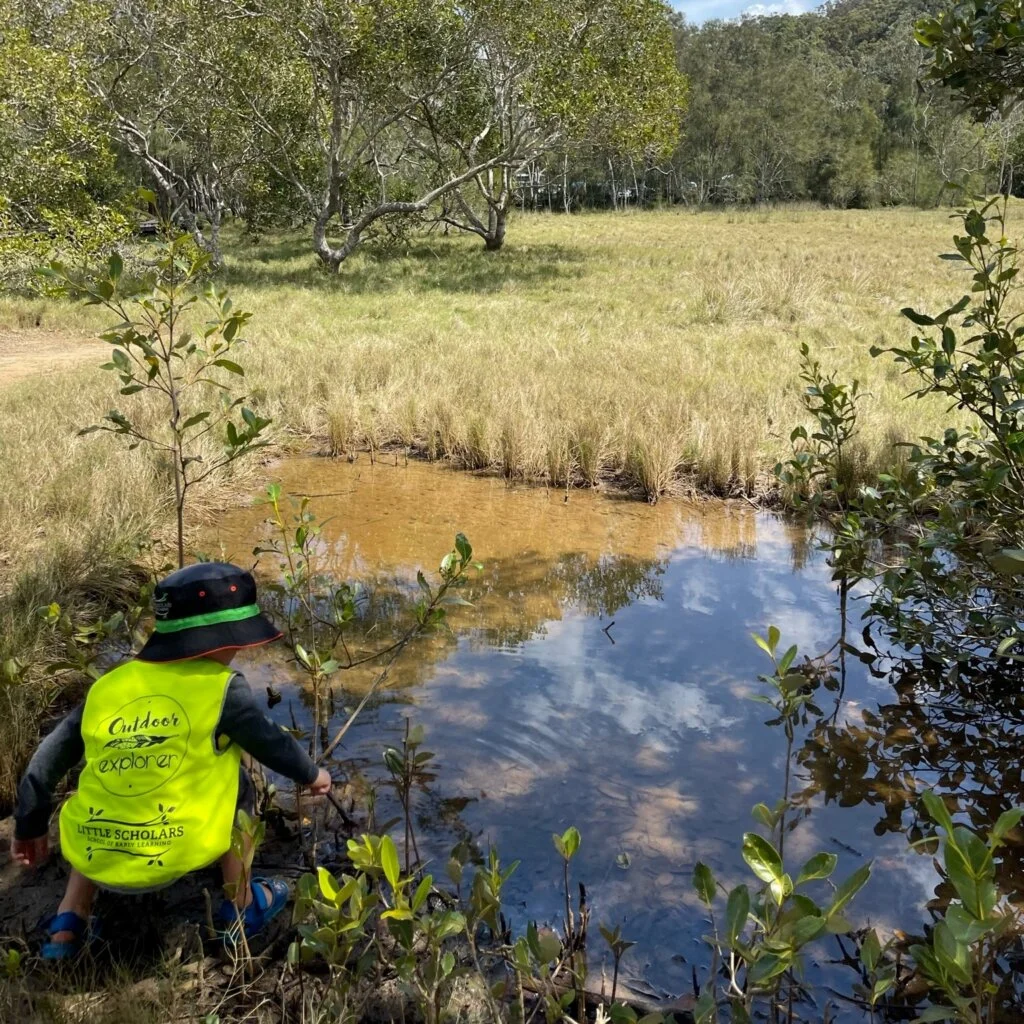
At Little Scholars, our educational programming places a strong emphasis on the natural environment. We have developed the Little Scholars’ Bush Kinder program, an innovative outdoor education experience for children of all ages, fostering exploration, discovery, and learning in nature.
During our Bush Kinder adventures, children engage in a range of activities, including nature walks, wildlife watching, building shelters, and learning about indigenous culture. They climb, scramble, jump, and fully immerse themselves in nature’s playground.
Our outdoor teachers are highly experienced and qualified in outdoor education and child development. They understand the significance of outdoor and nature play in fostering children’s development and well-being. By cultivating a love for nature and the environment, as well as a connection to all living things, they help fulfill children’s basic needs for freedom, adventure, experimentation, risk-taking, and simply being children.
At Little Scholars, the safety and security of our children are of utmost importance. Our Bush Kinder program is conducted in a safe and secure outdoor environment, with strict protocols in place to ensure the well-being of all participants. Our educators are passionate about providing children with meaningful learning experiences in a safe and supportive setting. Extensive risk assessments are conducted prior to excursions, but children are also advised and included in risk assessing while on their adventures so they can begin to think about safe risk taking while enjoying being outside. Our Bush Kinder program is designed to be fun, engaging, and educational, and there are plenty of benefits for children while they’re out on their adventures.
Children have the opportunity to explore and discover the wonders of the natural environment, learning about plants, animals, and ecosystems firsthand.
Through hands-on experiences, children develop critical thinking and problem-solving skills. They learn to navigate challenges and find creative solutions.
Outdoor play provides ample opportunities for children to interact with their peers, fostering the development of social skills and the formation of new friendships.
Engaging in outdoor activities helps children develop their physical skills, such as coordination, balance, and strength.
During bush kinder, we engage in Dadirri, an Aboriginal word meaning ‘inner deep listening and quiet still awareness and waiting’. So while out enjoying nature, the children and educators sit with a bit of space from each other and pay close attention to what they can hear, see, smell and feel. Bush kinder also provides an opportunity to learn, acknowledge, and celebrate the history and traditions of the people who were the traditional owners of the land they love to spend time exploring.
Finally, spending time in nature cultivates a sense of wonder and deepens children’s appreciation for the natural world around them.
While we take pride in our learning programs that prioritise outdoor play, it’s important to acknowledge the foundations upon which these programs were built. Our teams have conducted extensive research and drawn from the following theories:

Friedrich Froebel (1782-1852): Froebel’s approach emphasises holistic development and creativity in early childhood education. He recognised the importance of outdoor learning, nature walks, and gardening.
Jean Piaget (1896-1980): Piaget’s theory of cognitive development highlights the role of play in intelligence development. He believed that children’s play and environment should encourage cognitive and language growth.

Lev Vygotsky (1896-1934): Vygotsky emphasised the importance of children’s interaction with the environment and their peers. He believed that learning is enhanced through social interaction and scaffolding from a more knowledgeable other person.
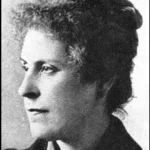
Margaret McMillan (1860-1931): McMillan, along with her sister Rachel, played a pivotal role in nursery education. They advocated for open-air nurseries and opened Britain’s first open-air nursery, and unlimited outdoor play, recognising the benefits of hands-on experience and active learning.
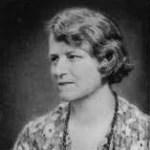
Susan Sutherland Isaacs (1885-1948): Isaacs, an educational psychologist, believed in the central role of play in a child’s education. She emphasised the importance of outdoor exploration and community engagement to support children’s emotional and cognitive needs.
While our Bush Kinder program is a significant aspect of Little Scholars, outdoor play doesn’t always require leaving the campus. Our yards are purposefully designed as extensions of our studios, providing space for learning, relaxation, and play. From play forts to bike tracks, gardens to sensory paths, and water play areas, our outdoor environments offer open and less structured spaces for children to explore, overcome challenges, and grow.
By encouraging children to spend time outdoors, whether through Bush Kinder or within our incredible yards, we aim to provide them with a well-rounded early education. Outdoor play nurtures essential skills such as resilience, teamwork, creativity, mindfulness, and risk assessment in a safe and supervised environment.
Now that you understand why outdoor play is such an integral part of the Little Scholars experience, it’s time to discover how nature play can bring out the best in your child. Find out more by booking a tour and seeing firsthand our commitment to supporting children’s growth and development.
For parents leaving their babies or young toddlers in care for the first time, it can be a stressful experience. When the paid maternity leave ends, parents must make the decision of whether or not both parents will work outside the home. The choice to leave their young child in early learning and care can create a number of concerns, one big one being how their relationship with their young child will be affected if the parent is not spending the majority of the child’s time with them. These are valid concerns, but research has suggested infant attachment to their parents is not generally affected by being in care, so long as the parents have a strong bond with the child when they are with them.
Understanding Attachment Theory
Attachment theory was first introduced by John Bowlby, a British psychoanalyst and psychiatrist in the 20th Century. Bowlby observed that early attachments could significantly affect a child’s emotional development and adult relationships in later life. He concluded that children between six and 30 months were very likely to form emotional attachments to familiar caregivers, especially if the adults are sensitive and responsive to child communications. This led him to propose the Attachment Theory after he studied the negative impact of maternal deprivation on young children.
Mary Ainsworth, an American psychologist who worked under Bowlby early in her career, later devised an assessment technique called the Strange Situation Classification (SSC) to investigate how attachments might vary between children. Her research in Uganda, then her well-known Baltimore Study in the 1960s, in which she noticed distinct individual differences in the quality of mother-infant interactions over time, led her to categorise these different attachment styles into three types: secure attachment styles, insecure attachment styles, and not-yet attached. She found a connection between maternal sensitivity and secure attachments. Sensitive mothers were familiar with their babies, provided spontaneous and specific detail about their children, and babies of sensitive mothers cried less and felt free to explore in the presence of their mother. Generally, she concluded that babies of sensitive mothers have secure attachments.
While Bowlby’s initial findings focused on maternal deprivation, later studies have contradicted his emphasis. Schaffer & Emerson (1964) found that specific attachments started at about eight months and shortly thereafter, the infants became attached to other people. By 18 months, very few (13%) were attached to only one person, and some had five or more attachments. Rutter (1972) noted that several indicators of attachment, such as protest or distress when an attached person leaves, have been shown for various attachment figures – fathers, siblings, peers, and even inanimate objects. Weisner, & Gallimore (1977) found that mothers are the exclusive carers in only a very small percentage of human societies, and often there are a number of people involved in the care of children, such as relations and friends. Van Ijzendoorn, & Tavecchio (1987) argue that a stable network of attachment figures is more important than the number of figures.
Some studies in the 1970s and 1980s found negative effects on young children in daycare and attachment, but arguments against those studies included that few mothers worked outside the home during those times, and the quality of the care facilities themselves were perhaps lower than you’d see today. Since then, much has changed, and research has shown many positive effects of early learning and care for young children, including social relationship development.
One study conducted in Norway found that infants who were in early learning settings scored higher on tests measuring cognitive and language development than infants who were cared for at home. Another study conducted in Canada found that children who attended high-quality care were more likely to to have better cognitive and language development than those who attended lower-quality care or stayed at home.
Both the Norwegian and Canadian studies highlight the importance of high-quality early learning for children’s cognitive and language development. High-quality early learning centres provide a safe and stimulating environment where children can learn and develop essential skills. They also offer opportunities for children to interact with other children and adults, helping them develop social skills and emotional intelligence.
In Australian early learning settings, we follow a National Quality Standard which lays out seven quality areas on which centres should meet or exceed. The fifth quality area is ‘relationships with children’ and its intent is to promote relationships with children that are responsive, respectful and promote children’s sense of security and belonging. Relationships of this kind free children up to explore the environment and engage in play and learning.
Please rest assured, when you’re leaving your child at one of our campuses, your child’s wellbeing is our number one priority. We support children to develop in a holistic manner, including socially, cognitively, physically and emotionally. If there are tears (from either of you!), we’re here for both of you, and know it means your relationship with your child is not only in tact, but flourishing.
Read more:
When you think of childcare, you might not necessarily think of early education, but that’s precisely what Little Scholars is doing; providing high calibre early education for the critical first five years of a child’s life, and at the same time, changing society’s perception of what childcare, or early education, is.
Little Scholars has always considered itself as a leader in the sector, but we elevated the quality of education with the addition of Susan Cooper, our group pedagogical leader one year ago.
Pedagogy is a form of teaching strategies in the practice of educating. It’s the techniques, strategies and approach taken by educators to let learning and development to take place. Pedagogy refers to the interactive process between the educator, the learner and the learning environment and provides reason to the design of learning spaces, materials, and resources on offer. Pedagogical leadership supports educators in relating their pedagogy to content knowledge and educational theories.
My aim is to support educators in entering the child’s world, enabling them to reflect on their practices and build capacity to support the child’s development.
– Susan Cooper, group pedagogical leader for Little Scholars
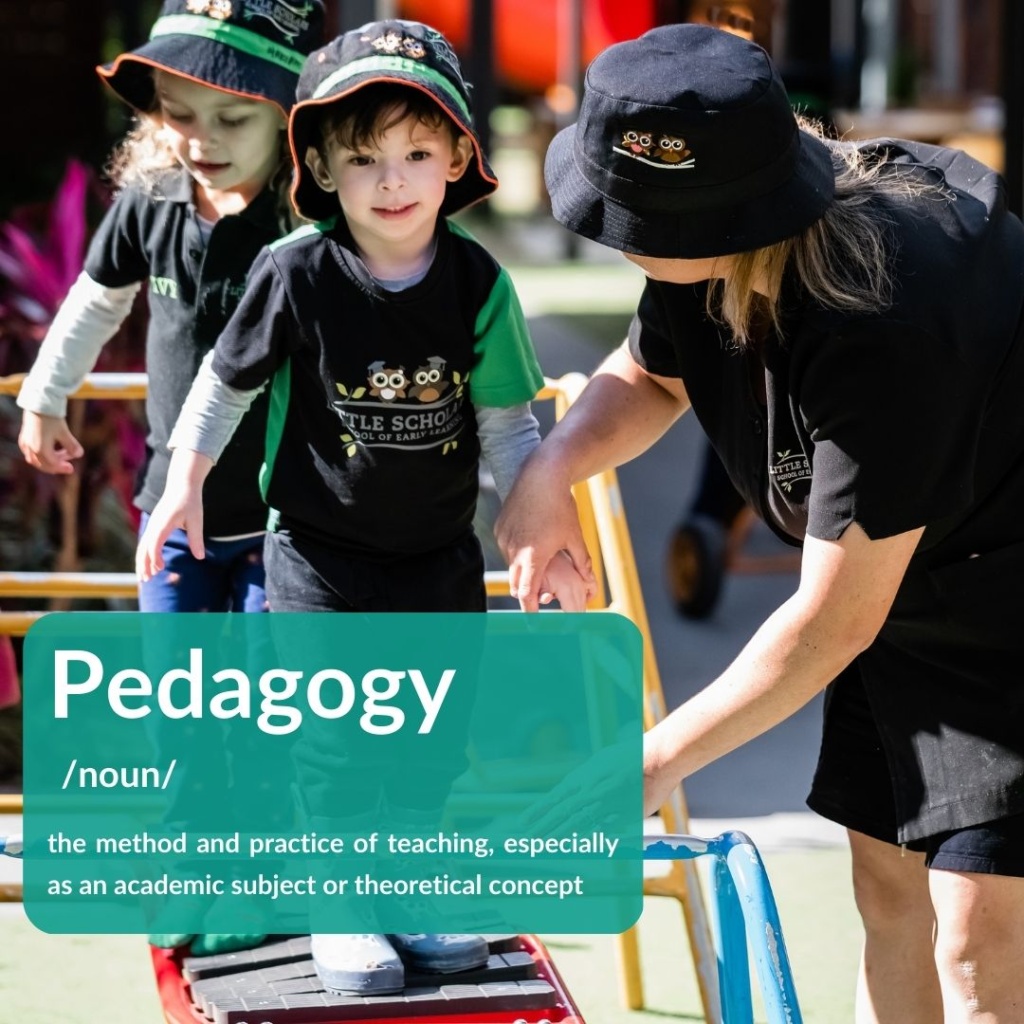
In the year since Susan joined us, she’s gone above and beyond to support our educators. Through her pedagogical leadership, Little Scholars has raised the benchmark of its overall quality of teaching, and recognises that providing children with strong foundations for ongoing learning and development is underpinned by a strong pedagogical practice. She inspires educators to employ new approaches to their teaching against up-to-date research, has helped translate the Little Scholars values and principles into practice and has without a doubt increased the quality of experiences and interactions across our campuses.
But the role was daunting at first, according to Susan.
“Having come with approximately 16 years’ experience in having been in varied roles across the sector within early childhood, my love of sharing knowledge and inspiring others drew me to apply to this role,” Susan says. “My experience in playwork allows me to see the true value in children’s play, the need to create spaces and support the learning and approach to working with children to support and facilitate play in its true essence. What really resonated with The Scholars Group and my own personal values and beliefs, was placing children as the core and central to all that we do.
“I see myself as an advocate for children’s rights, being the voice for many and striving to excel toward quality outcomes.”
The group pedagogical role is focused on mentoring and guiding teams in their practices and challenging new ways of working, to support innovative curriculum ideas, while supporting children’s learning across all Little Scholars campuses.
“I found the team to be so supportive and receptive to change, which has allowed me to share my vision, passion, and skillset,” Susan says.
With Susan’s support, our Deception Bay campus was rated exceeding against the National Quality Standards (NQS) in late 2022. A thrilling result, but not without a lot of preparation. Susan guided Nat, the campus manager, and her team, in the Assessment and Rating Process.
“It was critical that the team worked collaboratively toward a shared goal. This involved building strong relations with the team to build trust and mutual respect. This partnership saw me engage with all stakeholders, while we worked toward targeted goals and worked through evidence-based data to the exceeding themes,” Susan says.
Strong knowledge of theory and pedagogy underpinned the quality outcomes, according to Susan. Another great achievement Susan says, was the team being ranked 3rd out of 3,126 early learning centres across the state.
“My role is to take an active role in the development of pedagogy in the early childhood context. I primarily work alongside teams, across our 13 campuses to provide the opportunity to share pedagogical practice, leading knowledge to research and child development,” Susan says. “Not only does pedagogy inform direct work of teaching, but also the more indirect work of leadership. This develops a community of practice, where professional educators can share ideas and knowledge and engage in peer learning.”
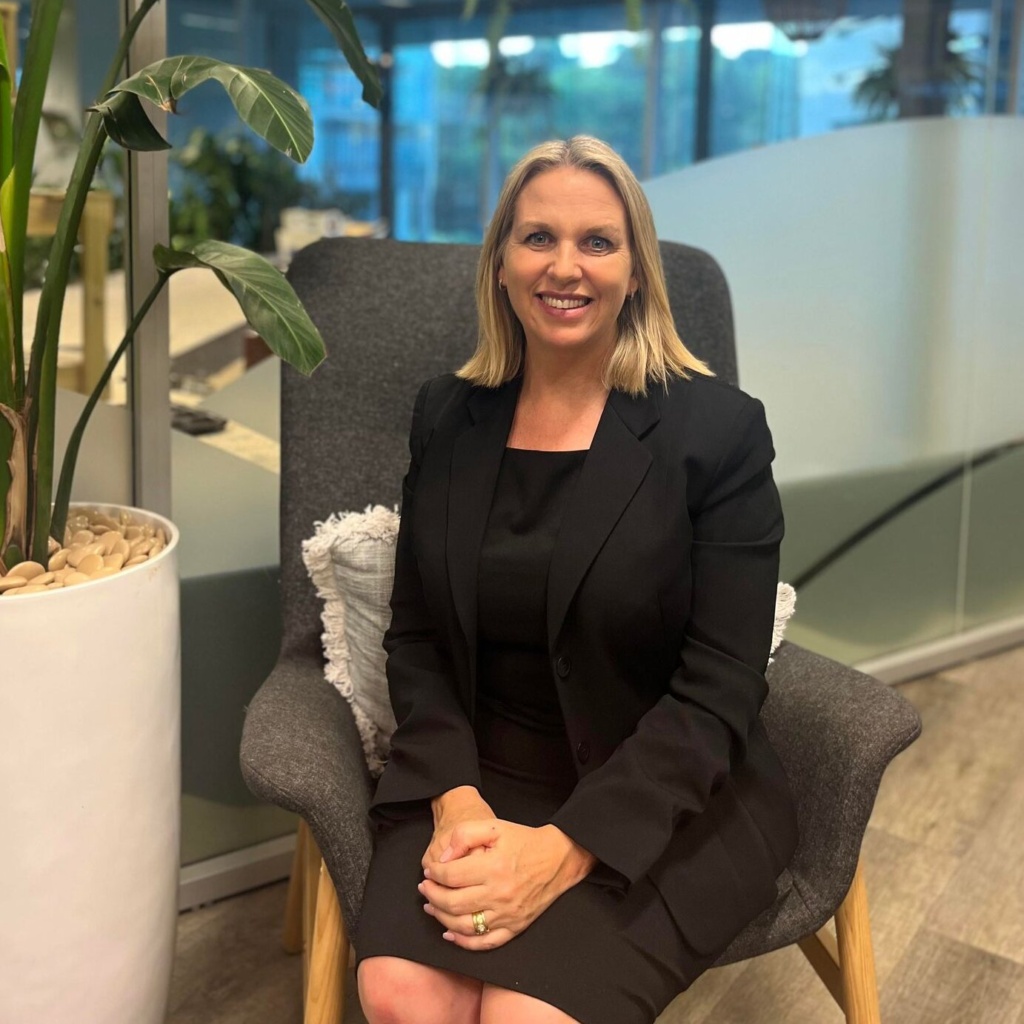
“Little Scholars has always been a leader in our field, due to our commitment and passion to the early years. With the addition of our Group Pedagogical Leader, the effectiveness of our educational program and practice has been elevated to a level we didn’t think was possible,” says Jae Fraser, founder of Little Scholars.
“In Susan’s role she is supporting and mentoring the team to influence children’s learning by fostering family engagement, ensuring fidelity to the Little Scholars curricular philosophy, using data to evaluate the effectiveness of our learning program, and exceeding standards established to optimise learning effective environments,” says Jae. “We couldn’t be happier with the results of this new role just after one year, and we are so excited to see the future.”
Susan’s goals for her role are simple: to continue to strive toward excellence, raising the benchmark in early childhood and placing children at the forefront of everything Little Scholars does.
“I take great pride in the relationships I’ve developed, the partnerships I have established, creating a safe space for the children and educators I work with,” Susan says reflecting on the past year. “Our impact is significant, and I’m thrilled to witness the progress in both the children and educators. I feel grateful to be part of such meaningful work, knowing that we’re making a real difference in the lives of these children.”
From the moment your child is born, you are inundated with information on your child’s growth and whether or not they’re hitting their developmental milestones – the sets of functional skills or age-specific tasks that most children can do at a certain age range.
Comparison is often called the thief of joy, and you face it everywhere you look as a parent – from the other children in your mum’s groups, doctor’s visits, even what you’re searching online will show up again in your targeted ads and suggested content on social media – your child will be measured against others.
As if parents need more to be anxious about, or do they? We know every child is different, so it begs the question, do development milestones really matter?
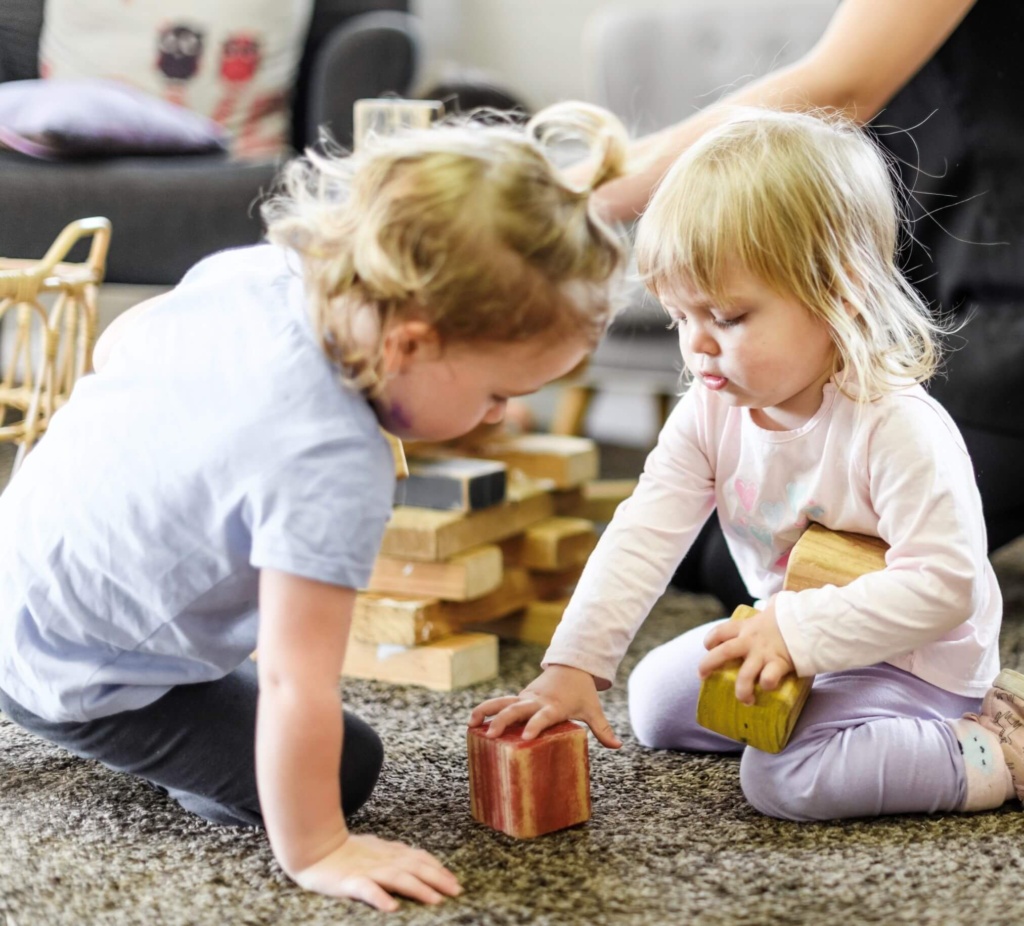
Recently in the US, Centers for Disease Prevention and Control (CDC) and American Academy of Pediatrics (AAP) updated the guidelines for child developmental milestones for the first time since 2004, aimed to better reflect the data of when children reach milestones such as crawling, walking, speech, and more, as well as some of the early indicators of autism. The changes were met with mixed reviews from parents and child experts, bringing a lot of conversation about children’s development to the forefront.
In Australia, our early childhood developmental milestones come from The Australian Children’s Education & Care Quality Authority (ACECQA)
According to the ACECQA, development milestones are important for your child’s:
So, according to experts, development milestones do matter, but with a range of abilities across each age group, when should parents take it seriously, and when can they worry less about what their child is and isn’t doing?
Children will meet these needs in their own time and are on their own journey. I always remember hearing how children meeting their development domains, can be represented like ‘popcorn kernels, when placed in hot oil, they will pop at different intervals,’ this can be seen how a child will shine and develop at different stages. – Susan Cooper, pedagogical leader, Little Scholars.
“While it is important to monitor children’s development and assess against the developmental milestones, we must be mindful not to place children in a box and begin the process of a check box system. Early childhood professionals place such value in assessing children’s growth and development and through assessment, in partnership with families, early intervention can be met for their child, should it be deemed necessary,” says Susan Cooper, pedagogical leader for Little Scholars.
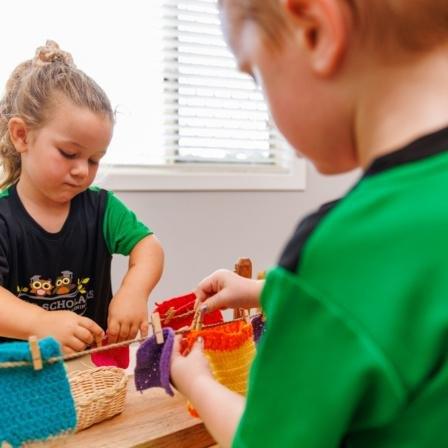
According to Skye, assistant campus manager at Little Scholars Pacific Pines, developmental milestones helps educators develop their educational programs.
“Milestones are important to monitor and keep track of as they can help us as educators and also families understand why a child may be exhibiting certain behaviours,” Skye said. “They also help gage what children’s interests, strengths and barriers are. Understanding and knowing age-appropriate milestones will help educators provide a program for each child’s individual needs.”
Your child’s weekly program evaluation and reflection informs parents of the significance of the learning experiences that have taken place over the course of the week, how those experiences tie into the Early Years Learning Framework, and include observations regarding your child’s development.
“We educate the families about the importance of milestones and when to be concerned for ‘red flags.’ I think it’s incredibly important that us lead educators are having frequent conversations about their children’s development, where they’re excelling and where they need further support,” says Holly, a lead educator in a Senior Kindy studio at our Stapylton campus.
“I have educated my families, especially during times like in my parent teachers about the importance of children meeting emotional development milestones. We also have a few Prep teachers who are parents at our campus, who have reiterated to us how critical it is for when children that go to Prep that they are able to confidently self-regulate their emotions and when to seek help, such as asking a peer for help, attempting to solve a problem themselves before asking a teacher – those kind of strategies.”
We’re here to ensure children learn and grow to the very best of their ability. Sometimes a child doesn’t meet his or her developmental milestone, and it might warrant a chat with our families about our observations. The conversation may begin by us asking the parents how they feel about their child’s development, and if they have any concerns. We’ll share what we’ve observed, and share examples of our observations – either written, photo or video. Families may become emotional throughout the discussion, and we understand how hard a conversation like this can be to digest. Please know we’ll always give time and space for our families, and we’ll support your next steps and help in any way we can.
“We do need to be guided by the developmental domains, as most children with developmental delays are not identified early enough to benefit from early intervention and they then enter their formal schooling at a disadvantage, which can set them back,” says Susan. “When we consider how much time children spend in our care and our qualified educators ability to track development through observational learning records, for parents, we are their trusted source.”
All of this might make you wonder if you can help aid your child’s development? The answer is a resounding yes!
For anxious parents who feel like worrying about whether their child is hitting their developmental milestones, Susan says while we need to be guided by developmental domains, there’s a range within those milestones.
“More often than not, families place high expectation on their children and make comparisons with others. We need to understand that children will meet these needs in their own time and are on their own journey,” Susan explains. “I always remember hearing how children meeting their development domains, can be represented like ‘popcorn kernels, when placed in hot oil, they will pop at different intervals,’ this can be seen how a child will shine and develop at different stages against another child, when the environment is supportive to learning and growing.”

Let us hold your hand and help looking for a child care centre. Leave your details with us and we’ll be in contact to arrange a time for a ‘Campus Tour’ and we will answer any questions you might have!
"*" indicates required fields
Let us hold your hand and help looking for a child care centre. Leave your details with us and we’ll be in contact to arrange a time for a ‘Campus Tour’ and we will answer any questions you might have!
"*" indicates required fields
Fill in the form to join your local Pram Pals mums and bubs walk