
Christmas Dough Cinnamon goodness. The easiest slime recipe you will ever read.
Make your house smell just like Christmas and allow the children to really get into the festivities. You can be as creative as you like with this recipe! Think of everything that smells and looks like Christmas.
Simply add them all together, and remember don’t be shy on the cinnamon. It is the main component in this recipe!
Simply mix all the ingredients together till it forms a dough. Add some flour if the mix is too wet. Oh, and don’t skimp on the cinnamon. Make it rain cinnamon!!! This is the part where you can add whatever Christmas props and edible goodness you want! We would suggest adding in chocolate cookies and nibbles for more deliciousness. Now it’s time to PLAY!

Red Velvet Edible Deliciousness. The easiest slime recipe you will ever read.
For all of you who have a real sweet tooth, we have a super delicious Red Velvet edible slime recipe. We had a blast making this one, now it’s your turn to make (and eat) it. Simply add them all together, mix and hours of fun.
WARNING best to do on an outside table because this stuff can get everywhere.
Simply combine 1/4 cup of the instant choccy goodness and 1/2 cup of cornstarch and mix well with a whisk. Be sure to break up all the clumps, because once you add the water it is harder to dissolve them. Now stir in 1/3 cup of very warm water until you can no longer mix it with the whisk!
Add in another 1/2 cup of cornstarch and start kneading the ooey, choccy slime with your hands until it is smooth and all the cornstarch is incorporated.
The consistency of this slime mixture comes up somewhere between a playdough and a slime, and just a little tip from the edible slime experts themselves (that’s us) add in a little oil to loosen up the texture.
Icky Sticky Fluro Goo. The easiest slime recipe you will ever read. Next time you are at the supermarket simple grab some of the Elmers Clear Glue.
Simply add them all together, mix and hours of fun.
WARNING best to do on an outside table because this stuff can get everywhere.
Taste Safe Foam. Everyone is always looking for a Taste Safe Foam recipe that is super simple. So we found one. Seriously sensory friends, this one is Foamazing! Who knew canned chickpea juice could be handy.
Chickpea can juice AKA Aquafaba is essentially the water that chickpeas and other legumes have been cooked in. It’s most commonly used in recipes as a egg white replacer. So once whisked, has very similar properties to a meringue.
Simple! About 1 cup of chickpea juice (about 2 cans ) and 1/2 teaspoon of Creme of Tartar, straight into your stand mixer with a whisk attachment.
TURN IT UP! Once the form starts to form, you can add a dash of colouring if you like. Let it whisk until stiff peaks are formed. Voila! That easy.
Super Simple Bread in the bag Recipe. We have a deliciously fun project for you to try this weekend with the children!
How to make bread in a bag! This quick homemade bread recipe is made with minimal kneading and we can confirm ourselves…. it’s tasty!!!
Colouring in activities are not only great fun but there are some wonderful benefits for your toddler to gain via this simple activity. Colouring in is an easy and largely mess-free activity to implement at home and is also a great way to keep toddlers busy when out and about.
Children simply love to share their artistic talents with everyone. See their self-confidence grow with some beautiful colouring in! It’s a wonderfully fun past-time and is also a very convenient and inexpensive way of learning and developing some lifelong skills!
It’s so advantageous to develop and practise fine motor skills before your child starts formal schooling. Colouring in will help develop some of these key skills such as muscle development in their fingers, hands and wrists. Showing your child how to hold a pencil or crayon correctly will help them develop the correct gripping technique and controls.
Cognitive skills will develop with colouring in such as paying attention to the task. The ability to calmly sit and focus on a task is an essential skill for your child to learn. Your child will learn (and then remember) how to hold the pencil or crayon as well as noticing what happens when they press hard or light with their crayon or texta.
It can be tempting to try and ‘correct’ how your little one is colouring in but give your toddler freedom. Let them be creative and use their imagination. There’s nothing wrong with pink sky and rainbow spotted grass! They will soon recognise and use the correct colours but for now, just let them explore. Colouring in on different textures will also help with their learning skills and it can encourage more creative exploration. Try using different coloured paper, cardboard or even sandpaper.
Helping your child with their colouring in is easy. Just sit with them and do your own colouring in. They will visually develop their skills simply by sitting with you and observing what you do! You’ll be modelling how you sit, hold your texta, and staying inside the lines. It’s also a great opportunity for your child to learn their colours too, so be sure to chat about which colour you’re using and ask them to name theirs.
You can pick up colouring in books very cheaply from discount stores and supermarkets. If you have a printer at home, there are also loads of free colouring in printables to download. Try and find a variety of shapes and themes for your child to colour as this will keep their interest and attention longer. Be sure to encourage and praise your child on their creative colouring in skills.
Looking for a childcare centre that offers a unique and engaging curriculum to foster your child’s natural abilities? Contact Little Scholars today to arrange a tour.
“ Loose parts play ” is an architectural concept from the 1970’s currently enjoying a resurgence in popularity in the early years learning curriculum framework. This development is enjoying burgeoning popularity in childcare centres and kindergartens across Australia. Early educator are choosing to embrace ideas of empowerment, creativity and self-directed learning. We believe that children are never too young to engage their minds through play, and we love seeing little people imagining big ideas!
Loose parts play is effectively ‘junk drawer play’ but on a much larger scale. It involves all the bits and bobs and odds and ends of life that adults struggle to find multiple purposes for.Children, however, are the masters of imagination and creativity. With supervision and the slightest adult facilitation, they can turn what we would see as a pile of rubbish into a wonderland. Secret tunnels, magic portals, precious gemstones and buried treasure take their place alongside makeshift transportation, musical instruments and construction vehicles.No idea is wrong. No idea is too big or too small or out of place. Everything can shift and change and flow with the reversal of expectations and the removal of ‘rules’. It’s this very concept of a positive sense of self that links loose parts play directly to the Little Scholars philosophy of learning.
Loose parts play is a revolution for the burgeoning development of a child’s thinking processes. Our educators do not tell children ‘how’ to do things, only that they may do what they like. This means that sometimes materials are used in ways that adults would not have expected. This subversion of expectation creates a dynamic in which the children are in charge and they are permitted to let their imaginations run wild, forming a vital part of their early learning curriculum.
Learn more about Loose Parts Play by downloading this guide by the Australian Children’s Education and Care Quality Authority.
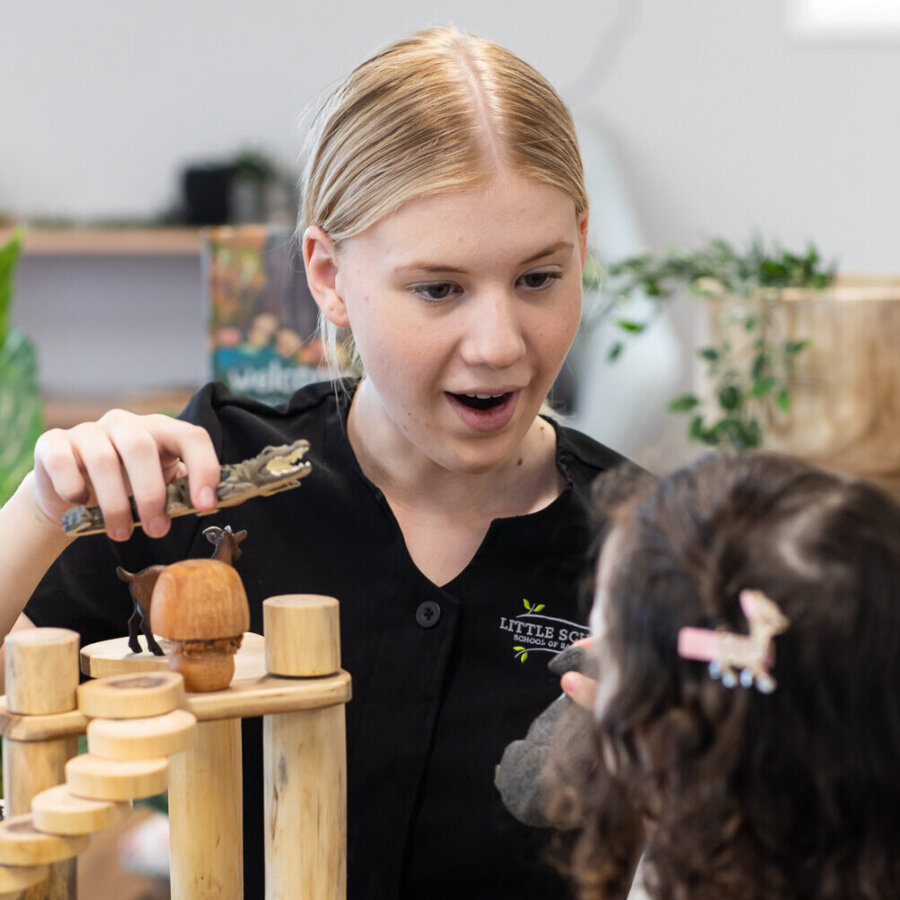
Our centres provide a wide variety of materials for loose play learning. We check every item for safety (no loose nails or splinters etc). From there, the learning is at the direction of the child. You might find the following items in a loose parts play environment. We encourage parents and carers to add anything they feel might be suitable for this wonderful explosion of delight and design.
Little Scholars are an innovative educational experience for children in their early years.
Contact us today to discuss your child’s enrolment. We give your child more than just supervision.
Our centres provide creative and intellectually stimulating activities for early learners of all ages. Give your child the very best during this important developmental stage.
Now more than ever, it is of the upmost importance that we foster sustainability for children. The banning of plastic bags from supermarkets, the cultural shift towards upcycling and repurposing and our renewed focus on the environment means that our children are well on their way to becoming the eco-warriors of the next generation.
Little Scholars places a lot of importance on the need to create a sustainable world. It is at the very core of our curriculum – particularly our Small Green Steps Program. We recycle our resources, conserve our water and practice energy efficiency. Our cleaning products are made from natural ingredients and come straight from organic sources. The gorgeous campuses made of sustainable material blend effortlessly with our breath-taking natural surrounds and we ensure there is a little of the environment within everything we do.
These are lessons that you can take home with you as well. Sustainability in early learning can very easily become sustainability in the home. Here are some ideas for embracing these concepts on your own property.
Allow your toddler to take part in the recycling activities that you do as part of your time with them. When it is time for the weekend shop, ask them to collect your green bags and put them in the boot of the car. During shopping, talk them through your choices and try to stay away from the over-use of plastic wrapping.
Not really a green thumb? That doesn’t matter. What does matter is allowing your child to become involved in planting and gardening. Little Scholars has woven gardening into the curriculum. Continuing the message at home is an ideal introduction to sustainability for little ones. Vegetables on an apartment balcony, flowers in a window sill – doesn’t matter. Choose the plant, tend to the plant, watch it grow. You might just be planting the seed of sustainability that could last a lifetime.
Put a stop to ‘throw away’ culture in your house. Ask your child to collect any old or unwanted toys and take them to the Op Shop together. Take a drab old bookshelf and paint it crazy colours to give it a new life. Turn ripped and torn old shirts into cleaning cloths, dress up clothes or crazy headbands.
At Little Scholars, we believe that sustainability in childcare is an important stepping stone towards creating environmentally aware citizens of the future. Find out how our program incorporates sustainability for children and much, much more.
From about eight months of age, baby is ready for some creative play with your help and guidance. Baby can now lift and hold things and is starting to explore more. Baby play is all about learning new things and there are lots of things to start showing and teaching baby. Encouraging and creating lots of baby play environments will assist them in continuing to develop their fine and gross motor skills, language and visual perception play.
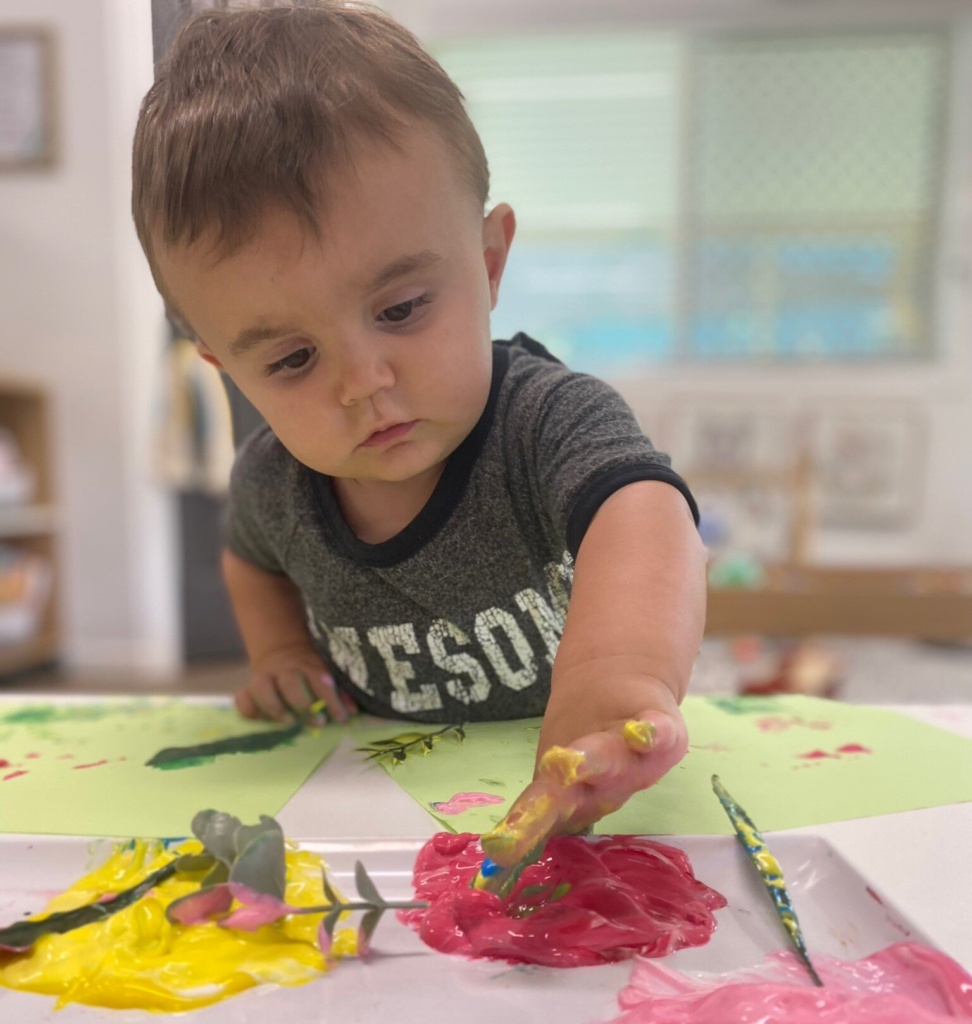
Finger painting is a wonderful place to start your baby play fun. If you are concerned about your little one eating the paint, you can make your own safe finger paints easily by mixing baby rice cereal as per instructions and then adding a little food colouring. Sit baby in their high chair, in the bath or even outside with some paper and finger paints and let them explore the colours and textures.
If you are after a less messy baby play idea, why not try stickers? Stickers are fun to watch baby interact with. You will need to help baby remove them from the backing sheet but they are often fascinated with stickers sticking to their hands, feet and clothes. Once baby learns that they stick where you put them, give them some paper and start sticking them on. Stickers are great for fine motor skills. Keep some handy in your bag for times when you need to keep baby entertained when out and about.
Bowls, cups and spoons are an easy, instant baby play idea – and great for when you are in the kitchen and baby wants to come, too. Sit baby on the floor with a variety of metal, plastic and wooden tools like spoons, cups and bowls and show baby how to play. Stack and knock over the cups, use the spoons as drumsticks and even put all the spoons in a bowl and tip them out again. Babies love to make noise so banging a spoon on a bowl or saucepan is a favourite way to play.
Playdough is wonderful fun for babies from about eight or nine months old and is an activity that children find engaging well into primary school. Each developmental stage has new benefits of using playdough. Starting out with playdough is more about poking and prodding. Roll some balls with the play dough and show baby how to bang them flat with their hands. Squish some playdough and give them some tools and just let them dig, stab and smoosh it. Playdough can be purchased ready-made or you may like to make a big batch at home. Just remember to make it non-toxic in case baby decides to give it a taste test!
Discover how the unique curriculum at Little Scholars can enhance your child’s development. Contact us today.
Nature play isn’t a new thing, in fact, toddlers and kids of all ages have been indulging in nature play for centuries. The difference is these days it’s become alarmingly less the norm due to the advances in technology and extended periods of screen time. Our generation has also become more risk averse, concerned about children’s safety. But the benefits of nature play for toddlers are clear. Read on to discover how getting back to nature can help your child’s development.
Nature play is the same as it used to be when you were a child – unstructured outdoor activities that connect children with nature. Anything from bike riding, gardening, walking, water play, making mud pies or playing in a cubby house is nature play.
The benefits of nature play are incredible, and it’s no surprise that the children missing out on regular time in the great outdoors are falling behind or suffering mental health challenges. Let’s take a look at some of the major benefits of nature play for toddlers.
When a child explores the outdoors, they try new things. They might try riding a bicycle, balancing on a log or going on a swing. Each time they try a new thing, they develop confidence within themselves; confidence to try again and eventually ride without training wheels, balance all the way to the end of a longer log or swing a little higher.
Not everything in the outdoors is presented perfectly, and that’s the beauty of it; it’s perfectly imperfect. The ground may have a slope, there may not be the perfect branch to complete a hut, and there may not be enough stepping stones to go over the ‘lava’! When kids play outdoors, they encounter all of these situations, particularly risky ones, and learn to make decisions and problem solve to find a solution. And when things don’t work out? They learn important life lessons in resilience.
Gross motor skills are important because they help a child build body strength and confidence. Gross motor skills can be developed outdoors doing activities such as riding a tricycle, climbing, engaging in water play, playing on a playground and drawing on the concrete with chalk, just to name a few.
It’s a pretty obvious benefit, but many toddlers and older children are still not getting enough physical exercise. Being active outside whether it’s kicking a ball, climbing, running, riding or skipping, helps children maintain a healthy weight, it reduces stress, mental fatigue and connects children with the real world.
Whatever time your child spends with a screen, swap it out for time in the backyard. If that’s too big of a change, try it in small increments until screen time is substantially reduced. You can also fit in nature play by scheduling regular family outings to the beach, on nature walks or bike rides and look for outdoor events near you with fun activities for the kids.
The best thing about nature play is that you don’t have to plan it – nature play is best unstructured because it leaves room for imagination and discovery. Give your children the opportunity and encouragement to do it, and they will benefit now and through to adulthood.
Take a look at our early learning campuses where we embrace nature play as a crucial part of the curriculum.

Let us hold your hand and help looking for a child care centre. Leave your details with us and we’ll be in contact to arrange a time for a ‘Campus Tour’ and we will answer any questions you might have!
"*" indicates required fields
Let us hold your hand and help looking for a child care centre. Leave your details with us and we’ll be in contact to arrange a time for a ‘Campus Tour’ and we will answer any questions you might have!
"*" indicates required fields
Fill in the form to join your local Pram Pals mums and bubs walk