We all know that in life, we have to deal with some pretty heavy issues, and sometimes your children have to deal with them as well. At Little Scholars, we’re here for your family and will do what we can to help children identify hard feelings, confusion about events and offer a big cuddle when needed. By letting educators know what’s going on at home, they can help by ensuring your child has the attention he or she needs especially at this time, or they can help facilitate activities or learning exercises to support feelings your child may be experiencing.
We’ve compiled a list of children’s books that can support what children are going through, because we know children can do amazing things with the right information.
 Hey Warrior: A book for kids about anxiety
City of Gold Coast Libraries & Brisbane Library
She screamed. You cried in the car. Then you checked the Little Scholars parent app 11 times before 9:00am. Sound familiar? We thought so.
Drop-off is one of those milestones nobody truly prepares you for. Everyone warns you about the sleepless nights, the teething, and the sudden meltdowns in the supermarket aisle. But nobody tells you about standing in the campus car park at 7:52am, sunglasses on, holding back tears from that first day drop off.
After walking alongside well over a thousand families across our Little Scholars campuses, we want to tell you this with absolute, heartfelt certainty: you are not alone, you are not failing, and your little one is going to be just fine!
Here is what we have learned together on this journey, as well as some gentle, real-world strategies that truly make a difference.
Separation anxiety isn’t a sign that something is wrong. It is a beautiful, reassuring sign that something is very right.
When your child protests at the campus gate, it means the bond between you is strong, healthy, and doing exactly what nature intended. They cry because they love you fiercely. Because you are their ultimate safe harbour. Leaving your side feels monumental to them – even if it’s only until after afternoon tea.
That isn’t a hurdle to fix. That is a relationship to be incredibly proud of.
Developmentally, most children between the ages of eight months and four years will ride the waves of separation anxiety. It peaks, it eases, and sometimes after a school holiday, a bout of sickness, or a big shift at home, it makes a surprise return. That doesn’t mean you’ve gone backward. It just means your little scholar is a beautifully sensitive human experiencing a change in routine, looking for reassurance. Give it a few days and together we will pass through it.
In almost every single case? They settle within minutes.
The moment you step out of view, our passionate educators wrap your little one in comfort. A soothing voice invites them into a favourite space. Out comes the sensory playdough. A familiar song begins. Or someone discovers a spectacularly interesting stick in our outdoor nature spaces, and suddenly, it’s the most exciting thing that has ever happened.
The child who was inconsolable at the door is now completely captivated by the joyful, bustling business of being small, curious, and alive.
The tears almost always stop before you’ve even ordered your morning coffee. The urge to check the app 11 times, though? That one takes a little longer to shake. And that is completely okay. At Little Scholars, we believe in nurturing our parents just as much as our children.
We’ve partnered with thousands of families to navigate this transition. Here are the practical, loving rituals that tend to work.

Children are extraordinarily intuitive. They read our body language, the tone of our voices, the tension in our shoulders, and the ease in our breath. They take their emotional cues directly from you.
When you truly trust the educators and the environment you are leaving your child in, that calm, beautiful energy transfers directly to them.
So, the goal isn’t to magically erase the drop-off dread. The goal is to feel it, take a deep breath, and let your child see that you believe in this space. Because the moment they see your confidence, it becomes their confidence.
The very first drop-off. The unexpected regression three months in. The post-holiday return that feels like day one all over again. The morning where they ran off without looking back, and you were the one left in tears.
Across our 17 beautiful campuses spanning the Gold Coast, Brisbane, Ipswich, and Redland Bay, our Little Scholars family has held hands through every single version of this moment.
Building the kind of trust that makes mornings seamless doesn’t happen overnight—but with patience, love, and partnership, it does happen.
Come and explore our campus before their first day.
The single best way to ease the drop-off spiral for both of you is to walk through our doors while you’re still holding their hand. Come explore our natural play spaces, meet our wonderful educators, and let your little one feel the warmth of our environment with you by their side.
Because drop-off becomes a beautiful routine when you already know that they are in the best possible hands.
You remembered the sunscreen, the spare clothes, the show-and-tell item AND made school lunches before 7am. Nobody clapped. Nobody noticed. This one’s for you.
Not the written list — the one in your head. The one that never gets put down, never gets turned off, and most definitely never gets acknowledged at the end of a long day.
This is the mental load. And if you’re carrying it, you already know exactly what it feels like. Heavy. Relentless. Completely invisible to almost everyone around you.

The mental load isn’t the doing of things. It’s the knowing of things. The tracking, the anticipating, the never-quite-switching-off awareness that something needs to happen, and that if you don’t hold it in your head, it simply won’t happen.
Research consistently shows that in households with young children, this cognitive labour falls disproportionately on one person — and that person is almost always the mother. Not because partners don’t care. Not because the system is working exactly as intended. But because it is a pattern so deeply embedded in how we were all raised that most of us didn’t even notice it settling into place.
And here’s the thing that makes it particularly exhausting: the mental load is invisible labour. Nobody sees it. Nobody measures it. Nobody hands you a certificate at the end of the week that says ‘outstanding work anticipating that the 2-year-old was going to need an extra layer today.
You just do it. Because it has to be done. Because you’re the one who knows.
When the mental load is consistently too heavy, something gives. Sometimes it’s sleep. Sometimes it’s the relationship. Sometimes it’s the version of yourself that used to have hobbies, or opinions about things that weren’t nap schedules and developmental milestones, or the ability to sit in a room for five minutes without mentally running through tomorrow’s logistics.
Sometimes it’s all three, quietly, at the same time.
This isn’t weakness. This isn’t failing at parenthood. This is what happens when one person holds too much, for too long, without enough support. It is a structural problem dressed up as a personal one. And the solution is not to be more organised, or more patient, or more grateful. The solution is to actually put some of the weight down.
Here is something we wish more parents understood: the right childcare centre doesn’t just care for your child. It carries part of the load with you.
When you trust the place your child goes every day — genuinely trust it, in your body not just your brain — something shifts. The morning drop-off becomes less fraught. The Sunday night dread eases. The mental bandwidth you were spending on is she okay, is he settled, did they remember about the allergy gets freed up for other things. For work. For rest. For being present with your family in the hours you do have together.
A childcare centre that communicates clearly, that knows your child as an individual, that has educators who notice when something’s off and tells you about it — that is not a luxury. That is part of the infrastructure of a functioning, sustainable family life.
The right childcare centre doesn’t just care for your child. It carries part of the load with you.
At Little Scholars, we think about your child constantly. Not just during the hours they’re with us — but in the planning that happens before they arrive and the documentation that captures what happened after they leave.
We think about whether the environment is set up to meet where your child is developmentally right now. We think about how to support the transition between home and care in a way that makes Monday mornings less hard. We think about nutrition, about outdoor time, about which educator is the right fit for which child on which day.
We think about your child the way you think about your child. Which means that for the hours they’re with us, you are genuinely allowed to think about something else.

We want to say this clearly, because we think someone should: you are doing an extraordinary amount. Every day. Often without acknowledgement, often without thanks, and almost always without anyone fully understanding the cognitive weight of what you are managing.
The invisible work is real work. The mental load is real labour. And the fact that it happens mostly in the quiet parts of the day — before anyone else is awake, after everyone else is asleep — does not make it less significant. It makes it more.
You are not failing at this. You are carrying it. And there is a difference.
Not the abstract, Instagram-caption version of a village. The real one — actual humans who know your child, who show up consistently, who make the load feel lighter on the days when it threatens to flatten you.
That’s what we’re here to be. Not just a place your child goes. A genuine part of the support system around your family. One less thing to carry alone.
Because you’ve already got enough on the list.
Your 2-year-old hasn’t slept through the night in 6 months. Before you blame yourself — read this.
It’s midnight. Maybe later.
You’re on your phone, one eye half-open, searching some combination of toddler won’t sleep, childcare sleep regression, is this normal, why is my child like this, and you’ve ended up here.
Welcome. You’re in exactly the right place. And before we go any further — you didn’t break your child’s sleep. You didn’t cause this. And you are not the only parent lying in the dark right now wondering if this is just life forever. Let’s talk about what’s actually going on.
Childcare doesn’t wreck sleep. What it does is load the nervous system. A full day of socialising, learning, navigating big emotions, managing transitions, sharing space with other small humans — this is genuinely hard work for a young child. And when the nervous system has been working that hard all day, it doesn’t always know how to wind down cleanly at the end of it.
The result? A child who seems wired at bedtime when they should be exhausted. A child who wakes at 2am processing something — a new friendship, a conflict on the mat, a sound they heard during rest time. A child whose sleep was perfectly fine before they started care and has been disrupted ever since.
This is not evidence that childcare is harmful. It is evidence that your child is doing a lot of growing.

Here’s something that genuinely surprises parents: sleep regressions don’t only happen at the textbook ages. They happen at any point of significant developmental leap — and starting or transitioning childcare is one of the biggest leaps a young child can experience.
New environment. New faces. New rhythms. New emotional demands. The brain is processing all of it, often during sleep — which is exactly why sleep gets disrupted in the process.
This is temporary. It almost always resolves as the child settles into their new routine and their nervous system learns to trust the predictability of their days. The children who tend to settle fastest? Those in environments with consistent rhythms, warm relationships, and educators who understand how the emotional load of the day affects what happens at night.
We’ve sat with enough exhausted parents across our Little Scholars campuses to know what genuinely moves the needle — and what doesn’t. Here’s the honest list.
If you are months into broken sleep and nothing is improving, that is not a parenting failure. That is a signal that you need more support than a blog post can give you. A paediatric sleep consultant, a conversation with your GP, or a proper sit-down with your child’s educators to look at the full picture — these are not last resorts. They are reasonable, sensible next steps, and there is no shame in taking them.
You cannot pour from an empty cup.
You are reading this at midnight because you care deeply about your child’s wellbeing. That level of dedication — that willingness to keep searching, to keep trying, to not give up — is exactly the kind of parenting that raises secure, settled, loved children.
The sleep will come back. It always does.
But you don’t have to figure it out alone.
If you’re looking for a childcare environment that understands the whole child including what happens after they go home — we’d love to talk. Our educators work closely with families to support not just the childcare day, but everything that surrounds it.
When a baby or toddler is ready to reduce the number of naps they have each day, or even drop naps altogether, this can be an equally challenging transition for parents!
Daytime naps naturally lessen in length and frequency as a child gets older because they can tolerate more awake time, from both a physiological and neurological perspective as they grow. Circadian rhythms – your 24-hour body clock that helps control your daily schedule for sleep and wakefulness – also mature as sleep begins to consolidate, particularly at night.
Especially for new parents, you may be wondering what some of the signs are that your child is ready to drop a nap. Dropping a nap is a transition that happens over time. Babies need to decrease their number of naps incrementally, but that won’t happen on its own, babies and toddlers still need your guidance to help ease these changes. And our educators are here to help.
Since our educators spend a few days a week with your little one, they have the knowledge of what to look for in signs of tiredness, or readiness to stay awake just a little longer! It’s important to remember that each child is different. What works for one, won’t work for another exactly the same age or way, and this is not a process to rush, small people need their rest!
Here are some signs that may show your little one is ready to drop a nap:
“For some children, cutting down their bottles or altering their times they have bottles (obviously age-appropriate) may help with stretching wake windows,” says Hayley, an educator with our Deception Bay campus.
“We aim to wake the child through gentle means, such as hustle and bustle around them to help them wake more naturally, which can help too.”
Hayley says looking at wake windows as a guide for your child can help and you can find free resources and blogs by sleep experts online. But she says keep in mind small children going through leaps and teething may have more difficulty with their sleep, but these adjustments are usually temporary.
Keeara, an educator in the nursery at our Yatala campus says they’ve had some parents request help in stretching their child’s nap to one sleep to transition in the toddler room.
They find play in an outdoor environment during the morning keeps little ones occupied enough to stay awake – but says if their children did fall asleep, it was obviously needed, and educators will try for a short afternoon nap to make up for it.
Fresh air and active fun like sensory activities are a great way to stretch that wake time out a little longer for little ones. Maybe for your child, it’s making music or playing with different textures that will keep him or her engaged and interested just a little longer.
Our Facebook and Instagram channels offer ideas on creative activities our educators do across our campuses to entertain little ones, which can really help stretch out those wake windows.
Like Hayley, Keeara and her fellow educators have also found works is having lunch around 11:30 and putting bottles on the warmer at the same time so they’re ready to go when lunch is finished.

“We’ve found most of the children would have their bottle then self-settle in their cots as they were so exhausted at this point,” Keeara says. “Surprisingly, it worked really well and made the transition smoother, they even slept for a longer period of time having just the one sleep.”
Then comes the (often dreaded by parents) time when children are ready to drop naps completely.
“We have a fair few two-three-year-olds in our room who have dropped sleep,” says Skye, an educator at our Yatala campus. “The most common sign for them was becoming upset at rest time, moving around a lot and getting up for drinks, toilet and to just tell us something.”
She says even if educators suspect a child is ready to drop naps, they start off with still giving the child a bed, but giving them a quiet activity like books, puzzles, or drawing supplies.
“That way they still have the option to fall asleep if they want to, if they haven’t slept the whole week, we then move them to an activity mat that we keep clear of beds, again for quiet activities while their peers sleep,” Skye says.
Independent play is also important for your child’s development, and it’s central to effective quiet time, so it’s worthwhile implementing it into your older toddler’s daily routine. Quiet time is a time during the day where your child has an opportunity to rest their busy little bodies and minds. The length of quiet time can range anywhere from 45 minutes to 2 hours, depending upon the child, but consistency in this new quiet time will work wonders for the whole family.
Skye says dropping naps is something they talk to parents about, and from those discussions, they work together on a plan to help the child adjust.
Do you have a child who’s struggling with separation anxiety, especially at when being dropped off at school or early education? Perhaps they’re going through a developmental milestone that makes them need Mum or Dad a bit more than before. This is common starting around six months of age, peaks at 14-18 months, then can happen again when your child hits preschool and school-age. Or maybe your child is new to our service or has recently transitioned studios. The transition from home to early education is a milestone for both children and families. Separation anxiety can even happen for children who’ve been in Little Scholars for a while. It can be hard moving into a new studio where she or he doesn’t yet know new routines, where things are kept and spending time with different educators with different ways of doing things can be overwhelming for the child. This is all normal.

If you’re at a loss on how to make things easier on your little one, and yourself, we have some ideas.
Acknowledge and validate their feelings by saying something like “I know goodbyes can be hard, but I always come back. I will see you later today. I love you.” Give a big hug, a smile and a wink.
Then at home, if your child is old enough, have a chat about why she/he is having a hard time at drop-off, and think about what you can do to alleviate it. Ask him or her what make things easier. Perhaps it’s including a comfort toy, blanket or family photo. Maybe you each have a special bracelet that you can touch when you’re missing each other. Make a plan for something special together when you pick him or her up, like a walk or playing a game together, which will give your child something to look forward to through the day.
If you’re preparing your child to go to early education or school, it’s best they understand what their days will look like. So the conversation could look something like ‘we’ll all have breakfast together and get ready for the day. Then we’ll get in the car and first we’ll stop at Little Scholars. I’ll walk you in, give you a big hug, and you’ll go off to have a day of play while I go to work. When I finish work, I’ll jump in the car and come right over to pick you up, then we’ll go _____” These conversations may have to happen several times for it to sink in.
Also, if you’re pondering signing your child up for early education, this is why we offer play dates to children newly enroled but yet to start – this allows them to begin to become familiar with their new educators and studios.
Remember, you can always chat with your educator or campus manager about how to help. We’re always available, and we’ve been through this before, we can offer ideas or reassurances everyone will be OK!
We also know separation anxiety can be a two-way street, especially for new parents, or returning to work after maternity leave. Don’t forget we have our Little Scholars app so you can see pictures of your child, and be reassured that if there were tears from your child, they likely didn’t last long and they’re busy having fun and learning while you’re at work.
Related links:
Elizabeth Stone, an award-winning essayist and journalist, once captured the essence of parenthood with a poignant quote, ‘Making the decision to have a child – it is momentous. It is to decide forever to have your heart go walking around outside your body.’ This statement resonates deeply with many parents, astutely capturing the feelings of boundless love and the inevitable vulnerability that comes with bringing a child into the world.
This overwhelming surge of emotion is particularly intense during those initial moments and first days of separation from your child, often experienced when that child is entrusted to the care of someone else for the first time. It’s a milestone filled with mixed emotions for parents – pride in their growing independence, yet a deep longing to keep them close forever.
While the focus in the first few weeks at early learning facilities is generally on the children and how they’re settling in, an often-forgotten topic is the separation anxiety parents also can feel when they drop their little ones in care for the first time.
In childcare, we offer families tips on how to help children settle in, from suggestions such as: ‘don’t sneak away’, ‘keep goodbyes short’, and ‘maintain calm and confidence’, but what if the child is just fine, but the parents are struggling from the separation?
It’s understandable. If you’re coming off maternity or paternity leave, or perhaps you’ve been the primary parent at home for the last few years, change can be profoundly hard.
What we’re talking about is parental separation anxiety, and it’s more common than you think.
“I experienced separation anxiety with both my children when I dropped them into care for the first time, but I was much more surprised with my feelings the second time around,” says Christina, a communications professional who has two children. “I had to go back to work much earlier the second time around, and I felt a lot of grief for not getting to continue to bond with my son the way I had been, knowing he was my last baby. I also experienced some fears around him attaching to his educators more than me.”
A 2016 study by Pacey UK (the professional association for childcare and early years) reported that out of 1,000 mothers, 70% of mums said they worried about the extent they would miss their children, 90% reported feeling anxious about returning to work after having a child, while nearly half of mums admitted being very anxious.
How can parental separation anxiety manifest itself? Some of the more obvious signs are tears. Anxious feelings. Moodiness. While others you may not notice until they start affecting your life and mental health.
Here are some common indicators of more serious separation anxiety to be aware of:
Ask yourself, what is your biggest fear or worry in separating from your child? The initial step in overcoming these feelings is to acknowledge and understand them. If you’re experiencing heightened anxiety about being apart from your child, it’s important to explore the origins of these feelings. Perhaps they stem from experiences in your life in childhood, or birth trauma, the loss of pregnancy or another child, perinatal or postnatal anxiety/depression and existing anxiety issues, or it may simply be triggered by the act of becoming a parent.
“How does a parent reconcile these feelings of separating from their child? I think what’s important about that one is that often it’s around guilt,” says Sarah Bergman, a clinical psychotherapist at Counselling on the Coast who has more than three decades of experience in emotionally-focused therapy.
“Guilt is really an emotion that comes up when we have like an idealised sense of a situation or who we are. So we feel guilty when we don’t feel we’ve reached what we want to be reaching or we haven’t done what we want to do. I would say to explore those feelings of guilt, what they are, what you feel like you’re not doing for your child or getting right for your child.”
Sarah says those guilty feelings in parents often link back to situations in their own childhood where they felt like their own parents let them down. But the concern is also passing down those guilty or anxious feelings to your child.
“Their own wounds start to muddy the waters of the child’s experience. So the child’s just going to school, but then they feel their parents anxiety and then they also think that something’s wrong then too, which can make them anxious. So if the parents have a good look at themselves around, ‘what was it that my parents got wrong for me? or what was it that wounded me? and how does that now play across on my child?’ So the parents will often work hard to do the things that they don’t want that their children to experience themselves.”
While Sarah says often the guilty feelings stem from what they missed in their own childhood, the opposite could be true.
“Maybe [parents feel they’re] not meeting the ideals of what your parent did for you or what things that you really loved about your parent and now you feel like you’re not getting that right.”
Wherever the feelings stem from, Sarah says, parents may be trying to heal themselves through their relationship with their child. But, she says, a child doesn’t have those wounds. They don’t experience their parents in that same way that perhaps you did. So she surmises parents could be overcompensating for their own childhood pain.

“Those kind of parents are very anxious at feeling like they have to attend to everything with their children because they don’t ever want their children to feel the way that they did,” Sarah summarises.
Consider jotting down your feelings or discussing them with a sympathetic friend or even a colleague who could relate with what you’re currently experiencing. Regardless of how trivial or illogical they might seem, allowing yourself to express and discuss these fears can aid in releasing them.
Making the decision to have a child – it is momentous. It is to decide forever to have your heart go walking around outside your body.
Elizabeth Stone
Sarah also suggests parents educate themselves on secure attachment, a theory first proposed by the British psychologist, psychiatrist, and psychoanalyst John Bowlby. For children, secure attachment to someone like a mum or dad allows them the secure base necessary to explore, learn and relate, and the well-being, motivation, and opportunity to do so. It’s important for safety, stress regulation, adaptability, and resilience and ultimately can help produce a happy, healthy well-adjusted child.
“If you are securely attached, you will feel less anxious because you will feel comfortable that you can trust, you have a positive view of other people and a positive view of self,” Sarah says. “So you think to yourself, ‘it’s okay. My child is in safe hands. They will let me know. I trust the daycare centre. And I trust myself that I’m doing the right thing by my child and it’s going to be okay and I need to go to work and this is just the way it is.’ Whereas someone who is more anxiously attached sometimes have a bit of a negative view of themself and possibly a bit of negative view of others so they don’t totally trust others, so it’s about trying to move into being more securely attached.”
She also says to have an honest conversation with educators or your campus manager.
“You know, that is actually good secure relating as well, that a parent can actually say, ‘I’m feeling a bit nervous’, or ‘I’m a bit worried about that,’ because they’re asking then, they’re not coping alone.”
Sarah recommends in that conversation, have a chat with educators or your campus manager about what might help to alleviate those anxious feelings, whether it’s a phone call or a text, a few extra pictures – whatever it is, having clear communication can help everyone.
“What helped me was an honest discussion with my son’s lead educator during a playdate. She asked me thoughtful questions about why I was having a hard time, asked how she could help alleviate those feelings for me, and was very mindful to update with lots of pictures, and even checked in on me at pick-up over the next few weeks. It was really helpful, and gave me feelings of trust in leaving my baby with her and her team,” Christina adds.
Those secure attachments we want children to have means we also want them to have bonds with others, such as loving educators.
A child who has had a secure attachment with her parent or another safe adult is more likely to be able to develop lasting successful relationships as an adult. In fact, a New York University study recently found positive, warm relationships between caregivers and children were associated with higher odds of attaining ideal heart health at multiple points across a 20-year span of adulthood, so developing these bonds is good for their health!
Part of early childhood training for educators is understand various child development theories such as attachment theory, so trust that your educators understand what secure attachments – both to parents and others children can trust – mean for children’s development and they work hard to ensure these bonds with your child.
Research has found our adult relationships are shaped by our early patterns of attachment and the ways we learn to deal with closeness and separation.
“Children are very attached to their parents and they love their parents very much. And that is who they want to be with. And if they create an attachment with someone else, that’s lovely. However, ultimately it’s important to keep in mind they will want to be with their parents,” Sarah says.
Sarah also says some of these feelings may be pressure we put on ourselves as parents.
“We don’t actually have to be perfect parents and I think a lot of people are really trying to be perfect parents and wrapping their children in bubble wrap. You just have to be good enough. I think from memory it’s only like around 60 or 70 per cent strike rate of meeting the child’s needs.”
Sarah is referring to the Winnicott theory.
“The good-enough mother is one who makes active adaptation to the infant’s needs, an active adaptation that gradually lessens, according to the infant’s growing ability to account for failure of adaptation and to tolerate the results of frustration.” – D. W. Winnicott, paediatrician and parent-infant therapist.
“We all have to learn that sometimes our needs aren’t going to be met. And that’s actually where we build resilience and we build understanding around that other people have things they need to do as well,” Sarah says. “You don’t have to drop everything to be there for your kids. It’s okay to have ruptures with your children. It’s actually okay because that is a realistic expectation on relationships. We all have ruptures and then we get to learn how to repair those ruptures. But of course, if the child’s fallen over or they’ve hurt themselves or they’re scared at night, you want your strike rate on those things needs to be closer to 100 per cent.
“But otherwise, we don’t have to be so hard on ourselves, we can get it wrong sometimes. We just go back and say, ‘Hey, I’m sorry I got that wrong.’ And then the child also learns that they’re going to get things wrong sometimes, too. They can come to their parent and say, ‘Hey, Mum, sorry about that.’”
If we can offer some advice, it’s what we also suggest to parents when children are having a hard time with separating. Find an activity you can do together outside of care hours that you can look forward to, so you can cherish your time together. Maybe after pick-up, you take your child for a walk or to the park, maybe it’s grabbing a sneaky ice cream after dinner, maybe it’s a game night or story time when you get home. Find ways to really connect with your child in the time you’re together may make the time you’re apart easier to deal with.
Sarah says mindful activities can help in easing anxious feelings. But, she says, if these feelings are taking over, it might be worth talking to a professional as soon as possible. You can talk to your GP about a referral to see a psychologist, or you can book in to a specialist practice such as Sarah’s Counselling on the Coast to have a chat with a psychotherapist.
Please remember, if Little Scholars can help in any way, we will, from offering a listening ear, to phone calls to whatever would help your family, we will. We’re not just here for children, we’re here for the whole family.
If you’re the parent or guardian of a child under five, you’ve probably observed some lies at some point during their young life.
That’s normal and dare we say, developmentally appropriate. We didn’t say it’s OK, but it’s common! Your child isn’t headed for a life of crime and incarceration, so you can now let out a sigh of relief. And there are certainly things you can do to help lead your child to a more honest way of communicating!
But from a developmental perspective, a blog shared by Early Childhood Australia confirms that lying in young children is rarely cause for concern.
From the ECA blog: “lying is often one of the first signs a young child has developed a “theory of mind”, which is the awareness others may have different desires, feelings, and beliefs to oneself. When a child misleadingly claims “Daddy said I could have an ice cream”, they’re using this awareness of others’ minds to plant false knowledge.”
Children can start lying by the time they start stringing sentences together, between the ages of two and four. The tales they tell may get more elaborate from the age of roughly four and up, as they start to understand what may be more likely to be believed, as their understanding of how others might think and interpret what they say gets more sophisticated.
But the reason behind the lies could also be far less sinister than you think it might be.
Perhaps, your child is just looking to be seen. It might be that they’re feeling invisible to you, and to really get your attention, to get you to make a big deal out of something in their lives, they need to make their story bigger. It can be easier for adults to think their problems, concerns and issues are so much bigger and more important than a child’s, but important to whom?

Interestingly, research has found that while almost all children lie at some point, they also have a pretty clear understanding young that lying is wrong. Kay Bussey from Macquarie University, found that children as young as four years of age rated ‘lies about misdeeds as being very bad and that the liar would feel guilty for telling such a lie. Furthermore, they rated this type of lie more negatively than other types of lies and even misdeeds themselves.’
So, children not yet school-aged do understand right from wrong, yet they do it anyway.
How might a parent react to this that would be an effective way to tamp down the untrue stories children sometimes tell?
One way to approach children lying, according to Jess Vanderwier, an American psychotherapist, is to come at it with curiosity and compassion.
Vanderwier’s strategies include:
Finally she says when your child tells the truth, especially in difficult situations, praise them for their courage and honesty. Noticing their honesty can encourage more truth-telling in the future.
Sometimes children lie or keep secrets to hide serious issues, such as experiencing harm or witnessing harm to others. For instance, children who have been abused by adults or bullied by peers might lie because they fear consequences or feel unsafe speaking up.
If you suspect your child is lying to protect someone or themselves:
Creating a safe environment is key to encouraging honesty and addressing any underlying issues. This is something that should be done all the time, not just when honesty is questioned.
Please know children’s safety is paramount to us. If we at Little Scholars suspect a child is being harmed, we have a duty of care to and will report it.
We adore the endless stream of questions that little ones bring to us every day! From an early education standpoint, we want children to learn at every opportunity. Children are inquisitive beings, and they have lots to learn! At Little Scholars, we cherish this innate curiosity in children and strive to foster a lifelong passion for learning.
As parents and educators, we understand that some questions from our little ones can catch us off guard, leaving us searching for the right words to provide age-appropriate answers. We’re here to lend a helping hand, so let’s tackle a few of these tough questions together!
How are babies made/how did a baby get in a mummy’s belly?
Children at this age are curious about the beginning of life. You can answer simply, “A tiny seed, called sperm, from the daddy joins with a special egg from the mummy, and that’s how a baby starts to grow inside the mummy’s belly.” They may understand it like a fruit grows from a seed. For young children, this should satisfy the question. You may want to explain it’s not the same kind of egg we eat for breakfast!
What does dying mean?
The concept of death can be challenging for young children to grasp. We think it’s important to be honest here. You can say, “Dying means that a person’s body stops working, and they don’t feel pain anymore. They don’t breathe, eat, feel hungry or cold. It’s a natural part of life’s cycle, like when leaves fall from a tree in the autumn.” This is a topic that may be followed up with further questions, such as ‘will I die or will you die?’ and be honest. “Yes, we all die. But I hope to be around for a really long time. I have no serious illnesses that could change that.”
What happens to us when we die?
For toddlers and preschoolers, you can offer a comforting response like, “When someone dies, they become like a beautiful memory in our hearts. We remember all the happy times we shared with them, and they will always be a part of us.” If your family has cultural or religious beliefs around death, this may be the place to share, “in our family and our culture/religion, we believe when the body dies ______.” Your child may work through this further through their play, but just be there for them and prepared to revisit this topic.
How come Louis has two dads?
Children may notice different family structures. You can say, “Families come in all shapes and sizes. Louis is very lucky to have two dads who love and care for him just like your mummy and daddy love you.”
Why does Ashley’s mum live in a different house from her dad?
When answering a small child’s question about why a couple has divorced, we think a simple, honest, and age-appropriate response that takes their emotional well-being into consideration works best. Here’s one way to address the question: “Sometimes, mummies and daddies decide to live separately because they have found they feel happier when they have some space. It’s like when friends need some time apart.
If it’s your separation, your child will need a lot of reassurance from you. “Even though mummy and daddy won’t be living in the same house, we both still love you very much, and we will always be there for you. You will have special time with both of them, and we will continue to love and care for you in different homes.”
Young children may have a limited understanding of complex situations like divorce, so keeping the explanation simple and reassuring them of their parents’ love is crucial. Encourage them to share their feelings and questions, and assure them that it’s okay to talk about their emotions. Creating a supportive and open environment helps children navigate through changes and emotions in a healthy way.
What happened in the news that’s making everyone so sad?
Addressing sad news can be tricky. Open the discussion by asking your child what they know about what’s happened in the news. This is a good opportunity to correct false information and provide context. Remember to use age-appropriate language. Check your child’s understanding throughout the conversation and allow them to ask questions. You can say, “Sometimes, sad things happen in the world, and it can make people feel upset. It’s okay to feel sad or worried, and we can always talk about our feelings with someone we trust. You can always talk to me about anything.”
I’m scared, why is the weather so bad?
Living in Queensland, while wonderful most of the time, also means we face all kinds of weather events, such as flooding, bush fires and extreme heat, and cyclones. Unusual weather can be scary for young children, so it’s important to stay calm and make sure the information you give them is age-appropriate and simple to understand.
It’s natural for children to feel scared, so reassure them with calm and simple words. Acknowledge their feelings and let them know they are safe. You might say:
“I can see that you’re worried, and that makes sense. These weather events can be scary, but we are safe. People are working hard to protect us, and we keep learning how to stay even safer in the future.”
Thunderstorms
Thunderstorms occur when warm, moist air rises rapidly into cooler parts of the atmosphere. As the air cools, clouds and rain form. Inside the clouds, lightning, a form of electricity, builds up. When lightning strikes, it heats the surrounding air, causing it to expand quickly and create the sound of thunder – BOOM! At the same time, cooler air sinks toward the ground, leading to strong winds.
Cyclones
A cyclone happens when warm air over the ocean rises up, creating a low-pressure area that pulls in cooler air, making it spin around like a whirlpool, and as the air gets higher, it cools down and forms clouds, bringing heavy rain and strong winds; basically, it’s like a big spinning dance of hot and cold air over the sea! These winds and rain can cause damage, but this is why we have emergency services to help keep us safe, and life will eventually go back to normal.
Flooding
Floods happen when it rains heavily for a long time, causing rivers, canals, creeks and oceans to overflow and water to spread onto land that is normally dry. It’s a natural event, and not anyone’s fault, and that while sometimes scary, there are ways to stay safe and prepared!
Bush fires
Bushfires happen when dry conditions, high temperatures, and strong winds cause trees and grass to catch fire. Sometimes, they start naturally, like from lightning, and other times, they are caused by people. Firefighters and experts work hard to prevent and control them to keep people and animals safe.
Why is the sky blue?
The secret behind the blue sky lies in something called “Rayleigh scattering”. It’s a fancy scientific term, but it’s a super interesting phenomenon that helps us understand why the sky is blue. When sunlight enters the Earth’s atmosphere, it interacts with tiny particles like dust, water vapour, and pollen. This mixing causes the sunlight to scatter, or spread out, in all directions. When light waves hit these particles, they bounce off and scatter in different directions, just like water droplets scatter after you throw a rock into a pond.
Now you might ask, “Why is the sky blue and not another colour?” That’s because blue light has a shorter wavelength than other colours of light, like red or yellow. Shorter wavelengths scatter more easily when they interact with the tiny particles in the atmosphere. So, when we look up at the sky, we see more blue light than other colours.
But guess what? The sky isn’t always blue! Sunrises and sunsets are not only beautiful but also full of science. The colours we see during these times depend on the angle of the sun and the distance its light travels through the atmosphere. The lower the sun is in the sky, the more atmosphere the light has to pass through. This causes shorter wavelengths, like blue and green, to scatter more, leaving the longer wavelengths, like red and orange, to dominate the sky. That’s why we see those breathtaking colours during sunrises and sunsets!
Clouds, pollution, and weather can also change the sky’s colour, making it look grey, white, hazy, or yellow.
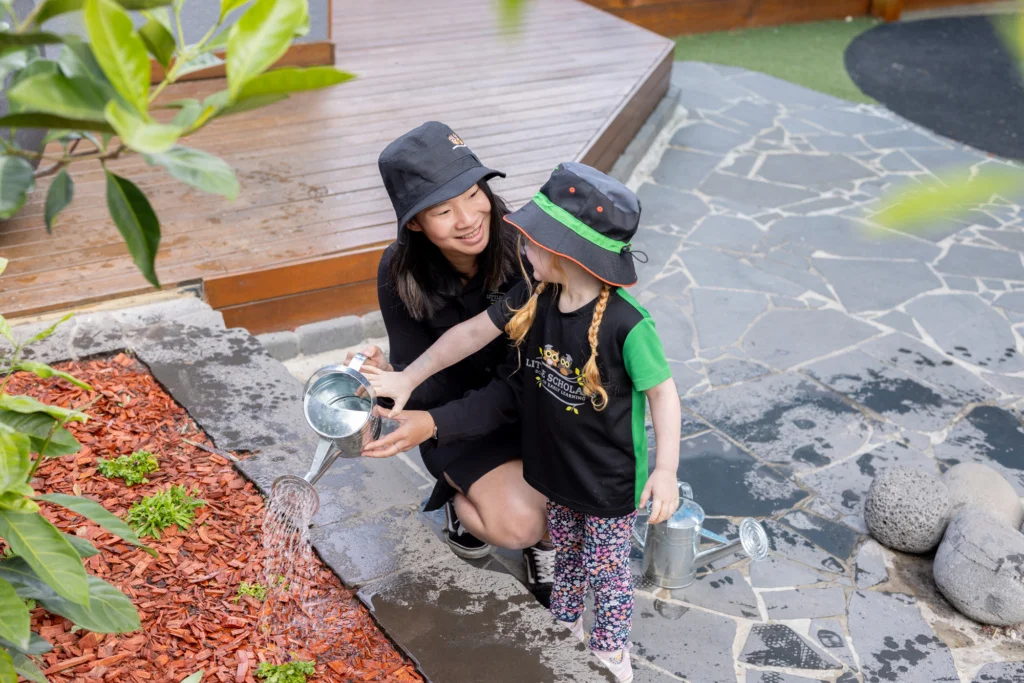
Where do birds go at night?
Children might wonder where birds go when it gets dark. You can say, “Birds have special nests or cozy spots where they rest at night, just like we have our beds to sleep in.
How do plants grow?
Children might be fascinated by the growth of plants and flowers. You can say, “The plants have roots at the bottom that absorb water and minerals in the ground, and then the stem starts growing. With the help of the sunlight, the stem grows in branches. Green leaves start growing out of the branches. The five things plants need to grow are sunlight, water, minerals, and food..
Why do we have seasons?
Seasons happen because the Earth goes around the sun. The Earth travels around the sun, called an orbit, once a year or every 365 days. As the Earth orbits the sun, the amount of sunlight each location on the planet gets every day changes slightly. This change causes the seasons. When it’s closer to the sun, it’s warmer, and when it’s farther away, it’s cooler.
Where does rain come from?
Children may be curious about rain and weather. Sunlight heats up water on Earth’s surface. The heat causes the water to evaporate/dry up into the sky, or to turn into water vapor. This water vapor rises into the air and makes up clouds. As the water vapor cools, it turns back into water, in the form of droplets or rain drops.
How do airplanes fly?
Little ones might be fascinated by airplanes in the sky. “Airplanes have special wings that help lift them into the air. When they move forward, the air goes over and under the wings, which creates lift and allows the airplane to fly.”
If they have follow-up questions, we liked the answers from Britannica Kids.
Why do I have to go to bed early?
Children may question bedtime rules. You can say, “Going to bed early helps our bodies and minds rest and get ready for a new day of fun and learning.”
Why do I have to eat vegetables?
Answer with something like, “Vegetables have special nutrients that help our bodies grow strong and healthy. They are like superhero foods for our bodies! We need a variety of food that have different types of nutrients so our bodies can get everything they need to be the best they can be.
How come your body doesn’t look like mine?
We bet you thought the puberty question would come later! But nope, your child has noticed there’s a slight difference between their bodies and their parents’ bodies. We know this can feel awkward to answer, but your child doesn’t understand why it could be hard for their parents to explain, so use proper words and keep it simple.
It’s okay not to have all the answers, and it’s perfectly fine to keep explanations simple and age-appropriate. If you don’t have the answers, you can look it up together. By embracing your child’s questions and engaging in open conversations, you’re nurturing their curiosity and building a strong foundation for their learning journey. Be sure to let your lead educator know you’re having these conversations at home. Your child is likely not the only one wondering some of these questions, and your educators can find ways to help them understand life’s curiosities!
In recent years, news headlines have frequently highlighted the challenges surrounding men’s mental health, and the troubling rates of violence and suicide among men. While these stories are not representative of men overall, these issues don’t emerge overnight. They’re often rooted in childhood, shaped by how boys are taught to understand emotions, handle challenges, and connect with others. While these statistics are concerning, they also present an opportunity. If we start now, we can nurture a generation of boys who grow into kind, empathetic, and resilient men. If we encourage sensitivity, respect, and emotional awareness from an early age, we can help our little boys become the well-rounded, compassionate adults our world needs.
Raising both sexes present different challenges for parents, but really it’s a very individual approach to each child to ensure they’re learning to become kind, respectful human beings.
Traditionally, little boys have been taught to “man up” and avoid showing “weakness” by expressing emotions. This can be deeply isolating, leading to feelings of loneliness or frustration, and in some cases, acting out through belittling or bullying those who are more open with their emotions. In fact, a recent international study found that Australian teenagers experience bullying at the second highest rate among developed countries. The good news is that bullying numbers are showing a downward trend, suggesting that shifts in attitudes are making a difference.
By encouraging young boys to embrace and express their feelings, as well as having awareness of them in others, we can cultivate environments that support kindness and empathy, helping them build respectful relationships and healthy ways to cope with emotions. This approach is essential for raising well-rounded, compassionate individuals who understand that true strength comes from being open, understanding, and kind to themselves and others.
At Little Scholars, we believe strength comes from vulnerability, showing and sharing the range of human emotion, and understanding and displaying empathy rather than ignorance.
Our goal is to provide a secure and trusting environment in which all children feel a sense of belonging. We support children to form positive relationships with peers, educators and their environments, while recognising and maybe improving their existing relationships with their family and community.
Part of building and maintaining these relationships means teaching children to recognise the range of emotions within themselves and in others. This in turn builds empathy, understanding and respect for others. We do this in a variety of age-appropriate ways to support children’s emotional development. From understanding what the various feelings are, understanding how they feel, how to see these in others, as well as mindfulness practices to deal with harder feelings when they arise.

To get an understanding of some of the potential reasons for what’s happening in males, what we can do now, we spoke to Dean Cooper, the program manager for White Ribbon Australia, a not-for-profit global social movement working to stop men’s violence against women. The organisation’s mission is to strive for a society where all women and children are safe. November is White Ribbon Month in Australia, we encourage you to visit the White Ribbon Australia website and contribute if you can.
Dean also happens to be the proud dad of two little boys, one of whom is pictured with Dean in the top photo and attends Little Scholars. We’re thrilled to have Dean’s expertise on this important topic.
I design programs for high schools and workplaces on domestic violence (DV), masculinity, respectful relationships, consent, etc. Secondary to my role at White Ribbon Australia, I am an ambassador for the innerBoy app which is an app assisting men to heal from trauma and get support for any mental health challenges they are facing.
Well, originally I wanted to play Rugby Union professionally, however that didn’t work out, so I studied criminology and undertook a career in corrections, conducting assessments on people who committed offences of all kinds. I began to focus solely on working with men and fathers who used violence, and about seven years ago I started facilitating men’s behavioural change programs for men being released from prison for DV offences. Quite alarmingly, what I learnt was a lot of behaviour I engaged in within sporting environments, such as sexist jokes, violent chants, and street harassment on nights out, actually made their way into these programs, and condoned or supported a lot of problematic beliefs these men who were using violence had. It was my full circle journey to realising that not all disrespect leads to violence, but all violence starts with disrespect. I’ve decided to stick with this work and found a passion for it as I think it’s important that those who are being disrespectful or choosing to use violence receive counter narratives from culture to say these behaviours aren’t okay.
I am passionate about the role men play in shaping children, especially boys, and have a desire to see every father role-modelling safe and respectful behaviour. I truly believe safe, engaged, and present fathers can positively impact our future generations and are the solution for the social issues we see today. Unfortunately, what I’ve learned in this work is that a lot of men either didn’t have positive role models growing up, or look around at music, TV, movies, pornography, social media, etc. and have no mainstream examples of what positive, safe, and effective fathering looks like. It’s my passion to create spaces for men to learn what fathering means and how we role model respect, equality, and safety.
There isn’t much at such a young age that we can ‘teach’ in that formal sense. Children will learn from observing so it’s important we role model more than try and teach. I’ll just provide my own strategies.
One thing I am trying to personally do is role model accountability. If my son says something like ‘that makes me sad’ or ‘I don’t like it’ if I am playing, or implementing a boundary I try to talk to him about why it upsets him and validate his feelings. I also role model saying ‘sorry’. Likewise, with my wife I make a purposeful attempt to apologise for things and role model what it’s like to get it wrong and change my mind. It’s crucial to show we don’t always have the answers, we are going to make mistakes, but we can always acknowledge our impact and make amends.
I try to hold myself proactively accountable as well. As adults, we know when we haven’t done our best work. If we are distracted on our phone when our child tries to engage us, or if we snap at them for not doing something we asked, or if they are talking and we interrupt with something else. We can proactively hold ourselves accountable, I try to say ‘son, when you were talking then I realise I wasn’t fully listening and I am sorry, what you have to say is important and I recognise by not listening I didn’t show that.’
“I also believe we play a huge role in teaching our boys to regulate their emotions. We seem to be better at comforting girls or more accepting of their emotions. In terms of our boys, we need to shift from correction to connection.”
Another, ‘I’m sorry I yelled before, it’s my responsibility to stay calm and I didn’t do that, it wasn’t my intention to make you upset but I realise it did, I am sorry for that and next time I am going to do better.’ If I see my son be unkind to someone in the playground or at kindy drop off, I try use those moments to ask him what he thinks the impacts were and how we can make amends. For example, ‘I saw when you took those two toys and didn’t give one to Johnny. Look at Johnny now, does he look happy or sad? Johnny looks sad and I think it’s because he doesn’t have a toy, can you help me find a way for Johnny to have a toy too?’ and layer that in with an apology for not sharing. Taking those steps to encourage my son to see the impact they have on others, be comfortable with reflecting on what they’ve done, and how to repair. That’s how we start to shape kind, reflective, and safe boys.
At least once a week, I try:
1. Admit a mistake I made
2. Share what I learnt about that mistake
3. Ask for help.
This is how we mark ourselves as a psychologically safe person. If we can role model getting it wrong, learning from that, and being willing to accept help, we role model that we are a safe person to hold accountable, we’ll treat their mistakes with empathy and understanding, and it’s okay to make mistakes. If we can mark ourselves as safe people by role modeling this, then we normalise recognising the impacts we have on others and repairing those. I just never want my children to hide something from me because they felt like they couldn’t tell me. I don’t want them to say ‘I made a mistake don’t tell Dad’ and instead say ‘I made a mistake I have to tell Dad.’ That’s the goal.
I also believe we play a huge role in teaching our boys to regulate their emotions. We seem to be better at comforting girls or more accepting of their emotions. In terms of our boys, we need to shift from correction to connection. Again, I think we need to role model this and talk about when we are frustrated, sad, disappointed, happy etc. I speak with a lot of dads who openly state at times they’ve been sad or angry, their children will ask ‘Daddy, are you okay?’ and they respond ‘Yeah, I am fine’ when they really aren’t. Children are these perfect little emotional barometers and what we actually do in that moment is not protect them from any negative feelings, but lie to them and tell them their sense of emotions was wrong. Instead, I try and role model ‘Daddy is feeling sad right now, thanks for noticing and asking if I am okay. When I feel sad I like to find an activity that makes me happy or find Mummy and give her a big cuddle.’ It’s important we teach boys to recognise their emotions, deal with them, and implement strategies to cope.
Physical affection is so important. As a guy growing up I always heard about this ‘tough love’ approach to parenting and the whole ‘just wait till your Dad gets home’ disciplinary role we were supposed to play. In my career, I’ve worked with a lot of men who have poor emotional regulation or traumatic backgrounds and they all report a lack of being told they are good enough and to be embraced. We do some exercises in prison groups where the men outline what they wish they had more of as children, all of it comes back to being told they were of value just as they were, and wishing they were shown love more.

At Little Scholars, we feel strongly it takes a village to raise a child, and we’re very proud to be a part of your child’s community as she or he grows and learns about the world. All of our little scholars learn about emotions in a number of age and developmentally-appropriate ways. It’s a very important facet of our early educational curriculum, supported by the Early Years Learning Framework.
We aim to provide a safe and secure space in which they grow and thrive. To ensure we’re doing this, we’re constantly working to improve our knowledge and practices. Our educators regularly take on professional development that helps them understand and guide children through not only their letters and numbers, but their emotional and social growth, on topics like developing mindfulness practices in their studios, developing frustration tolerance even more specific learnings such as trauma-informed practice.
Of course, ensuring children’s safety is paramount, and our educators are also regularly trained and updated on Child Protection Policy and procedures.
If you have any questions or concerns about your child, we have an open door policy and we invite you to talk to your educator, educational leader or campus manager any time.
Little Scholars offers you and your child the very best facilities, resources and early educational, play-based programs available, which are underpinned by the early years learning framework. Our belief is that through quality education and care for children we can also encourage, assist and support the entire family.
Our dedicated team of educators are committed to the individual needs and interests of children and their families, and thus we encourage and welcome family input and involvement.
We aim to be like an extension of your family and are very relationship-driven. We support nurturing relationships between our educators and your child, the relationships your child has with the other children who attend, and we value our relationship with you as the parent and other family members. So book a tour today to get started!

Let us hold your hand and help looking for a child care centre. Leave your details with us and we’ll be in contact to arrange a time for a ‘Campus Tour’ and we will answer any questions you might have!
"*" indicates required fields
Let us hold your hand and help looking for a child care centre. Leave your details with us and we’ll be in contact to arrange a time for a ‘Campus Tour’ and we will answer any questions you might have!
"*" indicates required fields
Fill in the form to join your local Pram Pals mums and bubs walk
