
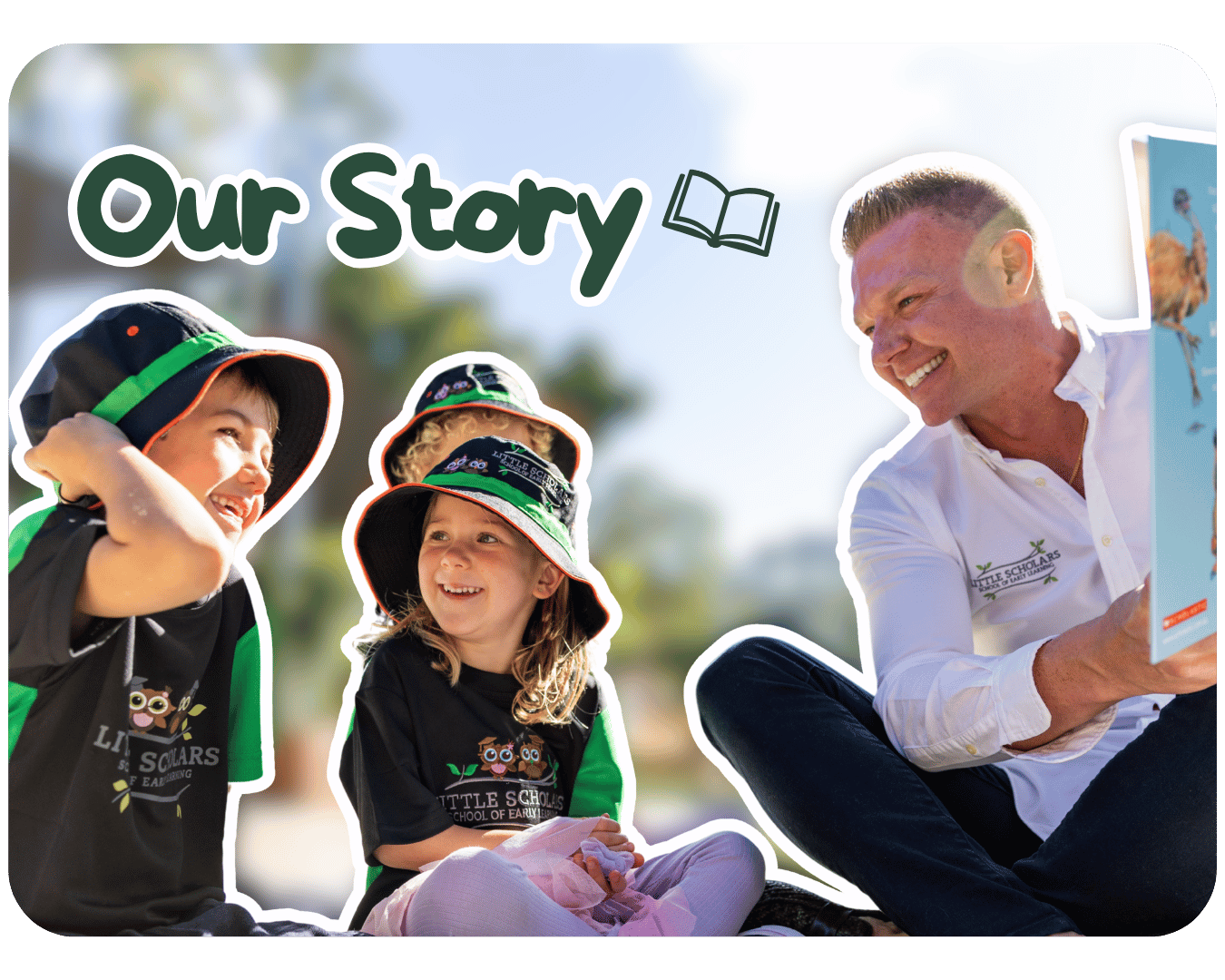
At Little Scholars School of Early Learning, we’ve always believed that a love of reading begins in early childhood. Books open up new worlds — helping children grow their language, imagination, creativity, and confidence, all while building the foundations for lifelong learning.
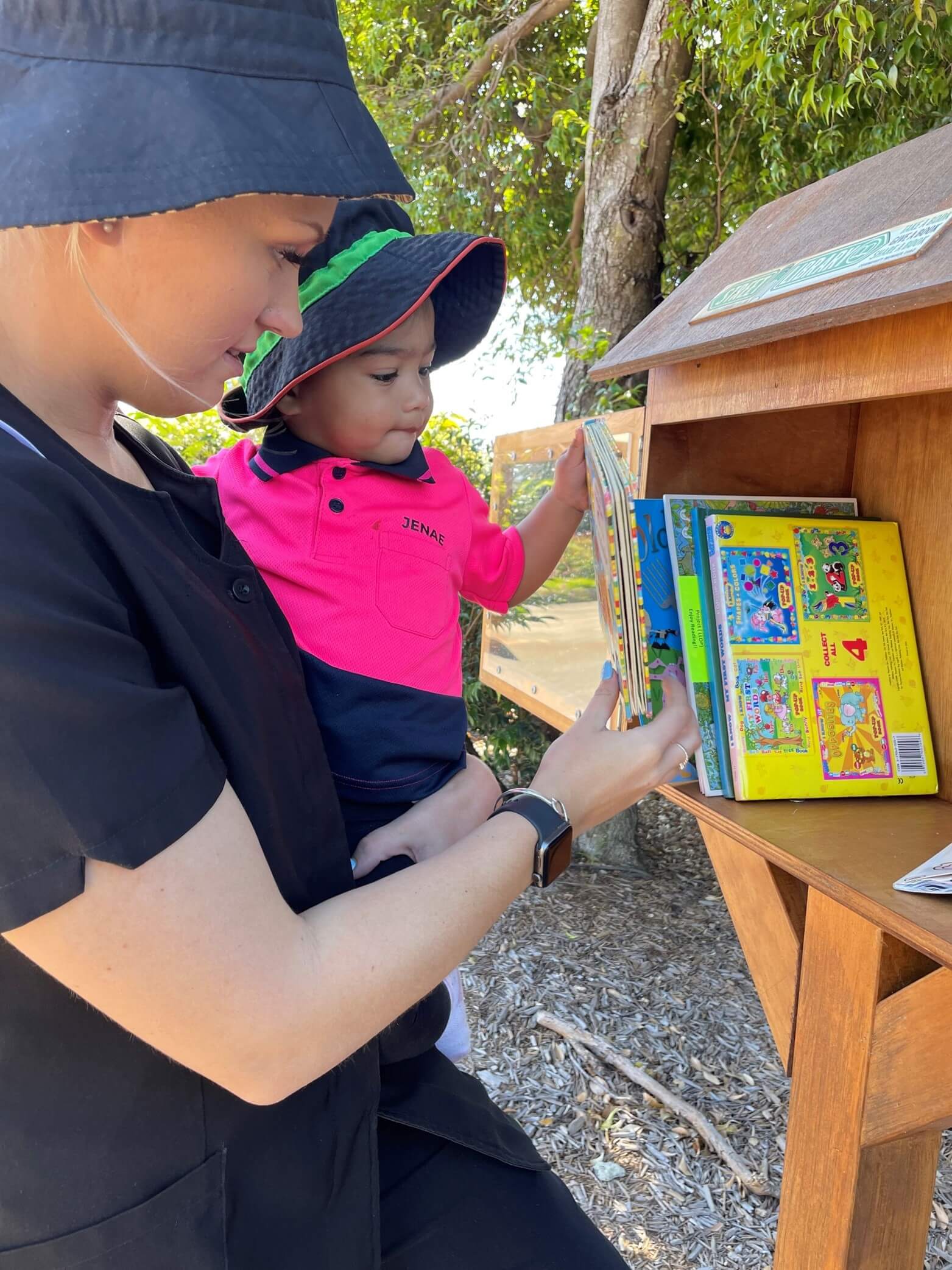
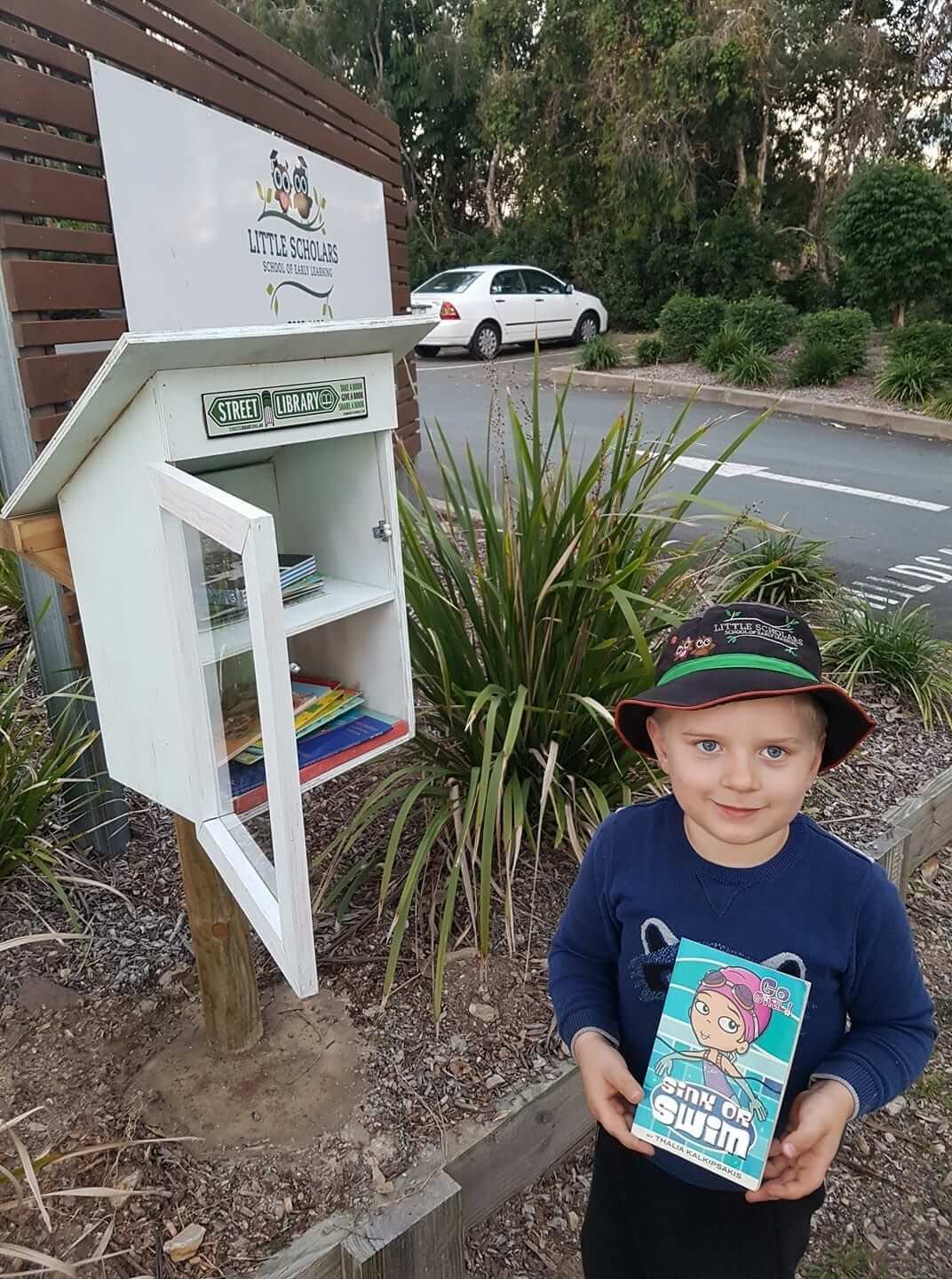
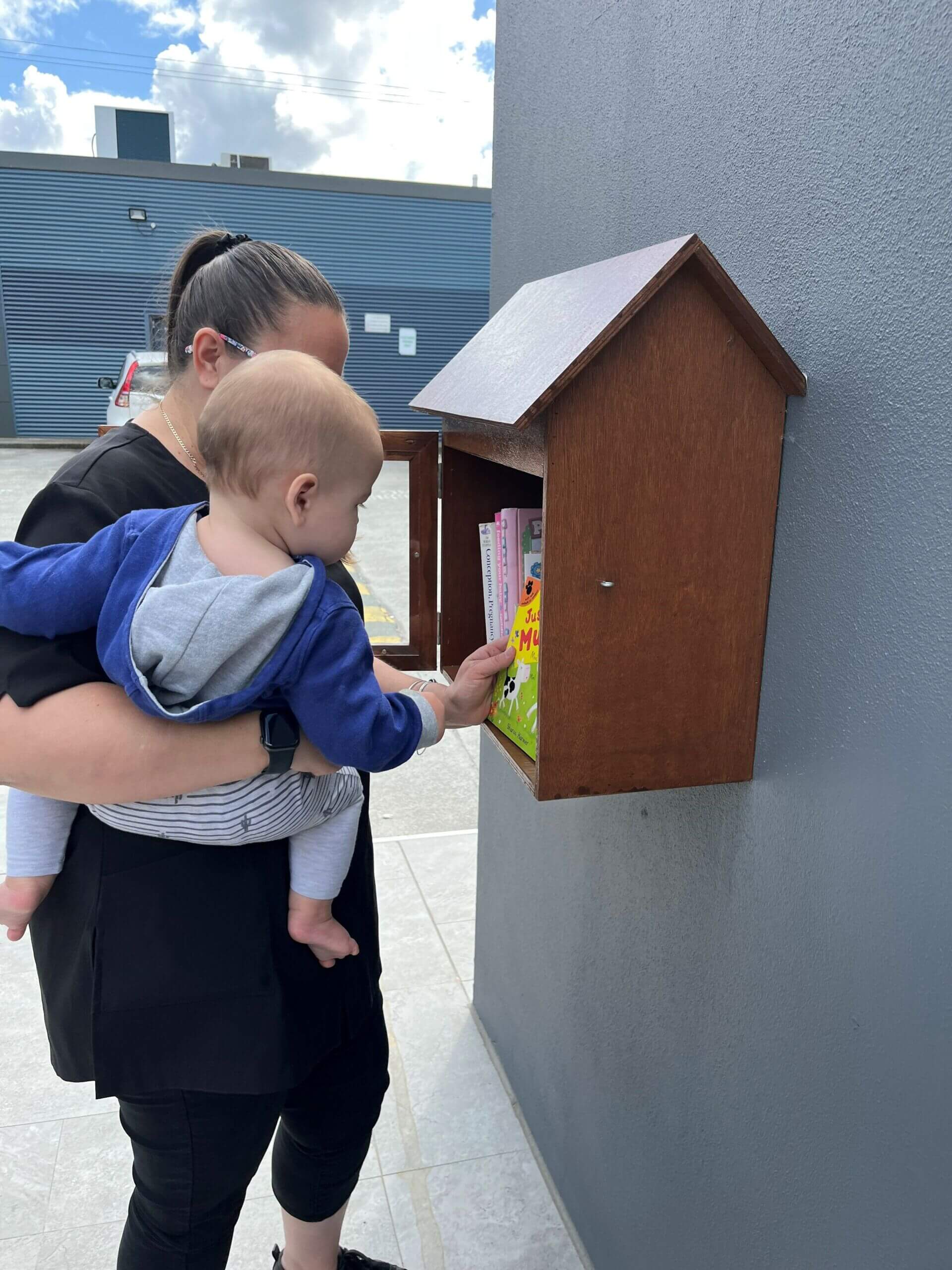
That’s why we’re so proud to have Street Libraries at every one of our Little Scholars campuses. These special little libraries make it easy for families and our wider community to share books, stories, and the joy of reading together.
A Street Library is a small, community book-sharing box where anyone can take a book, leave a book, and connect through the joy of reading.
Each of our Street Libraries is filled with a rotating collection of books for all ages that families can borrow, read, and pass on. If yourself or your child has outgrown a favourite story, you can leave it behind for another reader to enjoy.
It’s a simple idea, yet it encourages lifelong learning, strengthens community connection, and brings a little extra magic to our campuses.
Reading plays an essential role in every stage of early childhood education. When children listen to stories, explore illustrations, and talk about what they see, they’re building vocabulary, comprehension, and a love of storytelling.
At Little Scholars, books and story time are woven into our daily learning experiences. Our Street Libraries extend this practice beyond the classroom — inspiring families to read together at home and making books accessible to everyone.
Even a few minutes of shared reading each day can make an incredible difference to a child’s language development and school readiness.
One of our favourite parts of this initiative is seeing children excitedly check the shelves to see which new books have arrived.
The Street Libraries give families the chance to discover new stories, revisit old favourites, and create meaningful moments together. Each shared reading experience builds not only literacy skills but also a sense of connection — between parents, children, and the joy of learning.
Our Street Libraries aren’t just for Little Scholars families — they’re for everyone. Neighbours, friends, and passers-by are all welcome to explore the shelves, borrow a story, or leave one behind.
This shared space reflects one of our core values at Little Scholars: community. Through these small acts of generosity, a book once loved by one child can easily become another child’s new favourite adventure.
Our Street Libraries are open and ready for everyone to enjoy. You can:
Every book shared helps keep our libraries thriving and supports early childhood literacy across our community.
While our Street Libraries may be small in size, their impact is anything but. By sharing stories, encouraging family reading, and connecting our community, these little boxes of books nurture a love of learning that will last a lifetime.
Next time you visit your local Little Scholars campus, stop by our Street Library. You might discover a new favourite story — or share the perfect one with a friend.
Take a book. Leave a book. Share the love of reading.
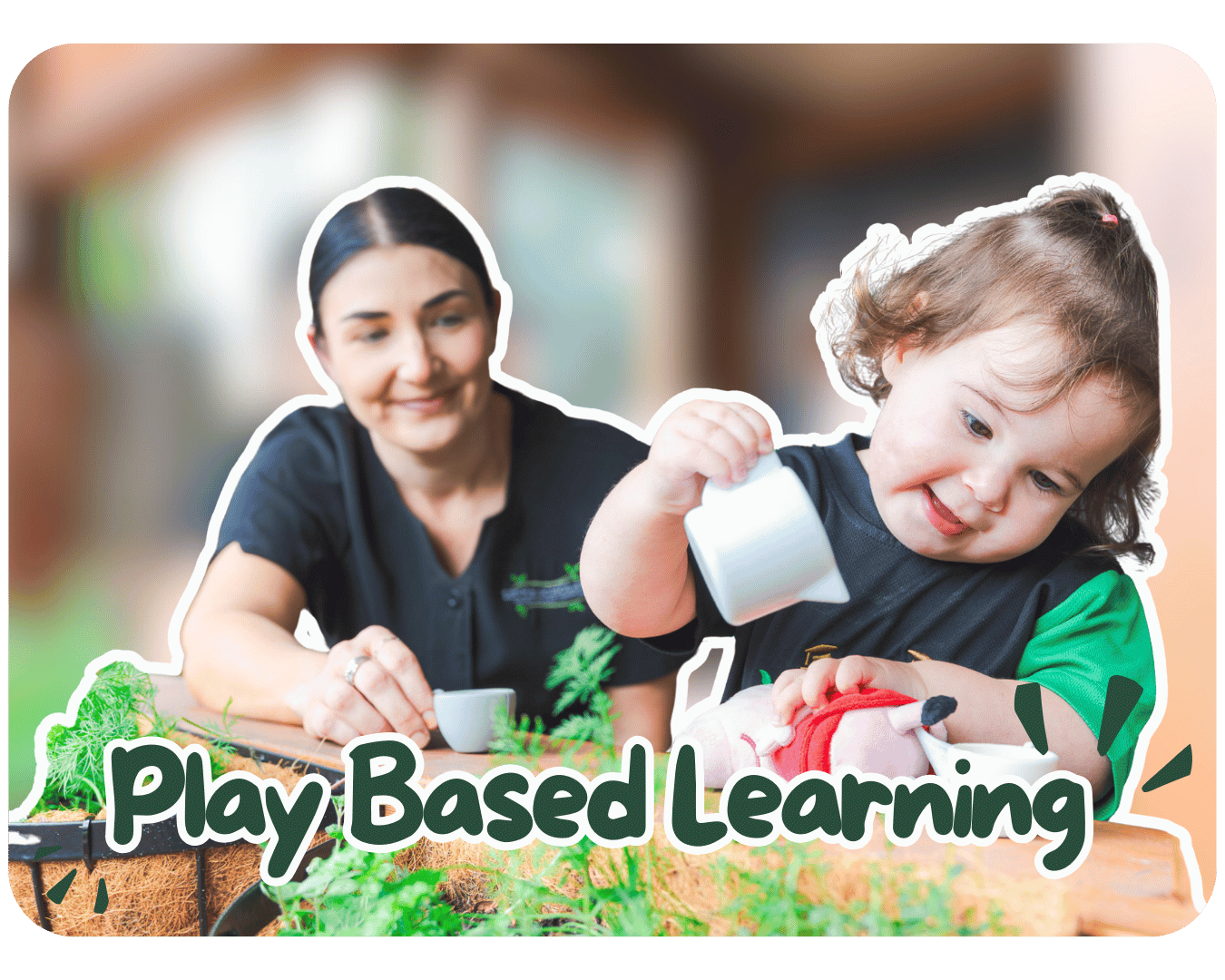
As a parent, you want your child to love learning, feel confident, and explore the world safely. At Little Scholars School of Early Learning, we believe the best way to achieve this is through play-based learning, the heart of our philosophy that guides everything we do for children aged 0–5 years.
Play-based learning is more than just fun. It’s a research-backed approach where children learn by exploring, experimenting, and engaging with their environment. Through play, children develop essential skills that lay the foundation for lifelong learning, including:
Problem-solving, creativity, and curiosity
Communication, collaboration, and empathy
Self-regulation, confidence, and resilience
Fine and gross motor development
Play allows children to take charge of their learning, following their interests and building confidence as capable learners.
At Little Scholars, our educators create rich, stimulating environments that encourage exploration and discovery. Every activity is designed to connect with child development while keeping learning fun and hands-on.
Children can:
Our approach blends guided play with child-led discovery, allowing children to learn at their own pace while reaching developmental milestones.
Unlike traditional early learning settings, we view children as active contributors to their own learning. Instead of passive instruction, we encourage children to ask questions, experiment, and solve problems, fostering independence and curiosity from a young age.
Our educators act as partners in exploration, observing interests, asking open-ended questions, and providing materials that extend learning naturally. This ensures that every moment of play is also a meaningful learning experience.
Children who engage in play-based learning develop:
At Little Scholars, we’re proud to offer an environment where play and learning go hand in hand, shaping curious, capable, and joyful children.
Give your child the gift of exploration, curiosity, and confidence. Book a tour and visit your local Little Scholars School of Early Learning campus to see how our play-based philosophy helps children aged 0–5 grow, learn, and thrive.
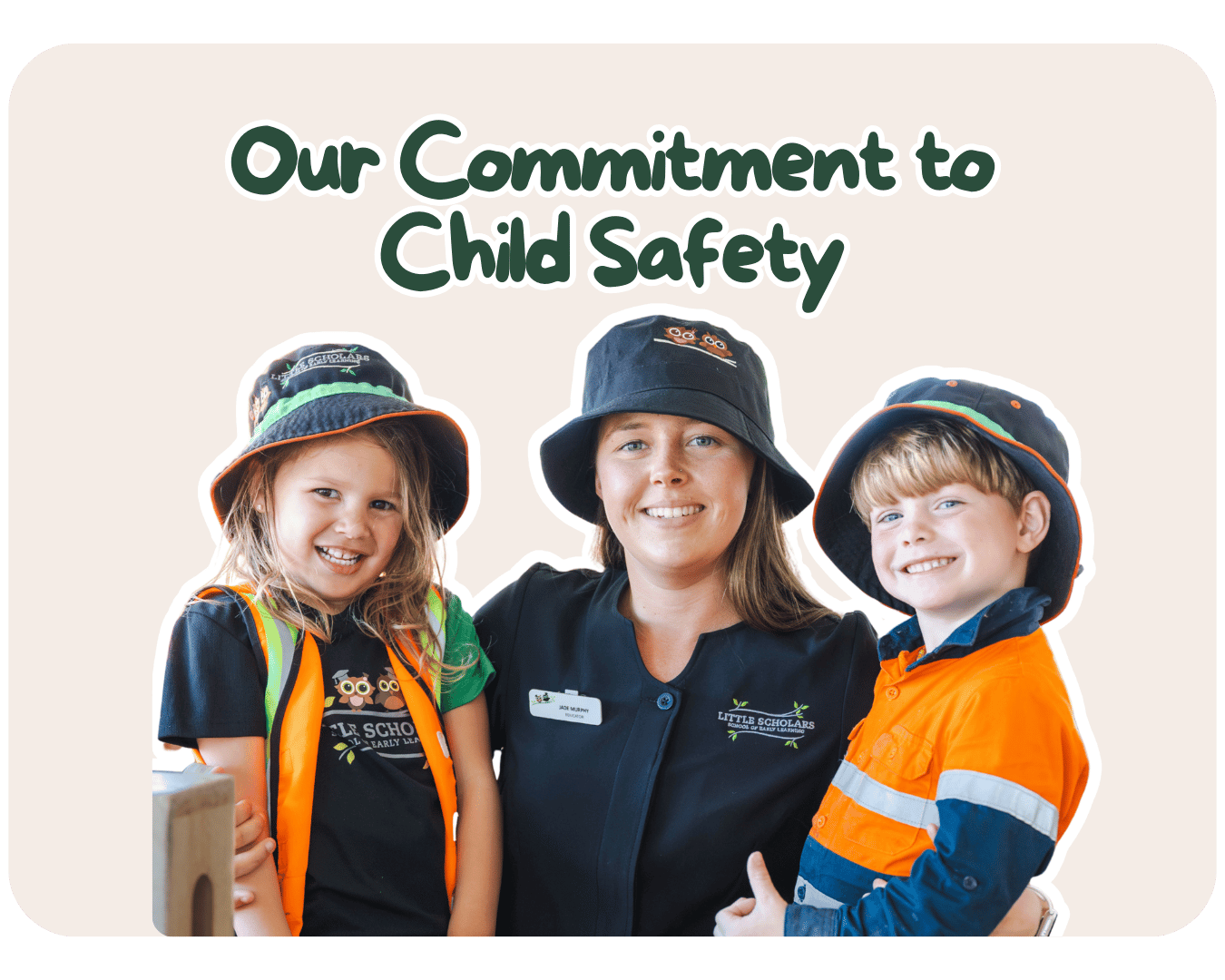
When it comes to choosing the best childcare for your little one, childcare safety is always the top priority. As parents, you want to feel assured that your child is not only having fun and learning, but also safe in a nurturing environment. At Little Scholars, a leading early learning provider with locations across the Gold Coast, Brisbane, Ipswich, and Redland Bay, childcare safety isn’t just a requirement, it’s at the heart of everything we do.
From the moment you walk into a Little Scholars centre, you’ll notice the care we take to ensure a safe and secure environment for your child. Whether it’s our carefully designed play areas, our secure gates, or the staff-to-child ratios, everything we do is to ensure that your child is both physically safe and emotionally supported.
Our centres follow the highest standards of safety outlined by the National Quality Framework (NQF), and we continuously evaluate our facilities to maintain a secure environment. This includes regular safety checks on equipment, child-proofing classrooms, and ensuring that all areas are free from hazards. Additionally, all Little Scholars staff are trained in first aid, emergency procedures, and child safety protocols, giving you peace of mind that your child is in capable hands.
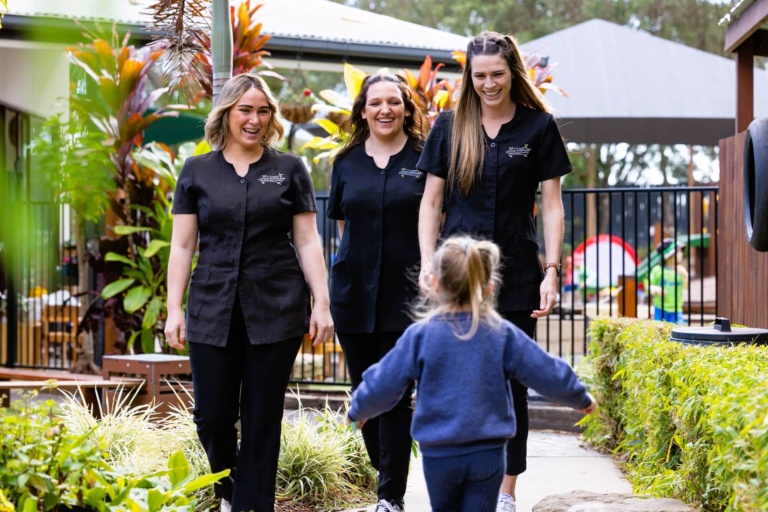
We know that children are naturally curious and full of energy, which can sometimes lead to accidents. That’s why at Little Scholars, we focus heavily on proactive safety measures to prevent injuries. Our classrooms and play areas are designed with safety in mind, with soft play surfaces and age-appropriate equipment that encourages exploration in a controlled, safe manner.
In addition to our physical environment, our educators are always on the lookout, providing constant supervision to ensure that children are not only safe but also engaged in activities that support their development. Whether it’s during active playtime, art projects, or quiet reading sessions, our educators are trained to supervise and intervene when necessary, ensuring every child’s wellbeing.
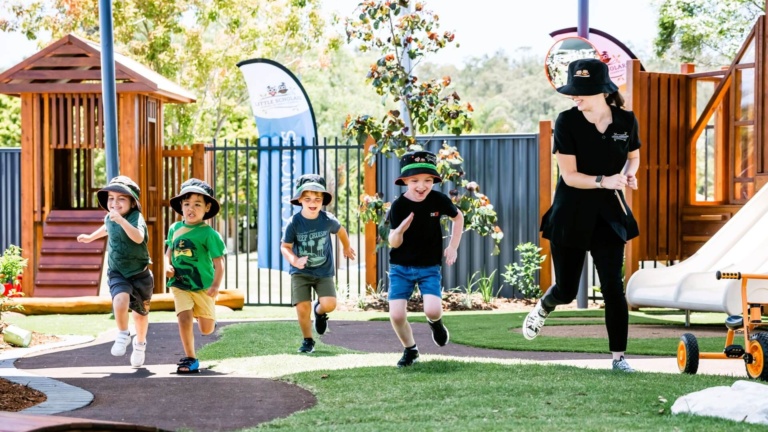
In addition to physical safety, we also prioritise hygiene at Little Scholars. Keeping children safe from illness is a top concern for all parents, and we take extra steps to maintain a clean environment. Our staff follow strict hygiene protocols, including regular hand washing, sanitising surfaces and toys, and ensuring that sick children stay home to prevent the spread of illnesses.
We understand that the first few years of a child’s life are crucial for building their immune system, and we aim to protect all children in our care by promoting healthy habits and cleanliness throughout the day.
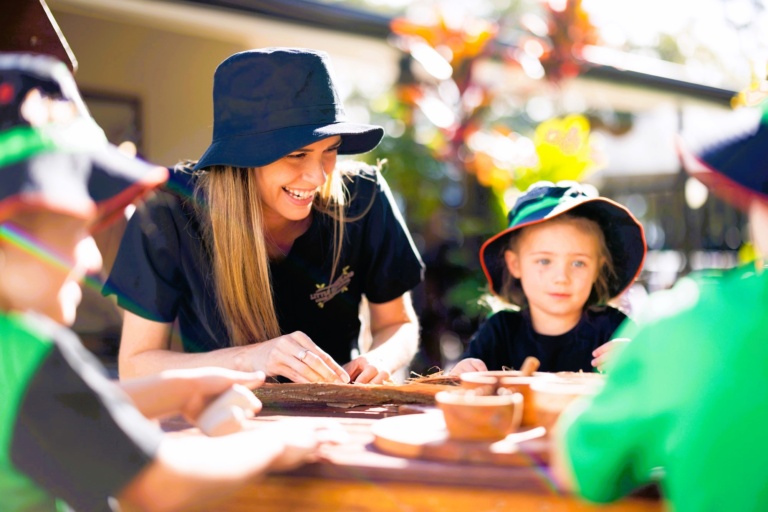
Child safety isn’t just about physical protection – it’s also about how children feel in their environment. At Little Scholars, we know that emotional safety is just as important. A child who feels secure and valued is more likely to thrive, both socially and cognitively.
Our educators are trained to create a welcoming, supportive environment where every child feels comfortable and included. We focus on fostering emotional intelligence by teaching children how to express their feelings, respect others, and manage social challenges in a positive way. Whether it’s helping children resolve conflicts with peers or offering encouragement during new experiences, our team creates a space where children feel emotionally safe to explore and learn.
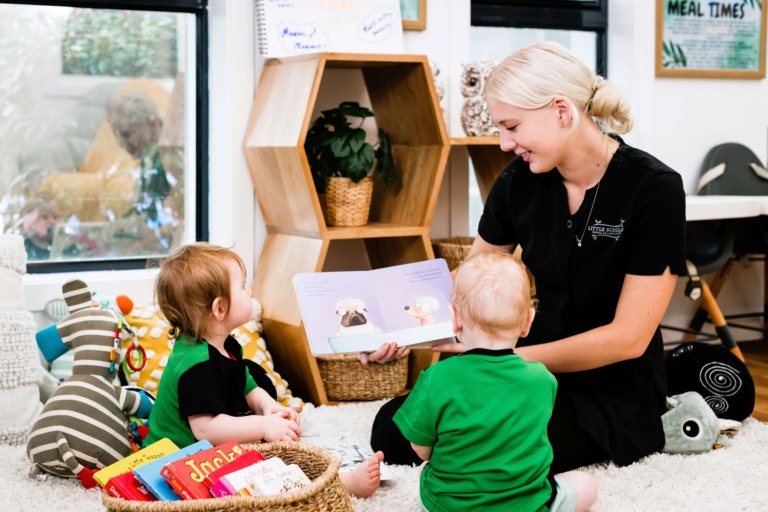
Child protection is a fundamental part of our safety practices at Little Scholars. We go beyond the standard practices of keeping children safe – we have comprehensive child safeguarding policies that are regularly updated to reflect best practices in the sector. Our policies ensure that all staff undergo background checks and are trained to recognise and respond to any signs of abuse or neglect.
Additionally, Little Scholars fosters an open line of communication with parents and guardians. We encourage you to be an active part of your child’s safety journey, and our team is always available to discuss any concerns or questions you may have.
Our Operations Manager, Melanie Excell, is a recognised Children’s Rights Queensland Ambassador, working closely with the community to raise awareness and advocate for children’s rights across the state – reinforcing our commitment at every level of leadership.
We also empower children through programs like the Bravehearts Ditto’s Keep Safe Adventure Show, which teaches children personal safety skills in an age-appropriate, engaging way.

With so many childcare options across Southeast Queensland, why do parents choose Little Scholars? It’s our unwavering commitment to safety, combined with a nurturing environment that supports every child’s growth and development. We’ve earned the trust of countless families because we genuinely care about the safety and wellbeing of each child in our care.
At Little Scholars, we believe that a safe environment is one where children can grow, learn, and reach their full potential. By providing a secure, caring, and stimulating environment, we ensure that your child will thrive both physically and emotionally, giving you the peace of mind you deserve.
Your child’s safety and wellbeing are our top priority. To ensure that every parent feels confident in their decision, we’ve created a Child Safety Checklist that you can download for peace of mind, along with detailed information on our safeguarding policies. Download the checklist here.
For more information about how we keep your child safe, please visit our Child Safeguarding page. We look forward to welcoming you and your little one to Little Scholars, where safety and learning go hand in hand.
At Little Scholars, we believe that the magic of science starts early – and for good reason. From bubbling volcanoes to magnetic wonders and curious critters, science sparks a unique kind of joy in children: the joy of discovery.
But beyond the “oohs” and “aahs,” there is a deeper purpose behind these moments. Science isn’t just fun; it’s foundational.
STEM – short for Science, Technology, Engineering and Mathematics – is more than a buzzword. It’s a gateway to essential skills that prepare children for a fast-changing world. Here’s why STEM education for early childhood is crucial:
We don’t save science for special occasions – it’s woven into everyday learning, and we enhance it further through our extracurricular program. Here’s how we bring STEM education to life:
Extra Curricular Program with Lab Kids
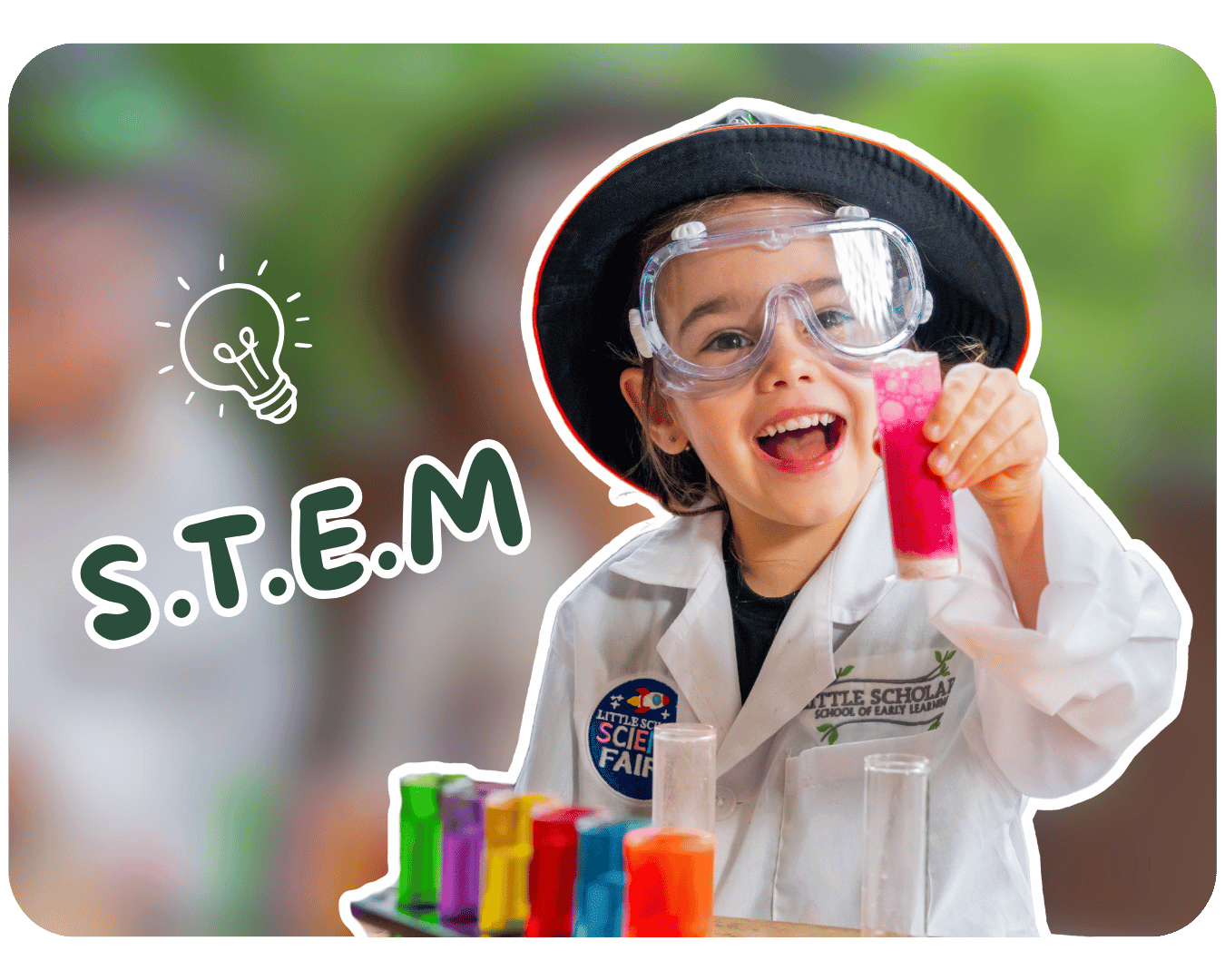
Did you know that Little Scholars offers an exciting STEM program for our kindergarten children? In collaboration with our friends at Lab Kids, we provide an incredible educational STEM program that aligns with the Early Years Learning Framework and the Australian National Curriculum. Through hands-on activities and age-appropriate scientific exploration, our Little Scholars explore topics like motion and states of matter, to learning about light, sound and chemical reactions.
Excursions and Events:
This August, Little Scholars are excited to host our biggest celebration of curiosity yet, our much-anticipated Little Scholars Science Fair! Children, parents, and curious souls in between from all 17 campuses across South East Queensland are coming together for a day jam-packed with serious fun.
Expect hands-on experiments, whizz-bang demonstrations, and STEM games and challenges (your little scholars won’t even realise they’re learning!) It’s science, play, and community all rolled into one unforgettable event.
Everyday Learning!
As part of our everyday curriculum, children are regularly invited to participate in science-based activities, such as:
Our role as early childhood educators is to lay the foundation for a lifetime of curiosity. By embracing STEM from the start, we’re not just teaching science – we’re raising confident, capable, and inquisitive young minds. To learn more about our extracurricular programs at Little Scholars or to book at tour at your local campus, call our team on 1800 732 926 visit https://mylittlescholars.com.au/book-a-tour/.
Everything you need to know about how Australia’s early childhood framework guides the way your child learns, grows, and thrives, explained in plain English.
The Early Years Learning Framework or EYLF is Australia’s national standard for early childhood education and care. Its full name is Belonging, Being and Becoming: The Early Years Learning Framework for Australia.
Developed by the Australian Government and released in 2009 (with a major update to V2.0 in 2022), the EYLF applies to all approved childcare and early education settings for children from birth to five years of age. It sits under Australia’s National Quality Framework (NQF) and is the foundation against which services are assessed by ACECQA.
The framework doesn’t dictate a specific program or curriculum. Instead, it gives educators a shared foundation of principles, practices, and learning outcomes to guide the experiences, environments, and relationships they create for children. The goal is a consistent, high-quality early education across every approved childcare centre in Australia.
The 2022 update expanded the EYLF's principles from 5 to 8, strengthened language around sustainability, critical reflection, and collaborative leadership, and updated practices to reflect contemporary research in early childhood pedagogy. If your child's centre was enrolled before 2023, their approach has been updated to reflect V2.0.
At the heart of the EYLF are three interconnected concepts that describe how children experience the world. These pillars aren’t stages, they exist simultaneously in every child’s life.
Children develop a sense of belonging through their relationships — with family, educators, peers, and the broader community. When children feel they belong, they feel secure, confident, and connected enough to learn and explore. Belonging is the foundation all other development is built on.
Being recognises that childhood is a valuable time in its own right — not just preparation for school. Children deserve time to simply be: to play, to wonder, to form friendships, and to experience the present moment fully. High-quality early childhood education honours this.
Becoming is about growth, change, and the development of identity over time. Every experience a child has — every relationship, challenge, and discovery — shapes who they are becoming. The EYLF asks educators to see and support each child’s unique developmental journey.
EYLF principles are the core beliefs that underpin everything educators do. They reflect contemporary research, ethical practice, and what we know about how children learn best. EYLF V2.0 expanded these from 5 to 8 principles.
Children learn best when they feel safe, valued, and emotionally connected. Warm, consistent relationships with educators are the single most important factor in quality early learning. This principle places relationship-building at the centre of every interaction.
Educators and families share responsibility for children’s learning and development. Genuine partnerships — built on communication, trust, and mutual respect — strengthen outcomes for children. Parents are considered the first and most important educators in a child’s life.
Every child has the capacity to succeed. This principle calls on educators to hold high expectations for all children regardless of background, ability, or circumstance, and to actively work to remove barriers to participation and achievement.
Australia’s children come from diverse families, cultures, and communities. Educators respect and value this diversity including Aboriginal and Torres Strait Islander ways of knowing and being, and reflect it in their programs and environments.
High-quality educators are always learning. This principle commits educators to continuous professional development, critical self-reflection, and staying current with early childhood research. It’s what separates good care from exceptional early education.
Added in EYLF V2.0, this principle encourages educators to examine their own assumptions, values, and practices with rigour. Critical reflection goes beyond routine self-assessment — it challenges educators to question why they do what they do and whether it truly serves every child.
Also new in V2.0, this principle recognises that children’s futures are shaped by the health of the planet and their communities. Educators integrate sustainability into everyday learning — helping children develop a sense of environmental responsibility from the earliest years.
Quality early education is a shared endeavour. This principle values leadership at every level — from the director to each educator — and recognises that when teams learn and grow together, children’s outcomes improve. A collaborative culture underpins a high-performing centre.
If principles describe what educators believe, practices describe what they do. These are the pedagogical strategies and teaching approaches that bring the EYLF to life in the learning environment every day.
Children’s development across physical, social, emotional, and cognitive domains can’t be separated. Educators take a whole-child approach — recognising that a child who feels loved and safe learns more than one who doesn’t, and that physical play builds cognitive skills as much as desk-based activities.
Skilled educators read children closely — their moods, interests, cues, and emerging ideas — and adapt in real time. Responsiveness builds trust, deepens engagement, and ensures each child’s experience is attuned to who they are right now, not a one-size-fits-all program.
Play is the primary vehicle for learning in the early years. Through play, children experiment, imagine, problem-solve, build social skills, and develop language. The EYLF recognises both structured and unstructured play as essential — leisure and downtime are as valuable as directed learning.
Great early childhood educators don’t just supervise — they teach with purpose. Intentional teaching means making deliberate decisions about experiences, language, questions, and provocations to extend children’s thinking and scaffold their development toward meaningful goals.
The physical and emotional environment of a centre is itself a teacher. Educators design spaces — indoors and outdoors — that invite curiosity, support risk-taking, reflect children’s identities, and promote independence. A well-designed learning environment makes quality learning happen more naturally
Educators actively incorporate children’s cultural backgrounds, languages, and family practices into their programs. Cultural responsiveness goes beyond celebrating events — it means genuinely embedding diverse ways of knowing, being, and doing into everyday learning experiences.
Transitions — between rooms, between services, and into school — can be unsettling for children. Educators work proactively to ensure these transitions are smooth, supported, and built on shared knowledge of each child’s learning journey, reducing disruption and building confidence.
Ongoing observation, documentation, and assessment help educators understand where each child is in their learning, what’s working, and where to go next. Assessment in the EYLF is not about testing, it’s a reflective practice that informs planning and celebrates children’s progress.
Learning outcomes are the broad goals that the EYLF guides educators toward for every child aged birth to 5. They’re not milestones or checklists — they’re holistic developmental destinations that shape how educators plan, observe, and document learning.
Children develop confidence in who they are their strengths, their feelings, their family, and their place in the world. This outcome includes developing resilience, a positive sense of self, and the ability to make choices and act with increasing independence.
Children develop a sense of connection to their communities, the natural environment, and the wider world. They learn about their rights and responsibilities, develop empathy, and begin to understand their role as active participants in society.
Physical health, emotional wellbeing, and a sense of safety and comfort all contribute to this outcome. Children who feel well are better equipped to learn, form relationships, and navigate challenge. Wellbeing is both an outcome and a precondition for all other learning.
Children develop dispositions for learning, curiosity, creativity, persistence, and enthusiasm. They become willing to take on challenges, try new things, and engage deeply with experiences. This outcome lays the cognitive and motivational foundations for lifelong learning.
Communication encompasses verbal language, non-verbal expression, literacy, numeracy, and digital literacy. Children learn to express themselves, listen and respond, engage with stories and symbols, and use a growing range of tools and technologies to communicate and create.
Common questions about the EYLF from parents, educators, and childcare students.
At Little Scholars, the EYLF isn’t just compliance — it’s the foundation of everything we do across our 17 South East Queensland campuses. Our educators are trained to bring all 8 principles and 8 practices to life every day, in environments designed for children to genuinely thrive.
Everything you need to know about how Australia's early childhood framework guides the way your child learns, grows, and thrives — explained in plain English.
Quick Reference
The Early Years Learning Framework — or EYLF — is Australia's national standard for early childhood education and care. Its full name is Belonging, Being and Becoming: The Early Years Learning Framework for Australia.
Developed by the Australian Government and released in 2009 (with a major update to V2.0 in 2022), the EYLF applies to all approved childcare and early education settings for children from birth to five years of age. It sits under Australia's National Quality Framework (NQF) and is the foundation against which services are assessed by ACECQA.
The framework doesn't dictate a specific program or curriculum. Instead, it gives educators a shared foundation of principles, practices, and learning outcomes to guide the experiences, environments, and relationships they create for children. The goal is a consistent, high-quality early education across every approved childcare centre in Australia.
At the heart of the EYLF are three interconnected concepts that describe how children experience the world. These pillars aren't stages — they exist simultaneously in every child's life.
Children develop a sense of belonging through their relationships — with family, educators, peers, and the broader community. When children feel they belong, they feel secure, confident, and connected enough to learn and explore. Belonging is the foundation all other development is built on.
Being recognises that childhood is a valuable time in its own right — not just preparation for school. Children deserve time to simply be: to play, to wonder, to form friendships, and to experience the present moment fully. High-quality early childhood education honours this.
Becoming is about growth, change, and the development of identity over time. Every experience a child has — every relationship, challenge, and discovery — shapes who they are becoming. The EYLF asks educators to see and support each child's unique developmental journey.
EYLF principles are the core beliefs that underpin everything educators do. They reflect contemporary research, ethical practice, and what we know about how children learn best. EYLF V2.0 expanded these from 5 to 8 principles.
Children learn best when they feel safe, valued, and emotionally connected. Warm, consistent relationships with educators are the single most important factor in quality early learning. This principle places relationship-building at the centre of every interaction.
Educators and families share responsibility for children's learning and development. Genuine partnerships — built on communication, trust, and mutual respect — strengthen outcomes for children. Parents are considered the first and most important educators in a child's life.
Every child has the capacity to succeed. This principle calls on educators to hold high expectations for all children — regardless of background, ability, or circumstance — and to actively work to remove barriers to participation and achievement.
Australia's children come from diverse families, cultures, and communities. Educators respect and value this diversity — including Aboriginal and Torres Strait Islander ways of knowing and being — and reflect it in their programs and environments.
High-quality educators are always learning. This principle commits educators to continuous professional development, critical self-reflection, and staying current with early childhood research. It's what separates good care from exceptional early education.
Added in EYLF V2.0, this principle encourages educators to examine their own assumptions, values, and practices with rigour. Critical reflection challenges educators to question why they do what they do and whether it truly serves every child.
Also new in V2.0, this principle recognises that children's futures are shaped by the health of the planet and their communities. Educators integrate sustainability into everyday learning — helping children develop environmental responsibility from the earliest years.
Quality early education is a shared endeavour. This principle values leadership at every level — from the director to each educator — and recognises that when teams learn and grow together, children's outcomes improve.
Want to see these principles in action? Visit one of our 17 South East Queensland campuses.
Book a tourIf principles describe what educators believe, practices describe what they do. These are the pedagogical strategies and teaching approaches that bring the EYLF to life in the learning environment every day.
Children's development across physical, social, emotional, and cognitive domains can't be separated. Educators take a whole-child approach — recognising that a child who feels loved and safe learns more, and that physical play builds cognitive skills as much as anything else.
Skilled educators read children closely — their moods, interests, cues, and emerging ideas — and adapt in real time. Responsiveness builds trust, deepens engagement, and ensures each child's experience is attuned to who they are right now.
Play is the primary vehicle for learning in the early years. Through play, children experiment, imagine, problem-solve, and build social skills. Both structured and unstructured play are essential — leisure and downtime are as valuable as directed learning.
Great early childhood educators teach with purpose. Intentional teaching means making deliberate decisions about experiences, language, questions, and provocations to extend children's thinking and scaffold development toward meaningful goals.
The physical and emotional environment of a centre is itself a teacher. Educators design spaces — indoors and outdoors — that invite curiosity, support risk-taking, reflect children's identities, and promote independence.
Educators actively incorporate children's cultural backgrounds, languages, and family practices into programs. This means genuinely embedding diverse ways of knowing, being, and doing into everyday learning experiences.
Transitions — between rooms, services, and into school — can unsettle children. Educators work proactively to ensure transitions are smooth and built on shared knowledge of each child's learning journey.
Ongoing observation, documentation, and assessment help educators understand where each child is and where to go next. Assessment in the EYLF is not about testing — it's a reflective practice that informs planning and celebrates children's progress.
Learning outcomes are the broad goals that the EYLF guides educators toward for every child aged birth to 5. They're not milestones or checklists — they're holistic developmental destinations that shape how educators plan, observe, and document learning.
Children develop confidence in who they are — their strengths, their feelings, their family, and their place in the world. This includes developing resilience, a positive sense of self, and the ability to make choices and act with increasing independence.
Children develop a sense of connection to their communities, the natural environment, and the wider world. They learn about their rights and responsibilities, develop empathy, and begin to understand their role as active participants in society.
Physical health, emotional wellbeing, and a sense of safety and comfort all contribute to this outcome. Children who feel well are better equipped to learn, form relationships, and navigate challenges. Wellbeing is both an outcome and a precondition for all other learning.
Children develop dispositions for learning — curiosity, creativity, persistence, and enthusiasm. They become willing to take on challenges, try new things, and engage deeply with experiences. This outcome lays the cognitive and motivational foundations for lifelong learning.
Communication encompasses verbal language, non-verbal expression, literacy, numeracy, and digital literacy. Children learn to express themselves, listen and respond, engage with stories and symbols, and use a growing range of tools to communicate and create.
Common questions about the EYLF from parents, educators, and childcare students.
At Little Scholars, the EYLF isn't just compliance — it's the foundation of everything we do across our 17 South East Queensland campuses. Our educators bring all 8 principles and 8 practices to life every day, in environments designed for children to genuinely thrive.
Children’s positive views of themselves as learners are more important than being told they are clever.
This insight from Nathan Wallis’s talk at the Australian Childcare Alliance (ACA) conference resonated with us, and we believe it’s valuable for parents to hear. Our intention isn’t to make parents feel guilty for praising their children’s intelligence. We understand that parents aim to foster a strong sense of self and ability in their children, and we fully support this. However, Wallis emphasises that before the age of seven, children don’t need to prove their intelligence. Instead, they need to develop learning skills through play and believe in their ability to learn. According to Wallis, more play and less structured learning before age seven leads to better outcomes in adulthood.
“To put it simply, before seven, it doesn’t matter how clever your child is. What matters is how clever your child feels and their disposition towards themselves as learners,” Wallis, an educator who focuses on neuroscience, explained on the Future Focus podcast.
“You’re better off having a six-year-old who can only count to 20 but thinks they’re a good learner than a six-year-old who can count to 100 but doubts their cleverness.”
Wallis highlights that free play boosts creativity and problem-solving, which are essential for intelligence. Letting children freely build, create, and explore supports flexible thinking and a positive learning mindset.
At the conference, which attracted hundreds of early childhood educators, Wallis offered advice on how to support children in their confidence and ability to learn:
Experts at Early Childhood Australia agree that children learn about themselves, others, and the world around them through play.
“If you provide your child with plenty of opportunities for playing, exploring, discovering their interests, solving problems, and tackling challenges, then you’ll be laying a strong foundation for building self-confidence,” says David Lyons, CEO of Nido Early School, in a post on ECA’s The Spoke blog.

According to Be You, the national mental health and wellbeing initiative for learning communities in Australia, praise is most effective when adults are mindful of how and when they use it.
When praising children, Be You suggests focusing on their efforts and achievements.
“Praise that’s specific and acknowledges the process of completing an activity or solving a problem helps develop children’s learning and motivation. For example, you might say, ‘You put away your toys so nicely,’ ‘I noticed you were really trying hard at building that block tower,’ or ‘You’ve used so many bright colours in your painting.’ Children can then use this learning when they have similar experiences in the future.”
Lyons agrees and cautions against overpraising.
“Children need to discover and learn those things that give them personal enjoyment and fulfilment, not just do things to please their parents. Similarly, comparing a child to others can be detrimental to their confidence and self-esteem.”
Dealing with disappointment is also crucial for developing confidence.
“Everyone fails to achieve their goals sometimes – and this isn’t a bad thing. You can build children’s ability to deal with challenges by responding sympathetically and with encouragement, helping children focus on what they can change, and challenging ‘I can’t’ thinking by showing and saying you believe in them and reminding them of their achievements,” says Be You.
Wallis reinforces that play enables children to develop social, cognitive, and emotional skills through their own interests and in creative and innovative ways.
“Play-based learning teaches creativity, which is fundamental to growing intelligence and the ability to problem-solve. When children can take their time and make multiple attempts before achieving success, they build resilience and other important skills needed later in life,” says Wallis.
Supporting children in developing a positive self-view as learners is crucial, especially in their early years. Emphasising the importance of play over structured learning fosters creativity, problem-solving, and resilience. By providing nurturing relationships, paying attention to their efforts, and creating flexible learning environments, we can help children build the confidence they need to thrive.
As Nathan Wallis and other experts highlight, the goal is to make children feel capable and enthusiastic about learning. This foundation will benefit them not only in school but throughout their lives. At Little Scholars, we encourage our little ones to play, explore, and believe in themselves – because how they see themselves as learners today will shape their success tomorrow.
Over the past couple of months, we have started to launch woodworking stations at our campuses! But why, you may ask. It’s dangerous! They could get hurt! At Little Scholars, we actively guide children through ‘risky’ activities to build up their skills, confidence, and resilience. Engaging in woodworking helps children learn to assess and manage risks, develop fine motor skills, and boost their creativity and problem-solving abilities. By introducing these activities in a controlled and supervised environment, we ensure they gain valuable life skills while staying safe.
Woodworking is an excellent way for children to exercise their creative, practical and critical thinking skills. It allows them to express their ideas and figure out solutions to their projects.
As they measure, cut, and assemble pieces of wood, they enhance their hand-eye coordination and fine motor skills. These activities require precision and control, which are crucial for writing, drawing, and other tasks. Furthermore, using tools like hammers, saws, and sandpaper teaches them how to handle and manipulate objects with care and accuracy.
Guiding children through woodworking activities helps build their confidence and resilience. Completing a woodworking project, no matter how simple, gives children a sense of accomplishment and boosts their self-esteem. They learn that they can create something tangible and useful with their own hands. Additionally, the process often involves overcoming challenges and solving problems, which teaches persistence and resilience. These qualities are essential for tackling academic challenges and life’s obstacles.
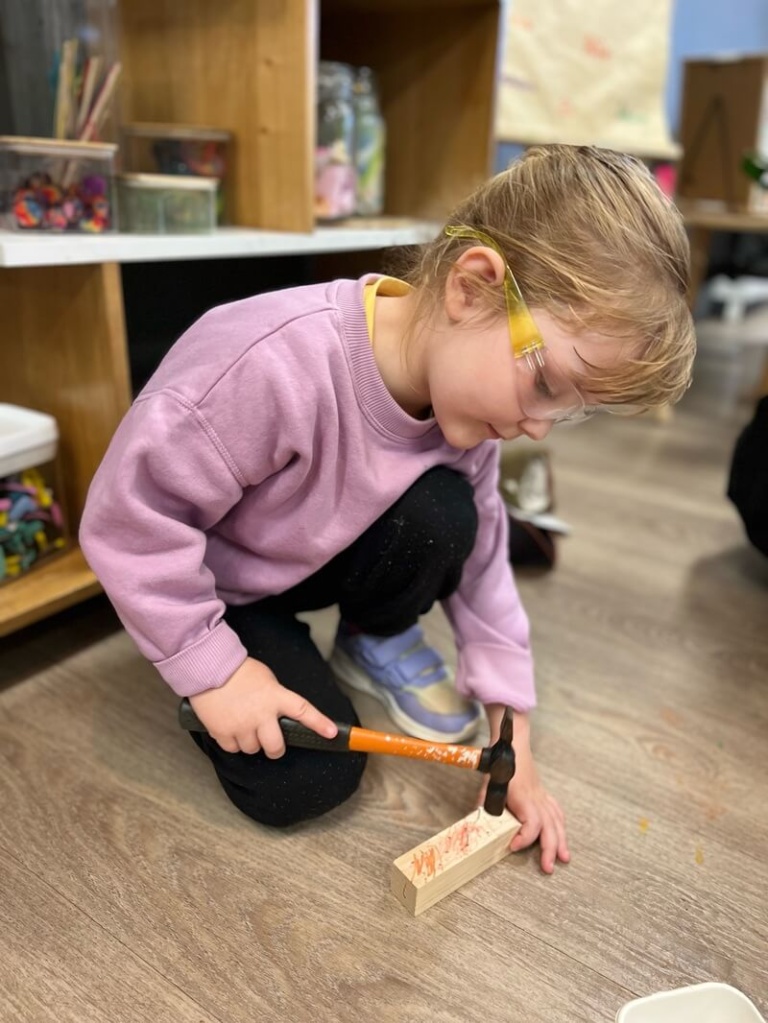
Our little scholars begin their woodworking projects by making a plan. This may look like drawing out their project, or making a model out of cardboard or building blocks, discussing with their friends and educators what they’d like to build, how they’d like it to look, what tools they need in order to make their design come to life, and figure out any risks there may be and how to reduce chances of hurting themselves.
Introducing woodworking in a controlled environment allows children to learn about risk management. They are taught how to use tools safely, understand the potential dangers, and take appropriate precautions. This hands-on experience with ‘risky’ activities helps them develop a healthy respect for safety and risk assessment. They learn to think ahead, plan their actions, and make informed decisions to minimise risks, which are valuable skills both in and out of the workshop.
Some of their documented conversations with educators have included:
How can we make sure we are safe when using the tool table?
“You have to wear safety glasses.”
“If you step on a nail you can hurt your feet.”
“It can’t be too busy, I might knock something over or into someone and hurt them.”
What do you do at the tool table?
“I can measure the wood.”
“When I’m at the table I use the screwdriver.”
“I use nails to put in the wood.”
How does it make you feel when you build at the tool table?
“I like tools because I can screw something in.”
“I feel happy because I can make something.”

Woodworking supports creativity and problem-solving skills. As children design and build their projects, they must think creatively to overcome design challenges and find solutions. This process encourages them to experiment, explore new ideas, and think outside the box. The ability to approach problems creatively and develop innovative solutions is a real skill in today’s world, where adaptability and innovation are highly valued.
In addition to the practical skills, woodworking integrates educational concepts such as maths and science. Measuring pieces of wood, calculating dimensions, and understanding geometric shapes are all part of the woodworking process. Children also learn about the properties of different materials and the principles of mechanics and engineering. This hands-on application of academic subjects helps to reinforce their learning and makes these concepts more tangible and understandable.
By providing children with the opportunity to engage in woodworking, we are equipping them with a wide range of skills and experiences that will benefit them throughout their lives. Through careful supervision and guidance, we ensure that they can enjoy the benefits of this fun activity safely.
Our Parkwood little scholars are not only a part of our newest intergenerational program, they’re helping contribute to important research that looks at how intergenerational bonds support children’s emotional wellbeing as well as that of older people who often experience feelings of loneliness in their later years. This latest study by Griffith University will run over 24 weeks in three eight-week pairings with eight children and eight grandfriends.
Researchers at Griffith University, led by Professors Gaery Barbery and Anneke Fitzgerald, are evaluating the intergenerational program, proudly hosted by Bupa Agedcare Group Limited at Bupa Runaway Bay.
“The program is all about making connections,” according to Professor Barbery, project lead for Griffith University.
The project will measure loneliness, resilience and general wellbeing of the aged care residents using the De Jong Scale of Loneliness, he says.
Isolation and feelings of loneliness are a serious threat for older people, because they’re more likely to live alone, lose family members and friends, suffer from chronic illness and hearing loss. Statistically, one in four older (over 65) Australians live alone. Of those who live alone, according to a 2015 Australian Bureau of Statistics survey, about 12 per cent didn’t receive visitors in a three-month period, and older men were reported to be less likely to have been visited, at 17 per cent.
From the viewpoint of the children, their educators will mark and monitor the project feedback and how it measures against set parameters using the Leuven scale.
“It measures children’s wellbeing and involvement based on observations from staff. There’s also a reflection manual for staff (educators) to offer their perspective of the program, along with a program evaluation survey,” according to Professor Barbery.
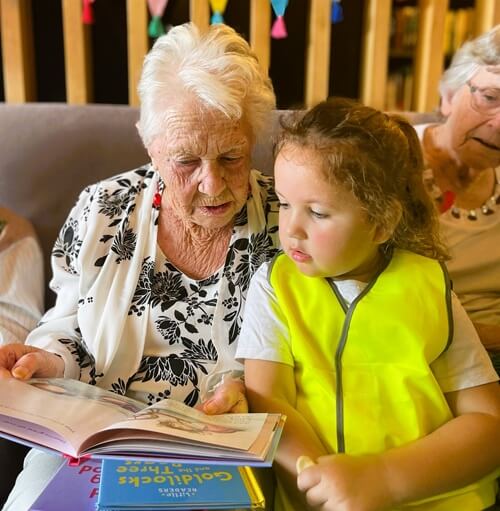
The Bupa residents were delighted to join the research project, all having different reasons for wanting to be a part of the program.
“To see the little ones again, because my grandchildren are all grown up, and all littler ones who’ve been born are overseas, so it’s nice to see little people again,” says Lorette.
“I like little children, and I’ve got a baby great-granddaughter but she’s in New Zealand. So this is a way to spend time with small children. They’re so cute, they’re gorgeous!” Pam says.
Being a half a world away from her family has been hard for Beverley.
“I was a teacher in preschool. I just love kids,” she says. “I have two grandchildren in England, I miss having my family nearby, they come but it’s so far away and a lot of money.”
For Joan, who turned 95 the day before the research project kicked off, she hadn’t considered how much she’d enjoy the visits.
“To start with, it was just an activity, but I found it was so interesting watching these children.”
And Joan says she’s impressed by the maturity of the children, even though they’re only four and five years old.
“They’re much older than we were mentally. Probably because as a society we do more adult things with them. They do seem very advanced to me. It’s a totally different ballgame than when I was a child,” Joan says with a laugh.
Of course, we had to ask our little scholars what their takeaway of the program has been so far, and their answers were predictably unpredictable.
This project is enthusiastically supported and funded by Bendigo Paradise Point Community Bank.
“The Bendigo Paradise Point Community Bank is a registered social enterprise supporting the Gold Coast Community,” says William Matthews, who is proud to be on the Board of Bendigo Bank Paradise Point, as well as principal and director of client operations for Sovereign Family Offices.
Will says he heard Professor Fitzgerald speak at the Australian Institute for Intergenerational Practice (AIIP) meetings that he regularly attends, and was inspired to see how Bendigo could help.
“As a social enterprise we reflect the values of our community, customers and staff. We see our support of Intergenerational Practice in the community as an essential component to strengthening our community by breaking down the barriers in how our most venerable people in society are cared for. We are extremely grateful for Little Scholars, BUPA and Griffith University for championing this project and supporting a future that includes people from every stage of life.”

Mandy Kaur, general manager of Bupa Runaway Bay, says once her team heard about the project, they were very quick to jump to be a part of it.
“We are all excited to continue this project,” Mandy says. “I believe these visits can foster a sense of joy, connection, and purpose for both the children and the elderly residents.”
The benefits of intergenerational programs in aged care are numerous, according to Mandy.
“Combating loneliness, fostering empathy, promoting social engagement, and enhancing cognitive function for older adults.
“They also provide younger generations with valuable life lessons, respect for elders, improved social skills, increased empathy and understanding towards older adults, enhanced emotional development, and opportunities for learning and cognitive stimulation.”
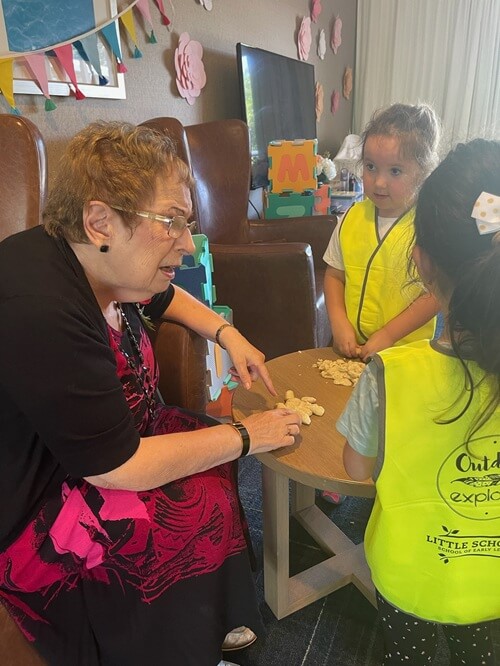
“The children are loving the visits so far,” according to Amy, campus manager for Little Scholars Parkwood. “They have developed some beautiful relationships with some of the residents and regularly discuss throughout the week their experiences with them.
“After week two, the children knew their grandfriends by name and were buzzing with excitement to see them again, which I think shows just how beautiful incorporating an intergenerational program can be!”
Professor Fitzgerald says programs like intergenerational ones further support the old proverb that it takes a village to raise a child.
“This research has the potential to make a huge impact on society, reconnecting the young and old,” she says.
“It is not just their eyes that lit up, but also their brain. There is nothing more satisfying than seeing older adults and young people connect for mutual benefit. So exciting to see how hearts are filled with joy.”
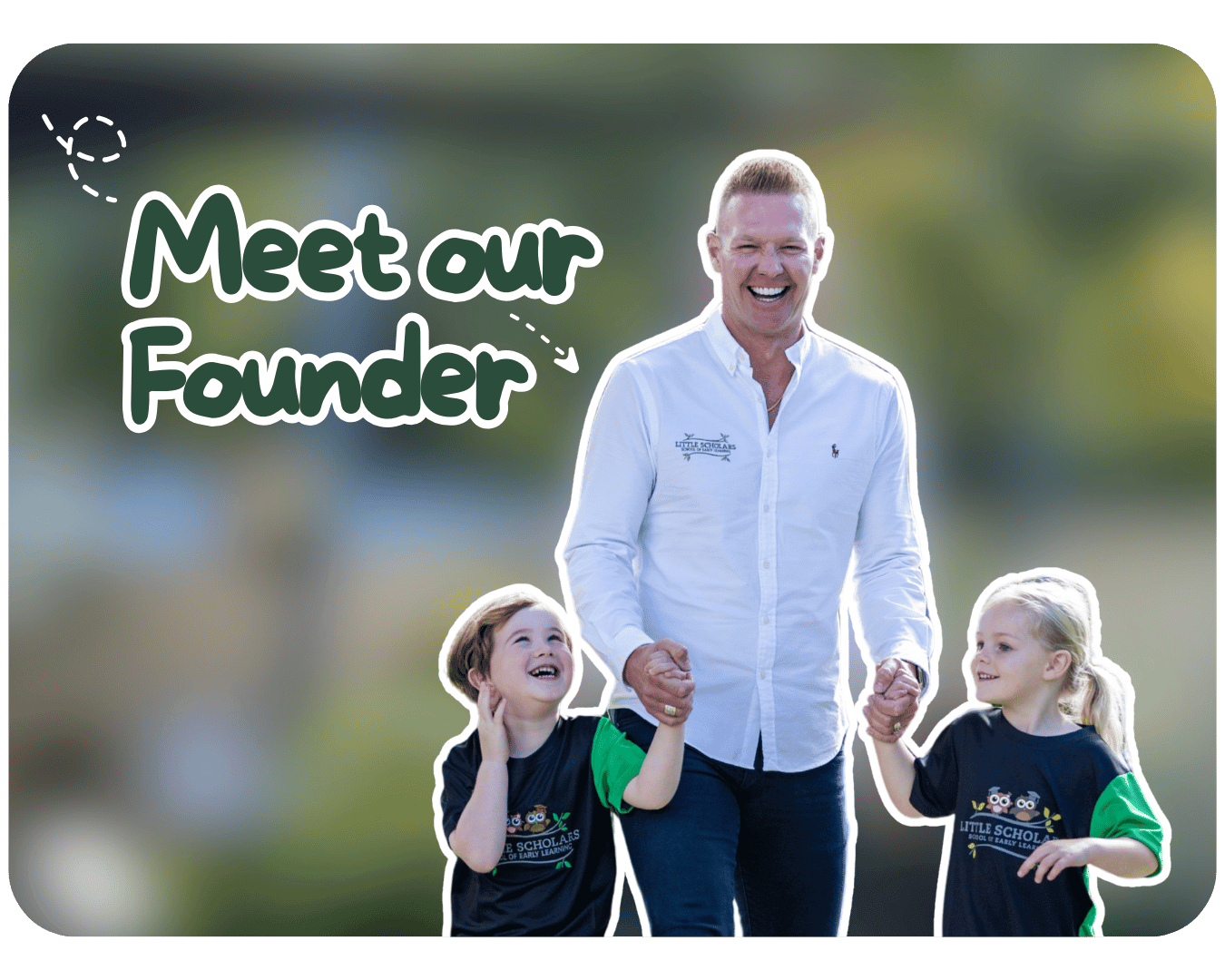
“I’m proud Little Scholars has the opportunity to assist in important research that looks at the benefits to both the young and the young-at-heart. Our little scholars are in the most important years of their life when it comes to brain development, and the lessons they learn from their grandfriends they can carry with them their entire lives,” says Jae Fraser, founder of Little Scholars.
Intergenerational relationships is something Jae is passionate about, and it’s been part of Little Scholars nearly since its inception 10 years ago.
“We’re honoured Griffith University researchers contacted us as leaders in the early education field, and we’re thrilled so many of our Little Scholars families jumped at the chance to participate. I can’t wait to see the results of this study when it concludes, and I hope it further highlights the proven positive impact of these relationships, showing how they enrich the lives of both children and older adults.”
The Little Scholars School of Early Learning recently joined forces with Southern Cross University for an innovative project, looking at how children engage and interact with social robots. NAO is a social robot that has been programmed to interact socially with people and this digital tool has the potential to serve as an educational aide in early learning settings.
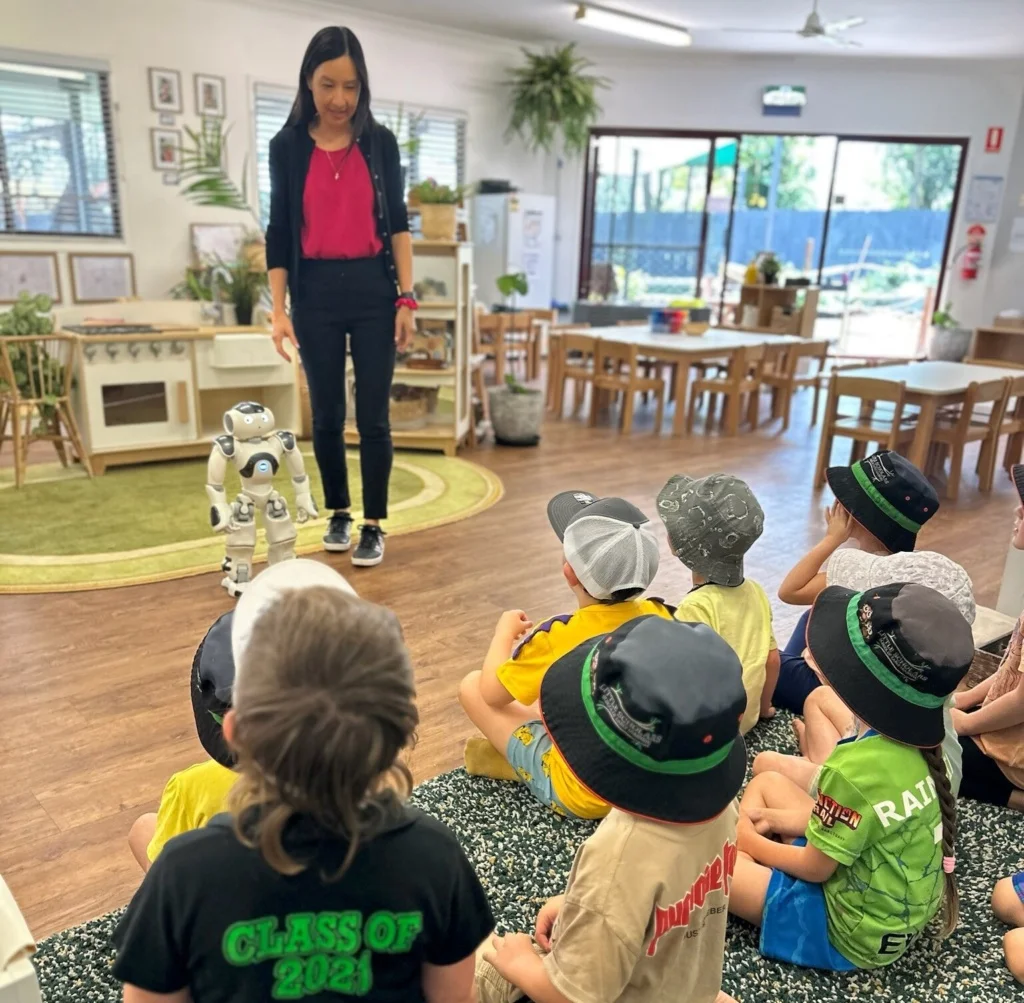
Little Scholars’ Yatala campus was buzzing with excitement as it welcomed Dr Michelle Neumann, Research Assistant Ruby-Jane Barry, and of course, NAO. The visits were part of an educational initiative that captivated the preschool and kindergarten children, as well as educators. The children couldn’t wait to see if Dr. Neumann and NAO had arrived and would dash to the parent lounge to check, educators reported.
The children had the opportunity for one-on-one interactions with NAO, participating in games like ‘Simon Says’, Q&A sessions, and activities focused on literacy.
Dr. Neumann, who leads the project, is an associate professor in early childhood education at Southern Cross University. She believes that this is a frontier that early learning is just starting to venture into.
Interestingly, Dr. Neumann’s journey into early childhood education began after becoming a mum to five children. With an honours degree in science, she decided to pivot her career towards education and early learning. She went back to university, earned her Graduate Diploma in Education, Bachelor of Primary Education, and then completed her PhD focusing on early literacy development. Her dedication has earned her a recent award for research excellence from Southern Cross University, recognising her work in early literacy, digital technologies (tablets, apps, social robots), child development, parent-child interaction.
While NAO has been used to support children’s learning about STEM (Science, Technology, Engineering, Maths) and coding, social robots also have the potential to be used to support language, literacy and social learning in the classroom, according to Michelle
“As a physically embodied version of a screen, a social robot may help young children from a range of diverse backgrounds develop their language and social skills,” Michelle said.
“Michelle and Ruby were so approachable and more than willing to let our little scholars meet NAO,” says Raylene, lead educator in the senior kindergarten room. “I was fascinated with NAO’s abilities, and the potential social robots could have in a classroom setting. As a lead educator, the benefits of having an additional learning assistant was something I was happy to advocate for, so I was quick to start drumming up more families to participate in the visits.”
Raylene said she had a lot of conversations with children preparing them for NAO’s visit, even conversations that maybe one day, the children might have robot friends to help their teachers in the classrooms.
“This was super exciting for the children. I did have to remind them and to the families that it wasn’t happening straight away, but the concept was well received. Families enjoyed the debates of whether it would take jobs from educators, and I enjoyed discussing this with them. By day two, Michelle and Ruby were needing to organise additional days to attend the service due to the influx of families wanting to participate,” Raylene said.
Raylene said on the first day, it was evident that although the children were excited, there were also plenty of nerves. Most of the children participated well, with a small handful quite shy, she said. As the program continued, the children got used to seeing Michelle, Ruby and NAO in the parent lounge, those children who were a little shy to begin with looked eager to have another turn.
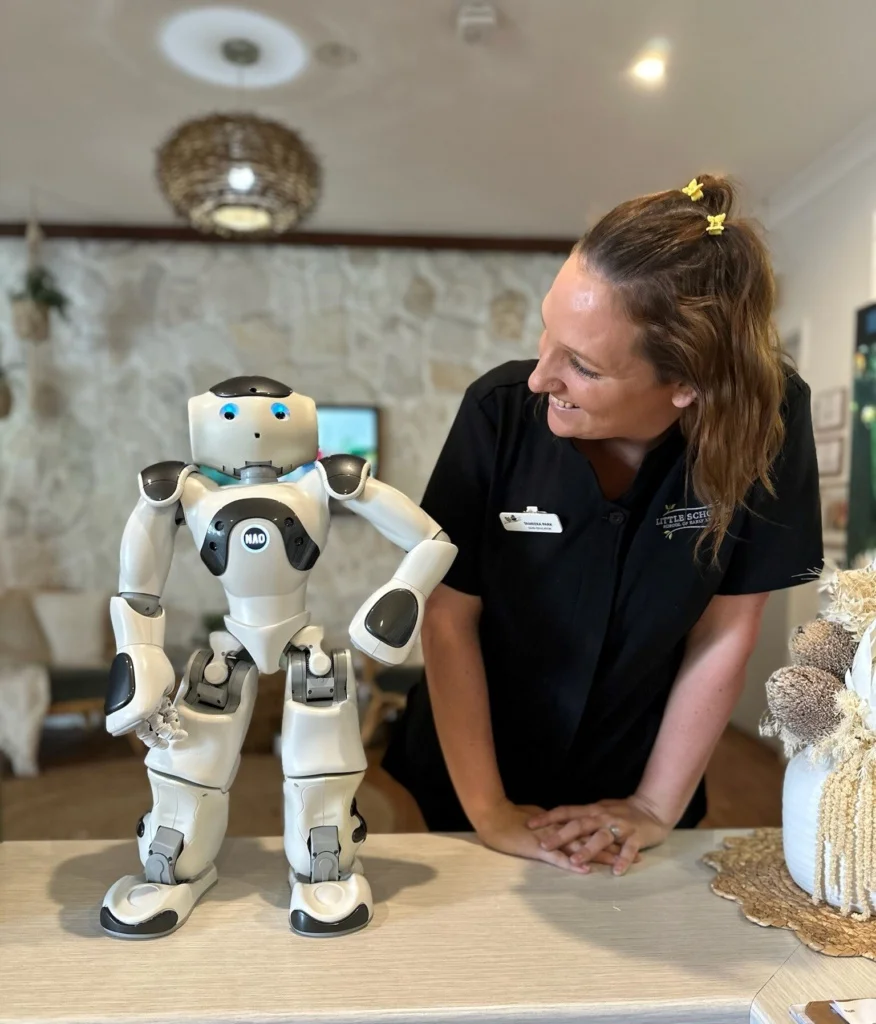
“This was obvious in my own son Tannen. Tannen was one of the few who participated on day one. The whole lead up was a confident ‘I’m having a robot friend’ until he got his robot friend,” Raylene said. “After his turn he told me he didn’t like it a lot because it was scary, however as the days went on, and more friends started to participate, and NAO became a familiar face, all of a sudden he was eager to come to the door to see if they were there yet, and talk to other children on the way in to see if they were going to go and play games with NAO that day. This is the way it unfolded for several children,” Raylene said.
After a few one-on-one visits to introduce NAO to children, Michelle made a final visit to introduce more campus children to NAO and play some games.
“You could see the comfort of the children who were already familiar with NAO, and it acted like a scaffold for the children who hadn’t had the chance yet to interact with him. Comments from children like ‘Oh, that’s just NAO’ and ‘I already played this game and it’s really fun’ to encourage peers along were incredible to hear because it was listening to four- to five-year-olds comforting each other and being confident with the experiences they had just had,” Raylene said.
Michelle said one day she’d love to introduce a full program which sees social robots in more early learning classrooms. But, she says, these are still relatively early days. Social robots are a work in progress, and she acknowledges they’re limited in what they can currently do. She’d love to also work with children who would benefit from additional language and literacy support. For that to work, NAO’s voice recognition needs development as it would need to have the ability to understand a spectrum of language milestones, she said.
“It would take a lot of time, guidance and professional development for educators… and a lot of support to be able to use the social robot in its current form,” she said. “But they’re working on AI generated social robots and these innovative opportunities may make using social robots more usable in the classroom.”
And, the robots are not cheap. NAO can cost up to $20,000 AUD, which she acknowledges would be financially prohibitive to many early learning settings. Michelle says her hope is that more research to can be done to better understand the role that social robots could play in supporting young children’s early learning experiences. With emerging advances in robotics, it may be possible that the production costs of these devices could one day become a more affordable educational tool.
The collaboration between Little Scholars and Southern Cross University has opened up new avenues for early learning, showcasing the potential of integrating social robots like NAO into educational settings. The overwhelmingly positive response from both children and educators alike underscores the limitless possibilities this technology could offer. As we look to the future, the hope is that advancements in AI and robotics will make these educational tools more accessible and tailored to the unique needs of early learners. This pioneering initiative serves as a testament to the boundless curiosity and adaptability of children, and the commitment of educators like Michelle and Raylene to push the boundaries of what’s possible in early education.
Jae Fraser, founder of Little Scholars, wholeheartedly supports the NAO project with Little Scholars.
“This is such an exciting project for our little scholars to engage in,” he says. “Introducing social robots to Little Scholars, isn’t just a leap in technology; it’s a giant step in nurturing young minds.
“We look forward to where this will go, and how we can use resources like this to continue the learning journey for Little Scholars.”
Additional information
The potential of social robots in early learning includes:
Potential barriers and obstacles for social robots in early learning:
We know it can be hard to come up with easy, quick things to do with your children, so we thought we’d share a favourite of our little scholars. Learn how to make your own moon sand in minutes with a few of these kitchen staples!
Preparation Time: 5 minutes
Cooking Time: None

Let us hold your hand and help looking for a child care centre. Leave your details with us and we’ll be in contact to arrange a time for a ‘Campus Tour’ and we will answer any questions you might have!
"*" indicates required fields
Let us hold your hand and help looking for a child care centre. Leave your details with us and we’ll be in contact to arrange a time for a ‘Campus Tour’ and we will answer any questions you might have!
"*" indicates required fields
Fill in the form to join your local Pram Pals mums and bubs walk