


Welcoming a new addition to your family is an extraordinary blessing. Along with the joy and love that fills your home, there are practical matters to consider, such as childcare. When you entrust your precious little ones into the hands of capable, nurturing early childhood educators, it’s an investment into their growth, development, and well-being.
Investing in quality childcare is more than just a financial decision; it’s about providing your child with an enriching environment that promotes their cognitive, social, and emotional development. Recognising this important investment, parents often wonder, “Is childcare tax deductible?”. We understand that childcare can be a significant portion of the family budget, which is why many families are interested in learning about the financial aids, tax benefits and deductions associated with childcare in Australia.
The short answer is no, childcare is not tax-deductible in Australia. The Australian Taxation Office (ATO) does not view childcare as a work-related expense. This is because the decision to incur childcare costs does not come directly from the necessities of an individual’s job but from personal circumstances. Even though many parents need to arrange childcare to maintain their employment, the ATO has made it clear that it does not qualify as a deductible expense.
While this might initially seem disheartening, it’s important to remember that there are various financial support options available to families, such as the Child Care Subsidy, to help offset these costs. The Australian Government recognises the importance of accessible, high-quality childcare and offers a range of subsidies and benefits to eligible families.
The Parenting Payment is an income support payment for parents or guardians to help with the costs of raising children. It is available to single parents with at least one child aged under 8, or partnered parents with at least one child aged under 6. Eligibility criteria also include income and assets tests. To apply, individuals should create a Centrelink account through the Department of Human Services.
The Family Tax Benefit is a payment to help eligible families with the cost of raising children. It is made up of two parts – Family Tax Benefit Part A, which is paid per child, and Family Tax Benefit Part B, which is paid per family. The eligibility and payment amounts depend on the family’s income, the number of children and their ages, and other factors. Applications can be completed online through myGov by linking to Centrelink.
Remember, investing in your child’s early education is a significant decision, and every dollar spent contributes to their growth and development. By staying informed and planning ahead, you can ensure you’re making the most of your investment.
At Little Scholars, we understand the financial commitments that come with providing your child with high-quality care and education. We believe that each child deserves the best start in life, regardless of their family’s financial situation, and we work diligently to uphold this principle in all aspects of our work.
If you have any questions regarding our childcare fees or if you’d like to learn more about our campuses, please do not hesitate to reach out to us. We’re more than happy to arrange a tour or discuss the individual needs of your family.
For parents leaving their babies or young toddlers in care for the first time, it can be a stressful experience. When the paid maternity leave ends, parents must make the decision of whether or not both parents will work outside the home. The choice to leave their young child in early learning and care can create a number of concerns, one big one being how their relationship with their young child will be affected if the parent is not spending the majority of the child’s time with them. These are valid concerns, but research has suggested infant attachment to their parents is not generally affected by being in care, so long as the parents have a strong bond with the child when they are with them.
Understanding Attachment Theory
Attachment theory was first introduced by John Bowlby, a British psychoanalyst and psychiatrist in the 20th Century. Bowlby observed that early attachments could significantly affect a child’s emotional development and adult relationships in later life. He concluded that children between six and 30 months were very likely to form emotional attachments to familiar caregivers, especially if the adults are sensitive and responsive to child communications. This led him to propose the Attachment Theory after he studied the negative impact of maternal deprivation on young children.
Mary Ainsworth, an American psychologist who worked under Bowlby early in her career, later devised an assessment technique called the Strange Situation Classification (SSC) to investigate how attachments might vary between children. Her research in Uganda, then her well-known Baltimore Study in the 1960s, in which she noticed distinct individual differences in the quality of mother-infant interactions over time, led her to categorise these different attachment styles into three types: secure attachment styles, insecure attachment styles, and not-yet attached. She found a connection between maternal sensitivity and secure attachments. Sensitive mothers were familiar with their babies, provided spontaneous and specific detail about their children, and babies of sensitive mothers cried less and felt free to explore in the presence of their mother. Generally, she concluded that babies of sensitive mothers have secure attachments.
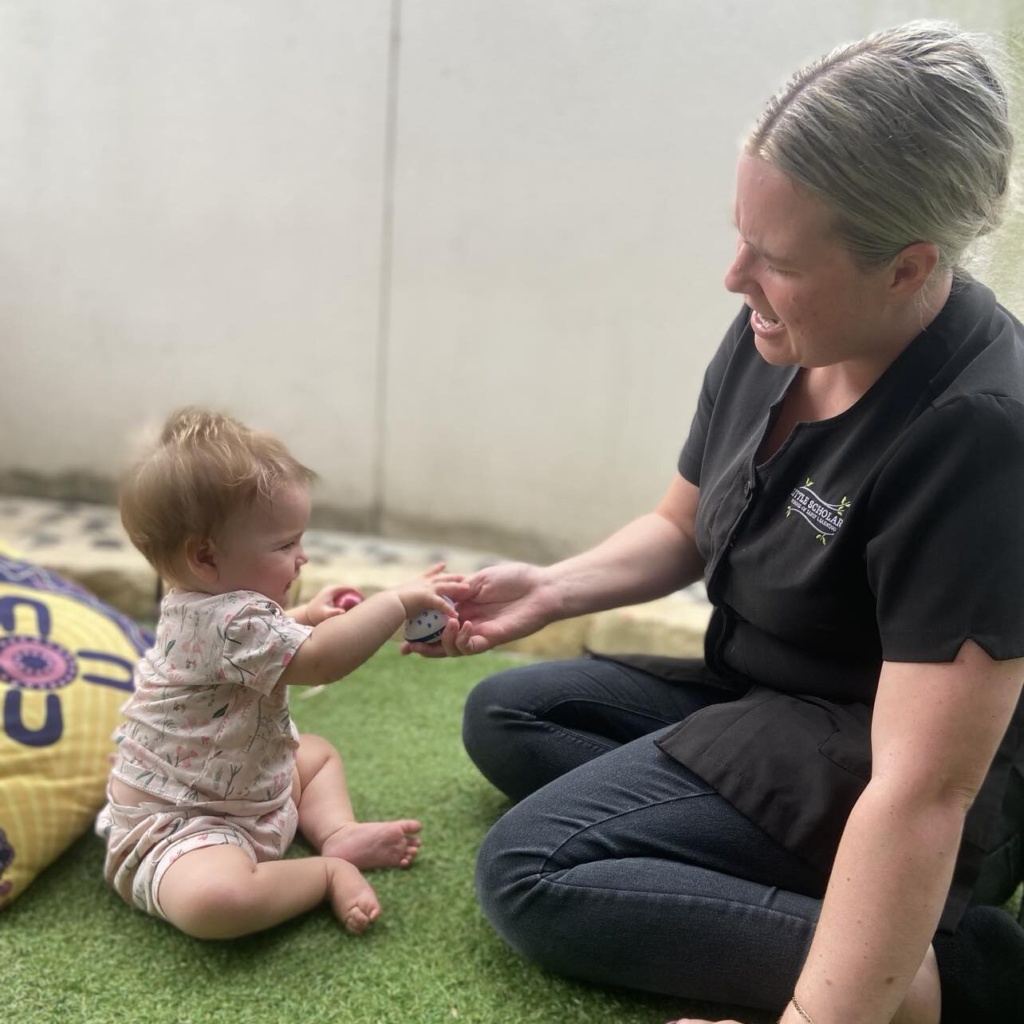
While Bowlby’s initial findings focused on maternal deprivation, later studies have contradicted his emphasis. Schaffer & Emerson (1964) found that specific attachments started at about eight months and shortly thereafter, the infants became attached to other people. By 18 months, very few (13%) were attached to only one person, and some had five or more attachments. Rutter (1972) noted that several indicators of attachment, such as protest or distress when an attached person leaves, have been shown for various attachment figures – fathers, siblings, peers, and even inanimate objects. Weisner, & Gallimore (1977) found that mothers are the exclusive carers in only a very small percentage of human societies, and often there are a number of people involved in the care of children, such as relations and friends. Van Ijzendoorn, & Tavecchio (1987) argue that a stable network of attachment figures is more important than the number of figures.
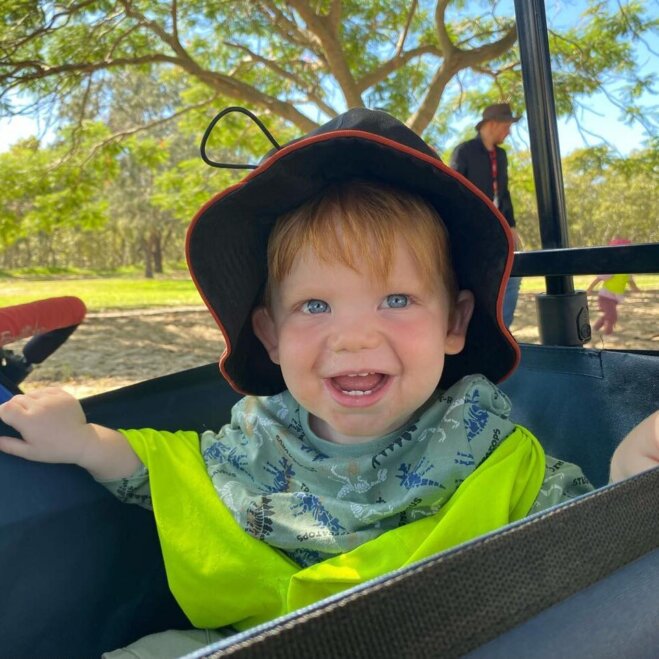
When you think of childcare, you might not necessarily think of early education, but that’s precisely what Little Scholars is doing; providing high calibre early education for the critical first five years of a child’s life, and at the same time, changing society’s perception of what childcare, or early education, is.
Little Scholars has always considered itself as a leader in the sector, but we elevated the quality of education with the addition of Susan Cooper, our group pedagogical leader one year ago.
Pedagogy is a form of teaching strategies in the practice of educating. It’s the techniques, strategies and approach taken by educators to let learning and development to take place. Pedagogy refers to the interactive process between the educator, the learner and the learning environment and provides reason to the design of learning spaces, materials, and resources on offer. Pedagogical leadership supports educators in relating their pedagogy to content knowledge and educational theories.
My aim is to support educators in entering the child’s world, enabling them to reflect on their practices and build capacity to support the child’s development.
– Susan Cooper, group pedagogical leader for Little Scholars
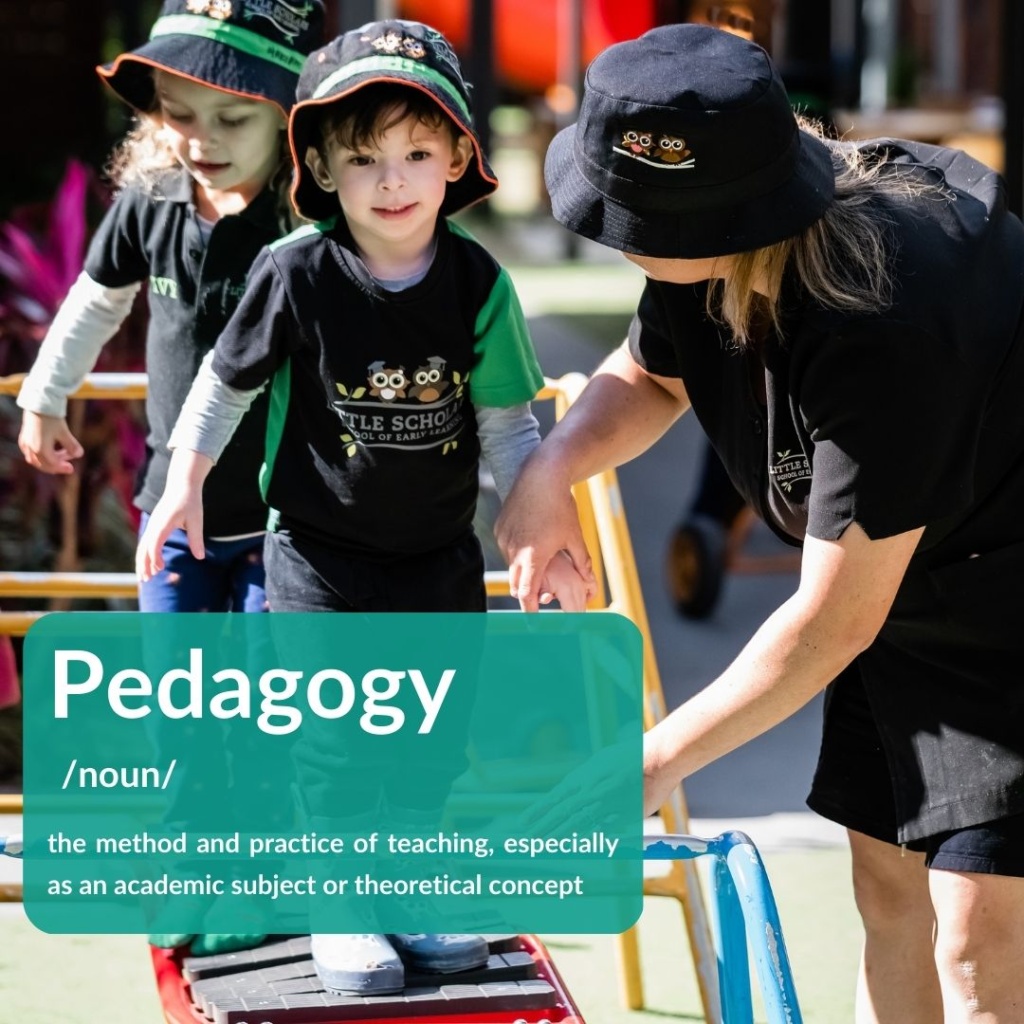
In the year since Susan joined us, she’s gone above and beyond to support our educators. Through her pedagogical leadership, Little Scholars has raised the benchmark of its overall quality of teaching, and recognises that providing children with strong foundations for ongoing learning and development is underpinned by a strong pedagogical practice. She inspires educators to employ new approaches to their teaching against up-to-date research, has helped translate the Little Scholars values and principles into practice and has without a doubt increased the quality of experiences and interactions across our campuses.
But the role was daunting at first, according to Susan.
“Having come with approximately 16 years’ experience in having been in varied roles across the sector within early childhood, my love of sharing knowledge and inspiring others drew me to apply to this role,” Susan says. “My experience in playwork allows me to see the true value in children’s play, the need to create spaces and support the learning and approach to working with children to support and facilitate play in its true essence. What really resonated with The Scholars Group and my own personal values and beliefs, was placing children as the core and central to all that we do.
“I see myself as an advocate for children’s rights, being the voice for many and striving to excel toward quality outcomes.”
The group pedagogical role is focused on mentoring and guiding teams in their practices and challenging new ways of working, to support innovative curriculum ideas, while supporting children’s learning across all Little Scholars campuses.
“I found the team to be so supportive and receptive to change, which has allowed me to share my vision, passion, and skillset,” Susan says.
With Susan’s support, our Deception Bay campus was rated exceeding against the National Quality Standards (NQS) in late 2022. A thrilling result, but not without a lot of preparation. Susan guided Nat, the campus manager, and her team, in the Assessment and Rating Process.
“It was critical that the team worked collaboratively toward a shared goal. This involved building strong relations with the team to build trust and mutual respect. This partnership saw me engage with all stakeholders, while we worked toward targeted goals and worked through evidence-based data to the exceeding themes,” Susan says.
Strong knowledge of theory and pedagogy underpinned the quality outcomes, according to Susan. Another great achievement Susan says, was the team being ranked 3rd out of 3,126 early learning centres across the state.
“My role is to take an active role in the development of pedagogy in the early childhood context. I primarily work alongside teams, across our 13 campuses to provide the opportunity to share pedagogical practice, leading knowledge to research and child development,” Susan says. “Not only does pedagogy inform direct work of teaching, but also the more indirect work of leadership. This develops a community of practice, where professional educators can share ideas and knowledge and engage in peer learning.”
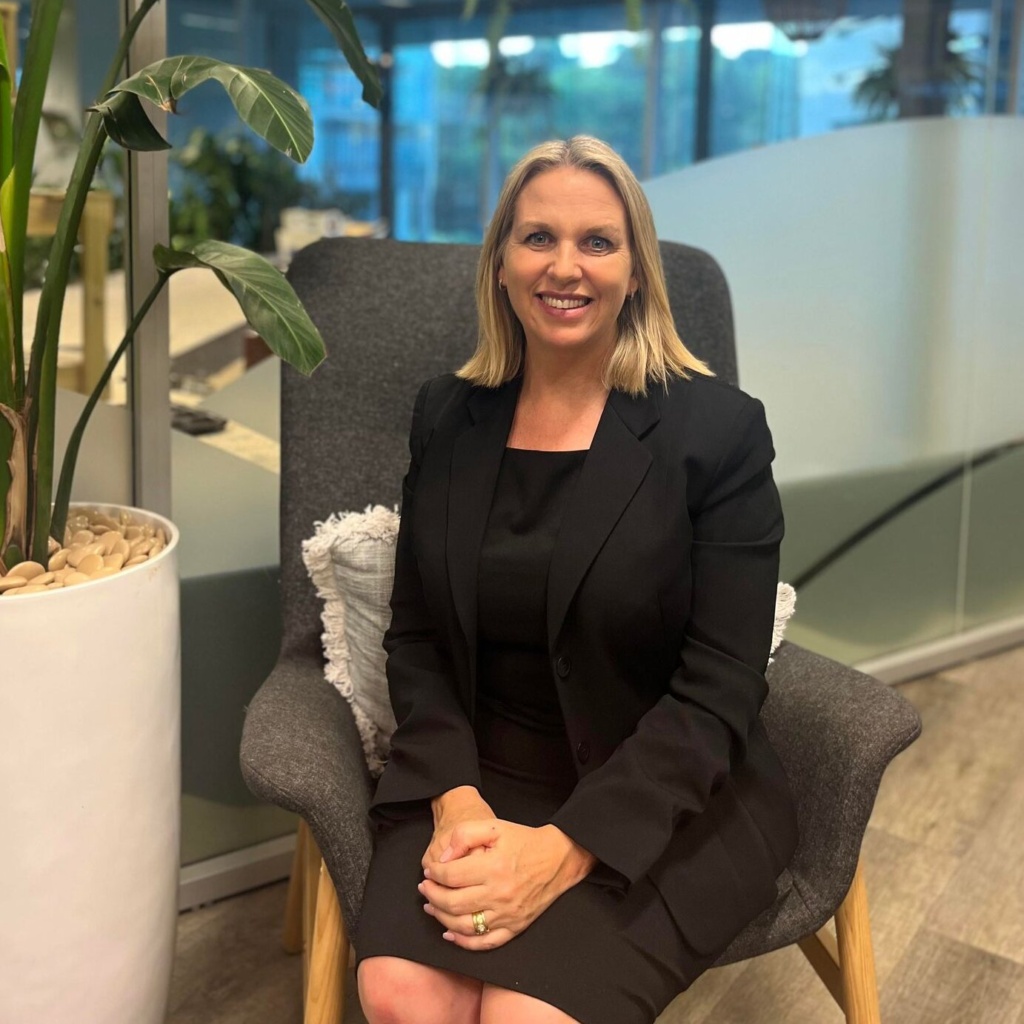
“Little Scholars has always been a leader in our field, due to our commitment and passion to the early years. With the addition of our Group Pedagogical Leader, the effectiveness of our educational program and practice has been elevated to a level we didn’t think was possible,” says Jae Fraser, founder of Little Scholars.
“In Susan’s role she is supporting and mentoring the team to influence children’s learning by fostering family engagement, ensuring fidelity to the Little Scholars curricular philosophy, using data to evaluate the effectiveness of our learning program, and exceeding standards established to optimise learning effective environments,” says Jae. “We couldn’t be happier with the results of this new role just after one year, and we are so excited to see the future.”
Susan’s goals for her role are simple: to continue to strive toward excellence, raising the benchmark in early childhood and placing children at the forefront of everything Little Scholars does.
“I take great pride in the relationships I’ve developed, the partnerships I have established, creating a safe space for the children and educators I work with,” Susan says reflecting on the past year. “Our impact is significant, and I’m thrilled to witness the progress in both the children and educators. I feel grateful to be part of such meaningful work, knowing that we’re making a real difference in the lives of these children.”
When choosing a childcare centre for your little one, it can be exciting yet overwhelming at the same time. There are endless options out there, but the question we often hear is, where do I even begin? Well, at Little Scholars, we’re here to guide you through with our professional childcare expertise and we guarantee after this, you will feel at utmost ease when it comes to choosing the right childcare centre for your child.
We promise if you consider the below key points, it will make your decision process a whole lot simpler because once you know what it is you are looking for, you will start to get an understanding of which of your requirements each childcare centre tick off or perhaps ‘don’t’ tick off.
We would suggest thinking about the following key points when choosing a childcare centre:
1. Qualified and Trustworthy Staff
It’s essential to ensure that the childcare provider has a team of qualified and experienced staff who can provide a safe and nurturing environment for your child. Look for staff with relevant qualifications, certifications, and experience in early childhood education.
2. Focus on Education and Learning
A good childcare centre should offer a well-rounded curriculum that includes learning opportunities throughout the day. Look for a centre that offers a balance of academic and non-academic activities, such as art, music, and physical exercise, to promote cognitive, social, and emotional development.
3. Emphasis on Social Skills and Interaction
Social interaction is critical for children’s growth and development. Look for a childcare centre that promotes social skills development and offers opportunities for children to engage in group activities, such as circle time, story time, and free play.
4. Play and Exploration
Play is a crucial component of early childhood development. Look for a childcare centre that provides plenty of opportunities for children to play, explore, and have fun. The centre should offer age-appropriate games, toys, and learning tools that stimulate children’s creativity and imagination.
5. Philosophy on Education
Every childcare provider has its own philosophy on education. It’s important to find a centre that shares your values and beliefs on how children learn and develop. Look for a provider whose philosophy on education aligns with your own and offers an environment that supports your child’s learning and growth.
6. Age-Appropriate Resources
Children of different ages have different needs and interests. Look for a childcare centre that offers age-appropriate games, toys, and learning tools that cater to your child’s developmental stage and learning style.
7. Positive Atmosphere
A positive atmosphere is essential for a child’s emotional well-being. Look for a centre that feels warm, welcoming, and cheerful. The centre should be clean, well-maintained, and have a pleasant and safe environment for children to learn and play.
8. Safety and Security
Safety and security are paramount when it comes to selecting a childcare centre. Look for a centre that has adequate safety measures, such as a secure entrance, fenced outdoor play area, and policies for illness and emergencies.
9. Parental Involvement
Parental involvement is crucial in a child’s development. Look for a childcare centre that encourages parent-teacher collaboration and provides opportunities for parental involvement, such as parent-teacher conferences, family events, and volunteer opportunities.
10. Flexibility
Flexibility is another crucial factor to consider when selecting a childcare provider. Look for a centre that can accommodate your schedule and budget. The centre should offer flexible hours, payment plans, and holiday arrangements to suit your needs.
If we could give you some valuable (and helpful) advice when choosing a childcare provider, it would be to not just think about what is best for your child now – but think about the needs of your now AND the needs they will have in the future.
Do some research on the learning programs and extracurricular programs the childcare centres offer so you are totally aware of what learning opportunities your child is offered in order to learn and grow to their fullest potential. These programs will inspire and teach your child daily, so it is pivotal to find the best programs for your child.
At Little Scholars, we offer an early learning curriculum that allows every child to experience a world of creative engagement through movement, play and physical activities. Our extracurricular programs are a key focus, and all activities are conducted by expert teachers and educators children expect from childcare and early education.
One of our most adored programs by parents (and children) is Bush Kinder and you will find that most parents these days want their child to be outdoors in the natural environment. This, however, is only just a taste of what Little Scholars programs offers, but as childcare experts, we truly understand that each child is unique and thrives differently, so you need to ensure the programs really suit your child’s needs individually. We would really emphasise taking note of what programs these Early Learning Centres offer will really help shape your decision.
When interviewing potential childcare centres, it is important to ask how they meet the children’s changing developmental needs in their care or offer enrichment programs for different age groups. Ask how they create positive learning environments for the children and do they create positive social interactions between students.
You can never ask too many questions when it comes to interviewing your childcare providers because we know how IMPORTANT this decision is. This is the second place in which your child is going to spend a big majority of their time, apart from home, so there is a lot to ask in order to feel like you are making the ‘right’ decisions and feel secure.
Of course, when it comes to choosing an early learning centre, you want what is best for your child. You want them to be in an environment where they are comfortable, safe, and stimulated. You want them to be in an environment where they will learn and grow, and an environment where they will thrive and be inspired daily. So, one last piece of advice we could give you is to involve your child in the choosing process!
Seeing as they are going to be spending so much time with their childcare provider, it is important they meet the educators and explore the environment before you make your final decision so you can see your child is genuinely happy and comfortable in this environment. This will work out in the long run and will make choosing the right early learning centre journey a whole lot smoother for not just your child, but the family.
We hope our expert guide has helped give you some direction on what to consider when choosing the right early learning centre. We truly know how IMPORTANT it is to find the right environment for your child and hope to have given you comfort when making these final decisions. Get in touch to find out more about our programs and how they might be a fit for you and your family. We would love to learn more about your future Little Scholar.
Our days seem to be getting more and more hectic. There’s the 9-5 slog, rushing to and from work, drop-offs and pick-ups at daycare and school, running to appointments, weekends are for relaxing, or are they actually for rushing to children’s sports, house and yard maintenance? Even being more connected to devices means we might be losing connections with each other. We always seem to be busy, finishing one task or appointment so we can cross it off the endless list.
If we reflect on our own childhoods, do our children’s developing years look like ours? Maybe not. We likely (and hopefully) have memories of aimless play, exploration and time to dream.
Even going on family walks may come with encouragements of ‘c’mon Freddy, let’s go!’ or ‘keep walking’, but why? Challenge yourself not to give your children any instructions for the next minute the next time you’re out for a walk. Was 60 seconds hard to get through? The funny thing is, on walks, you’re probably not even in a rush.
Your children may constantly feeling hurried, rushed, pushed to keep moving. This can create feelings of anxiety, stress and resentment.
There’s a movement brewing the last few years, called Slow Parenting. Have you heard of it, or pondered it yourself?
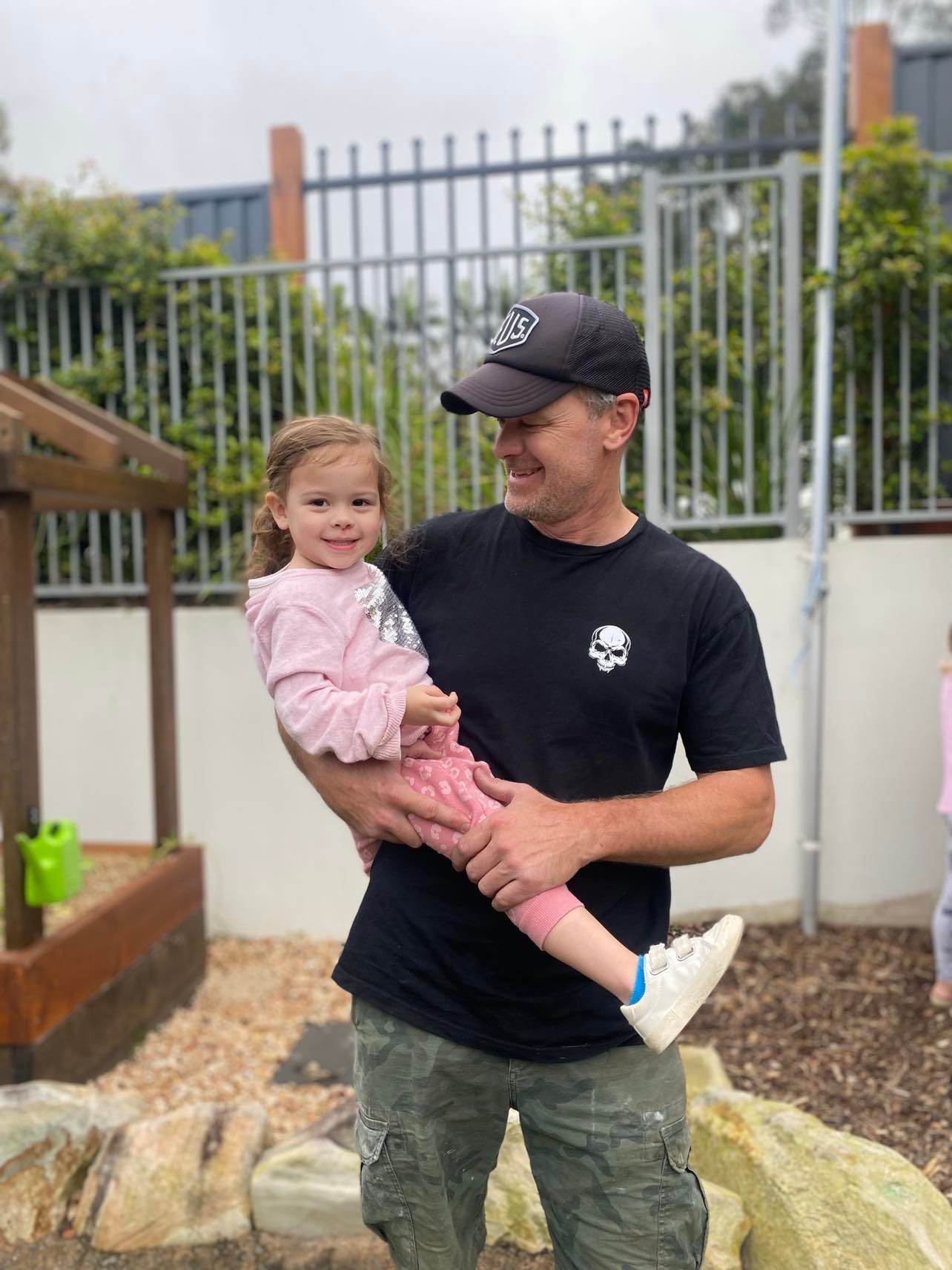
According to a 2015 article in the Boston Globe, slow parenting ‘cherishes quality over quantity, being in the moment, and making meaningful connections with your family.’
In the article, Carrie Contey, a prenatal and perinatal psychologist, says young children need a balance of activity and down time.
“In early development, children are still wiring. They need to have moments of doing and moments of being for integration to happen,” says Contey. “If they don’t take space for integration that leads to meltdowns and overtiredness.”
Need some ideas on how you can slow down your parenting, and in a way, time?
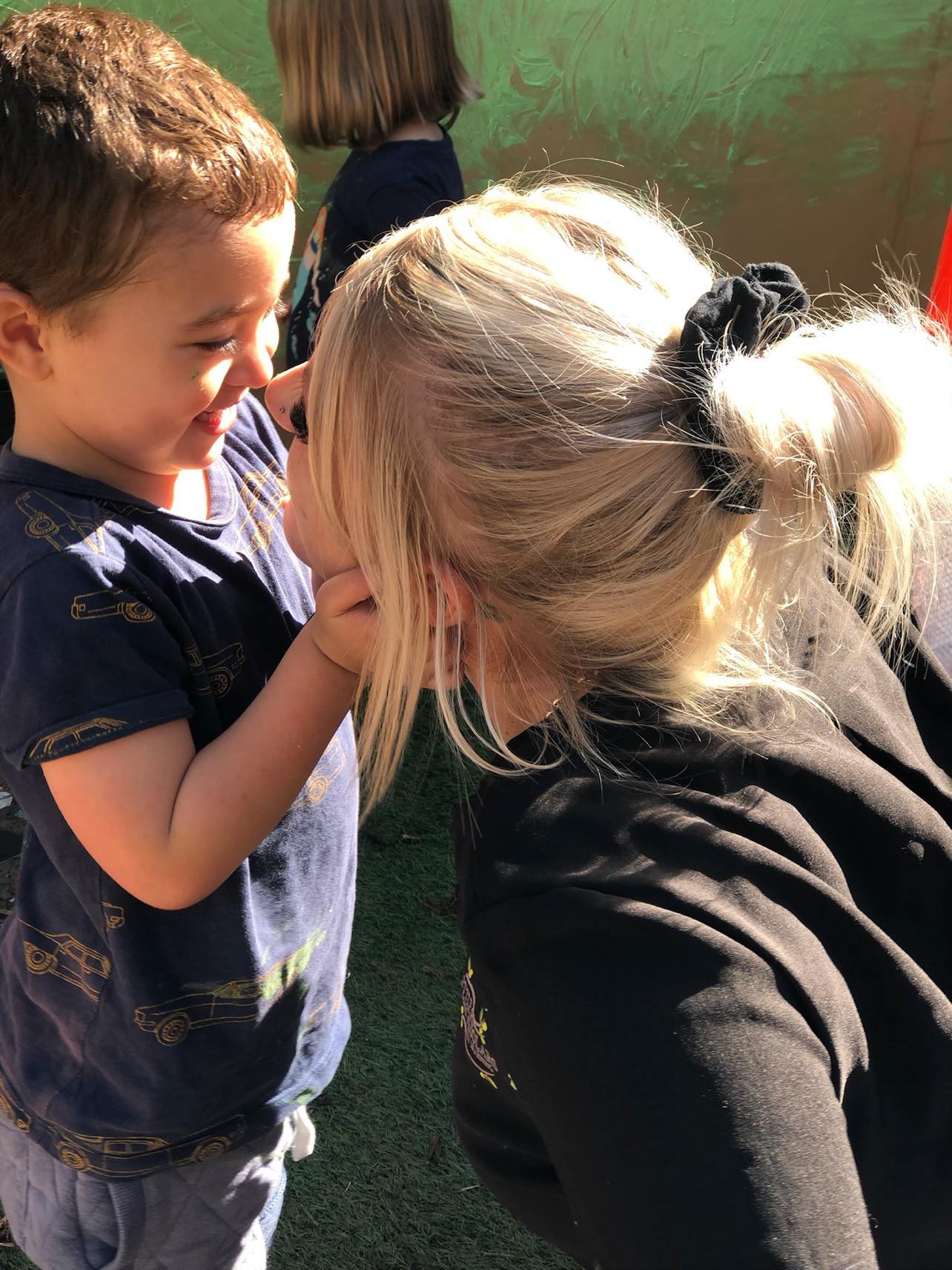
Next time you’re about to hurry your child, take a moment to think about why, and how you can approach it differently. If it’s about being late for something say bed time, will an extra 15 minutes affect them adversely once and a while? What about what they stand to gain from the extra time? If it’s getting to school and work on time, reflect on how you can alter your routine to allow for a bit of flexibility. You never know what small moments will make up lifetime memories for your child.
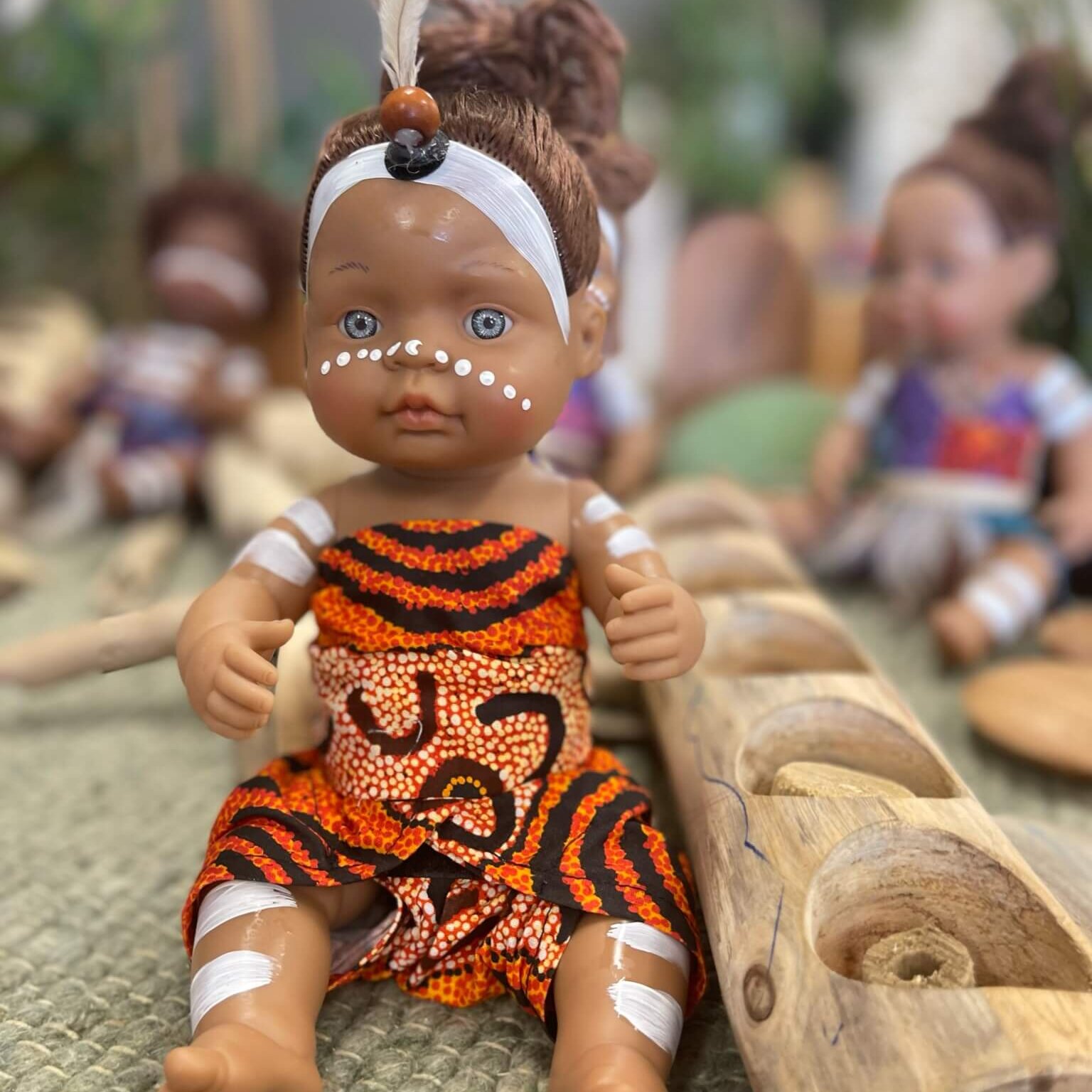
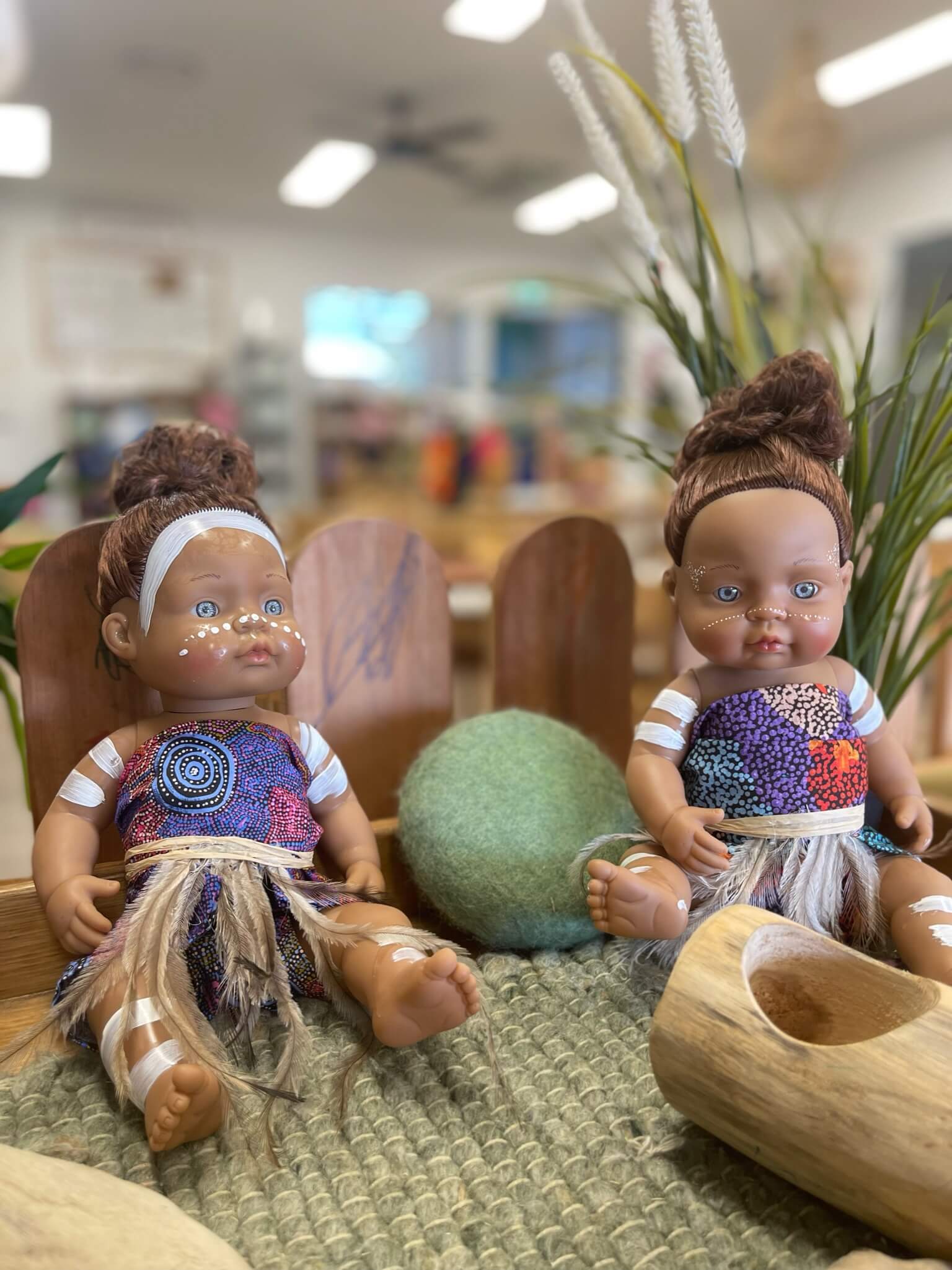
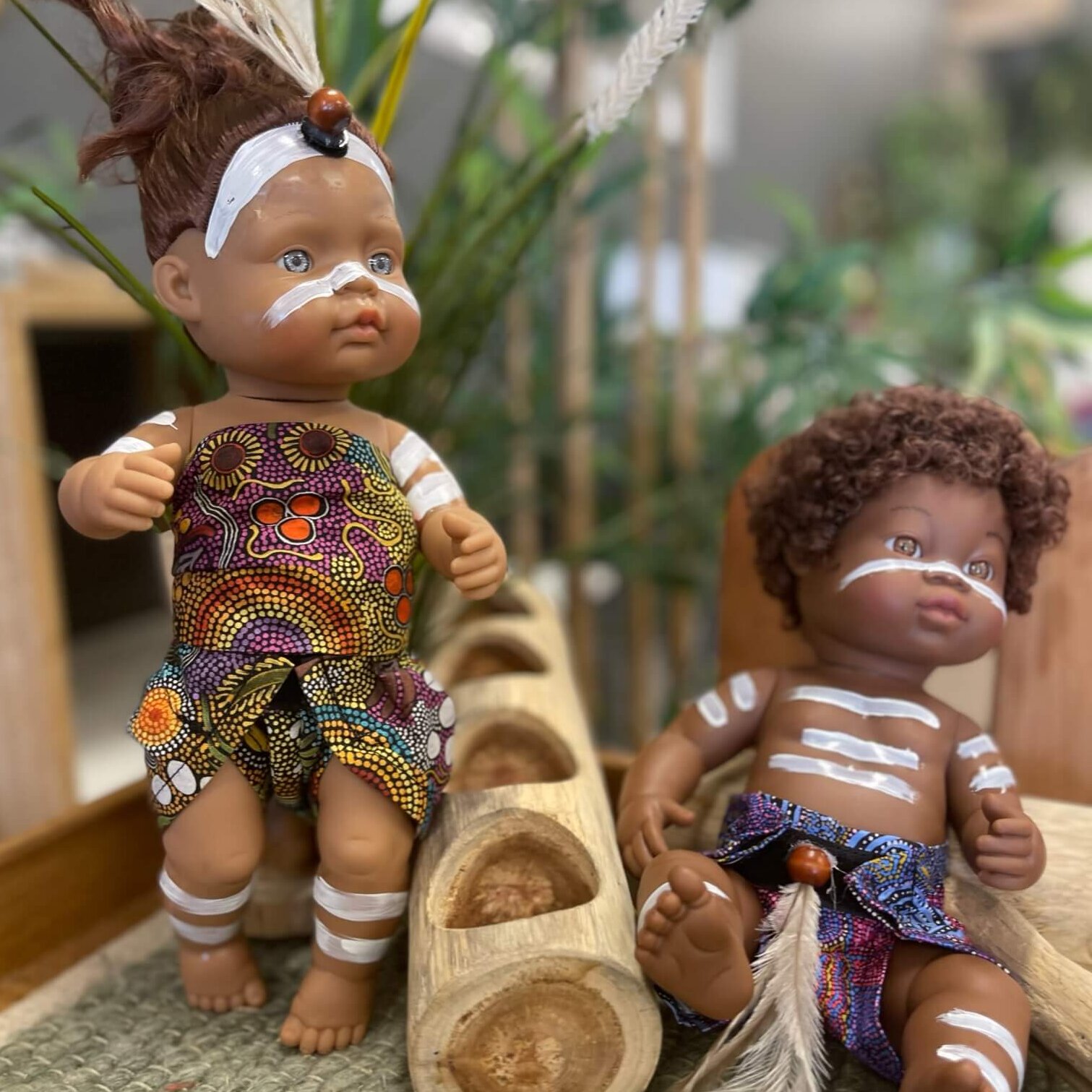
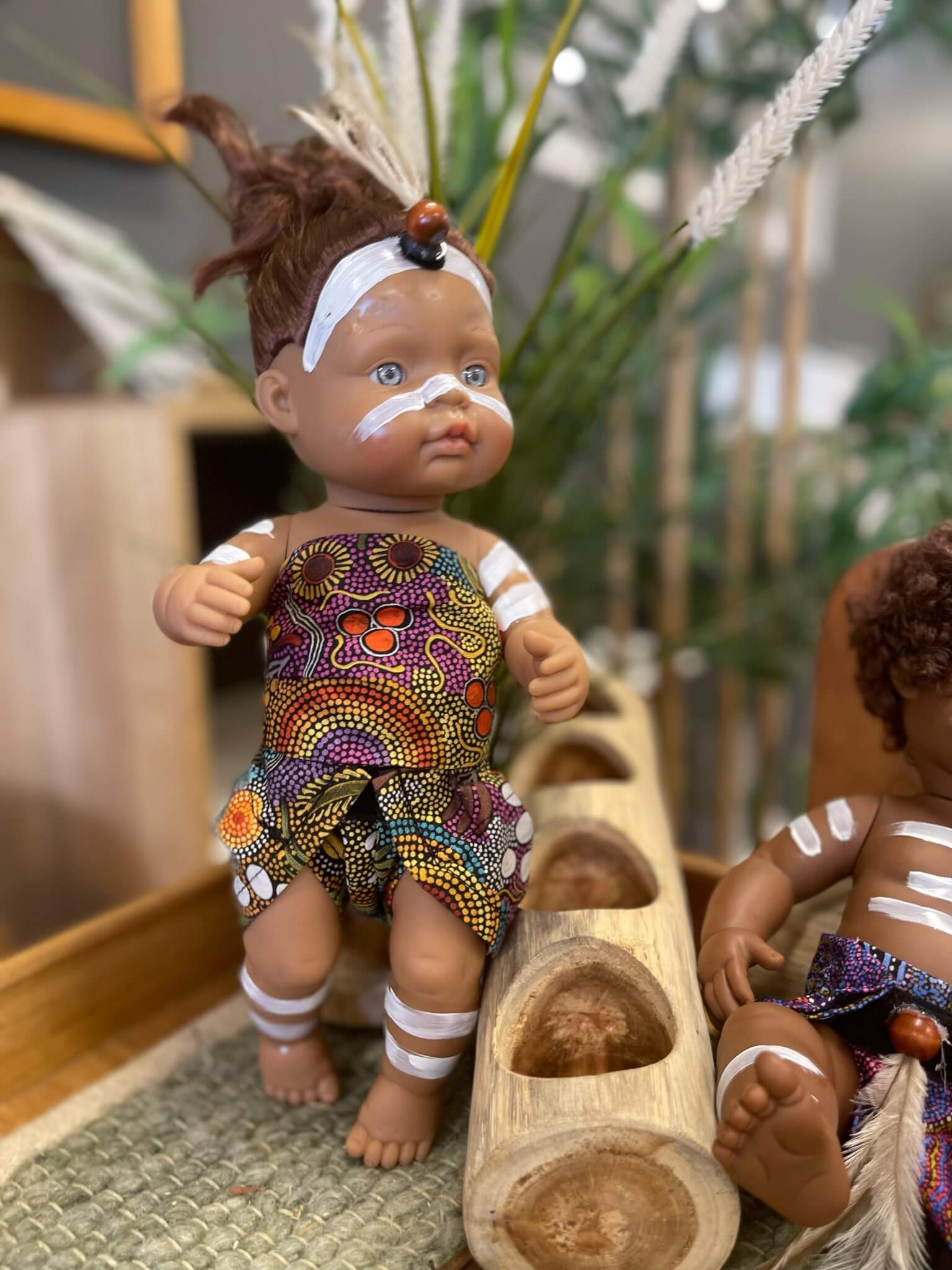
Little Jarjums is a Children’s Indigenous dolls and clothing line created and designed by Emily Rose, a proud Ngarabul woman born and raised on Quandamooka country (North Stradbroke Island) and mum of two.
Emily started making First Nations dolls to help her make an income to support her education studies and growing family. We believe these dolls are a perfect way to start teaching little ones about Australia’s First Nations history. Emily shares her background with us and the idea behind the creation of these beautiful dolls.
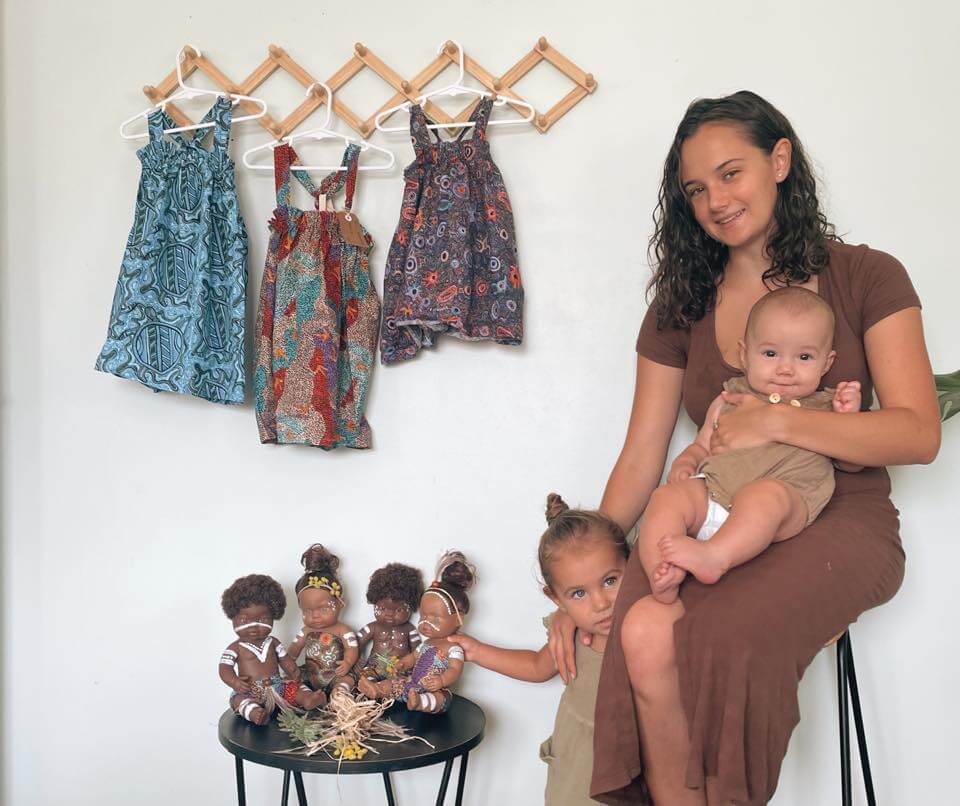
I’m a proud Korri Women from Jimiji/Ngarabul tribes. However a 4th Generation born and raised in Goompi – Dunwich on Minjerribah North Stradbroke Island, Qumdamooka country. Being the 4th Generation to grow up away from country, I longed to learn my own language dance, song and culture. I always felt that missing part in me, however I am very grateful to have grown up in a community where dance and culture is alive and feel honoured to be a part of it.
I fell pregnant with my daughter at 15 in 2019. My main goal and focus as a mum is to educate my daughter around her own culture. I started this by making her an aboriginal doll we named the doll “Capeembah” this is what the Nunukul people call the ‘fresh water spring’, that has been renamed to Myora. Connecting to my daughter’s name, Myora-Rose.
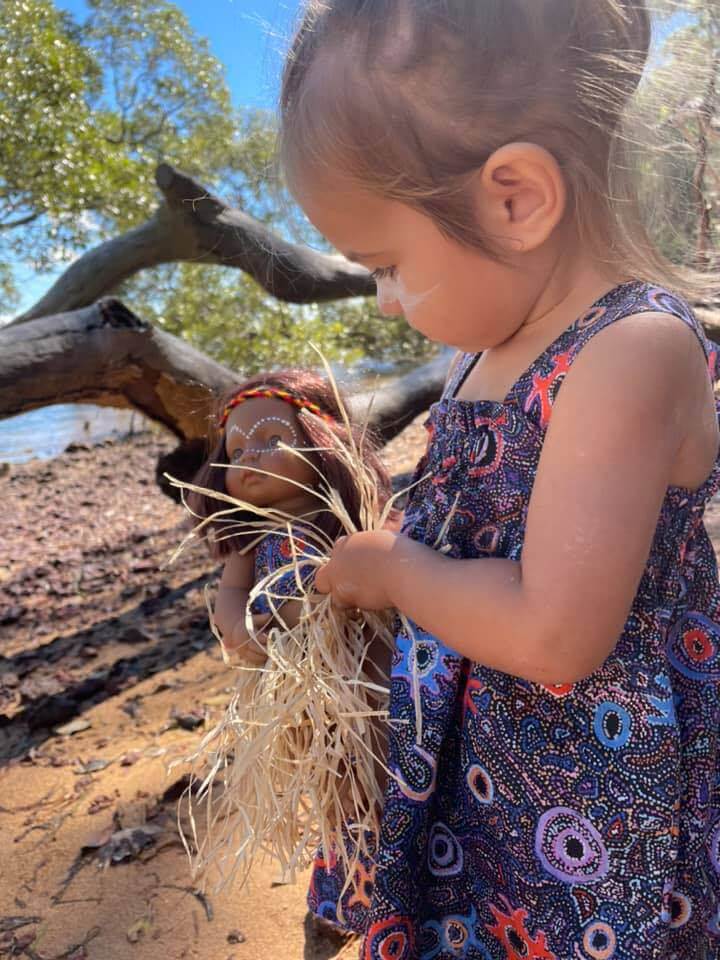
In 2021, I was meant to start my university journey into education. However, I fell pregnant again and felt the time wasn’t right to start. I was encouraged by my Aunty Delvene Cockatoo-Collins to start my own business. Making Indigenous dolls. Creating the dolls gave me something to do and was able to make a little side income to support my growing family. So ‘Little Jarjums’ was born.
Our goal is to help young children to identify culture and language through play. And I’m so grateful to now have my dolls in the Little Scholars Campuses, helping to educate all the little Jarjums-children on our First Nations people.
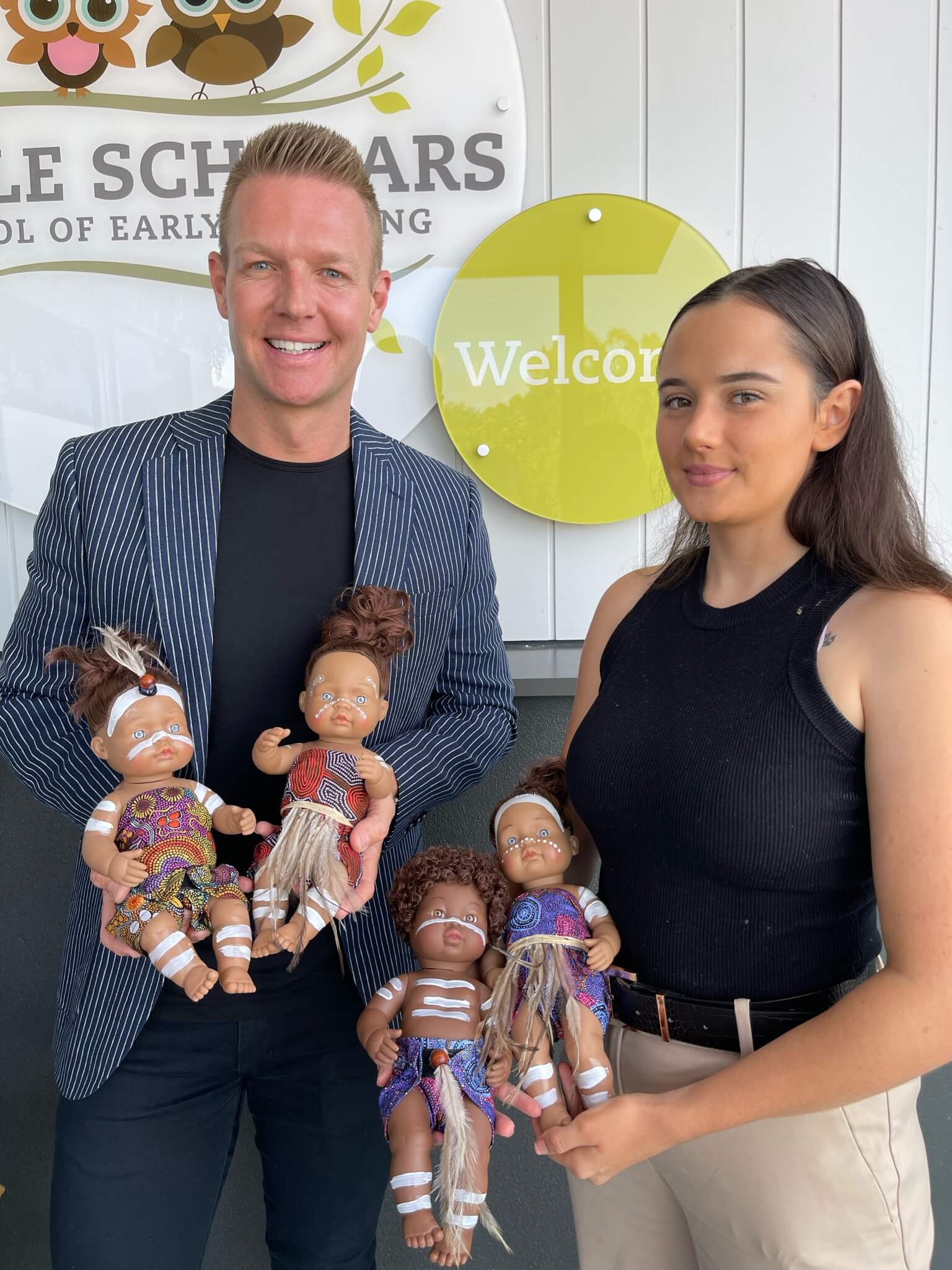
Emily’s dolls are being distributed to all Little Scholars campuses and will make for a beautiful addition to our rooms. The Little Jarjum’s dolls are an amazing way for children to learn about the culture, as well as a beautiful way for our educators to incorporate the Indigenous heritage into everyday learning.
Children learn a lot from their environment, which is why at Little Scholars we put effort into ensuring we offer toys, books, and music from around the world to reflect different cultures. We celebrate different cultural events, including making foods so the children can discover different flavours.
Engaging children in culturally-responsive experiences is a great way to build their self-confidence, increase their knowledge and teaches them to always accept others for who they are. Our educators play a vital role in acknowledging cultural differences and helping the children feel like they belong. If we encourage children’s understanding of differences and appreciation of diversity in all aspects of life, we set them on a path to become kind and compassionate people.
Jae, founder of Little Scholars said, “I was so excited when we found Emily-Rose to provide us with handmade local toys for our campuses. We are always looking for creative and meaningful ways to embed Indigenous culture into or curriculum and daily practise. We know the further implementation of Aboriginal and Torres Strait Islander cultures will enhance early learning educational outcomes. It will build on levels of cultural awareness, understanding and bring change for an education journey that children can thrive in, so these dolls are a perfect fit for our incredible educators to use for this purpose.”
We are excited to welcome Susan Cooper, our new group Pedagogical Leader for Little Scholars School of Early Learning.

Susan will support educators to guide and influence children’s love of learning by fostering family engagement, ensuring fidelity to Little Scholars curricular philosophy, using data to evaluate the effectiveness of the learning program, and ensure we are exceeding standards to optimise learning environments and prepare children for successful futures.
Through pedagogical leadership, Susan hopes to raise the benchmark to overall quality of teaching and recognises that providing children with strong foundations for ongoing learning and development is underpinned by a strong pedagogical practice.
Pedagogy is a form of teaching strategies in the practice of educating. It is the techniques, strategies and approach taken by educators to let learning and development to take place. Pedagogy refers to the interactive process between the teacher, the learner and the learning environment and provides reason to the design of learning spaces, materials, and resources on offer. Pedagogical Leadership supports educators in relating their pedagogy to content knowledge and educational theories.
Susan’s primary role will be to provide leadership to pedagogy and support educators in relating their pedagogy to content knowledge and educational theories. Susan will be working across the 13 Little Scholars Early Learning Campuses mentoring and coaching our educational leaders to implement curriculum delivery. Susan will inspire educators to employ new approaches to their teaching against up-to-date research, which will shape the quality of experiences and interactions across our campuses.
Susan has worked in the Early Childhood Sector for more than 16 years and has extensive knowledge in the field of Pedagogical Practices. Having worked in many fields within the Education sector, from operating a family day care, to being an educator within long day care sector as well as outside school hour care services, through to management and leadership.
“To take on this role is exciting as I can share my passion, influencing pedagogy approaches and practices and place emphasis on children’s play to promote continuous child development and quality outcomes for children,” she says.
Susan is passionate about advocating for children’s rights and is a firm believer of a child-centred approach and that the quality of interactions between adults and children play a fundamental role in stimulating early learning.
According to Jae Fraser, founder of Little Scholars School of Early Learning, pedagogical leadership is about leading or guiding pedagogical practice, supporting Little Scholars educators in their work with children and families, and translating the Little Scholars values and principles into practice.
As another year draws to a close, and we look forward to spending time relaxing and with people we love, we decided to ask our staff what some of their favourite traditions around the holidays are. Who knows, it might inspire some new holiday traditions for you!
“Every Christmas, we love to go camping at Tipplers on the boat and do Christmas Day swimming, eating, being merry and playing beach cricket as a family” – Renee, Campus Manager of Little Scholars Nerang.
“Each Christmas, we love to go down to my parents’ house in Tweed and spend time at as a family at Kingscliff beach after Christmas lunch.” – Carly, Campus Manager of Little Scholars Redland Bay South.
“Our family enjoys a special Christmas Eve dinner, then have an evening of watching The Polar Express every year!” Taylor, Campus Manager of Little Scholars Yatala.
“All the houses on our street (cul-de-sac) decorate the front of their houses and front gardens with Christmas lights. Every night in December all the children and families go out the front to play, talk (and drink) and look at the lights. We have lots of other people also visit our street. The kids love it!” Melanie Excell, Operations Manager of Little Scholars.
“Each December my circle & I organise a date for “Friendmas” prior to Christmas Day. Both Christmas and Friendmas is spent out in the sunshine either by the pool or at the beach. We love to end the year being surrounded by the people we adore and love!” – Sam Schmidt, Assistant Campus Manager of Little Scholars Burleigh.

“My Christmas traditions are always around food, my mum is Dutch/Indonesian, so our typical Christmas treats aren’t rum balls or White Christmas. Our favourites to bake/cook are spekkoek (cake), speculaas (biscuits) and soto ayam (soup) are our faves!” Samantha, Campus Manager of Little Scholars Ormeau.
“One of my favourite traditions stemming back from when I was little in Canada, was making gingerbread cookies and decorating them with my Nana, little sister, my dad and my aunt. Now, we head over to my husband’s family home and spend an afternoon making cookies and decorating with his nieces and nephews. This year will be the first year our toddler can help!” Christina, Social Media and Marketing, Little Scholars.
“My sister makes a Christmas event calendar for friends and family to participate in over December. For example last night she did Christmas trivia. Also, we usually go and get a Christmas photo together, my siblings and me.” – Alice, Campus Manager of Little Scholars Burleigh.
“Our perfect Christmas Holiday activity is to grab a blanket and head down to the Broadwater and watch the sun set. We love taking the fur babies, grabbing some freshly cooked fish and chips and hanging out with friends for the afternoon. Definitely fills our cups.” Andrew, Executive Director, Little Scholars.
“We always watch “Carols in the Domain” together with candles and sing along to the Christmas carols – whenever this is on. We would always go to our local carols by candlelight as well. We also always put aside one night everyone is free to go and spend a few hours looking at Christmas lights in the area.” – Jaimie-Lee, Enrolments Officer, Little Scholars.
Little Scholars wishes you a happy, healthy holiday filled with love and memories to last for years to come.
Many of you might be familiar with the Abecedarian approach if you are a parent, however, if you’re not that’s okay, because we are here to share everything we know about this incredible learning approach. There are countless benefits of this learning approach which is what led us to adopting the Abecedarian approach at all our campuses. In fact, we have a qualified coach on our team, so it made sense to bring this approach into Little Scholars’ learning lives.
Did you know that a research study found children who participate in the Abecedarian approach have a brain capacity 30-40% greater? Pretty amazing right? One of the main focuses of the Abecedarian approach is language, because it gives children a way to structure their thoughts and explain their ideas, and the opportunity to express their feelings and the tools required when interacting with peers and adults. One of the obvious benefits that come with the Abecedarian approach is children gain more interaction and have a chance to widen their use and understanding of vocabulary. They also develop memory, understand number concepts, and learn shapes and colours.
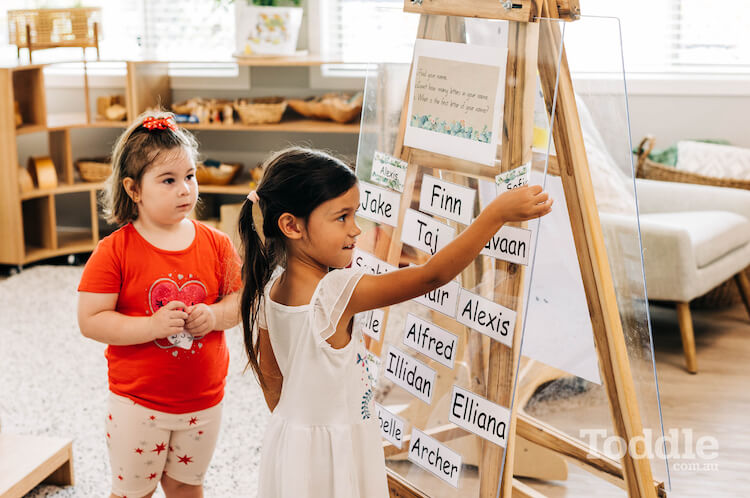
There are four main elements that make up the Abecedarian approach and these are language priority, conversational reading, enriched caregiving and learning games. If you want to incorporate any of these strategies at home with your little one(s), there are many simple ways you can do this. To build on the language you use language priority or conversational reading strategies with your child. Conversational reading could be pointing out an object in a book, asking your child if they can show you that object, and then asking what it is called? Or during story time, for example, you can talk to your child and say ‘I can see a red ball on this page, can you point to the red ball? Amazing, what is this next to the ball?’
When it comes to language priority, this approach presents an opportunity to show your child what words mean, as well gives parents or educators a chance to use rich and interesting language when talking with a child. You can use numbers when you talk and play and say something like ‘I notice you’re looking at the green stem’. It is incredible what your language can tell a child, whether it’s telling a child about feelings, time, colours, shapes, textures, tastes, and honestly, so much more.
With enriched caregiving, you can simply add educational content around routine times. Bath time would be the perfect time to take on this approach because rather than just sitting and supervising, you can talk to your child about objects in the bath. This could be colours, shapes, objects they see, body parts and anything that your child can visualize.
Okay, finally there are learning games! There is a wide list of simple games you can use with your child, to teach them about ideas and concepts. These games may include letting your child match colours or shapes and colours, the list of games is endless and at Little Scholars we have a vast range of games available at all our campuses which are available to borrow for all our families.
All the strategies from the abecedarian approach work best with individual children or maybe just two children at a time – not large groups, which is why is it beneficial for families to use. At Little Scholars we send out several family booklets to promote these strategies, so if you are a parent at one of our campuses and you want to learn more about the abecedarian approach, please feel free to contact any of our wonderful educators.
To read more about why Little Scholars adopts The Abecedarian approach, go to Little Scholars adopts Abecedarian approach to increase children’s brain development (thesector.com.au)
As adults we all know the importance of finding ways to cope with any form of stress, anxieties or depression, because let’s face it – there is nothing more nerve-wracking than feeling as though your head is going to explode. We have all been there.
Naturally, as you get older or should we say you gain ‘more life experiences’ instead, we did not all learn to cope with our stresses and anxieties at an early age or have the opportunities to practice modern mindfulness techniques like we do today. So, that is why at Little Scholars, we believe it is absolutely fundamental to bring this Mindfulness Program into our little scholars’ lives at a young age.
There is nothing more blissful than watching your little ones learn to understand and manage their own internal worlds. Whether that be learning to cope with overwhelming situations that arise in their day-to-day lives, or approaching interactions with other children or even siblings in a more positive way. There is so much our little scholars can learn and benefit from adopting mindfulness into their lives on a consistent basis, and we believe that this program compliments our existing holistic learning model which is in place across all of our childcare centres.
Our Mindfulness Program is a toolkit which has been implemented into the daily learning program at our campuses across all ages, and consists of exercises such as the ABC’s of Mindfulness, Yoga Flashcards and Memory Card. These thoughtfully crafted exercises have been created by Founder of ‘Mindful & Co Kids’, Jacqueline Yeats, a child psychotherapist who developed these mindful exercises based on scientific research. There are numerous studies that emphasise how mindfulness in early childhood can improve the capacity of a child’s brain to manage cognitive processes and helps increase their overall wellbeing.
What brings us the most comfort with teaching our little scholars mindfulness, is knowing that as they grow older we have equipped them with valuable tools and life skills to help them deal with emotions and stress calmly and constructively. Oh, and what proud (and sad) adults we will be when the day comes and our super ‘zen’ little ones are not so little anymore and can go on through their educational journey and teach their mindfulness skills to younger children.
Stay zen, and treat yourselves to a beach sunset walk a couple of times a week because we promise you, that is therapy. We would love to hear about your family’s favourite mindfulness activities.

Let us hold your hand and help looking for a child care centre. Leave your details with us and we’ll be in contact to arrange a time for a ‘Campus Tour’ and we will answer any questions you might have!
"*" indicates required fields
Let us hold your hand and help looking for a child care centre. Leave your details with us and we’ll be in contact to arrange a time for a ‘Campus Tour’ and we will answer any questions you might have!
"*" indicates required fields
Fill in the form to join your local Pram Pals mums and bubs walk