We are so excited to share with our community the launch of our George St Valet Service, our first ever Valet service for the hard-working families of Brisbane CBD who are looking to save some hours during the week, or are hoping for a more convenient drop off on the way to work. We know how time consuming it can be every morning when you are stuck in traffic or stressed looking for a park during ‘drop offs’ but do not worry! We are here to help and make your life easier.
After completing a survey with our George St fam, it became clear that the most challenging element of their daily commute was finding parking, an elevator trip, hand over of belongings and the anxious goodbye – which can all take 30 minutes every morning. To create a less stressful childcare experience for both children and parents we thought it was only necessary to introduce a smoother drop off alternative for those parents who need it. Particularly now that more parents have returned to work in the city since the second wave of lockdowns, we can only imagine how busy the roads have become and that alone is stressful so we hope to bring some relief to our parents busy work schedules.
At Little Scholars, we try to make the lives of our children and parents as enjoyable and smooth as possible, and so far, our Centre Manager, Ricky Glasson, has reassured us that they already have numerous parents using the valet service on a daily basis, and the families utilizing this service has made their mornings more enjoyable, and for some families it meant they had more time to read with their children in the mornings, or even a spare moment grab a quick coffee before starting work. The most important thing is making sure you and your children feel secure and we can assure you that our valet service implements a safe ‘drop and go’ meeting point on a nearby main road, with our campus educators assisting children out of their cars and then into the centre.
We hope our lovely George Street community enjoy this new valet service, and if you have any queries please don’t hesitate to contact us.
Wondering what to look for in an early learning campus? Finding the right one can be tricky and may even stir up anxiety in some parents. While this may come as no surprise to some, it does not have to be this way.
A childcare centre is a special place that should nurture and enhance your child’s development through play and socialisation. You will need to find one suitable for your child within your budget, and that can accommodate your working hours.
Little Scholars is a privately-owned and operated early learning provider with 14 campuses across South East Queensland. We offer you and your child the very best facilities, resources, and early educational play-based programs. Our curriculum is underpinned by a thorough and well tested early years learning framework. As a result, we believe that we can encourage, assist, and support the entire family through quality education and childcare.
Read on to find out some of the facets you should consider before enrolling your child in a childcare centre.
Every child needs a stimulating environment to interact and develop alongside other children. Try to assess whether there is extensive verbal and physical interaction between the kids and also the caregivers.
You should also check for age-appropriate toys that are in good condition. Finally, feel free to ask for a rundown of the daily activities, which might include talking, reading, dancing, singing, and more.
Most well-run childcare centres will spell out their health and safety rules for everyone to follow. Some to look out for are:
The childcare provider should seem genuinely interested in caring for children – pay close attention to how they interact with the other children when you visit. For example, you can ask whether they partake in sensory play.
The childcare centre needs to be a safe environment for your child. Here are some of the safety precautions they should be taking:
Many other safety measures can be taken to guarantee that your child is well looked after, so ask what specific steps each centre takes. If you’re looking for a childcare in Brisbane or the Gold Coast, at Little Scholars, your child’s safety and well-being are our utmost priority.
If you need to pick up your child but can not make it on time, try and call as soon as possible to inform the childcare providers that you will be running late or sending someone else. If you give them enough notice, they should try and accommodate you. However, it is essential to note that your childcare subsidy may be affected if your child stays past their allowable hours.
Having a good feeling about your childcare provider will add a layer of reassurance and peace to your day that you may not even have noticed missing prior. Being open and communicative with your chosen provider will allow you to guarantee the best possible experience for you and your child, and at Little Scholars, communication and relationship building is at the core of what we do.
It’s essential to pay attention whenever you visit a childcare centre, especially in regards to how the staff interact with the children. In an ideal situation, a childcare provider should be playing with the children on their level.
Young children are very receptive; they need affection, closeness, love, and interactive relationships with adults to thrive in later life. Therefore, you must pay close attention to ensure that your child’s caregivers are warm and responsive and can have healthy one-on-one interactions with children and others, allowing your child to become the best they can be.
A good childcare provider should have similar parenting philosophies as you on feeding, discipline, sleeping, and television watching. On top of this, they should have policies in place in case of an emergency, child safeguarding and more. The more info you can ascertain concerning these enquiries, the less likely you will be surprised later, and the more secure the childcare environment for your child.
Until your child comes to the age where they can talk, you will have to depend on what the childcare provider tells you about your child and their day. This is another reason why open and honest communication is critical.
Of course, you will want to know every detail of your child’s day, including the number of times their nappies were changed and if they took a proper nap (if only to know whether you are taking a happy or grumpy child back with you!). It’s best to communicate with the caregiver in person; however, you can always ask for a convenient time to call if this is not possible.
As a parent, it’s good to trust your instincts when something does seem quite right, and, sometimes, you may not be so pleased with a particular campus. In such cases, don’t lose hope; just look for other options. Your child deserves to grow under good and nurturing care, and there are plenty of great early learning centres out there!
As a busy parent with your child’s best interest at heart, finding a caregiver on the Gold Coast or Brisbane for your child’s overall growth is essential. Little Scholars provides parents with peace of mind by letting them know they’re leaving their children in safe hands. Our campuses are a home away from home where your child will grow and flourish. Contact us today.
Colouring in activities are not only great fun but there are some wonderful benefits for your toddler to gain via this simple activity. Colouring in is an easy and largely mess-free activity to implement at home and is also a great way to keep toddlers busy when out and about.
Children simply love to share their artistic talents with everyone. See their self-confidence grow with some beautiful colouring in! It’s a wonderfully fun past-time and is also a very convenient and inexpensive way of learning and developing some lifelong skills!
It’s so advantageous to develop and practise fine motor skills before your child starts formal schooling. Colouring in will help develop some of these key skills such as muscle development in their fingers, hands and wrists. Showing your child how to hold a pencil or crayon correctly will help them develop the correct gripping technique and controls.
Cognitive skills will develop with colouring in such as paying attention to the task. The ability to calmly sit and focus on a task is an essential skill for your child to learn. Your child will learn (and then remember) how to hold the pencil or crayon as well as noticing what happens when they press hard or light with their crayon or texta.
It can be tempting to try and ‘correct’ how your little one is colouring in but give your toddler freedom. Let them be creative and use their imagination. There’s nothing wrong with pink sky and rainbow spotted grass! They will soon recognise and use the correct colours but for now, just let them explore. Colouring in on different textures will also help with their learning skills and it can encourage more creative exploration. Try using different coloured paper, cardboard or even sandpaper.
Helping your child with their colouring in is easy. Just sit with them and do your own colouring in. They will visually develop their skills simply by sitting with you and observing what you do! You’ll be modelling how you sit, hold your texta, and staying inside the lines. It’s also a great opportunity for your child to learn their colours too, so be sure to chat about which colour you’re using and ask them to name theirs.
You can pick up colouring in books very cheaply from discount stores and supermarkets. If you have a printer at home, there are also loads of free colouring in printables to download. Try and find a variety of shapes and themes for your child to colour as this will keep their interest and attention longer. Be sure to encourage and praise your child on their creative colouring in skills.
Looking for a childcare centre that offers a unique and engaging curriculum to foster your child’s natural abilities? Contact Little Scholars today to arrange a tour.
Navigating your child’s early years requires access to reliable, evidence-based information. To support your journey, we have curated a comprehensive directory of the best Australian resources for parents. From government-approved childcare guides to expert insights on developmental milestones, these trusted websites provide the essential tools you need to foster your child’s growth and well-being within the Australian early childhood education framework.
Startingblocks.gov.au is a new, family friendly resource available to help new parents answer child care questions and better understand the benefits of early childhood education and care. It offers helpful tips for parents on early childhood development and what to look for to ensure their child gets a quality care and learning experience. Starting Blocks is brought to you by ACECQA.
Raising Children Network is the complete resource for Australian parents, taking you from pregnancy to newborns to teenagers. We offer evidence-based content you can trust on hundreds of topics about raising children and looking after yourself as a parent.
You can find information and activities specific to your child and family, based on age, relationship, location and activity preferences. Tips and information on supporting your child’s early learning and development through play, care, encouragement, numeracy (read & count) and literacy (talk & listen) or sort by age to find content relevant to your child.
The Australian Institute of Family Studies is a national research and information agency on children and families in Australia. Includes research, publications, online library, and further links and resources for professionals.
The Australian Research Alliance for Children and Youth (ARACY) is a national collaboration of eminent experts disseminating knowledge about problems and solutions to issues affecting children and young people.
As Australia’s peak national non-government cancer control organisation, Cancer Council Australia advises the Australian Government and other bodies on practices and policies to help prevent, detect and treat cancer. Cancer Council Australia launched the national SunSmart Schools program in 1998. The program has grown rapidly and there are now more than 2500 SunSmart schools and 3500 SunSmart childcare centres across the country.
The Centre for Community Child Health is an internationally recognised centre of excellence supporting and empowering communities to continually improve the health, wellbeing and quality of life of children and their families, now and for the future.
The Department of Social Services is responsible for helping to support Australian families and children. The Families and Children section of this website provides detailed information on the various forms of assistance available including programs, services, benefits and payments.
The Department of Human Services is responsible for the development of Australian Government service delivery policy and offers a range of social, health and other payments and services. Support is available through Medicare, Centrelink, the Child Support program, CRS Australia and Australian Hearing. You can go directly to the Medicare program or the Centrelink program.
The Department of Health is responsible for supporting better health and active ageing for all Australians. Information is available on a wide range of conditions and diseases, education and prevention, Aboriginal and Torres Strait Islander health issues and topics relevant to ageing and aged care.
Early Childhood Intervention Australia (ECIA) is a national forum for promotion of early intervention for infants and young children with developmental delays or disabilities and their families, including workshops, seminars and conferences to facilitate quality service provision.
Early Learning Association Australia (ELAA) is a not-for-profit, peak membership organisation representing the voice of parents and early learning providers. ELAA represents over 1200 early childhood services, including stand-alone kindergartens, cluster managers, integrated services, long day care centres, local government, government and independent schools, and before and after-school care providers, and provides a range of resources, advisory, training, and advocacy services.
Family Assistance Offices have been set up in Medicare offices and Centrelink Customer Service Centres across the country, offering a range of payments to support families with their work and family responsibilities. It gives Australian families better access to government services. Instead of going to different agencies to get family assistance, families are able to get all their payments from just one place – the Family Assistance Office. Financial assistance includes the Family Tax Benefit, Child Care Benefit, Child Care Rebate and Baby Bonus. The Family Assistance Program is the responsibility of the Department of Families, Housing, Community Services and Indigenous Affairs and the Department of Education, Employment and Workplace Relations.
Good Beginnings builds better outcomes for children in vulnerable communities through effective early intervention programs. Good Beginnings provides free early childhood and practical parenting programs for children and families across Australia, based at their Early Years Centres or home visits.
The Isolated Children’s Parents’ Association provides support, advice and advocacy for parents in isolated communities. It is a voluntary national parent body dedicated to ensuring that all geographically isolated students have equality with their non-isolated peers, of access to an appropriate education.
Mychild is Australia’s online childcare portal containing information for families, carers and providers. The website provides information about children’s early learning, care and wellbeing. It includes information on different types of childcare, how to access help with the cost of childcare, a searchable database of local child care services, other relevant links and support.
The Murdoch Childrens Research Institute is dedicated to finding ways to prevent and treat conditions affecting babies, children and adolescents, helping them lead happy, healthy lives. The Institute has close partnerships with the Royal Children’s Hospital and the University of Melbourne.
The National Out of School Hours Services Association (NOSHSA) is a network of all Australian State and Territory Out of School Hours Services Associations. These organisations promote provision of Out of School Hours Services and act as a united voice to advocate both to Government and the community for excellence in service provision.
An independent, non-profit research and development organisation focused on supporting parents through the development of resources, programs and policies based on scientific evidence.
Playgroup Australia is the national peak and administrative body for playgroups in Australia.
The Raising Children Network Website provides centralised, Australian-focused, evidence based information for parents and carers of children from birth to fifteen years of age. It also provides information for those who work with parents.
The Secretariat of National Aboriginal and Islander Child Care (SNAICC) is the national non government peak body in Australia representing the interests of Aboriginal and Torres Strait Islander children and families
Bees are the darlings of the insect world and this weeks marks the launch of our Stingless Bee program at Little Scholars Ashmore and Little Scholars Yatala
Stingless native bees enable children to safely explore, engage, learn and experience close up the social behaviours of the bee, an awareness of the impact of human activity on the environment and the interdependence of living things.
As an added bonus the bees will pollinate the gardens and your school will be aiding the conservation of the native bee. The keeping of stingless bees is easy and does not require any special expertise , equipment or licence. The hive needs to be located in complete shade, the bees will forage in the garden darting back and forth laden with pollen.
This is a great program to have and to teach our Little Scholars and encourage them to have respect for our environment by understanding how important our bees are for pollinating Australia’s wild flowers and their small size enables them to reach pollen in tiny flowers that bigger bees cannot reach.
These captivating and useful insects are the subject of a new wave of beekeeping. Thousands of people are new converts to keeping these bees as pets, for small-scale home honey production and for pollination.
Without native bee’s, lots of our native trees which can only be pollinated by little bee’s, could not survive and would not be here so… lets give our native bees a big cheer!
Our bee’s have settled in very nicely and we have created the most amazing environment for them.
While bees won’t show you love in the same way a dog or cat would, they have the added bonus of being low maintenance, supplying you with honey, pollinating your flowers and vegie garden and helping to save the the planet. Native Bees are a small, black and stingless so great to have with children around, plus having no sting means our Little Scholars can harvest the honey themselves without getting hurt. They produce around 1 litre of delicious honey a year that tastes a little more tangy than store brought honey with a hint of lemon or eucalyptus..
Anyone can have a native bee hive. All you need, apart from the hive, is a nice place in full shade to place the hive with a flight path that is free from any obstacles including trees, branches and spider webs.
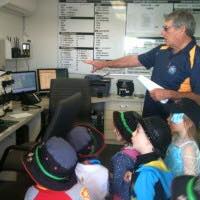
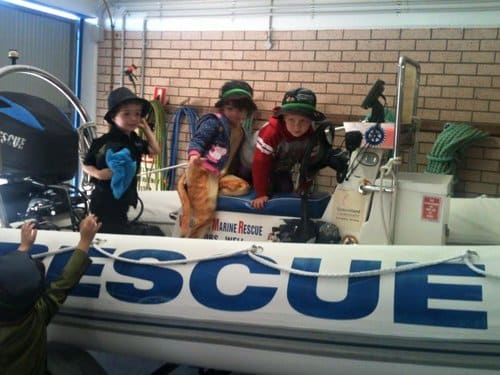
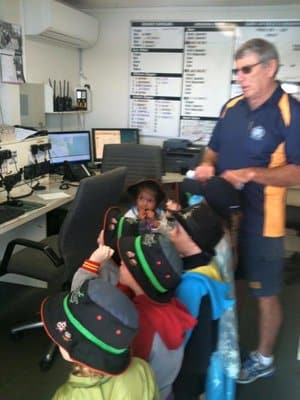
Our Kindergarten children had the opportunity to visit The Volunteer Marine Rescue at Jacobs Well recently.
This was a great opportunity for us to further engage with the people and services within our community. The children got to visit the control room and listen in on some communication, they also got to explore one of the rescue boats that was parked in the rescue office. The children had a fabulous time and learnt lots about the great service that the VMR offer.
We have an exciting new program coming to our centres on Fridays… Bush Kinder!
Our bush kinder will provide a valuable natural kindergarten experience for 4-year-old kinder children enrolled at Little Scholars.
A forest kindergarten is a type of preschool education for children held almost exclusively outdoors. Whatever the weather, children are encouraged to take the lead in playing, exploring and learning in a forest or natural environment.
Bush Kinder is a special part of a Little Scholars’ total kinder experience. A model to suit our community’s and children’s specific needs. It recognises the place the bush has in Australian folklore and the significance of the land in aboriginal culture. It draws upon and extends the existing philosophy of Little Scholars to offer a unique educational program.
No toys, No tools, No art supplies
The children and adults benefit from using only what nature has provided.
“Outdoor spaces with plants, trees, rocks, mud and water invite open ended interactions, spontaneity, risk taking and a connection with nature” (NQS, QA 3 Physical environment).
Please speak to your Little Scholars Kinder teacher or Centre Manger for more details for your centre.
We are excited to announce the release of our 1st Edition of our Little Scholars Family Cookbook. In Conjuction with our families and the Little Scholars community we have gathered all of our favourite recipes for everyone to share. From our schoolies, to our Chinese teacher, everyone has been involved. We wish to thank everyone for their input and we hope you enjoy our Little Scholars Family Cookbook.
For your copy of the Little Scholars Family Cookbook, please speak with Tayla or Rachel today.
Junior Yoga started this week at Little Scholars Yatala and Little Scholars Stapylton.
We love having Emma run this program for us as she specialises in mother and baby yoga.
The Little Scholars loved the new activity including the big group hug at the end.
Our first week at Little Scholars Stapylton was amazing. It reconfirms why we do what we do. Watching the faces of the new Little Scholars as they set about exploring the centre was wonderful.
The Little Scholars got to feed the goldfish, plant vegetables seedlings, water the new plants and lots of fun activities. They loved breaking in all the new play equipment, using all the new craft supplies, meeting the local community and cooking fresh meals with our new chef.
We have new families starting all the time but places are filling fast.
For centre tours of Little Scholars Stapylton please call Rachel on 3804 7831, or email [email protected] or go to www.mylittlescholars.com.au for more information.
Let us hold your hand and help looking for a child care centre. Leave your details with us and we’ll be in contact to arrange a time for a ‘Campus Tour’ and we will answer any questions you might have!
"*" indicates required fields
Let us hold your hand and help looking for a child care centre. Leave your details with us and we’ll be in contact to arrange a time for a ‘Campus Tour’ and we will answer any questions you might have!
"*" indicates required fields
Fill in the form to join your local Pram Pals mums and bubs walk