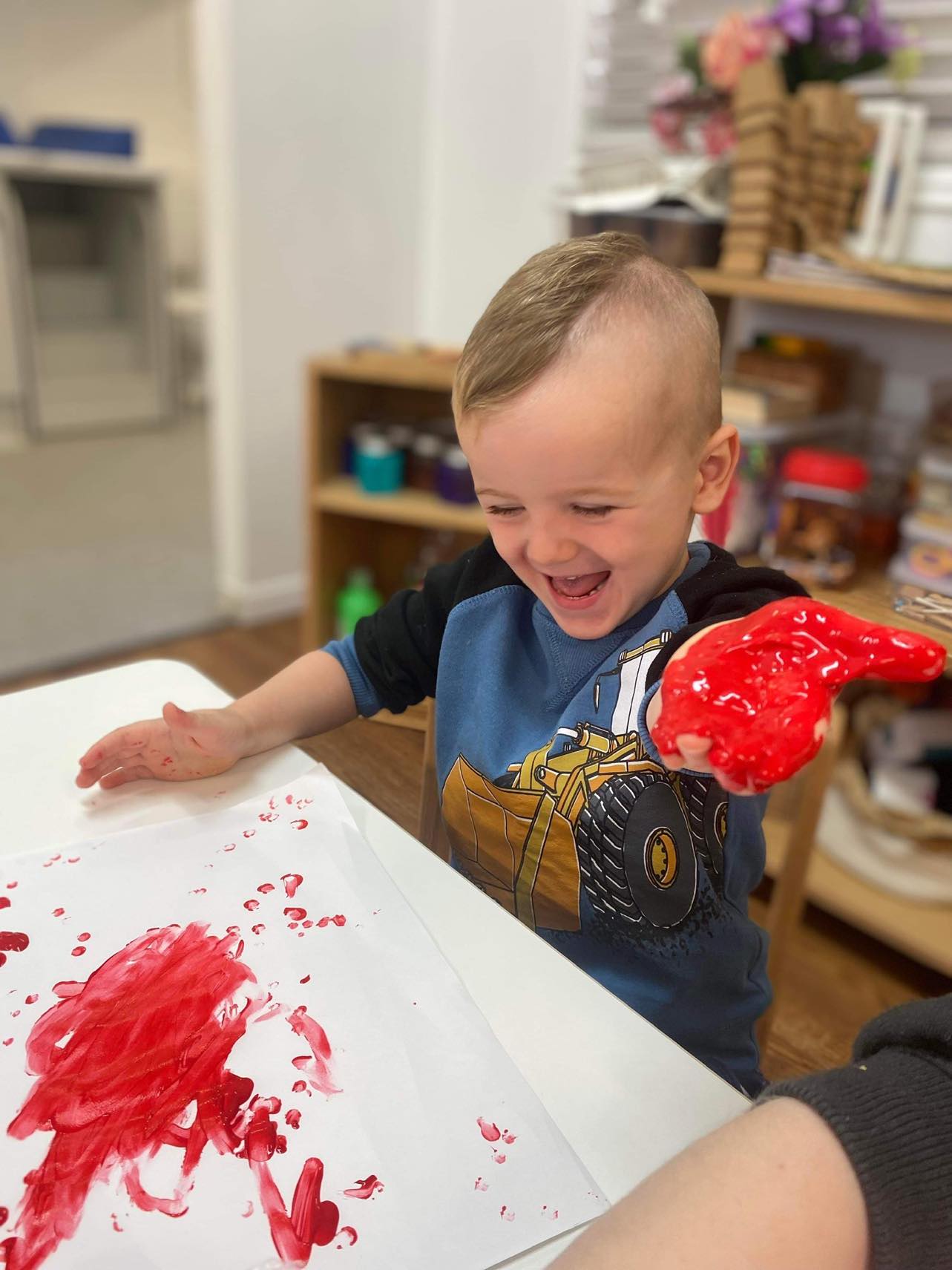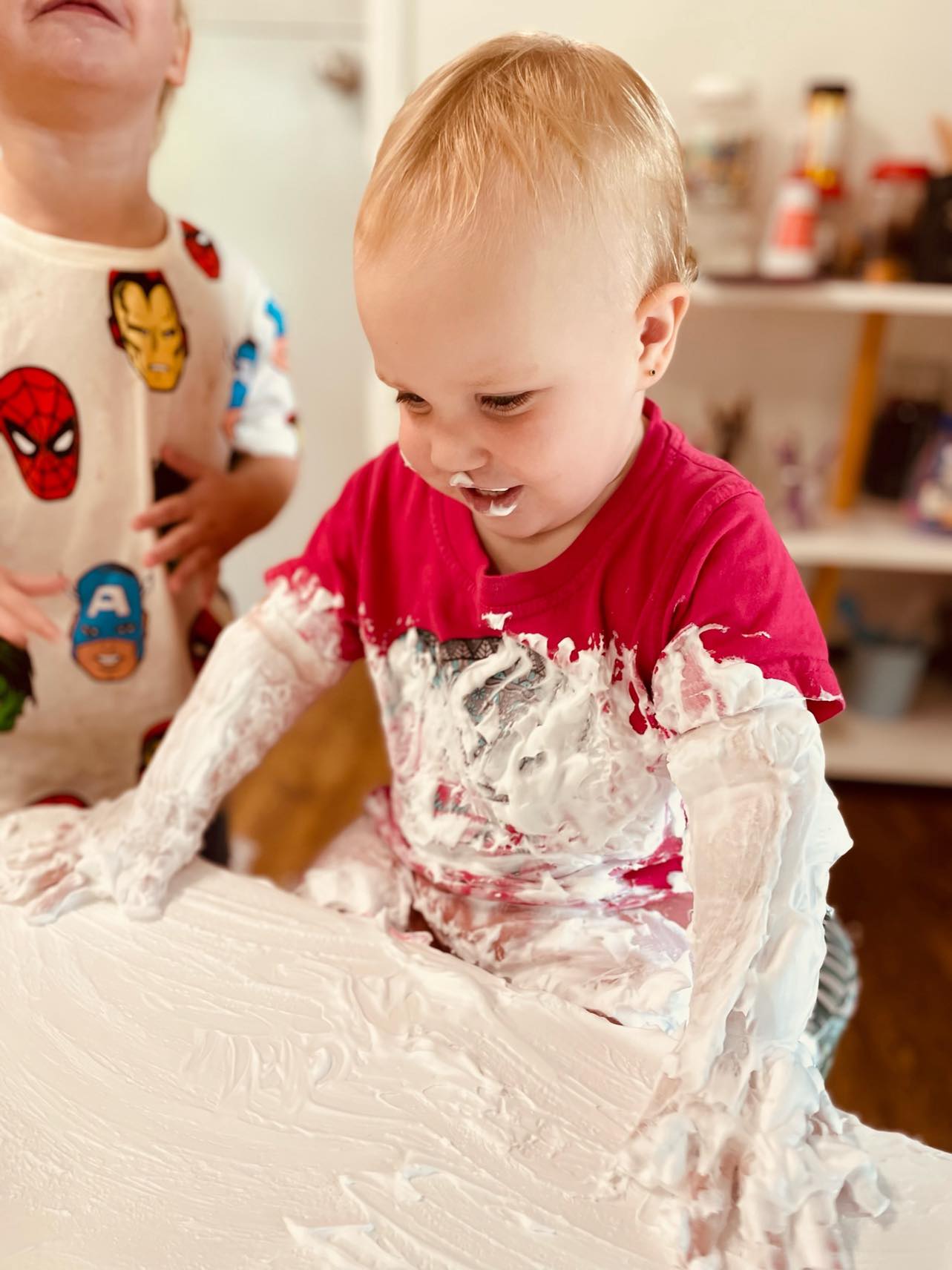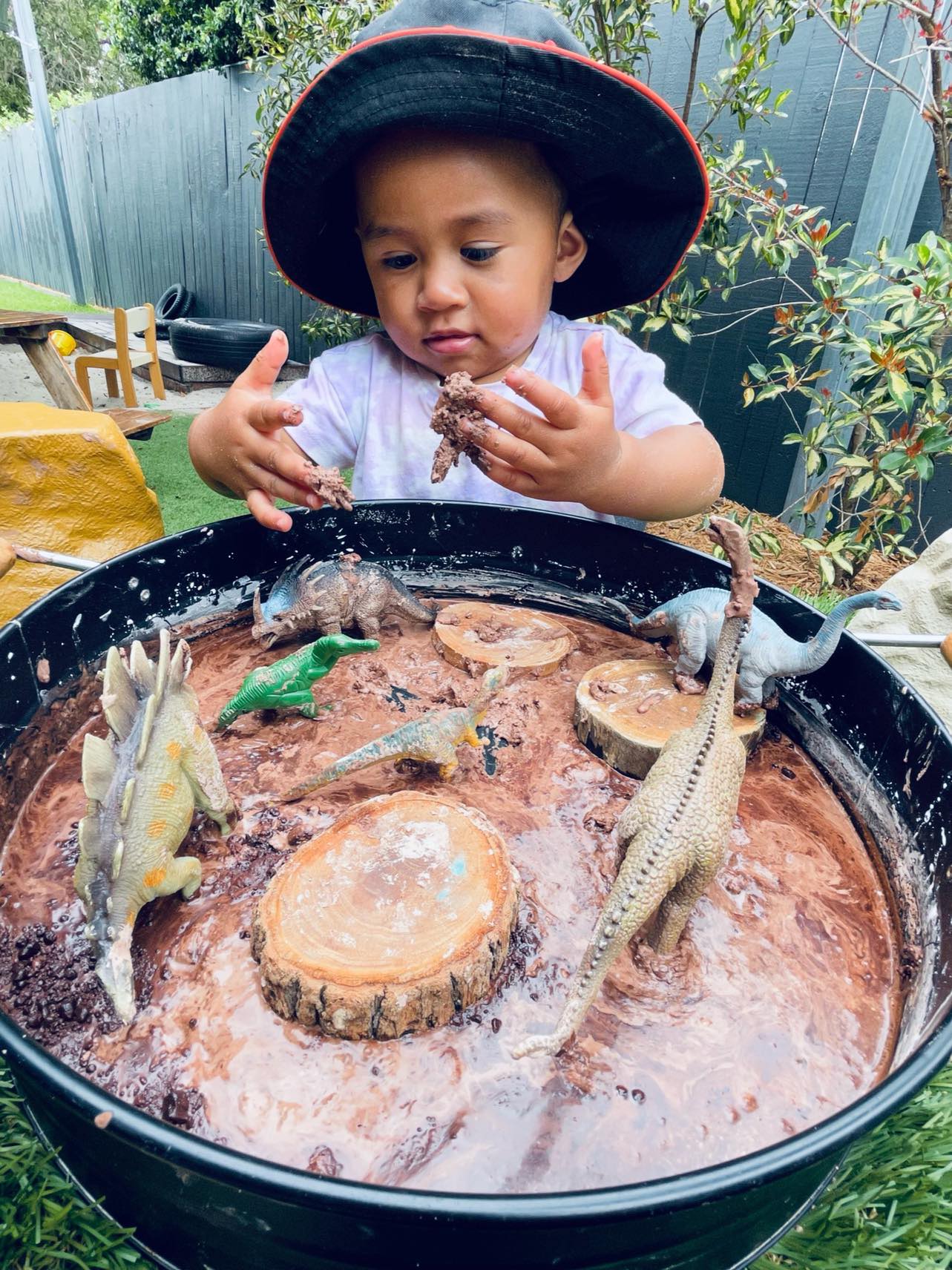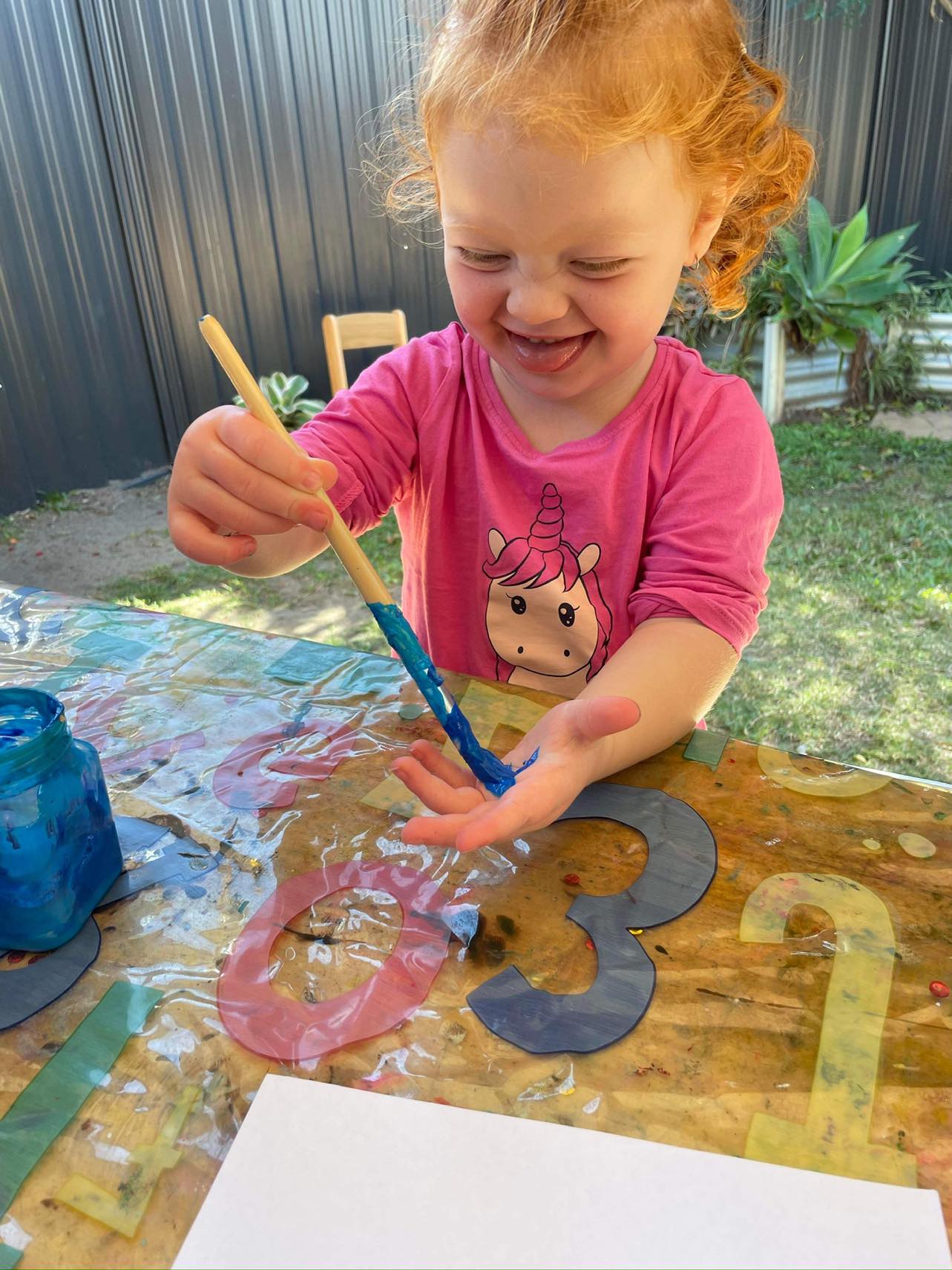







Learning to write. Learning to read. Learning to count. There is a certain set of expectations of things children are expected to learn around the time they are about to start school, but what about other equally important things, things that will give children just as many future benefits, but make parents cringe? What are we talking about?
Getting messy.
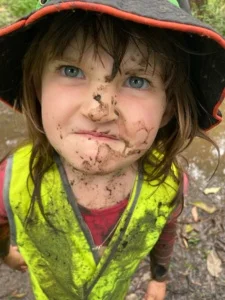
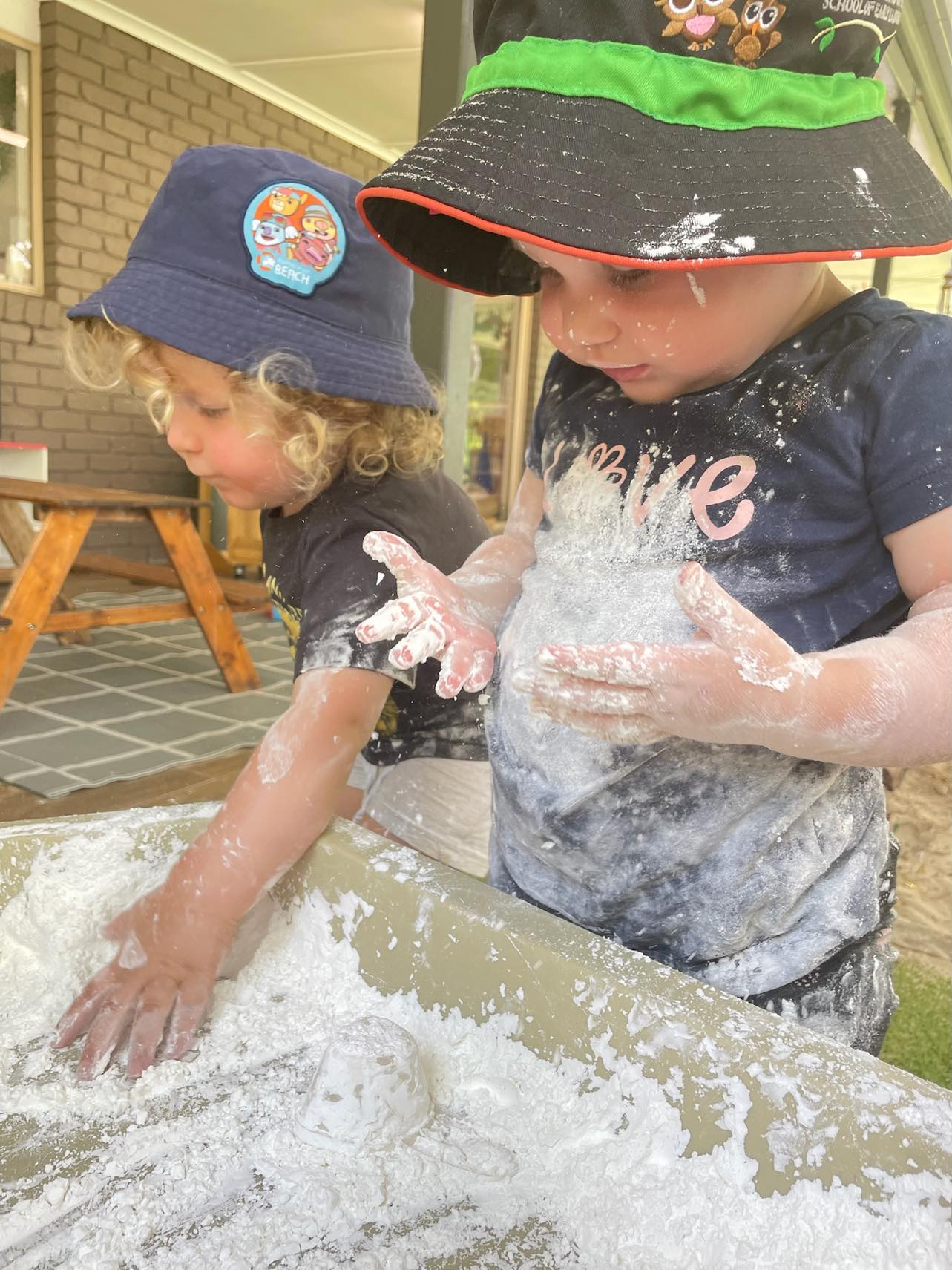
For a number of reasons, getting messy is an important part of childhood learning and development. While many parents understand the benefits of being out in nature, they may be less comfortable with the idea of getting messy while outside. Or inside, for that matter! Some of the reasons for parental discomfort in messy play could include:
Messy play can help children develop their fine motor skills, problem-solving skills, creativity and sensory awareness. It can also help them learn about cause and effect, and even how to manage their emotions.
A recent study by the University of South Australia (UniSA) looked at comfort of parents and early educator when it comes to messy and risky play in early education. Dr Margarita Tsiros, Senior Lecturer in Paediatric Physiotherapy at UNISA, said that given that nearly half of all Australian children ages 0-5 are in some sort of early education setting, further education and training for both early childhood educators and parents could help overcome some of the challenges that might be linked with nature play, which often involves both getting messy and taking risks.
This study explored the perspectives of parents and early childhood educators on unstructured nature play for young children. Participants were interviewed about their views on the benefits, barriers, and facilitators of nature play, and the researchers’ findings suggest that parents and educators value the benefits of nature play for children’s physical, social, emotional, and cognitive development. However, participants also identified a number of barriers to nature play, including time constraints, lack of access to nature play spaces, and concerns about safety and mess. The study also found that adults can play a gatekeeper role in nature play, by either facilitating or restricting children’s access to nature.
The findings of this study suggest that parents and educators need additional resources and guidance on how to engage with nature play and how to overcome barriers within early childhood settings and the home environment.
Messy play is of course, not limited to playing in nature, though there are plenty of opportunities outside to get a little dirty. But messy play is everywhere, from when a baby is exploring food in those early days, learning to feed herself, learning cause and effect when dropping food, that’s just one aspect.
As well, children are creative beings, and parents can attest to the fact that their little ones are directly drawn to arts and crafts that include glitter. OK, we kid a little, but art and creativity are a large part of the childhood experience, and will likely require sweeping, wiping and washing in the end.
Messy play is of course, not limited to playing in nature, though there are plenty of opportunities outside to get a little dirty. But messy play is everywhere, from when a baby is exploring food in those early days, learning to feed herself, learning cause and effect when dropping food, that’s just one aspect.
As well, children are creative beings, and parents can attest to the fact that their little ones are directly drawn to arts and crafts that include glitter. OK, we kid a little, but art and creativity are a large part of the childhood experience, and will likely require sweeping, wiping and washing in the end.
Specifically about messy outdoor play, a 2021 study by Melike Kandemir and Serap Sevimli-Celik, from the Department of Elementary & Early Childhood Education, Middle East Technical University, Ankara, Turkey, found that parents and educators believe that it can provide a number of benefits for children, including:
The study found that teachers and parents value the benefits of outdoor play for children’s development, but that they also have concerns about safety, messiness, and lack of resources.
The study also found that teachers and parents have different views on the role of outdoor play in children’s learning. Teachers were more likely to see outdoor play as a way for children to learn about the natural world, while parents were more likely to see outdoor play as a way for children to burn off energy.
The study also found that teachers and parents are concerned about the messiness of outdoor play. They worry about children getting dirty, tracking mud into the house, or ruining their clothes.
The study concludes by arguing that there is a need to better support teachers and parents in providing opportunities for children to engage in outdoor play.
Another study looked explicitly at vulnerable children and getting messy in play.
The study, “Patterns and attributes in vulnerable children’s messy play” by Sue Gascoyne, et al., explores the patterns and attributes of messy play in vulnerable children.
The study defines vulnerable children as “children who are at risk of social, emotional, and/or developmental difficulties.” It used a mixed-methods approach, including interviews with parents and practitioners, and observations of children’s messy play.
Researchers found that vulnerable children engage in messy play in a variety of ways, but that there are some common patterns. For example, vulnerable children often use messy play to explore their emotions, to develop their relationships with others, and to learn about the world around them.
The study also found that there are some specific attributes of messy play that are particularly beneficial for vulnerable children, such as, messy play can help children to develop their sensory awareness, their problem-solving skills, and their self-confidence.
But researchers also found that vulnerable children often use messy play to express their emotions. For example, children might use messy play to express anger, sadness, or joy. As often vulnerable children are facing hardship other children might not be, this was important.
The study also found that messy play can help children to develop their relationships with others. For example, children might play together with messy materials, or they might help each other to clean up after messy play.
The study concludes by arguing that messy play is an important part of the development of vulnerable children, and that it should be encouraged.
Observing the babies experience this source of joy, excitement, relaxation and total presence, I can’t help but feel a sense of wonder and awe.
-Jodie, lead educator
Jodie Dzarir is the lead educator in the nursery studio at Little Scholars Burleigh campus. She agrees there’s a multitude of benefits when it comes to allowing children to get messy while they explore their world.
“My favourite would have to be the social and emotional development encountered, and the creative/imaginative stimulation it provides,” she says.
“Messy play allows babies the freedom to convey their emotions, experimenting different forms of self-expression. It stimulates their imagination and creativity as they engage in open-ended activities with no predetermined outcomes.
Observing the babies experience this source of joy, excitement, relaxation and total presence, I can’t help but feel a sense of wonder and awe. Witnessing their endless curiosity, laughter and the genuine connections they form with one another is heart warming,” Jodie continues.
For parents who cringe at the idea of their young child coming home filthy, she encourages an open mind and a trust in the process.
“For parents, messy play is an important part of your child’s development and can be vastly beneficial to their learning journey, as it allows them to explore, learn and develop essential skills. Rest assured, we prioritise safety and hygiene during these activities to provide a controlled and enriching experience for your child,” Jodie adds. “Investing in a few basic outfits for messy play could be one of the best purchases you make.”
Susan Cooper, group pedagogical leader for Little Scholars, agrees that messy play is an important vessel for play for young children.
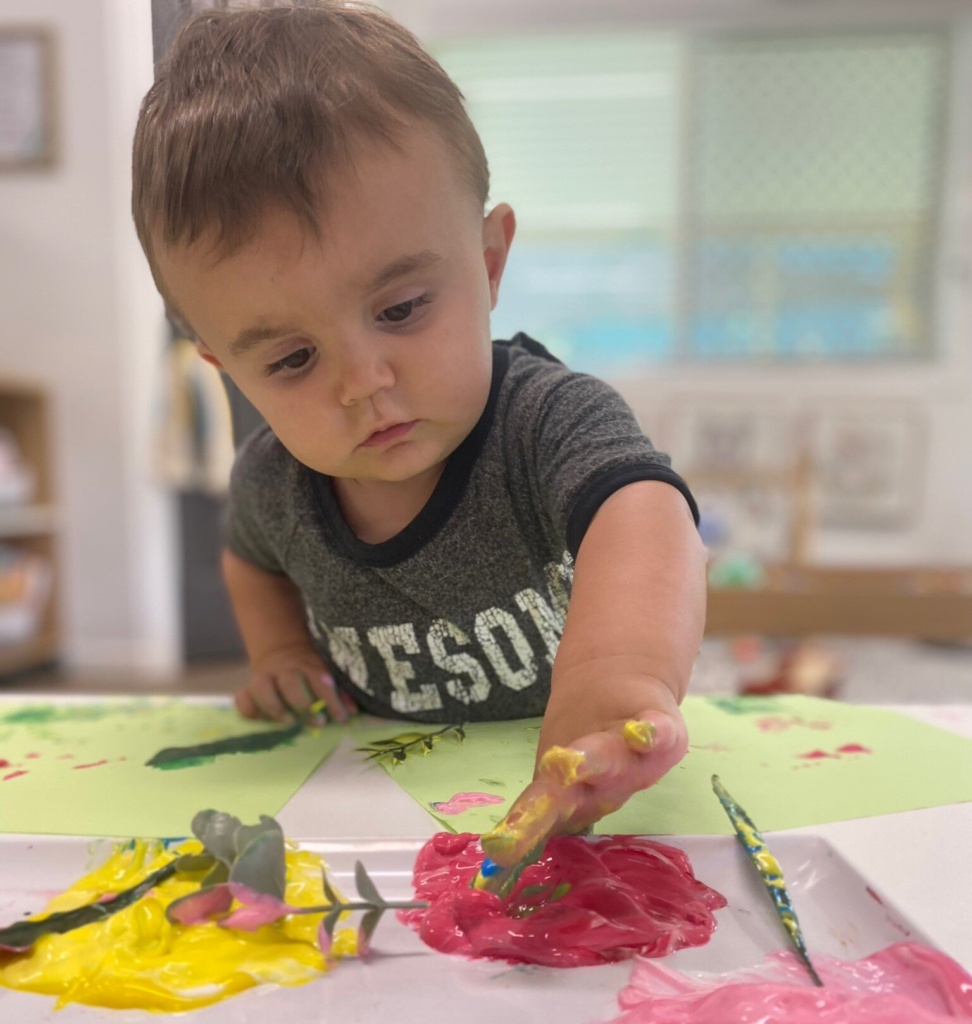
I have seen through my travels how messy play can act as an emotional outlet for many children, they’re able to verbally express themselves, it’s engaging, enjoyable and most importantly fun, interactive, hands-on learning, ultimately encouraging the love for learning, says Susan.
“While we provide these experiences within our curriculum, there is an element to planning around messy play experiences, planning for management to risk, management to supervision and ensuring that children are able to engage within the experiences that is developmentally age-appropriate, meeting their needs and supporting an inclusive environment for all children.”
Although some parents may initially hesitate at the prospect of cleaning up after a lively outdoor romp or an exuberant indoor painting session, (we understand, you’re busy enough!) the abundant benefits of messy play far outweigh any temporary inconveniences. As both parents and educators, we should actively seek out opportunities to provide children with the enriching sensory experiences and learning opportunities that messy play offers.
Yes, messy play might require a deep breath followed by the use of brooms, vacuums, and mops, but let’s not forget to focus on the incredible outcomes that emerge from these seemingly chaotic moments. We wholeheartedly encourage parents and educators to embrace the magic of messy play. It’s in these moments that we witness the spark of imagination ignite, where education and career trajectories may take shape, and lifelong passions may be kindled.
Remember, every single fun and messy experience can pave the way for a world of endless possibilities. The memories created through messy play will remain etched in the hearts of children, shaping their growth and development in ways that extend far beyond the spills and splatters. Join us at Little Scholars, embrace the mess and the extraordinary potential it holds blossom before our very eyes.
References:
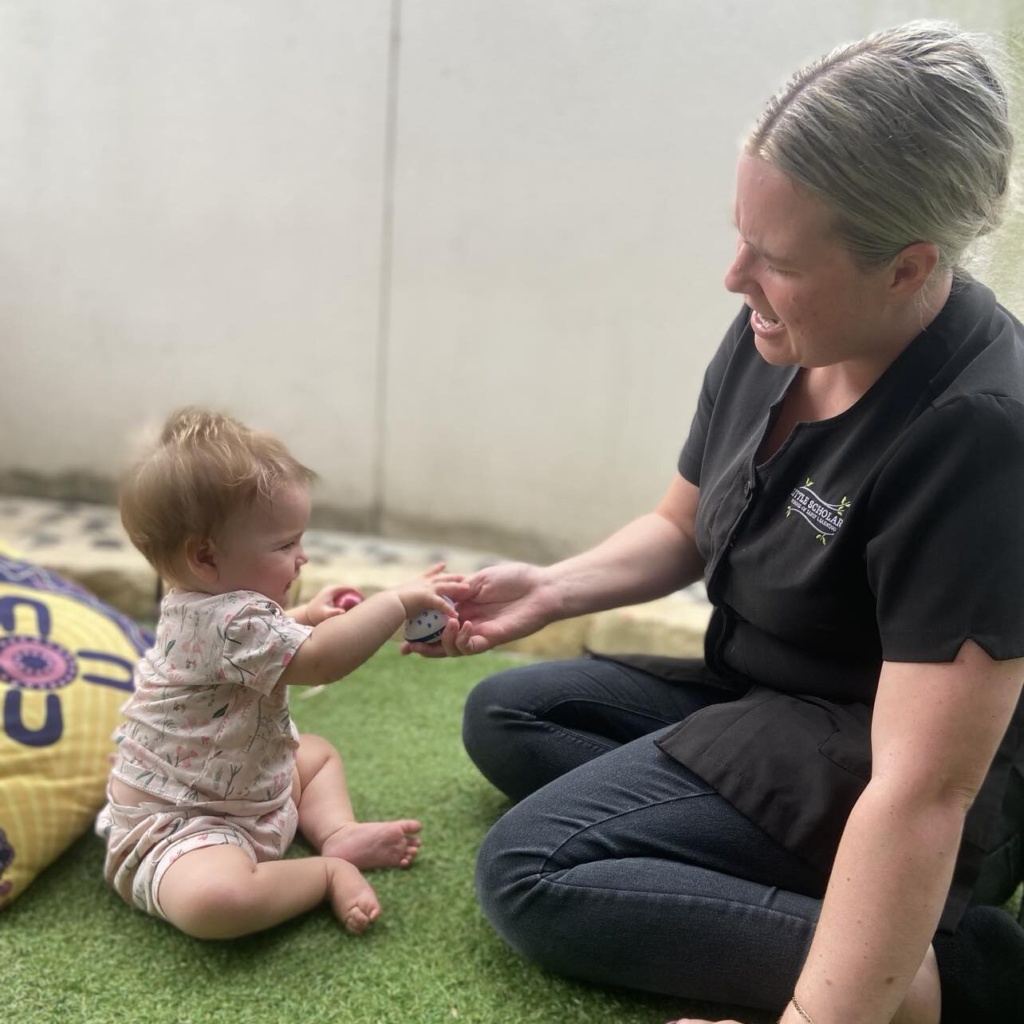
For parents leaving their babies or young toddlers in care for the first time, it can be a stressful experience. When the paid maternity leave ends, parents must make the decision of whether or not both parents will work outside the home. The choice to leave their young child in early learning and care can create a number of concerns, one big one being how their relationship with their young child will be affected if the parent is not spending the majority of the child’s time with them. These are valid concerns, but research has suggested infant attachment to their parents is not generally affected by being in care, so long as the parents have a strong bond with the child when they are with them.
Understanding Attachment Theory
Attachment theory was first introduced by John Bowlby, a British psychoanalyst and psychiatrist in the 20th Century. Bowlby observed that early attachments could significantly affect a child’s emotional development and adult relationships in later life. He concluded that children between six and 30 months were very likely to form emotional attachments to familiar caregivers, especially if the adults are sensitive and responsive to child communications. This led him to propose the Attachment Theory after he studied the negative impact of maternal deprivation on young children.
Mary Ainsworth, an American psychologist who worked under Bowlby early in her career, later devised an assessment technique called the Strange Situation Classification (SSC) to investigate how attachments might vary between children. Her research in Uganda, then her well-known Baltimore Study in the 1960s, in which she noticed distinct individual differences in the quality of mother-infant interactions over time, led her to categorise these different attachment styles into three types: secure attachment styles, insecure attachment styles, and not-yet attached. She found a connection between maternal sensitivity and secure attachments. Sensitive mothers were familiar with their babies, provided spontaneous and specific detail about their children, and babies of sensitive mothers cried less and felt free to explore in the presence of their mother. Generally, she concluded that babies of sensitive mothers have secure attachments.
While Bowlby’s initial findings focused on maternal deprivation, later studies have contradicted his emphasis. Schaffer & Emerson (1964) found that specific attachments started at about eight months and shortly thereafter, the infants became attached to other people. By 18 months, very few (13%) were attached to only one person, and some had five or more attachments. Rutter (1972) noted that several indicators of attachment, such as protest or distress when an attached person leaves, have been shown for various attachment figures – fathers, siblings, peers, and even inanimate objects. Weisner, & Gallimore (1977) found that mothers are the exclusive carers in only a very small percentage of human societies, and often there are a number of people involved in the care of children, such as relations and friends. Van Ijzendoorn, & Tavecchio (1987) argue that a stable network of attachment figures is more important than the number of figures.

Life is full of big changes, everyone goes through a few in their lifetime, and some of these things are in our control and some aren’t. Knowing changes are coming, whether they’re positive or negative, isn’t always easy. As change happens, your routines are disrupted and suddenly you have to adapt as you are pushed further and further out of your comfort zone. For the little people in your life, generally, when a big change happens in their home, they have little control over what’s happening, may not even understand what or why something is happening, and it can be hard.
Some examples of these life changes affecting small children could be a new sibling, parents separating, losing a family member, moving to a new house or even a new city or town. While these changes affect everyone in the house, children don’t necessarily have the coping skills yet to deal with them. Children who are new to major life changes need extra support in addressing their feelings, understanding and adjusting to change, and learning new strategies and skills along the way. As their parent, even if you’re also dealing with these changes yourself, you have to find time for your children to support them through this change. They may be small, but their feelings matter just as much as everyone else’s.
If you can, give them time to prepare. Is Nana sick? Have a conversation with your children about what this could mean: her not being able to see them while she recovers. Maybe it means time in hospital and she may look different, or maybe it’ll be harder to touch her or talk to her, and maybe it means she may not survive. You may need to prepare yourself first about how you’ll have these kinds of hard conversations with them.
Is a new baby coming? Assure them this does not mean you will love them any less. Let them know that while a new baby may need more attention in the beginning, you’re always there for them and you will still have special time together. Many parents swear by having a special toy basket set up for when the baby needs to be fed, and putting these random, loose parts in the basket that can change regularly to keep them interested.
At our centres, we can arrange activities that help children understand the changes that may be happening at home.
For example, when it comes to a new sibling’s arrival:
“We have had a few new sibling arrivals, and with that we will set up some baby care stations with wraps, bottles, rattles, nappies clothes, etc,” says Skye, an educator at our Yatala campus. “We even do a little bath sensory activity, we read books on the arrival of babies at home and also find some songs about families,”
If you’re at a loss on where to start preparing, book stores and libraries these days have incredible selections of books for children to help them understand in age-appropriate ways big life changes that can affect them. Whatever the scenario, by giving them time to process and accept the change that’s coming, things may be easier when they actually do come. They may not offer up what’s happening in those busy minds and you may need to check in and ask them how they’re feeling or what they think. “I told you not long ago that Mummy and Daddy have to sell the house because we have to move to another city. What are some of the things that come to mind when you think about not living here anymore?”
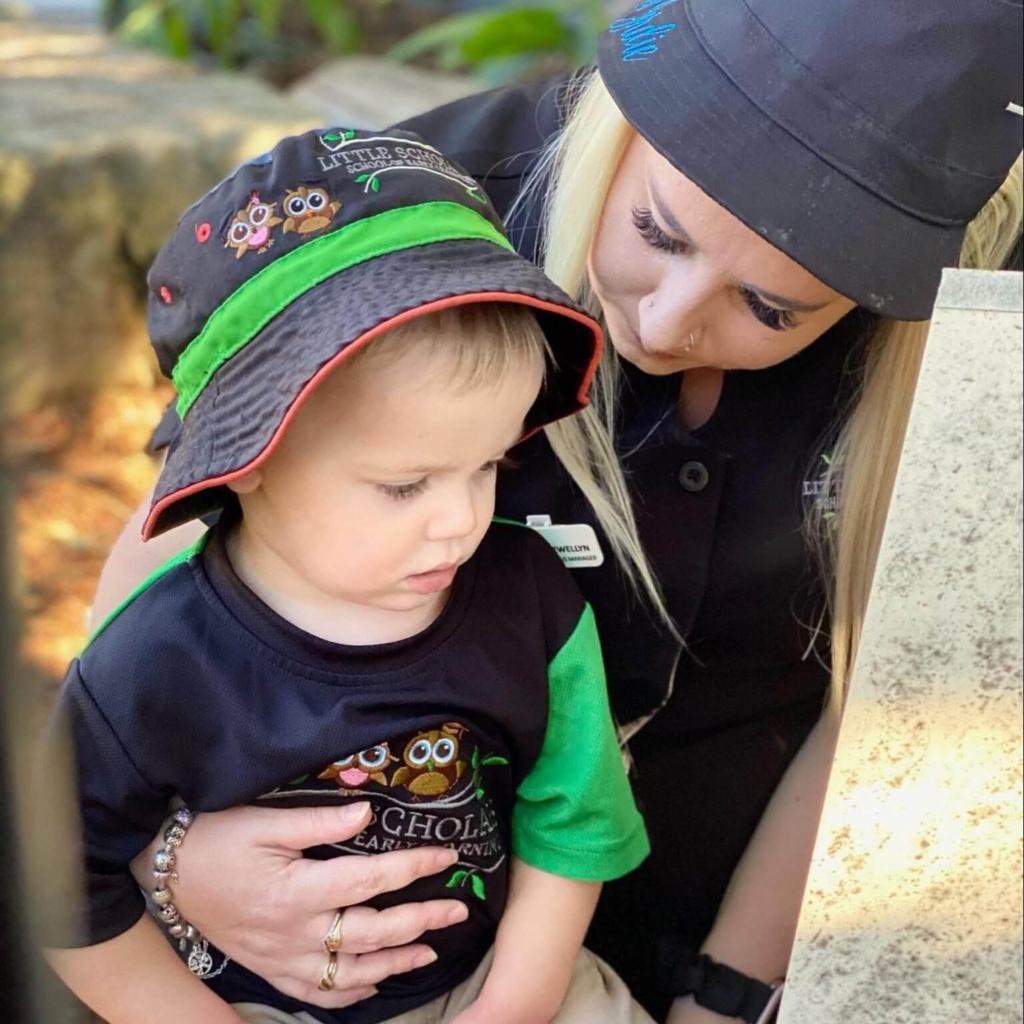
Take time to listen to their concerns. Be ready to answer questions (and for most children, there will be more and more questions!) and know these questions may come up at what seems to be random times, but that goes to show they internalise change and are trying to process it maybe even more than you think! Say something like, “Moving to a new place can feel sad and scary. It’s okay to feel that way. Let’s take some deep breaths. We can get through it together.”
You may need to help them identify what their feelings are and explain what they mean: emotions such as feeling anxious, sad, scared, excited, and nervous are normal feelings and won’t last forever, and also let them know that these are feelings grown-ups feel too.
Consistency and stability are just as important now as ever before. Bedtimes and mealtimes should remain consistent and are great times to connect as a family, even if the family dynamic is changing. The structure feels safe for children, so provide as much of it as possible to restore a sense of safety. Avoid a lot of big changes at once. Even if there’s a new baby coming, this may not be the time to move your child from cot to big bed if they’re already unsure of their feelings about not being your baby anymore. If Mummy and Daddy are going to live apart, help them set up their second bedroom similarly to the one they’ve known, and try to keep those routines the same, no matter what home they’re spending time in.
“When it comes to a family break, we always talk with parents encouraging them to keep the same routine at both houses, like toileting, comforters, for example,” Skye says.
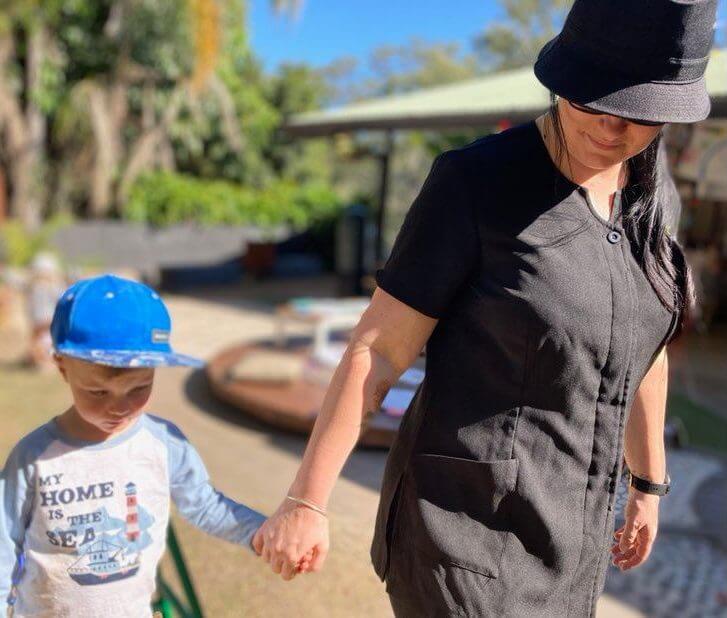
Another thing that should remain consistent is your child’s relationship with you. Make sure your child knows that no matter what else changes, you aren’t going anywhere, and neither is the bond you have with your child. You are always there for them, even if it’s by phone when you can’t be beside them.
Set aside even 10 minutes each day to give your child your undivided attention. Make eye contact, put the phone away, and be playful and affectionate. This will be as good for you as it is your children. If your thing together is going for a walk together, keep doing it. Being cuddled up and reading books together is a wonderful way to maintain your bond. Do an activity together that your child enjoys, whether it’s video games or kicking a ball around, playing dolls or colouring together, you may be surprised with what they’ll remember long into the future about what their time with you meant. Try to remember that a little extra attention and parent-child time reassures your child that your love will stay consistent, making it much easier to cope with changes in other aspects of life.
Our relationships with our families are so important. We can and would like to help! Talk to your educators or campus manager about what’s going on at home. Your educator may have noticed changes in your child’s behaviour or emotions already, which has given them the heads-up something is different.
“How I notice when children are going through tough times or even have experienced a traumatic event is when they start ‘acting out,’” says Holly, an educator at our Stapylton campus. “Difficulties eating and sleeping than their usual, acting clingy more than usual, more tantrums, losing interest in activities they once enjoyed, they stop playing with their friends and aren’t socially interacting, drawings that are concerning about what is happening in their lives, regression with toileting and even going back to thumb sucking etc.”
By letting educators know what’s going on at home, they can help by ensuring your child has the attention he or she needs especially at this time, or they can help facilitate activities or learning exercises to support feelings your child may be experiencing.
“You definitely need to have built a strong and positive relationship with families in your centre, to ensure you can effectively work together,” Holly says. “Document children’s change of behaviour if you’re concerned and communicate with families about this. It also helps to provide strategies that you will implement at the centre as well as helping families with strategies for home.”
“We always give lots of extra cuddles and when we notice they are having a tough day, and encourage them to do some relaxing activities like laying on the cushions reading, playdough, sensory bottles, calming toys like fidget spinners, poppets, mini lava lamps, just things that give them some space and also some one-on-one time,” Skye says.
It’s our job to help ensure your child is spending their time with us in a warm, welcoming, supportive and caring environment in which she or he can grow socially, cognitively, emotionally, and physically, and we’re here to support your entire family. We have an open-door policy, and you’re very welcome to call or come in to talk as much as you need.
So, the questions that pop up often for a parent when their little ones are in their last year of kindergarten is; is my child ready for school, or what do I need to do to make sure my child is equipped for their transition to school? These are all totally normal thoughts to have as a parent, but we can happily reassure you that at Little Scholars, we offer an extensive Transition to School Program that will give your child the life skills they need and confidence to have a successful transition to big school!
What we believe makes a successful transition to school is our Little Scholars School of Early Learning service and educators working in collaboration with local schools and our community to make sure we are assisting children and families with this transition. Our Transition to School Program is based on the National Early Years Learning Framework and Queensland Kindergarten Learning Guidelines, as well as we have wonderful early childhood teachers (also known as ECTs) who teach the children and support their learning and development hugely.
School readiness is about the development of the whole child – their social and emotional skills, physical skills, communication skills, and cognitive skills. For children to thrive at school, they need to learn important skills like following instructions, communicating their needs, and getting along with other children. At Little Scholars, we are truly committed to ensuring that our little scholars are supported and motivated in all aspects of their learning and development so that our children in their last year of Kindy are ready for that next stage of their lives.
Some key points involved in getting your child ready for their school transition and that make up our Transition School Program are the following:
These are all fundamental steps we teach our children in kindergarten so that they can learn a comfortable school routine and most importantly, so they can adapt to this new transition period. At Little Scholars, we want their routine to feel as normal and as exciting as possible, rather than something daunting. It is important to support the children in every way imaginable during their Transition to School program, and the most rewarding part for us is watching our little scholars go confidently into their next chapter, blossoming and becoming a positive contribution to our futures.
Our Little Scholars’ Kindergarten studios integrate some small but very useful routines for the children which assist in getting them ready for school. We bring in programs for the children that start at 8:30 am, so we encourage you and your child to arrive before this time so they can become used to big school starts!
We focus on teaching age-appropriate independent skills in the kindergarten studio – such as packing their bag, carrying their own bag, opening lunch boxes and food containers, dressing as well as emotional regulation skills.
At Little Scholars, we offer a range of stimulating extra-curricular activities that give the children a firsthand experience into the diverse range of subjects they would learn at school. These extracurriculars include our Intergenerational program, swimming, sports and fitness program, languages program, yoga, and dance programs weekly, Lab Kids’ STEM, Bush and Beach Kinder programs, and excursions and incursions.
Wondering what else you can do with your child at home to assist in preparing them for big school? We can help with this! You can help your child develop a basic awareness of numbers by helping around the house – they could set a table and count the plates, match socks from the clothing line, or measure ingredients for baking.
It is beneficial to read with your child as often as possible, and try talking to them about the story, point out new words and ask questions – this will help with their comprehension, vocabulary, and language skills.
Let’s say you have some free time in the afternoons, or even on the weekends, you can play games with your child like Snakes and Ladders or Go Fish! These simple games are great for practicing developing basic numeracy, turn-taking, sharing, waiting, and learning to cope with not winning.
Finally, encourage your child to have conversations with you – ask them questions, listen to their answers, and encourage them to talk about what they think and feel so they can express themselves with new friends and teachers.
We are extremely happy to have you with us, if at any time you feel there is more we can do, please let us know as we are here to encourage and support your child to learn and grow in a fun, exciting, and stimulating environment.
You pile the children into the car, late as per usual, and do the panicked drive to your local Little Scholars campus.
Upon entering your Little Scholars campus, you’re suddenly enveloped into an atmosphere of calm. There’s coffee and croissants waiting for you next to a sign-up list for take-home dinners that evening. (Do you write your name down? You bet you do!) Friendly, caring educators help lighten your load and immediately engage your children with interesting, exciting activities. Your morning stressors lighten, you stand up a little straighter and you charge confidently back out into the carpark, ready to face your busy day.
But what happens once you leave? Here’s what!
Little Scholars campuses have extracurricular activities like Japanese, art, cooking and sport that are perfectly positioned to help develop your little learner. They’re cognitively engaged as they learn new skills, emotionally intelligent as they negotiate relationships with peers and teachers and they’re socially satisfied by engaging, exciting and interesting lessons. There is no ‘plonking them down in front of an iPad’ to be had here – if technology is used, it’s used well. This is the campus that’s backed by pedagogical understanding of what makes children tick and how they can be challenged to be the best they can be.
Every single Little Scholars is built on the tenements of imaginative and sustainable play. There is an ethos here that encourages children to become active learners, rather than passive children who wait to be told exactly what to do. There is a culture of calculated risk here as little scholars become citizens in the world of knowledge.
A sustainable lifestyle is encouraged wherein all children learn about recycling, reusing and repurposing materials to lessen our carbon footprints and respect the beautiful world that’s around us. The buildings and landscapes themselves often inspire the children to be more and to do more in terms of sustaining an environmentally sound future.
That hard day at the office is a little less awful knowing that your children are happy, safe and engaged in learning.
When you work in Brisbane City, it’s often the case of having to drop your child at a suburban childcare centre early in the morning to get to work on time. Days are long, and the distance can be a tad inconvenient. Imagine being able to say goodbye to the hindrances of suburban childcare? Brisbane City offers quality early learning options and here are some great reasons why you should consider it.
Instead of spending your commute time sitting on your own in traffic, on a bus or train, think about how much more time you’d have to really connect with your children if they shared the trip with you each day. There’s nothing so chatty as a toddler in the car – Brisbane’s famous for its long commute times, use that time to talk to your little person!

There’s nothing worse than having to commute an hour or more to a sick child who needs you. With Little Scholars city campus in George Street, a mere ten minutes away from your office building, you can be with your child in no time. With very easy drop off and pick up, and a parent’s breakfast station (with coffee, we understand the importance of morning coffee!) you can pop them into their city childcare centre and even visit at lunch if you want to be sure they’re having a wonderful day!
When you work in the city, the commute time and horrible traffic means it can often be around 6 pm or later when you get to your children in the suburbs. Childcare in Brisbane City, on the other hand, will have you finishing at 5 pm and picking up your children at 5.10 pm; this means more family time and shorter days. Make it even easier on yourself and order from the Little Scholars Take Home Dinner Menu so you don’t have to worry about the children’s dinner when you get home.
When you’re so close to your children’s childcare in the city, it’s so much easier to attend special family days, for example, Little Scholars Father’s Day. You can even drop in for a lunch date to celebrate a birthday. Your children will be so pleased to see you, and you’ll no longer have to live through the parent’s guilt of not being able to attend. Using childcare in Brisbane City that’s close to your office means taking one hour of your time instead of two, three or more.

There are so many exciting things to do with children in the city; you don’t have to wait for the weekend to do them! Our Little Scholars Childcare Brisbane Campus, means you can finish work early, collect your children and take them to explore city favourites like QAGOMA Children’s Art Centre or the Queensland Museum. Work and childcare in the city opens the doors to so many fun opportunities and quality family time. Learn more about the best parks in Brisbane for toddlers and little ones.
Working in the city doesn’t have to be such a strain on family life; make it work for you and your family and consider the benefits of childcare in Brisbane City.
Find out more about Little Scholars’ city childcare in Brisbane or contact us to book a tour of our campus.
We have teamed up with Monique from Kool Kindy Cuts to offer hair cuts for your Little Scholars.
We are always looking at ways we can increase the services we provide to our families and what better way to allow more quality family time on the weekends without this unnecessary hassle.
Monique has over 20 years experience with cutting children’s hair. To book in or more information please see Tayla.
Let us hold your hand and help looking for a child care centre. Leave your details with us and we’ll be in contact to arrange a time for a ‘Campus Tour’ and we will answer any questions you might have!
"*" indicates required fields
Let us hold your hand and help looking for a child care centre. Leave your details with us and we’ll be in contact to arrange a time for a ‘Campus Tour’ and we will answer any questions you might have!
"*" indicates required fields
Fill in the form to join your local Pram Pals mums and bubs walk