Locations



Child safety
Adequate supervision means educators can see or hear children and respond quickly, whatever the layout. Educators position themselves to see the whole room, scan it, listen for changes and stay close to the play.
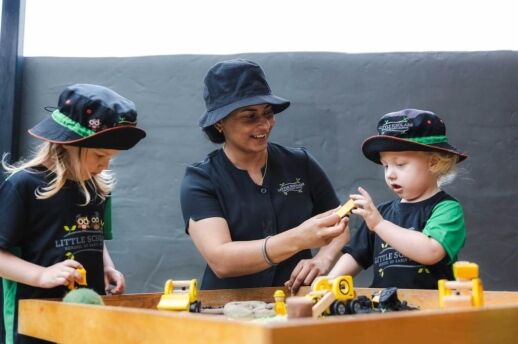
It is a legal duty. Under section 165 of the National Law, every service must make sure all children are adequately supervised, and under section 167 it must take every reasonable precaution to protect children from harm and hazards.
Supervision is also part of the National Quality Standard. ACECQA is clear that there is no single formula. Instead it describes supervision that is:
Intentional, relational and engaged with the children.
Responsive and flexible as the room and the play change.
Reflective and evaluative, so it keeps improving.
Source: ACECQA, Adequate supervision for children’s safety.
Regulation 115 of the National Regulations asks that premises are designed and maintained so children can be supervised at all times, while keeping children’s rights and dignity.
Inside the room, the Queensland Department of Education says the height and placement of furniture and play equipment must give educators a clear view of children at all times. Clear lines of sight are planned, not left to chance.
Read about how our learning environments are set up.
Sources: Education and Care Services National Regulations, regulation 115; Queensland Department of Education.

ACECQA lists six steps. Together they mean educators are positioned to see and hear the children, keep scanning and listening, and step in before a problem grows.
Arrange the room so sightlines reach every area, and know where the blind spots are.
Spread out so the whole room is covered, and adjust positions as play moves.
Look across the room often and keep track of where every child is.
Listen for changes in sound and respond to them.
Think ahead about what may happen next in the play.
Join the play and guide it before things go wrong.
Source: ACECQA, Adequate supervision for children’s safety.
Yes. ACECQA says educators adjust supervision through the day, including at mealtimes, sleep and rest, and transitions between environments.
Read how sleeping babies are checked.
Sources: ACECQA, Adequate supervision for children’s safety and Guide to the National Quality Framework.
These questions show how child safe practice works day to day. See how we approach child safety and the play zones in a childcare studio.
At Little Scholars
Our studios have glass panels throughout so educators and children are always visible, with no hidden rooms.
Our toddler program is built on warm routines, clear boundaries and active supervision.

Walk through the studios, watch the educators at work and ask anything about safety.