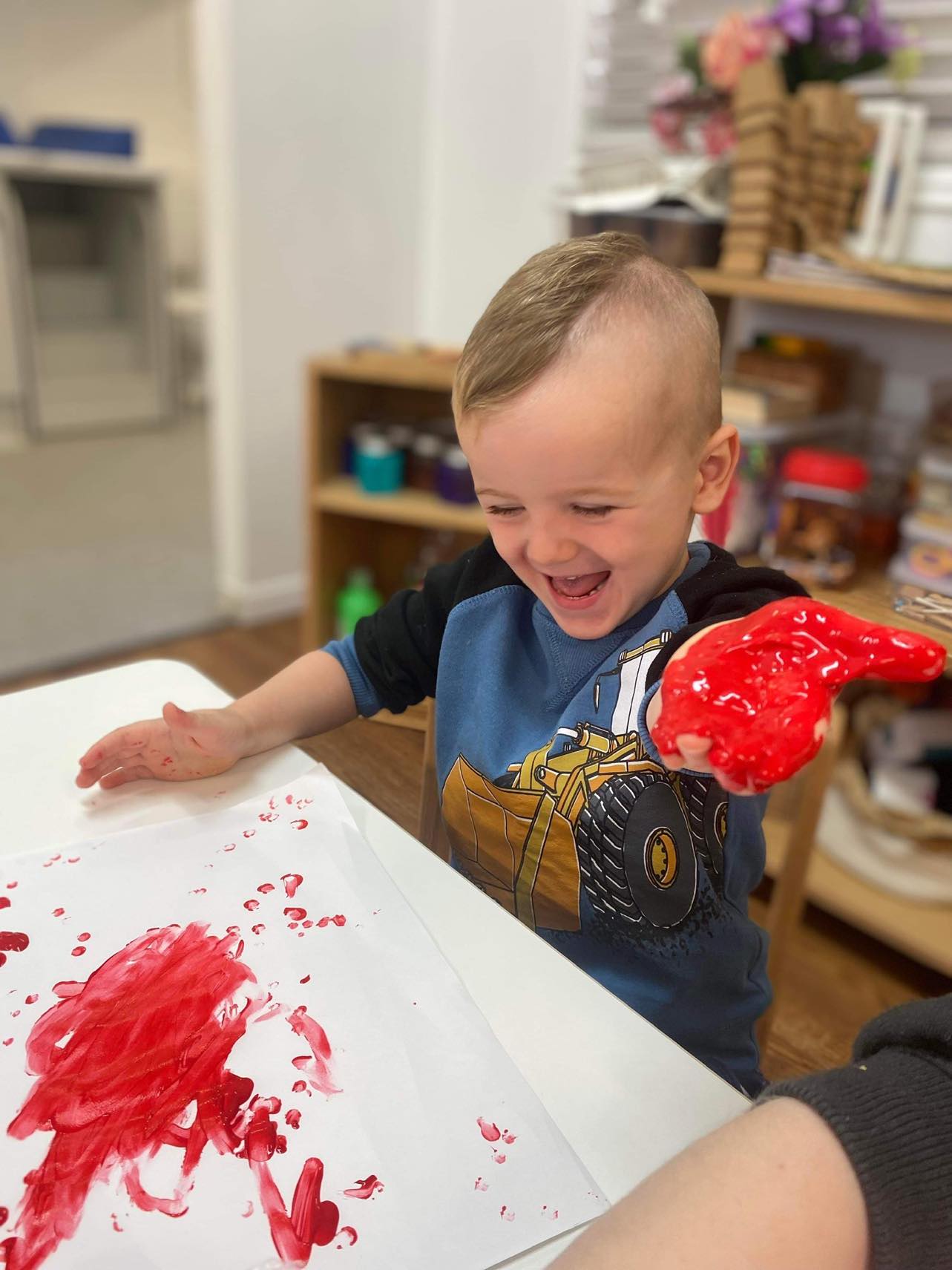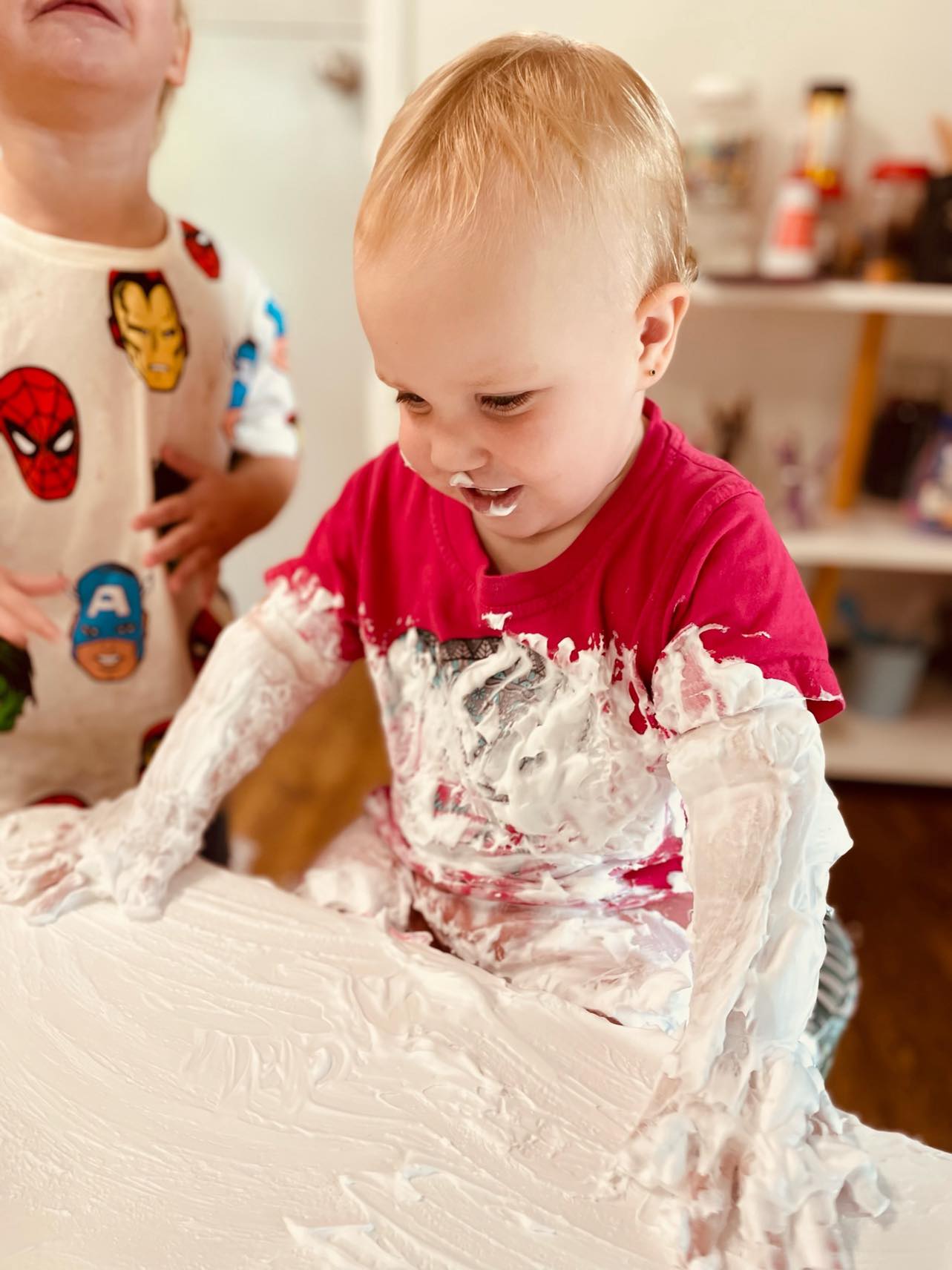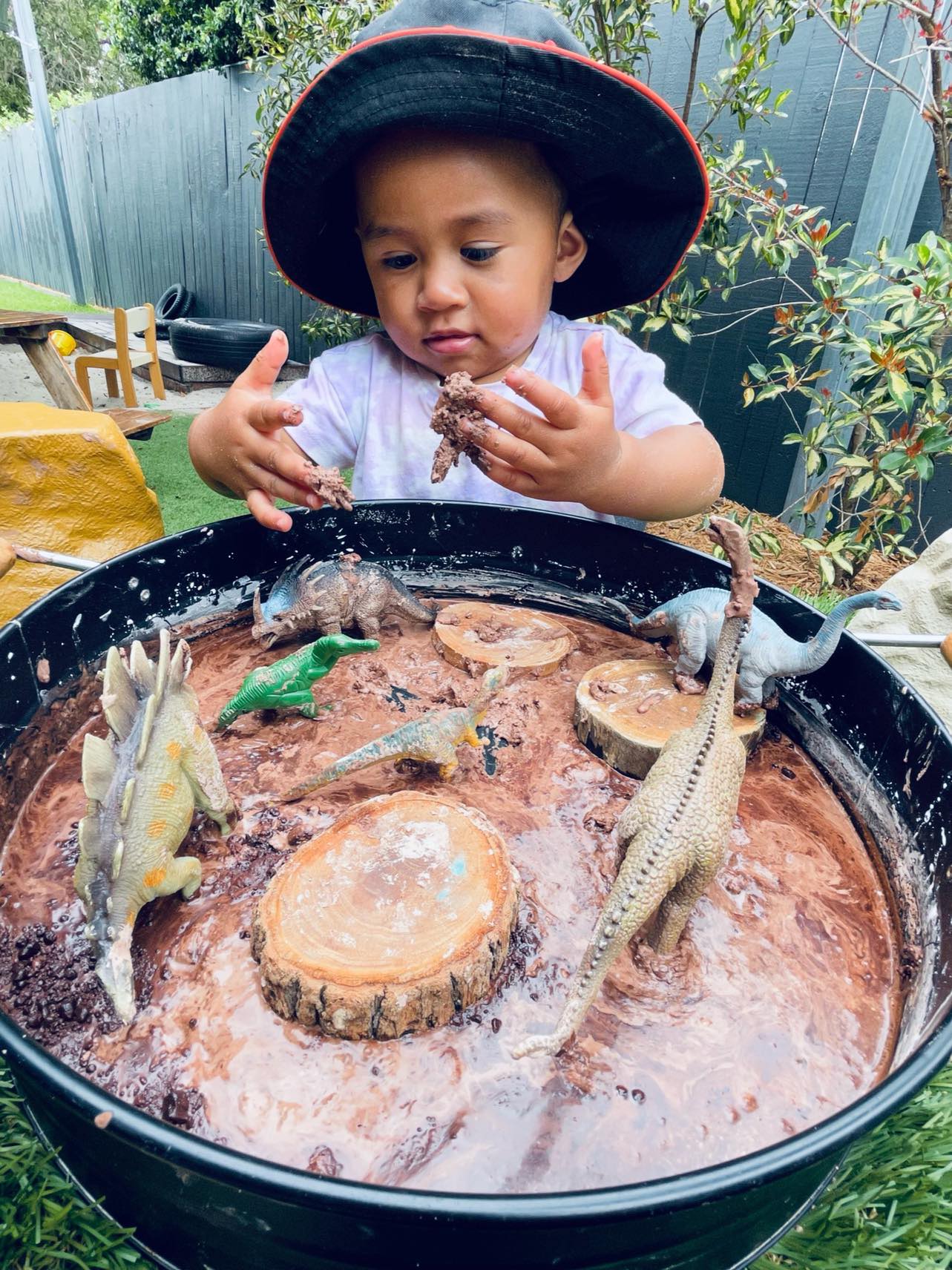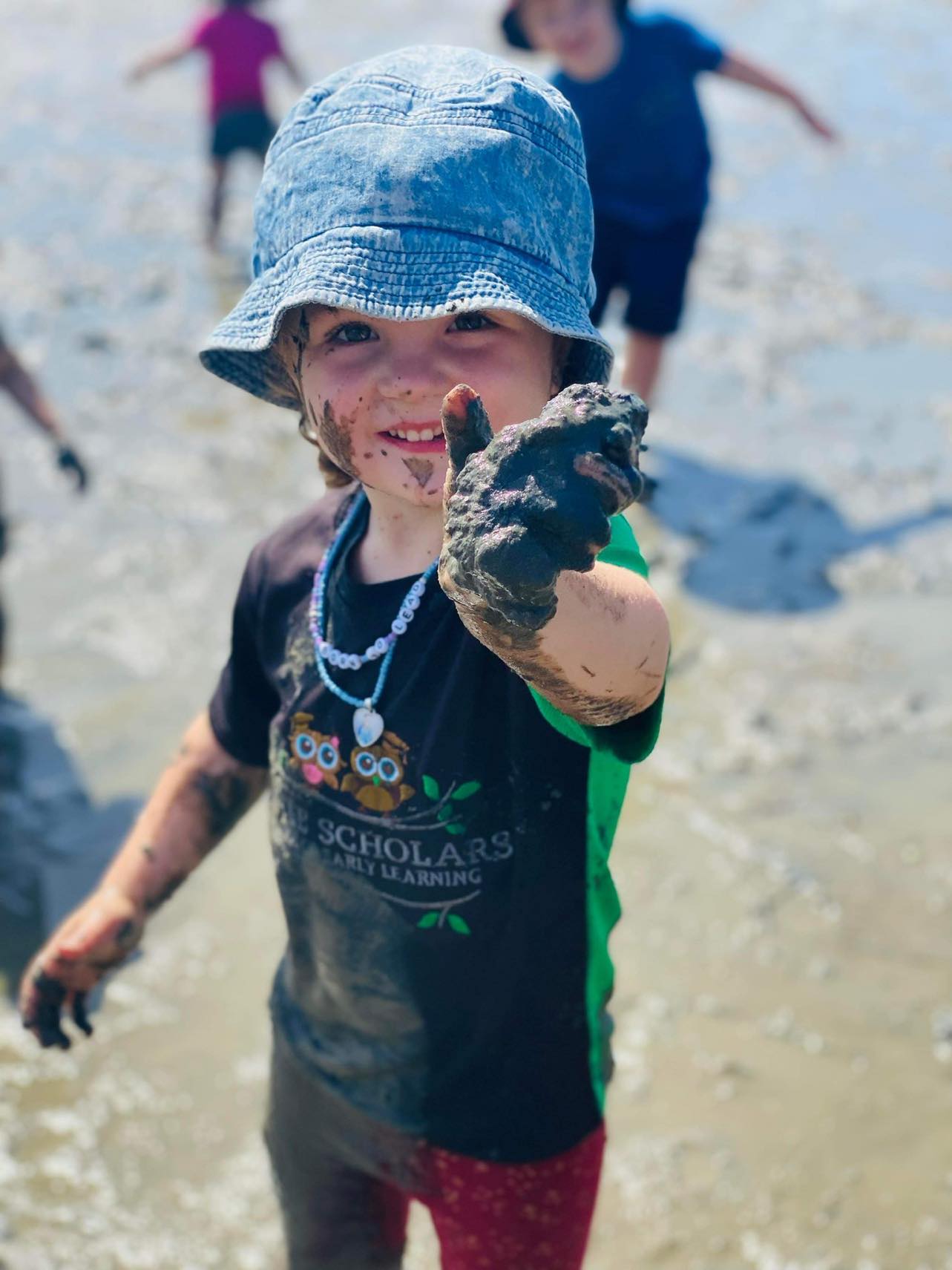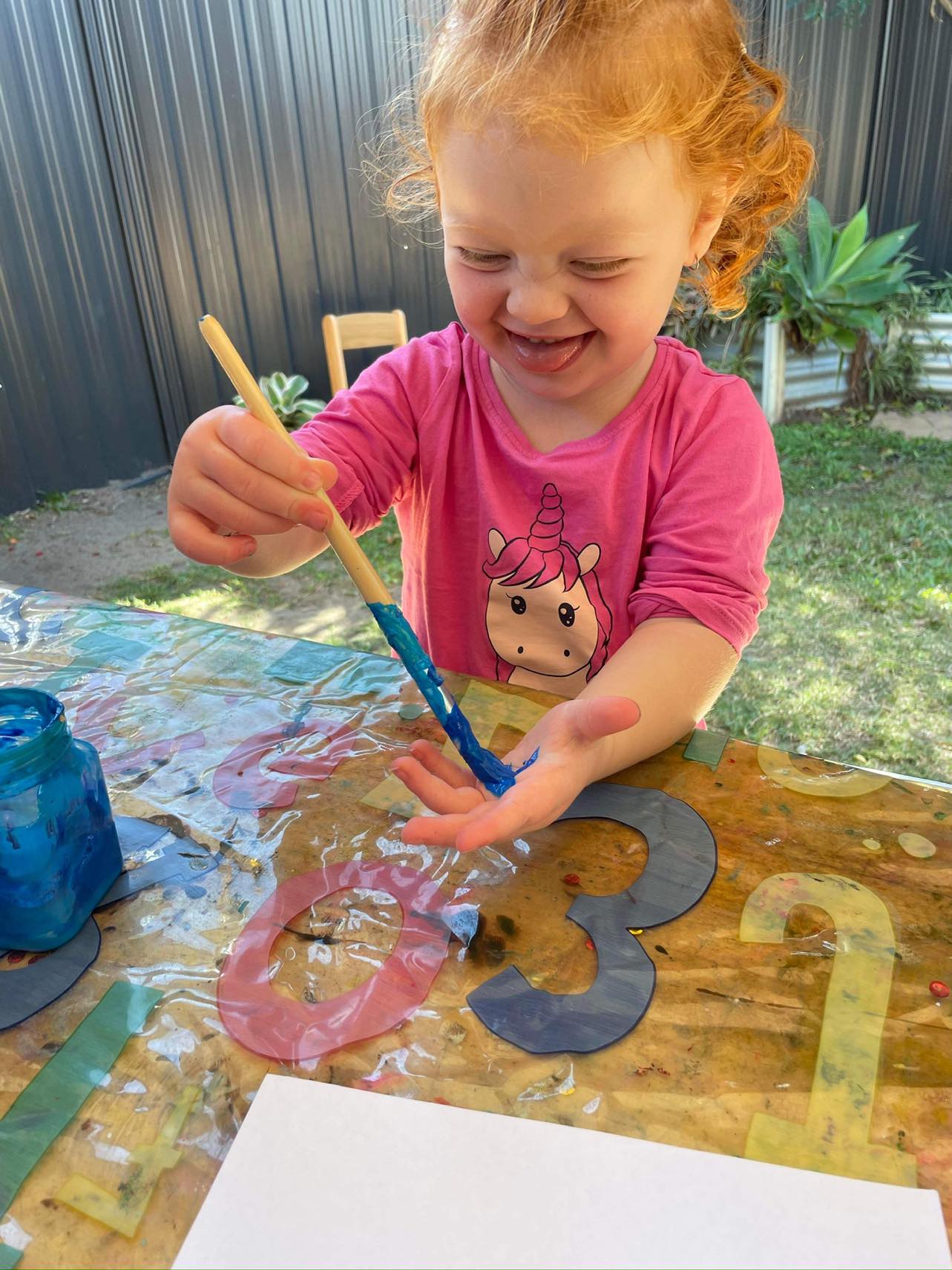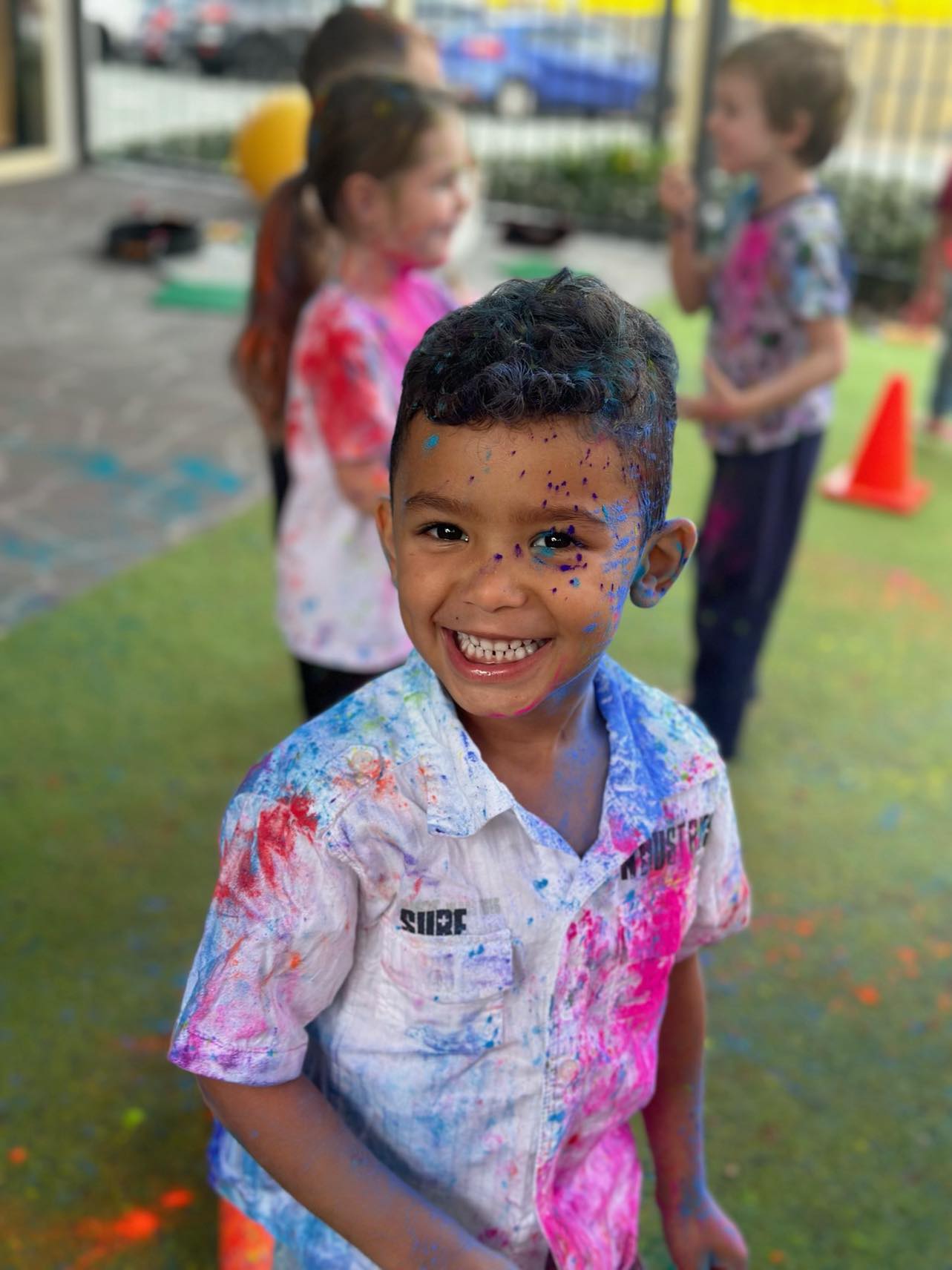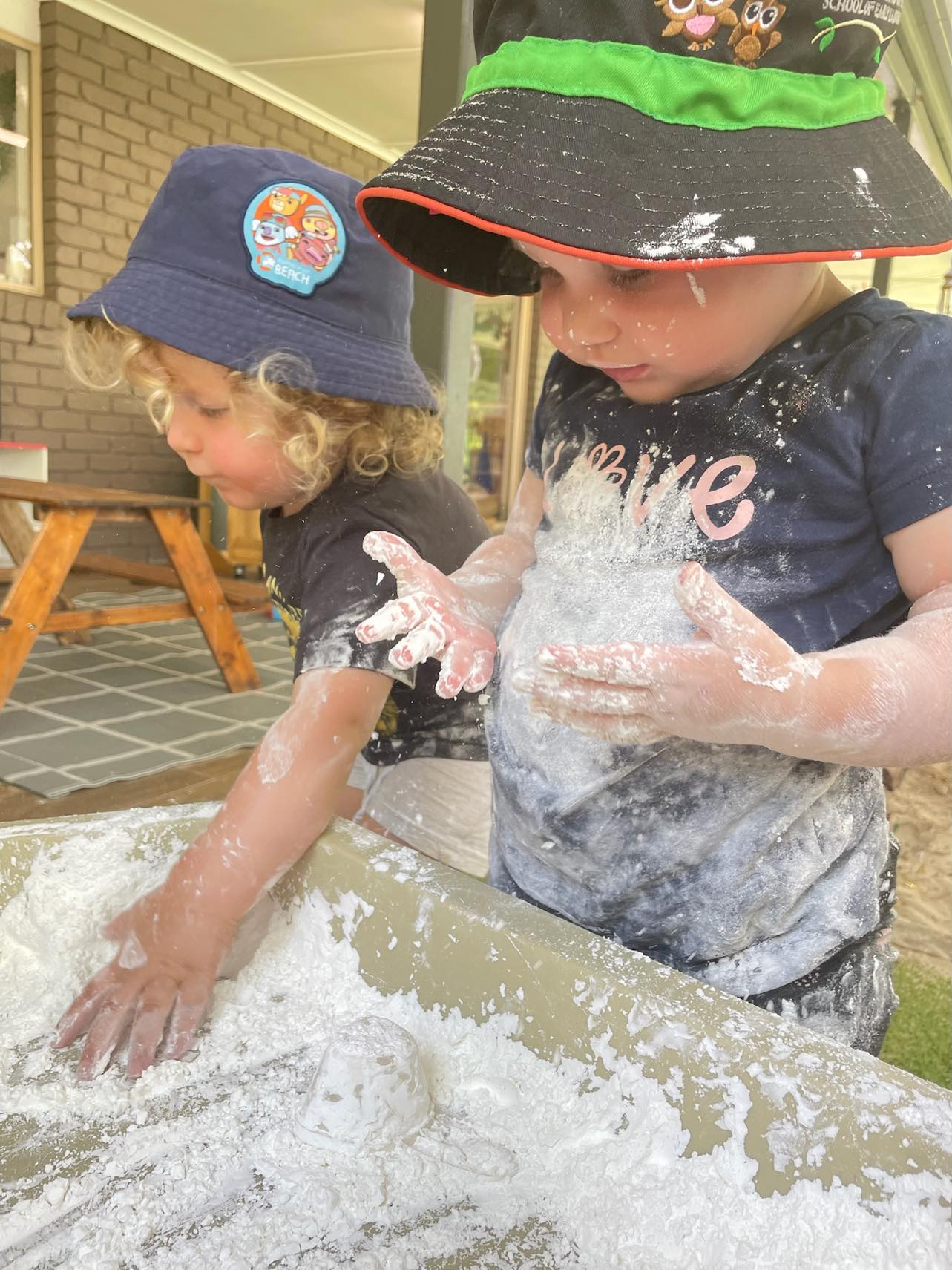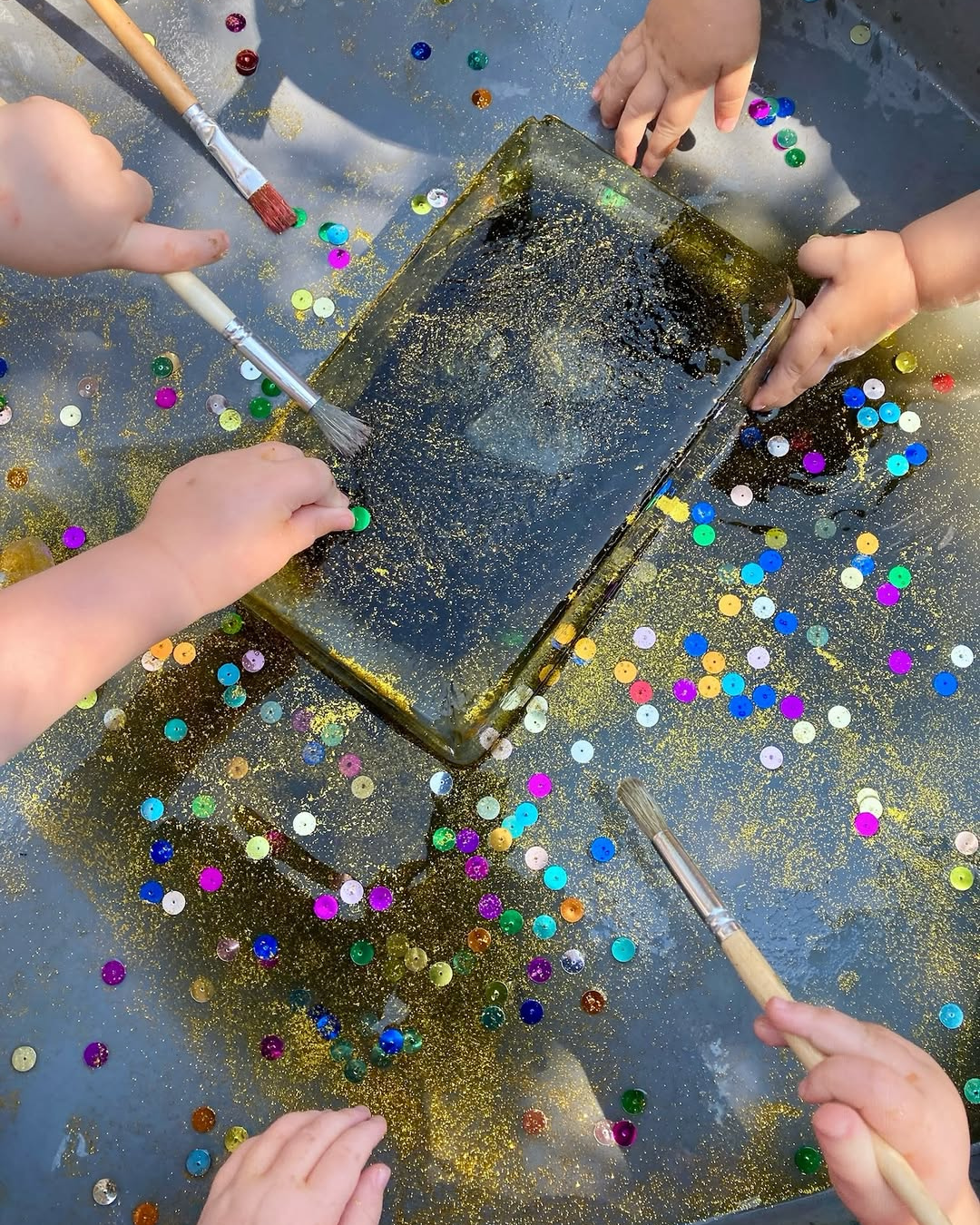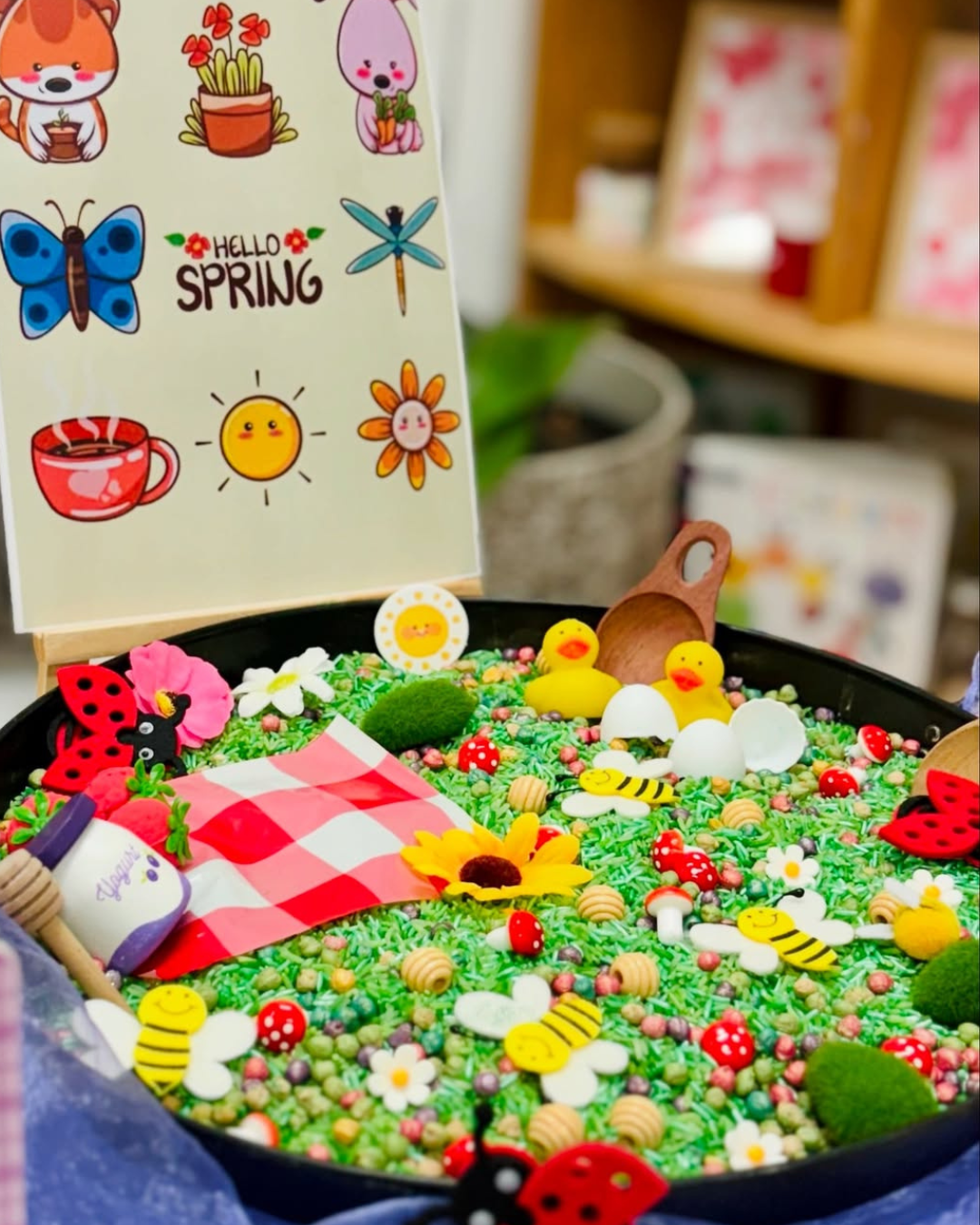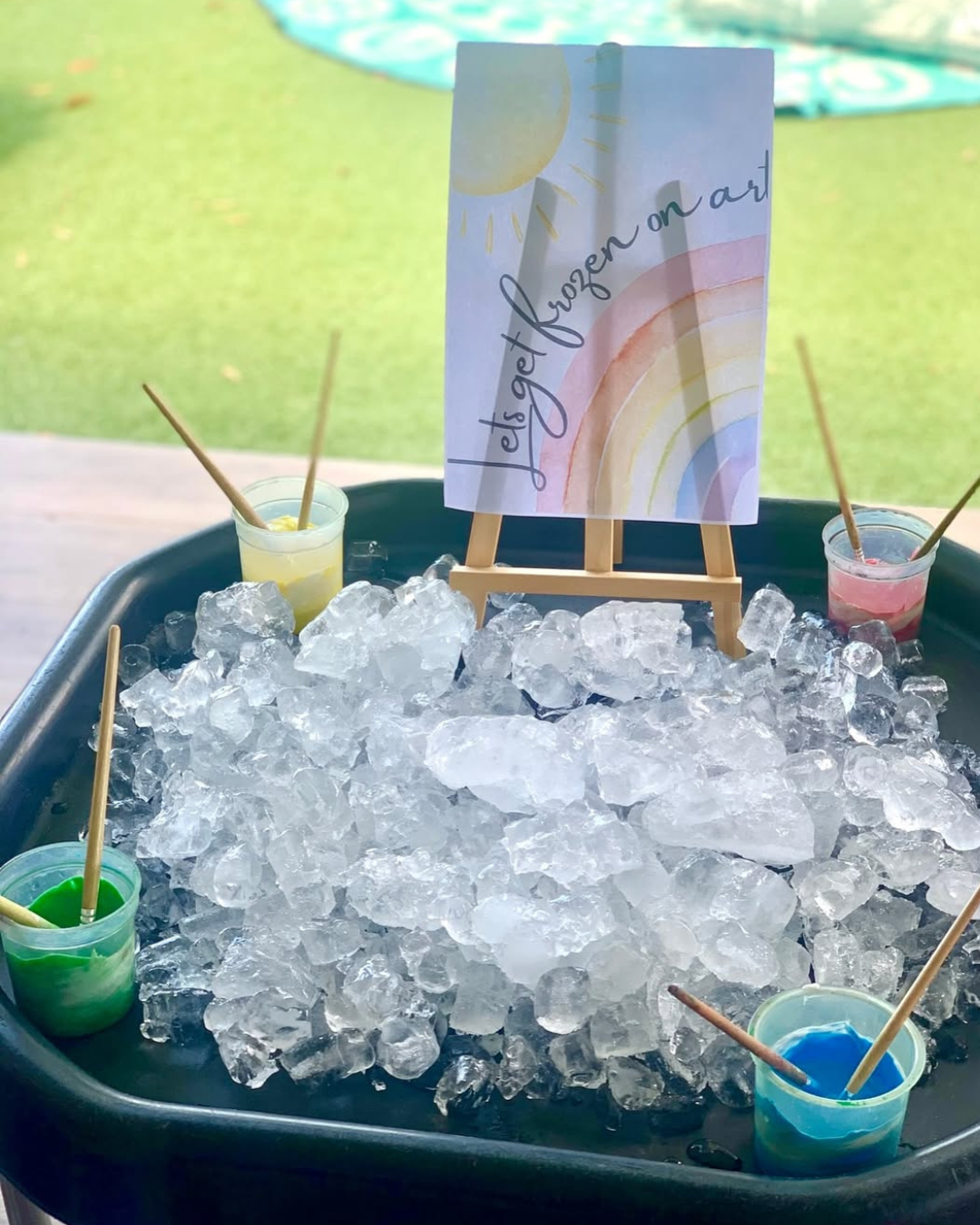
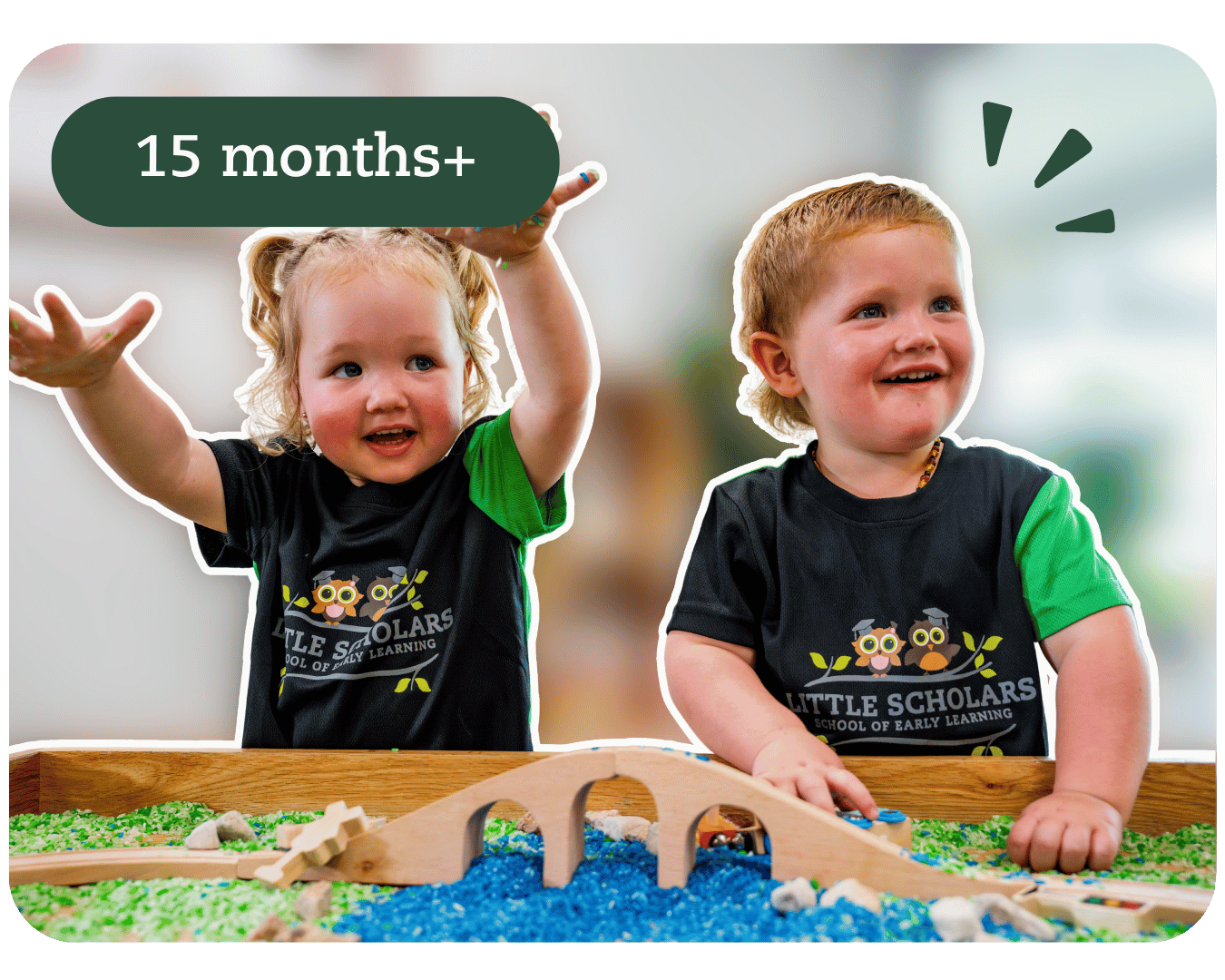
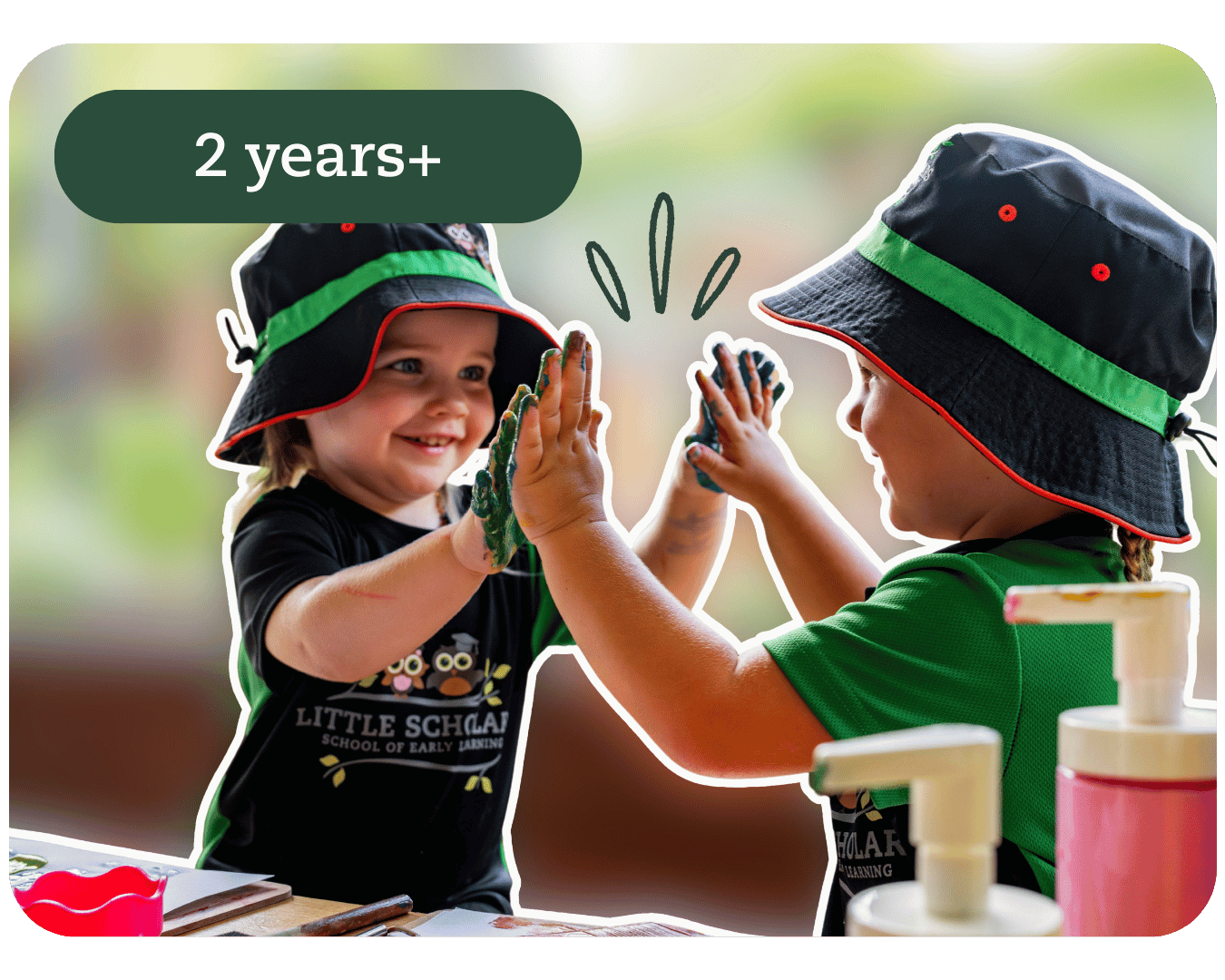


Learning to write. Learning to read. Learning to count. There is a certain set of expectations of things children are expected to learn around the time they are about to start school, but what about other equally important things, things that will give children just as many future benefits, but make parents cringe? What are we talking about?
Getting messy.
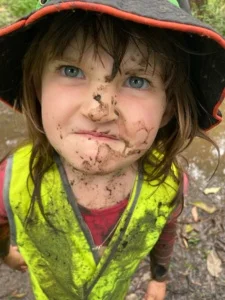
For a number of reasons, getting messy is an important part of childhood learning and development. While many parents understand the benefits of being out in nature, they may be less comfortable with the idea of getting messy while outside. Or inside, for that matter! Some of the reasons for parental discomfort in messy play could include:
Messy play can help children develop their fine motor skills, problem-solving skills, creativity and sensory awareness. It can also help them learn about cause and effect, and even how to manage their emotions.
A recent study by the University of South Australia (UniSA) looked at comfort of parents and early educator when it comes to messy and risky play in early education. Dr Margarita Tsiros, Senior Lecturer in Paediatric Physiotherapy at UNISA, said that given that nearly half of all Australian children ages 0-5 are in some sort of early education setting, further education and training for both early childhood educators and parents could help overcome some of the challenges that might be linked with nature play, which often involves both getting messy and taking risks.
This study explored the perspectives of parents and early childhood educators on unstructured nature play for young children. Participants were interviewed about their views on the benefits, barriers, and facilitators of nature play, and the researchers’ findings suggest that parents and educators value the benefits of nature play for children’s physical, social, emotional, and cognitive development. However, participants also identified a number of barriers to nature play, including time constraints, lack of access to nature play spaces, and concerns about safety and mess. The study also found that adults can play a gatekeeper role in nature play, by either facilitating or restricting children’s access to nature.
The findings of this study suggest that parents and educators need additional resources and guidance on how to engage with nature play and how to overcome barriers within early childhood settings and the home environment.
Messy play is of course, not limited to playing in nature, though there are plenty of opportunities outside to get a little dirty. But messy play is everywhere, from when a baby is exploring food in those early days, learning to feed herself, learning cause and effect when dropping food, that’s just one aspect.
As well, children are creative beings, and parents can attest to the fact that their little ones are directly drawn to arts and crafts that include glitter. OK, we kid a little, but art and creativity are a large part of the childhood experience, and will likely require sweeping, wiping and washing in the end.
Messy play is of course, not limited to playing in nature, though there are plenty of opportunities outside to get a little dirty. But messy play is everywhere, from when a baby is exploring food in those early days, learning to feed herself, learning cause and effect when dropping food, that’s just one aspect.
As well, children are creative beings, and parents can attest to the fact that their little ones are directly drawn to arts and crafts that include glitter. OK, we kid a little, but art and creativity are a large part of the childhood experience, and will likely require sweeping, wiping and washing in the end.
Specifically about messy outdoor play, a 2021 study by Melike Kandemir and Serap Sevimli-Celik, from the Department of Elementary & Early Childhood Education, Middle East Technical University, Ankara, Turkey, found that parents and educators believe that it can provide a number of benefits for children, including:
The study found that teachers and parents value the benefits of outdoor play for children’s development, but that they also have concerns about safety, messiness, and lack of resources.
The study also found that teachers and parents have different views on the role of outdoor play in children’s learning. Teachers were more likely to see outdoor play as a way for children to learn about the natural world, while parents were more likely to see outdoor play as a way for children to burn off energy.
The study also found that teachers and parents are concerned about the messiness of outdoor play. They worry about children getting dirty, tracking mud into the house, or ruining their clothes.
The study concludes by arguing that there is a need to better support teachers and parents in providing opportunities for children to engage in outdoor play.
Another study looked explicitly at vulnerable children and getting messy in play.
The study, “Patterns and attributes in vulnerable children’s messy play” by Sue Gascoyne, et al., explores the patterns and attributes of messy play in vulnerable children.
The study defines vulnerable children as “children who are at risk of social, emotional, and/or developmental difficulties.” It used a mixed-methods approach, including interviews with parents and practitioners, and observations of children’s messy play.
Researchers found that vulnerable children engage in messy play in a variety of ways, but that there are some common patterns. For example, vulnerable children often use messy play to explore their emotions, to develop their relationships with others, and to learn about the world around them.
The study also found that there are some specific attributes of messy play that are particularly beneficial for vulnerable children, such as, messy play can help children to develop their sensory awareness, their problem-solving skills, and their self-confidence.
But researchers also found that vulnerable children often use messy play to express their emotions. For example, children might use messy play to express anger, sadness, or joy. As often vulnerable children are facing hardship other children might not be, this was important.
The study also found that messy play can help children to develop their relationships with others. For example, children might play together with messy materials, or they might help each other to clean up after messy play.
The study concludes by arguing that messy play is an important part of the development of vulnerable children, and that it should be encouraged.
Observing the babies experience this source of joy, excitement, relaxation and total presence, I can’t help but feel a sense of wonder and awe.
-Jodie, lead educator
Jodie Dzarir is the lead educator in the nursery studio at Little Scholars Burleigh campus. She agrees there’s a multitude of benefits when it comes to allowing children to get messy while they explore their world.
“My favourite would have to be the social and emotional development encountered, and the creative/imaginative stimulation it provides,” she says.
“Messy play allows babies the freedom to convey their emotions, experimenting different forms of self-expression. It stimulates their imagination and creativity as they engage in open-ended activities with no predetermined outcomes.
Observing the babies experience this source of joy, excitement, relaxation and total presence, I can’t help but feel a sense of wonder and awe. Witnessing their endless curiosity, laughter and the genuine connections they form with one another is heart warming,” Jodie continues.
For parents who cringe at the idea of their young child coming home filthy, she encourages an open mind and a trust in the process.
“For parents, messy play is an important part of your child’s development and can be vastly beneficial to their learning journey, as it allows them to explore, learn and develop essential skills. Rest assured, we prioritise safety and hygiene during these activities to provide a controlled and enriching experience for your child,” Jodie adds. “Investing in a few basic outfits for messy play could be one of the best purchases you make.”
Susan Cooper, group pedagogical leader for Little Scholars, agrees that messy play is an important vessel for play for young children.
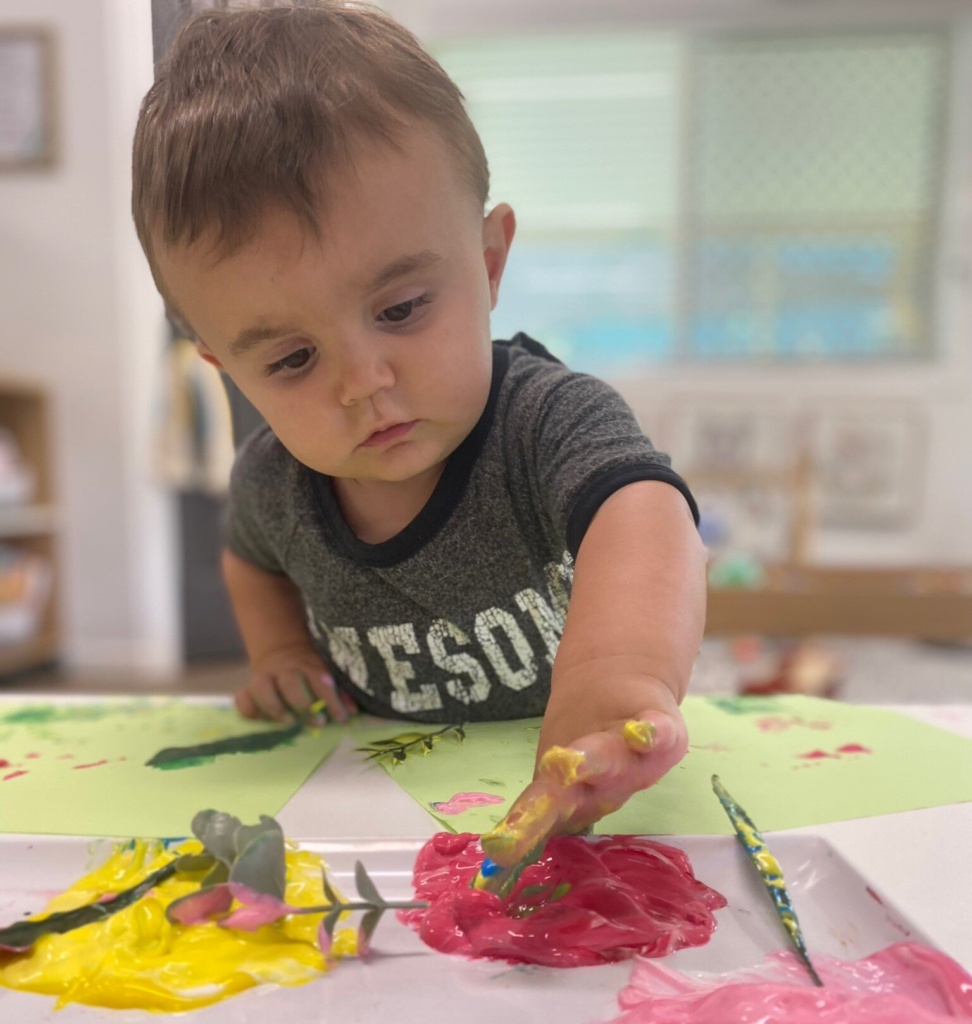
I have seen through my travels how messy play can act as an emotional outlet for many children, they’re able to verbally express themselves, it’s engaging, enjoyable and most importantly fun, interactive, hands-on learning, ultimately encouraging the love for learning, says Susan.
“While we provide these experiences within our curriculum, there is an element to planning around messy play experiences, planning for management to risk, management to supervision and ensuring that children are able to engage within the experiences that is developmentally age-appropriate, meeting their needs and supporting an inclusive environment for all children.”
Although some parents may initially hesitate at the prospect of cleaning up after a lively outdoor romp or an exuberant indoor painting session, (we understand, you’re busy enough!) the abundant benefits of messy play far outweigh any temporary inconveniences. As both parents and educators, we should actively seek out opportunities to provide children with the enriching sensory experiences and learning opportunities that messy play offers.
Yes, messy play might require a deep breath followed by the use of brooms, vacuums, and mops, but let’s not forget to focus on the incredible outcomes that emerge from these seemingly chaotic moments. We wholeheartedly encourage parents and educators to embrace the magic of messy play. It’s in these moments that we witness the spark of imagination ignite, where education and career trajectories may take shape, and lifelong passions may be kindled.
Remember, every single fun and messy experience can pave the way for a world of endless possibilities. The memories created through messy play will remain etched in the hearts of children, shaping their growth and development in ways that extend far beyond the spills and splatters. Join us at Little Scholars, embrace the mess and the extraordinary potential it holds blossom before our very eyes.
References:
Teaching a small child self-respect, to find and use his or her own voice can be one of the most valuable lessons you share as a parent or special adult in that child’s life. When children can speak up for themselves, this will help them in every aspect of their lives, for the rest of their lives. Having the ability to use their voices, they’re able to command respect, protect their feelings and their bodies, and increase their confidence in their ideas, their relationships and in various social settings. There are several facets to teaching a child to use his or her voice.
Allow your child to make choices about his or her body. You can start by allowing them choices on what to wear, and checking with them if it’s ok to help them dress or undress. This is the beginning of teaching your child about consent, even if he or she is a baby. Loved ones can also model consent by asking, ‘May I pick you up?’ or ‘May I give you a hug?’ and in the bath or nappy changes, asking permission before you clean or wipe your child in private places. Those conversations can lead to discussions about appropriate versus inappropriate touching, and even little children should expect to be asked permission from anyone who comes into contact with them. Even if they’re your children and you’ve been looking after them literally since day one, you’re showing them you respect their body by asking first.
This is the same in our campuses. It’s our policy to maintain the rights and dignity of the children, that includes in terms of nappy changing and toileting, so we try to provide privacy where possible from everyone in our campuses. Our educators are all trained in respectful care, and host not-for-profit visitors such as Bravehearts, who teach children about advocating for body safety, yes and no feelings, the difference between parents, trusted adults like doctors or educators looking after their bodies, versus strangers and unsafe adults.
We recommend teaching children young the proper names for their body parts and use them any time you are talking about them. When they’re first learning to speak, this can be a great bathtime conversation as you point out the names of various body parts. Keep any cringing when talking about body parts to yourself. The sexualised nature of private body parts — giggling or shame when talking about them — that’s adult stuff that we don’t need to put onto children.
“I teach my children “Your body belongs to you and you only” as well as naming their correct private parts which are theirs only,” says Holly, a lead educator in the Senior Kindy studio at our Staplyton campus. “Children really need to be educated about body awareness/safety.”
Why is teaching them proper names so important? Getting used to these conversations young can reduce embarrassment, something unnecessarily expressed by many adults and in previous generations, and establish ongoing communications with children about sex/sexuality. But most importantly, this educates and empowers little ones about their body safety, and research shows this could protect them from predators.
Explain to your child that nobody is allowed to touch our private parts unless it’s for hygiene or medical reasons and that people who have to come in contact with your child’s private areas have to ask permission first. But while there’s no shame in their bodies, they should also know there are parts of the body that are private and have it explained to them those parts are just for them.
Holly says additionally, they have conversations with the children with scenarios about stranger danger and the steps they need to remember in case anything like that happens. They also have conversations about who the children name as their ‘safe people’.
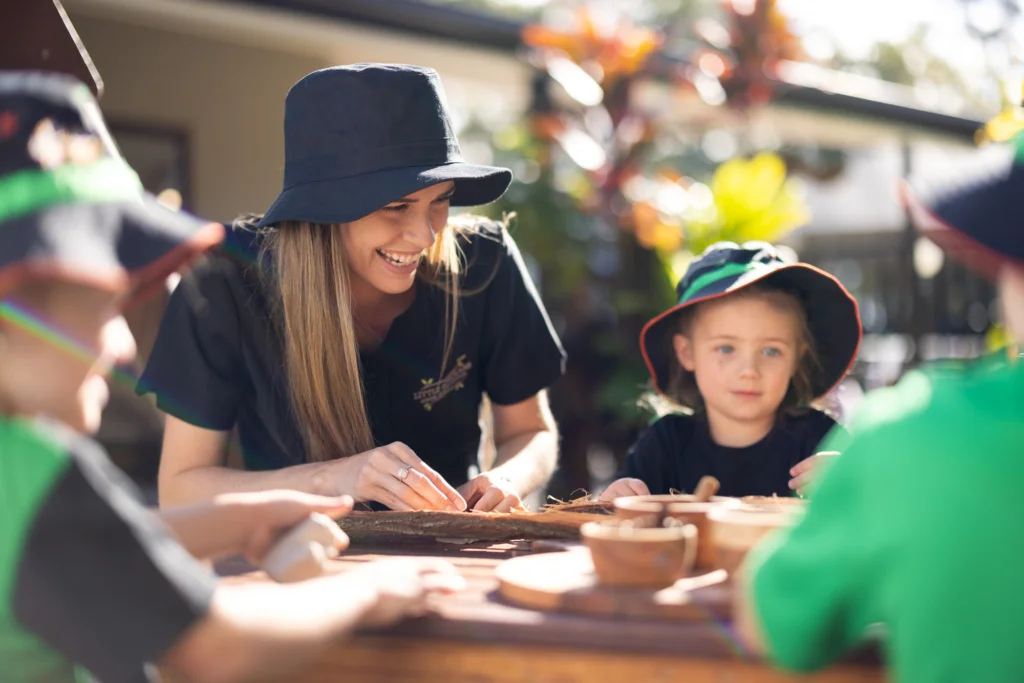
There are lots of ways to show children respect, and it’s important when you expect them to respect others. Try to refrain from talking about your child, especially in front of them, to others, or be mindful of what you do share. This shows your child you respect his or her privacy. You may remember a time when you were younger when a parent or someone you loved shared a story that embarrassed you – even as an adult, you remember. Your child could too. Before you tell a story, ask yourself how they’d feel about you telling it.
In our increasingly digital world, this also goes for sharing everything about them on social media. Once it’s online, it’s there forever. Even if it in theory disappears after 24 hours, screenshots can be taken. That also goes for other people’s children – other parents may not want them on social media, so keep online sharing to your own children. Consider what you are posting, would your child want to have a picture for the world to see of themselves on the potty or with a bare bottom when they’re older? Keep in mind others may Google them in the future; potential and current employers, associates, and most scarily, predators.
Another way you can show your child respect is by discussing inappropriate behaviour away from public settings. Keep important conversations for a time when you can discuss them privately. You may think embarrassing them by calling their actions out in public might stop them from doing it again, but this will likely backfire. You can say in public something like ‘We will have an important talk about this later.’ and stick to that. But highlighting negative behaviours in public only causes humiliation and shame, and no one needs to feel that way.
Don’t force children to hug or kiss anyone, even family. You could ask, for example, how they’d like to say greet people in each social situation.
“I offer children the choice of a hug, holding hands or sitting together as an alternative to allow them to make the choice. When saying hello or goodbye they can say just the words, high five, fist bump or hug, but it is always up to them,” says Claire, an educator from our Nerang campus. These options still teach them to be polite if that’s important to you, but shows them how they can do it within their comfort level and respects their physical boundaries.
Parents often focus on teaching children to be respectful, such as learning to apologise when in the wrong, but teaching children to just say ‘sorry’ versus understanding how their actions actually affect others and learning to own their actions is a better way to develop their emotional maturity. By asking the children questions such as ‘how do you think your sister felt when you hit her?’ or ‘how were you feeling when you broke that toy?’ and ‘what would you like people to do if they recognise they made you feel sad?’ will get them to begin to understand owning up to their mistakes and learning to say sorry meaningfully.
This is also where modelling comes in. It’s important to apologise to your child when you make a mistake. They learn from you, and by saying you’re sorry sincerely shows children that no one is perfect, that everyone makes mistakes, but it’s how we respond to them that counts. This could be done in other ways, rather than an adult yelling when angry, but by speaking kindly and respectfully to them, even when it’s difficult to, or if you’re setting a limit, children begin to understand their actions have consequences and can respond to situations differently in future.
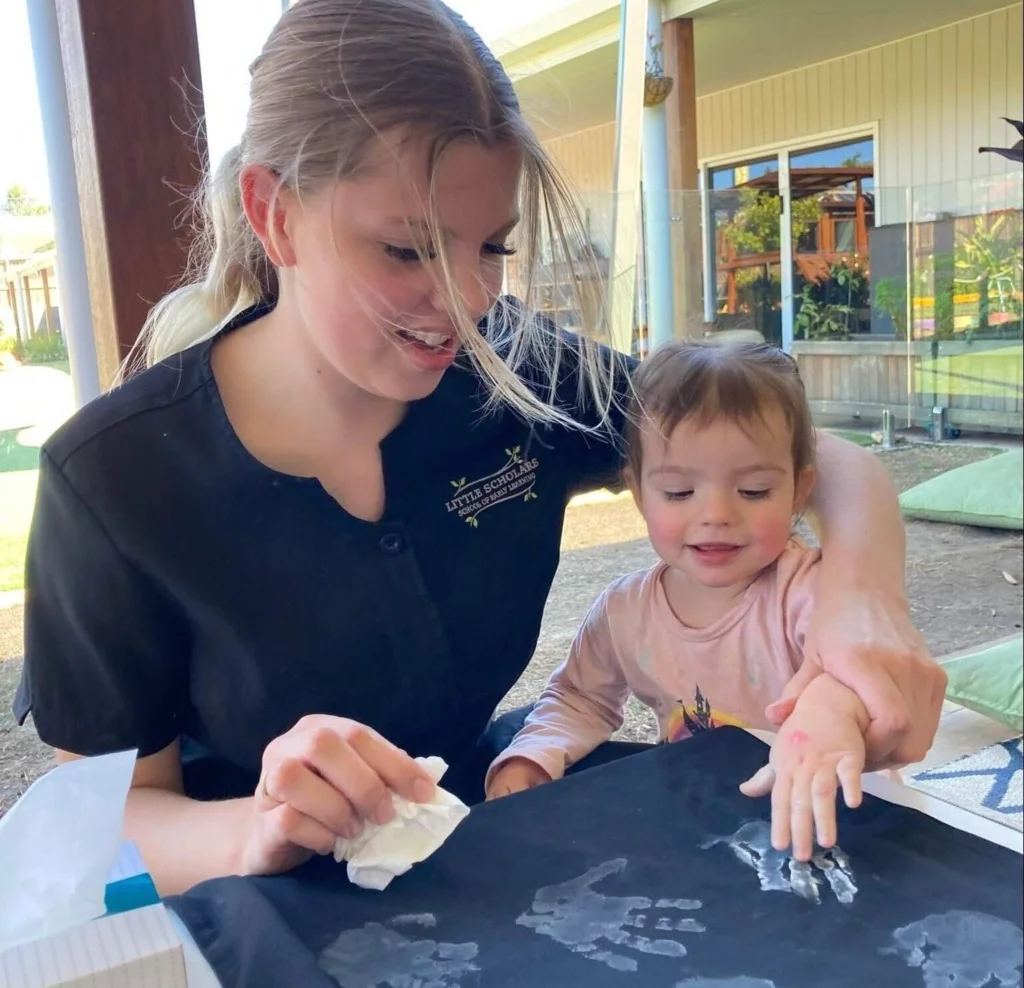
Let your child answer for themselves. Refrain from answering questions directed at them. If they don’t want to answer, don’t make a big deal about it.
“We use language to acknowledge how children feel for example, ‘I can see that you are upset, how can I help you?’” says Claire. “We use this language to help children to speak for themselves every day so it becomes second nature to them.”
We guide our educators to tune in to the behaviours, actions and emotions of the child to identify what they may be trying to communicate.
“Through listening to gestures cues, along with words, shows respect and ensures we are responsive to children and value their rights,” says Susan Cooper, group pedagogical leader for Little Scholars. “It is important for early childhood educators to validate what the children may be feeling and this is done by our educators asking the child about their emotions and setting spaces and environments where the children feel safe and secure to express their feelings comfortably.”
Tell them it’s OK to say ‘no’ if they feel unsafe or unsure. This teaches children and young people that it is OK to stand up for themselves and to be assertive if something doesn’t feel right. Following this, they should know that nothing is so ‘yucky’ that they can’t tell someone they trust about it. Hopefully, this is something your child never has to deal with, but if they’re asked to keep something secret that hurts them or makes them uncomfortable, then by talking to them about situations like this, they’ll speak up straight away and not worry about getting in trouble by breaking a ‘secret’. Teach them the difference between secrets, privacy, and surprises.
Here’s an explanation of the differences. A surprise is something that should be fun, happy, and temporary. Secrets that are meant to be kept for a long time are usually meant to protect someone or keep someone from getting in trouble. Although we want children to be wary of secrets (therefore, keep language in mind) —and especially to come to us when they have an unsafe secret—they also need to learn that some things should be kept private. Privacy isn’t about keeping someone from getting in trouble; it’s about respecting a person’s personal information.
Finally, please feel free to talk to your educators or campus managers about how they manage any of these conversations and talk to them about how you prefer it handled. We want your children and your family to feel respected and heard, safe and happy in our care, and if we can help with those conversations, we’d like to. These are also conversations you should have with extended family or people who will be in your child’s life.
Most importantly, model the person you want them to become. Children will remember their biggest role models their entire lives, so being a respectful, caring, supportive, confident adult influence will teach children the best person he or she can become. By showing them the respect they deserve and teaching them about self-respect, we’re setting them up for their future. Self-respecting and resilient children who spend time in positive, affectionate and supportive environments, led by clear and reasonable guidelines, and have healthy connections to parents and other adults, grow to be adults with the ability to bounce back from challenging situations their entire lives. And, all of the ways you show respect for children teaches them how they should show respect for others.
If you have a child at Little Scholars, you’ve likely heard of ‘The Collective’ but do you know what it is? We thought it might be time for an explainer!
Little Scholars School of Early Learning’s The Collective is a service-wide, multi-faceted educational initiative, designed to enhance each child’s learning and development and best support educators’ time spent with children.
The development of The Collective is based upon early childhood pedagogy. Children are provided the time and space to explore, imagine, create, problem solve and develop social groups and guided to find their individual learning journey. The Collective allows for educators to have freedom in how they document and plan for children. This supports a strength-based approach with our team and highlights individual skillset of our educators and value the multiple voices being heard, embedding a collective response to children’s learning.
Understanding the demands of documenting processes, Little Scholars wanted to create a streamlined approach to the educational program across all our campuses. The intention was to demonstrate quality over quantity, foster children’s growth, and develop them to become successful citizens and critical thinkers. This curriculum approach also supports educators to adopt theory and put it into practice. Educators, through observations of children’s play, conversations and their interactions within their environment, explore what the child might be thinking. This is then the beginnings of the planning process within our collective curriculum.
Alice Micklewright, campus manager of Little Scholars Burleigh, with her team, came up with the idea of The Collective and led its early development.

Alice Micklewright, campus manager of Little Scholars Burleigh
“I wanted to look at curriculum for a while because there were a lot of things that we felt were just kind of there but didn’t feel like they had a place, so streamlining that focus was good.”
“We had a lead educator meeting one night and we talked about how the educators were feeling in general, and some of the comments were just like ‘I feel like I spend more time writing things down than I do with children.’ They are still with the children most of their time, but when you’re feeling like you’re trying to focus on something else and not giving the whole attention to something and being present, it can be really unsettling.”
That was at the peak of the pandemic crisis, according to Alice, and her team became cognisant that what they were doing in the moment was far more important than anything else.
“The first conversation we had, we looked at what we were doing and wrote down notes on the back of the pizza box – ideas about why we’re doing what we were doing, what the processes were and what we felt didn’t really fall within the planning cycle appropriately for it be conducive to having good outcomes for everybody involved.”
“We really started The Collective off the back of our Engagement Initiative – that’s the one day a month we have with no documentation of photos, no technology. It was purely based on educators getting back in touch with engaging with children and not focusing so much on some of the perceived pressures that have come about in the sector in terms of things like families’ expectations on photos being received, and the amount of documentation that sometimes can spiral. It is a regulation for services to demonstrate planning toward an educational program for children. We wanted a streamlined approach to guide our campuses to set the benchmark to support and engage.
“It’s really been child-driven on the focus of what we want to do,” she says.
Melanie Excell, Operations Manager for Little Scholars, agrees.
“When we started this process, we gathered information from a variety of different perspectives – including families and children, and professional training and resources,” Mel says.
There was a vast amount of training for educators to understand new processes.
“At its core, it’s really been just trying to pare back what we were doing to deliver quality curriculum for children, that supports their outcomes and their developmental needs, to generate a stronger culture of critical thinkers in terms of children and educators,” Alice adds.
Weekly, rather than daily, detailed written updates are now sent to families, allowing educators to focus more on being with children. Families still get photos daily to see what their child has been learning and enjoying that day, but learning outcomes, routines, links to Early Years Learning Framework and research are saved for the end of the week, and individual child updates are sent out termly.
“Sometimes you find that services will continue to add a lot of documentation [about each child] and to try to meet the needs of the framework and the standards, when it can be a lot simpler and child focused,” Alice says.
The critical reflection component of the curriculum is most important, according to Alice.
“Everything we do really needs to have a purpose, a thought behind it and a reason why we want to engage in it that way, and then involving the children in that process and the families as well.
“If you look at the planning cycle in the National Quality Framework (NQF), you gather information from an idea or interest that children have, engage the children in what they’d like to do moving forward and analyse the information you’ve gathered, plan for it, then reflect and review is the whole cycle.”
For example, educators might look at children who are engaging in an activity and would consider it across developmental milestones and outcomes what they think the children are trying to achieve. In a nursery, where early learners can’t yet speak, educators might observe a child picking up resources and putting them into a basket and taking them back out, a learning behaviour known as a schema.
“Children are exploring all of these different concepts every day, even though you may not realise because they’re playing and it’s natural for them to do that,” says Alice.
The use of open-ended questioning with children supports the understanding of their play and helps gain a child’s perspective as opposed to an adult’s agenda.
The planning comes from what educators talk about in the moment, and educators act on what they’ve gathered, followed by a review at the end, where they decide if they activity worked well or didn’t, and if it didn’t, questioning why – were the children just not interested in that topic anymore, and is there a reason why?
Little Scholars produces individual learning journeys for each child that highlight significant milestones and achievements to their development whilst in our care. Various modes of documentation record the learning identified through the child’s participation in our program.
Little Scholars sends out the personalised mid-year assessments to the families and then the end of the year they’ll receive a transition letter which wraps up their child’s journey, acknowledging achievements and progress in their studio.
“One of the other points we highlighted when we started reviewing the curriculum, is that we wanted to educate our families that what we were doing. We know that there’s a lot of electronic information available as well, but the value of that face-to-face conversation and relationship with staff and families, is important too,” Alice says.
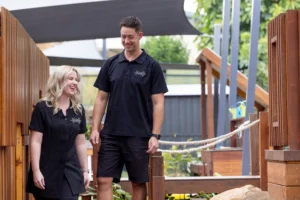
The Collective allows for educators to have autonomy in how they document and plan for children. This supports a strength-based approach with our team,” according to Susan Cooper, group pedagogical leader for Little Scholars. “It highlights individual skillset of our educators and value the multiple voices being heard, embedding a collective response to children’s learning.”
Alice says it’s still a process that Little Scholars is undergoing.
“Ultimately, it’s important that we have educators here who feel stable and like they want to contribute and that they are getting recognised for the things that they’re doing, and we believe The Collective does that.”
Jae Fraser, founder of Little Scholars agrees. Little Scholars wants to ensure educators feel seen, heard and valued, because our educators’ passion for our children and their education is why we’re delivering exceptional educational play-based programs.
“We really care about and listen to our teams, so when they are feeling pressured due to significant amount of paperwork, we act,” says Jae. “It’s all about the educators and the children, so if we can achieve amazing outcomes without all the unnecessary paperwork, and children and educators are interacting and engaging in really meaningful ways – this is what we need to focus on.”
More about Little Scholars:
Book a tour today!
When you think of sensory play, you might picture messy playdough or rice bins — but there’s so much more to it! Contrary to popular belief, sensory play isn’t just for children who need extra support with development or social skills. In fact, all children benefit from sensory activities, no matter their age or abilities.
At Little Scholars, we believe sensory play is one of the best ways for children to learn, grow, and explore their world — all through touch, sound, smell, sight, and movement.
Sensory play refers to any activity that engages your child’s senses — touch, sight, smell, taste, hearing, and even their internal senses like balance and body awareness.
From squishing playdough and painting with fingers to listening to new sounds or jumping in piles of leaves, sensory play helps children make sense of the world around them through hands-on exploration.
It’s natural, instinctive, and incredibly beneficial — babies begin sensory exploration from the moment they’re born! As parents and educators, we simply guide and encourage this curiosity in fun and creative ways.
You don’t need fancy toys or expensive materials to provide amazing sensory experiences at home. Here are a few fun, budget-friendly ways to get started:
A sensory bin is a simple container filled with materials that feel, sound, or look interesting — think leaves, sand, rice, shredded paper, or water beads.
Here’s an easy-to-follow recipe on one off our favourite sensory bin activities, moon sand!
Tip:
Always supervise young children during sensory play, especially if they like to explore with their mouths. Avoid small items that could pose a choking hazard.
Yes, playing with food can be encouraged! Sensory food play helps children explore textures and smells, which can even reduce picky eating over time.
Try:
Remember: sensory food play is different from mealtime — it’s about exploration, not eating dinner with their hands!
Turn everyday items into sensory toys!
To create a sound tube:
This simple DIY helps develop auditory awareness and fine motor control.
Sensory play might look simple, but its benefits for development are enormous. Here’s how it supports your child’s growth:
When babies and toddlers play with different textures, sounds, and materials, they form new neural connections in their brain. These experiences lay the foundation for lifelong learning and problem-solving.
Exploring new sensations stimulates brain areas related to memory and attention. Activities like sorting, scooping, and identifying objects help toddlers remember patterns and details.
Through sensory play, children learn how to share, cooperate, plan, and problem-solve. These experiences build confidence, resilience, and social awareness.
Pouring, pinching, scooping, and stirring all strengthen fine and gross motor skills, improving coordination and hand-eye control — essential for writing, dressing, and self-feeding later on.
Sensory play helps children become little scientists — testing, observing, and learning how things work through trial and error. This kind of hands-on experimentation fuels curiosity and independent thinking.
Surprisingly, sensory play can even make your child more open to trying new foods! Research shows that when children physically play with vegetables or unfamiliar foods, they’re more likely to eat them later.
At Little Scholars Early Learning, sensory play is at the heart of everything we do.
We’re a privately owned early learning service providing quality education and care across South East Queensland, guided by the Early Years Learning Framework.
Our educators design daily activities that stimulate the senses — from messy art and outdoor discovery to music, movement, and water play.
We believe:
We aim to be an extension of your family — nurturing relationships, celebrating milestones, and helping every child thrive.
Want to see sensory play in action?
Come visit your nearest Little Scholars campus and discover how our hands-on, play-based approach helps children learn through joy, exploration, and discovery.
Book a tour today and see why families love being part of the Little Scholars community!
The importance of routines for children is often overlooked. Life moves with different patterns each day, and habits can help children make sense of it all. As parents or carers, it’s crucial to be aware of this and implement healthy structures in your child’s life. Following these routines makes it easy for your child to transition through the different stages of life, whatever happens.
At Little Scholars, we understand the importance of routine and make sure to help all children in our care develop healthy habits. To share this knowledge, we collated eight of our top tips to help you implement routines for your child that will help them flourish.
One core benefit of a well-structured routine is that it can help the child feel safe and manage any changes that come their way. These challenging periods may include moving home, changing school, etc.
Maintaining a routine during these trying times can help them find some comfort and stability, allowing them to adapt in a healthy manner.
Many daily routines such as taking baths, mealtime, story time, bedtime, or setting the table, can be seen as simple and taken for granted. However, each has the opportunity to teach valuable life lessons about responsibility, time management, and more that will stay with them until adulthood. Whatever the routine may be, it’s an excellent opportunity to support your child’s learning and development, even while having fun.
A routine can help your child build their curiosity, self-confidence, and self-control, all things they will require while growing up.
Love them or not, routines are a fact of life. They encompass almost everything we do as adults, from work to socialising. This is why accustoming your child to routines at a young age can help develop their social skills.
Routines around playtime and mealtime are the best to develop these skills fully. As they communicate, share toys, help others, share food, and take turns in different activities, children start to develop excellent social skills. In addition, with a routine in place surrounding these activities, they begin to understand whether it’s time to play or not.
If you’re based in South East Queensland and want the best environment for your child to develop their social skills, then book a tour with us today.
Routines perform a vital role in the home environment as they can help your child feel more secure and cared for. So try and build practices centred around having fun or around family time as they can instil a sense of belonging and strengthen family bonds.
It’s easy to understand this if you imagine your child had a tough day at school, yet they know they can look forward to story time when they get home. In addition, activities like reading together, sharing conversations over a meal (meals could be a no-technology time), or playing sports can foster healthy habits in your child – which brings us to our next point …
Another relevant facet of routines for young children is that they can establish healthy habits that can sometimes be hard to implement. These habits include brushing teeth, washing hands, using the toilet, exercising, etc.
Eventually, these routines can also reduce your stress as your child begins performing these necessary habits by themself. Daily routines also help set the child’s body clock. For instance, bedtime routines can help program the child’s body to know when it’s time to sleep.
Routines are in place for your child, but they also make your life easier. Parenthood can be pretty overwhelming, and having a pattern to work around is a huge bonus. On top of this, a predictable routine helps free up spare time that you might not have had, as there is less time wasted on figuring out what you or your child need to do next.
They can also take some stress out of decision making – if Tuesday night is taco night, then there’s no room for arguments!
Most of all, they teach children skills and responsibility.
Chores may well be chores, but they are an essential aspect of every person’s life, and developing good habits and routines around them from a young age can help guarantee success for your child.
For example, if you set your child the task of setting and clearing the table, they may not know which side to put the forks on the first time they do it. However, as they perform the task more often, they will get comfortable doing it and learn to appreciate the importance of the job and how it is a help to you.
While routines are helpful in many ways, and some structure is good, it’s vital to note that they’re not the be-all and end-all of raising a child. There should still be free time to relax, play, or pursue creative activities. This free time might even lead to spontaneous ideas, which can be the highlight of not just a child’s week, but of their early life. Routines should also be flexible, adapting to the child as they grow, or under certain special circumstances.
Little Scholars is a privately-owned and operated early learning campus providing quality early education and care for children across South East Queensland.
We offer you and your child the very best facilities, resources and early educational, play-based programs available, which are underpinned by the early years learning framework. We believe that through quality education and care for children, we can also encourage, assist, and support the entire family.
Our dedicated team of educators are committed to the individual needs and interests of children and their families, and thus we encourage and welcome family input and involvement.
So if you’re looking for an early learning company that can fit in with your daily routine, contact Little Scholars today. Want to keep reading? Check out our blog on Getting Messy in Childhood now!
As early childhood educators, we encounter a variety of situations on a daily basis, ranging from ordinary to interesting (to say the least!). Reflective practice in early learning is about taking a step back and critically examining these experiences to better understand what happened and why. By reflecting on our practice, we can learn from our experiences, improve our approach, and ultimately provide better care for the children in our campuses.
Little Scholars provides an attractive and safe environment to children on the Gold Coast while giving you total peace of mind while your children are in our care. Learning areas include well-equipped playrooms and landscaped outdoor spaces for maximum learning opportunities. Book a tour today if you are looking for an early learning campus in South East Queensland.
Reflective practice is a process of critical examination and evaluation of experiences, situations, and decisions to learn from them and improve future practice. It involves actively seeking out information, analysing and interpreting it, and using it to guide decision-making and improve outcomes. Reflective practice is not just about what happened, but also about why it happened and how it can be improved.
We apply reflective practice to various aspects of our work, such as planning, teaching, assessing, and communicating with children and families. It helps us identify the rationale behind our practices and evaluate whether they are consistent with our beliefs, values, and core philosophy.
Little Scholars School of Early Learning’s The Collective is a service-wide, multi-faceted educational initiative, designed to enhance each child’s learning and development and best support educators’ time spent with children.
There are different types of reflective practice, including reflection-in-action, reflection-on-action, and reflection-for-action.
Reflection-in-action occurs spontaneously as we make decisions in response to what is happening in the moment.
Reflection-on-action involves thinking about experiences after the event and questioning how and why a specific practice contributed to or detracted from a child’s learning or relationships with families.
Reflection-for-action is a proactive way of thinking about future action and involves considering different approaches and refining inclusive practices and communication strategies to improve outcomes.
We view reflective practice as an essential component of developing a culture of learning that drives continuous improvement and focuses attention on quality outcomes for children and families. It helps us to enrich children’s learning, build our own knowledge and skills, and affirm and challenge our colleagues.
To engage in reflective practice, we take time to observe children closely, foster relationships and gain insights into their thinking and learning. Here are some strategies we employ to engage in reflective practice in early learning:
Reflective practice in early childhood education is important as it ensures educators regularly reflect on what they do, why they do it, and how this knowledge can improve their practice.
Studies show that high-quality early childhood settings positively affect children’s development, and reflective practice is a feature of such environments. This practice allows early childhood professionals to develop a critical understanding of our own practice and continually develop the necessary skills, knowledge and approaches to achieve the best outcomes for children.
Reflective practice also helps us create real opportunities for children to express their own thoughts and feelings and actively influence what happens in their lives. In addition, reflective practice helps professionals to develop a deeper awareness of their own prejudices, beliefs, and values, and advance learning for vulnerable children.
At Little Scholars, we recognise the importance of reflective practice in providing high-quality early education to the children in our care. Our educators engage in regular reflection and are encouraged to share their insights and experiences with their colleagues.
We believe that by reflecting on our practice, we can continually improve and adapt to better meet the needs of the children and families we serve. The Collective allows for educators to have autonomy in how they document and plan for children. This supports a strength-based approach with our team.
If you live in South East Queensland, book a tour today to enrol your child in the best early learning campuses in the community.
At Little Scholars, the Early Childhood Australia Code of Ethics serves as one of the guideposts in our approach to education, informing our interactions with children, families, colleagues, and the wider community. Our dedicated educators embrace these ethical standards, continually striving to provide a caring, inclusive, and stimulating environment for every child in our care.
By taking on board the ECA Code of Ethics, you can rest assured that we are committed to providing a nurturing and enriching environment for your child. But what is the ECA Code of Ethics? Let’s take a closer look.
Book a personalised tour of one of our campuses today. We look forward to welcoming you and your child to our community.
The ECA Code of Ethics is a set of guiding principles designed to help early childhood professionals navigate the complex decision-making processes involved in their work. It is a living document developed by Early Childhood Australia, Australia’s leading advocacy organisation for children’s rights and education.
The importance of the ECA Code of Ethics in early childhood education cannot be overstated. It informs and guides educators on their ethical responsibilities, promoting integrity and professionalism. By committing to the Code, educators reaffirm their responsibility to children’s well-being, learning, and rights, thereby cultivating learning environments that are nurturing, inclusive, and respectful.
The ECA Code of Ethics also offers a common language for discussing ethical issues and dilemmas that may arise in early childhood settings. For example, it supports educators in making decisions that align with core ethical values, fostering trust and collaboration among colleagues, families, and communities.
At Little Scholars, we wholeheartedly embrace the ECA Code of Ethics, using it as a compass in our daily practices and interactions. Let’s take a closer look at the code’s core principles.
The ECA Code of Ethics rests on a set of deeply held values. These values are central to early childhood education and direct decision-making processes concerning ethical responsibilities. They emphasise respect and uphold the rights and dignity of all – children, families, colleagues, and communities. The ECA Code of Ethics principles are based on the United Nations Convention on the Rights of the Child, an international agreement on childhood developed in 1991.
One of the core principles emphasises the uniqueness of each child. This principle recognises that every child, with their individual interests and strengths, has the potential to contribute significantly to their communities.
They also acknowledge that children, from birth, are full-fledged citizens, deserving of civil, cultural, linguistic, social, and economic rights. This principle emphasises that children are not merely passive recipients but active participants in society.
Effective learning and teaching is seen as a professional undertaking that utilises specialised knowledge and incorporates diverse perspectives. This principle values informed decision-making in shaping learning environments and experiences.
The Code of Ethics also underscores the importance of partnerships with families and communities. These partnerships foster shared responsibility and collective effort in promoting children’s learning, development, and well-being.
Promoting democratic, fair, and inclusive practices is another core principle of the ECA Code of Ethics. It recognises the importance of equity and cultivates a strong sense of belonging among all participants.
At the heart of children’s education and care are respectful, responsive, and reciprocal relationships. This principle promotes a relationship-centred approach in all interactions involving children.
The importance of play and leisure in children’s learning, development, and well-being is also a key principle. This reflects the understanding that children’s engagement in play is not only natural but also essential for their holistic development.
Lastly, the Code of Ethics recognises that research, inquiry, and practice-based evidence are integral in informing quality education and care. This principle encourages a culture of continuous learning and evidence-based practice.
The ECA Code of Ethics outlines several significant commitments that educators make as they undertake their crucial role in the field of early childhood education. These commitments form the ethical backbone of the profession, providing guidance and norms to ensure the best possible care and education for all children.
Foremost in the Code of Ethics, educators pledge to act in the best interests of all children. They commit to creating safe, inclusive, and stimulating learning environments that respect children’s agency, balance child-led and educator-initiated experiences, and value the role of play in learning and development.
Educators also commit to maintaining strong, respectful, and cooperative relationships with families, recognising the vital role that family plays in a child’s life and learning. They promise to treat all families with respect, regardless of their composition, circumstances, or cultural background.
The Code encourages educators to cultivate supportive and respectful relationships with their professional peers. They commit to collaborate, share knowledge, and provide support to enhance the quality of care and education provided.
A pledge to uphold the reputation and standards of the early childhood education profession is also central to the Code of Ethics. Educators commit to engaging in continuous professional learning, and upholding ethical standards and policies in their practice.
Finally, the Code recognises educators’ role within larger communities and societies. They commit to promote the value of early childhood education, advocate for the rights and wellbeing of all children, and act as stewards of the environment for current and future generations.
For further information regarding the educators commitments outlined in the ECA Code of Ethics, visit the ECA website.
At Little Scholars we are dedicated to creating a nurturing, stimulating, and safe educational setting for children. To accomplish this, we have integrated the Reggio Emilia approach into our curriculum. This powerful educational philosophy puts the child at the heart of their learning journey, aligning perfectly with our commitment to compassion, love, and preparing children for life.
This article explores what the Reggio Emilia approach is, how it originated, and how we integrate it into our teaching at Little Scholars.
Little Scholars provides an attractive and safe environment to children on the Gold Coast while giving you total peace of mind while your children are in our care. Learning areas include well-equipped playrooms and landscaped outdoor spaces for maximum learning opportunities. Book a tour today if you are looking for a childcare centre in SE Queensland.
The Reggio Emilia approach is an educational philosophy focused on early childhood education. Originating from the region of Reggio Emilia in Italy, this approach views young children as curious individuals who have the potential to learn from everything around them.
Essentially, the Reggio Emilia approach places significant emphasis on fostering a strong sense of self, creativity, and cognitive skills through a systematic learning process based on exploration and discovery. It recognises children as active participants in their learning, with their own unique interests, abilities, and the capability to construct their own understanding and knowledge of the world.
There are 11 key principles in the Reggio Emilia approach:
The Reggio Emilia approach to early childhood education originated after World War II, through collaboration between early childhood educator and psychologist Loris Malaguzzi and parents in the villages surrounding Reggio Emilia, Italy. They joined forces to create a new type of childcare education that would prioritise community involvement, instil a love for learning, and promote respect. Together, they established and managed preschools that emphasised the significance of community, democracy, and an active role in education. This shared mindset laid the foundation for what we now know as the Reggio Emilia approach.
Over time, the Reggio Emilia approach has evolved, incorporating influences from various sociological and academic ideas. Despite its humble beginnings, this philosophy has gained international recognition for its innovative and child-centred approach, making a profound impact on early childhood education. Today, thousands of schools inspired by the Reggio Emilia approach can be found worldwide, each adapting and implementing the philosophy in ways that resonate with their own specific cultural and community contexts.
In a world where traditional education can often be rigid and structured, the Reggio Emilia approach offers a refreshing child-centred approach, recognising and valuing children as strong, capable, and resilient individuals who possess innate wonder and knowledge.
At Little Scholars, we embrace the Reggio Emilia approach as it aligns with our philosophy.
We integrate this philosophy alongside Australia’s National Quality Standard for education and the Early Years Learning Framework, into our everyday practices, curriculum, and interactions. Our aim is to create environments that inspire children’s exploration, discovery, and active engagement. In our studios, we purposefully arrange the space to stimulate curiosity, problem-solving skills, and social interaction. Every nook and cranny of our campuses are designed to be a learning space where children can interact with materials, nature, and their peers.
The unique combination of our values and the Reggio Emilia approach not only nurtures cognitive and social skills but also fosters deeper growth. It equips children with a strong moral compass and a deeper understanding and respect for the world they live in.
Do your children play with dolls? There have been some fascinating research findings that highlight the advantages of dolls as a tool for nurturing social and emotional skills in children. Recent studies have shown that doll play provides children with opportunities to engage in imaginative role-playing, develop empathy, and enhance their communication about others’ thoughts and feelings. There’s also been some research that looks at traditional notions of gender preferences in toy choices, emphasising the importance of providing children with diverse play experiences, all of which we’ll explore here.
Research challenges the notion of innate gender preferences in toy choices. Studies have found that even baby boys can and will show a preference for dolls over trucks, indicating that toy preferences may be influenced by environmental factors rather than biological predispositions. By encouraging children to play with dolls, we can help them develop a broader understanding of the world, challenge gender stereotypes, and promote equality.
Doll play provides opportunities for children to practice social and emotional skills by creating imaginary worlds, taking others’ perspectives, and talking about others’ thoughts and feelings, according to 2020 research titled Exploring the Benefits of Doll Play Through Neuroscience. The study, conducted by researchers from Cardiff University and King’s College London, saw 33 children between the ages of four and eight freely play with Barbie dolls and accessories, or tablet games with a social partner or by themselves.
The children were left to play spontaneously, but their chat was monitored and they were also fitted with a specialised cap containing state-of-the-art, functional near-infrared spectroscopy equipment – a form of brain imaging technology, making it possible to track brain activity while the child freely moved around.
The study found that the children talked more about others’ thoughts and emotions when playing with the dolls, compared with playing creative games on a computer tablet, such as a hairdressing game or a city-building game with characters.
Social play also activated the right prefrontal regions in the brain more than solo play, researchers found. These areas of the brain are responsible for regulating thoughts, actions and emotions.
The children in the study were also more likely to talk to the dolls versus characters in the digital games, which showed they were developing important social and emotional skills, according to the lead researcher.
“When children create imaginary worlds and role play with dolls, they communicate at first out loud and then internalise the message about others’ thoughts, emotions and feelings,” says lead researcher Dr. Sarah Gerson in the university release. “This can have positive long-lasting effects on children, such as driving higher rates of social and emotional processing and building social skills like empathy that can become internalised to build and form lifelong habits.”
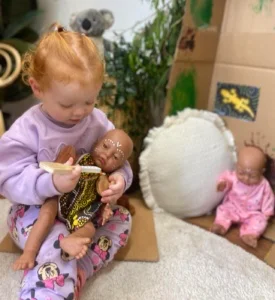
Closer to home, research conducted at the University of Western Sydney in 2013 found young baby boys seemed to prefer dolls to trucks, challenging the theory of an innate preference among babies for typical feminine or masculine toys. Researchers gauged the preferences of four and five-month-old babies by showing them pictures of male and female humans and dolls, as well as cars and other items.
Researchers then measured how long their gaze lingered on the objects, and calculated their preferences based on that length of time. Researchers found there was a general looking preference for dolls or doll faces over cars or trucks for both the male and female babies observed at five months old.
Other studies conducted at U of WS have found as babies age, there are sometimes preferences toward toys marketed at their own gender, but those preferences, researchers hypothesised, could be environmental or a result of nurturing, so if they’ve been given more opportunities to play with toy trucks than dolls, they may show a preference for toy trucks.
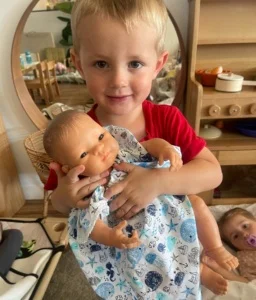
Babies don’t typically show gender preference until at least their second year, according to some studies, indicating that preference later may be the result of their physiological changes, cognitive development or social pressure.
Playing with dolls is a version of role-playing, and that’s a great thing in child development. Dolls are used to create narratives while playing. When children do this, they’re learning to make sense of the world and this kind of role-play helps them see things more broadly.
Other research has looked at how gendered toys are approached by each sex. One study in the 1980s had a few dozen girls and boys (aged four to nine years) presented with toys in three sex-labeled boxes and were given six minutes to explore the objects. The children’s memory for information about the toys was tested one week later. Results show that the children tactually explored toys labeled for their own sex more than similar objects labeled for the other sex, and remembered more detailed information about own-sex than other-sex objects. Between ages three to five, gender is very important to children, according to an an associate professor at the University of Kentucky. So when children are presented with very specifically-marketed gendered toys, they pay careful attention.
This is a time we should encourage children to play with all kinds of toys, as it sets the foundations for free thinking, creative play and removes the constraints of gender.
The benefits for children, regardless of their sex, of playing with dolls are numerous and supported by research. Doll play provides opportunities for children to practice social and emotional skills, develop empathy, and engage in imaginative play. Studies have shown that doll play leads to increased communication about others’ thoughts and emotions, activating important brain regions responsible for regulating thoughts, actions, and emotions.
At Little Scholars, we recognise the importance of supporting children’s interests and providing them with a diverse range of toys and play opportunities. Our home corner, which includes dolls and role-playing materials, encourages children to explore, imagine, and develop important skills and dispositions for learning. By embracing doll play and role-playing activities, we foster autonomy, creativity, problem-solving abilities, and a sense of agency in our children.
References:
Since nearly the beginning of Little Scholars, Little Scholars School of Early Learning has been proud to have special friendships in the community with people who live in aged care setting.
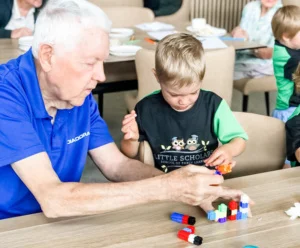
The premise of Little Scholars Intergenerational Program, dating back to 2015, is simple. It’s all about supporting connection between the young and the young at heart and bringing parts of our community together.
“It all began when our leadership team attended an intergenerational forum where we learnt that 16% of people in Australia are over 65 years of age and 45% of these people have reported feelings of loneliness. That’s a huge number and made us want to act,” says Jae Fraser, founder of Little Scholars.
“We also had some feedback from families who had moved here from interstate or internationally, and their children had no physical contact with their grandparents – so this was a wonderful opportunity for us to allow these children to have ‘Grandfriends’.”
Isolation and feelings of loneliness are a serious threat for older people, because they’re more likely to live alone, lose family members and friends, suffer from chronic illness and hearing loss. Statistically, one in four older (over 65) Australians live alone.* Of those who live alone, according to a 2015 Australian Bureau of Statistics survey, about 12% didn’t receive visitors in a three-month period, and older men were reported to be less likely to have been visited, at 17%.
In a 2020 Royal Commission report, of the Australians who reported knowing someone in aged care facilities, one third never contacted the people they know, and one in five never visited.
Social isolation has also been linked to mental illness, emotional distress, suicide, the development of dementia, premature death, physical inactivity, poor sleep, and biological effects, including high blood pressure and poorer immune function.
Little Scholars aims to fix this.
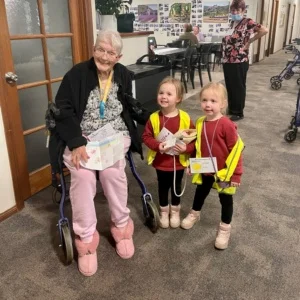
With our intergenerational program, the children visit with their grandfriends fortnightly. They do crafts, play games, sing songs, share morning teas and have meaningful chats. For their young-at-heart mates, the visits help alleviate challenges of isolation, and brings joy, feelings of self-worth, developing new friendships, silliness, and fun. For the children, the visits have a multitude of benefits, including:
So many of the residents just want or need one thing that they can look forward to, to keep them going.
Natalie Carey, Deception Bay campus manager
Our Redland Bay campus started its friendship with a nearby aged care home because a parent worked there. The parent mentioned how much the residents loved when her own children visited, so staff decided to reach out and begin planning an intergenerational program.
“We started with just the kindergarten class, and every time we went down there, we took a different age group with us,” says Jordie, now campus manager of Little Scholars Ormeau 2. “We went there to share high teas, we created hampers for the residents for Mother’s Day, Father’s Day and Christmas that were donated by our families.”
Our Deception Bay Little Scholars began its program in 2016, when campus manager Nat arranged for the kindergarten children to visit the aged care home Nat’s grandmother lived in.
“We connected with them to be able to give the elderly someone consistent who would come and visit them, as some of them received no visitors,” Nat says. “I learnt this when I spoke to one of my grandma’s carers and she said so many of the residents just want or need one thing that they can look forward to, to keep them going.”
Nat says they started taking the kindergarten children regularly, then extended it down to the younger studios to embed it across their service.
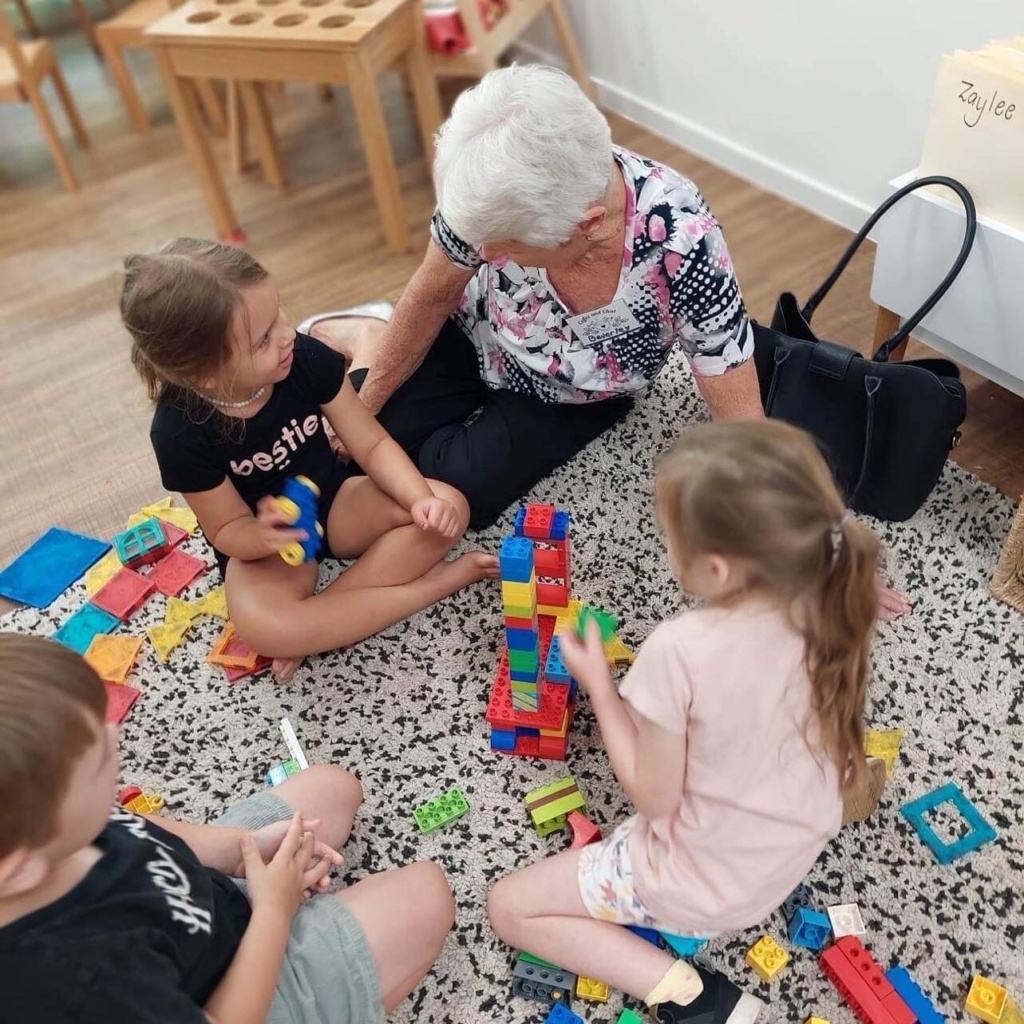
“We would always take five or six kindergarten children to allow the connections to continue between the children and their grandfriends. The dementia patients, in particular would love our babies, and together we got to create and witness some special moments.”
The Little Scholars Ashmore campus started its intergenerational program last year, after working with Griffith University’s Dr Jennifer Cartmel and PhD student, Jelisa Tan.
Jelisa did her placement at the campus and prepared resources for team members and families. She shared slideshows, floor books and fact sheets with an emphasis on the benefits of the intergenerational program and its progress.
While many of our services have had informal relationships with local aged care residences for many years, we believe the intergenerational program is more important than ever and will be incorporated in all 13 Little Scholars campuses by the end of 2023.
“Celebrating the role older community members play in the development of children is something to be fostered and celebrated. The program is one of the most popular aspects of our services, we’ve found our community loves finding occasions to see the different generations come together and share in a common experience,” Jae says.
Help your child grow physically, emotionally, socially. Our intergenerational program will be at all our campuses by end of 2023. Learn more about Little Scholars.
Related stories
Let us hold your hand and help looking for a child care centre. Leave your details with us and we’ll be in contact to arrange a time for a ‘Campus Tour’ and we will answer any questions you might have!
"*" indicates required fields
Let us hold your hand and help looking for a child care centre. Leave your details with us and we’ll be in contact to arrange a time for a ‘Campus Tour’ and we will answer any questions you might have!
"*" indicates required fields
Fill in the form to join your local Pram Pals mums and bubs walk