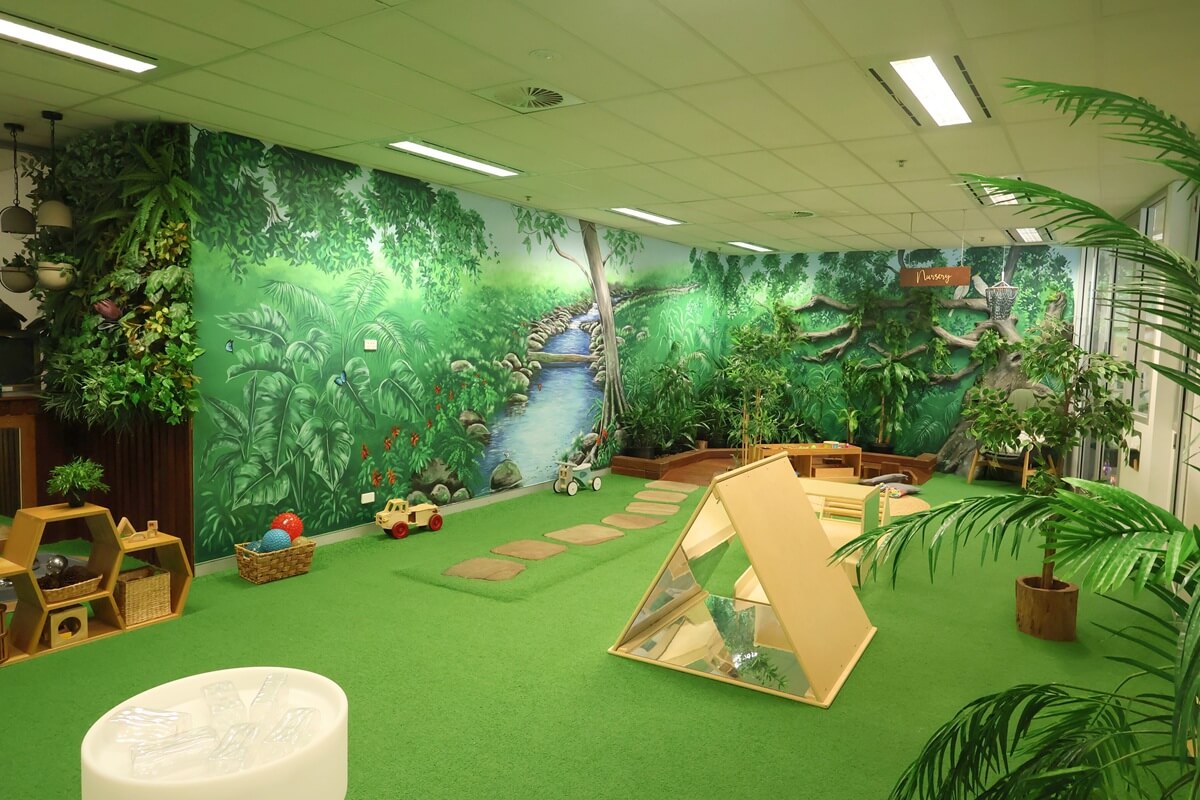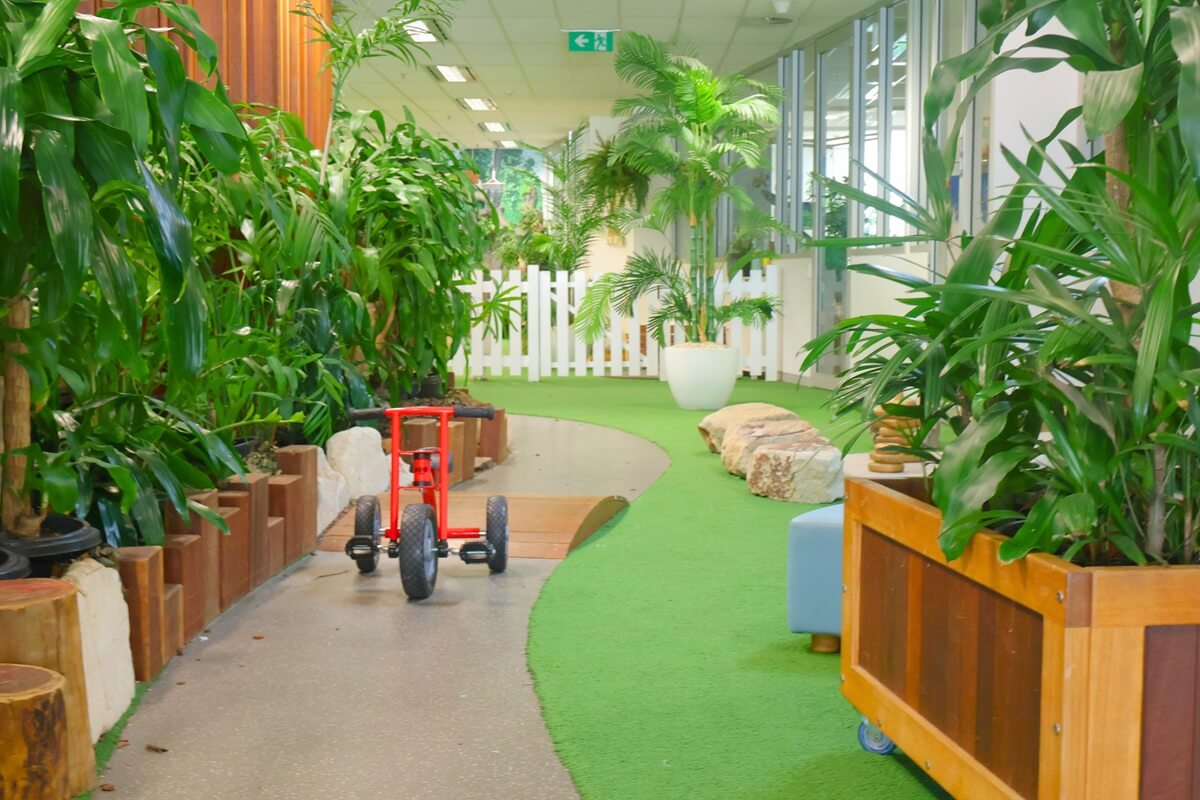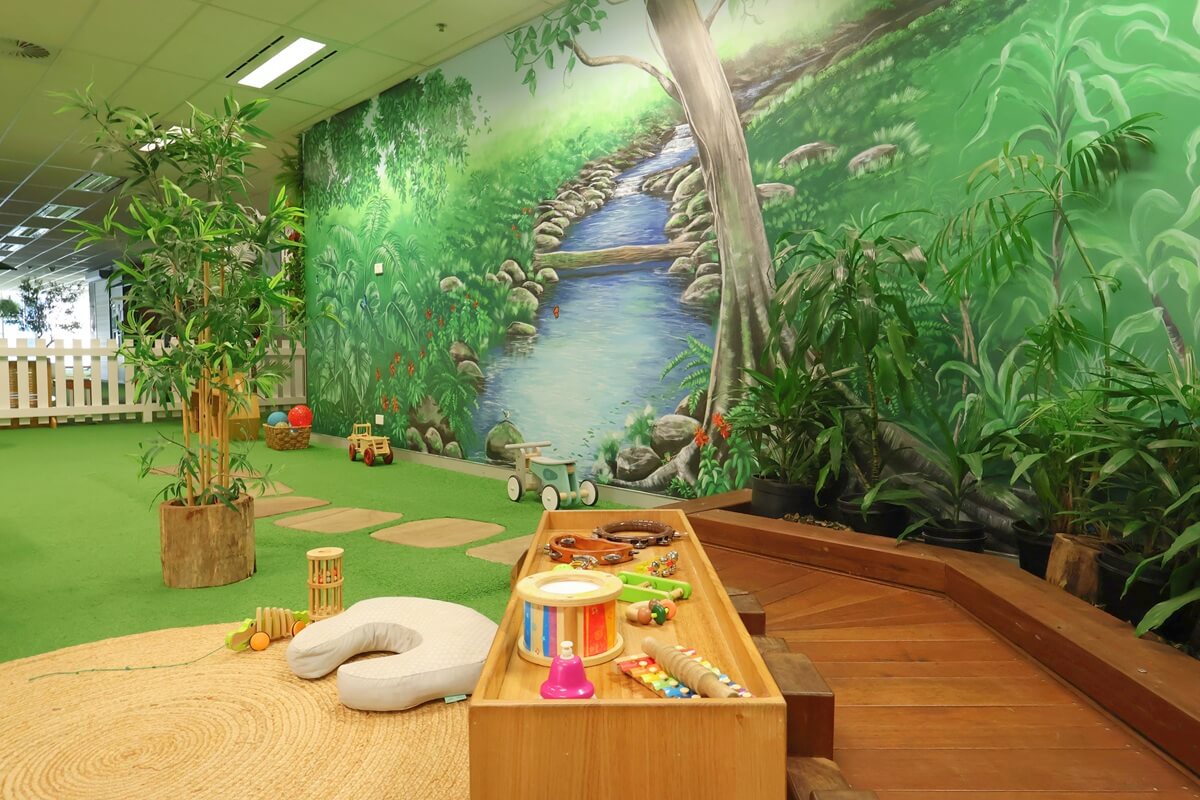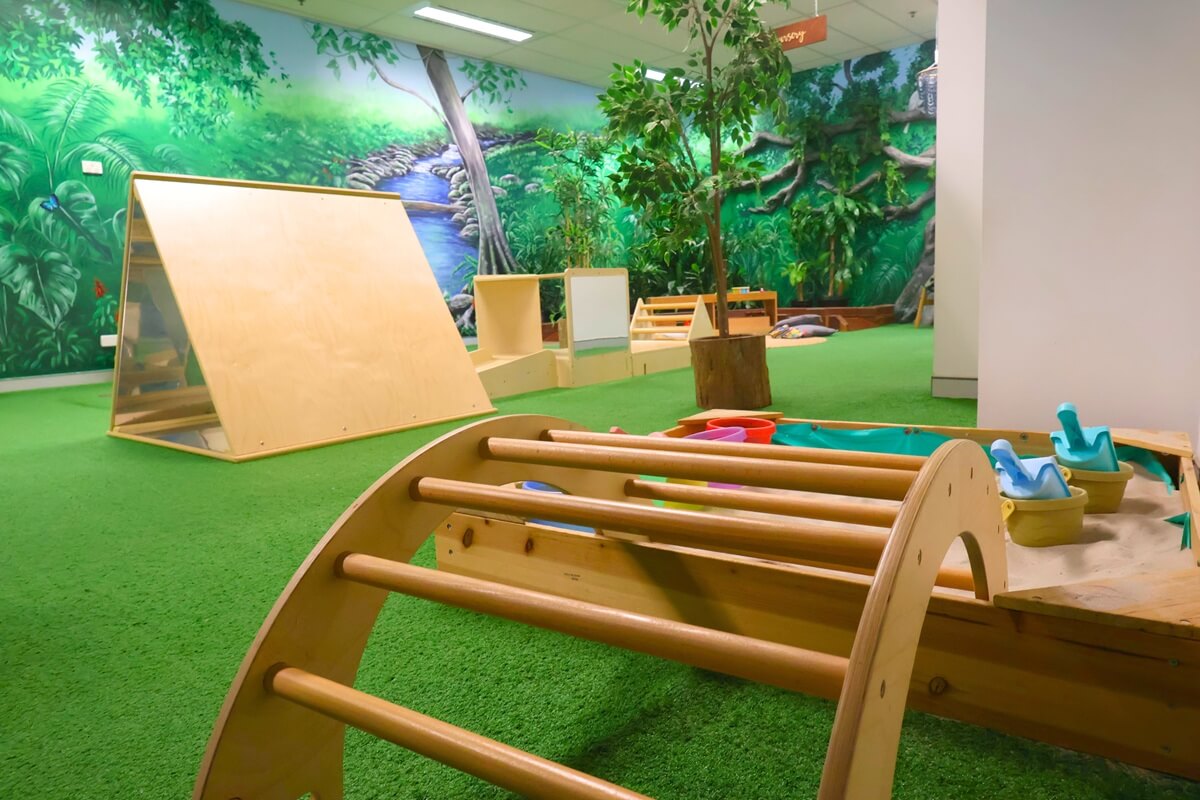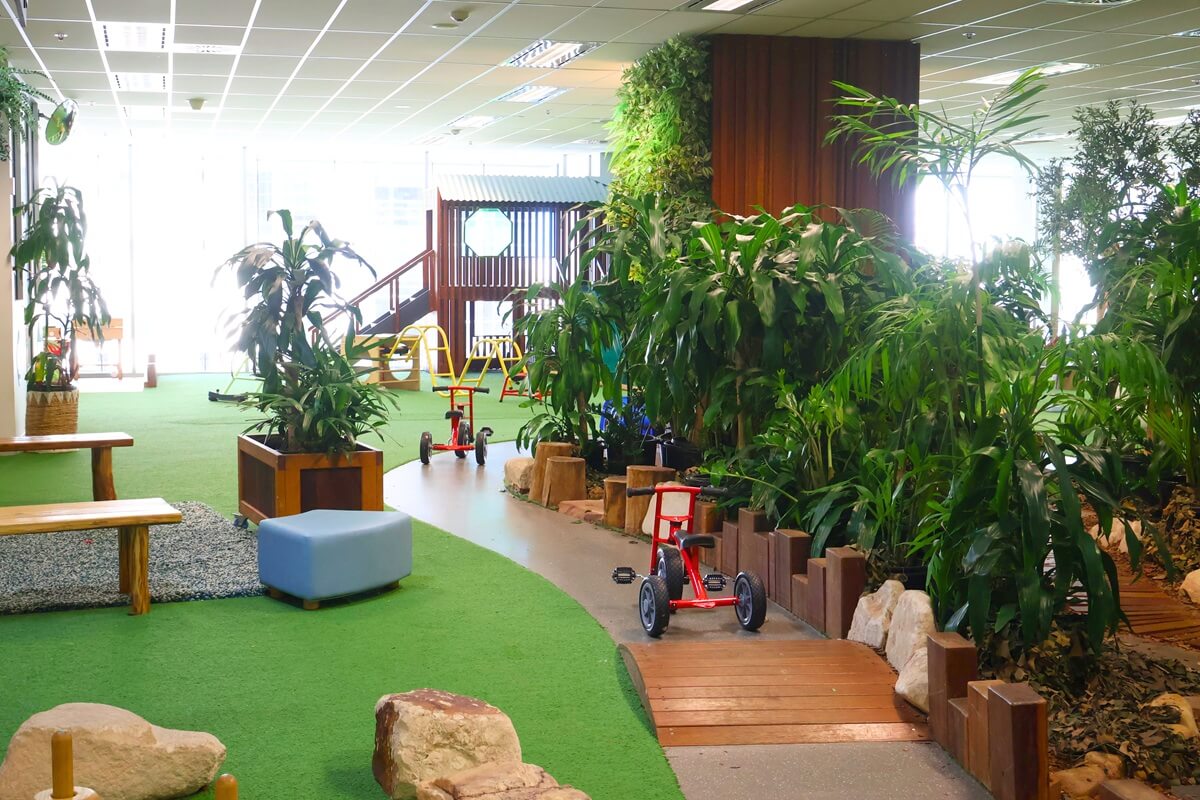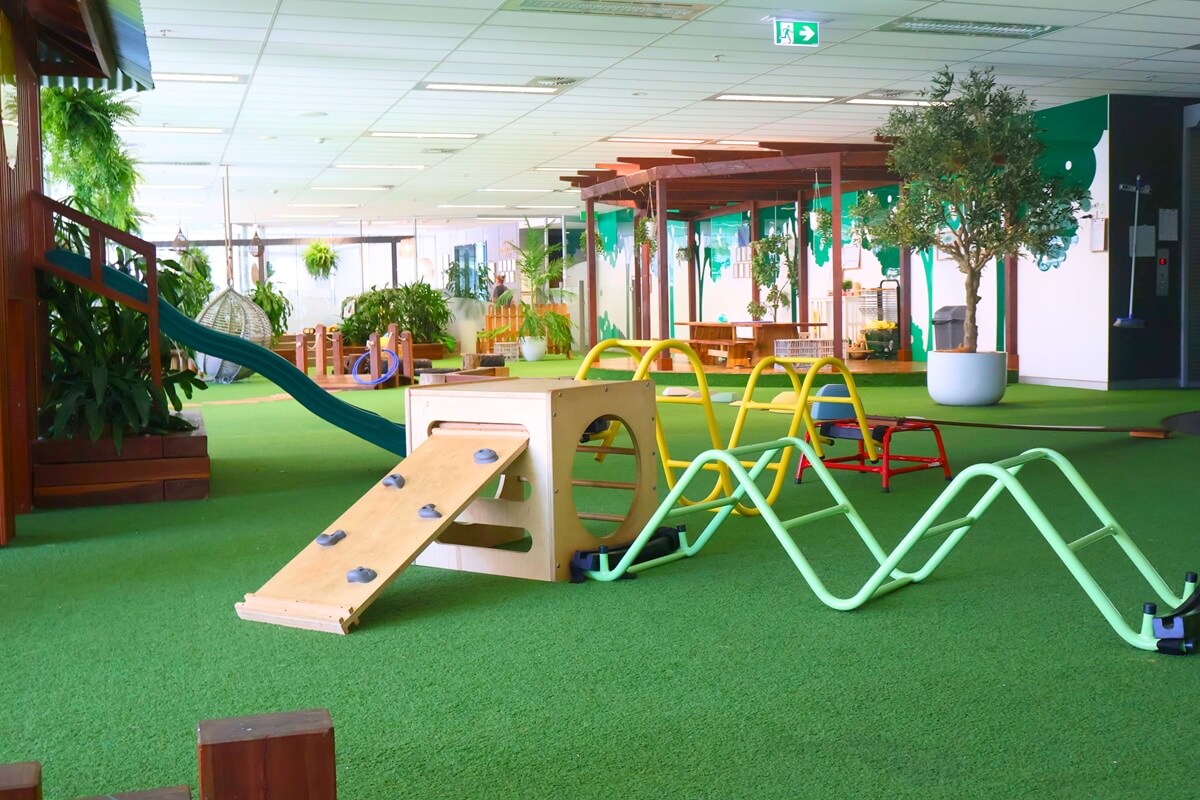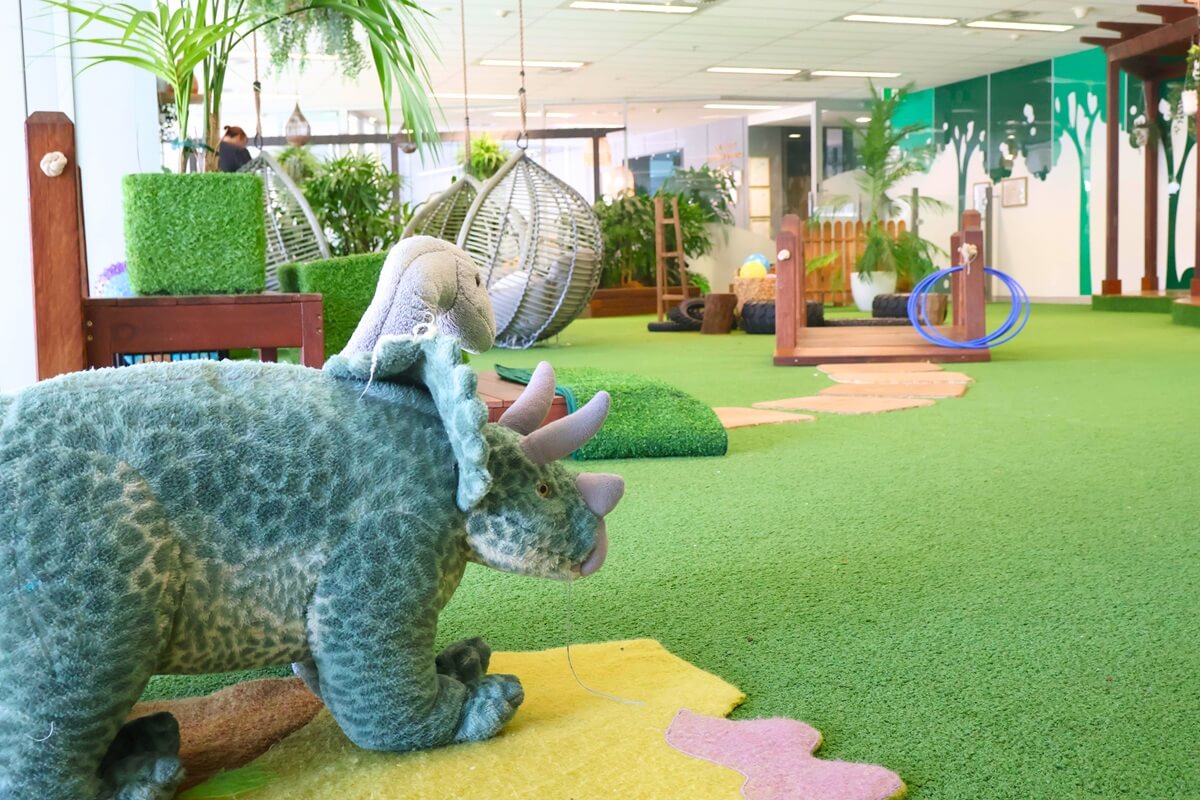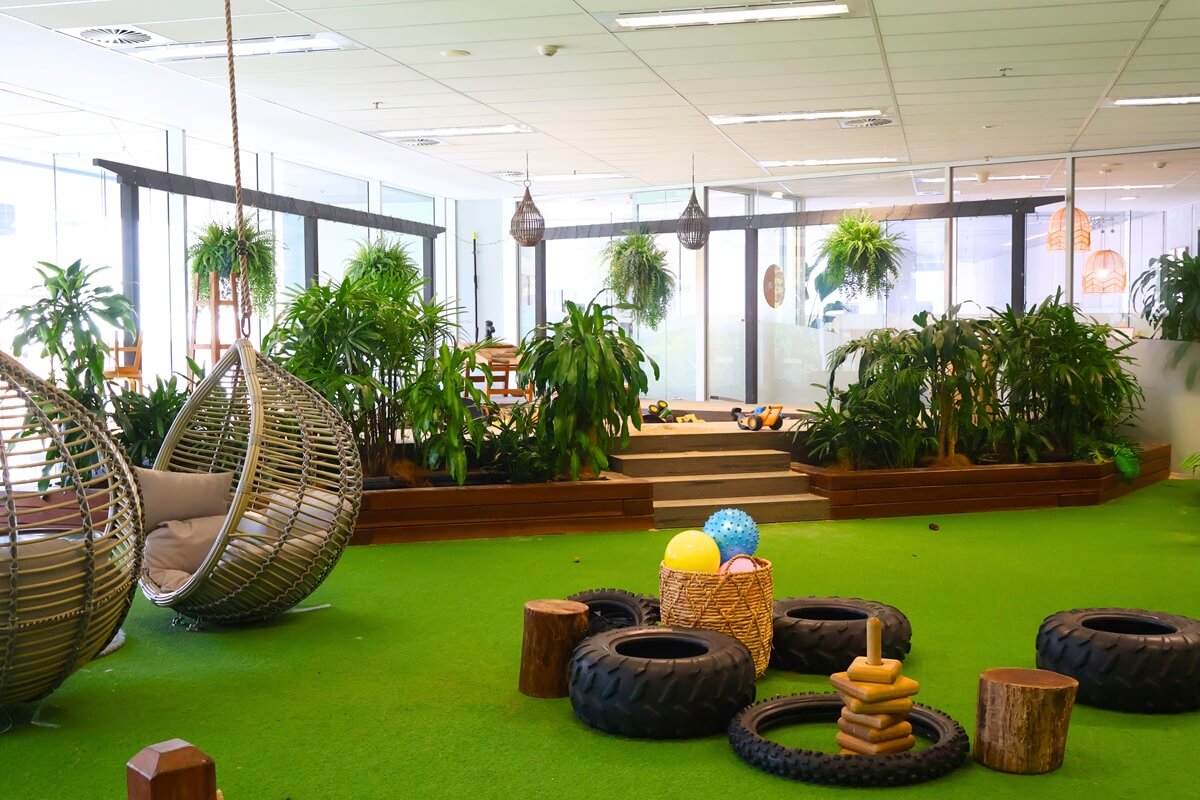




Most city childcare comes with a quiet trade-off: convenience for your commute, but not much room for your child to move. A tower-block centre with a small balcony and a roster of indoor activities is the usual compromise. Little Scholars George Street was built to refuse that trade-off. It has the largest indoor childcare playground in Brisbane — and the whole city beyond it doubles as the classroom.
Here’s what that actually looks like.
The George Street playground isn’t a converted room with some equipment in it. It’s a purpose-built, double-storey indoor play environment in the middle of the CBD, with:
Because it’s indoors, none of it depends on the weather. On a 38-degree day, a wet week, or a day of city smoke haze, the children are still climbing, digging and moving — not parked in front of a screen. For a working parent, that means a consistent active day, every day, regardless of what’s happening outside.
There’s also a dedicated outdoor teacher whose whole focus is leading the children’s physical play and exploration, so this space is genuinely staffed and programmed, not just available.
A CBD location is usually framed as a downside for childcare — all concrete, no nature. At George Street it’s the opposite. Some of Brisbane’s best cultural and green spaces are within walking distance, and they’re built into the weekly program rather than saved for the occasional special outing.
Within a short walk, the children regularly visit:
Excursions here aren’t a once-a-term event. They’re a regular rhythm, which means children grow up genuinely familiar with their city — its museums, libraries, parks and galleries — as ordinary, knowable places. Few centres anywhere have that on their doorstep.
A big playground only matters if the play inside it has purpose. At George Street the environment sits underneath a curriculum called The Collective — a play-based, child-led approach grounded in the Early Years Learning Framework, where educators follow what the children are curious about and extend it.
That plays out across programs like:
The playground is where a lot of this happens — climbing becomes a lesson in confidence and risk, the garden beds feed the cooking program, and the city excursions turn into weeks of follow-up curiosity back at the centre.
If you work in the CBD, George Street lets you have both things at once: a centre minutes from your office, and a child who spends the day moving, exploring and getting out into the city — not contained in a small space because that’s all the location allows. The convenience doesn’t cost your child the room to be a child.
Indoors. It’s the largest indoor childcare playground in Brisbane — double-storey, weatherproof, and usable every day regardless of heat, rain or air quality.
Double-storey play forts, water play, garden and herb beds, a mud kitchen, sandpit, bike track, obstacle course, construction zone, putt-putt area and reading nooks, with 180-degree city views.
Yes — regularly. The centre runs frequent walking excursions to Roma Street Parkland, the Queensland Museum, GOMA, and the State and Brisbane Square Libraries, all within walking distance
Yes. There’s a dedicated outdoor teacher leading physical play and exploration, and the playground sits within The Collective, the centre’s play-based, child-led curriculum.
Rarely. Because the main playground is indoors, children stay active through extreme heat, rain or city smoke haze
Little Scholars George Street, Level 2, 400 George Street, Brisbane City — a seven-minute walk from Roma Street Station.
When you’re comparing childcare centres, almost everything on a website is marketing. The one thing that isn’t is the NQS rating. It’s assessed independently by a national authority, it’s public, and it’s the same yardstick applied to every centre in the country. If you only learn to read one thing before choosing care, make it this.
Here’s what the rating means, what the top tier actually requires, and why so few centres in Brisbane City hold it.
Every approved childcare centre in Australia is assessed by ACECQA — the Australian Children’s Education and Care Quality Authority — against the National Quality Standard (NQS). There are five possible ratings:
Most centres sit at Meeting NQS. Nationally, only around one in five centres reaches Exceeding. In Brisbane City, it’s rarer still.

The rating isn’t a single score. ACECQA assesses a centre across seven distinct quality areas:
A centre’s overall rating reflects how it performs across all seven — not just the ones that are easy to put in a brochure. Staffing, governance and genuine family partnership count as much as the program itself.
This is the part most parents don’t realise. The gap between Meeting and Exceeding isn’t about having more equipment or a nicer foyer. ACECQA looks for three specific things in every quality area:
A centre has to demonstrate all three, in all seven areas, to be rated Exceeding. That’s why it’s a meaningful signal — it’s hard to fake and hard to sustain. It reflects a whole team operating at a high level, consistently, over time.
Inner-city centres face real constraints: tighter physical space, higher staff turnover, and the pressure of running at capacity. Those are exactly the conditions that make Exceeding harder to reach. While roughly one in five centres nationally is rated Exceeding, in Brisbane City it’s closer to one in twenty.
Little Scholars George Street is the only Exceeding NQS-rated childcare centre in the Brisbane CBD. It earned the rating in 2024 — across all seven quality areas — which in a dense inner-city environment is genuinely uncommon.
You don’t have to take any centre’s word for it, including ours. Every centre’s current rating is public. You can look up any Australian childcare centre on the ACECQA national register or through the Queensland Government’s Starting Blocks site, and see its rating across all seven quality areas. It’s worth doing for every centre on your shortlist — and being cautious about any centre that’s vague about where it sits.
It means a centre goes beyond the National Quality Standard in all seven quality areas, with practice that’s embedded across the team, informed by ongoing reflection, and shaped by the centre’s own community. It’s the highest standard rating most centres can reach.
Yes. Meeting NQS means a centre meets the national standard. Exceeding means it consistently goes beyond it across every quality area. Both are solid; Exceeding is the stronger signal.
Roughly one in five nationally. In Brisbane City it’s closer to one in twenty, which makes it a strong point of difference for a city centre.
ACECQA, the independent national authority, through an assessment and rating process. It’s not self assessed or paid for.
Look it up on the ACECQA national register or the Queensland Government’s Starting Blocks website. Ratings are public and free to view
Little Scholars George Street is the only Exceeding NQS-rated childcare centre in the Brisbane CBD, rated across all seven quality areas in 2024.
If you work in the Brisbane CBD, childcare is really a logistics problem. The centre has to fit the shape of your day — the commute, the early start, the meeting that runs late — not the other way around. Little Scholars George Street was built for exactly that: a city campus that takes the friction out of working-parent life and gives you back the parts of the day that matter.
Here’s what you actually need to know.
Little Scholars George Street is at Level 2, 400 George Street, in the heart of Brisbane City. It’s a seven minute walk from Roma Street Station, with on-site undercover parking and pram and bike parking if you’d rather not take the train.
The part most city parents care about most: the George Street Parent Valet. We help with drop-off and pickup at the door, so you’re not wrestling a car seat and a toddler through morning traffic. You hand over, you go, and you’re back at your desk minutes later. For a CBD commute, that’s the difference between a calm start and a stressful one.
We’re open 6:30am to 6:30pm, Monday to Friday, 52 weeks a year — hours that hold up against a real working day, not just a school one.
Every childcare centre in Australia is rated by ACECQA against the National Quality Standard, across seven quality areas. Most centres are rated Meeting NQS. Only around 5% of centres in Brisbane City are rated Exceeding.
Little Scholars George Street is one of them — in fact, it’s the only Exceeding NQS-rated childcare centre in the Brisbane CBD, a rating it earned in 2024.
Here’s what Exceeding NQS actually means, and why it’s rare in the city.

George Street has the largest indoor childcare playground in Brisbane — double-storey play forts, water play, garden beds and nature walks, a dedicated outdoor teacher, and 180-degree city views, all indoors and weatherproof. Because the centre sits in the middle of the CBD, the city itself becomes part of the program: the Queensland State Library, Brisbane Square Library, the Queensland Museum and GOMA are all within walking distance. Take a closer look inside the playground.
Little Scholars runs a Family Time Program designed around one idea: handing working parents back their evenings and weekends. At George Street, included at no extra cost, that means:
The things that usually eat a working parent’s evenings get folded into the day instead.
George Street serves families across Brisbane City, South Brisbane, West End, Spring Hill, Paddington and New Farm — anyone whose work or commute runs through the city. It cares for 108 children, from six weeks old through kindergarten age.
If your child is kindergarten-age, you may also be eligible for Queensland’s Free Kindy funding, which can significantly reduce your fees on top of the Child Care Subsidy
Both work. There’s on-site undercover parking, plus pram and bike parking. The centre is also a seven minute walk from Roma Street Station for parents who commute by rail.
A drop-off and pick-up service exclusive to George Street, where our team helps you hand over and collect your child at the door — built to make city mornings faster and calmer. No other CBD centre offers it.
It’s the rating ACECQA gives centres that go beyond the National Quality Standard across the seven quality areas. Around 5% of Brisbane City centres hold it. George Street is the only Exceeding-rated centre in the Brisbane CBD.
6:30am to 6:30pm, Monday to Friday, 52 weeks a year.
Six weeks through kindergarten age, across nursery, toddler, pre-kindy and kindergarten studios.
Yes. An in-house chef prepares all meals and snacks daily, with vegetarian and halal options, and chef prepared Take Home Meals are ready for families at pickup.
Families come from across Brisbane City, South Brisbane, West End, Spring Hill, Paddington and New Farm.
Yes — book a tour and see the playground, meet the team, and walk through a day at the centre.
Come and see it. The fastest way to know whether George Street fits your family is to stand in the playground and meet the educators.

Planning a birthday party for little ones can feel like a full-time job, especially when you’re juggling nap times, weather, budgets and a crowd of excited toddlers. To help make party planning easier, here is a roundup of 10 of the best birthday party venues for under 5s across the Gold Coast, with categories to suit every type of celebration.
Did you know you can reserve a party table at The Backyard at Westfield Coomera completely free of charge? It’s one of the Gold Coast’s best hidden gems for toddler birthday parties.
The Backyard features a huge, shaded playground, waterplay area, scooter track and plenty of space for little ones to run around safely. Party organisers can reserve a table right near the waterplay area, making it easy for parents to supervise while the children play.
There are also free BBQ facilities available, or you can grab takeaway from nearby cafés like Café 63. Simply bring your own decorations, cake and party food and you’re set.
Bookings can be made through Westfield Coomera Concierge.

If you’re inviting the entire daycare class (plus siblings and parents), EMF Jnr Nerang is a fantastic option for big celebrations.
Their after-hours party hire can cater for up to 100 guests, giving children exclusive access to the play space without the usual crowds. The venue includes climbing equipment and soft play zones specifically for younger children, as well as a huge variety for older children including trampolines, ball pits, mega race slide and a jumping castle.
It’s ideal for families wanting plenty of room, minimal stress and entertainment built in.
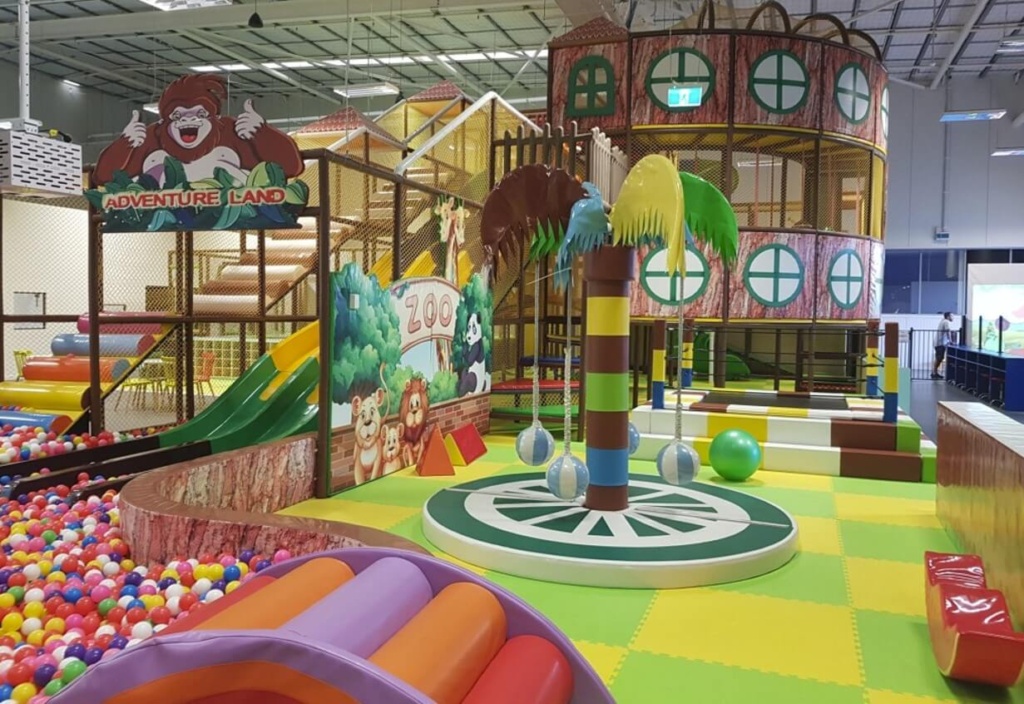
For a party venue that works rain, hail or shine, Doodlebugs in Miami is a favourite among Gold Coast parents of little ones.
Designed especially for younger children, the indoor play space combines imaginative play with sensory fun in a calm, manageable environment for under 5s. One of the biggest highlights is the indoor trike track, where toddlers can safely ride around and burn off energy while parents relax nearby.
Parents love the café atmosphere, as well as the great lines of sight across the whole venue for stress-free supervision. It’s a great option for summer birthdays when outdoor parties can become a little too hot and hectic.

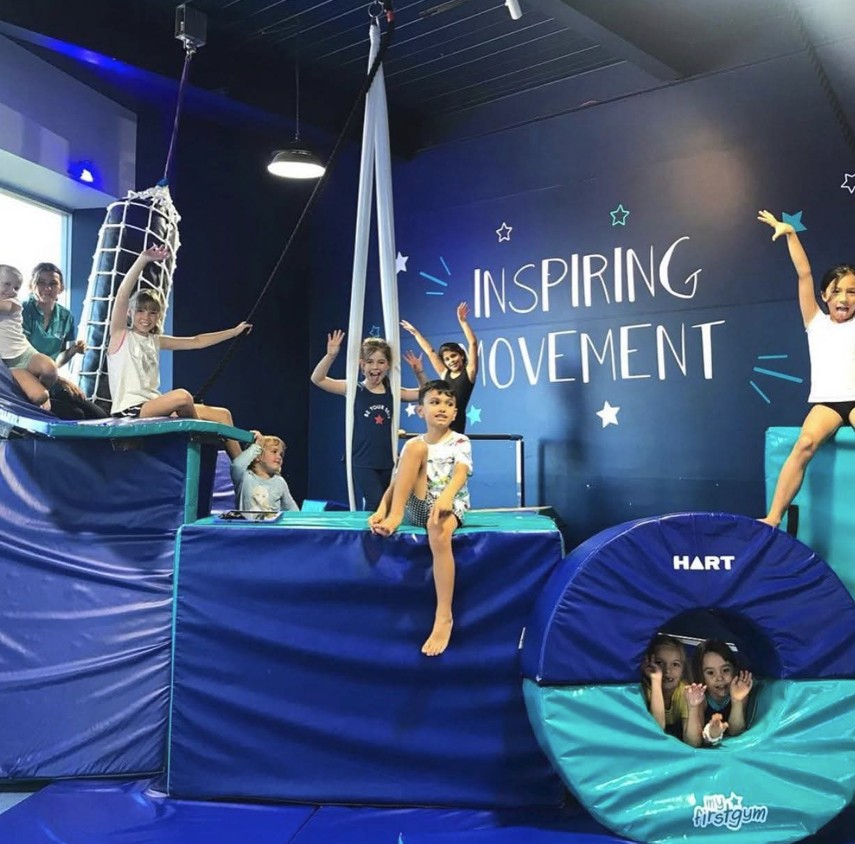
If your child loves climbing, jumping, tumbling and nonstop movement, a birthday party at MyFirstGym is hard to beat. Little guests will have the full run of the facility, with instructor-led games, music and activities designed especially for younger children. The energetic sessions keep toddlers and preschoolers engaged from start to finish, making it a fantastic option for active little personalities.
Parents can relax and enjoy the celebration too, with setup and clean-up taken care of by the team. Parties can cater for up to 30 children and include exclusive use of the facilities, so the space feels safe, private and easy to supervise. Families can bring their own party food or choose from available catering options, and there are different party themes to suit your child’s interests.
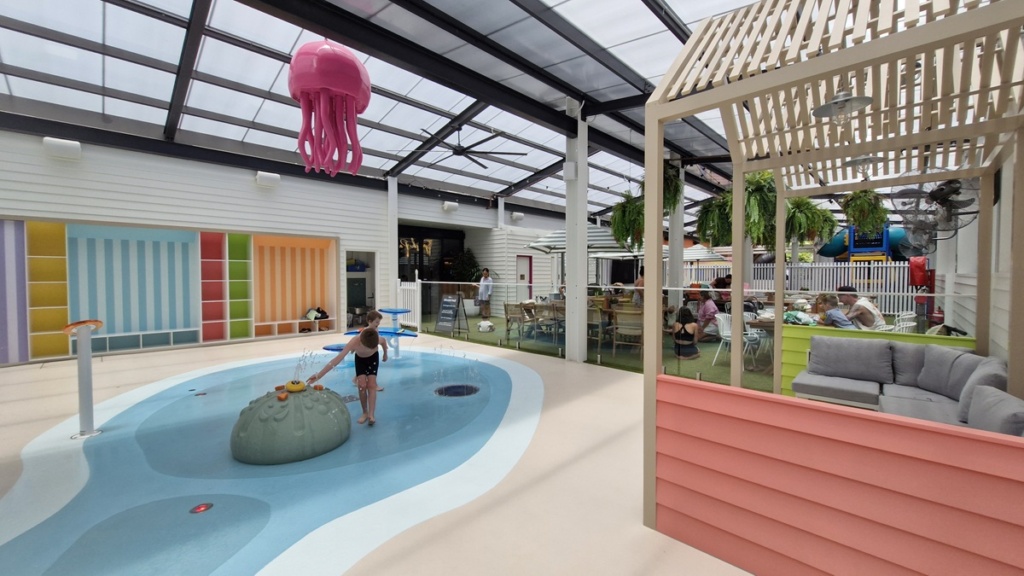
Sometimes parents just want to show up, enjoy the party and leave without cleaning up afterwards, and that’s where CSI Club Southport shines.
Their party packages can include food, drinks and reserved spaces, and with three dedicated children’s play areas, the entire process here is simple and easy to organise. One of the biggest drawcards is the huge alfresco area, complete with playgrounds and waterplay that keep little ones entertained for hours while adults can relax nearby.
The relaxed family-friendly atmosphere also works brilliantly for larger gatherings with siblings and extended family.
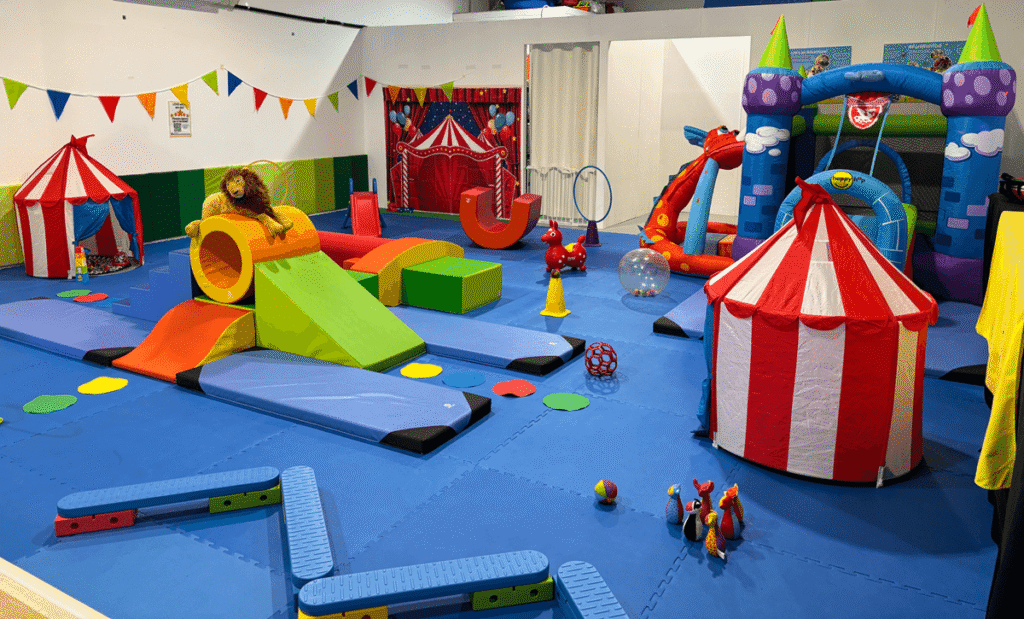
Families can celebrate first birthdays with a beautiful, age-appropriate celebration at The WOW Sensory Centre in Ashmore. This is a safe and fully enclosed space designed specifically for babies and toddlers. It’s a wonderful alternative to busy playground parties, with no worries about little ones running off, navigating large equipment or dealing with unpredictable weather.
One of the biggest highlights is the exclusive use of the entire venue, creating a calm and private environment for party guests to enjoy. Families are welcome to bring their own food, drinks and birthday cake, and families can decorate the space to suit their chosen party theme.
Party options can be tailored to suit the age group, with Baby Sensory packages designed for younger, crawling children, and Toddler Sense parties offering more active play for children aged one and up, including balance activities, climbing, jumping and larger play equipment.
It’s a thoughtfully designed, stress-free celebration space perfect for little ones’ first milestones.
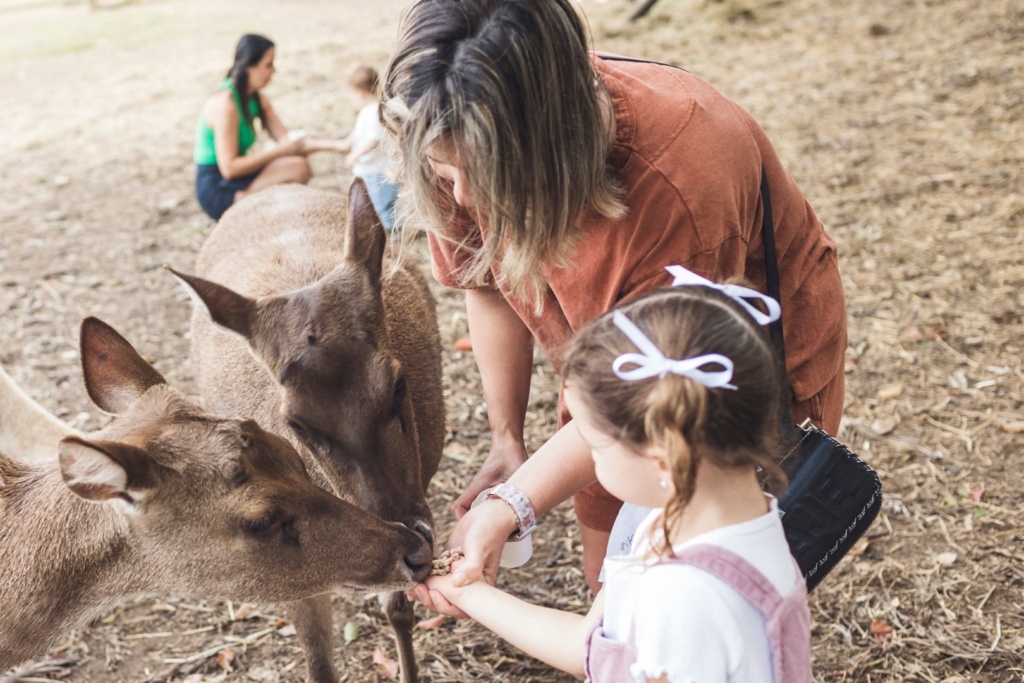
Planning your child’s birthday has never been easier! At Historic Rivermill, party packages offer a great mix of delicious food, hands-on activities and entertainment, making it simple to host a memorable, hassle-free celebration.
Children will love interacting with friendly farm animals, including feeding alpacas and turtles, plus enjoying pony rides and other fun farm experiences. With plenty of space to explore, it’s a hands-on venue that keeps little guests engaged from start to finish.
Parents can relax and enjoy the day thanks to the spacious, family-friendly setting and weather-protected areas, designed to keep celebrations comfortable and stress-free regardless of conditions.
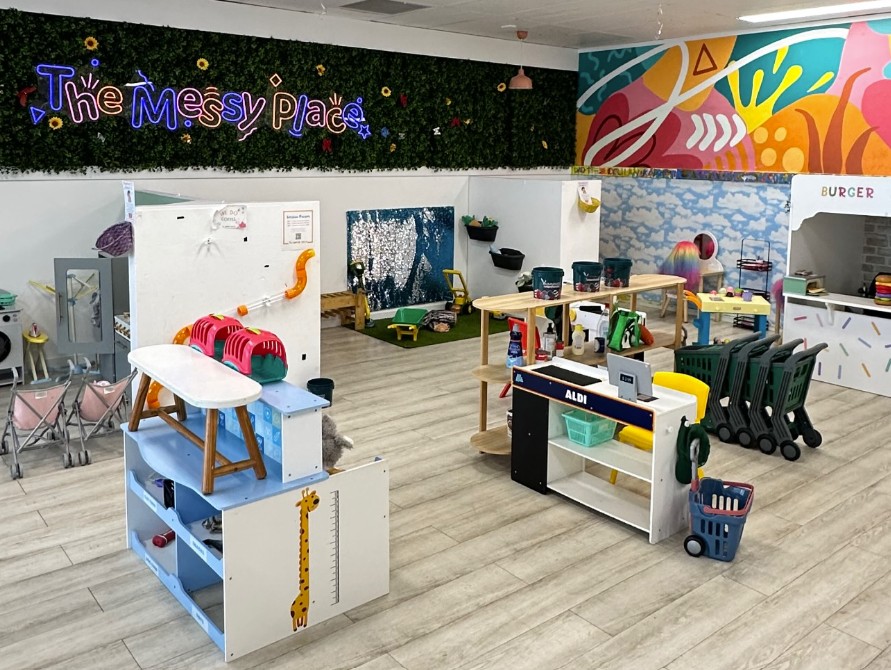
For children who love getting delightfully messy, The Messy Place delivers turns birthdays into colourful, messy, joy-filled celebrations packed with hands-on play, creativity and just the right amount of fun chaos.
Every party is fully hosted, fully set up and fully cleaned up by the team, so parents can genuinely relax and enjoy the celebration. You simply bring the cake and your favourite people, everything else is handled for you.
From slime and sensory play to themed setups and endless giggles, the experience is all about making children feel extra special while keeping things contained and stress-free. It’s colourful, engaging and ideal for curious toddlers and preschoolers.
If you’re searching for a truly memorable birthday experience, Magnolia Ridge Estate’s “Mini Moo’s Children’s Party Package” is one of the most unique options around.
This is not your typical party venue; it’s a hands-on farm experience where the highlight is up-close time with friendly Highland cows. Children can feed and pat the Highland cows, making it a rare and unforgettable experience that instantly becomes the talking point of the party. There are also miniature donkeys to be cuddled!
With exclusive venue hire, picnic tables and chairs, farm games, and even a special gift for the birthday child, this is one unique location. A dedicated host guides the activities throughout, helping the party run smoothly while keeping everything relaxed and engaging. This is a standout choice for families wanting something truly different from the usual play centre party.

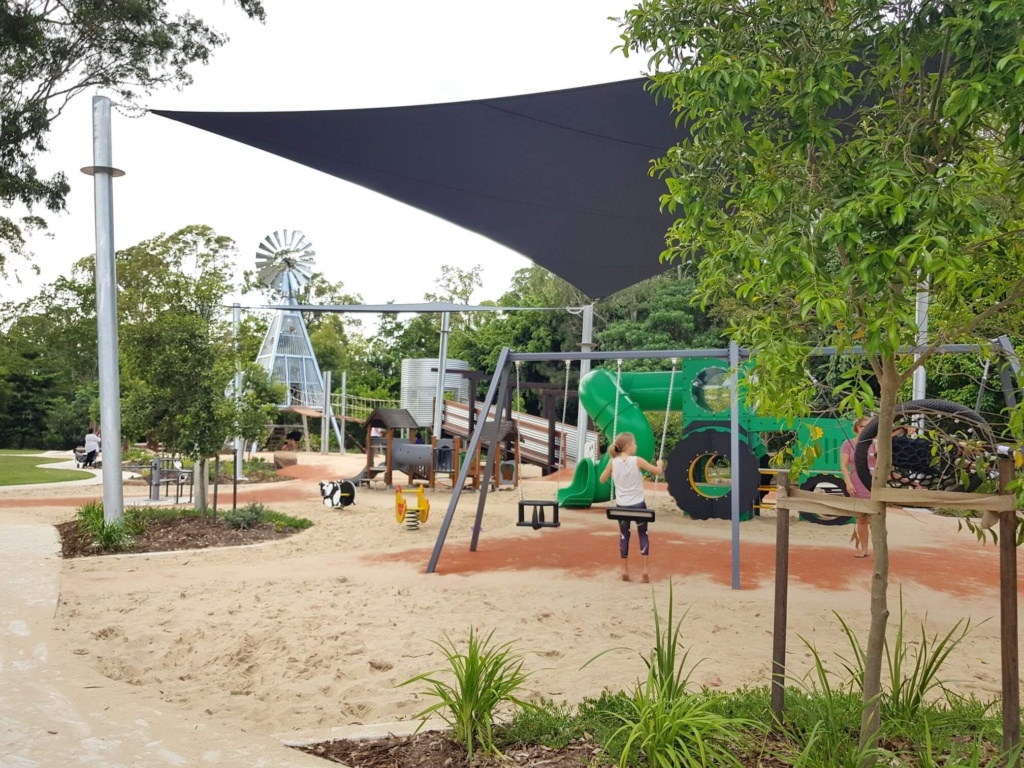
If you’re looking for a birthday party in the park, the huge playground and picturesque parklands at Country Paradise Parklands in Nerang ticks the box. The playground’s impressive 11.5m windmill tower with mega slide and swing bridge quickly becomes the highlight of any party. There’s also a creek-style water play area with pumps, troughs and channels that encourage hands-on, imaginative play. For little ones, there’s even a fun tractor-themed play structure that’s perfect for toddlers, alongside dedicated younger play zones that keep things safe and age-appropriate.
With separate play zones for toddlers, preschoolers and older children, it caters well to mixed-age birthday groups. Wide paths also make it scooter-friendly, adding another layer of fun. Families will find plenty of shade, BBQs, covered picnic areas and nearby toilets, making it easy to set up a relaxed DIY party.
Are you looking for an early learning environment that feels like a second home? At Little Scholars School of Early Learning, we nurture your child’s natural curiosity, creativity, and love for discovery every single day—not just on birthdays!
Book a tour at your nearest Little Scholars campus today to meet our passionate educators, explore our campus facilities, and see how we make every day an adventure in learning.
She screamed. You cried in the car. Then you checked the Little Scholars parent app 11 times before 9:00am. Sound familiar? We thought so.
Drop-off is one of those milestones nobody truly prepares you for. Everyone warns you about the sleepless nights, the teething, and the sudden meltdowns in the supermarket aisle. But nobody tells you about standing in the campus car park at 7:52am, sunglasses on, holding back tears from that first day drop off.
After walking alongside well over a thousand families across our Little Scholars campuses, we want to tell you this with absolute, heartfelt certainty: you are not alone, you are not failing, and your little one is going to be just fine!
Here is what we have learned together on this journey, as well as some gentle, real-world strategies that truly make a difference.
Separation anxiety isn’t a sign that something is wrong. It is a beautiful, reassuring sign that something is very right.
When your child protests at the campus gate, it means the bond between you is strong, healthy, and doing exactly what nature intended. They cry because they love you fiercely. Because you are their ultimate safe harbour. Leaving your side feels monumental to them – even if it’s only until after afternoon tea.
That isn’t a hurdle to fix. That is a relationship to be incredibly proud of.
Developmentally, most children between the ages of eight months and four years will ride the waves of separation anxiety. It peaks, it eases, and sometimes after a school holiday, a bout of sickness, or a big shift at home, it makes a surprise return. That doesn’t mean you’ve gone backward. It just means your little scholar is a beautifully sensitive human experiencing a change in routine, looking for reassurance. Give it a few days and together we will pass through it.
In almost every single case? They settle within minutes.
The moment you step out of view, our passionate educators wrap your little one in comfort. A soothing voice invites them into a favourite space. Out comes the sensory playdough. A familiar song begins. Or someone discovers a spectacularly interesting stick in our outdoor nature spaces, and suddenly, it’s the most exciting thing that has ever happened.
The child who was inconsolable at the door is now completely captivated by the joyful, bustling business of being small, curious, and alive.
The tears almost always stop before you’ve even ordered your morning coffee. The urge to check the app 11 times, though? That one takes a little longer to shake. And that is completely okay. At Little Scholars, we believe in nurturing our parents just as much as our children.
We’ve partnered with thousands of families to navigate this transition. Here are the practical, loving rituals that tend to work.
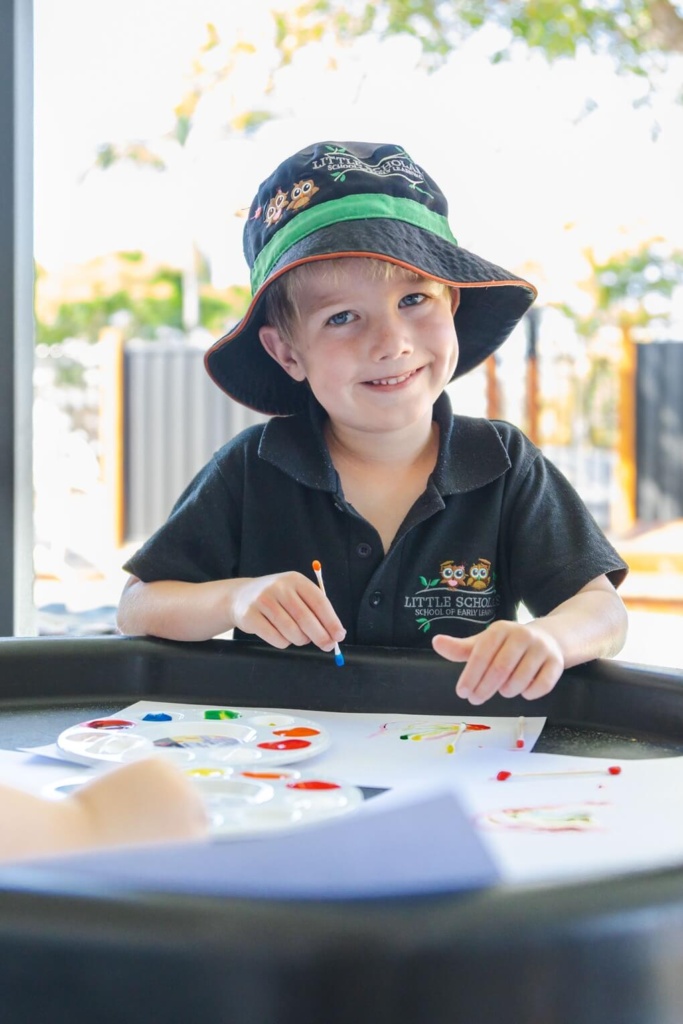
Children are extraordinarily intuitive. They read our body language, the tone of our voices, the tension in our shoulders, and the ease in our breath. They take their emotional cues directly from you.
When you truly trust the educators and the environment you are leaving your child in, that calm, beautiful energy transfers directly to them.
So, the goal isn’t to magically erase the drop-off dread. The goal is to feel it, take a deep breath, and let your child see that you believe in this space. Because the moment they see your confidence, it becomes their confidence.
The very first drop-off. The unexpected regression three months in. The post-holiday return that feels like day one all over again. The morning where they ran off without looking back, and you were the one left in tears.
Across our 17 beautiful campuses spanning the Gold Coast, Brisbane, Ipswich, and Redland Bay, our Little Scholars family has held hands through every single version of this moment.
Building the kind of trust that makes mornings seamless doesn’t happen overnight—but with patience, love, and partnership, it does happen.
Come and explore our campus before their first day.
The single best way to ease the drop-off spiral for both of you is to walk through our doors while you’re still holding their hand. Come explore our natural play spaces, meet our wonderful educators, and let your little one feel the warmth of our environment with you by their side.
Because drop-off becomes a beautiful routine when you already know that they are in the best possible hands.
Choosing the right kindergarten program is an important decision for Queensland families. Many parents compare sessional kindergarten and long day care kindergarten to find the right balance of learning, flexibility, and care.
At Little Scholars School of Early Learning, our approved kindergarten programs are designed to support school readiness while fitting the needs of modern families across our campuses. Whether you are looking for a school-style session or a flexible long day care kindergarten program, we can help you understand which option may suit your child best.
Both options can provide high-quality early learning experiences. The key is choosing the kindergarten program that best suits your child’s needs and your family routine.
Sessional kindergarten, sometimes called preschool or community kindergarten, usually operates during school hours and school terms only. These programs are often run by community organisations, councils, or schools and focus specifically on preparing children for the transition to primary school.
Children generally attend for shorter sessions across the week, such as a few hours per day or several days per week.
Families often choose sessional kindergarten because it offers:
For some families, sessional kindergarten is a great fit. For others, the shorter hours and term-only schedule may not suit work commitments or family routines.
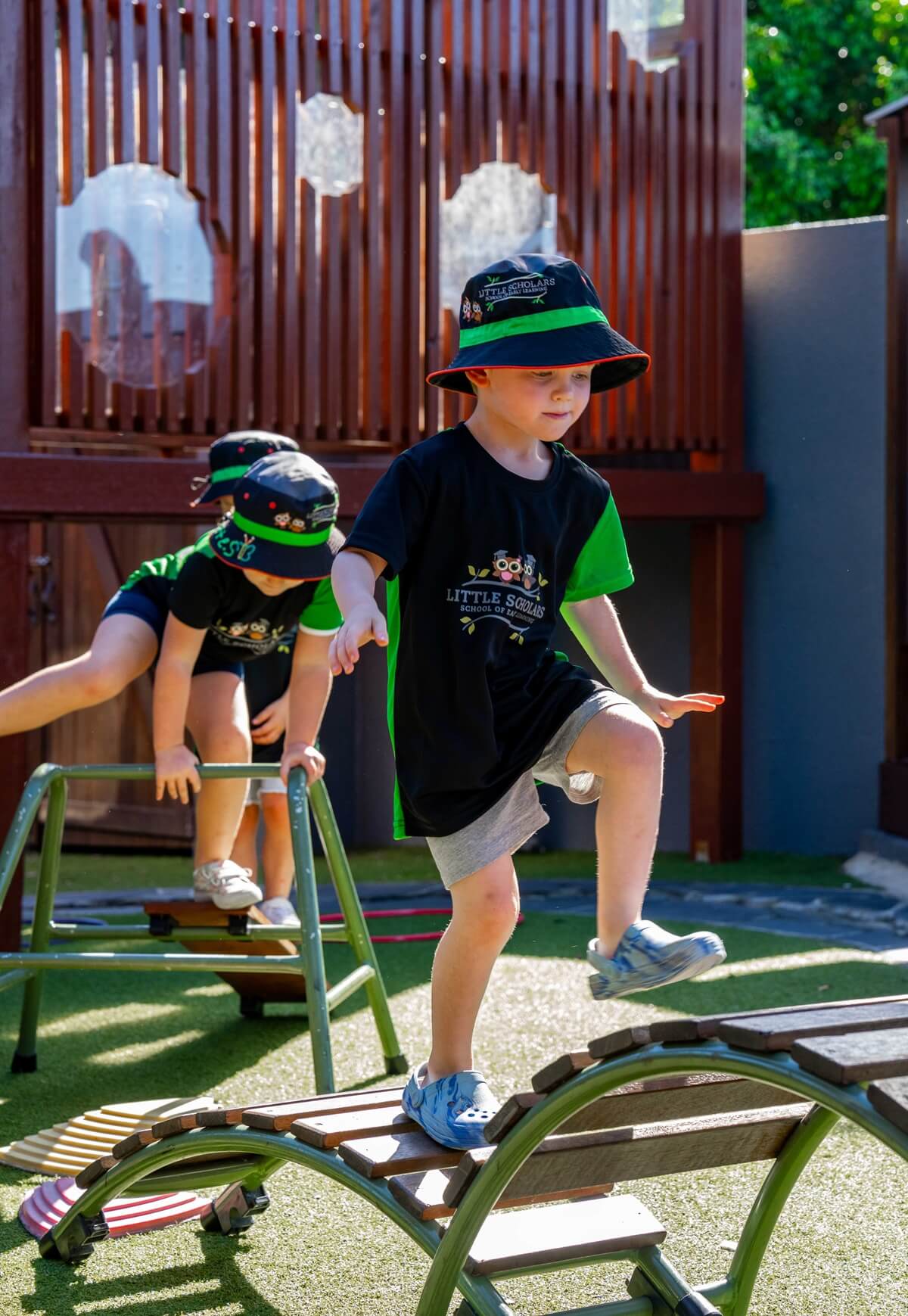
Long day care kindergarten combines high-quality early education with the convenience of extended care hours. These programs are delivered within early learning centres and are led by qualified early childhood teachers.
At Little Scholars, our kindergarten programs are designed to support children’s learning and development while providing families with greater flexibility.
Long day care kindergarten programs typically offer:
For many Queensland families, this balance of education and flexibility makes long day care kindergarten a practical and valuable choice.
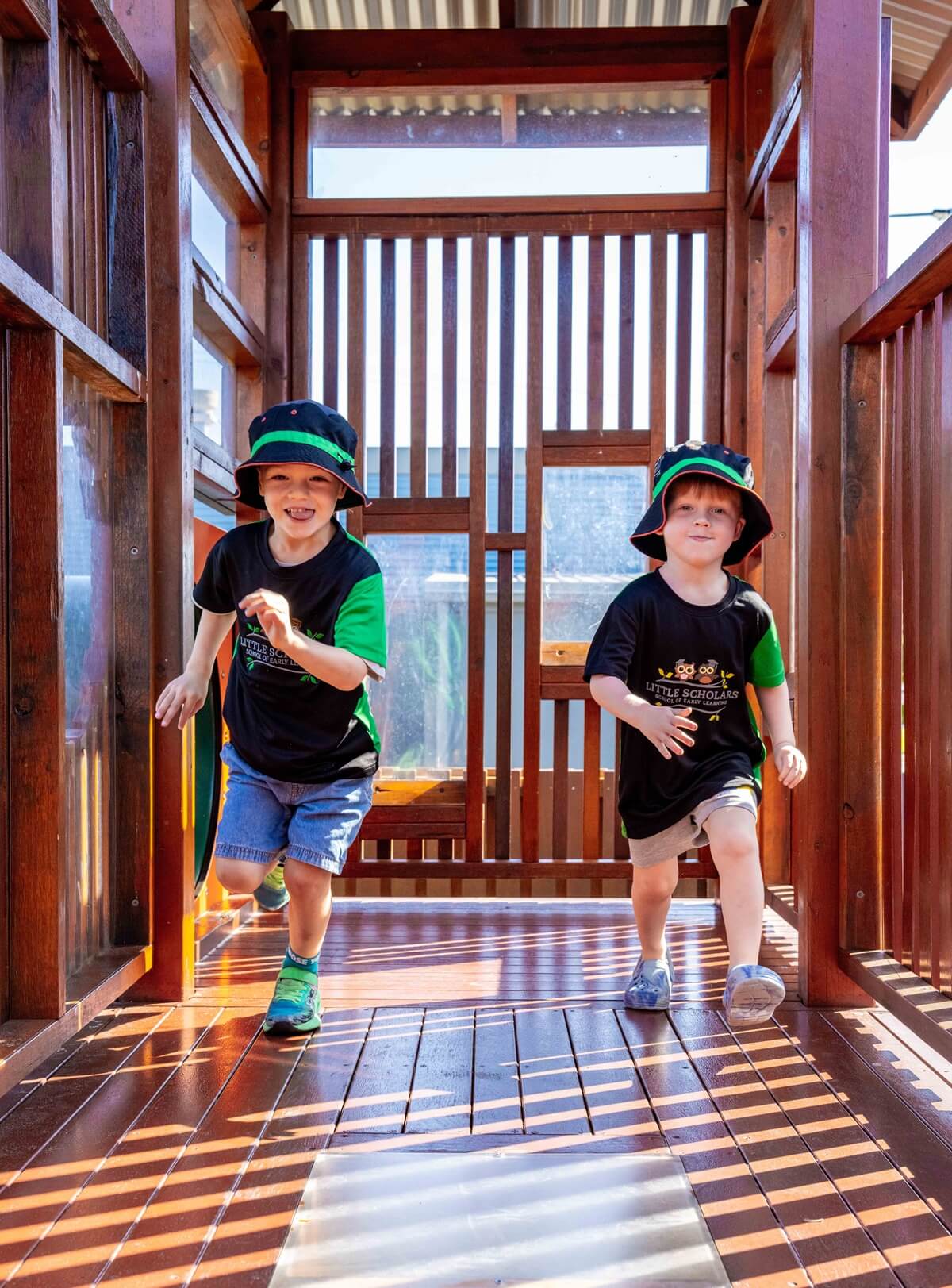
A common misconception is that kindergarten in a long day care setting is less educational than sessional kindergarten. In reality, approved kindergarten programs must meet strict standards and follow recognised early learning frameworks.
Children in long day care kindergarten programs take part in structured educational experiences that support literacy, numeracy, communication, emotional wellbeing, and social development.
At Little Scholars, our focus is on creating play-based learning environments where children build confidence, independence, and a love of learning. Our campuses are designed to support children’s growth in a warm, engaging setting that feels like a second home.
One of the biggest advantages of long day care kindergarten is consistency. Children remain in the same familiar environment throughout their early learning journey, building strong relationships with educators and peers over time.
This continuity helps children feel safe, secure, and confident as they prepare for school.
Many families juggle work, commuting, and busy schedules. Long day care kindergarten provides extended hours that support working parents while ensuring children continue learning throughout the day.
Instead of arranging multiple drop-offs, pickups, or extra care arrangements, families can access education and care in one place.
Quality kindergarten is about much more than letters and numbers. Children learn best through meaningful play experiences that encourage curiosity, creativity, communication, and problem-solving.
Our educators plan experiences based on children’s interests and developmental stages, helping build:
These are the foundations that support a smooth transition to primary school.
Long day care settings allow educators to build close, ongoing partnerships with families. Daily conversations and longer hours create more opportunities to share updates, celebrate milestones, and work together to support each child’s development.
There is no one-size-fits-all answer. The best choice depends on your child’s personality, your family routine, and the type of support you need.
Sessional kindergarten may suit families who:
Long day care kindergarten may suit families who:
Both pathways can help children thrive when the program is high quality and aligned with a child’s individual needs.
When comparing kindergarten options, the most important factors are:
At Little Scholars School of Early Learning, we believe every child deserves an inspiring early learning experience that prepares them not just for school, but for life.
Our kindergarten programs are designed to support children’s growth, confidence, and school readiness in a warm and engaging environment. With campuses across Queensland, Little Scholars offers families a flexible early learning option that combines education, care, and convenience.
Whether you are exploring sessional kindergarten alternatives or looking for a long day care kindergarten program, our team is here to help you find the right fit for your family. Book a tour at your nearest Little Scholars campus to learn more about our approved kindergarten programs.
Does your little one ask “but why?” about everything? Good news, science has the answers, and your kitchen has the ingredients.
Welcome to Little Scholars easy at-home science experiments: five magical, hands-on, mess-approved experiments designed to spark curiosity and sneak in a little learning while your kids are too busy having fun.
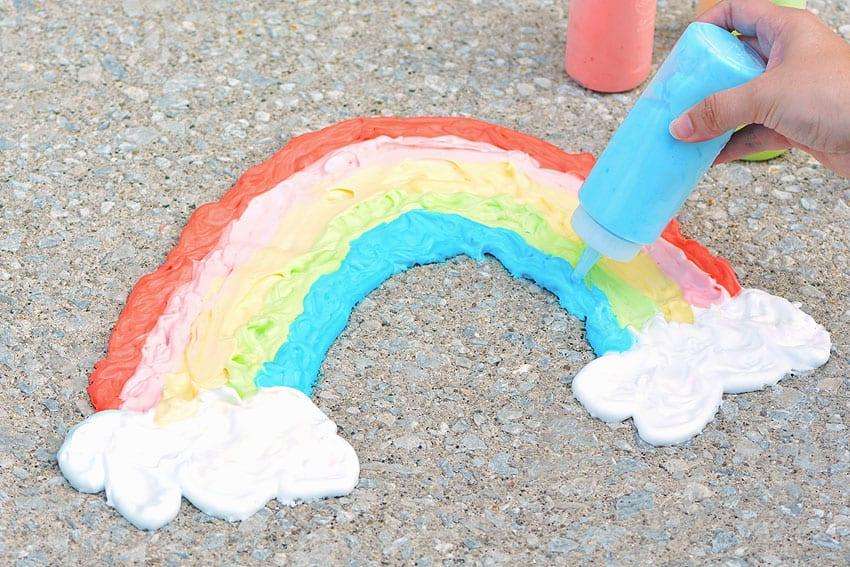




Bringing science into your home doesn’t just create a fun afternoon activity, it lays the foundation for a lifetime of curiosity and problem-solving. At Little Scholars, we love seeing our children make these big discoveries every single day. Our STEM program is designed to transform this natural curiosity into real-world skills, guiding our little scholars as they explore, experiment, and understand the world around them. Try these experiments at home this week, and watch your child’s inner scientist truly come alive!
Come visit your nearest Little Scholars campus and discover how our hands-on, play-based approach helps children learn through joy, exploration, and discovery.
Book a tour today and see why families love being part of the Little Scholars community!
At Little Scholars School of Early Learning, we are incredibly proud of the passionate, dedicated educators who bring our values to life every single day. Our annual Pillar Awards recognise team members who truly embody our core pillars: Learn, Grow, Inspire, and Contribute.
In 2026, we are thrilled to celebrate four outstanding individuals whose commitment, heart, and impact have made a lasting difference across our communities.
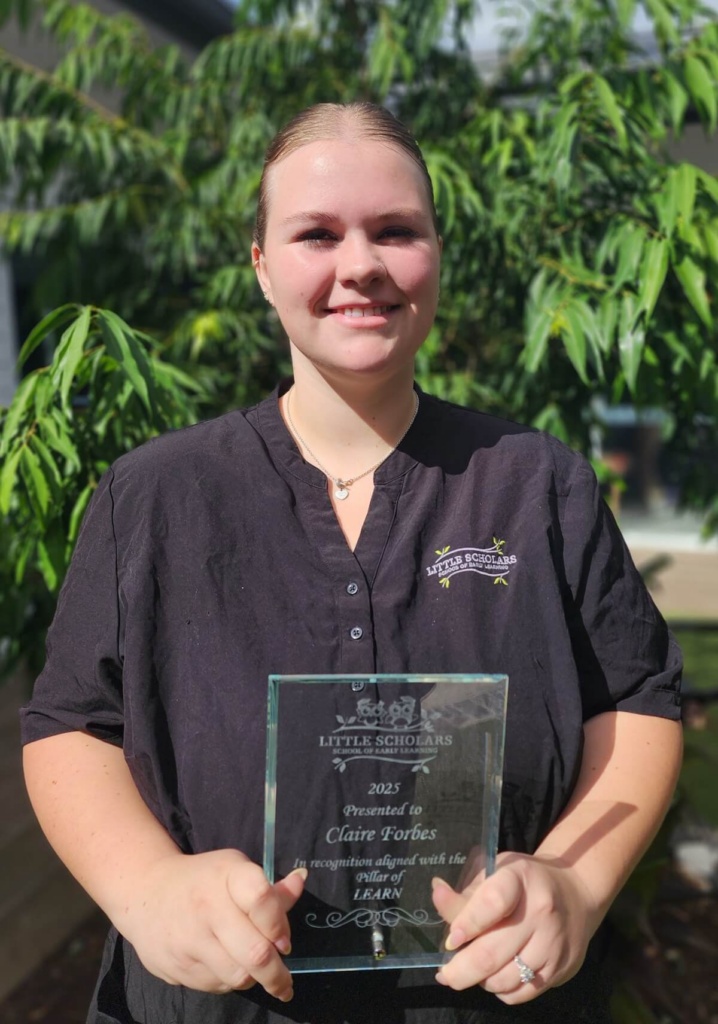
Claire Forbes exemplifies what it means to be a lifelong learner. Her commitment to professional growth is evident in everything she does—actively seeking opportunities to expand her knowledge, reflecting on her practice, and embracing feedback with openness and purpose.
Claire consistently applies new learning to enhance outcomes for children, demonstrating curiosity, initiative, and a genuine passion for best practice. Beyond her own growth, she generously shares her knowledge with colleagues, fostering a culture of continuous learning within her team.
Her dedication not only strengthens her own practice but creates a ripple effect, positively impacting both her peers and the children in her care.
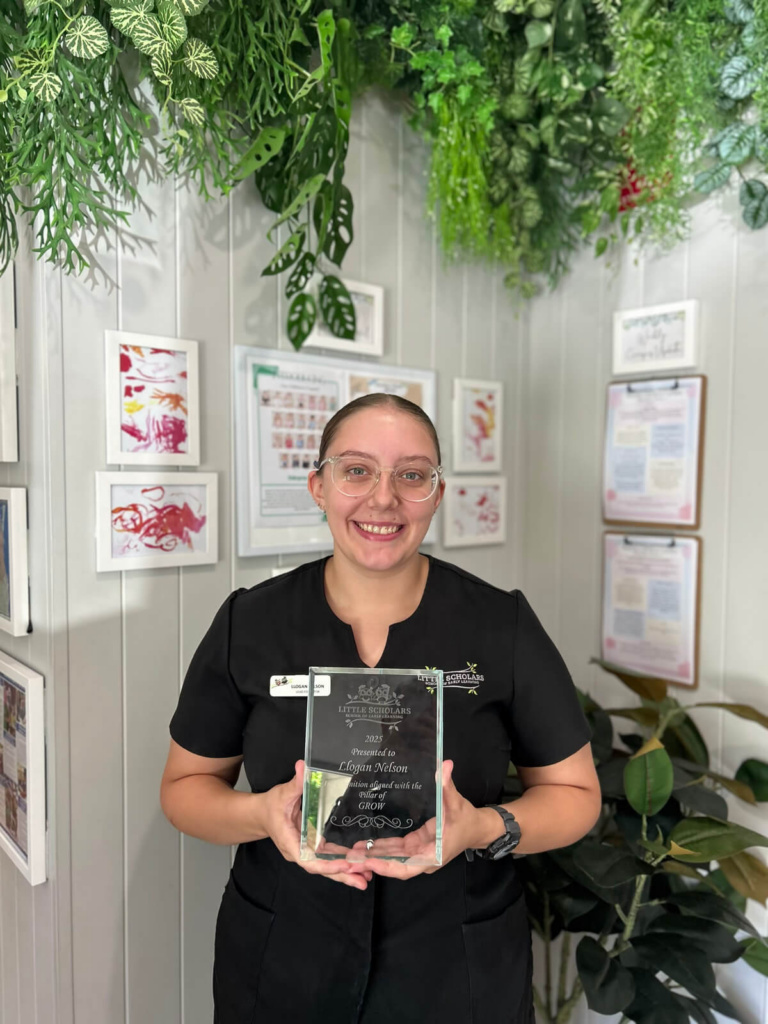
Llogan Nelson’s journey over the past year is a powerful example of growth in action. Stepping into the role of Lead Educator in the Senior Kindy studio, she embraced a challenging environment and transformed it with determination and resilience.
Faced with behavioural, team, and environmental challenges, Llogan actively sought feedback, welcomed guidance, and consistently looked for ways to improve. Her commitment to implementing strategies discussed in behaviour meetings led to meaningful and lasting change within the studio.
Now transitioning into Kindergarten, Llogan continues to build on this success—working collaboratively to ensure children experience a smooth, positive transition. Her willingness to learn, adapt, and lead with intention truly reflects the spirit of the Grow pillar.
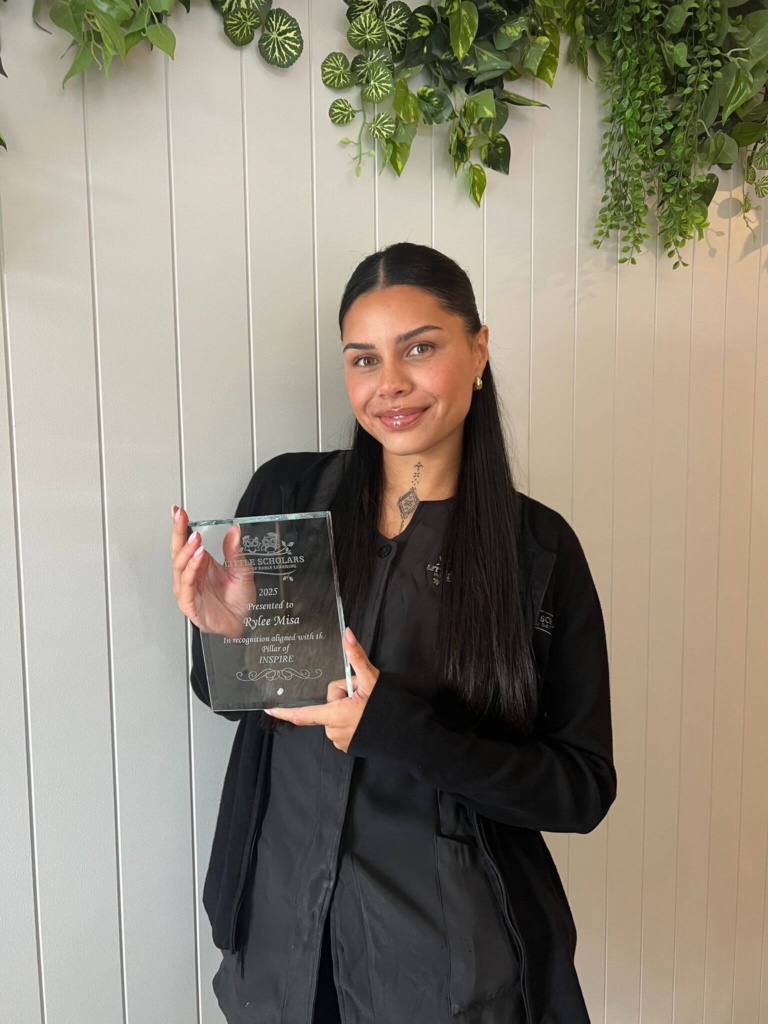
Rylee Misa brings creativity, energy, and heart into everything she creates. As a content creator and events coordinator, she goes above and beyond to design experiences that are meaningful, memorable, and inspiring for children and families alike.
Rylee holds herself to a high standard, always striving to create environments and events that feel thoughtful, engaging, and special. What truly sets her apart is her ability to listen—ensuring the voices of children, families, and her team are reflected in every experience.
Her passion and attention to detail help shape vibrant learning environments where our community feels seen, included, and celebrated. Rylee’s work continues to inspire not only those around her, but the experiences we create as a service.
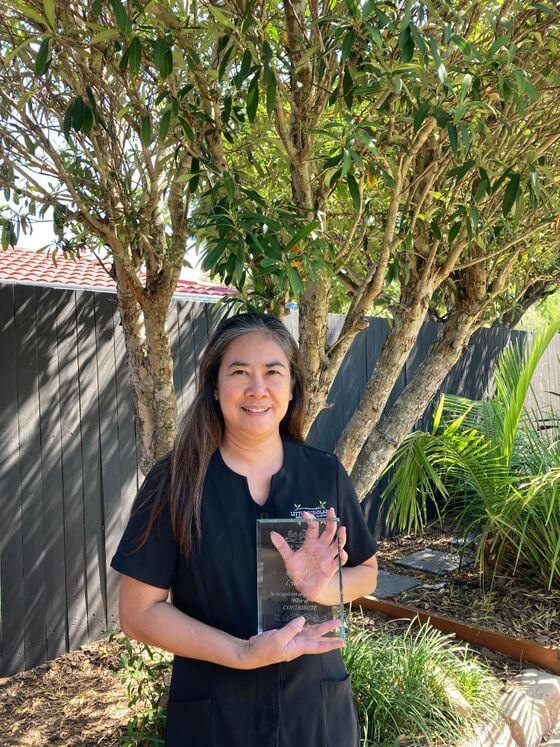
With nearly a decade of dedicated service, Lyle Bala is the heart of contribution within her centre community. Approaching her 10-year milestone, Lyle continues to go above and beyond for children, families, and her team.
She is always ready to lend a helping hand, never missing an opportunity to support events or step in where needed. Lyle takes immense pride in creating positive, welcoming experiences for families, and her warmth and enthusiasm are felt by everyone she meets.
Her supportive nature helps families feel valued and connected, while her energy and care make each day brighter for the children. Lyle is a truly cherished member of the Little Scholars community.
Each of our 2026 Pillar Award winners represents the very best of Little Scholars School of Early Learning. Through their dedication, passion, and commitment to our values, they help create environments where children, families, and educators can thrive.
We are incredibly grateful for the impact they make every day—and we are so proud to celebrate their achievements.
Congratulations Claire, Llogan, Rylee, and Lyle!
Inspired by our incredible educators? At Little Scholars School of Early Learning, we’re always looking for passionate, dedicated individuals who want to make a meaningful impact in the lives of children and families.
Discover what makes our team so special and explore current opportunities here:
You remembered the sunscreen, the spare clothes, the show-and-tell item AND made school lunches before 7am. Nobody clapped. Nobody noticed. This one’s for you.
Not the written list — the one in your head. The one that never gets put down, never gets turned off, and most definitely never gets acknowledged at the end of a long day.
This is the mental load. And if you’re carrying it, you already know exactly what it feels like. Heavy. Relentless. Completely invisible to almost everyone around you.
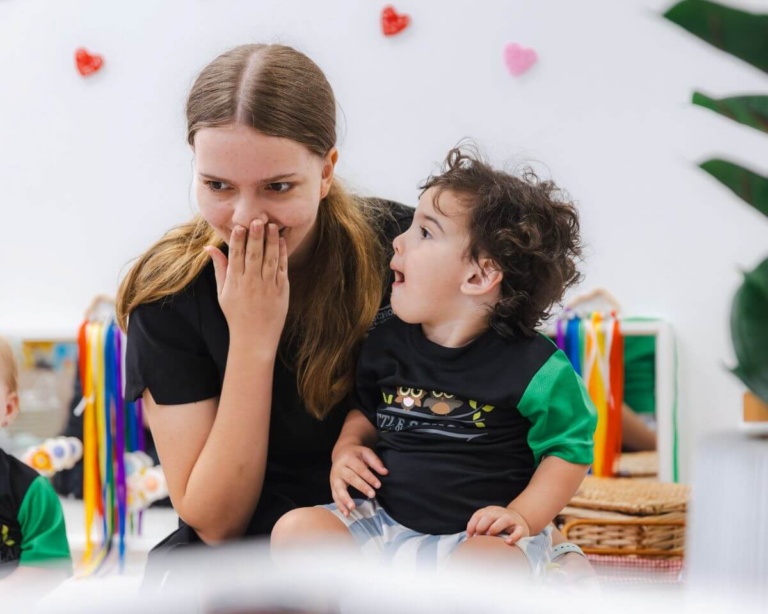
The mental load isn’t the doing of things. It’s the knowing of things. The tracking, the anticipating, the never-quite-switching-off awareness that something needs to happen, and that if you don’t hold it in your head, it simply won’t happen.
Research consistently shows that in households with young children, this cognitive labour falls disproportionately on one person — and that person is almost always the mother. Not because partners don’t care. Not because the system is working exactly as intended. But because it is a pattern so deeply embedded in how we were all raised that most of us didn’t even notice it settling into place.
And here’s the thing that makes it particularly exhausting: the mental load is invisible labour. Nobody sees it. Nobody measures it. Nobody hands you a certificate at the end of the week that says ‘outstanding work anticipating that the 2-year-old was going to need an extra layer today.
You just do it. Because it has to be done. Because you’re the one who knows.
When the mental load is consistently too heavy, something gives. Sometimes it’s sleep. Sometimes it’s the relationship. Sometimes it’s the version of yourself that used to have hobbies, or opinions about things that weren’t nap schedules and developmental milestones, or the ability to sit in a room for five minutes without mentally running through tomorrow’s logistics.
Sometimes it’s all three, quietly, at the same time.
This isn’t weakness. This isn’t failing at parenthood. This is what happens when one person holds too much, for too long, without enough support. It is a structural problem dressed up as a personal one. And the solution is not to be more organised, or more patient, or more grateful. The solution is to actually put some of the weight down.
Here is something we wish more parents understood: the right childcare centre doesn’t just care for your child. It carries part of the load with you.
When you trust the place your child goes every day — genuinely trust it, in your body not just your brain — something shifts. The morning drop-off becomes less fraught. The Sunday night dread eases. The mental bandwidth you were spending on is she okay, is he settled, did they remember about the allergy gets freed up for other things. For work. For rest. For being present with your family in the hours you do have together.
A childcare centre that communicates clearly, that knows your child as an individual, that has educators who notice when something’s off and tells you about it — that is not a luxury. That is part of the infrastructure of a functioning, sustainable family life.
The right childcare centre doesn’t just care for your child. It carries part of the load with you.
At Little Scholars, we think about your child constantly. Not just during the hours they’re with us — but in the planning that happens before they arrive and the documentation that captures what happened after they leave.
We think about whether the environment is set up to meet where your child is developmentally right now. We think about how to support the transition between home and care in a way that makes Monday mornings less hard. We think about nutrition, about outdoor time, about which educator is the right fit for which child on which day.
We think about your child the way you think about your child. Which means that for the hours they’re with us, you are genuinely allowed to think about something else.
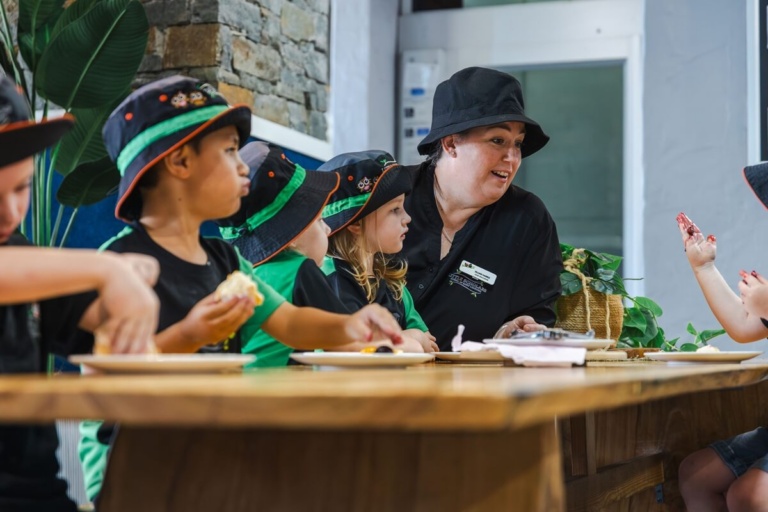
We want to say this clearly, because we think someone should: you are doing an extraordinary amount. Every day. Often without acknowledgement, often without thanks, and almost always without anyone fully understanding the cognitive weight of what you are managing.
The invisible work is real work. The mental load is real labour. And the fact that it happens mostly in the quiet parts of the day — before anyone else is awake, after everyone else is asleep — does not make it less significant. It makes it more.
You are not failing at this. You are carrying it. And there is a difference.
Not the abstract, Instagram-caption version of a village. The real one — actual humans who know your child, who show up consistently, who make the load feel lighter on the days when it threatens to flatten you.
That’s what we’re here to be. Not just a place your child goes. A genuine part of the support system around your family. One less thing to carry alone.
Because you’ve already got enough on the list.
Your 2-year-old hasn’t slept through the night in 6 months. Before you blame yourself — read this.
It’s midnight. Maybe later.
You’re on your phone, one eye half-open, searching some combination of toddler won’t sleep, childcare sleep regression, is this normal, why is my child like this, and you’ve ended up here.
Welcome. You’re in exactly the right place. And before we go any further — you didn’t break your child’s sleep. You didn’t cause this. And you are not the only parent lying in the dark right now wondering if this is just life forever. Let’s talk about what’s actually going on.
Childcare doesn’t wreck sleep. What it does is load the nervous system. A full day of socialising, learning, navigating big emotions, managing transitions, sharing space with other small humans — this is genuinely hard work for a young child. And when the nervous system has been working that hard all day, it doesn’t always know how to wind down cleanly at the end of it.
The result? A child who seems wired at bedtime when they should be exhausted. A child who wakes at 2am processing something — a new friendship, a conflict on the mat, a sound they heard during rest time. A child whose sleep was perfectly fine before they started care and has been disrupted ever since.
This is not evidence that childcare is harmful. It is evidence that your child is doing a lot of growing.
Here’s something that genuinely surprises parents: sleep regressions don’t only happen at the textbook ages. They happen at any point of significant developmental leap — and starting or transitioning childcare is one of the biggest leaps a young child can experience.
New environment. New faces. New rhythms. New emotional demands. The brain is processing all of it, often during sleep — which is exactly why sleep gets disrupted in the process.
This is temporary. It almost always resolves as the child settles into their new routine and their nervous system learns to trust the predictability of their days. The children who tend to settle fastest? Those in environments with consistent rhythms, warm relationships, and educators who understand how the emotional load of the day affects what happens at night.
We’ve sat with enough exhausted parents across our Little Scholars campuses to know what genuinely moves the needle — and what doesn’t. Here’s the honest list.
If you are months into broken sleep and nothing is improving, that is not a parenting failure. That is a signal that you need more support than a blog post can give you. A paediatric sleep consultant, a conversation with your GP, or a proper sit-down with your child’s educators to look at the full picture — these are not last resorts. They are reasonable, sensible next steps, and there is no shame in taking them.
You cannot pour from an empty cup.
You are reading this at midnight because you care deeply about your child’s wellbeing. That level of dedication — that willingness to keep searching, to keep trying, to not give up — is exactly the kind of parenting that raises secure, settled, loved children.
The sleep will come back. It always does.
But you don’t have to figure it out alone.
If you’re looking for a childcare environment that understands the whole child including what happens after they go home — we’d love to talk. Our educators work closely with families to support not just the childcare day, but everything that surrounds it.

Let us hold your hand and help looking for a child care centre. Leave your details with us and we’ll be in contact to arrange a time for a ‘Campus Tour’ and we will answer any questions you might have!
"*" indicates required fields
Let us hold your hand and help looking for a child care centre. Leave your details with us and we’ll be in contact to arrange a time for a ‘Campus Tour’ and we will answer any questions you might have!
"*" indicates required fields
Fill in the form to join your local Pram Pals mums and bubs walk