
For many families, choosing an early learning environment is a major milestone. It’s not just about childcare — it’s about setting the foundation for a child’s lifelong growth, confidence, and love of learning.
High-quality early education nurtures the whole child: socially, emotionally, and intellectually, supporting them well beyond their early years.
Here’s how:
The first five years of life are a time of incredible growth. During this period, a child’s brain is developing rapidly, forming the connections that shape how they learn, think, and engage with the world.
Research shows that up to 90% of brain development occurs before a child even starts primary school. This means that experiences between birth and age five, the conversations they hear, the games they play, and the relationships they form, all shape the way they think, learn, and relate to the world around them.
At Little Scholars, our play-based approach embraces this important stage. Through hands-on experiences, meaningful interactions, and guided discovery, we encourage children to explore their interests, think creatively, and develop confidence in their abilities.
We believe that when children feel supported and inspired, a genuine love of learning naturally follows.
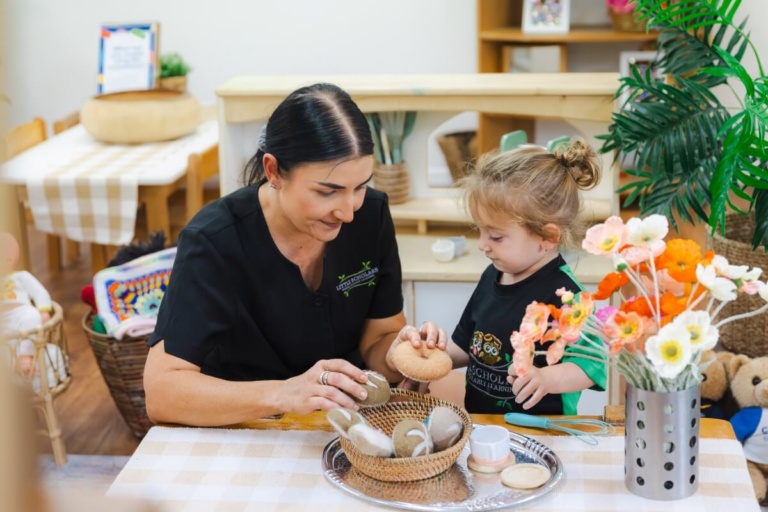
Early learning is just as much about the heart as it is about the mind.
In a nurturing and supportive environment, children begin to understand their emotions, build empathy, and form positive relationships with others. These early experiences help shape how they communicate, collaborate, and navigate the world around them.
Between ages 3 and 5, children start to enjoy playing with others and begin to understand other people’s feelings. In early learning settings, they’re encouraged to share, work together, and include their peers’ ideas in play. These experiences help them develop empathy, build friendships, and learn to get along with others — valuable skills for preschool and beyond.
Studies from the Australian Early Development Census (AEDC) highlights that almost 50% of Australian children starting school are developmentally vulnerable in one or more key areas such as language, social competence, or emotional maturity. A strong early learning experience helps children transition into school with confidence and ease. They become familiar with routines, develop independence, and build the social skills needed to thrive in a classroom environment.
Attending a high-quality early learning and kindergarten program helps ensure children don’t fall behind before they even start school. Importantly, additional research also shows that all children benefit from early learning, regardless of background or family income. Every child deserves access to nurturing, high-quality education that helps them reach their full potential.
At Little Scholars, we focus on preparing children not just for school, but for life — nurturing resilience, curiosity, and a positive sense of self from day one.
You can learn more about our kindergarten program here: Kindergarten
A child’s wellbeing is at the heart of everything we do.
Through active play, nutritious meals, and time spent outdoors, children develop healthy habits that support both their physical and emotional development. Just as importantly, they learn to feel comfortable, secure, and connected in their environment.
Our holistic approach ensures that the whole child is supported, helping them grow into happy, confident individuals.
By choosing a high-quality early learning environment, families are giving their children the opportunity to develop the skills, confidence, and mindset they need for a bright future.
At Little Scholars School of Early Learning, we are proud to nurture, guide, and inspire children during these important years, because we know that what happens early in life truly matters.
We believe that strong partnerships with families are essential to a child’s success.
Children thrive when families and educators work together. By building strong partnerships with families, educators can create a shared understanding of each child’s unique strengths, needs, and goals. This sense of community creates continuity, trust, and confidence, ensuring children feel supported both at home and at their Little Scholars campus.
Children thrive in high-quality early learning environments. Learn more about our play-based curriculum designed to support your child’s individual growth, wellbeing, and love of learning.
Book a tour today and see how we can support your child’s best possible start.
As a parent, you may be asking yourself, “Is my child ready to start school next year?” “Should I delay prep?” “How do I know if my child is ready for big school?”
Starting school is a big milestone — for children and families. While age often guides the conversation, true school readiness is about much more than a birthday.
In Queensland, families have flexibility when it comes to starting Prep, and understanding your child’s individual development can help you make the best decision for their learning journey.
In Queensland, children are eligible to start Prep in the year they turn five by 30 June. However, school doesn’t become compulsory until six years and six months, meaning families can choose to delay Prep if they feel their child would benefit from more time to grow and develop.
This flexibility recognises something important: every child develops at their own pace.
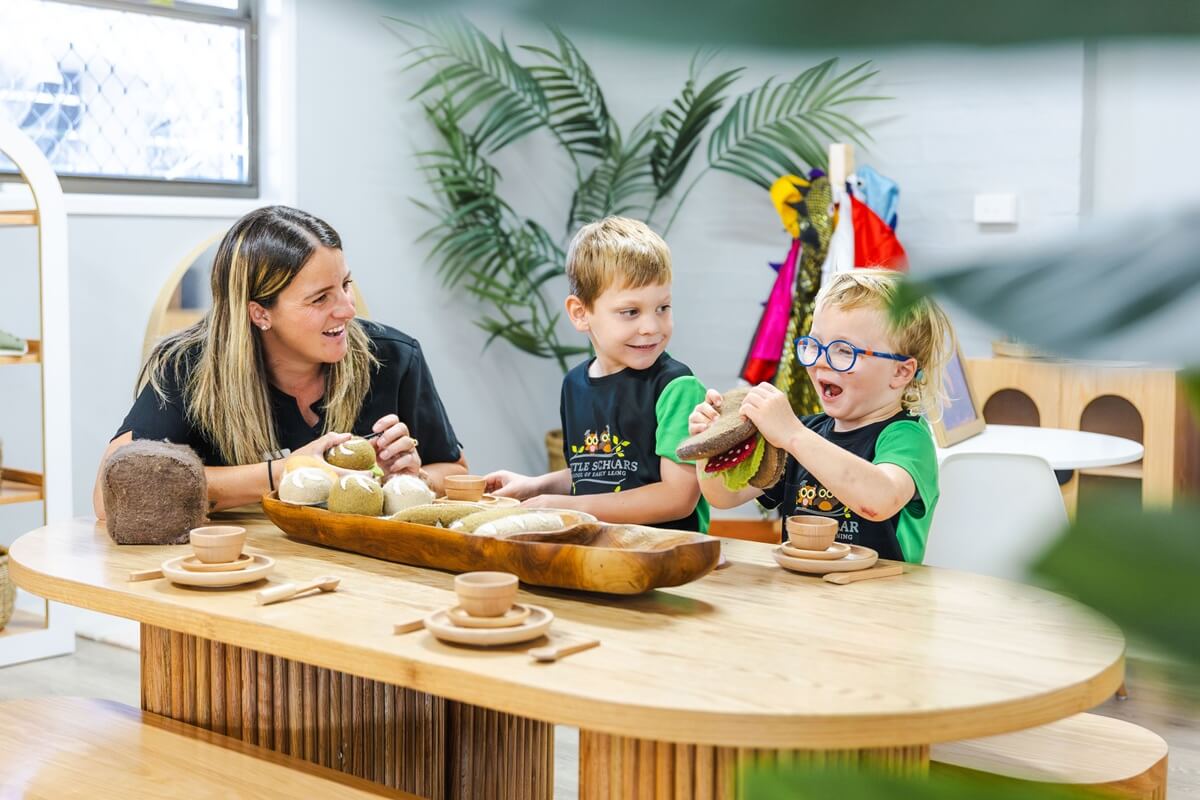
School readiness isn’t just about knowing letters, numbers or how to write their name. While early literacy and numeracy are valuable, research shows that a child’s ability to thrive at school depends largely on their social and emotional development.
Key school readiness skills include:
These skills help children feel secure, capable and ready to engage with learning once they begin school.
High-quality early learning plays a vital role in supporting school readiness. In a nurturing and structured environment, children develop essential skills gradually and naturally through play, relationships and meaningful experiences.
At Little Scholars School of Early Learning, our kindergarten programs are thoughtfully designed to support each child’s individual journey. We focus on:
Our qualified early childhood teachers (ECT’s) and educators work closely with families to ensure children feel supported, understood and prepared for their next step — whether that’s starting Prep soon or taking a little more time.
If you’re beginning to think about Prep or wondering whether your child is truly school-ready, you don’t have to navigate it alone. Little Scholars is here to support your family every step of the way.
Families may also be eligible for Free Kindy in Queensland, giving children the opportunity to participate in a high-quality kindergarten program while building the confidence, social skills and emotional readiness needed for a smooth transition to school.
Feel free to book a tour or chat with our team to learn more about our kindergarten programs and how we can support your child’s confidence, development and readiness for school.
Wondering what an Educational Leader at Little Scholars does and why it’s important for your child’s early learning? This key role shapes the high-quality education your child receives. It’s one of those behind-the-scenes roles that plays a huge part in your child’s day-to-day experience.
So let’s break it down in parent terms.
At Little Scholars, every campus has an Educational Leader – someone whose main job is to support our amazing educators and make sure the programs we run are the best they can be. They guide the team, introduce new ideas, help with planning and problem-solving, and basically make sure everything we do is helping your child learn, grow, and thrive.
They’re not counted in educator-to-child ratios, so they have time and space to really focus on quality. That means they’re free to mentor educators, work on exciting learning projects, and stay up-to-date with the latest in early childhood education.
Because when educators are well-supported, children benefit… big time.
Educational Leaders help make sure every learning experience is thoughtful, engaging, and tailored to children’s needs. They’re constantly reflecting on what’s working, what could be better, and how we can keep improving. That means your child is part of a program that’s always growing and evolving, just like them.
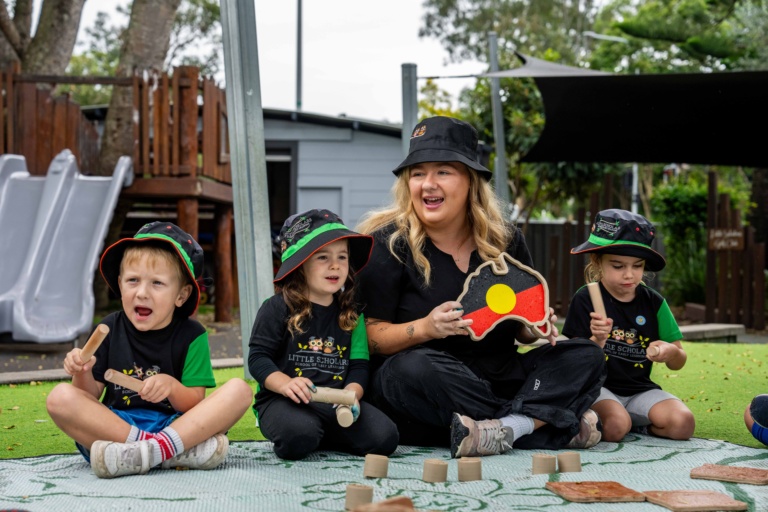
At Little Scholars, we do more than just tick the boxes. Our Educational Leaders:
In simple terms: they help make Little Scholars the best it can be — for our team, and most importantly, for your child.
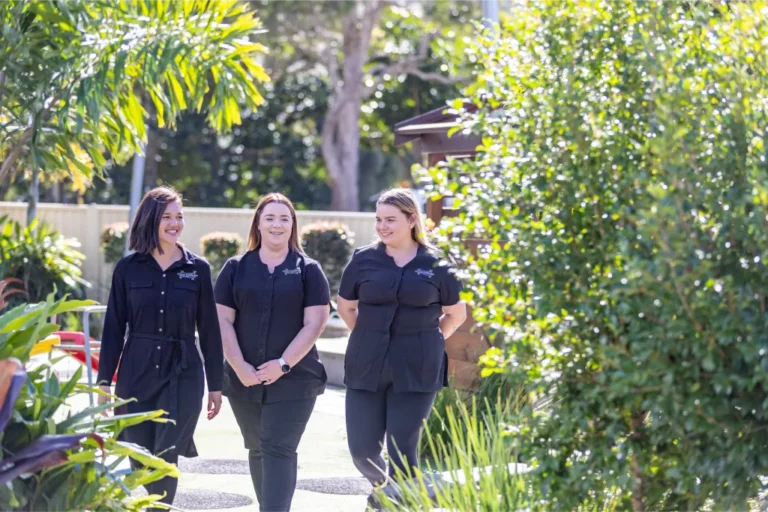
Our Educational Leaders might not be in every photo or pickup conversation, but their impact is felt in every room, every interaction, and every learning moment. They’re here to support our team so your child can have the rich, high-quality early learning experience they deserve.
Because when our educators thrive, your little scholar does too.
Babies are a mysterious bunch. For many months, their main forms of communication are cries, squeaks, gestures and coos. Parents fall madly in love with these little humans without knowing what they’re thinking and feeling, often just guessing at best.
How babies play, how and what they’re learning, and what they’re interested in can be a mystery to many. Many parents have seen their baby pull out every book off a shelf, for example, watch it fall, then grab another, while that parent scratches his or her head and says ‘why?’
There’s an answer. It’s a schema. A schema is both a category of knowledge as well as the process of acquiring that knowledge. In play, babies are often involved in repeated actions or certain behaviours as they explore the world around them and try to find out how things work. Those repetitive actions, such as a baby pulling out book after book, allows a child to practice and construct meaning to something, until they’ve understood that schema. Then they find something else to focus on and lather, rinse, repeat!
As Yvette, educational lead from our Burleigh campus says, it’s children’s development making sense.
“All of those little things that you see children do that seem a bit cute, or frustrating even, like throwing, it’s a schema, a child’s pathway of development for making sense of the world,” Yvette says.
The repetitive action of a schema allows a child to practice and construct meaning until they have mastered the understanding of the schema. Being aware of play schemas helps in two ways:
There are a number of types of schemas when it comes to babies.
Trajectory schema – The trajectory schema is one of the earliest schemas observed in babies. They are fascinated with how they, and objects move. Children will often throw objects or food from their pram or highchair. They climb and jump in puddles and enjoy exploring running water.
Transporting schema – Little ones enjoy repeatedly moving resources around, from one place to another. They will carry many items at a time using their hands, pockets, containers,
baskets, bags, or anything else that will hold their newfound treasures.
Enclosing schema – Children show an interest in enclosed spaces. They may want to sit (and hide in) boxes or laundry baskets. Or they may show interest constructing fences and barricades to enclose toy animals or themselves.
Rotational schema – Children showing a rotational schema may display a preference for turning taps on and off, winding and unwinding string, and playing with
hoops. They may also be fascinated with the physical experience of twirling and twisting their body, spinning around on the spot, or rolling themselves down a hill. They have an interest in things that turn, such as wheels and windmills. They enjoy rolling tyres around, turning lids and watching the washing machine on a spin cycle.
Enveloping schema – Children with an enveloping schema are interested in covering and hiding items, including themselves. They will enjoy dressing up, and filling and emptying bags and containers with different objects.
Connecting schema – Children displaying the connecting schema want to join items together. They find resources like string to tie things. They connect and disconnect toys such as rail tracks.
They enjoy construction toys, and doing arts and crafts where they can glue and stick pieces together.
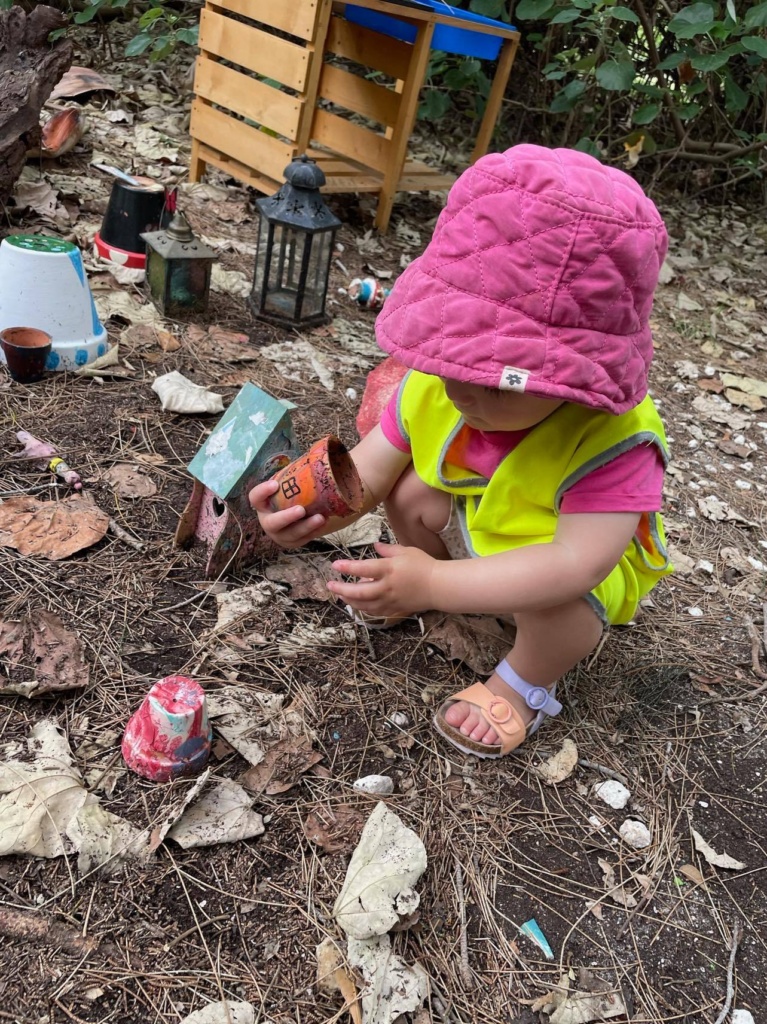
Orientation schema – Children like to turn objects and themselves around and upside down, to get a view from under the table or from the branch of a tree. They may bend over and look at the world backwards through their legs. They enjoy seeing things from a different view when exploring using cardboard tubes, binoculars or a magnifying glass.
By adapting this theory, we have been able to slow down and become more in tune to the children and noticing their behaviour patterns in play. It is now so important to us that we allow our babies and young children the time to explore the repetitive actions of schematic play.
-Jodie, lead educator
Jean Piaget was one of the first to use the term “schema” back in 1923. Piaget was an important child development theorist and his Theory of Cognitive Development was and still is read and followed today by early childhood specialists. He was one of the first who believed children think differently than adults and that they have an innate desire to learn and actively build up their knowledge about the world. They are not passive creatures waiting for someone to teach them.
Susan, our group pedagogical leader, is bringing her schema knowledge across our campuses to the lead educators in the nursery and toddler studios in 2023. Learn a bit more below about how we use schema theory, and how one educator has taken it on in her nursery.
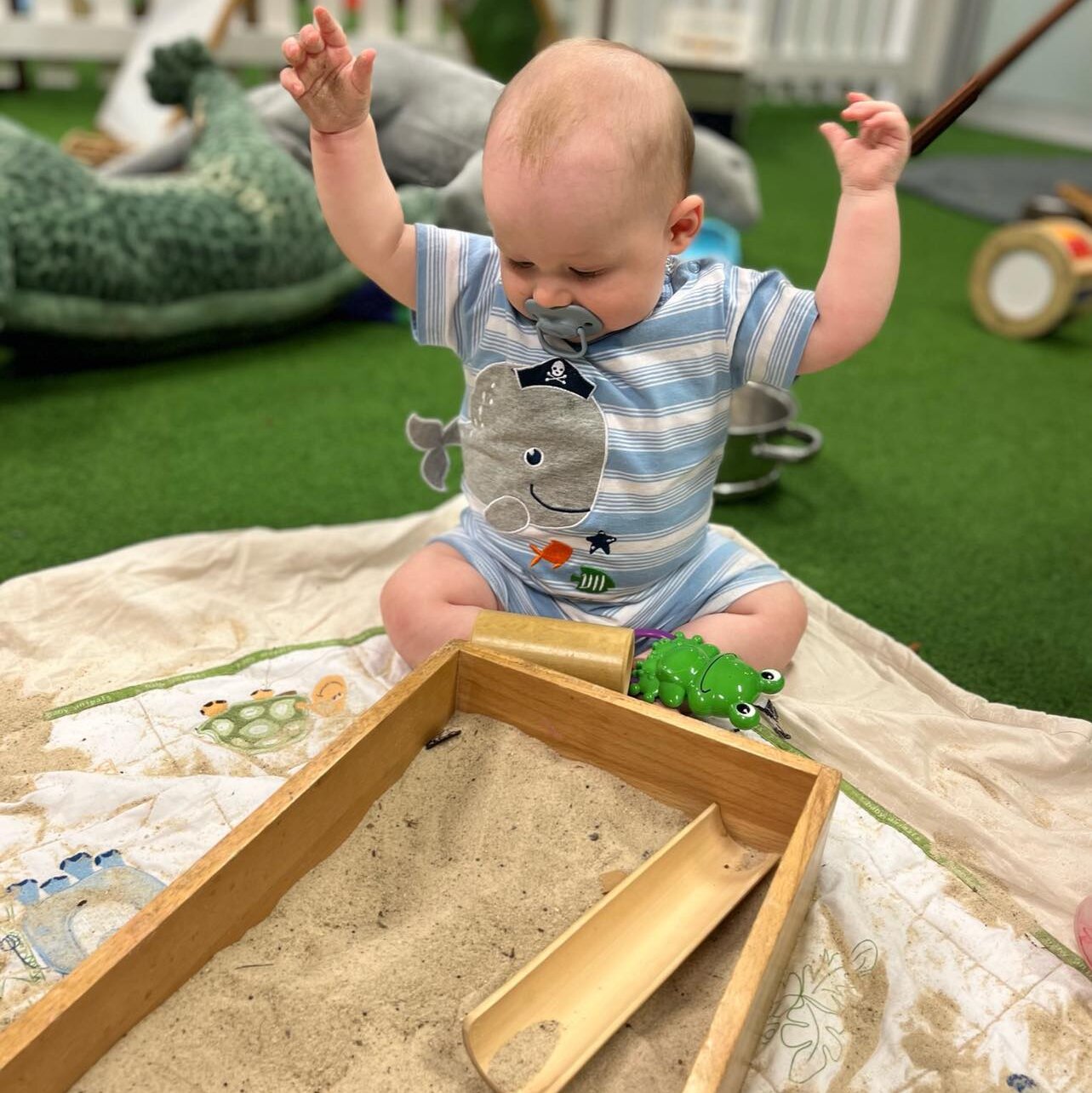
Schematic Pedagogy
Through our collective curriculum, our educators are guided through a ‘schematic lens’, meaning they can plan for children’s thinking, not just activities. This has a strong link to our Collective Curriculum, our educational program for children.
The learning environment
Our educators apply teaching methodologies to design their play spaces and are intentional in the resources offered.
Observing and planning for children’s thinking
Through our collective curriculum, our educators observe the children through their play, to determine schemas explored through the children’s engagement to an activity or resource. Through observing patterns of learning, our trained educators can plan forward to scaffold their cognitive capabilities.
Partnering with children in play
Through ongoing mentoring and coaching, our educators are able use their knowledge of schemas and plan effectively. Our educators are encouraged to partner with children in their play and observe behaviours explored through schemas.
“Schemas are an intrinsic part of child development, knowledge to schemas provide our team of educators an opportunity to identify and encourage independence in children as they explore patterns of movement, often related to schemas,” Susan says. “Supporting assessing through a schematic lens, provides our educators with a framework which can be used to analyse children’s learning, supporting the planning process within our curriculum.”
You may be wondering if you have a baby or a small toddler in one of our campuses, how we use schemas to help their development. We talked to one of the educators at our Deception Bay campus about using schemas for educational programming. Deception Bay Little Scholars was recently rated as Exceeding the National Quality Standard (NQS) after it was assessed by the Department of Education. The NQS sets a high national benchmark for early childhood education and care in Australia. Jodie, lead educator in the nursery studio, says learning about schemas was a game-changer.
Both our younger babies and older babies really enjoy dropping objects or putting things in and out of containers (vertical trajectory). Using old formula tins and cutting an opening in the top with lids from jar foods a milk bottle lids, is a big favourite.
Our older babies are seen continuing with trajectory and begin to start exploring other forms of schematic play like, transporting, rotation, connecting and this can lead to a disconnecting schema where the child builds something that they can demolish or through [activities like] untying knots, as well as enclosing, positioning, enveloping and orientation, such as looking at things from different viewpoints like hanging upside down, looking through their legs, looking at things upside down. No wonder our little people are so busy and on the go all the time!
Thanks, Jodie!
Related:
Pedagogical Practices: Bringing new learning techniques to Little Scholars
Teaching children emotional awareness, in themselves and recognising emotions in others, is an important part of children’s growth and wellbeing. Understanding emotions is also not something ingrained, and not necessarily an easy thing to teach or grasp, especially as these small humans’ brains are rapidly developing in all areas.
In children, all kinds of changes are happening at the same time, and some areas, such as children’s language skills, develop before their self-regulation skills. This means that while your child may have a broad vocabulary, they still may not be able to put into words how they’re feeling. A toddler’s capacity to regulate their emotional state and emotional reactions can affect everyone around them, and can carry on to academic performance, long-term mental health, and their ability to thrive in a complex world.
Helping children to identify and label emotions is an important first step and something Little Scholars focuses on in our educational programming. Small children do not yet have the vocabulary to identify feeling words like angry or frustrated, or have the skills to “read” facial cues or to interpret body language.
Even the littlest Scholars are learning emotional intelligence by communicating how they feel, according to Jodie, a lead educator in the nursery studio at Deception Bay.
“If a child is expressing an emotion or a behaviour, [we question] is it because they need something from us? ‘I can see you’re feeling sad, how come you’re feeling sad?'” Jodie says. “If we begin to speak to the babies about what they’re feeling, information I’ve learned from [child psychologist] Justin Coulson, it will relate to five things, either them being hungry, angry, lonely, tired or stressed. It’s often one of those things that will cause big emotions.
“They’re obviously not able to completely communicate with us on what their needs are. I’ve learned not to ask the children what they want, but what do they need?” she says. “Maybe they’re feeling hungry and frustrated, so offering them an apple could work, where they can get some of that anger out through crunching. Maybe they’re feeling tired, but they need a little more comfort first. What other feelings are they feeling?”
At our Burleigh campus, children and educators have feelings chats as part of their morning routine. In the Toddler studio, children ask their educators questions such as ‘why is she angry?’ providing a great opportunity for further conversation. Educators support the children in understanding their emotions through discussions as part of their morning routine.
“During the morning, we will sit down for our morning meeting [with children] so when we come inside, we’ll ask how they’re feeling, they’ll express how they’re feeling – happy, sad, ‘good’, and throughout the day we’ll do activities and they’ve gotten really good at recognising and showing those emotions,” says Sasha, lead educator in the Toddler 2 studio. “It’s crazy to see how much they can take in and understand.
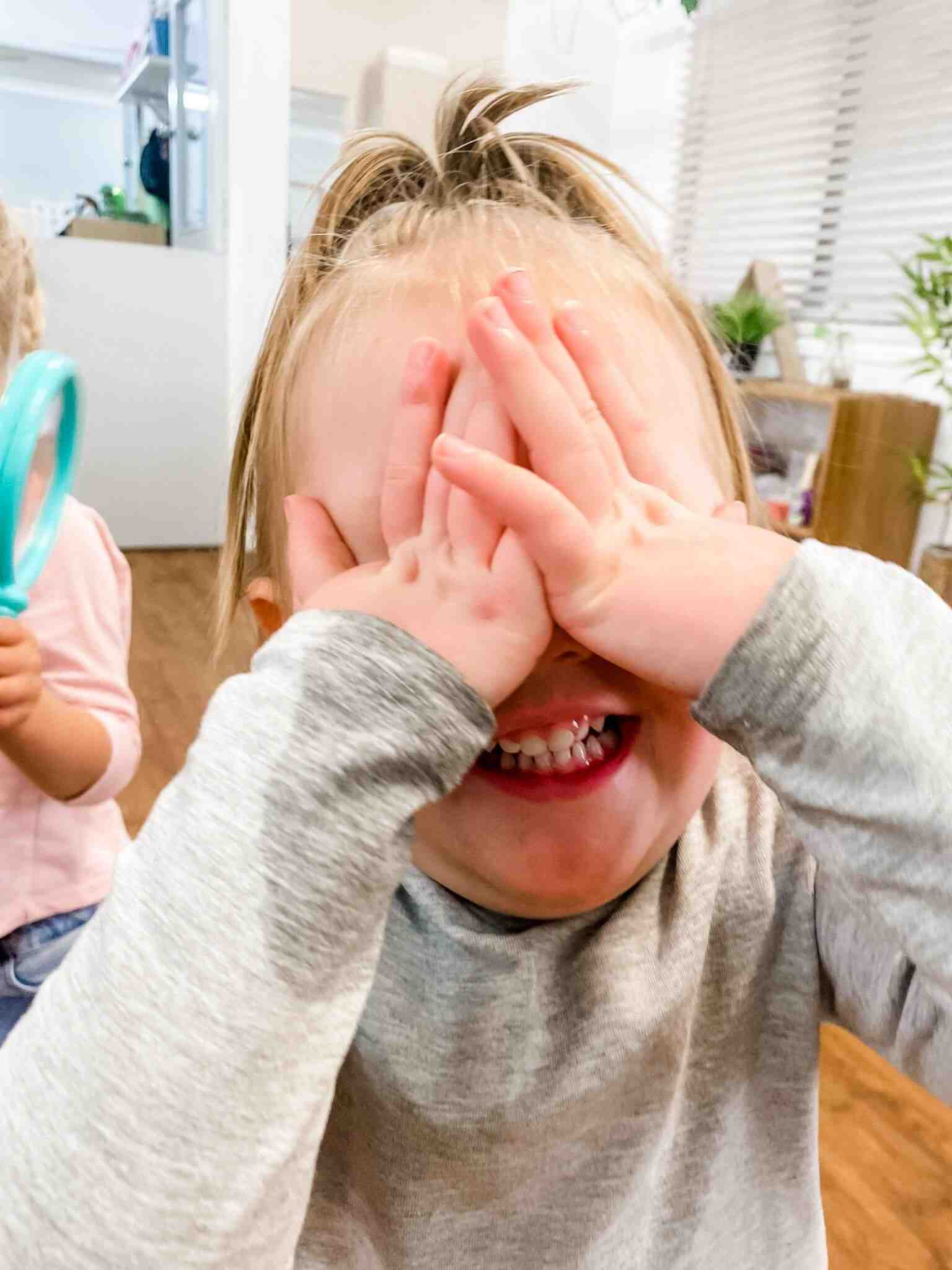
“It’s harder for some of the younger ones [to grasp], but we still try to get them involved by asking ‘how do you think that person looks in the photo?’ or ‘how could we make that person feel better?’ and get them to try to understand how others may be feeling,” Sasha continues. “They’re getting really good at being able to understand their own emotions, and we try to support them in how they can support themselves if they are feeling sad, or feeling overwhelmed and need space. Next year they’ll be learning more about how others feel and how we can help them.”
Raylene, an educator in the senior kindy studio at our Yatala campus, says the benefits of exploring emotions, all emotions including the hard ones, allows children to not only identify them but develop the skills to go through them.
“One child mentioned that she would cry all day if she couldn’t see her mummy again. Mr J mentioned that he gets angry when he can’t find his treasures. Mr T doesn’t like when Mummy drops him off etc which led to a discussion about developing strategies to cope with these emotions when they occur. [It’s] so powerful. Mr J said that he could take a big breath and then think about where he put his treasures. Miss K said that she would give her sister a big hug if she couldn’t hug Mummy. Mr T said he could come with Miss Ray,” says Raylene. “Ensuring educators create opportunities for children to communicate their feelings and then giving children the tools to not only identify them, but develop strategies to manage them, rather than saying ‘you’re OK’ is the power moment.”
Tori, an educator at the same campus agrees.
Jodie is right. Research shows that children who learn how to understand emotions in themselves and others are better able to regulate their own responses to strong emotions. Helping children to identify and label emotions is an important first step, and this is supported by the Early Years Framework in helping children develop a strong sense of identity.
Further information
Everything you need to know about how Australia’s early childhood framework guides the way your child learns, grows, and thrives, explained in plain English.
The Early Years Learning Framework or EYLF is Australia’s national standard for early childhood education and care. Its full name is Belonging, Being and Becoming: The Early Years Learning Framework for Australia.
Developed by the Australian Government and released in 2009 (with a major update to V2.0 in 2022), the EYLF applies to all approved childcare and early education settings for children from birth to five years of age. It sits under Australia’s National Quality Framework (NQF) and is the foundation against which services are assessed by ACECQA.
The framework doesn’t dictate a specific program or curriculum. Instead, it gives educators a shared foundation of principles, practices, and learning outcomes to guide the experiences, environments, and relationships they create for children. The goal is a consistent, high-quality early education across every approved childcare centre in Australia.
The 2022 update expanded the EYLF's principles from 5 to 8, strengthened language around sustainability, critical reflection, and collaborative leadership, and updated practices to reflect contemporary research in early childhood pedagogy. If your child's centre was enrolled before 2023, their approach has been updated to reflect V2.0.
At the heart of the EYLF are three interconnected concepts that describe how children experience the world. These pillars aren’t stages, they exist simultaneously in every child’s life.
Children develop a sense of belonging through their relationships — with family, educators, peers, and the broader community. When children feel they belong, they feel secure, confident, and connected enough to learn and explore. Belonging is the foundation all other development is built on.
Being recognises that childhood is a valuable time in its own right — not just preparation for school. Children deserve time to simply be: to play, to wonder, to form friendships, and to experience the present moment fully. High-quality early childhood education honours this.
Becoming is about growth, change, and the development of identity over time. Every experience a child has — every relationship, challenge, and discovery — shapes who they are becoming. The EYLF asks educators to see and support each child’s unique developmental journey.
EYLF principles are the core beliefs that underpin everything educators do. They reflect contemporary research, ethical practice, and what we know about how children learn best. EYLF V2.0 expanded these from 5 to 8 principles.
Children learn best when they feel safe, valued, and emotionally connected. Warm, consistent relationships with educators are the single most important factor in quality early learning. This principle places relationship-building at the centre of every interaction.
Educators and families share responsibility for children’s learning and development. Genuine partnerships — built on communication, trust, and mutual respect — strengthen outcomes for children. Parents are considered the first and most important educators in a child’s life.
Every child has the capacity to succeed. This principle calls on educators to hold high expectations for all children regardless of background, ability, or circumstance, and to actively work to remove barriers to participation and achievement.
Australia’s children come from diverse families, cultures, and communities. Educators respect and value this diversity including Aboriginal and Torres Strait Islander ways of knowing and being, and reflect it in their programs and environments.
High-quality educators are always learning. This principle commits educators to continuous professional development, critical self-reflection, and staying current with early childhood research. It’s what separates good care from exceptional early education.
Added in EYLF V2.0, this principle encourages educators to examine their own assumptions, values, and practices with rigour. Critical reflection goes beyond routine self-assessment — it challenges educators to question why they do what they do and whether it truly serves every child.
Also new in V2.0, this principle recognises that children’s futures are shaped by the health of the planet and their communities. Educators integrate sustainability into everyday learning — helping children develop a sense of environmental responsibility from the earliest years.
Quality early education is a shared endeavour. This principle values leadership at every level — from the director to each educator — and recognises that when teams learn and grow together, children’s outcomes improve. A collaborative culture underpins a high-performing centre.
If principles describe what educators believe, practices describe what they do. These are the pedagogical strategies and teaching approaches that bring the EYLF to life in the learning environment every day.
Children’s development across physical, social, emotional, and cognitive domains can’t be separated. Educators take a whole-child approach — recognising that a child who feels loved and safe learns more than one who doesn’t, and that physical play builds cognitive skills as much as desk-based activities.
Skilled educators read children closely — their moods, interests, cues, and emerging ideas — and adapt in real time. Responsiveness builds trust, deepens engagement, and ensures each child’s experience is attuned to who they are right now, not a one-size-fits-all program.
Play is the primary vehicle for learning in the early years. Through play, children experiment, imagine, problem-solve, build social skills, and develop language. The EYLF recognises both structured and unstructured play as essential — leisure and downtime are as valuable as directed learning.
Great early childhood educators don’t just supervise — they teach with purpose. Intentional teaching means making deliberate decisions about experiences, language, questions, and provocations to extend children’s thinking and scaffold their development toward meaningful goals.
The physical and emotional environment of a centre is itself a teacher. Educators design spaces — indoors and outdoors — that invite curiosity, support risk-taking, reflect children’s identities, and promote independence. A well-designed learning environment makes quality learning happen more naturally
Educators actively incorporate children’s cultural backgrounds, languages, and family practices into their programs. Cultural responsiveness goes beyond celebrating events — it means genuinely embedding diverse ways of knowing, being, and doing into everyday learning experiences.
Transitions — between rooms, between services, and into school — can be unsettling for children. Educators work proactively to ensure these transitions are smooth, supported, and built on shared knowledge of each child’s learning journey, reducing disruption and building confidence.
Ongoing observation, documentation, and assessment help educators understand where each child is in their learning, what’s working, and where to go next. Assessment in the EYLF is not about testing, it’s a reflective practice that informs planning and celebrates children’s progress.
Learning outcomes are the broad goals that the EYLF guides educators toward for every child aged birth to 5. They’re not milestones or checklists — they’re holistic developmental destinations that shape how educators plan, observe, and document learning.
Children develop confidence in who they are their strengths, their feelings, their family, and their place in the world. This outcome includes developing resilience, a positive sense of self, and the ability to make choices and act with increasing independence.
Children develop a sense of connection to their communities, the natural environment, and the wider world. They learn about their rights and responsibilities, develop empathy, and begin to understand their role as active participants in society.
Physical health, emotional wellbeing, and a sense of safety and comfort all contribute to this outcome. Children who feel well are better equipped to learn, form relationships, and navigate challenge. Wellbeing is both an outcome and a precondition for all other learning.
Children develop dispositions for learning, curiosity, creativity, persistence, and enthusiasm. They become willing to take on challenges, try new things, and engage deeply with experiences. This outcome lays the cognitive and motivational foundations for lifelong learning.
Communication encompasses verbal language, non-verbal expression, literacy, numeracy, and digital literacy. Children learn to express themselves, listen and respond, engage with stories and symbols, and use a growing range of tools and technologies to communicate and create.
Common questions about the EYLF from parents, educators, and childcare students.
At Little Scholars, the EYLF isn’t just compliance — it’s the foundation of everything we do across our 17 South East Queensland campuses. Our educators are trained to bring all 8 principles and 8 practices to life every day, in environments designed for children to genuinely thrive.
Everything you need to know about how Australia's early childhood framework guides the way your child learns, grows, and thrives — explained in plain English.
Quick Reference
The Early Years Learning Framework — or EYLF — is Australia's national standard for early childhood education and care. Its full name is Belonging, Being and Becoming: The Early Years Learning Framework for Australia.
Developed by the Australian Government and released in 2009 (with a major update to V2.0 in 2022), the EYLF applies to all approved childcare and early education settings for children from birth to five years of age. It sits under Australia's National Quality Framework (NQF) and is the foundation against which services are assessed by ACECQA.
The framework doesn't dictate a specific program or curriculum. Instead, it gives educators a shared foundation of principles, practices, and learning outcomes to guide the experiences, environments, and relationships they create for children. The goal is a consistent, high-quality early education across every approved childcare centre in Australia.
At the heart of the EYLF are three interconnected concepts that describe how children experience the world. These pillars aren't stages — they exist simultaneously in every child's life.
Children develop a sense of belonging through their relationships — with family, educators, peers, and the broader community. When children feel they belong, they feel secure, confident, and connected enough to learn and explore. Belonging is the foundation all other development is built on.
Being recognises that childhood is a valuable time in its own right — not just preparation for school. Children deserve time to simply be: to play, to wonder, to form friendships, and to experience the present moment fully. High-quality early childhood education honours this.
Becoming is about growth, change, and the development of identity over time. Every experience a child has — every relationship, challenge, and discovery — shapes who they are becoming. The EYLF asks educators to see and support each child's unique developmental journey.
EYLF principles are the core beliefs that underpin everything educators do. They reflect contemporary research, ethical practice, and what we know about how children learn best. EYLF V2.0 expanded these from 5 to 8 principles.
Children learn best when they feel safe, valued, and emotionally connected. Warm, consistent relationships with educators are the single most important factor in quality early learning. This principle places relationship-building at the centre of every interaction.
Educators and families share responsibility for children's learning and development. Genuine partnerships — built on communication, trust, and mutual respect — strengthen outcomes for children. Parents are considered the first and most important educators in a child's life.
Every child has the capacity to succeed. This principle calls on educators to hold high expectations for all children — regardless of background, ability, or circumstance — and to actively work to remove barriers to participation and achievement.
Australia's children come from diverse families, cultures, and communities. Educators respect and value this diversity — including Aboriginal and Torres Strait Islander ways of knowing and being — and reflect it in their programs and environments.
High-quality educators are always learning. This principle commits educators to continuous professional development, critical self-reflection, and staying current with early childhood research. It's what separates good care from exceptional early education.
Added in EYLF V2.0, this principle encourages educators to examine their own assumptions, values, and practices with rigour. Critical reflection challenges educators to question why they do what they do and whether it truly serves every child.
Also new in V2.0, this principle recognises that children's futures are shaped by the health of the planet and their communities. Educators integrate sustainability into everyday learning — helping children develop environmental responsibility from the earliest years.
Quality early education is a shared endeavour. This principle values leadership at every level — from the director to each educator — and recognises that when teams learn and grow together, children's outcomes improve.
Want to see these principles in action? Visit one of our 17 South East Queensland campuses.
Book a tourIf principles describe what educators believe, practices describe what they do. These are the pedagogical strategies and teaching approaches that bring the EYLF to life in the learning environment every day.
Children's development across physical, social, emotional, and cognitive domains can't be separated. Educators take a whole-child approach — recognising that a child who feels loved and safe learns more, and that physical play builds cognitive skills as much as anything else.
Skilled educators read children closely — their moods, interests, cues, and emerging ideas — and adapt in real time. Responsiveness builds trust, deepens engagement, and ensures each child's experience is attuned to who they are right now.
Play is how young children learn best, through experimenting, imagining, problem-solving, and building social skills. Skilled educators pair this with intentional teaching, making deliberate choices about experiences, questions, and provocations to extend children's thinking, while still valuing unstructured play and downtime.
The physical and emotional environment of a centre is itself a teacher. Educators design spaces — indoors and outdoors — that invite curiosity, support risk-taking, reflect children's identities, and promote independence.
Educators actively incorporate children's cultural backgrounds, languages, and family practices into programs. This means genuinely embedding diverse ways of knowing, being, and doing into everyday learning experiences.
Transitions — between rooms, services, and into school — can unsettle children. Educators work proactively to ensure transitions are smooth and built on shared knowledge of each child's learning journey.
Ongoing observation, documentation, and assessment help educators understand where each child is and where to go next. Assessment in the EYLF is not about testing — it's a reflective practice that informs planning and celebrates children's progress.
Learning outcomes are the broad goals that the EYLF guides educators toward for every child aged birth to 5. They're not milestones or checklists — they're holistic developmental destinations that shape how educators plan, observe, and document learning.
Children develop confidence in who they are — their strengths, their feelings, their family, and their place in the world. This includes developing resilience, a positive sense of self, and the ability to make choices and act with increasing independence.
Children develop a sense of connection to their communities, the natural environment, and the wider world. They learn about their rights and responsibilities, develop empathy, and begin to understand their role as active participants in society.
Physical health, emotional wellbeing, and a sense of safety and comfort all contribute to this outcome. Children who feel well are better equipped to learn, form relationships, and navigate challenges. Wellbeing is both an outcome and a precondition for all other learning.
Children develop dispositions for learning — curiosity, creativity, persistence, and enthusiasm. They become willing to take on challenges, try new things, and engage deeply with experiences. This outcome lays the cognitive and motivational foundations for lifelong learning.
Communication encompasses verbal language, non-verbal expression, literacy, numeracy, and digital literacy. Children learn to express themselves, listen and respond, engage with stories and symbols, and use a growing range of tools to communicate and create.
Common questions about the EYLF from parents, educators, and childcare students.
At Little Scholars, the EYLF isn't just compliance — it's the foundation of everything we do across our 17 South East Queensland campuses. Our educators bring all 8 principles and 7 practices to life every day, in environments designed for children to genuinely thrive.
Children’s positive views of themselves as learners are more important than being told they are clever.
This insight from Nathan Wallis’s talk at the Australian Childcare Alliance (ACA) conference resonated with us, and we believe it’s valuable for parents to hear. Our intention isn’t to make parents feel guilty for praising their children’s intelligence. We understand that parents aim to foster a strong sense of self and ability in their children, and we fully support this. However, Wallis emphasises that before the age of seven, children don’t need to prove their intelligence. Instead, they need to develop learning skills through play and believe in their ability to learn. According to Wallis, more play and less structured learning before age seven leads to better outcomes in adulthood.
“To put it simply, before seven, it doesn’t matter how clever your child is. What matters is how clever your child feels and their disposition towards themselves as learners,” Wallis, an educator who focuses on neuroscience, explained on the Future Focus podcast.
“You’re better off having a six-year-old who can only count to 20 but thinks they’re a good learner than a six-year-old who can count to 100 but doubts their cleverness.”
Wallis highlights that free play boosts creativity and problem-solving, which are essential for intelligence. Letting children freely build, create, and explore supports flexible thinking and a positive learning mindset.
At the conference, which attracted hundreds of early childhood educators, Wallis offered advice on how to support children in their confidence and ability to learn:
Experts at Early Childhood Australia agree that children learn about themselves, others, and the world around them through play.
“If you provide your child with plenty of opportunities for playing, exploring, discovering their interests, solving problems, and tackling challenges, then you’ll be laying a strong foundation for building self-confidence,” says David Lyons, CEO of Nido Early School, in a post on ECA’s The Spoke blog.

According to Be You, the national mental health and wellbeing initiative for learning communities in Australia, praise is most effective when adults are mindful of how and when they use it.
When praising children, Be You suggests focusing on their efforts and achievements.
“Praise that’s specific and acknowledges the process of completing an activity or solving a problem helps develop children’s learning and motivation. For example, you might say, ‘You put away your toys so nicely,’ ‘I noticed you were really trying hard at building that block tower,’ or ‘You’ve used so many bright colours in your painting.’ Children can then use this learning when they have similar experiences in the future.”
Lyons agrees and cautions against overpraising.
“Children need to discover and learn those things that give them personal enjoyment and fulfilment, not just do things to please their parents. Similarly, comparing a child to others can be detrimental to their confidence and self-esteem.”
Dealing with disappointment is also crucial for developing confidence.
“Everyone fails to achieve their goals sometimes – and this isn’t a bad thing. You can build children’s ability to deal with challenges by responding sympathetically and with encouragement, helping children focus on what they can change, and challenging ‘I can’t’ thinking by showing and saying you believe in them and reminding them of their achievements,” says Be You.
Wallis reinforces that play enables children to develop social, cognitive, and emotional skills through their own interests and in creative and innovative ways.
“Play-based learning teaches creativity, which is fundamental to growing intelligence and the ability to problem-solve. When children can take their time and make multiple attempts before achieving success, they build resilience and other important skills needed later in life,” says Wallis.
Supporting children in developing a positive self-view as learners is crucial, especially in their early years. Emphasising the importance of play over structured learning fosters creativity, problem-solving, and resilience. By providing nurturing relationships, paying attention to their efforts, and creating flexible learning environments, we can help children build the confidence they need to thrive.
As Nathan Wallis and other experts highlight, the goal is to make children feel capable and enthusiastic about learning. This foundation will benefit them not only in school but throughout their lives. At Little Scholars, we encourage our little ones to play, explore, and believe in themselves – because how they see themselves as learners today will shape their success tomorrow.
Early childhood education has far-reaching benefits, not just for children, but for society as a whole. By investing in the early years, we create a foundation that supports the well-being of families, strengthens communities, and drives economic growth.
Here’s why:
It creates a happier and healthier workforce. Early education supports parents, reducing absenteeism and turnover by improving overall wellbeing and mental health. This leads to a more stable and productive workforce.
It establishes a future-ready workforce. Children who receive early education develop crucial social and emotional skills, preparing them to handle future complexities and challenges.
There are huge economic benefits. Early childhood education contributes significantly to the economy. It generates $313M in immediate tax revenue and an additional $495M in future tax revenue. This is because parents of children in early education can work more, and these children grow up to earn higher qualifications and wages.
It actually has the potential to reduce public spending. How? There’s a $1,194M reduction in health, welfare, and crime costs. Early education leads to lower rates of obesity and smoking, more people entering the workforce, and fewer involved in the justice system.
It can increase household Incomes. While costs are incurred in childcare fees, overall families benefit significantly, with household incomes increasing by $1,463M. Many parents can work more hours or re-enter the workforce thanks to early childhood education.
It enhances lifetime earnings. Early education boosts lifetime earnings by $997M due to higher academic achievement and qualifications.
It leads to healthier lives! Each year, 8,500 children are less likely to face obesity-related health issues, 2,300 are less likely to become smokers, and 763 are less likely to be incarcerated as adults.
It improves productivity. There’s a $319M increase in productivity from a more educated workforce. Additionally, 4,000 fewer children drop out of school each year because early education provides them with the foundational skills they need to succeed, and often leads to a lifetime love of learning.
These benefits underscore the critical importance of early childhood education for everyone. Investing in our youngest learners is an investment in our future.
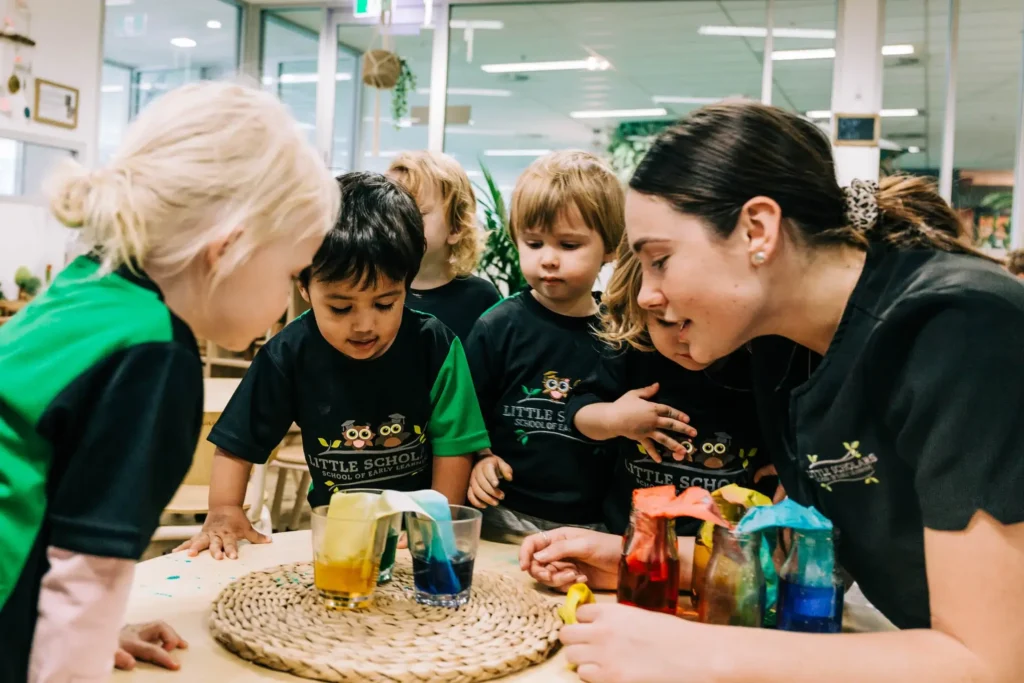
At Little Scholars, we are committed to supporting not just the incredible children we have the privilege of educating, but their families.
Through initiatives like our Family Time program, which includes haircuts, quarterly date nights, take-home meals for the children and parents. We also arrange specialist appointments on-site which include optometrist, podiatrist, speech pathologist visits, dentist, and child health nurse appointments.
We believe that by nurturing these relationships and providing high-quality early education, we can help create a brighter future for all.
Book a tour today to see firsthand how Little Scholars can support your family. Visit www.mylittlescholars.com.au to learn more.
We hear a lot about how important the first five years are for children’s brain development, and it’s a time when children’s curiosity is at a lifetime high, so it’s the perfect time to embrace their curious minds by extending these interests and keeping those little minds active and absorbed, and a new study out of Queensland explores this in further detail.
Griffith University researchers recently concluded a three-year study investigating the progression of curiosity into enduring interests and its role in fostering a continuous learning culture. The study involved 57 children aged four to five from south east Queensland, participating in two-week enrichment programs covering 15 diverse topics. This research sheds light on the developmental journey of young children as they cultivate interest in various subjects.
This research looked into how young children start to take an interest in different subjects and how this interest affects their learning. The study aimed to find out the best ways to spark interest in children, how interest fits into their learning, and what effects it has.
To tackle this, the study, led by Ellie Christoffina van Aswegen, introduced special programs filled with topics aimed at getting children excited about learning. These programs included a variety of subjects not typically taught to young children but are essential for a well-rounded education. This approach is based on the idea that children should be exposed to a wide range of knowledge to help them understand new information better and build on what they already know.
The chosen subjects ranged from plants and animals to famous artworks and space exploration, divided into three sets. The first set included topics like reptiles and continents; the second set covered the human body and insects; and the third set introduced children to religions and dinosaurs, among others. These topics were selected to broaden the children’s knowledge and provide a solid foundation for further learning.
The enrichment programs were delivered with a mixed approach of direct instruction, explicit instruction, play-based learning, group reading, and take-home activity booklets.
The underlying principle of the study was that a broad knowledge base is crucial for children’s learning because it helps them connect new information with what they already know, making it easier for them to understand and learn new things.
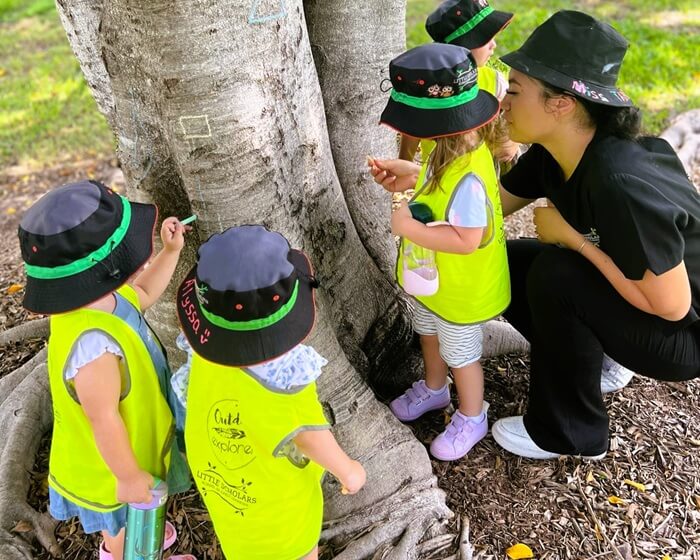
The study reviews the nuanced distinction between curiosity and interest in children, drawing on insights from Renninger and Hidi. It suggests that curiosity is the spark ignited by a specific question, a momentary engagement, as Dewey describes, that captures a child’s attention briefly. In contrast, interest is portrayed as a deeper, more sustained engagement with a subject, driven by a desire to gather extensive information and maintain engagement over time.
The research looks into the dynamics of how curiosity evolves into interest. Initially, a child’s curiosity prompts a flurry of questions about a topic. This questioning phase deepens their interest as they uncover new knowledge, fueling a continuous cycle of inquiry and discovery. Interest is described as encompassing three interconnected facets: actions, thoughts, and emotions. Together, these elements foster a rich learning environment in early childhood, where knowledge acquisition is intertwined with emotional engagement.
Researchers highlight the critical role of emotional connections and perceived competence in sustaining interest. When children develop a strong emotional attachment to a topic, their eagerness to explore and learn intensifies. Similarly, feeling adept in a certain area enhances their interest, propelling them to pursue further learning.

One example mentioned in the study was building on children’s interests of flowers. Educators led a two-minute activity during which the children pretended to be flowers. Two children showed some disengagement towards the end of the activity. Comments made by the researcher and thoughts on possible reasons for disengagement were included in notes. Each component of the session was similarly identified and analysed providing a snapshot of engagement during the session.
Before and after participating in a two-week program focused on flowers, children’s knowledge about flowers and their parts, such as stems, leaves, and roots, was evaluated. Initially, although all children were familiar with the concept of a flower, many lacked knowledge of its basic parts. However, by the end of the program, there was a significant increase in the number of children who could accurately illustrate these parts on a flower diagram. For instance, the ability to draw a stem improved from three to 17 children.
Similarly, the program enhanced children’s recognition of different types of flowers. Prior to the program, only a few children could name any flowers. Following the program, a substantial improvement was noted in their ability to identify common flowers like roses and dandelions. For example, the number of children identifying a rose increased from two to 16.
Observations of the children’s play and interactions during the program indicated a deep engagement with the topic of flowers. Activities ranged from drawing and painting flowers to hands-on exploration and pretend gardening activities. This engagement suggested a high level of cognitive involvement with the flower program.
The researchers observed data on the behavioural and emotive component of interest through video, notes, and feedback provided by both the early childhood teacher and the classroom educators.
Feedback from parents provided through a post-program questionnaire offered additional insights into the children’s growing interest in flowers. Parents reported behaviors indicating an increased awareness and curiosity about flowers in their environment, such as noticing or wanting to pick flowers. This parental feedback supported the observations made during the program, confirming a heightened interest and engagement with the subject of flowers among the children.
The researchers concluded that social interaction was key to developing interest. Social interaction, between teacher and child, their peers and at home, formed the basis of developing interest in the various topics of the enrichment program.
Each component of the program was delivered through images, interesting facts, stories, music, and drama. Researchers found engagement increased as the teacher showed more enthusiasm and modelled curiosity. The study noted that it became clear that the teacher didn’t know all the answers to children’s questions as their interest took them in a variety of directions, and the teacher became a learning partner motivated to research the topic further. The children also motivated each other to learn more, creating art, playing games, bouncing ideas off each other, solving problems and exploring nature together. Familial involvement was identified as another factor impacting curiosity and interest development in a positive way, such as parents working with children to collect or observe flowers or plants in nature to support their learning and working on take-home activity books together. The children brought in their completed take-home activity booklets, to share with the class as well as any ‘treasures’ they had found such as a feather, a flower, a leaf, etc. which stimulated conversation.
The study also examined how children emotionally connected with different subjects, aiming to spark feelings of wonder and awe. This approach occasionally led to feelings of empathy and compassion, or simply brought about joy and delight. Certain subjects allowed children to marvel at the wonders of nature, feel empathy towards animals, or experience the simple pleasure of discovering delightful things.
The study did not shy away from challenging emotions, such as the sadness children felt watching a whale get untangled from fishing nets. Children were provided a supportive environment to discuss their feelings, helping them expand their emotional vocabulary. This is important because understanding different emotions can assist children in managing their feelings better, as they learn various strategies for emotional regulation. Additionally, engaging in music, art, drama (role-play), and free play allowed children to further process their emotions, aiding their emotional growth.
The research also revealed a strong connection between emotional and cognitive engagement. Children became more inquisitive and sought additional information on topics that touched them emotionally.
At Little Scholars, our educational program, The Collective, is based on the premise that children are most successful at learning when curriculum experiences account for children’s interests, strengths, and individual needs. The Collective encompass all aspects of Little Scholars, including a collaborative approach with our children, families, educators, and community.
Our weekly programs, which can be seen in our studios, are responsive to the evolving interests and needs of the children and allow for flexibility and extended periods of play and research to test theories.
Renninger, K.A., & Hidi, S. (2017). The Power of Interest for Motivation and Engagement (1st ed.). Routledge. https://doi.org/10.4324/9781315771045
Harackiewicz, Judith M., Jessi L. Smith, and Stacy J. Priniski. (2016) Interest matters: The importance of promoting interest in education. https://journals.sagepub.com/doi/10.1177/2372732216655542
Babies are not born knowing how to control their emotions, nor are adults necessarily well-versed in how to regulate their emotions, even after decades experiencing them. While modern society is making way and space for people to feel and name emotions such as sadness, anxiety, anger, embarrassment, stress and more, some of us hadn’t learned how to allow ourselves to be vulnerable and express these emotions in a healthy way.
At Little Scholars, emotional regulation skills are as important as every other lesson children learn during their time with us. We’re hoping to break generations of cycles of mental health stigmas by teaching children to name and work through their emotions, but we also recognise this must happen at home, on the sports field, and anywhere else they may need to have access to a range of tools to cope and work through tough situations and feelings.
As parents and caregivers, we understand that not all of us were raised with the emotional intelligence to guide a young person in developing theirs. There’s also the possibility that children in our care have experienced more traumatic or negative experiences than we’ve had to deal with, so it might be something we don’t know yet how to navigate. More on that later.
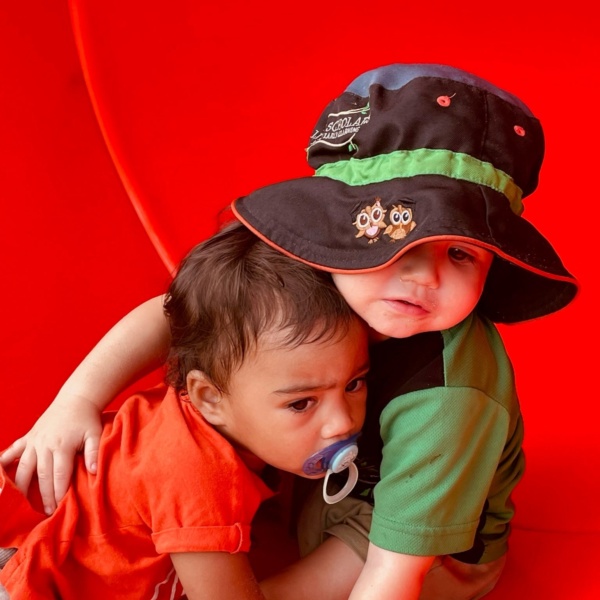
When emotional states are high, it’s helpful to recognise the behaviours we see, and the emotional states we may not see.
The behaviours can be aggression, screaming, crying, avoidance, refusal, hiding, running, threatening and loss of self-control, for example.
What we may not be seeing in our children are feelings of: nervousness, exhaustion, guilt, fear, disappointment, overwhelmed, anger, rejected, embarrassed, judged, unloved, depressed, anxious, worried, shame, disrespected, helplessness, offended, sad, and attacked, amongst other feelings.
When a child is displaying any of the above behaviours, what do you think the feeling behind it could be?
1. Stay tuned and recognise signs – Keep a close eye on behavioural cues that indicate your child is experiencing strong or challenging emotions. Be aware of these signals when they arise. Of course, the strength of the emotion is normal, it’s how they deal with it that’s important. This is a step in which you’re helping to create a safe haven for the child, one of trust and acceptance. For the adult, this is recognising and understanding that all emotions are natural and normal.
2. Turn challenges into teaching moments – See difficult situations as opportunities to connect with your child and help them learn valuable emotional regulation skills. Helping children to label their emotion encourages the regulatory process to engage and reconnect the thinking brain with their limbic system. In other words, name it to tame it!
3. Listen with empathy and validate their feelings – Before reacting with discipline, keep in mind the phrases ‘Connect before you correct‘ and ‘Stay calm and curious, not quick to anger.’ Ask open-ended questions to help your child identify and express their emotions, like “I noticed you seem to be feeling ___. Could it be that you’re feeling ___?’ or ‘I’m sorry that happened to you, you must be feeling very ___’
4. Establish boundaries – Clearly communicate expectations for behaviour, reinforcing positive actions such as using kind words and explaining consequences for inappropriate behaviour like hitting. Setting these boundaries helps maintain safety of the child and those around her/him. It’s important not to make the child feel shame, and ensure the child maintains self-dignity. ‘It’s ok to feel like that, but it’s not ok to behave like that’ or ‘we don’t deal with our emotions by ___’
5. Problem-solve together – Encourage your child to brainstorm possible solutions or strategies to improve future outcomes. Provide support tailored to their age and comprehension level, using visual aids or suggesting choices when helpful. So to restore and repair, you might explore the situation first: ‘how were you feeling when that happened?’ and ‘have you felt that way before?’ then show your child you’re in this together brainstorming ‘let’s think of what you could have done instead’ or ‘can you think of two more ways you can deal with your feelings?’ the work together to come up with solutions ‘let’s decide what you will do next time you feel like this’ or ‘do you think that ____ would be more helpful next time?’
How trauma can influence behaviour in children
Zoe Lowe is a teacher and mentor who guides educators and parents through early education, behavioural support and trauma-informed practices. She recently spoke to Little Scholars educators at our annual Learning & Development Day.
Her talk helped our educators understand trauma-informed practice, how to recognise the different types of trauma people can experience, and how to work with children who might have experiences of trauma. In Australia, upwards of 5 million adults are affected by childhood trauma.
The types of trauma include:
· Simple trauma, which stems from often a single incident that was life threatening or have the potential to cause serious injury.
· Complex trauma involves interpersonal threat, violence and violation, in contrast to simple trauma, complex trauma involves multiple incidents and is therefore longer in duration.
· Developmental trauma is used to describe the impact of early, repeated trauma and loss which happens within a child’s important relationships, generally early in life.
Children who have experienced any of these traumas can be affected in many ways in their development, she says, because their mental capacity to learn may be eclipsed by having to cope with these negative circumstances.
“This is correlated with developmental trauma,” Zoe says. “Surviving the situation. So [a child’s] survival system becomes overdeveloped. Everything else is underdeveloped.”
“What also happens with trauma, the hippocampus, the part of the brain that’s responsible for your memory [learning and emotion] and the ability to differentiate between the past and the present. So, with persistent exposure to trauma, it can shrink in size, so it won’t pull on what it can to differentiate between the past and present, which is why our past experiences can have such a profound impact on us, even if we’re no longer in danger,” Zoe continues.
So why does this matter?
Because trauma can present itself in many ways in children. Perhaps they’re tired all the time, they startle easily, children who perceive educators or other trusted adults as angry and perceiving them as authoritarians with whom they can’t connect or feel safe, struggling to understand concepts easily, not coping well with transitions, friendship issues, over or under-eating, and, aggression.
However, she says, trauma can explain the behaviour, but it does not excuse the behaviour.
And these symptoms that can present in children may not necessarily be trauma, so Zoe warns not to be quick to diagnose children.
Whether the child has experienced an adverse life event or not, if there’s a behaviour exhibited that we don’t want to see, Zoe says this is where we question what’s behind the behaviour, and find out what a child might need to cease the behaviour.
“As educators, we are going to make a paradigm shift. We’re moving away from ‘what is wrong with you?’ to ‘what happened to you? What is this behaviour that I am seeing right now communicating to me? What need is needing to be met by me?’ says Zoe.
This shift also helps adults calm down and regulate their own reactions to the behaviour in question.
“We expect children to self-regulate, they can’t. They need co-regulation, we need to be with them, supporting them, holding space for them, and teaching them how to regulate.”
While children may not be born knowing how to regulate their emotions, at Little Scholars, we believe they deserve a safe space to learn and grow. We understand that emotional regulation skills are crucial for all aspects of life, and we’re committed to working alongside parents and caregivers to build a supportive community where every child feels empowered to express themselves healthily.
Our educators are extensively trained in recognising emotional cues and guiding children through challenging situations. We encourage you to stay tuned for further resources, and remember, you’re not alone, we’re here to support your child, your family and our greater community in creating a generation equipped with the emotional intelligence to navigate life’s ups and downs with confidence and compassion.

Let us hold your hand and help looking for a child care centre. Leave your details with us and we’ll be in contact to arrange a time for a ‘Campus Tour’ and we will answer any questions you might have!
"*" indicates required fields
Let us hold your hand and help looking for a child care centre. Leave your details with us and we’ll be in contact to arrange a time for a ‘Campus Tour’ and we will answer any questions you might have!
"*" indicates required fields
Fill in the form to join your local Pram Pals mums and bubs walk