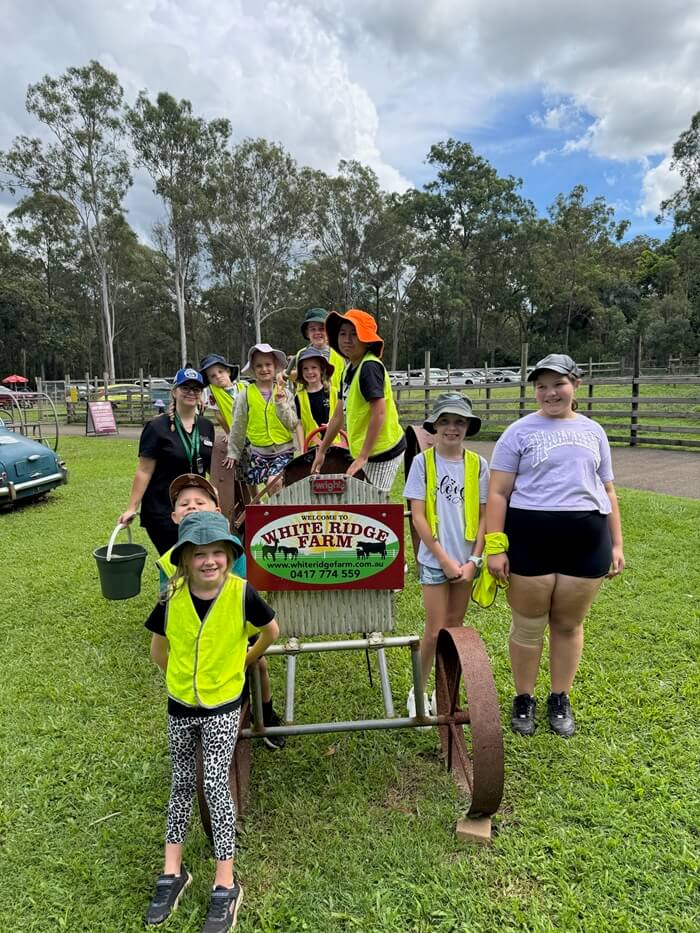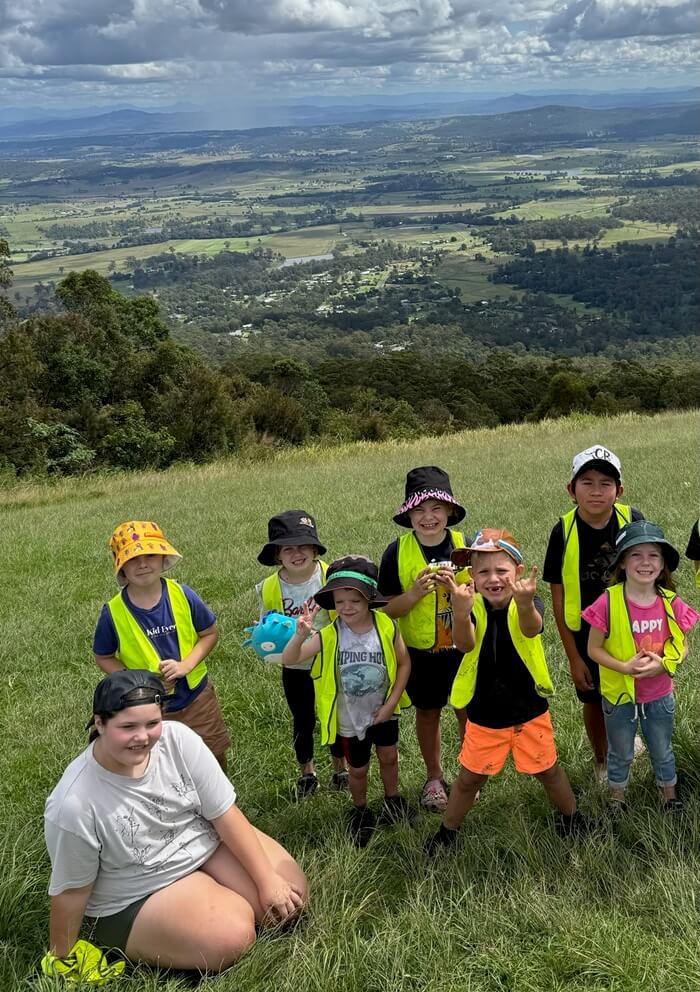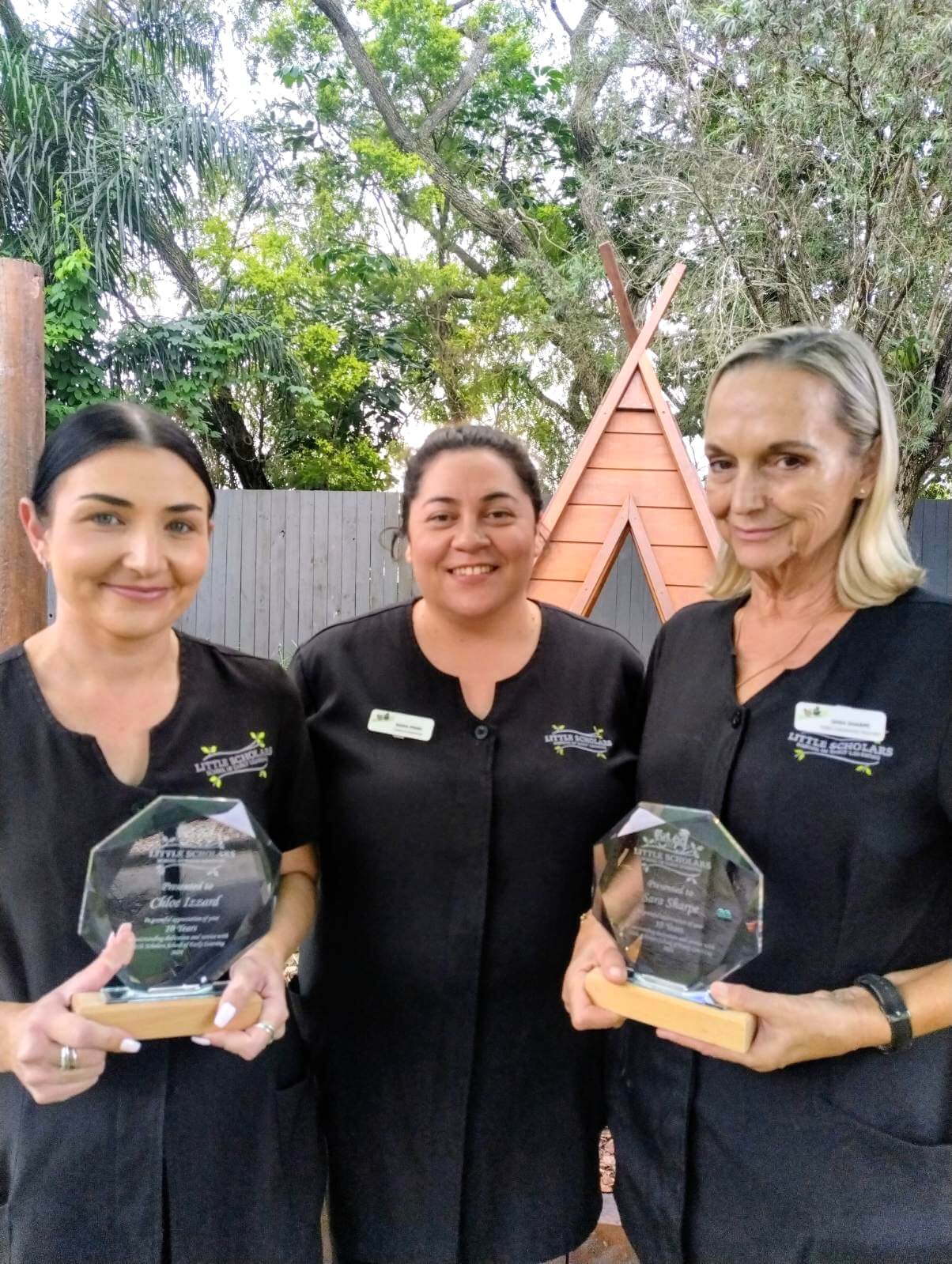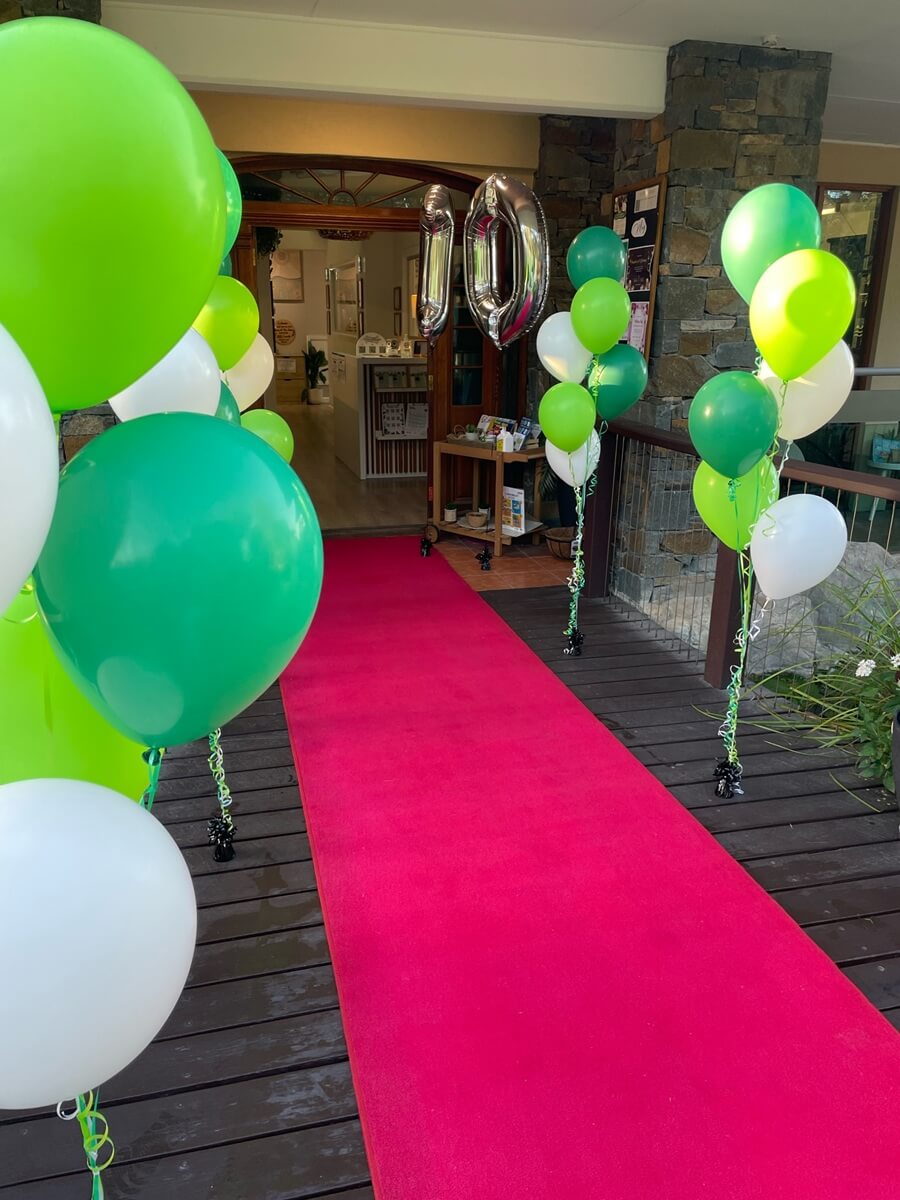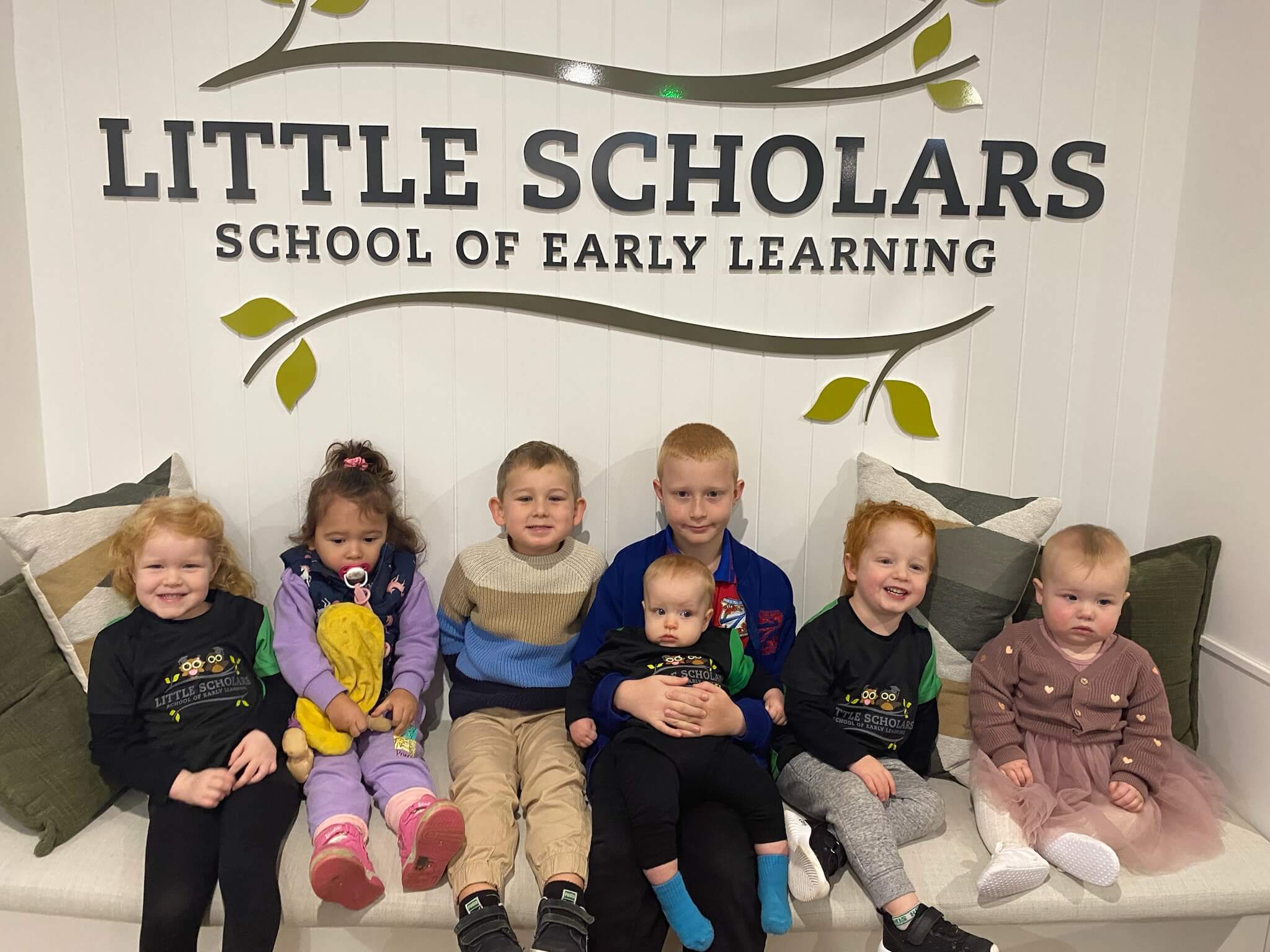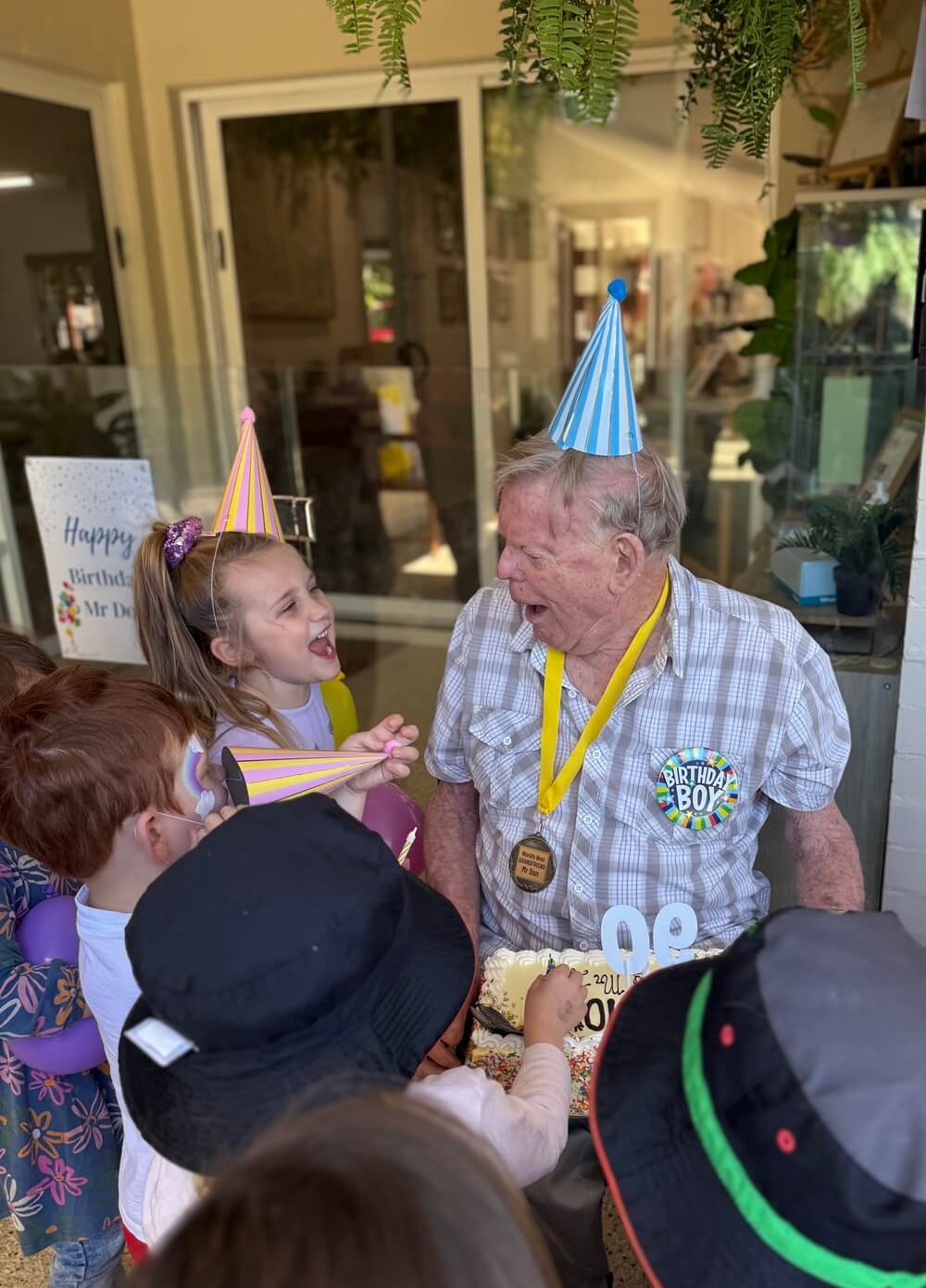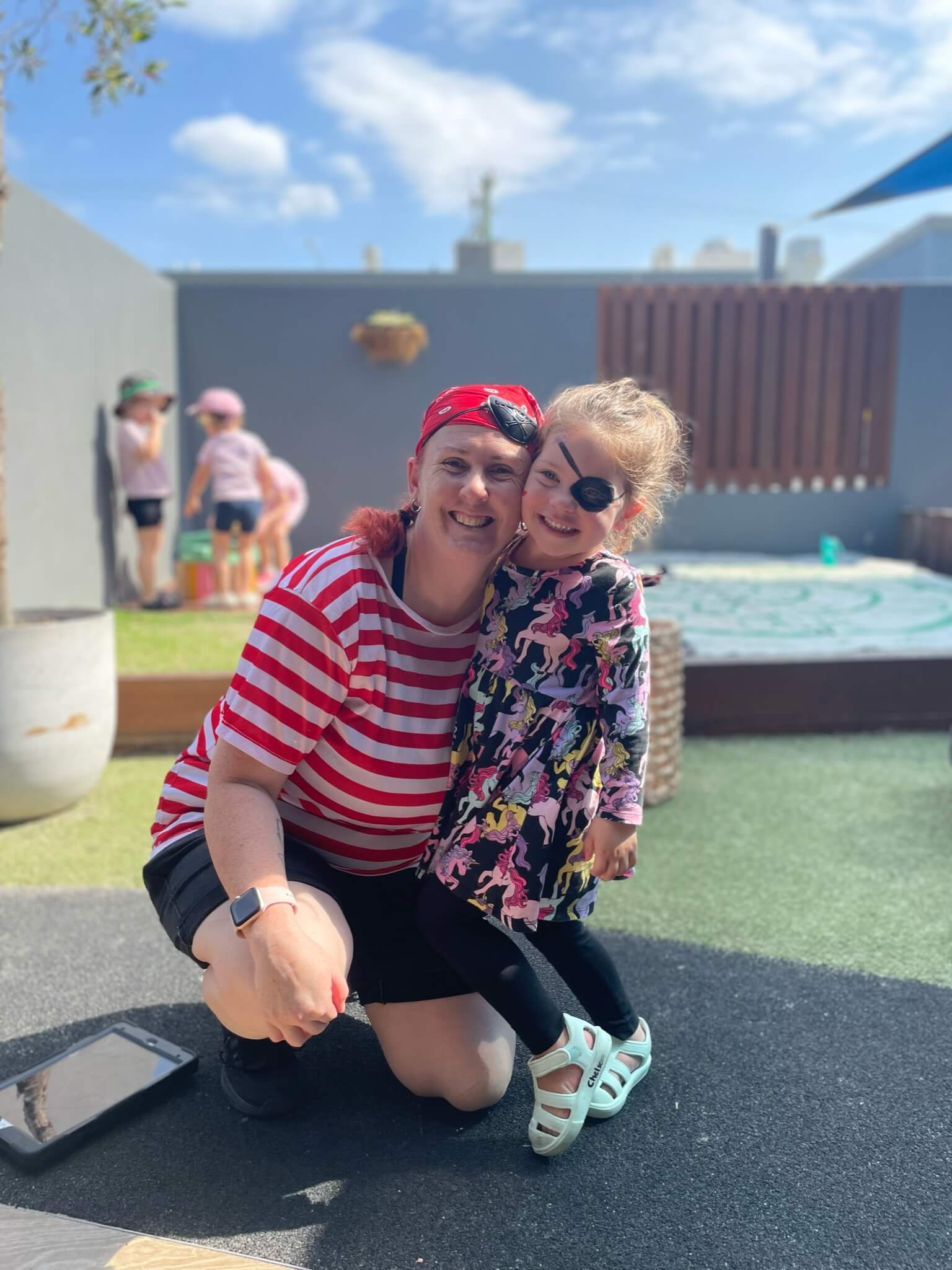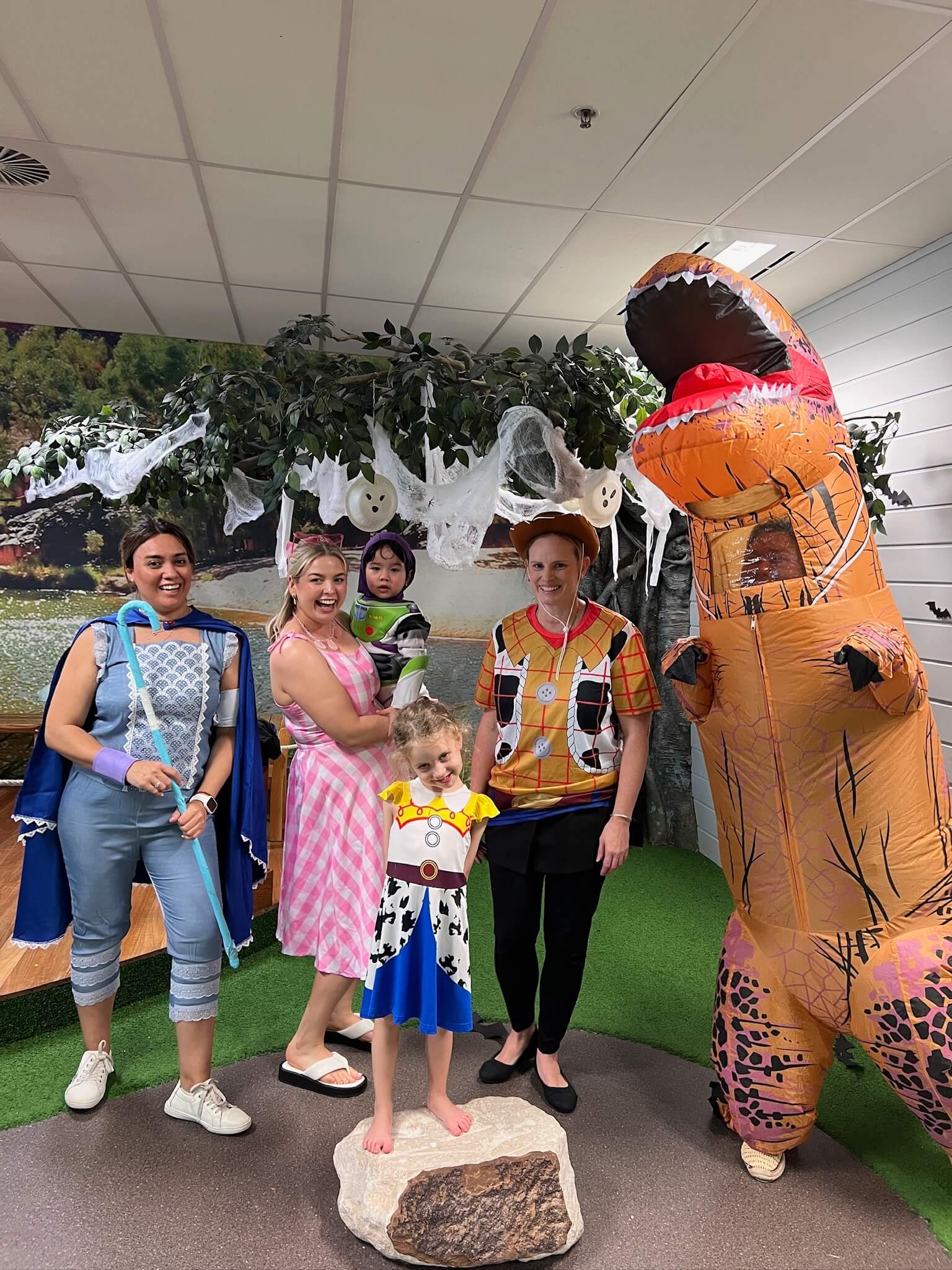

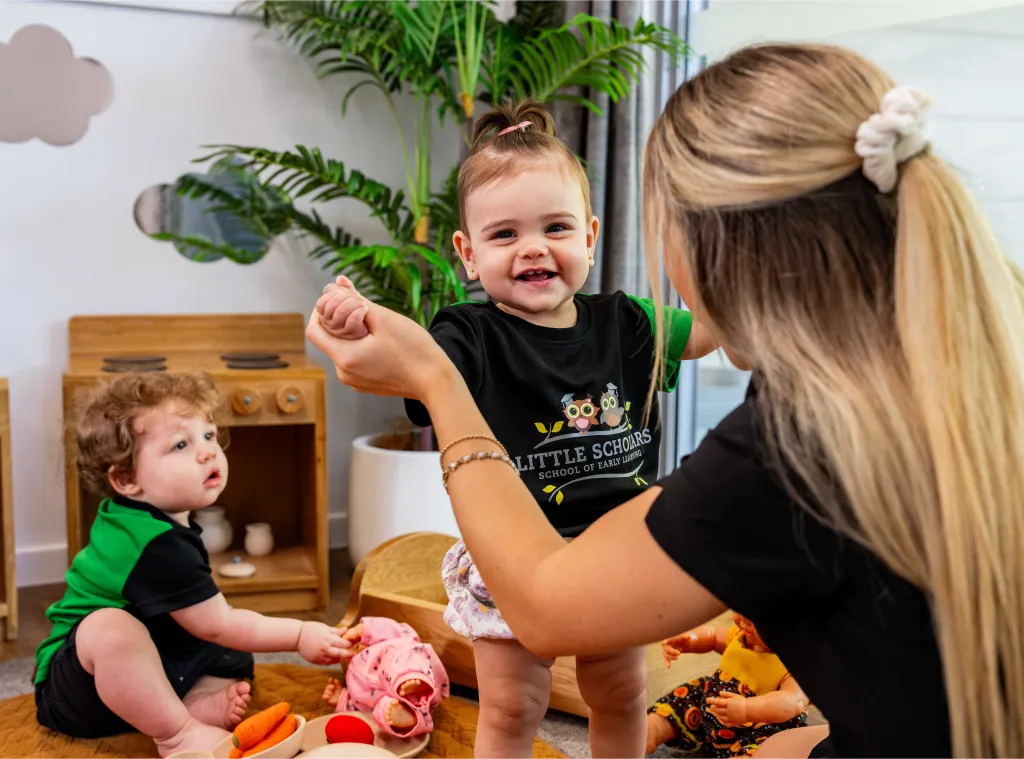
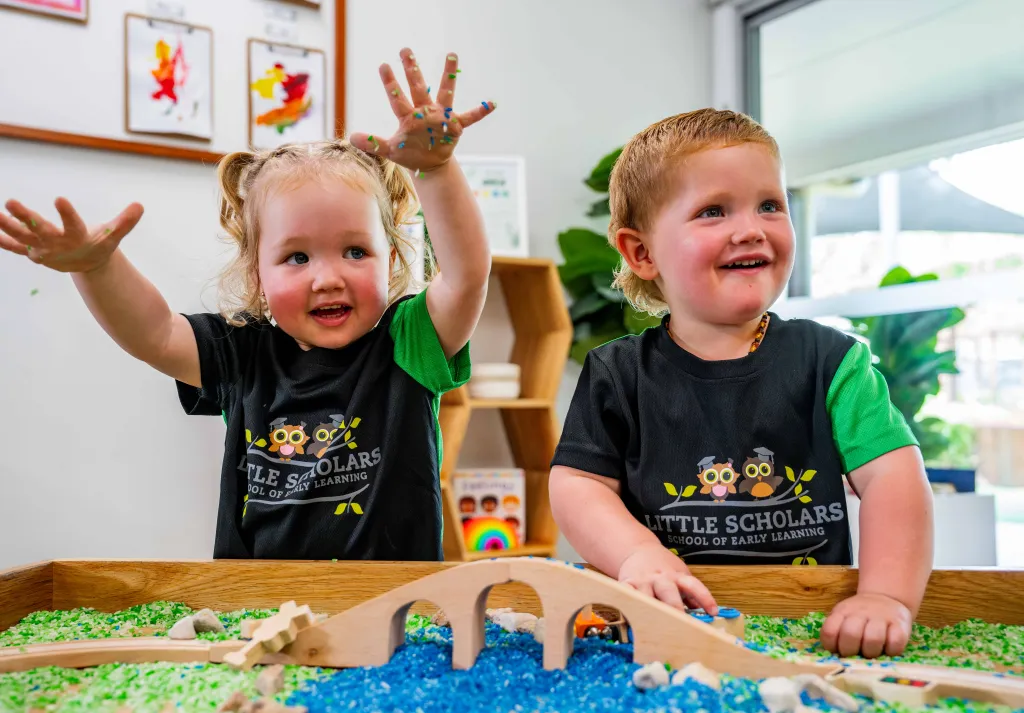
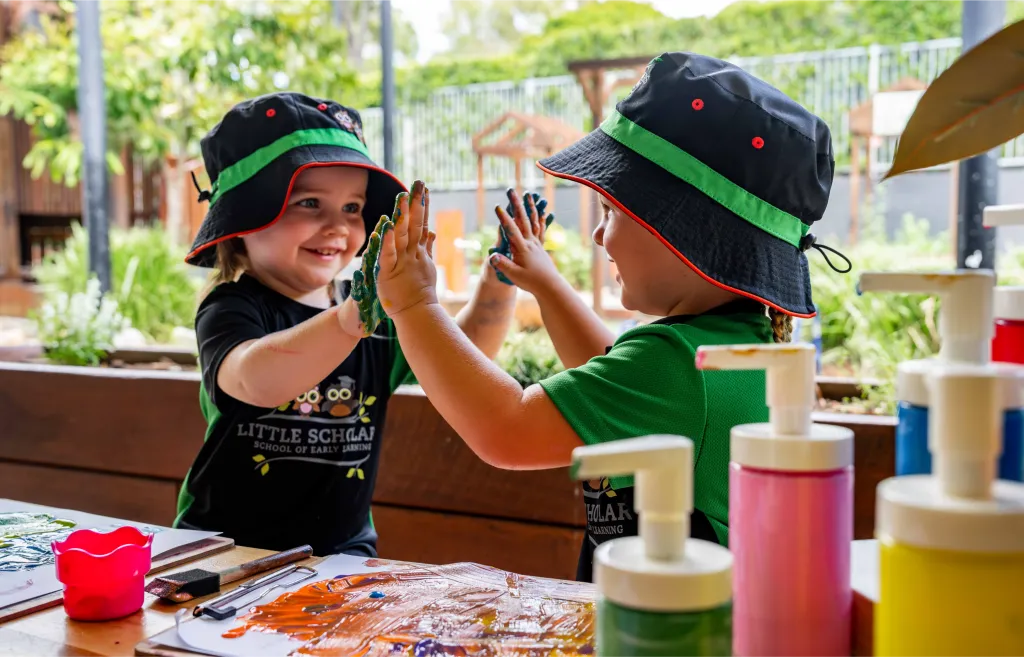
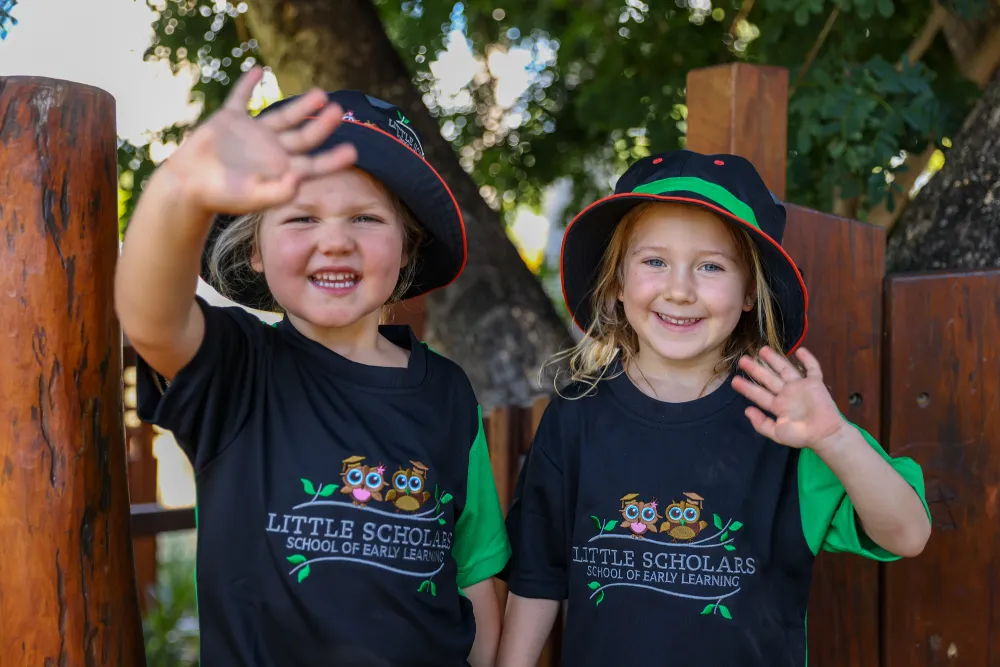
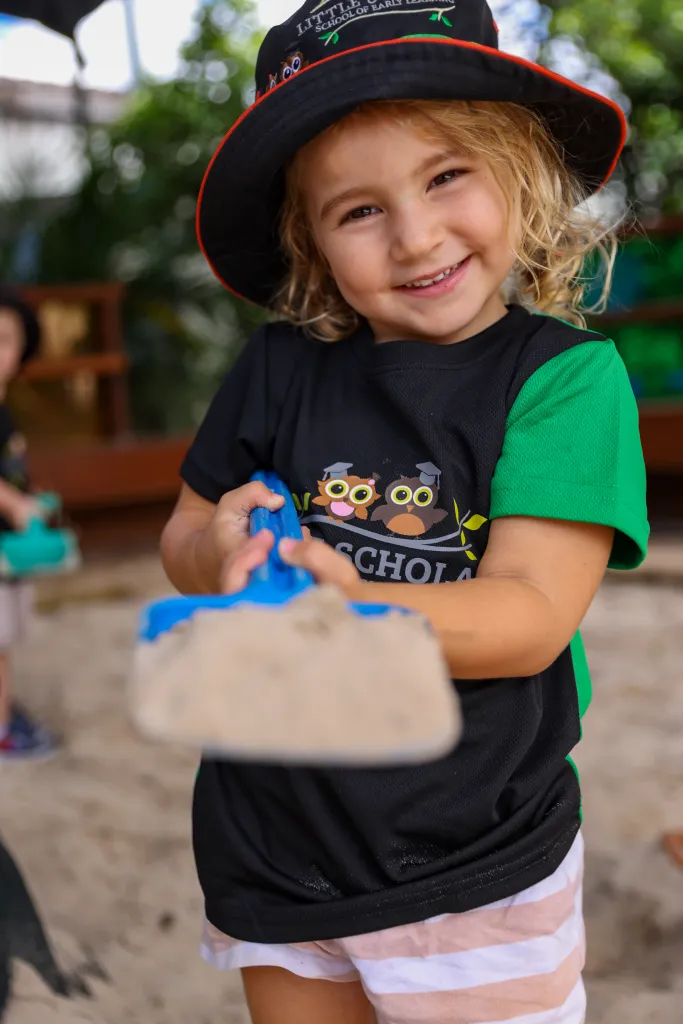
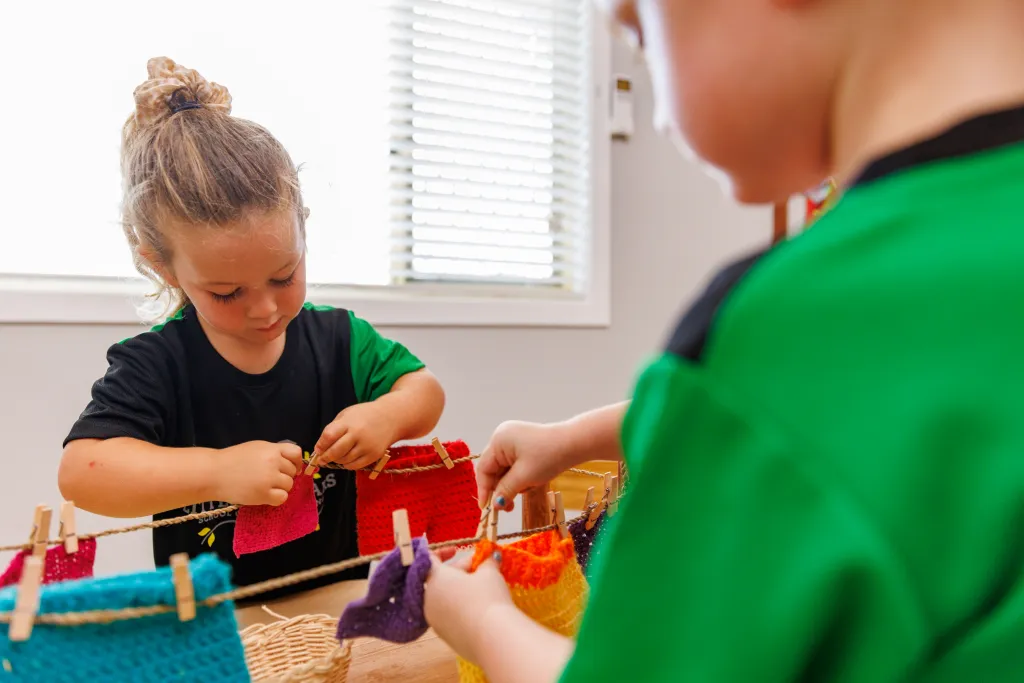
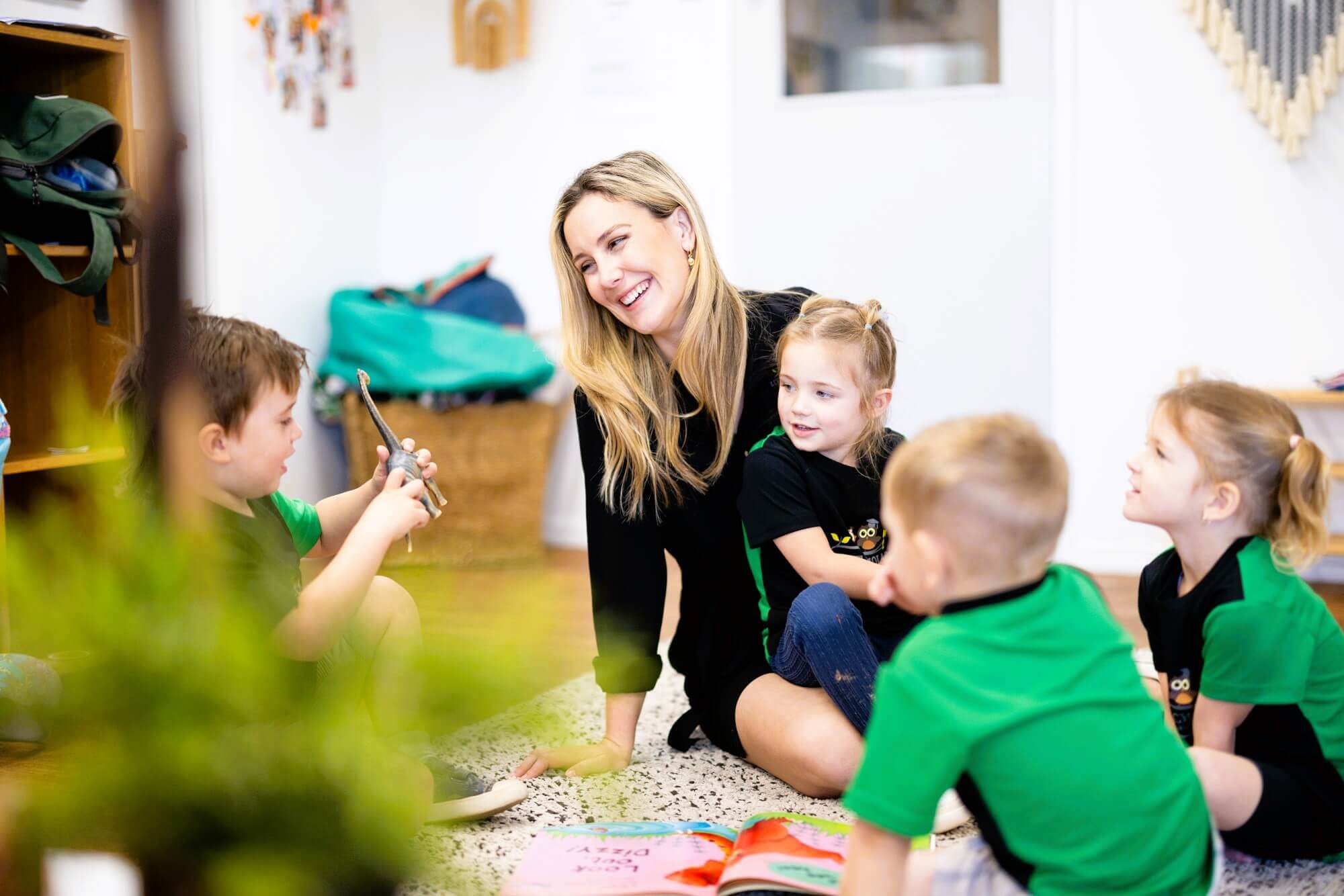


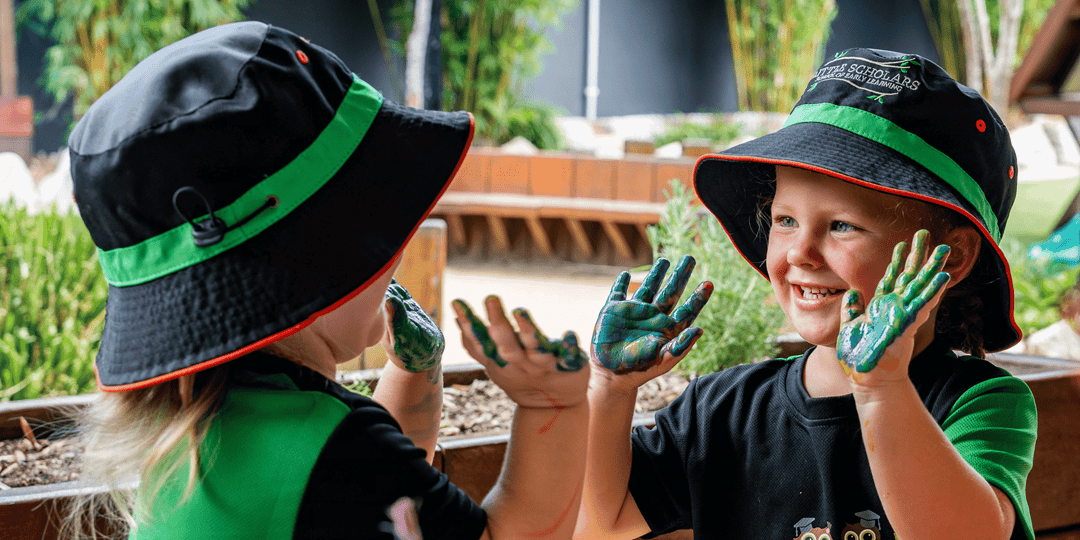
As we wrap up another incredible year at Little Scholars School of Early Learning, we’re taking a moment to reflect on all the wonderful moments that made 2025 so special.
From new beginnings to community milestones, this year has been filled with learning, laughter, and a whole lot of heart. Here’s a month-by-month look back at our highlights from across our Little Scholars campuses.
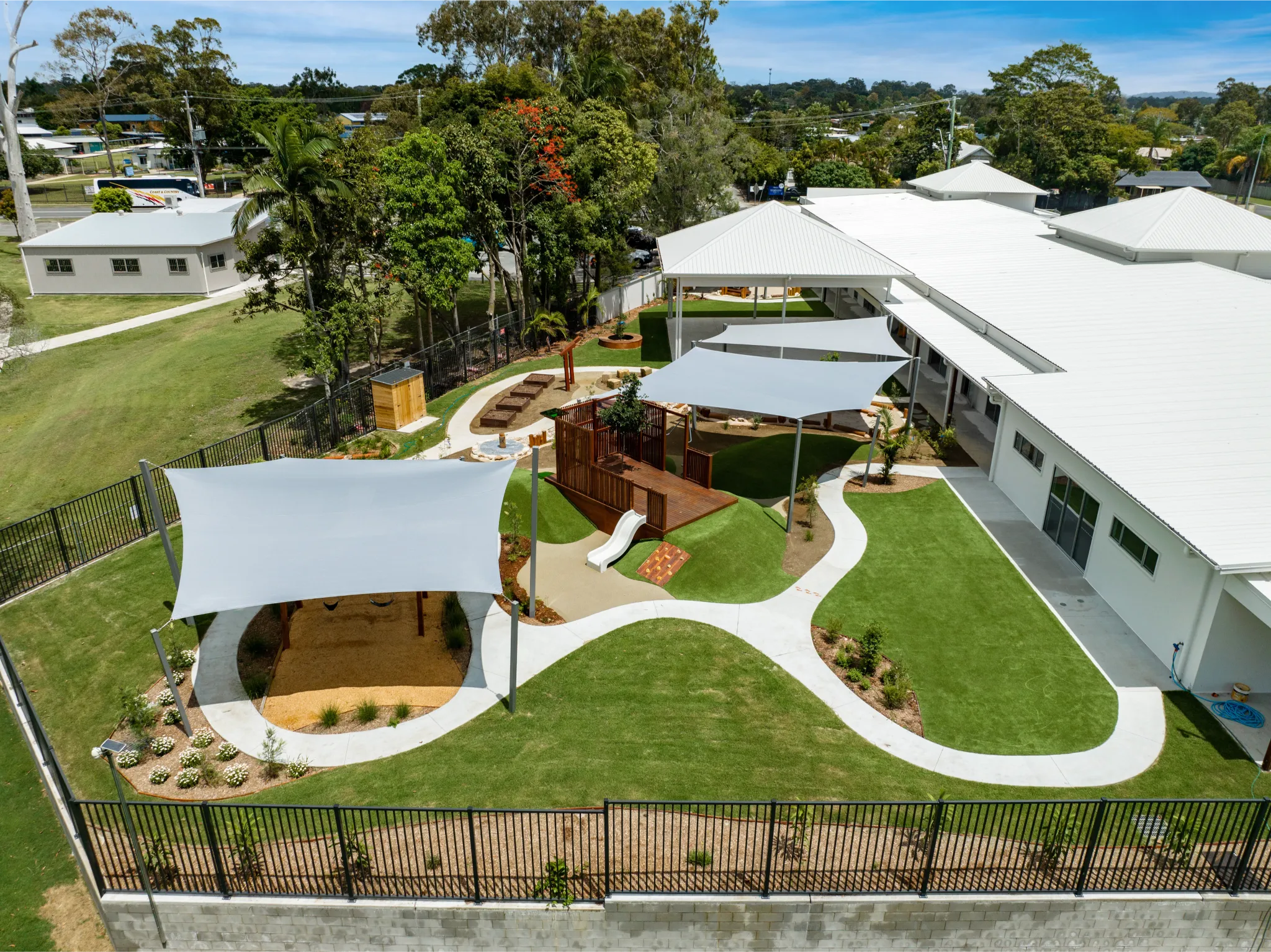
We started the year with an exciting milestone — the opening of Little Scholars Deception Bay North!
Our newest campus quickly became a vibrant learning community, filled with curiosity, creativity, and new friendships.


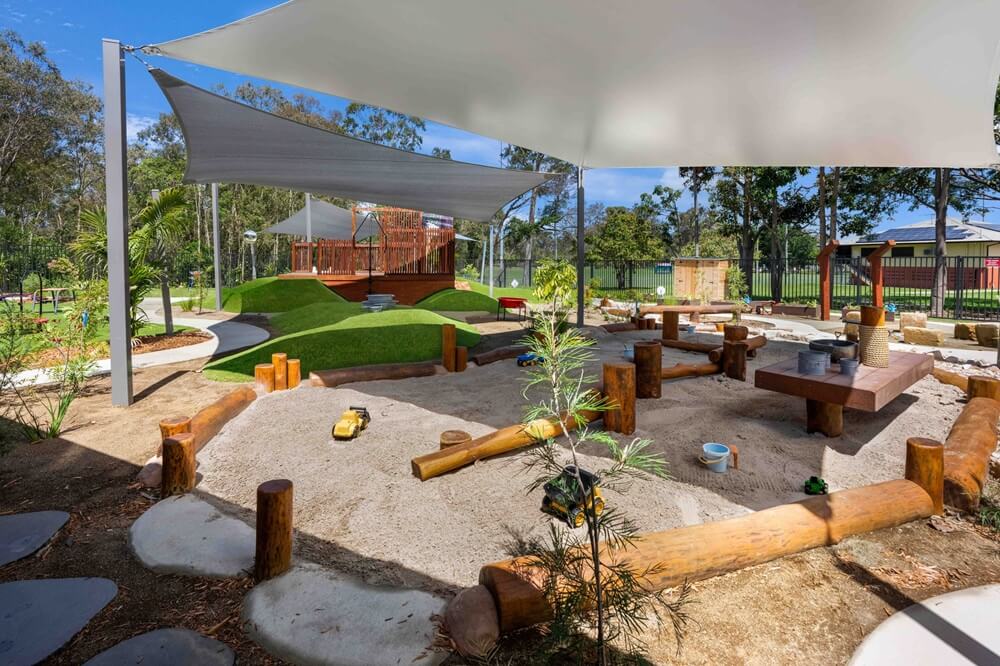
February was a big month of achievement and giving back.


March brought together our families and the community for our beloved annual Little Scholars Camp Out!
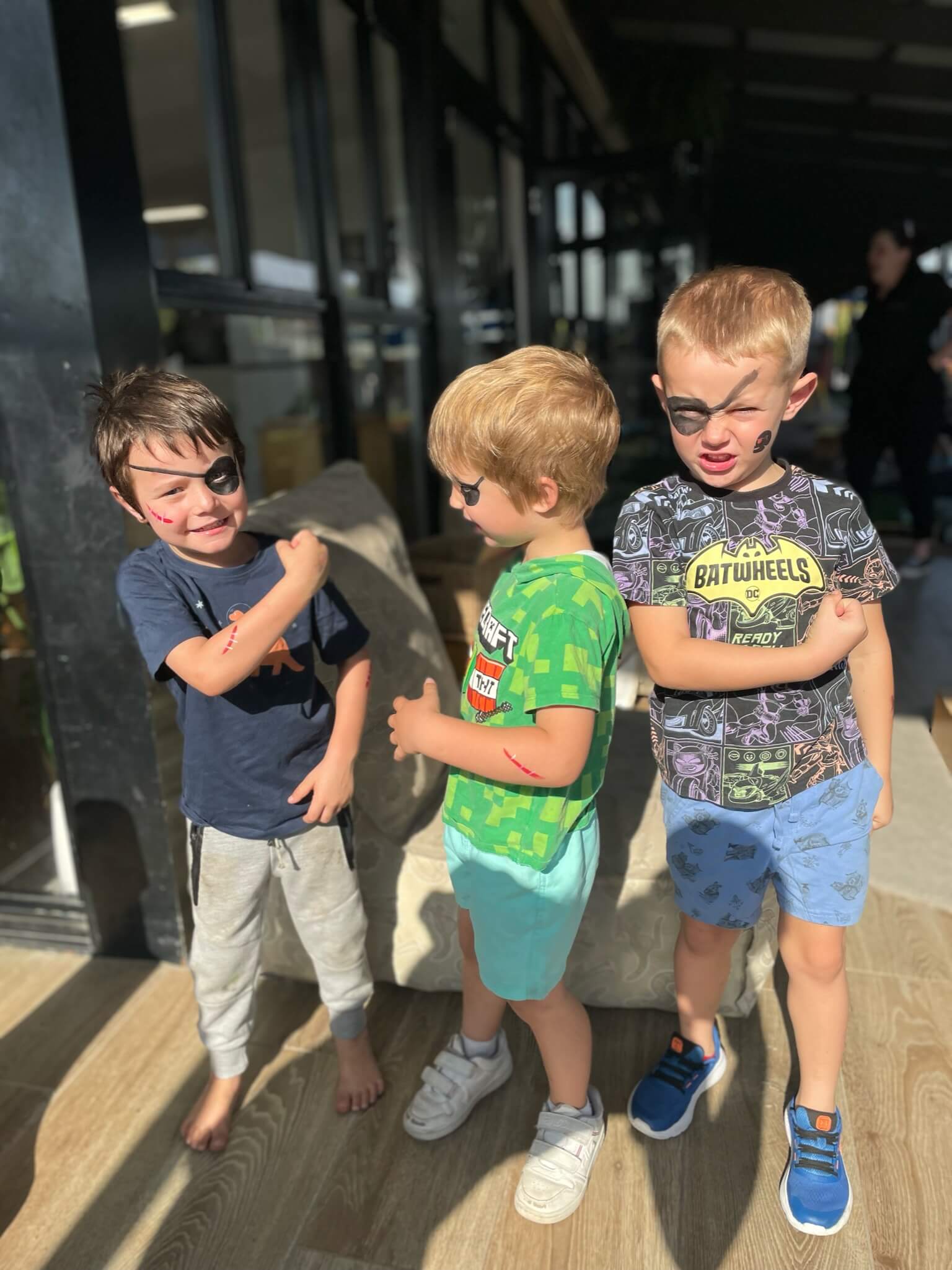
Families enjoyed an evening under the stars, where our children and families enjoyed BBQ’s and roasting marshmallows, some were treated to reptile shows, face painting and even fire twirlers.
We also had a special meeting with our Children’s Rights Council in our Nerang campus, empowering our little scholars to have a voice in shaping their learning environments.
April was a month dedicated to professional growth and shared learning. Our annual Learning & Development Day brought together hundreds of educators and leaders from all 17 of our Little Scholars campuses for a weekend of collaboration and inspiration.
We also celebrated Easter across our campuses. Our studios were filled with joy, crafts, and Easter themed activities
May was a month full of celebrations, achievements and professional development:
July was a month of culture, learning, and community.


August was a massive month bursting with imagination and discovery:

September was a time for both recognition and fun:
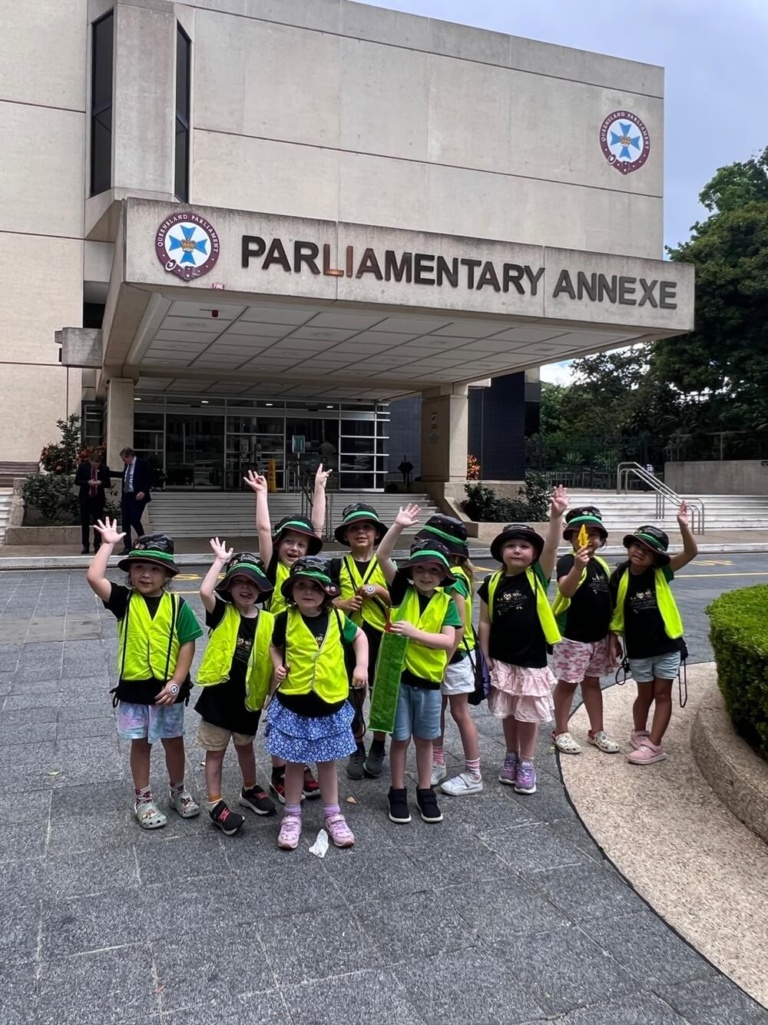
October was filled with excitement and exploration:

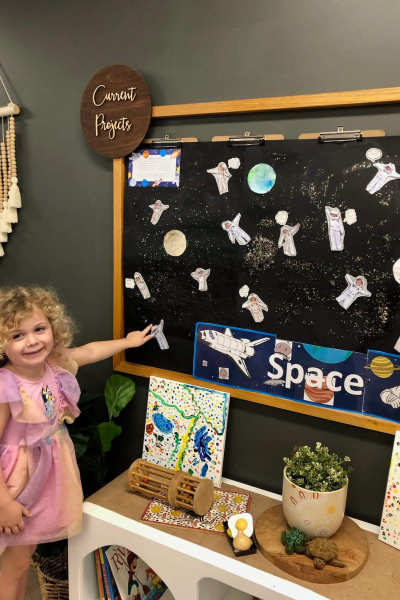
November brought reflection and gratitude.
We closed out the year with festive Christmas celebrations across all campuses.
From campus Christmas parties to Christmas-themed craft, December was filled with joy, gratitude, and friendships — the perfect way to end a wonderful year.
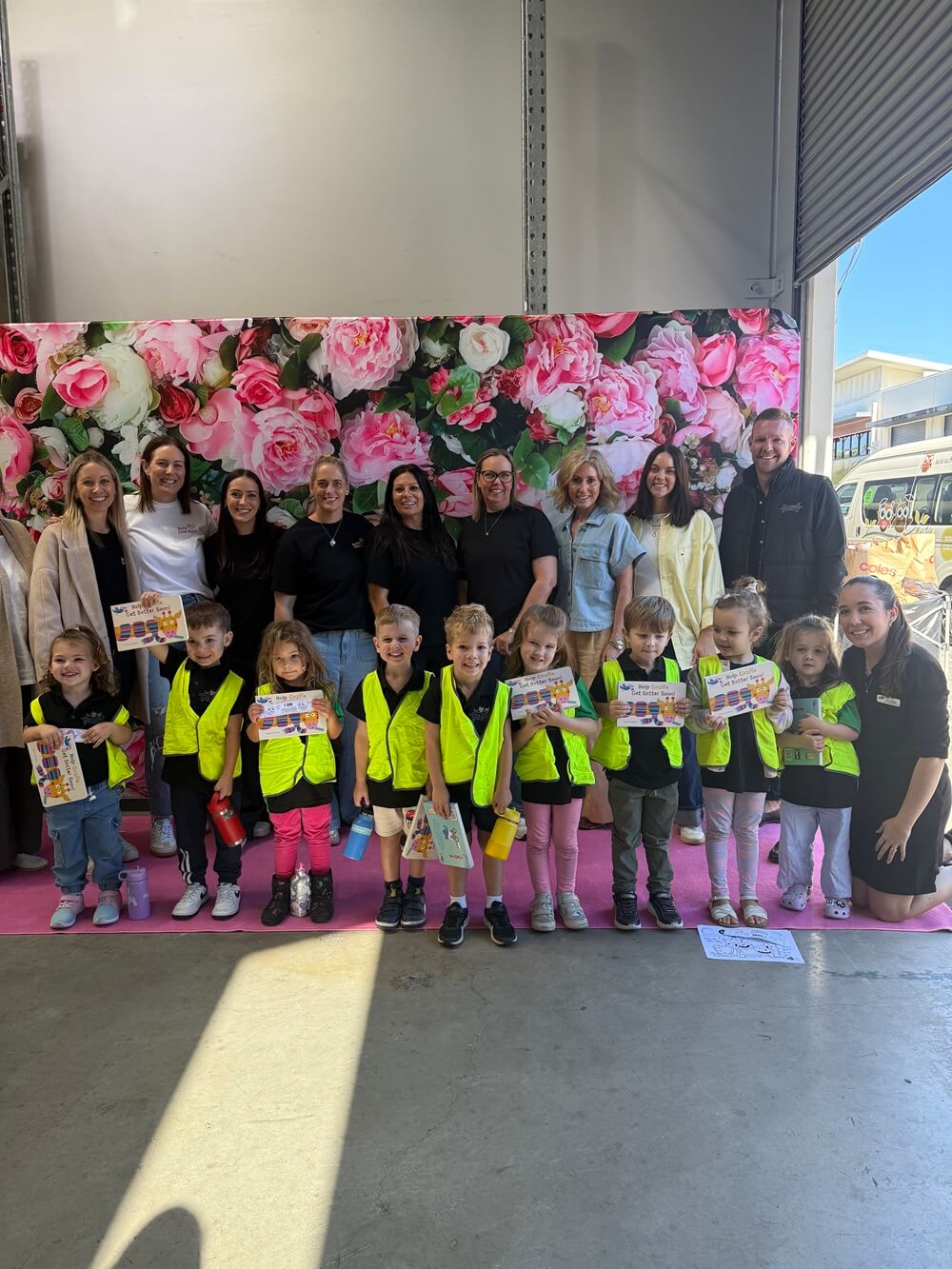
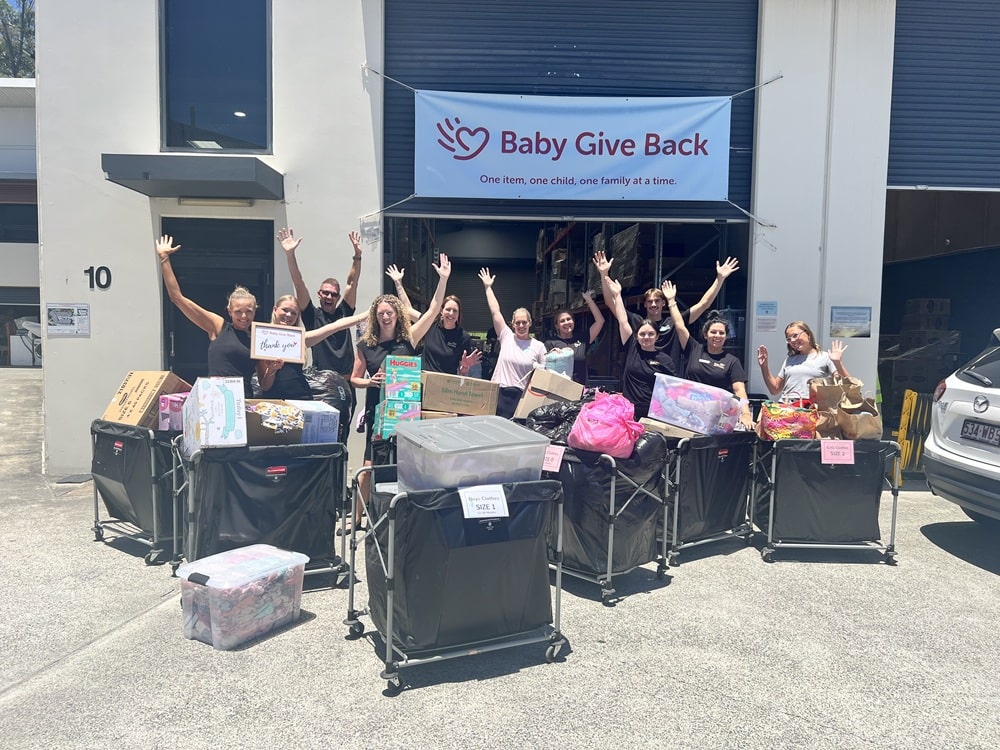
December was also a powerful reminder of what makes our Little Scholars community so special. As the year came to an end, our families, educators and children joined together in a truly generous effort to support Baby Give Back, an organisation that provides essential items to children and families who are doing it tough.
Because of the incredible kindness shown across our Little Scholars campuses, we collected more than 680 kilograms of much-needed items. These donations will help support over 200 children and their families, offering comfort and relief when it is needed most. Every nappy, toy, book and piece of clothing represents a small act of care that will make a genuine difference in a child’s life.
What touched us the most was the way our community approached this initiative. Parents, educators and children spent time sorting donations and packing items, and many families used the opportunity to talk with their little ones about kindness and helping others. Moments like these show our children what community really looks like, and how even the smallest actions can have a big impact.
We are incredibly proud of what we achieved together in December. Your generosity reflects the heart of Little Scholars and our commitment to giving every child the best possible start in life.
Thank you to everyone who contributed, participated and encouraged their children to be part of something meaningful. You helped make December a month filled with compassion, connection and genuine community spirit.
2025 was a year of milestones, learning, and community. We’re deeply grateful to our dedicated educators, our supportive families, and — most of all — our incredible little scholars who inspire us every single day.
Here’s to another year of discovery, growth, and happiness in 2026!
At Little Scholars, our commitment has always been to deliver the highest standard of early education and care — and this year, we are thrilled to recognise three of our campuses that have been officially rated Exceeding during their 2025 Assessment & Rating visits, joining our growing list of ‘exceeding’ campuses! These results reflect the dedication, passion, and professionalism of our educators, as well as our commitment to creating exceptional early learning environments.
In February, our Nerang campus was recognised for its warm, inclusive community and its rich, play-based learning program. This Exceeding rating highlights the incredible work of the team, who cultivate an environment where every child feels valued, supported, and inspired.
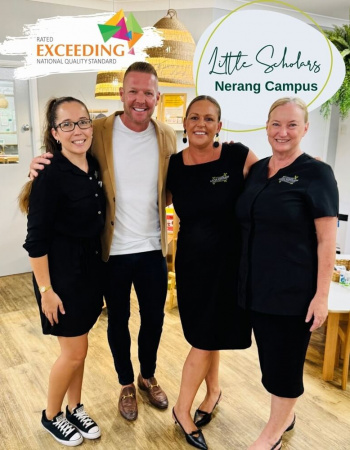
Our Ashmore campus proudly achieved its Exceeding rating in September. Known for its inviting learning spaces and strong educator-family relationships, Ashmore continues to set the benchmark for quality practice and meaningful learning experiences.
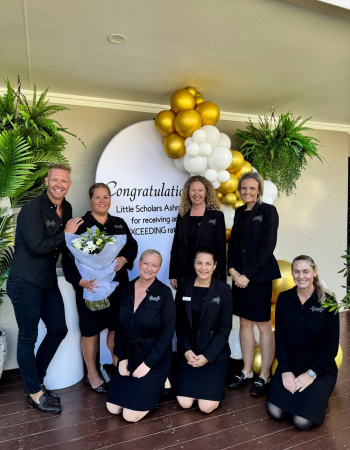
In October, Parkwood earned its Exceeding rating — a reflection of its engaging educational programs, nurturing educators, and commitment to children’s wellbeing. The team’s dedication to going above and beyond in all areas shines through in this achievement.

These three campuses joined our growing list of ‘exceeding’ campuses, which now consist of: Little Scholars Burleigh, Little Scholars George Street, Little Scholars Nerang, Little Scholars Ashmore, Little Scholars Parkwood, and Little Scholars Deception Bay.
An Exceeding rating signifies that a service is not only meeting the National Quality Standards but consistently surpassing expectations across quality areas — from educational programming and relationships with children, to health, safety, leadership, and family partnership.
For families, these results offer confidence and reassurance: your children are learning, growing, and thriving in environments that exceed national expectations. For our teams, these achievements reflect their unwavering dedication to providing the very best early learning experience possible.
These results affirm the hard work and heart our educators bring to their roles — and the trust families place in Little Scholars each day. We are incredibly proud of all our Little Scholars campuses — and deeply grateful to our educators, children, and families who make these communities so special.
At the core of Little Scholars School of Early Learning lies a strong foundation built on four pillars: Contribute, Grow, Inspire, and Learn. Embracing these pillars, Little Scholars believes in a philosophy centered around understanding the purpose behind everything they do. Their focus is on nurturing children’s holistic development, encompassing social, cognitive, emotional, physical, and moral aspects. One of the fundamental elements of the Contribute pillar is Little Scholars’ meaningful partnership with Baby Give Back.
As a Southeast Queensland charity dedicated to assisting vulnerable babies, children, and families in the local community, Baby Give Back ensures that every child has an equal start in life. On 10 June 2025, they will be holding their annual fundraising event, the Baby Give Back Giving Day.l As a proud sponsor, all donations from our Little Scholars community will be TRIPLED in the lead-up to Giving Day. You can donate here.
The charity began after founder Carly Fradgley, a lawyer at the time, had completed her family and wanted to pass along her baby items that were still in great condition. Carly began collecting items and connecting with agencies, and her garage quickly became a makeshift storage shed for the donations received. Quickly growing, Baby Give Back moved into a warehouse and Carly now works full time for Baby Give Back as CEO.
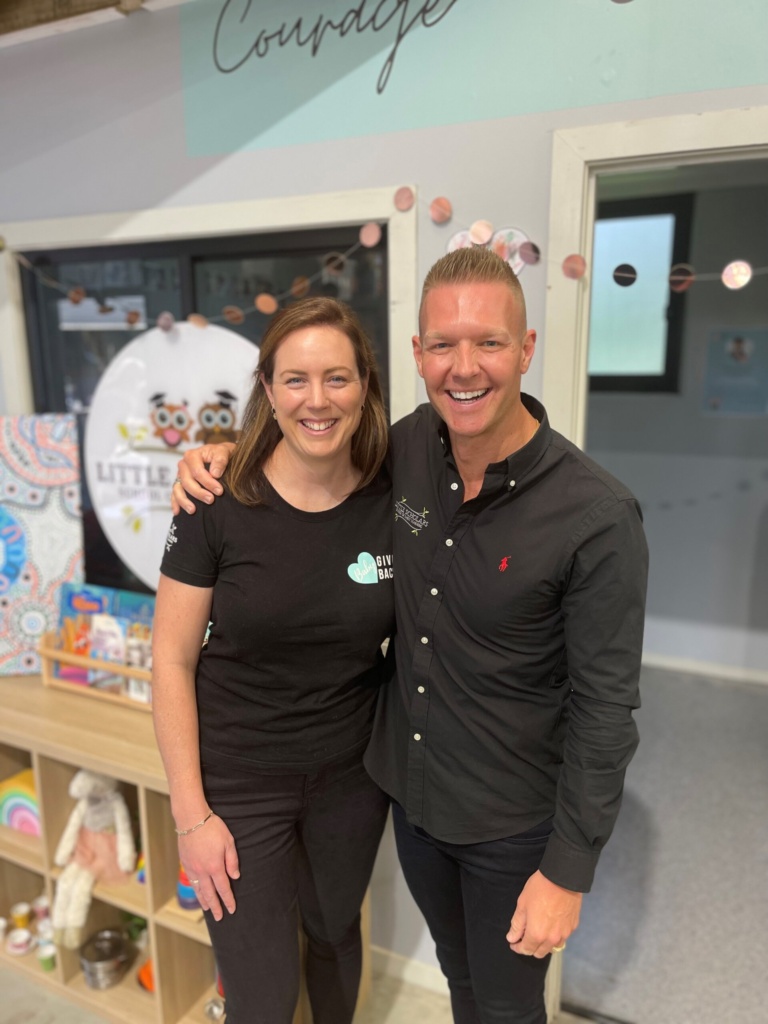
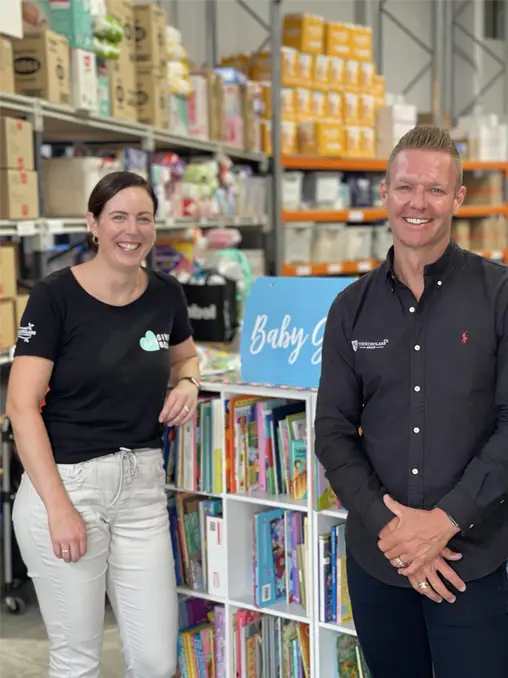
Carly Fradgley, Baby Give Back founder with Jae Fraser, Little Scholars founder
The charity collects, besides funds, items from clothing to nappies, cots, car seats, prams and more. There is a thorough process to ensure that every item they collect is safe, clean and in great condition, to meet the needs of each family’s needs and circumstances. The need is big in the local community.
In 2024, their impact was BIG. Baby Give Back distributed over 5,800 clothing boxes, providing clean and recycled clothing to children in need. 2,214 Safe Start Boxes were distributed giving vulnerable families the essentials for a safe start in life. This was all achieved with the help of 646 volunteers, who have dedicated their time to help baby give back support local families in crisis.
While families need support for a variety of reasons, one of the biggest issues they face is domestic and family violence. In 2023, 42% of the nearly 10,000 children Baby Give Back helped were affected by domestic and family violence, and that still remains a top issue in the current year.
Little Scholars and The Scholars Group founder Jae Fraser first heard about the plight of Baby Give Back in 2019.
When Jae married that year, he and his partner requested no wedding gifts, but rather, asked their guests to each bring a new toy for a child in need. They didn’t know exactly where they would donate them, but their friend suggested Baby Give Back. That began a beautiful friendship.
“Our guests were so generous, and after we connected with Carly and her volunteers, we knew we wanted to help. Our personal gift drive inspired us to do the same thing with our campuses that Christmas,” says Jae. “It’s the perfect partnership.”
Carly agrees. She says she was emotional to see the gifts roll up.
“When Jae turned up at our warehouse with a car and trailer both overflowing with new gifts, I cried. It was so overwhelming to see so many wonderful gifts and know that I could jump on the phone to the caseworkers who thought their families would miss out,” she says. “There were more tears when caseworkers came to collect gifts with many of them telling me that these gifts would be the only things that the children would receive – they weren’t extras, it was all they would have.”
The toy drive was perhaps a little too successful for the small charity, as they ran out of storage room along with their essential items! Now, their focus is back to where it always was, ensuring deserving families have what they need.
Now, Little Scholars and Baby Give Back partner together over several fundraising events each year, and the wider Little Scholars community pitches in as well. Little Scholars employees and families donate gently used items at each of the 17 Little Scholars campuses.
To learn more about Baby Give Back and how to help, visit: babygiveback.org
“We have built a great partnership with Little Scholars over the last 7 years on a foundation of shared values in both of our organisations striving to give children the best possible start to life,” Carly says.
“The financial support from Little Scholars has been crucial to our ability to keep the doors open through some really rough times,” Carly adds. “They also coordinate collections of the donations we need across the year. In addition to financial support, Little Scholars sponsor our t-shirts for volunteers allowing us to provide these free of charge and the Family Packs that are given to every family we support, letting them know that the support comes from the community with compassion.”
The children and community love Little Scholars and are thrilled to help. All 17 campuses hosted individual fundraising events to support Baby Give Back ahead of its annual June Giving Day.
“The parents have been amazing with supporting our fundraisers,” says Nat Carey, Deception Bay campus manager.
Children at every campus participated in bake sales, sausage sizzles, art exhibits and gold coin events to raise as much as they can for their peers in need.
“While community service is part of the national framework that childcare campuses follow, it’s more than that”, says Alison Carney, campus manager of Little Scholars Ormeau Village campus.
“By engaging in charity events such as Baby Give Back’s Giving Day and all year round, and other events in the community, we not only contribute to the well-being of others but also shape the hearts and minds of our children, encouraging a generation empowered to create a more compassionate and inclusive world.”
Baby Give Back’s annual Giving Day will be held on 10 June
2025 and Little Scholars is proud to TRIPLE all donations leading up to this
event. Click here https://babygiveback-giving-day-2025.raiselysite.com/little-scholars
to make a donation today.
At Little Scholars, everything we do is guided by the four pillars that shape our philosophy: Learn, Grow, Inspire, and Contribute. These values are more than just words – they form the foundation of how we nurture children, support families, empower educators, and engage with our community. Each year, we honour four outstanding team members who bring these pillars to life through our annual ‘Pillar Awards’. This celebration recognises those who consistently go above and beyond – not only in their daily roles but in the way they lead, uplift others, and create a lasting impact.
While all our educators embody the spirit of Little Scholars, this year’s award recipients have stood out for their remarkable contributions in one pillar each – earning them the well-deserved title of our 2025 champions of Learn, Grow, Inspire, and Contribute.
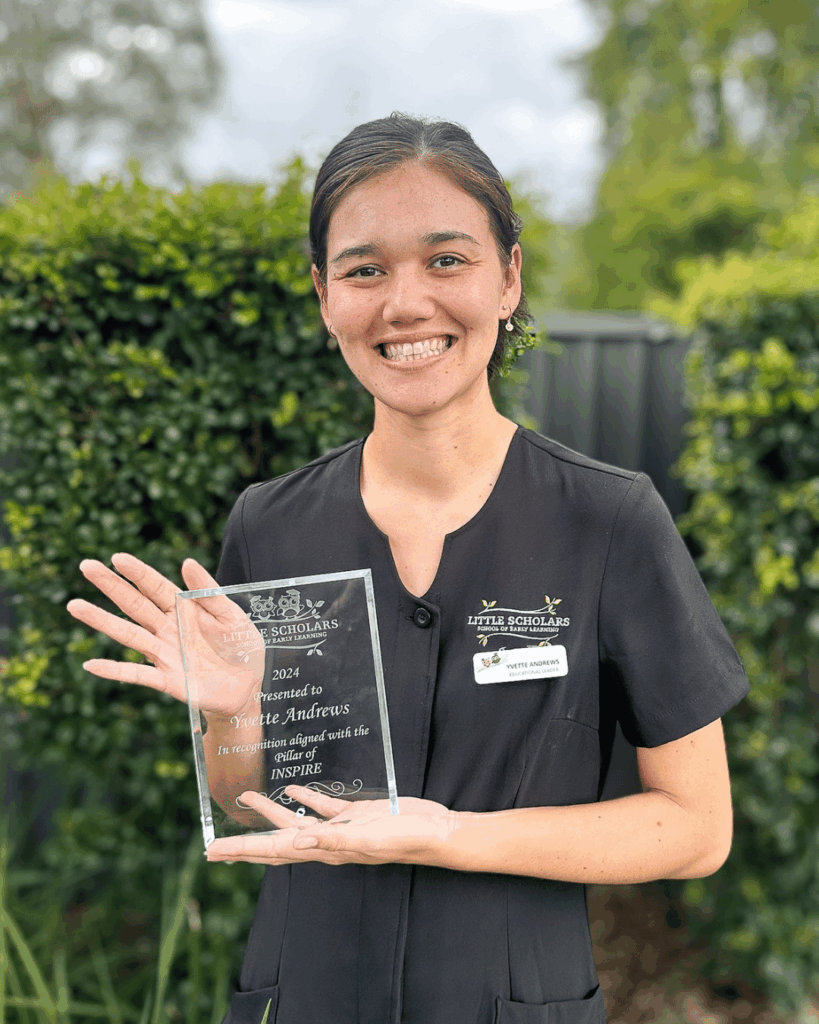
Yvette Andrews from Little Scholars Burleigh is the recipient of the ‘Inspire’ Pillar Award for 2025.
Yvette was nominated for her ability to lead with intention, encourage reflective practice, and consistently support those around her to think deeply about the impact they have on young children’s lives.
How long have you been an educator, Yvette?
I started in 2010 so have been working in early childhood for 15 years now!
What made you pursue a career in early childhood education?
To play! I was a really energetic 20 year old so I really just wanted to play with the children.
What does winning the award mean to you?
It reminds me that what I’m doing is meaningful and the effort I’m putting in isn’t going unnoticed.
What do you like about working for Little Scholars?
I get to work in an environment with people I can make a difference with – building an environment where everyone wants to contribute and celebrate being amazing educators, and helping support amazing little humans.
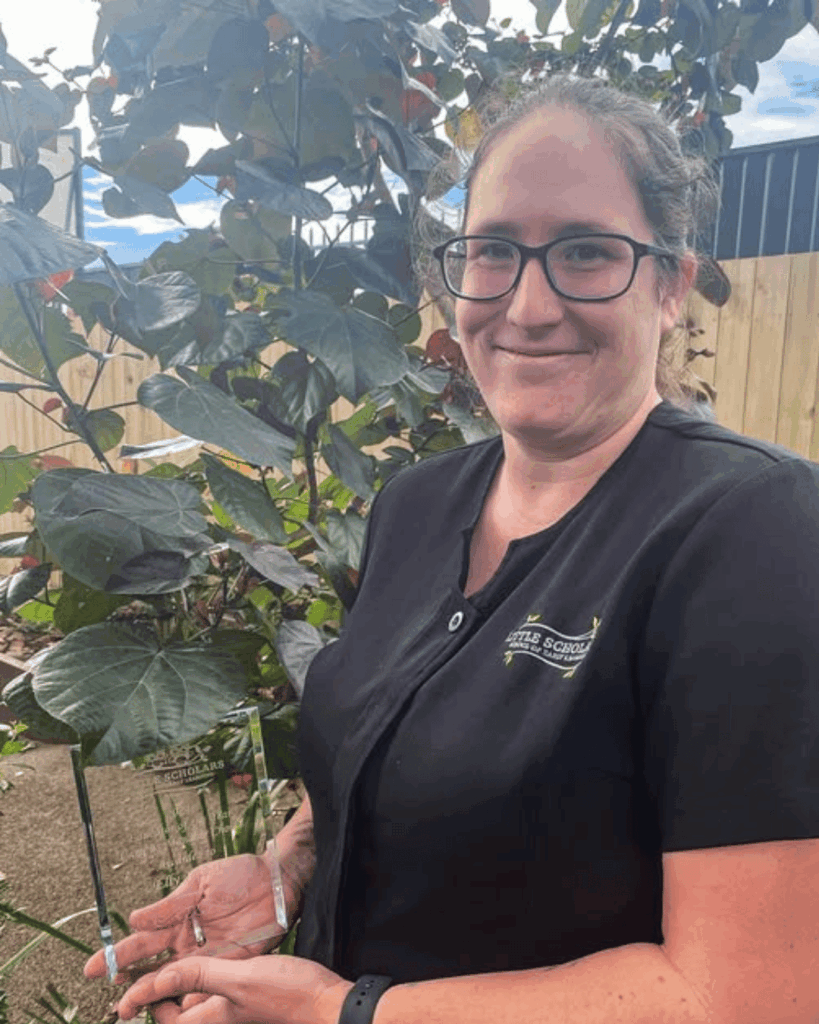
Hannah Megginson from Little Scholars Parkwood is the recipient of the ‘Contribute’ Pillar Award for 2025.
As a Lead Educator, Sustainability Officer, and now 3rd In Charge at Little Scholars Parkwood, Hannah consistently goes above and beyond, contributing not only to the care and education of children, but to the support of her team and the overall growth of her centre.
How long have you been an educator and how long with Little Scholars?
I have been an early childhood educator for 14 years.
What made you pursue a career in early childhood education?
I have always loved watching children learn and grow, they have such unconditional love for others and can be pretty funny too.
What does winning the award mean to you?
It means so much to be recognised for my hard work and commitment to the children that I care for.
What do you like about working for Little Scholars?
I get to work in an environment with people I can make a difference with – building an environment where everyone wants to contribute and celebrate being amazing educators, and helping support amazing little humans.
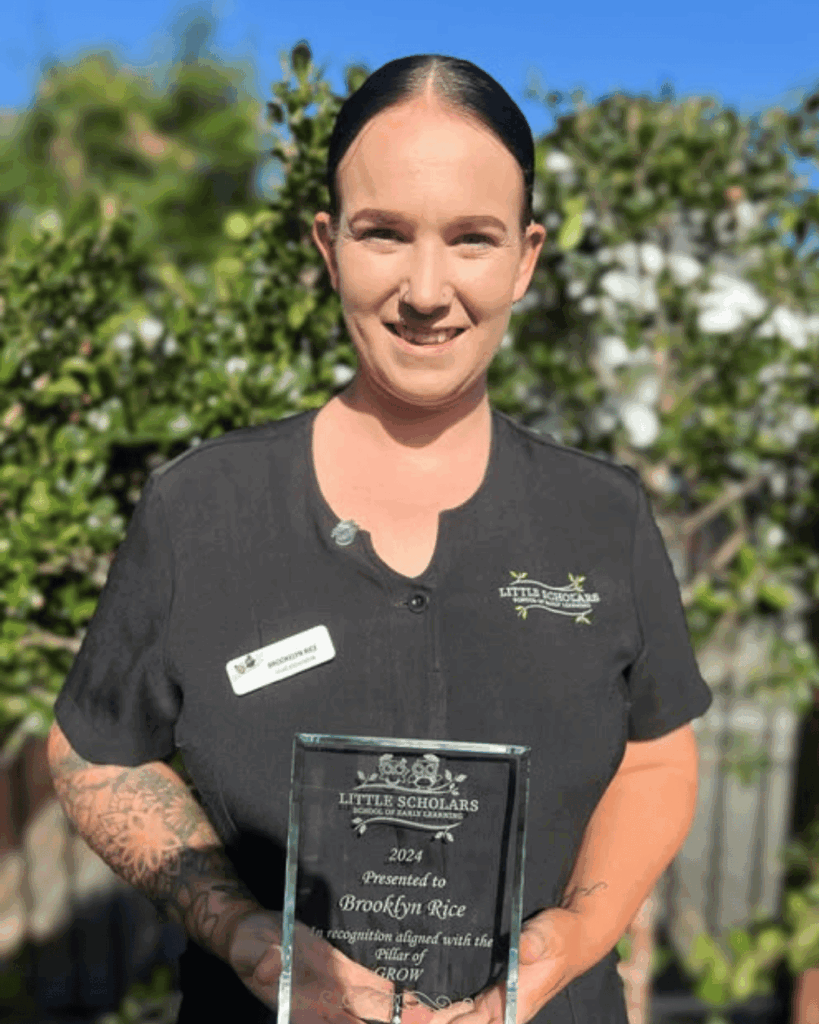
Brooklyn Rice from Little Scholars Pacific Pines is the recipient of the ‘Grow’ Pillar Award for 2025.
Brooklyn has shown incredible growth in her role as Lead Educator in the Senior Kindy room at Little Scholars Pacific Pines. Over the past six months, she’s transformed the space into a nurturing and engaging environment, supported her peers with openness and care, and built strong connections with families and children alike.
How long have you been an educator and with Little Scholars?
I started my educator journey 2.5 years ago with Little Scholars.
What made you want to become an educator?
I have a deep passion for helping children grow and develop. The ability to make a positive impact on their lives, guiding them through their early years and watching them blossom.
What does winning the award mean to you?
Winning this award means that my efforts and dedication have been recognised and appreciated. It serves as validation for the hard work, passion and care I put into my role as an educator. It’s not just about the recognition but the reminder that what I do truly makes a difference in the lives of the children I work with. It inspires me to continue growing, learning, and striving to be the best I can be.
What do you like about working with Little Scholars?
I enjoy working with Little Scholars because is aligns with my values and allows me to grow both personally and professionally. They are so supportive and there’s a shared commitment to making a positive impact on the lives of the children in our care. Working here also provides me with the opportunity to make a meaningful difference, knowing that I’m apart of something larger that values both education and the wellbeing of the children.
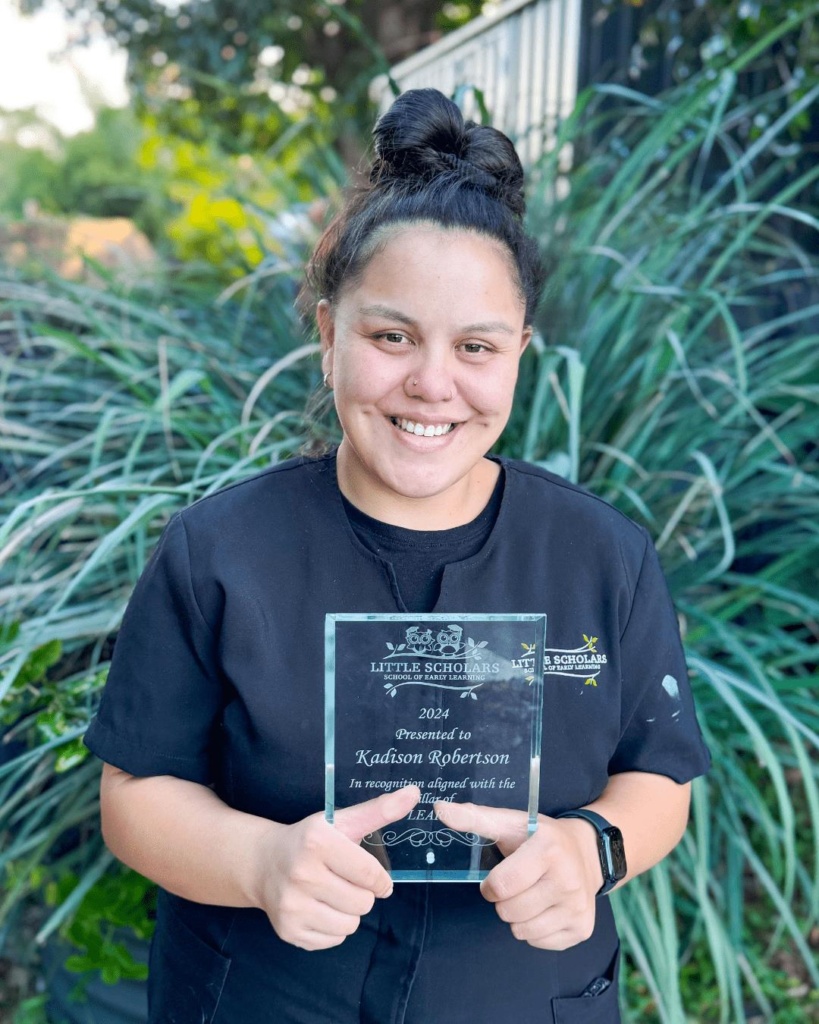
Kadison Robertson from Little Scholars Ashmore is the recipient of the ‘Learn’ Pillar Award for 2025.
Kadi is a seasoned educator whose extensive knowledge and experience make her a trusted source of wisdom and support. Always eager to engage in professional development, she consistently offers guidance and encouragement to those around her. Through her passion, others witness the true magic of teaching and learning through play.
As Little Scholars celebrates its milestone decade of educating and caring for South East Queensland children we met up with Jae Fraser, the founder of Little Scholars, to hear his memories and reflection of the past 10 years operating Little Scholars School of Early Learning! For a bit of background on Jae, he’s spent more than half his life educating young children.
After years working in the early learning and care sector, starting as a trainee and working his way up to early childhood teacher and campus manager, Jae eventually became general manager of Australia’s largest ASX-listed childcare company. But he felt a constant pull to do things differently. This drive led him to purchase his first Little Scholars campus, a run-down campus in Yatala. Ten years later, Little Scholars now educates more than 7,000 children across 16 campuses and employs more than 600 staff.
From the beginning, he wanted to offer what no one else did. The result for families who are enrolled with the Little Scholars School of Early Learning are innovative offerings such as chef-prepared take home meals for busy parents who don’t have time to cook, as well as our Family Time program that offers specialist appointments as well as dental and haircuts so families can use their free time together. Little Scholars was one of the first to introduce Bush and Beach Kinder in Queensland, all of this as well as first-class education and care in beautiful spaces to play and learn.
As a passionate teacher, I never thought I would find myself in a corporate role as a general manager of a company with more than 500 centres and 6,500 staff, but I loved every moment of it, especially the people I had the pleasure of working alongside. I’d always felt a deep conviction about early learning. It’s absolutely more than a career, it’s my calling. I was incredibly proud of the work we did in my previous role, but I kept dreaming of something that could be even more child-centered, community-focused, and creatively enriching.
I wanted to create something different, something that families and educators hadn’t seen before, a space where children could explore, get messy, learn about kindness, and discover the world on their own terms, environments that . I had a vision to create an early learning centre unlike anything in the market—an elevated, high-quality experience where every environment is thoughtfully designed to inspire wonder, nurture growth, and offer a truly exceptional foundation for young learners.
Little Scholars was born from that vision. I didn’t leave because anything was missing per se, but rather because I knew there was something special, we could create that could go beyond the traditional expectations in early childhood education. Little Scholars was my chance to bring that vision to life fully.
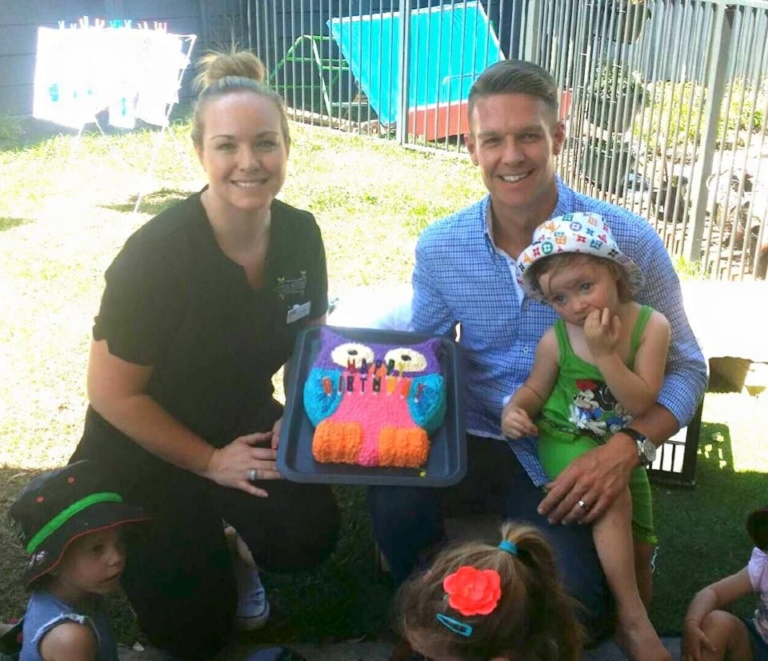
Opening the Yatala campus was exhilarating but incredibly intense (and so so stressful). In those first few months, I was wrapping up my role as general manager, while putting everything I had into Little Scholars at Yatala. It was chaotic, but the kind of chaos where every long day, every sleepless night, felt like it had real purpose. There were times when I felt that I had taken on too much and was I ever going to get there?
When I eventually stepped away from my GM role to focus solely on Little Scholars, it was already showing the spark of what it could become. People were resonating with what we were building, a place where families felt at home and children felt empowered, and that was everything I’d hoped for.
We started with nothing but a dream, pouring all our savings into opening that first campus; with limited funds, we did everything ourselves – cooking, cleaning, gardening, renovating, and managing every detail to bring our vision to life while building a new business from the ground up. Honestly, I’ll never forget those early days. Family, friends, our new team, and even complete strangers chipped in, offering hands-on support, encouragement, and assurance. Andrew was there by my side constantly, and the team that joined early on was absolutely invaluable – they believed in Little Scholars right from the start. Local families and businesses welcomed us, and that sense of community support really set the tone for everything we’ve done since.
I also remember families telling us that they drove past four other services, to come to Little Scholars – they loved it that much and so grateful for what we were creating for their children. Little Scholars became a destination early learning facility, a place families were willing to travel to because of our never-ending commitment to education and our philosophy of learning through play, where every experience is designed to ignite curiosity, joy, and a lifelong love of learning.

The scariest part was wondering if this dream was something I could actually bring to life. If I could truly build a place where children would feel that they belonged and where parents felt absolute trust. Another was the relentless hours, working 15-16 hours a day, seven days a week, with barely enough funds to keep us going. I was constantly worried about whether we’d ever make it. We were now employers, responsible for our team’s livelihoods, knowing they depended on us to help pay their rent and mortgages. On top of that, there was the pressure of delivering on every promise I’d made, ensuring that our vision didn’t just stay a dream, but that the outcomes we set out to achieve would truly come to life.
There were days I’d wake up worrying about all the unknowns: ‘Will families see the value in what we’re doing? Will children thrive here the way I envision?’ But every time I walked into the Yatala campus and saw the smiles on those little faces, it reaffirmed that we were on the right path.
I remember when the moment I thought, ‘Oh my goodness, this might just work,’ so vividly. I mean, each Monday morning, after a weekend spent making improvements, we’d see the amazement on the children’s faces, the excitement in the educators’ eyes, and the families’ appreciation for what we were building. But the real turning point was our Open Day. Over 500 people came through, and the response was overwhelming! Families were captivated by the environment and everything we had created.
One of my friends, who had just come to visit, ended up taking enrolment fees on the EFTPOS machine because people were lining up, eager to be a part of it. Seeing that level of enthusiasm and belief in what we were doing was when I realised this dream was resonating with others in a big way.
I watched children running into the campus with huge grins, so excited to start their day, and I thought, ‘we’re onto something.’ Families would tell me how their children talked about their teachers, their new friends, and the garden we’d planted together. That’s when I knew this wasn’t just a service, it was really becoming a meaningful part of people’s lives. And even 10 years later, that feeling never gets old.
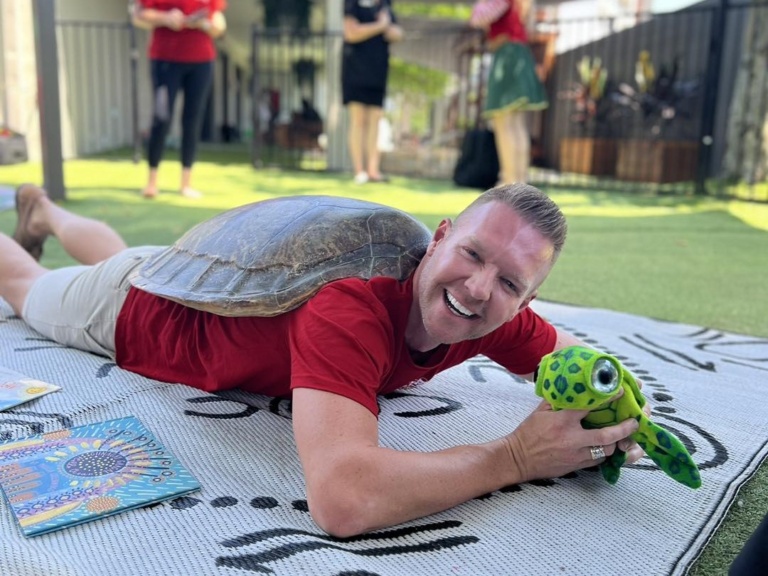
Oh, there are so many memories from those early days! I remember the late nights spent painting walls and bike tracks, filling sandpits, washing buses, planting gardens and laying turf until my hands were blistered. It wasn’t glamorous work, but it was honest and heartfelt, and every effort meant we were creating a place that was genuinely ours to share.
One memory that’s always close to my heart is my best friend Mel bringing her little boy into the campus on weekend to help while we were still setting up. He’d toddle around, exploring every corner as if he were inspecting our progress, and his joy and curiosity reminded me of exactly why we were doing this. Countless weekends were spent working alongside friends and family, all of us taking a quick break in the playground, enjoying a Yatala Pie before moving on to the next task.
Those moments of shared effort and laughter laid the foundation for everything Little Scholars stands for today.
Another of my biggest dreams in starting Little Scholars was to make it possible for educators to become teachers without facing the same struggles I did coming from humble beginnings. I always hoped that one day I’d be in a position to support others on that journey. I’ll never forget the day an educator at Yatala mentioned they wanted to study to become a teacher but couldn’t afford it. In that moment, I was able to look them in the eye and say, ‘I’ll fund your study and support you every step of the way to help you become a teacher.’ That educator is still with us today, teaching at our Yatala campus, and their journey is a constant reminder of what Little Scholars is truly about.
Looking back, it’s incredible to think that five campuses once felt like a dream, and now, with over 17, we’re just getting started. In the next 10 years, I see Little Scholars as a leading light in early childhood education, not through size or numbers, but through our commitment to quality and impact. We’re dedicated to refining what we do best, focusing on the growth and development of every child, and ensuring our teams have the support and professional opportunities to grow their careers and reach their potential. We’ll also continue to participate in meaningful research and projects to improve the educational journey and outcomes for children, even beyond Little Scholars. Our goal is to deepen our connections with families and communities, staying true to our heart-driven purpose to create spaces where each child feels seen, heard, and genuinely valued.
It’s about holding onto what makes Little Scholars special and continually raising the bar in early learning.
The children, educators, staff and families are celebrating Little Scholars George Street receiving an Exceeding result in the National Quality Standards (NQS) Assessment and Rating recently.
Situated in the heart of Brisbane’s bustling central business district, Little Scholars George Street provides exceptional early learning and care for 108 children. Its unique location places children just steps away from some of Brisbane’s most iconic cultural spaces, including the Queensland State Library, Brisbane Square Library, Queensland Museum, and the Gallery of Modern Art.
Excursions like these, which pique children’s curiosity and understanding of the world, are just some of the unique offerings from Little Scholars George Street.
As Little Scholars approaches its 10th anniversary of serving South East Queensland families, the children, and the educators, are the heart of what makes this exceeding campus so special.
“Our team is incredibly dedicated to providing the best early education experience for our little scholars,” says Jae Fraser, founder of Little Scholars. “The Exceeding rating is a testament to their hard work, innovation, and commitment to the children’s development. They consistently go above and beyond to create a nurturing environment where each child can thrive, while also supporting families by making Little Scholars a true home away from home.”
Little Scholars’ Collective Curriculum emphasises how much of its educational experiences are child led, and this was noted in George Street’s assessment.
“Educators and service leaders actively sought the perspectives, opinions, and voices of children, families, and the community,” the assessment noted.
The assessment went on to say the George Street team demonstrated a strong, ongoing commitment to meaningful, authentic, and regular engagement to inform the program.
It highlighted the collaboration Little Scholars has with families and the community supported educators in designing and implementing programs that promoted belonging, valued each person’s unique contribution, and created a sense of wellbeing and calm throughout the service.
George Street team demonstrated a strong, ongoing commitment to meaningful, authentic, and regular engagement to inform the program.
An example of this approach is the Children’s Council, a key initiative at all Little Scholars campuses, including George Street. The Council, composed of children, their early childhood teacher, and educational leader, meets monthly to gather feedback on the children’s kindergarten experience and empower them to participate in decisions affecting their campus. The child-led meetings occasionally veer off-topic, but they offer invaluable insights into the children’s interests and perspectives.
Understanding how busy its families are, Little Scholars George Street goes the extra mile to ease parents’ daily challenges. The campus offers free parking, rare in the heart of Brisbane, along with a valet service where a caring staff member greets children and escorts them to the campus.
Additional support offered to families includes a daily breakfast bar, take-away meals to simplify dinner time, and quarterly date nights, giving parents the opportunity to reconnect while their children enjoy an evening of fun with friends.
“Given our proximity to government departments, law firms, and entertainment venues, we know our parents have demanding schedules,” Jae explains. “That’s why we’re committed to providing these additional services that truly make a difference in their daily lives.”

Amy Robertson, campus manager of Little Scholars George Street can barely contain her excitement, and says she’s proud of her staff, who she believes always goes above and beyond.
“Our recent assessment and rating at George Street has highlighted the exceptional quality of care and education our campus provides. We are proud to receive an exceeding rating, a testament to the dedication and professionalism of our educators,” says Amy.
“This achievement has been warmly received by our families, with one parent expressing, ‘We always knew the campus was exceeding, it’s gratifying to see the staff receive this well-deserved recognition from the Department,’” she adds.
Little Scholars George Street’s Exceeding rating reflects the hard work and dedication of its entire community, and it highlights the exceptional quality of early education and care provided at this remarkable campus.
At Little Scholars, we have four pillars that underpin everything that we do at Little Scholars – for our children, families, educators, and our community.
As part of our annual awards, we have four awards dedicated to those Little Scholars’ values – learn, grow, inspire and contribute. This year, while our award-winning educators certainly personify all four pillars, but with their unique special skills and achievements, we’ve declared one clear winner for each pillar.
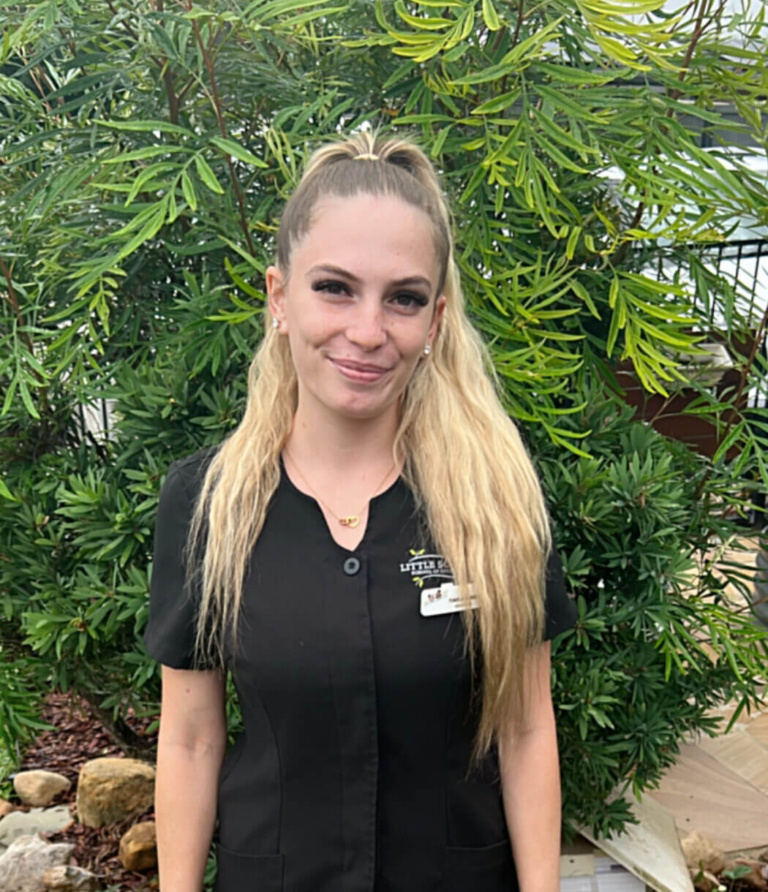
Tiahla at our Ashmore campus was named winner of the Pillar Award in the Learn category because she stepped up to become a lead educator, and she is happy to keep learning from her peers and further her education in the sector.
How long have you been an educator?
Four years
What made you pursue a career in early childhood education?
I feel like it was supposed to be as it all fell into place. I just came out of a casual job seeking for a new career journey and a job at Little Scholars Ashmore popped up. I applied for it and received the role the exact same day.
What’s the most rewarding and most challenging parts of your role? Watching their personalities blossom from a very young age, celebrating their personal developmental milestones with the children and building amazing relationships with families.
The most challenging part would be watching the children you have taught over the years move on to big school. We miss them so much!
What does winning this award mean to you?
Winning my award has meant the world to me, it makes me feel as though my progression and my achievements as an educator are noticed and valued.
Tahlia’s nomination
“Tiahla is always putting her hand up to learn new skills,” says Elise, campus manager for Little Scholars Ashmore.
“She is eager to grow from her peers, and will ask for help and support to build on her knowledge as an educator.”
Tiahla finished her Cert III and was keen to study her Diploma right away, Elise says.
“Tiahla has a bright future as an early childhood educator, as she values the importance of professional and personal growth through learning and collaborative partnerships.”
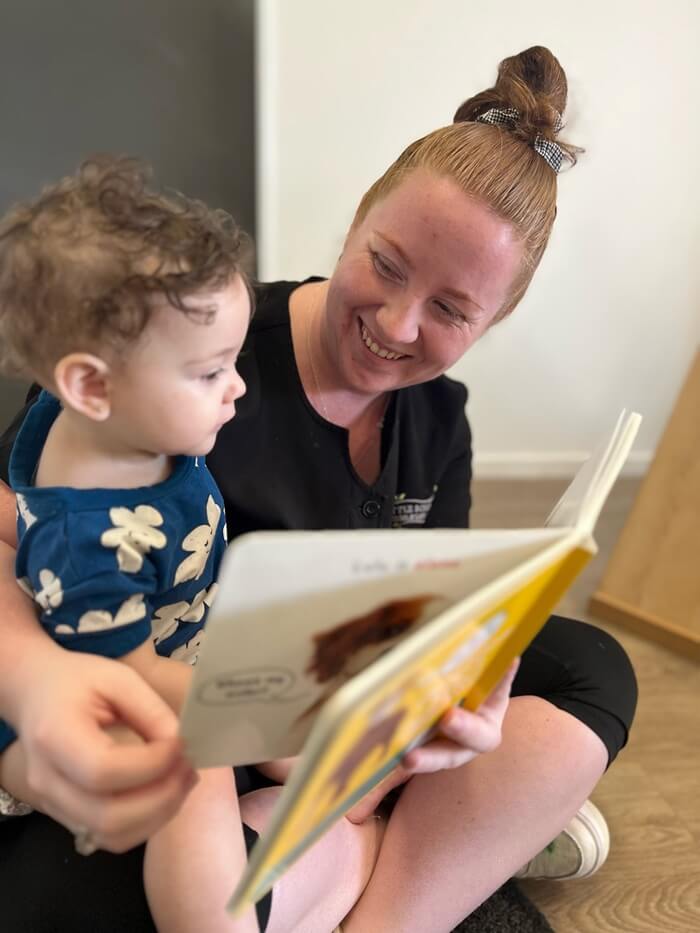
Keeva is an educator at Little Scholars Redland Bay South and is the recipient of an Inspire Little Scholars Pillar Award 2024.
How long have you been an educator, Keeva?
I have been an educator since 2016, so eight years now and have been with Little Scholars Redland Bay South since January 2023.
What made you pursue a career in early childhood education?
When I first started in early childhood education, I was studying an accounting degree, I quickly came to realise that I wanted to focus on my early childhood career. I fell in love with the children, how incredible they are and how much they could teach me. It wasn’t just the children that I fell in love with but also the challenges and limitless knowledge I could acquire and learn from to be the best educator possible.
What’s the most rewarding and most challenging parts of your role?
The most challenging part of my role is that I want to spend as much time as possible with each individual child everyday teaching them and learning from them but there is not always enough time. The most rewarding part of my job is watching the children hit all their goals and the excitement they display when they see us or accomplish goal. Mentoring and supporting other educators and seeing how far they have come in their journey is another rewarding aspect always leaving me feeling proud of their accomplishments.
What does winning this award mean to you? I was so shocked to receive this award, as I just turn up to work each day to do my best to support and guide both the children and educators. It felt so good to know that what I do each day is being noticed. It definitely makes you feel like you are doing a great job. To be recognised for the support and guidance I provide was so special and my heart felt full of love for my team. To me it cemented the fact that I am becoming the educator I always wanted to be
Keeva’s nomination
In Keeva’s nomination from Redland Bay South campus, it said, “Keeva is an educator who truly embodies each of the little scholars core pillars.
However, it is Keeva’s ability to inspire those around her, that is one of the most outstanding qualities. Keeva invests in mentoring those around her, inspiring their abilities to grow as educators utilising her existing knowledge and ability to learn more through professional development, to inspire each person to grow to full potential.”

Claire is the educational leader at Little Scholars Nerang campus and has been awarded the 2024 Contribute pillar award.
How long have you been an educator and how long with Little Scholars?
I have been an early childhood educator for 18 years and with Little Scholars for nearly six years.
What made you pursue a career in early childhood education?
I’m not quite sure when I decided this was the path I wanted to take as I feel like it’s been my career goal since I was little. I still remember the way one of my kindergarten teachers, Miss Anderson, made me feel. She was fun, caring, and knowledgeable. I wanted to be that for someone and help children to learn in their own time and style. I liked the idea of being able to help shape the minds of little ones and set them up to be kind, respectful humans.
What are the most rewarding and most challenging parts of your role?
As educational leader within my campus, the most rewarding part of my role is watching both the children and educators flourish and grow as humans. It fills me with so much pride to watch the children reach their milestones and celebrate their successes with them as much as it does when educators gain new skills that help them in their professional career.
My biggest challenge is saying goodbye to the children as they venture off on their next journey into formal schooling. It happens each year but never gets easier to see them go after watching them grow and develop over the years.
What does winning this award mean to you?
Winning this award makes me feel like I am on the right path to creating what I hoped to. It reinforced the fact that I am in the right career and doing the right things to help create a better future and bring our campus closer to our local communities. I feel so proud to be recognised as the 2024 contribute pillar winner.
Claire’s nomination
Renee, campus manager, said, “Claire has remarkable attributes and will contribute to anything and everything you can throw at her.
She is passionate about supporting others and always willing to participate in any type of event, including her own professional growth.
Claire is dedicated within our Little Scholars family and her years with us is another wonderful example of her contribution to our sector.”
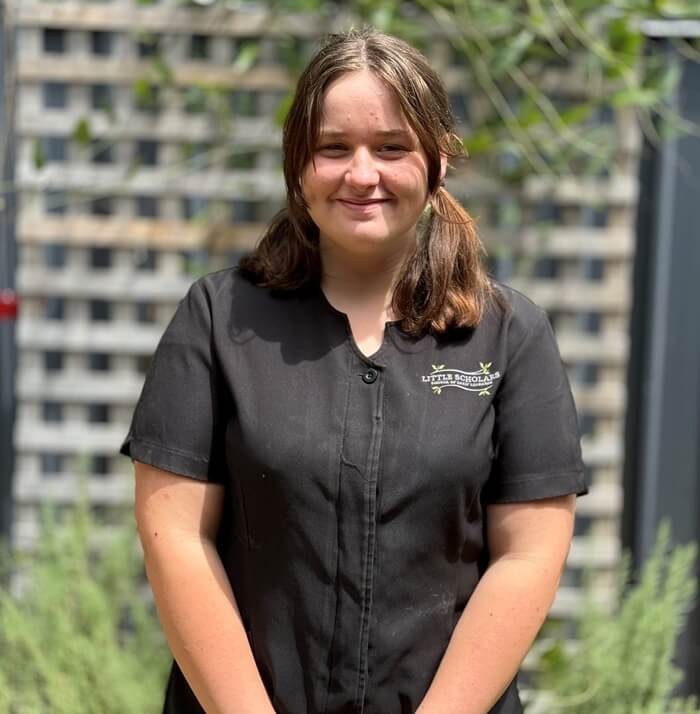
Stefenie, an educator at our Yatala campus, has remarkable attributes and we’re told her growth as an educator has been propelled by her enthusiasm to contribute, learn and inspire her team and go above and beyond not only for children, but families as well.
How long have you been an educator and with Little Scholars?
I have been an educator with Little Scholars for three years.
When you started, what was it about the role that made you want to stay in the sector?
When I was completing my work experience at the Yatala campus, I loved the relationships I was building with the children and I could see the impact educators had on the children.
What’s the most rewarding and most challenging parts of your role? The most rewarding part of my role is building such strong relationships with the children. The most challenging part is because I am so use to the younger age group, when I’m with the older children, I have to adjust my teaching style and interactions to their age groups.
What did being recognised for the Grow award mean to you?
It was really special because it really made me see how far I’ve come since being a 16 year old school based trainee. My confidence with the children and families, as well as my knowledge on child development has strengthened so much. I am a completely different educator and the fact that my leadership team can see and recognise it, it is a very special feeling.
Stef’s nomination
Stef at our Yatala campus was named winner of the Pillar Award in the Grow category because she’s grown from a trainee at the campus just a few years ago to now full time educator.
Sasha, campus manager at Little Scholars Yatala had this to say:
“Stef! What a superstar you are, and what a year you have had! From completing your Cert III as a school based trainee to jumping straight into full time work with us and then to go straight to studying your Diploma, nothing can stop you from achieving your goals, and we are so proud of how far you have come and the growth that you have achieved.”
If you have a child at Little Scholars, you’ve likely heard of ‘The Collective’ but do you know what it is? We thought it might be time for an explainer!
Little Scholars School of Early Learning’s The Collective is a service-wide, multi-faceted educational initiative, designed to enhance each child’s learning and development and best support educators’ time spent with children.
The development of The Collective is based upon early childhood pedagogy. Children are provided the time and space to explore, imagine, create, problem solve and develop social groups and guided to find their individual learning journey. The Collective allows for educators to have freedom in how they document and plan for children. This supports a strength-based approach with our team and highlights individual skillset of our educators and value the multiple voices being heard, embedding a collective response to children’s learning.
Understanding the demands of documenting processes, Little Scholars wanted to create a streamlined approach to the educational program across all our campuses. The intention was to demonstrate quality over quantity, foster children’s growth, and develop them to become successful citizens and critical thinkers. This curriculum approach also supports educators to adopt theory and put it into practice. Educators, through observations of children’s play, conversations and their interactions within their environment, explore what the child might be thinking. This is then the beginnings of the planning process within our collective curriculum.
Alice Micklewright, campus manager of Little Scholars Burleigh, with her team, came up with the idea of The Collective and led its early development.

Alice Micklewright, campus manager of Little Scholars Burleigh
“I wanted to look at curriculum for a while because there were a lot of things that we felt were just kind of there but didn’t feel like they had a place, so streamlining that focus was good.”
“We had a lead educator meeting one night and we talked about how the educators were feeling in general, and some of the comments were just like ‘I feel like I spend more time writing things down than I do with children.’ They are still with the children most of their time, but when you’re feeling like you’re trying to focus on something else and not giving the whole attention to something and being present, it can be really unsettling.”
That was at the peak of the pandemic crisis, according to Alice, and her team became cognisant that what they were doing in the moment was far more important than anything else.
“The first conversation we had, we looked at what we were doing and wrote down notes on the back of the pizza box – ideas about why we’re doing what we were doing, what the processes were and what we felt didn’t really fall within the planning cycle appropriately for it be conducive to having good outcomes for everybody involved.”
“We really started The Collective off the back of our Engagement Initiative – that’s the one day a month we have with no documentation of photos, no technology. It was purely based on educators getting back in touch with engaging with children and not focusing so much on some of the perceived pressures that have come about in the sector in terms of things like families’ expectations on photos being received, and the amount of documentation that sometimes can spiral. It is a regulation for services to demonstrate planning toward an educational program for children. We wanted a streamlined approach to guide our campuses to set the benchmark to support and engage.
“It’s really been child-driven on the focus of what we want to do,” she says.
Melanie Excell, Operations Manager for Little Scholars, agrees.
“When we started this process, we gathered information from a variety of different perspectives – including families and children, and professional training and resources,” Mel says.
There was a vast amount of training for educators to understand new processes.
“At its core, it’s really been just trying to pare back what we were doing to deliver quality curriculum for children, that supports their outcomes and their developmental needs, to generate a stronger culture of critical thinkers in terms of children and educators,” Alice adds.
Weekly, rather than daily, detailed written updates are now sent to families, allowing educators to focus more on being with children. Families still get photos daily to see what their child has been learning and enjoying that day, but learning outcomes, routines, links to Early Years Learning Framework and research are saved for the end of the week, and individual child updates are sent out termly.
“Sometimes you find that services will continue to add a lot of documentation [about each child] and to try to meet the needs of the framework and the standards, when it can be a lot simpler and child focused,” Alice says.
The critical reflection component of the curriculum is most important, according to Alice.
“Everything we do really needs to have a purpose, a thought behind it and a reason why we want to engage in it that way, and then involving the children in that process and the families as well.
“If you look at the planning cycle in the National Quality Framework (NQF), you gather information from an idea or interest that children have, engage the children in what they’d like to do moving forward and analyse the information you’ve gathered, plan for it, then reflect and review is the whole cycle.”
For example, educators might look at children who are engaging in an activity and would consider it across developmental milestones and outcomes what they think the children are trying to achieve. In a nursery, where early learners can’t yet speak, educators might observe a child picking up resources and putting them into a basket and taking them back out, a learning behaviour known as a schema.
“Children are exploring all of these different concepts every day, even though you may not realise because they’re playing and it’s natural for them to do that,” says Alice.
The use of open-ended questioning with children supports the understanding of their play and helps gain a child’s perspective as opposed to an adult’s agenda.
The planning comes from what educators talk about in the moment, and educators act on what they’ve gathered, followed by a review at the end, where they decide if they activity worked well or didn’t, and if it didn’t, questioning why – were the children just not interested in that topic anymore, and is there a reason why?
Little Scholars produces individual learning journeys for each child that highlight significant milestones and achievements to their development whilst in our care. Various modes of documentation record the learning identified through the child’s participation in our program.
Little Scholars sends out the personalised mid-year assessments to the families and then the end of the year they’ll receive a transition letter which wraps up their child’s journey, acknowledging achievements and progress in their studio.
“One of the other points we highlighted when we started reviewing the curriculum, is that we wanted to educate our families that what we were doing. We know that there’s a lot of electronic information available as well, but the value of that face-to-face conversation and relationship with staff and families, is important too,” Alice says.
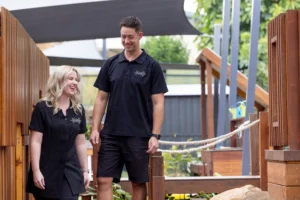
The Collective allows for educators to have autonomy in how they document and plan for children. This supports a strength-based approach with our team,” according to Susan Cooper, group pedagogical leader for Little Scholars. “It highlights individual skillset of our educators and value the multiple voices being heard, embedding a collective response to children’s learning.”
Alice says it’s still a process that Little Scholars is undergoing.
“Ultimately, it’s important that we have educators here who feel stable and like they want to contribute and that they are getting recognised for the things that they’re doing, and we believe The Collective does that.”
Jae Fraser, founder of Little Scholars agrees. Little Scholars wants to ensure educators feel seen, heard and valued, because our educators’ passion for our children and their education is why we’re delivering exceptional educational play-based programs.
“We really care about and listen to our teams, so when they are feeling pressured due to significant amount of paperwork, we act,” says Jae. “It’s all about the educators and the children, so if we can achieve amazing outcomes without all the unnecessary paperwork, and children and educators are interacting and engaging in really meaningful ways – this is what we need to focus on.”
More about Little Scholars:
Book a tour today!
At Little Scholars, the Early Childhood Australia Code of Ethics serves as one of the guideposts in our approach to education, informing our interactions with children, families, colleagues, and the wider community. Our dedicated educators embrace these ethical standards, continually striving to provide a caring, inclusive, and stimulating environment for every child in our care.
By taking on board the ECA Code of Ethics, you can rest assured that we are committed to providing a nurturing and enriching environment for your child. But what is the ECA Code of Ethics? Let’s take a closer look.
Book a personalised tour of one of our campuses today. We look forward to welcoming you and your child to our community.
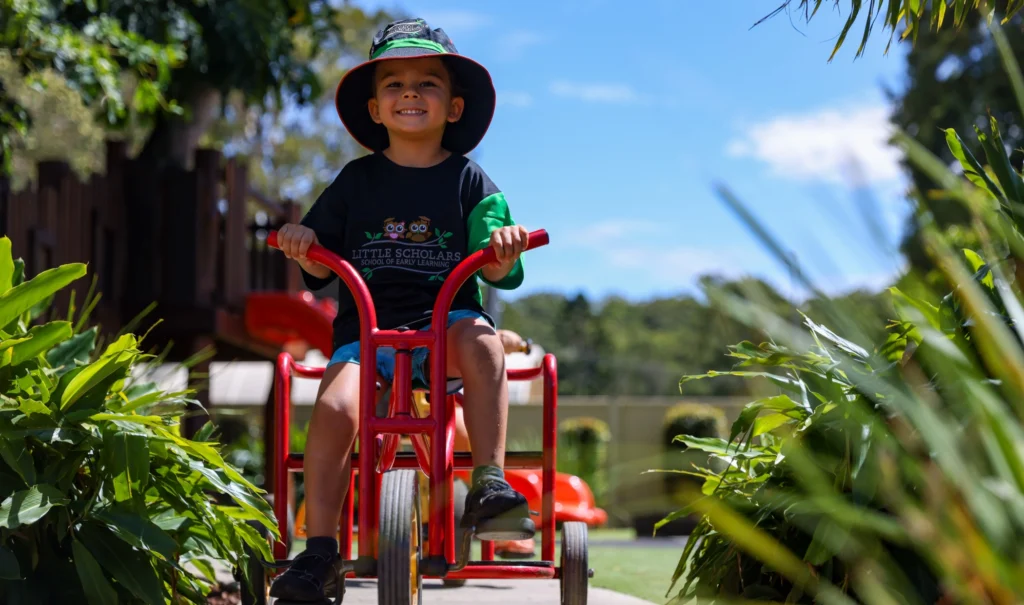
The ECA Code of Ethics is a set of guiding principles designed to help early childhood professionals navigate the complex decision-making processes involved in their work. It is a living document developed by Early Childhood Australia, Australia’s leading advocacy organisation for children’s rights and education.
The importance of the ECA Code of Ethics in early childhood education cannot be overstated. It informs and guides educators on their ethical responsibilities, promoting integrity and professionalism. By committing to the Code, educators reaffirm their responsibility to children’s well-being, learning, and rights, thereby cultivating learning environments that are nurturing, inclusive, and respectful.
The ECA Code of Ethics also offers a common language for discussing ethical issues and dilemmas that may arise in early childhood settings. For example, it supports educators in making decisions that align with core ethical values, fostering trust and collaboration among colleagues, families, and communities.
At Little Scholars, we wholeheartedly embrace the ECA Code of Ethics, using it as a compass in our daily practices and interactions. Let’s take a closer look at the code’s core principles.
The ECA Code of Ethics rests on a set of deeply held values. These values are central to early childhood education and direct decision-making processes concerning ethical responsibilities. They emphasise respect and uphold the rights and dignity of all – children, families, colleagues, and communities. The ECA Code of Ethics principles are based on the United Nations Convention on the Rights of the Child, an international agreement on childhood developed in 1991.
One of the core principles emphasises the uniqueness of each child. This principle recognises that every child, with their individual interests and strengths, has the potential to contribute significantly to their communities.
They also acknowledge that children, from birth, are full-fledged citizens, deserving of civil, cultural, linguistic, social, and economic rights. This principle emphasises that children are not merely passive recipients but active participants in society.
Effective learning and teaching is seen as a professional undertaking that utilises specialised knowledge and incorporates diverse perspectives. This principle values informed decision-making in shaping learning environments and experiences.
The Code of Ethics also underscores the importance of partnerships with families and communities. These partnerships foster shared responsibility and collective effort in promoting children’s learning, development, and well-being.
Promoting democratic, fair, and inclusive practices is another core principle of the ECA Code of Ethics. It recognises the importance of equity and cultivates a strong sense of belonging among all participants.
At the heart of children’s education and care are respectful, responsive, and reciprocal relationships. This principle promotes a relationship-centred approach in all interactions involving children.
The importance of play and leisure in children’s learning, development, and well-being is also a key principle. This reflects the understanding that children’s engagement in play is not only natural but also essential for their holistic development.
Lastly, the Code of Ethics recognises that research, inquiry, and practice-based evidence are integral in informing quality education and care. This principle encourages a culture of continuous learning and evidence-based practice.
The ECA Code of Ethics outlines several significant commitments that educators make as they undertake their crucial role in the field of early childhood education. These commitments form the ethical backbone of the profession, providing guidance and norms to ensure the best possible care and education for all children.
Foremost in the Code of Ethics, educators pledge to act in the best interests of all children. They commit to creating safe, inclusive, and stimulating learning environments that respect children’s agency, balance child-led and educator-initiated experiences, and value the role of play in learning and development.
Educators also commit to maintaining strong, respectful, and cooperative relationships with families, recognising the vital role that family plays in a child’s life and learning. They promise to treat all families with respect, regardless of their composition, circumstances, or cultural background.
The Code encourages educators to cultivate supportive and respectful relationships with their professional peers. They commit to collaborate, share knowledge, and provide support to enhance the quality of care and education provided.
A pledge to uphold the reputation and standards of the early childhood education profession is also central to the Code of Ethics. Educators commit to engaging in continuous professional learning, and upholding ethical standards and policies in their practice.
Finally, the Code recognises educators’ role within larger communities and societies. They commit to promote the value of early childhood education, advocate for the rights and wellbeing of all children, and act as stewards of the environment for current and future generations.
For further information regarding the educators commitments outlined in the ECA Code of Ethics, visit the ECA website.
At Little Scholars we are dedicated to creating a nurturing, stimulating, and safe educational setting for children. To accomplish this, we have integrated the Reggio Emilia approach into our curriculum. This powerful educational philosophy puts the child at the heart of their learning journey, aligning perfectly with our commitment to compassion, love, and preparing children for life.
This article explores what the Reggio Emilia approach is, how it originated, and how we integrate it into our teaching at Little Scholars.
Little Scholars provides an attractive and safe environment to children on the Gold Coast while giving you total peace of mind while your children are in our care. Learning areas include well-equipped playrooms and landscaped outdoor spaces for maximum learning opportunities. Book a tour today if you are looking for a childcare centre in SE Queensland.
The Reggio Emilia approach is an educational philosophy focused on early childhood education. Originating from the region of Reggio Emilia in Italy, this approach views young children as curious individuals who have the potential to learn from everything around them.
Essentially, the Reggio Emilia approach places significant emphasis on fostering a strong sense of self, creativity, and cognitive skills through a systematic learning process based on exploration and discovery. It recognises children as active participants in their learning, with their own unique interests, abilities, and the capability to construct their own understanding and knowledge of the world.
There are 11 key principles in the Reggio Emilia approach:
The Reggio Emilia approach to early childhood education originated after World War II, through collaboration between early childhood educator and psychologist Loris Malaguzzi and parents in the villages surrounding Reggio Emilia, Italy. They joined forces to create a new type of childcare education that would prioritise community involvement, instil a love for learning, and promote respect. Together, they established and managed preschools that emphasised the significance of community, democracy, and an active role in education. This shared mindset laid the foundation for what we now know as the Reggio Emilia approach.
Over time, the Reggio Emilia approach has evolved, incorporating influences from various sociological and academic ideas. Despite its humble beginnings, this philosophy has gained international recognition for its innovative and child-centred approach, making a profound impact on early childhood education. Today, thousands of schools inspired by the Reggio Emilia approach can be found worldwide, each adapting and implementing the philosophy in ways that resonate with their own specific cultural and community contexts.
In a world where traditional education can often be rigid and structured, the Reggio Emilia approach offers a refreshing child-centred approach, recognising and valuing children as strong, capable, and resilient individuals who possess innate wonder and knowledge.
At Little Scholars, we embrace the Reggio Emilia approach as it aligns with our philosophy.
We integrate this philosophy alongside Australia’s National Quality Standard for education and the Early Years Learning Framework, into our everyday practices, curriculum, and interactions. Our aim is to create environments that inspire children’s exploration, discovery, and active engagement. In our studios, we purposefully arrange the space to stimulate curiosity, problem-solving skills, and social interaction. Every nook and cranny of our campuses are designed to be a learning space where children can interact with materials, nature, and their peers.
The unique combination of our values and the Reggio Emilia approach not only nurtures cognitive and social skills but also fosters deeper growth. It equips children with a strong moral compass and a deeper understanding and respect for the world they live in.
Let us hold your hand and help looking for a child care centre. Leave your details with us and we’ll be in contact to arrange a time for a ‘Campus Tour’ and we will answer any questions you might have!
"*" indicates required fields
Let us hold your hand and help looking for a child care centre. Leave your details with us and we’ll be in contact to arrange a time for a ‘Campus Tour’ and we will answer any questions you might have!
"*" indicates required fields
Fill in the form to join your local Pram Pals mums and bubs walk