










Our days seem to be getting more and more hectic. There’s the 9-5 slog, rushing to and from work, drop-offs and pick-ups at daycare and school, running to appointments, weekends are for relaxing, or are they actually for rushing to children’s sports, house and yard maintenance? Even being more connected to devices means we might be losing connections with each other. We always seem to be busy, finishing one task or appointment so we can cross it off the endless list.
If we reflect on our own childhoods, do our children’s developing years look like ours? Maybe not. We likely (and hopefully) have memories of aimless play, exploration and time to dream.
Even going on family walks may come with encouragements of ‘c’mon Freddy, let’s go!’ or ‘keep walking’, but why? Challenge yourself not to give your children any instructions for the next minute the next time you’re out for a walk. Was 60 seconds hard to get through? The funny thing is, on walks, you’re probably not even in a rush.
Your children may constantly feeling hurried, rushed, pushed to keep moving. This can create feelings of anxiety, stress and resentment.
There’s a movement brewing the last few years, called Slow Parenting. Have you heard of it, or pondered it yourself?

According to a 2015 article in the Boston Globe, slow parenting ‘cherishes quality over quantity, being in the moment, and making meaningful connections with your family.’
In the article, Carrie Contey, a prenatal and perinatal psychologist, says young children need a balance of activity and down time.
“In early development, children are still wiring. They need to have moments of doing and moments of being for integration to happen,” says Contey. “If they don’t take space for integration that leads to meltdowns and overtiredness.”
Need some ideas on how you can slow down your parenting, and in a way, time?
Next time you’re about to hurry your child, take a moment to think about why, and how you can approach it differently. If it’s about being late for something say bed time, will an extra 15 minutes affect them adversely once and a while? What about what they stand to gain from the extra time? If it’s getting to school and work on time, reflect on how you can alter your routine to allow for a bit of flexibility. You never know what small moments will make up lifetime memories for your child.
We live in a digital world, and for many of us, our small children are quicker to learn and use technology than we are. For a parent, letting your child use technology can be a bit of a break, so you can have a few minutes to work, cook, tidy up or even just have some peace. And increasingly, children are required to have their own devices for their education once they get to big school. Technology allows them to learn things in ways a book or even a television show can’t teach them, but it also comes with risk of which parents need to be aware.
Here are our top tips on how to keep your child safe while using devices.
Engage with your child on their digital experiences. Parents often talk about what a child does during their day – how school or daycare was, what they had for lunch, what they’re reading, but do you talk to them about what they’re doing online or on devices? We recommend being an active participant with your child while on the phone, iPad or computer and watch, read or do online activities with them. Be curious about what interests them and ask questions — at the same time, you can gently introduce online safety tips, such as not clicking on pop-ups, or question links coming from sources they don’t know before they click. Remind your child to always talk to you about anything, and to come to you if they find something online that makes them feel uncomfortable or if someone outside their immediate trust circle contacts them online. Make those conversations commonplace, because the more you interact with your children during and about screen time, the better.
Digital footprints can last for a long time. Talk with your children about what the internet is, and how (when they’re older) what they post can influence people’s opinions of them—good or bad. This is also a reminder to you about considering what you post, especially when it comes to your child. Asking them early if you may take their photo, and if you plan to share it on social media, let them know who will see it, why you want to share it, and respect their decision if they don’t want to share it. This shows respect for your child, models consent and respectful data sharing practices. The more they know about this, the better off they’ll be when it comes to making decisions about their online presence when they’re older.
Children under two years of age are not recommended to have any screen time outside of occasional video calls, according to national and international guidelines, such as from Early Childhood Australia and the American Academy of Pediatrics. Children younger than age two are more likely to learn when they interact and play with parents, siblings, and other children and adults. After age two and until at least age five, it’s suggested that little eyes only be exposed to one to two hours of high quality programming per day.
Too much screen time and regular exposure to poor-quality programming has been linked to:
Unstructured playtime is more valuable for a young child’s developing brain than is electronic media, but not all screen time is ‘bad’ and can even be beneficial.
Sites such as Children and Media Australia and Common Sense Media can help parents understand the quality of the media and apps that their children are using with programming ratings and reviews.
Parental controls are software tools that allow you to monitor and limit what your child sees and does online.
They can be set up to do things like:
The Australian government’s eSafety Commissioner is a great resource with important information on how to protect children of all ages when they spend time online.
Obviously, with the recommended screen time guidelines for small children to be somewhere between zero to two hours daily depending on age, your child’s time should be mostly device-free, but this is a great idea for all family members to carve out some time each day without devices to focus on other interests and each other. Your children are always watching what you’re doing, and seeing you keep the phone or iPad away so you can read or play with them, or even focus on other passions or hobbies of your own, models healthy behaviour when it comes to devices. As mentioned above, you can set time limits on devices, with both Apple and Android, and switch things up so that when the limit is up, go do something outside.
Maybe as a family everyone can agree to device-free time together, such as at meals or weekend mornings – whatever works for you. Research shows that devices shouldn’t be used for at least an hour before bedtime to ensure your child has the best quality sleep.
You could also agree to areas in which devices are to be used such as living rooms or the study. If you keep mobile phones and other devices out of your child’s bedroom at night, your child won’t be able to play games or potentially wander into online territory you don’t want them to see. This can also stop your child being disturbed in the night by messages and notifications. Reducing the areas in which devices may be used also allows other areas for connection – like car rides and restaurants, as a family.
Resources:
Do you have a little one who is eager to learn and likes technology? Apps can improve skills in fine motor skills, reading, phonics, maths, problem-solving and more. Research suggests that after age two, children may benefit from some types of screen time, such as programming with music, movement and stories. We’ve compiled a list of what we think are some of the best educational apps for children aged three to five years.

Pre-school aged children can learn about morning and bedtime routines with PBS KIDS’ Daniel Tiger. Help Daniel Tiger get ready for school in the morning and for bed at night through imaginative play and songs.
We like it because there are sing-along songs that make routines fun and a musical timer to keep routines such as teeth-brushing on track.
Pros: Simple, age-appropriate for toddlers.
Cons: There’s no order required for following the routines, and it’s limited to morning and evening routines only.
Available on the App store and Google Play

Pre-coding logic game for kids
Why? We think introducing children to coding early is gives children a head start in learning how to code with Hopster Coding Safari. This animal themed pre-coding logic game to help little ones learn the fundamentals of coding. Children are presented with a series of logic problems to solve, getting different animals to where they need to be.
Children learn: The fundamentals of computational thinking
This game will engage young children in computational thinking – the fundamental techniques needed to understand coding – without them realising they are learning!
Pros: Wide range of activities, links to early years learning objectives.
Cons: Paid subscription based and not a lot offered without paying.
Available on the App store

Shape-sorting puzzles great for fine motor skill development
What makes Busy Shapes so clever is the way the puzzles gently gets more challenging, motivating little ones to find solutions to each puzzle through experimentation. From shape-changing to colour-mixing to hidden holes, we’re impressed with how the game spurs out-of-the-box thinking, stimulating curious young minds. The app’s designers say it’s inspired by the pioneering works of child theorist Jean Piaget (1896-1980), who believed that “children are little scientists” and that a child’s thoughts are built through experiences that encourage him or her to engage in the reasoning process.
Pros: Free version includes a lot of activities. The challenge increases, with multiple objects and holes of different shapes, moving objects, obstacles to get around or to move, and finally the need to use tools to move the objects. There’s no direction and no help. Children must explore and discover on their own how to get the objects into the holes.
Cons: Doesn’t seem to be a way to get to earlier levels.
Available on the App store and Google Play

Khan Academy Kids is a free, fun, educational program with thousands of activities and books that will inspire a lifetime of learning and discovery for children ages two+.
The app is designed by experts in early childhood education to guide young learners on a delightful journey through key skills in maths, reading, phonics, writing, social-emotional development, and more. It includes thousands of lessons, activities, books, and games that are age-appropriate for preschool through year two. With catchy songs and yoga videos, little ones will also have fun moving, dancing, and getting the wiggles out.
Pros: The variety of learning topics and the creative approach to activities offer breadth and depth without it feeling overwhelming.
Cons: Animations could use more captioning; written instruction and language options.
Available on the App store and Google Play

This app aims to strengthen children’s cognitive skills, concentration and memory with activities such as tracing letters, spelling with an A-Z of animals, counting, jigsaw puzzles, spot the difference, pet salon, feed the animals and more. Your toddler will really enjoy playing this game as every little action has been thoughtfully designed for an effortless gameplay.
Pros: Fun cheerful characters, good for young learners working on fine motor skills, problem-solving skills, spelling, and language acquisition.
Cons: Limited activities and full screen ads in free version, some complaints about price of full version.
Available on the App Store

This app for toddlers has more than 1000+ fun and educational activities and games! This delightfully interactive smart app helps children learn ABCs, numbers, colours, shapes, and more. Children can skip, sing, and dance to popular nursery rhymes with Moolingo the monkey.
Pros: The amount of activities.
Cons: Paid subscription service.
Available on the App Store and Google Play

Thoughtfully-made educational games for children aged two to eight, including early literacy skills using a comprehensive program full of interesting activities, building blocks for maths confidence, and tools for navigating social skills, empathy, and confidence.
Pros: Personalised to children’s interests across subjects, learning grows with child.
Cons: Paid subscription service.
Available on the App Store and Google Play

Features letters and word learning games to help children learn basic tracing of alphabet, letters, words and numbers one to 10.
Pros: Full app is free.
Cons: Some complaints on sound issues.
Available on the App Store and Google Play

The Toca Boca suite of apps for children is an interactive way to explore the world by cooking, cutting hair, building a neighborhood, and taking care of pets. For the youngest users, try a role-playing app like Toca Doctor or a simple app like hairstyling (children love the hairdryer!). And as they grow, children can design and build their own city with the Toca Life apps.
Pros: Dozens of games to choose, including some free, and ome games can be purchased as a bundle for discounted pricing. Variety of games for beginners, animal lovers, budding engineers, and more.
Cons: Not all apps will be of interest to all.
Available on the App Store and Google Play
Related:
From the moment your child is born, you are inundated with information on your child’s growth and whether or not they’re hitting their developmental milestones – the sets of functional skills or age-specific tasks that most children can do at a certain age range.
Comparison is often called the thief of joy, and you face it everywhere you look as a parent – from the other children in your mum’s groups, doctor’s visits, even what you’re searching online will show up again in your targeted ads and suggested content on social media – your child will be measured against others.
As if parents need more to be anxious about, or do they? We know every child is different, so it begs the question, do development milestones really matter?
Recently in the US, Centers for Disease Prevention and Control (CDC) and American Academy of Pediatrics (AAP) updated the guidelines for child developmental milestones for the first time since 2004, aimed to better reflect the data of when children reach milestones such as crawling, walking, speech, and more, as well as some of the early indicators of autism. The changes were met with mixed reviews from parents and child experts, bringing a lot of conversation about children’s development to the forefront.
In Australia, our early childhood developmental milestones come from The Australian Children’s Education & Care Quality Authority (ACECQA)
According to the ACECQA, development milestones are important for your child’s:
So, according to experts, development milestones do matter, but with a range of abilities across each age group, when should parents take it seriously, and when can they worry less about what their child is and isn’t doing?
Children will meet these needs in their own time and are on their own journey. I always remember hearing how children meeting their development domains, can be represented like ‘popcorn kernels, when placed in hot oil, they will pop at different intervals,’ this can be seen how a child will shine and develop at different stages. – Susan Cooper, pedagogical leader, Little Scholars.
“While it is important to monitor children’s development and assess against the developmental milestones, we must be mindful not to place children in a box and begin the process of a check box system. Early childhood professionals place such value in assessing children’s growth and development and through assessment, in partnership with families, early intervention can be met for their child, should it be deemed necessary,” says Susan Cooper, pedagogical leader for Little Scholars.
According to Skye, assistant campus manager at Little Scholars Pacific Pines, developmental milestones helps educators develop their educational programs.
“Milestones are important to monitor and keep track of as they can help us as educators and also families understand why a child may be exhibiting certain behaviours,” Skye said. “They also help gage what children’s interests, strengths and barriers are. Understanding and knowing age-appropriate milestones will help educators provide a program for each child’s individual needs.”
Your child’s weekly program evaluation and reflection informs parents of the significance of the learning experiences that have taken place over the course of the week, how those experiences tie into the Early Years Learning Framework, and include observations regarding your child’s development.
“We educate the families about the importance of milestones and when to be concerned for ‘red flags.’ I think it’s incredibly important that us lead educators are having frequent conversations about their children’s development, where they’re excelling and where they need further support,” says Holly, a lead educator in a Senior Kindy studio at our Stapylton campus.
“I have educated my families, especially during times like in my parent teachers about the importance of children meeting emotional development milestones. We also have a few Prep teachers who are parents at our campus, who have reiterated to us how critical it is for when children that go to Prep that they are able to confidently self-regulate their emotions and when to seek help, such as asking a peer for help, attempting to solve a problem themselves before asking a teacher – those kind of strategies.”
We’re here to ensure children learn and grow to the very best of their ability. Sometimes a child doesn’t meet his or her developmental milestone, and it might warrant a chat with our families about our observations. The conversation may begin by us asking the parents how they feel about their child’s development, and if they have any concerns. We’ll share what we’ve observed, and share examples of our observations – either written, photo or video. Families may become emotional throughout the discussion, and we understand how hard a conversation like this can be to digest. Please know we’ll always give time and space for our families, and we’ll support your next steps and help in any way we can.
“We do need to be guided by the developmental domains, as most children with developmental delays are not identified early enough to benefit from early intervention and they then enter their formal schooling at a disadvantage, which can set them back,” says Susan. “When we consider how much time children spend in our care and our qualified educators ability to track development through observational learning records, for parents, we are their trusted source.”
All of this might make you wonder if you can help aid your child’s development? The answer is a resounding yes!
For anxious parents who feel like worrying about whether their child is hitting their developmental milestones, Susan says while we need to be guided by developmental domains, there’s a range within those milestones.
“More often than not, families place high expectation on their children and make comparisons with others. We need to understand that children will meet these needs in their own time and are on their own journey,” Susan explains. “I always remember hearing how children meeting their development domains, can be represented like ‘popcorn kernels, when placed in hot oil, they will pop at different intervals,’ this can be seen how a child will shine and develop at different stages against another child, when the environment is supportive to learning and growing.”
As parents and as educators, it’s our job to keep children safe. For children, it’s their job to explore, push limits, move their bodies, and happily tune out what they don’t want to hear.
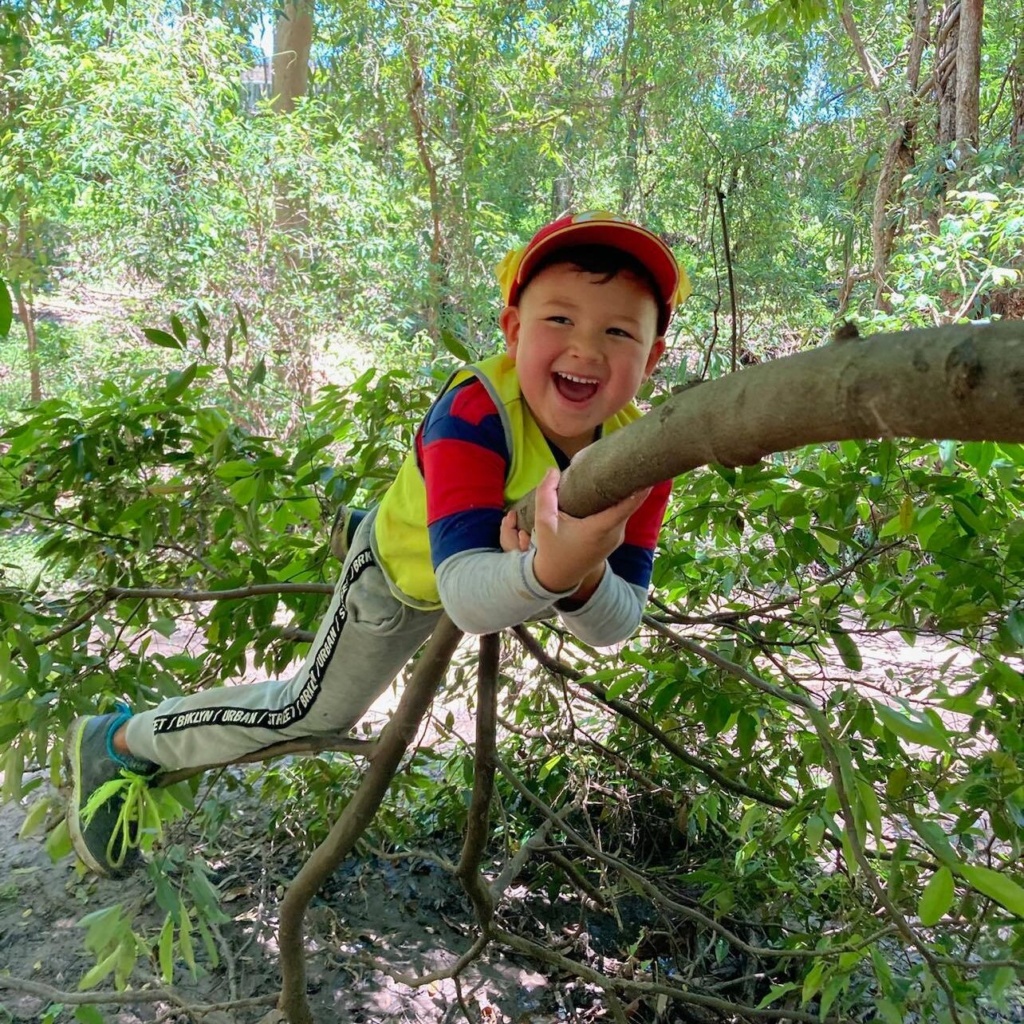
So when a child is engaging in risky play – which is so important in a child’s development as it furthers their frustration tolerance, critical thinking skills, self-confidence, resilience and so much more – it can also put the watching adult into panic mode, often triggering the phrase ‘be careful!’
But, if that adult expects the child to immediately stop what they’re doing after uttering (or shouting) those two words, they probably have another reality coming. ‘Be careful’ isn’t terribly effective because it’s vague and lacks specificity for a toddler. Saying it on repeat will likely lose any small amount of effectiveness it did carry because, well, being told to be careful isn’t any fun. Or worse, hearing that phrase could create fear and dim a child’s curiosity and sense of adventure.

As adults, we also need to think about what we mean when we say ‘be careful’. Do we want the child to stop what they’re doing? Do something differently? Slow down? Do we think they will get hurt? Every situation is different, but it’s worth thinking about the intention behind the phrase. Is it possible the child could get seriously hurt? Is what the child is doing put another child at risk? Is there something valuable that you don’t want damaged?
Perhaps rather than ‘be careful’ you say:
‘Looks fun, just watch out for your little sister!’
‘Do you hear the cars? The road is close by.’
‘Before you throw that stick, just watch for the window over there.’
‘Do you feel safe?’
‘I’m here if you need me.’
‘Maybe just slow your body down a little bit.’
‘Focus on where your feet are.’
‘Using two hands might help you hold on tighter.’
‘What’s your plan for coming back down?’
Even just asking ‘does your body feel safe?’ may give your little one a second to pause and think about what they’re doing, and perhaps change course if needed.
For adults, when they observe children participating in risky play, if they approach it with curiosity and give specific feedback that focuses on creating awareness and problem-solving skills, it helps your toddler becomes more confident in their skills, abilities, problem-solving and learning.
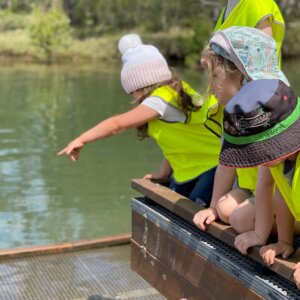
Risky play is something to be encouraged. Something happened between the time when many parents of small children were little ones themselves, to now. We may remember our parents letting us go play unsupervised, as long as we were back before dark. That play may be some of your best childhood memories. Society has become more risk-adverse in recent decades, from parents worries about kidnapping and injury, to the fear of judgement from others thinking they’re bad caregivers can drive many parents to intervene before their child can engage in risk during play. But those fears could actually be hurting children’s development by hovering over them constantly. Research shows that engaging in risky play can actually reduce the risk of injury, too. Something parents and educators can do is teach young children to risk-assess.
For example, rather than worrying about if your child is going to get a sharp bindi seed in his or her foot from running across grass barefoot, involve your child in the risk assessment. In this case, point out what a bindi weed looks like, and encourage your child to look for the weeds with shoes on before deciding if it’s a good idea to take shoes off. By assessing ‘risk’ situations together, your child will learn increased ability to hypothesize, predict, experiment and investigate, and your child will feel you trust their ability to make safe decisions. it’s all about balancing the risk with the benefits. Imagine if your child was running barefoot in the grass and you spotted bindis and yelled ‘Be careful!’ your child could be bewildered by your cry, ignore your yelling and keep going, or could possibly stop, landing perfectly on the sharp weed you want him or her to avoid.

At Little Scholars, risk assessment is a part of our programming, such as bush/bush kindy or loose parts play, where children have the opportunity to guide and direct their own learning tying in with activities that are child-led and learning is a process of discovery. Sites are pre-risk assessed by educators, and children are involved in the risk management process, guided to look out for themselves and have a group discussion about it before play.
“It’s all about setting boundaries with the children and asking them about what risks they think may be involved before they go ahead,” says Melanie, operations manager for Little Scholars. “We wouldn’t use ‘risk’ with little ones, so it may look like ‘how can we be safe when we play in this area?'”
“Play is a powerful behaviour that is often a missed agenda for many early childhood professionals. Extrinsic agenda will often lead to children being told what they should experience, as opposed to living the experience, says Susan, Little Scholars’ pedagogical leader and practice manager.
Susan highlights Lev Vygotsky’s theory of play as a lived experience.
“Too often, adults feel the need to apply an adult agenda, often with good intention, however this often has the potential to limit the actual multifarious nature of what we call play.
“As adults, we need to trust in the play process and accept that children will create situations in which they can act out emotions in ways they feel they can. When given the freedom to do so, children will demonstrate ability for exploration, imagination, and decision-making.”
Related:
These pizza scrolls are a guaranteed favourite for everyone! Whether you are after a super easy lunchbox snack, dinner for your little ones or even afternoon tea, these pizza scrolls will definitely be a favourite for kids and parents!
After getting the little ones to bed each night, you are probably just about ready to turn in yourself. It can be hard to motivate yourself to do anything more than scroll through your phone while brushing your teeth! Although this may be your own night-time ritual, spending a little bit of time away from the screen to get a few things done might make your tomorrow go a whole lot smoother.
A good morning routine starts with a little bit of preparation the night before, so here are our ideas for some little habits and rituals that might make life easier in the morning for families, and can be done before anyone hits the hay
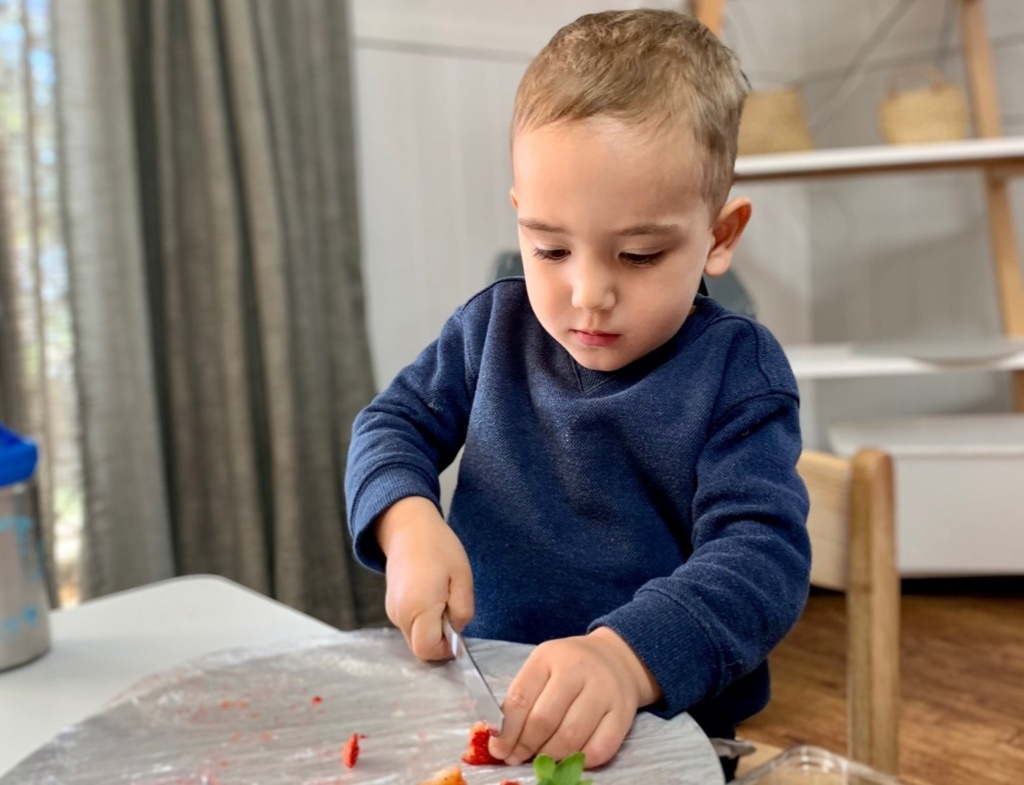
You’ve probably learned the hard way that packing lunches in the morning may make you late for work, school, or kindy. Leftovers from dinner packed in a contained whilst dinner is being served makes it nice and easy to grab in the morning, alongside some fruit and snacks. Or, get your child involved in lunch preparation! By letting them choose what fruits, veggies, and snacks they will have for lunch means they will more likely eat what’s in their lunchbox.

There’s nothing like a tidy kitchen bench to wake up to in the morning! Cleaning up the kitchen after you finish eating closes out the last meal of the night and ensures you have clean surfaces to wake up to in the morning. Run the dishwasher before you go to bed so you can wake up to a full set of dishware in the morning – no one wants to wake up to dirty dishes in the sink.
Besides the kitchen, give yourself some time to tidy-up the house before going to bed. This will make your home feel nice and fresh in the morning and everything will be much easier to find as it will be where it is supposed to be! If you’re struggling to feel motivated to tidy-up, set a timer for 15 minutes and see how much you can tidy before turning in. Include the whole family by making it a competition to see who can do the most in the time allotted. You’ll be surprised just how much you get done!
Some people might even like to prepare breakfast the night before, like soaking overnight oats or making hard-boiled eggs. Prepping breakfast muffins or mini quiches on a Sunday afternoon are great options for a ‘grab and go’ breakfast come Monday morning.
One of our favourites from the Little Scholars Summer menu is our Breakfast Cookies which are super simple to make and a delicious, easy breakfast for the morning.

A great habit to get into is choosing everyone’s outfits the night before. Have your child choose what they want to wear the next day, including socks and shoes. This saves the out-the-door battles you may face with your little ones, who are never prompt when you need them to be! Set out what you’re wearing the next day as well, and that includes getting any ironing that you need done in the evening, or when putting laundry away. This is much better than running around the house in the morning looking for your favourite shirt or work uniform! Gather any sports uniforms, workout clothes, or a spare outfit for your little one and put them in a bag next to the front door.

After getting ready for the next day, it’s important to remember the one thing that will make tomorrow go smoothly and that is getting a good night’s sleep. Set yourself a little bit of time to wind down before going to sleep. This can be whatever relaxes you, watching TV, showering (which can also save time in the morning) or reading. Try to avoid scrolling through your Instagram feed or checking your work emails. You deserve the rest!
Looking for an easy snack to make with ingredients from home? Here is one of our delicious snack items from our Little Scholars menu. We had to share this recipe as it is super easy to make and you can add whatever toppings you want! You probably already have these ingredients in your kitchen!
This recipe makes approximately six scones. You can double this recipe if you wish to freeze them for later or to feed more people!
Serve with your favourite toppings like Jam and Cream for an extra yummy treat!
Growing up involves a lot of falling, tripping, bumping into things and it can cause big feelings in our little ones when it happens.
Something as small as a scrape on the knee may not be a big deal for an adult but may be a big issue for our little ones. We want to validate their feelings by letting them know we understand they are hurt, while at the same time not making a big deal out of something that could be a minor injury.
According to research, parents who are more anxious and distressed, are less able to support their children when they get hurt. This increases the distress of the child, and that child is less likely to be distracted by toys or conversation. It’s important to pause, take a deep breath and assess the situation and see what response will be best helpful to your child. The solution could be as simple as a hug!

“I can see you hurt your finger, it looks like it hurts! Can you tell me what happened?”
Acknowledge that you can see that they hurt themselves and have them to explain how it happened. This allows them to communicate openly with you and explain how the injury occurred, even if you may have seen it happen.
“I know it hurts, I’m here for you.”
Let your child know that you feel their pain and you can understand why they are upset. It’s important that your child knows this as they will always feel comfortable coming to you in times of need.
“Ouch! I can see that your knee really hurts! Would you like to put a band-aid?”
Collaborate with your child and find out what the best solution may be to help. Ask your child if ice, a cold compress, or a band-aid will help their injury. This offers them a distraction and helps to move along the healing process.
“Take a deep breath. Can you tell me how you are feeling?”
Give your full attention as you listen to them explain why they are hurt and encourage them to take deep breaths. Get them to take through their feelings. They might be mad that they hurt themselves so they can’t continue their activity, or they may be frustrated that something didn’t go their way. Listen as they go through the motions of telling you what happened.
“Would you like to choose a band-aid? Here, you can pull the paper off.”
Distractions can help move on with the recovery process. Once you have acknowledged their pain and given them a chance to express how they feel, allow your child to help with the recovery process by opening the band-aid wrapper or applying the ice.
If your child refuses a hug or doesn’t want to talk to you, give your child a chance to regulate themselves by saying something like, “I can see you are really upset about this and it’s okay to be upset, but it doesn’t seem like what I am saying is helping you. Take some deep breaths, I’ll be right here when you need me.”
You aren’t ignoring your child or not validating their feelings, they may just need a little time on their own because we all do sometimes! The main thing we want our children to know when they are hurt, is that they are safe with us, we understand how they are feeling and that we are here to care for them.
Take the time to tell them why they can’t. Statements such as “Because I said so” or “Because I told you so” are not efficient in this situation as you aren’t giving them an appropriate reason instead of just saying no to children. This is important as it lets them come to peace with your decision, but also acknowledge their feelings as well.
“It’s expected to be disappointed, I would feel disappointed too.”
If they are angry or frustrated, they might need to expel some energy outside for a few minutes, take some deep breaths, do some colouring in to calm down or maybe even have a rest.
Once the boundaries have been set and your child is aware of your feelings, we also want to offer choices. For example, if they aren’t wanting to get dressed for the day, give them a few options and ask them to choose what they would like to wear. This gives your child a sense of independence and control in the situation.
We want to remind our children of their choices when they are challenging your boundaries. It’s important to keep consistent and follow through with expectations that have been made clear to them. Follow through with your consequences and reinforce their behaviour when they do respect your choice.
Modelling an appropriate behaviour can also be effective. For example, if they are patting the dog a little too aggressively, show them what to do by patting the dog softly and telling them what the dog likes.
If you are stressed in the situation, let your child know. Tell them “I am going outside for some fresh air for a few minutes, I’ll be back when I’m feeling better.” This shows your child how to respect other people’s boundaries as well as their own.
Learn how our team at Little Scholars handles saying no the children and other areas of concern. Contact us today.

Little Scholars Educator Holly says “Instead of saying “no” to running inside, we often say “Stop. What feet do we use inside?” Or “Do you think what you’re doing is a good choice?”.
If a child is jumping off furniture we get down to their level and ask them “What is the chair used for?” “A chair is for sitting on.”
Sometimes we have children who want to keep the tap on in the bathroom just to experiment with the water and its cause and effect. During these times we ask the children “What are the taps used for? “They are for washing our hands.” “I understand you might want to play with water and feel different textures, so how about we set up a fun water experience instead?” Something more appropriate and positive to redirect.
Empathising with children during challenging behaviors is so important. Children want to be heard and understood like us adults do. Providing children with appropriate suggestions and redirection is more positive and beneficial than just saying “no” all the time. It doesn’t always allow the children to critically think as to why are they doing what they’re doing and what they can do instead.
Let us hold your hand and help looking for a child care centre. Leave your details with us and we’ll be in contact to arrange a time for a ‘Campus Tour’ and we will answer any questions you might have!
"*" indicates required fields
Let us hold your hand and help looking for a child care centre. Leave your details with us and we’ll be in contact to arrange a time for a ‘Campus Tour’ and we will answer any questions you might have!
"*" indicates required fields
Fill in the form to join your local Pram Pals mums and bubs walk
