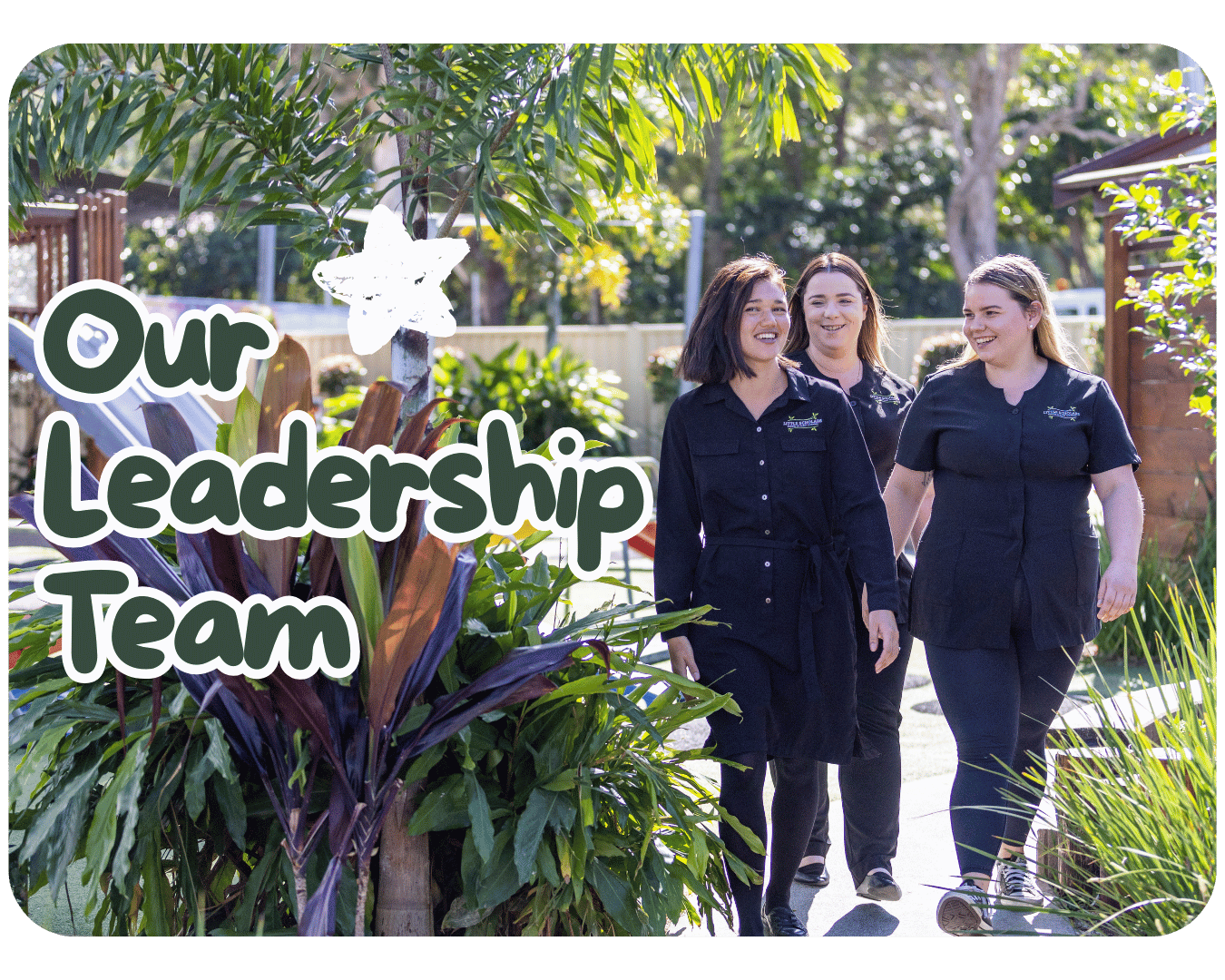
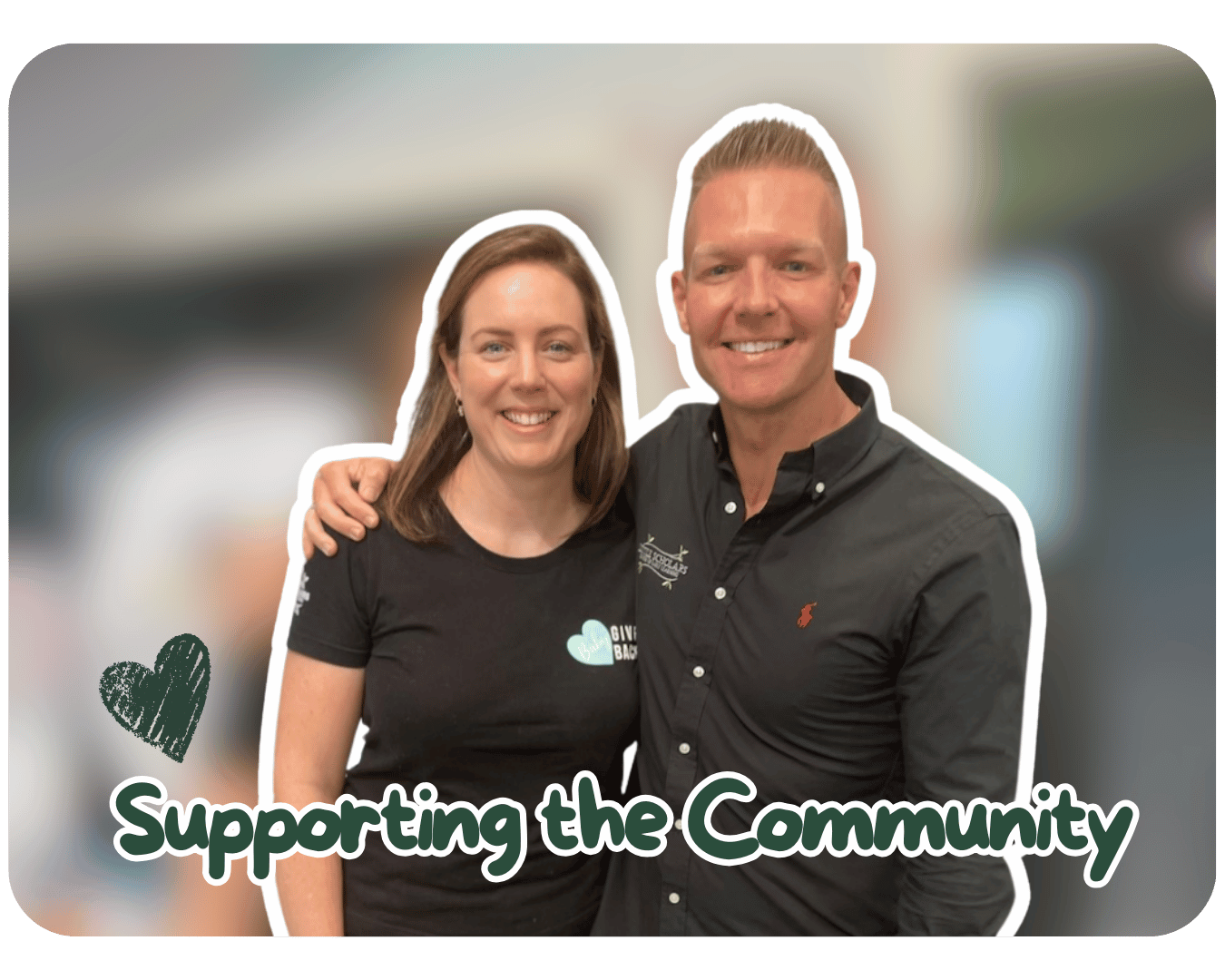
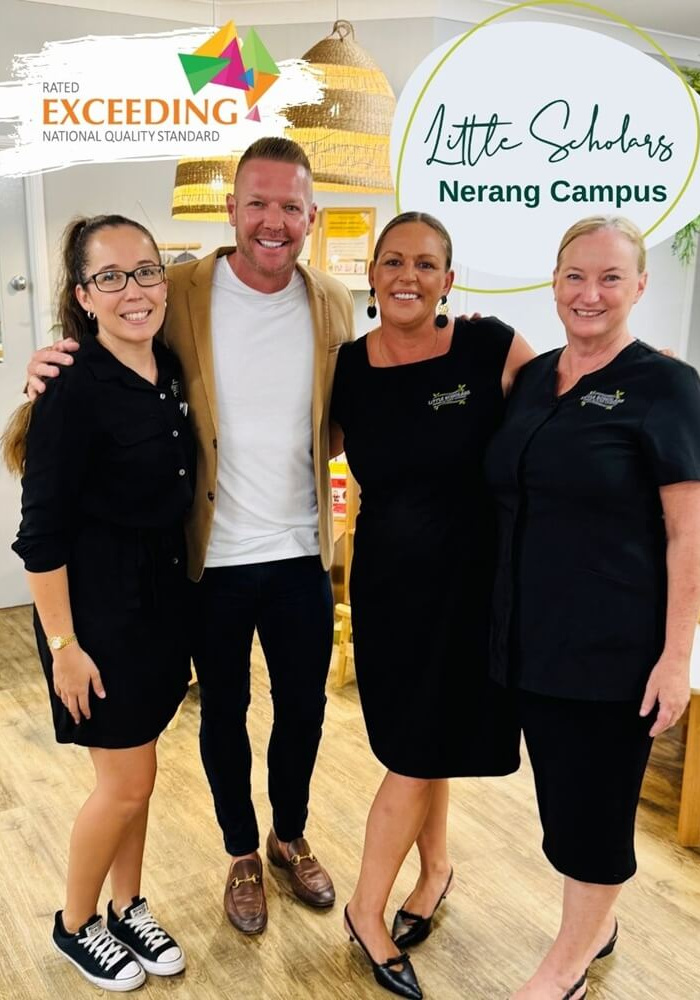
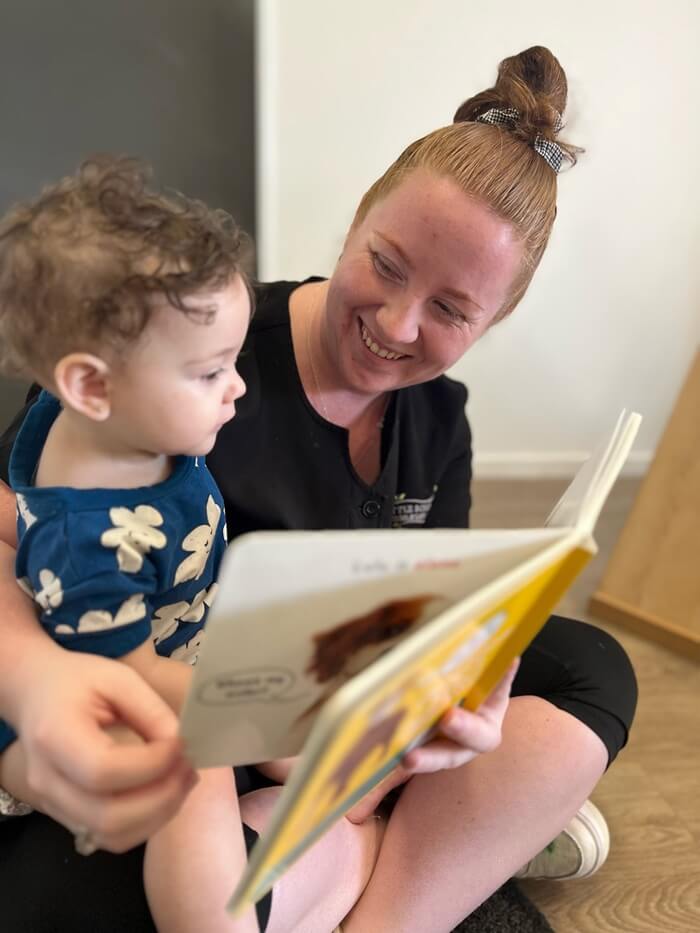
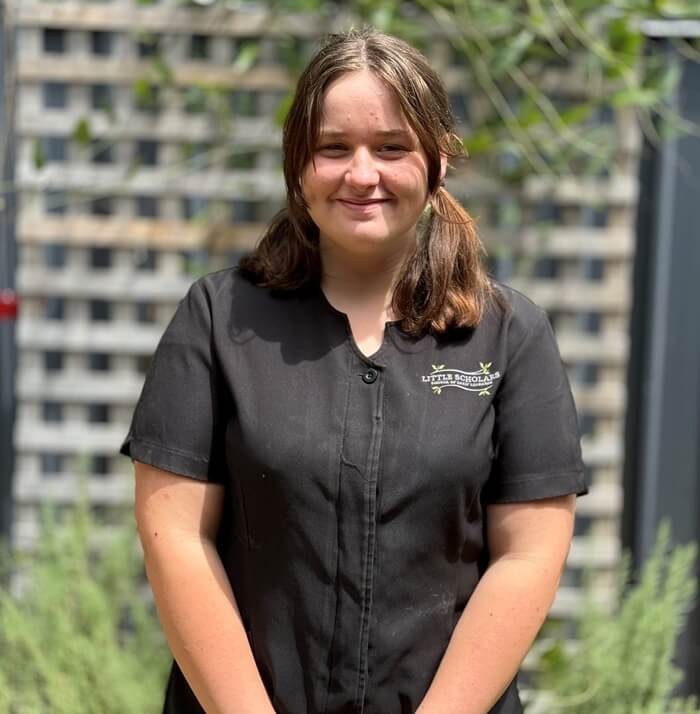
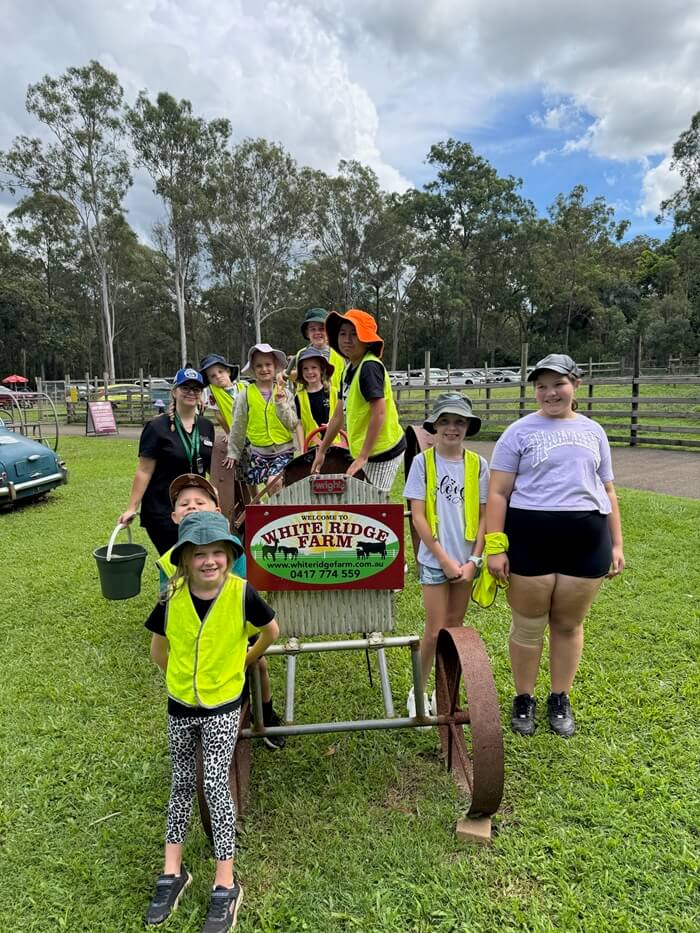
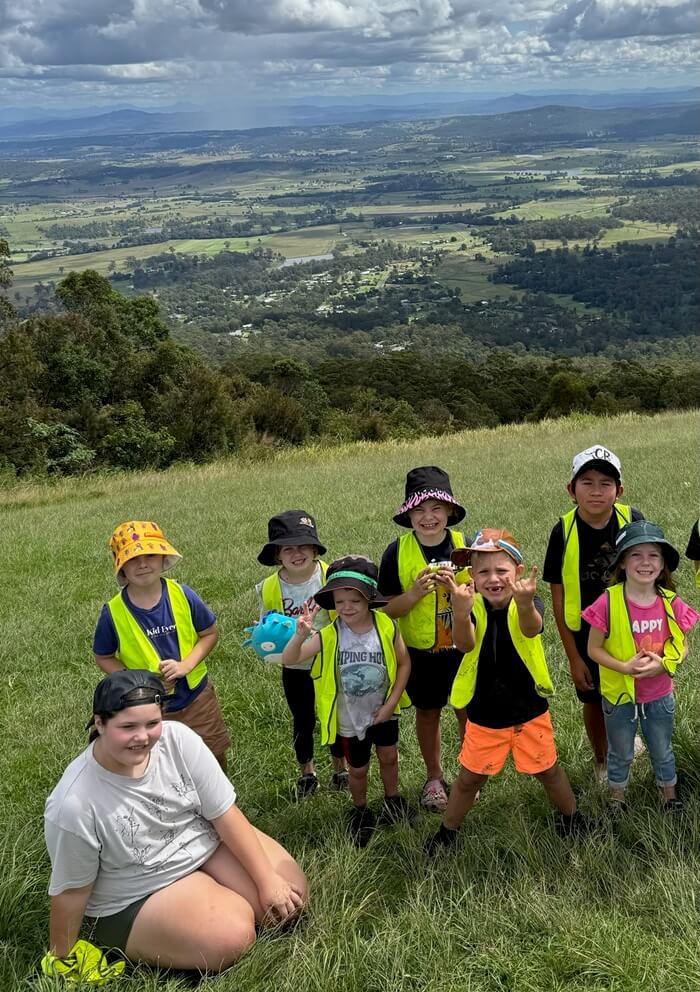
At Little Scholars School of Early Learning, we are incredibly proud of the passionate, dedicated educators who bring our values to life every single day. Our annual Pillar Awards recognise team members who truly embody our core pillars: Learn, Grow, Inspire, and Contribute.
In 2026, we are thrilled to celebrate four outstanding individuals whose commitment, heart, and impact have made a lasting difference across our communities.
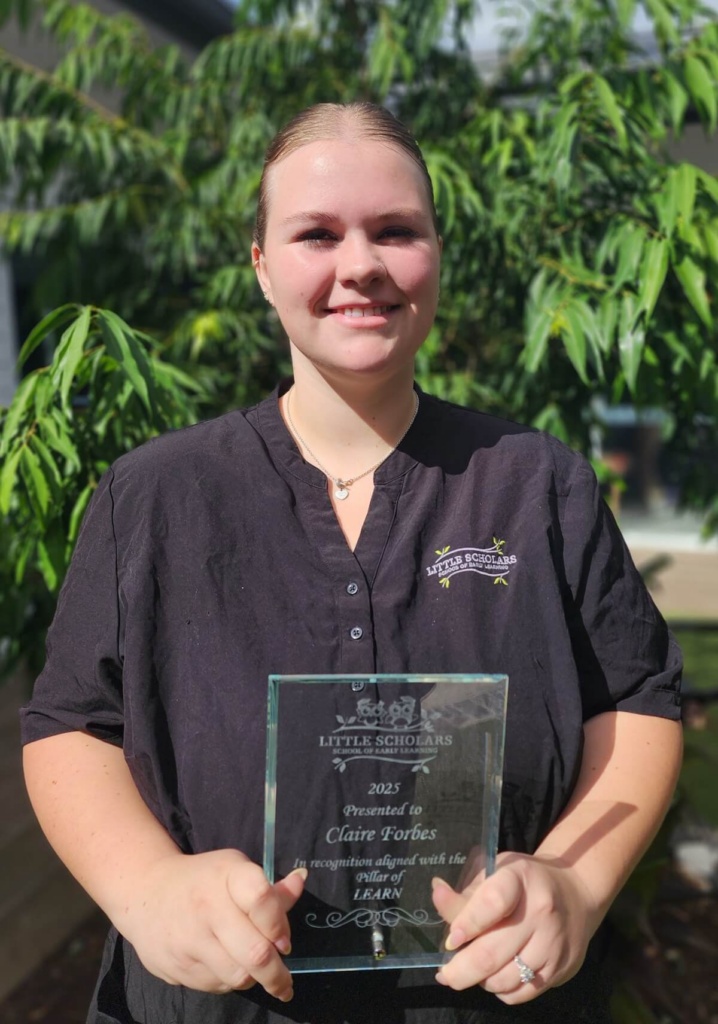
Claire Forbes exemplifies what it means to be a lifelong learner. Her commitment to professional growth is evident in everything she does—actively seeking opportunities to expand her knowledge, reflecting on her practice, and embracing feedback with openness and purpose.
Claire consistently applies new learning to enhance outcomes for children, demonstrating curiosity, initiative, and a genuine passion for best practice. Beyond her own growth, she generously shares her knowledge with colleagues, fostering a culture of continuous learning within her team.
Her dedication not only strengthens her own practice but creates a ripple effect, positively impacting both her peers and the children in her care.
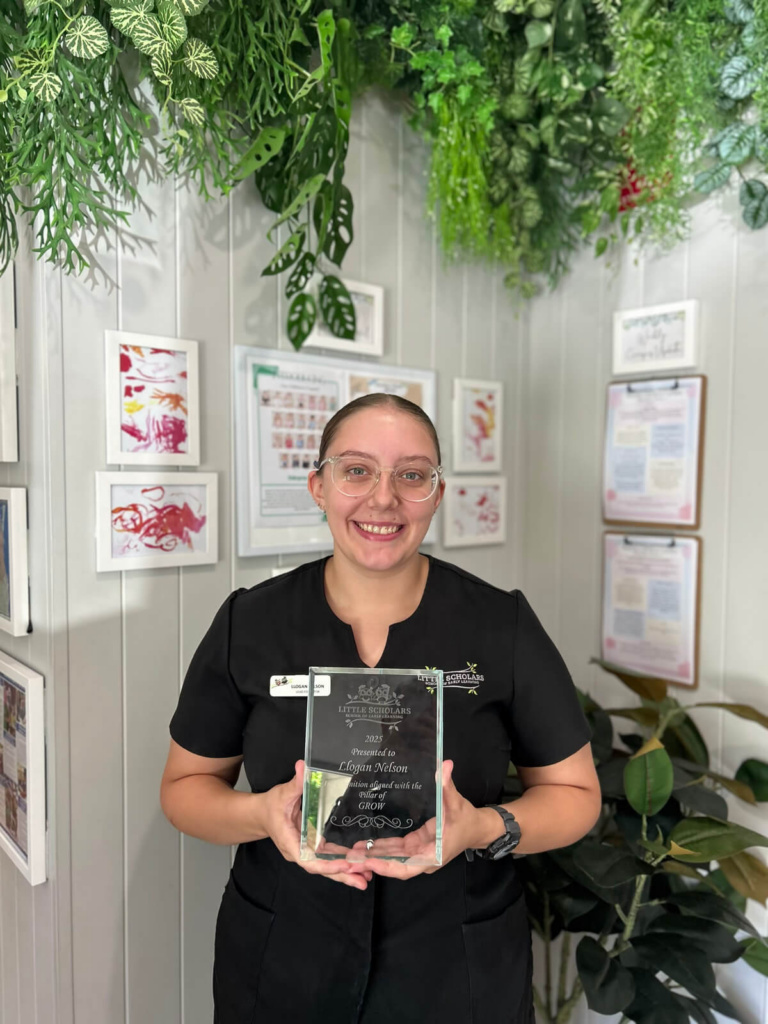
Llogan Nelson’s journey over the past year is a powerful example of growth in action. Stepping into the role of Lead Educator in the Senior Kindy studio, she embraced a challenging environment and transformed it with determination and resilience.
Faced with behavioural, team, and environmental challenges, Llogan actively sought feedback, welcomed guidance, and consistently looked for ways to improve. Her commitment to implementing strategies discussed in behaviour meetings led to meaningful and lasting change within the studio.
Now transitioning into Kindergarten, Llogan continues to build on this success—working collaboratively to ensure children experience a smooth, positive transition. Her willingness to learn, adapt, and lead with intention truly reflects the spirit of the Grow pillar.
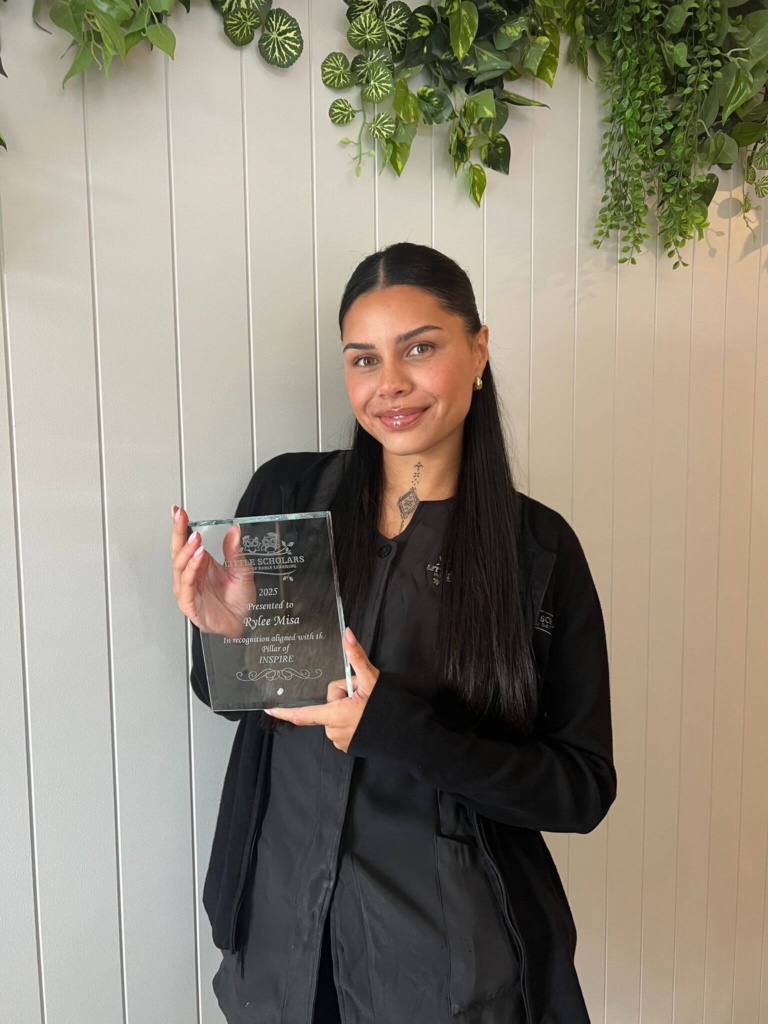
Rylee Misa brings creativity, energy, and heart into everything she creates. As a content creator and events coordinator, she goes above and beyond to design experiences that are meaningful, memorable, and inspiring for children and families alike.
Rylee holds herself to a high standard, always striving to create environments and events that feel thoughtful, engaging, and special. What truly sets her apart is her ability to listen—ensuring the voices of children, families, and her team are reflected in every experience.
Her passion and attention to detail help shape vibrant learning environments where our community feels seen, included, and celebrated. Rylee’s work continues to inspire not only those around her, but the experiences we create as a service.
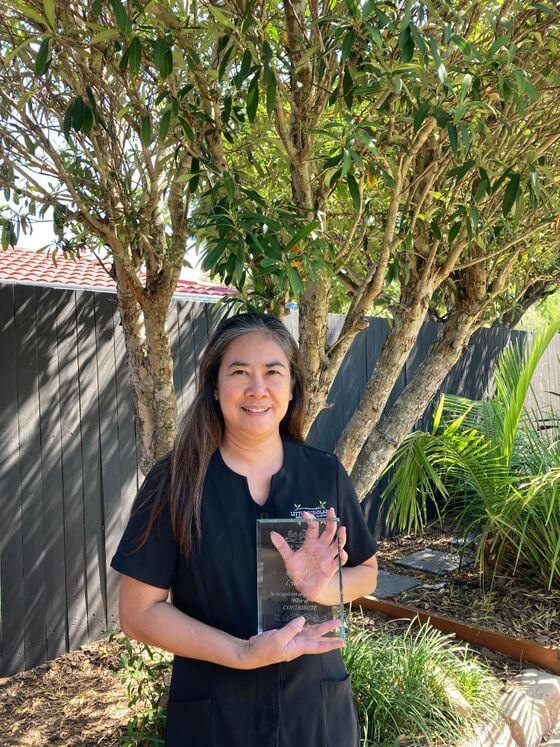
With nearly a decade of dedicated service, Lyle Bala is the heart of contribution within her centre community. Approaching her 10-year milestone, Lyle continues to go above and beyond for children, families, and her team.
She is always ready to lend a helping hand, never missing an opportunity to support events or step in where needed. Lyle takes immense pride in creating positive, welcoming experiences for families, and her warmth and enthusiasm are felt by everyone she meets.
Her supportive nature helps families feel valued and connected, while her energy and care make each day brighter for the children. Lyle is a truly cherished member of the Little Scholars community.
Celebrating Excellence
Each of our 2026 Pillar Award winners represents the very best of Little Scholars School of Early Learning. Through their dedication, passion, and commitment to our values, they help create environments where children, families, and educators can thrive.
We are incredibly grateful for the impact they make every day—and we are so proud to celebrate their achievements.
Congratulations Claire, Llogan, Rylee, and Lyle!
Join Our Team at Little Scholars
Inspired by our incredible educators? At Little Scholars School of Early Learning, we’re always looking for passionate, dedicated individuals who want to make a meaningful impact in the lives of children and families.
Discover what makes our team so special and explore current opportunities here:
The 3-Day Guarantee Explained. What Actually Changes for Gold Coast Families in 2026.
A rule change that came into effect on 5 January 2026 means Gold Coast families can access subsidised childcare three days a week — without proving they work, study, or volunteer a single hour.
5 min read
Updated April 2026
72subsidised hours per fortnight — guaranteed
~$39est. weekly cost for 3 days (family on $80K, Gold Coast avg fee)
$17K+potential annual saving vs. full fees, same family
If you've been putting off childcare because the cost felt out of reach — or because you weren't working enough hours to qualify for a meaningful subsidy — this one's worth reading carefully. The 3-Day Guarantee is the biggest structural shift to childcare subsidies since 2018. It doesn't just tweak the numbers. It changes who can access affordable care entirely.
What is the 3-Day Guarantee, exactly?
Put simply: from 5 January 2026, every family that is eligible for the Child Care Subsidy (CCS) is guaranteed a minimum of 72 subsidised hours of childcare per fortnight — no questions asked about whether you work, study, train, or volunteer.
Before this change, the Activity Test determined how many subsidised hours you could access. Families who weren't working enough were capped at just 24 subsidised hours per fortnight — three days worth of care, but paid at rates with minimal subsidy beyond that lower tier.
The 3-Day Guarantee removes that floor for the first 72 hours. You get them automatically. If you work more, your entitlement can still increase above that — but those three days are locked in regardless.
Play-based learning at Little Scholars — where every day builds something that lasts.
The key change in one sentence
Before 5 January 2026, low-activity families could only access 24 subsidised hours per fortnight. Now every eligible family gets at least 72 — triple the previous minimum.
Who qualifies?
The 3-Day Guarantee applies to you if you're already eligible for the Child Care Subsidy. That means meeting the standard CCS criteria:
Australian residency
You or your child must be an Australian citizen, permanent resident, or holder of a specified visa.
Immunisation
Your child must be up to date on the Australian Immunisation Register (or hold an approved exemption).
Approved care service
Your child attends an approved provider like Little Scholars. All 17 of our campuses qualify.
If you're already receiving CCS, the 3-Day Guarantee applied to your account automatically from 5 January 2026 — no new application required. If you haven't yet applied for CCS, you'll need to do that through myGov before the subsidy kicks in.
What does it actually cost? The Gold Coast numbers.
The Gold Coast average daily childcare fee sits at around $131 per day, based on CareforKids data. Here's what three days per week looks like at different income levels under 2025–26 CCS rates.
Household Income
CCS Rate
Govt pays (per day)
You pay (per day)
Your cost: 3 days/wk
Up to $83,280
90%
~$117.90
~$13.10
~$39/wk
$100,000
~80%
~$104.80
~$26.20
~$79/wk
$130,000
~65%
~$85.15
~$45.85
~$138/wk
$160,000
~50%
~$65.50
~$65.50
~$197/wk
Above $530,000
0%
$0
$131.00
$393/wk
Estimates based on Gold Coast avg daily fee of $131 and 2025–26 CCS rates. Get a personalised figure → use our CCS Calculator
More than subsidy. It's access.
For a family on $80,000 choosing three days of care, the difference between the old system and the 3-Day Guarantee can be more than $17,000 per year in subsidised hours they previously couldn't access without meeting the Activity Test.
That's the part worth sitting with. Not just a reduction in what you pay per day — but access to days of care that simply weren't available to you before, at meaningful subsidy rates.
What happens if you do work or study?
The Activity Test hasn't been scrapped — it's still relevant if you want more than 72 hours of subsidised care per fortnight. Think of the 3-Day Guarantee as a floor, not a ceiling.
Activity Test tiers from 5 January 2026
0–7 hours of activity per fortnight → 72 subsidised hours guaranteed (the 3-Day Guarantee)
8–16 hours per fortnight → up to 72 subsidised hours (the guarantee covers this tier fully)
17–47 hours per fortnight → up to 100 subsidised hours per fortnight
48+ hours per fortnight → up to 120 subsidised hours per fortnight
If you're working full-time, the Activity Test still works in your favour for additional hours. But if you're between jobs, studying part-time, caring for another family member, or simply at home with your child — the 3-Day Guarantee means childcare is now genuinely accessible without proving your worth to a government system first.
What do Gold Coast families need to do right now?
If you're already on CCS:
Nothing. The 3-Day Guarantee applied to your account automatically from 5 January 2026. No re-application or re-confirmation needed.
If you haven't applied for CCS yet:
Apply through myGov as soon as possible. Once approved, you'll have access to the guaranteed 72 hours immediately. Our team can walk you through the process — just get in touch.
If you're currently paying full fees because you weren't meeting the Activity Test, it's worth reviewing your subsidy entitlement now. Many Gold Coast families will find they're eligible for significantly more support than they assumed.
Use our CCS Calculator to get an estimate based on your household income and the number of days you're considering. It takes about 60 seconds.
Common questions from Gold Coast families
Does the 3-Day Guarantee apply to all childcare types?
It applies to centre-based daycare — the kind offered at Little Scholars. It does not currently apply to family daycare or in-home care in the same way. Always check with Services Australia for the most current eligibility rules.
My child is only two — do they qualify?
Yes. The 3-Day Guarantee applies from birth to the age your child starts school, as long as you meet the standard CCS eligibility criteria. The child's age is not a limiting factor for the guarantee itself.
Can I split the 72 hours across different days?
The 72 hours is a per-fortnight entitlement that applies to your family regardless of which approved service your child attends. You can use it across up to three days per week — or spread it differently depending on your session hours.
Is the 3-Day Guarantee permanent?
It is government policy as of January 2026. Like all subsidy settings, it could change in future federal budgets. We'll keep this page updated as any changes are announced.
Do Little Scholars campuses have availability?
Availability varies by campus and age group. With 17 campuses across the Gold Coast, Brisbane, Ipswich, and Redland Bay, we'd encourage you to enquire early — especially for the under-2 rooms. Contact your nearest campus →
Little Scholars School of Early Learning
Find out what the 3-Day Guarantee means for your family.
Our team can walk you through exactly what you're entitled to — and check availability across our campuses on the Gold Coast, Brisbane, Ipswich, and Redland Bay.
17 campuses across South East Queensland · 1300 896 139
Subsidy figures based on 2025–26 CCS rates published by Services Australia and the Department of Education. Gold Coast average daily fee of $131 sourced from CareforKids.com.au. Out-of-pocket estimates are indicative only and based on the hourly rate cap; actual costs may vary depending on your provider's fees and individual circumstances. Always verify your CCS entitlement via Services Australia or a registered CCS adviser.
Childcare costs are one of the most searched — and most misunderstood — topics for families with young children in Redland Bay. The headline fee feels scary. The subsidy system feels complicated. And most of the information out there is either national averages that don't apply locally, or government fact sheets that need a spreadsheet to decode. This post does the maths for you — using real Redland Bay fees, real 2025–26 CCS rates, and real out-of-pocket costs across a range of income levels. No jargon. No guesswork.
1What childcare actually costs in Redland Bay in 2026.
Based on data from CareforKids and Toddle, the average daily fee for long day care in Redland Bay sits at $148 per day for a standard 10-hour session in 2026 — $149/day for babies, $148 for toddlers, and $147 for kindergarten-age children.
That's higher than the Queensland state average of $131/day, and above the Gold Coast and Ipswich averages too. Fewer centres serving a growing population is the main driver. It's part of why Little Scholars runs two campuses in Redland Bay — giving local families more than one option close to home.
How Redland Bay compares — average daily fee, SEQ 2026
Redland Bay
$148/day
Brisbane metro
$139/day
Gold Coast
$131/day
Ipswich
$127/day
Source: CareforKids, Toddle (2026). QLD state average ~$131/day. Individual centre fees vary.
2The one thing most Redland Bay families don't realise about their subsidy.
The Child Care Subsidy doesn't apply to your full daily fee. It applies to whichever is lower: your actual fee, or the government's CCS hourly rate cap of $14.63/hr for 2025–26. On a standard 10-hour day that cap works out to $146.30.
Redland Bay's average of $148/day is $14.80/hr — $0.17 above the cap. That means every Redland Bay family pays a fixed above-cap gap of $1.70 per day that no level of subsidy can cover. On three days a week that's $5.10 per week, or $255 per year. It won't break your budget, but it's worth building into your numbers.
In plain English: Your CCS is calculated on $14.63/hr, not $14.80/hr. The $0.17 difference — $1.70/day — comes out of your pocket at every income level. Want to see your exact weekly cost? Use our free CCS Calculator →
3Your CCS percentage — how it's calculated.
Your subsidy rate is determined by your combined household adjusted taxable income. It starts at 90% for families earning up to $85,279, decreasing by 1% for every additional $5,000 earned above that threshold.
Family income
CCS rate
CCS per hour
Gap per hour
Daily out-of-pocket
Up to $85,279
90%
$13.17
$1.63
$18.00
$120,000
83%
$12.14
$2.66
$28.30
$140,000
79%
$11.56
$3.24
$34.10
$160,000
75%
$10.97
$3.83
$40.00
$180,000
71%
$10.39
$4.41
$45.80
$220,000
63%
$9.22
$5.58
$57.50
Gap per hour = ($14.63 – CCS per hour) + $0.17 above-cap. Multiply by 10 for daily gap. 2025–26 CCS rates, effective 7 July 2025. Your exact rate depends on your confirmed income estimate with Services Australia. Calculate yours here.
4What four real Redland Bay families pay each week at Little Scholars.
Here's what different household incomes actually translate to in weekly childcare costs — based on three days a week at Little Scholars Redland Bay, using the $148/day average and 2025–26 CCS rates.
Family A — $80,000
One income, or returning to work part-time
CCS rate90%
Government pays per day$130.00
Your daily gap fee$18.00
You pay — 3 days/week~$54
Family B — $120,000
Dual income, first child starting care
CCS rate83%
Government pays per day$119.70
Your daily gap fee$28.30
You pay — 3 days/week~$85
Family C — $140,000
Two professionals, planning for kindy next year
CCS rate79%
Government pays per day$113.90
Your daily gap fee$34.10
You pay — 3 days/week~$102
Family D — $180,000
Higher-earning household, two incomes
CCS rate71%
Government pays per day$102.20
Your daily gap fee$45.80
You pay — 3 days/week~$137
Based on $148/day at Little Scholars Redland Bay. CCS applied to the $14.63/hr hourly rate cap; above-cap gap of $1.70/day is included in all daily gap figures. Before 5% annual withholding reconciliation. Indicative only. Get your exact figure here.
At 90% CCS, the government covers $130 of your $148 daily fee. Three days a week at Little Scholars costs a family on $80,000 around $54 — not $444.
5How days and income combine — full weekly reference.
Whether you're looking at two days around the school run or five full days while you return to work, here's the complete picture across income levels for Little Scholars Redland Bay.
Family income
CCS %
2 days/wk
3 days/wk
4 days/wk
5 days/wk
$80,000
90%
~$36
~$54
~$72
~$90
$100,000
87%
~$41
~$62
~$82
~$103
$120,000
83%
~$57
~$85
~$113
~$142
$140,000
79%
~$68
~$102
~$137
~$171
$160,000
75%
~$80
~$120
~$160
~$200
$180,000
71%
~$92
~$137
~$183
~$229
$220,000
63%
~$115
~$173
~$230
~$288
All figures are weekly out-of-pocket after CCS, based on $148/day and the 2025–26 $14.63/hr rate cap. 5 days/week requires 48+ hours/fortnight of recognised participation (work, study, volunteering). Indicative only.
6Second child under 5? Your subsidy rate goes up.
If you have a second child aged 5 or under enrolled at Little Scholars, they attract a higher CCS rate of up to 95% for families earning under $143,273. This applies whether both children are at the same campus or different ones.
At $148/day and 95% CCS, your second child's daily gap drops to roughly $9.10 — about $27 a week for three days. If you're weighing up the cost of dual enrolment, that number is usually the one that changes people's minds.
95%Max CCS for a second child under 5 — families earning under $143,273
~$27/wkOut-of-pocket for second child, 3 days at Little Scholars ($148/day avg)
7If your child turns 4 this year, Free Kindy changes the numbers entirely.
Queensland's Free Kindy program provides eligible children with 15 hours per week of fee-free kindergarten for up to 40 weeks a year. For 2026, that's children born between 1 July 2021 and 30 June 2022. Both Little Scholars campuses in Redland Bay are approved providers — meaning your child can access Free Kindy at Little Scholars as part of their normal day.
In practice, CCS is applied first to reduce your gap fee. Free Kindy then covers a significant portion of what's left during the 15 kindy program hours each week. For families on lower-to-mid incomes, combining both programs can bring the weekly cost of a two-day kindy enrolment very close to zero during term.
Free Kindy is not income-tested. Even families who earn too much to qualify for CCS still receive the Queensland Government's Free Kindy benefit — if your child is the right age, you're eligible regardless of household income. See how Free Kindy works at Little Scholars →
8What's included in the fee at Little Scholars Redland Bay.
When you're comparing childcare fees, it's worth knowing what's actually included. At Little Scholars, your daily fee covers access to our curriculum — a play-based, educator-led program delivered across every room from Nursery and Infant Care through Toddler, Junior and Senior Kindy, and Kindergarten. It's built on the Early Years Learning Framework and delivered by qualified early childhood teachers and educators.
Redland Bay children also have access to our Outdoor Explorers (Bush Kinder) program — nature-based learning that takes the classroom outside and builds confidence, curiosity, and resilience in young children. It's one of the things families tell us they didn't expect and end up valuing most.
Little Scholars is family-owned, with 17 campuses across South East Queensland. The people making decisions about how your child's day runs are the same people who started this. That matters when things come up — and they always do when you've got a toddler.
9Two campuses in Redland Bay. Book a tour at either.
Little Scholars has two campuses serving Redland Bay families — one on Main Street and one on Collins Street. Both run the same programs. Book a tour at whichever works better for your commute or school run.
10The cost is sorted. Getting a place is the harder part.
Redland Bay has grown by over 2,000 residents since the 2021 Census, adding approximately 53 more children under five to the local demand pool. Current data shows around 1.8 children under five per licensed childcare place in the area — supply is tight and it's not getting looser.
Knowing what you'll pay matters. But honestly, knowing there's a place available matters more. Families who join Little Scholars' Redland Bay waitlists often do so six months to a year in advance — some before their baby is born. The subsidy paperwork takes an afternoon. Finding the right centre with an actual vacancy takes a lot longer.
If this post has made the cost feel more manageable than you expected, the best next step is to book a tour at one of our Redland Bay campuses, see the space, meet the team, and get your name down. The numbers will follow.
11The short version.
Redland Bay's average daily fee is $148/day— above the SEQ average, reflecting limited local supply. Little Scholars has two campuses in the area.
Because $148/day is above the CCS hourly rate cap ($14.63/hr), all families pay a fixed above-cap gap of ~$1.70/day regardless of their income or subsidy rate.
At 90% CCS (incomes under $85,279), three days a week at Little Scholars costs approximately $54 per week — not $444.
A second child under 5 attracts up to 95% CCS for families earning under $143,273 — their daily gap drops to around $9.10.
Eligible 4-year-olds can access Free Kindy at Little Scholar — stacking on top of CCS to dramatically reduce term-time costs. Not income-tested.
Supply in Redland Bay is tight. Book a tour before you finalise anything else.
📍 What Childcare Really Costs — Little Scholars South East Queensland Series
Use our CCS Calculator to see your real weekly cost — then come and see Little Scholars Redland Bay for yourself. Both campuses have a Book a Tour form right on the page.
Little Scholars School of Early Learning — 17 campuses across Gold Coast, Brisbane, Ipswich & Redland Bay
Average daily fee of $148 sourced from CareforKids.com.au and Toddle (2026). CCS rates and hourly rate cap ($14.63/hr) sourced from the Department of Education and Services Australia (2025–26). Weekly out-of-pocket figures are indicative only, before the 5% annual CCS withholding reconciliation, and do not constitute financial or legal advice. Individual centre fees vary — contact Little Scholars directly for current pricing.
As we wrap up another incredible year at Little Scholars School of Early Learning, we’re taking a moment to reflect on all the wonderful moments that made 2025 so special.
From new beginnings to community milestones, this year has been filled with learning, laughter, and a whole lot of heart. Here’s a month-by-month look back at our highlights from across our Little Scholars campuses.
January – A New Beginning
We started the year with an exciting milestone — the opening of Little Scholars Deception Bay North! Our newest campus quickly became a vibrant learning community, filled with curiosity, creativity, and new friendships.
February – Community & Excellence
February was a big month of achievement and giving back.
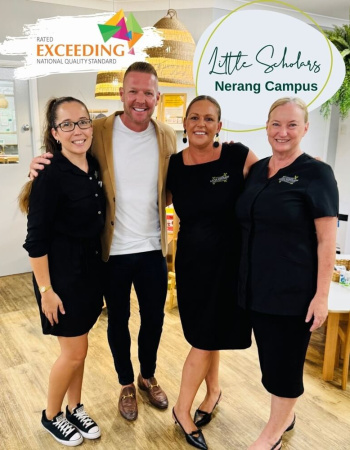
Little Scholars Nerang received an Exceeding rating in their Assessment & Rating visit — a true testament to our educators’ commitment to quality and care.
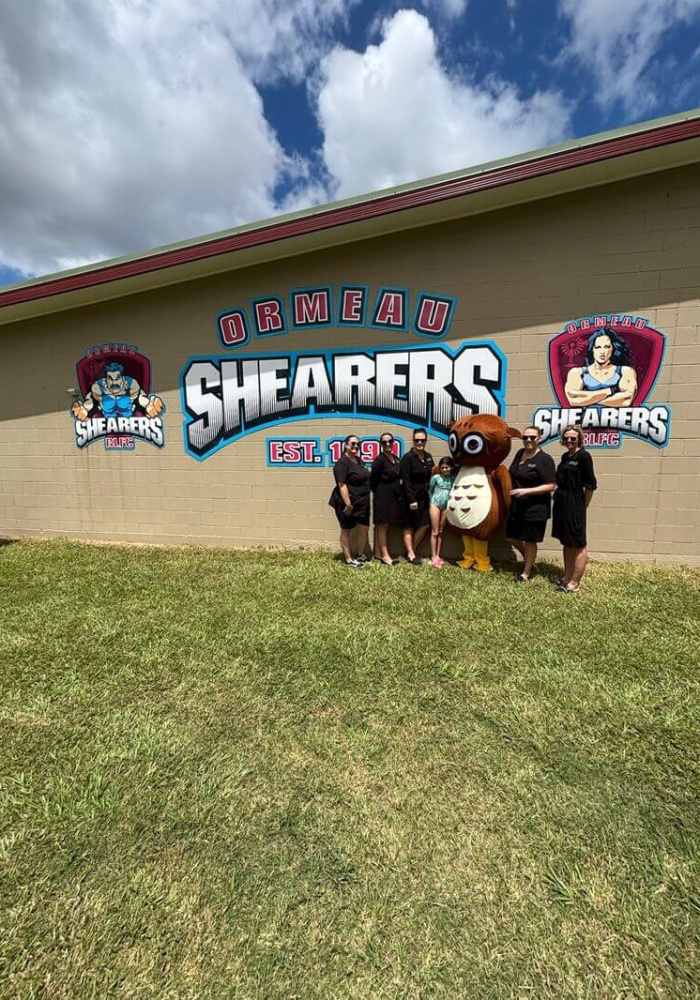
Little Scholars Ormeau Village proudly supported the Ormeau Shearers Rugby League sign-on day, connecting with local families and community spirit.
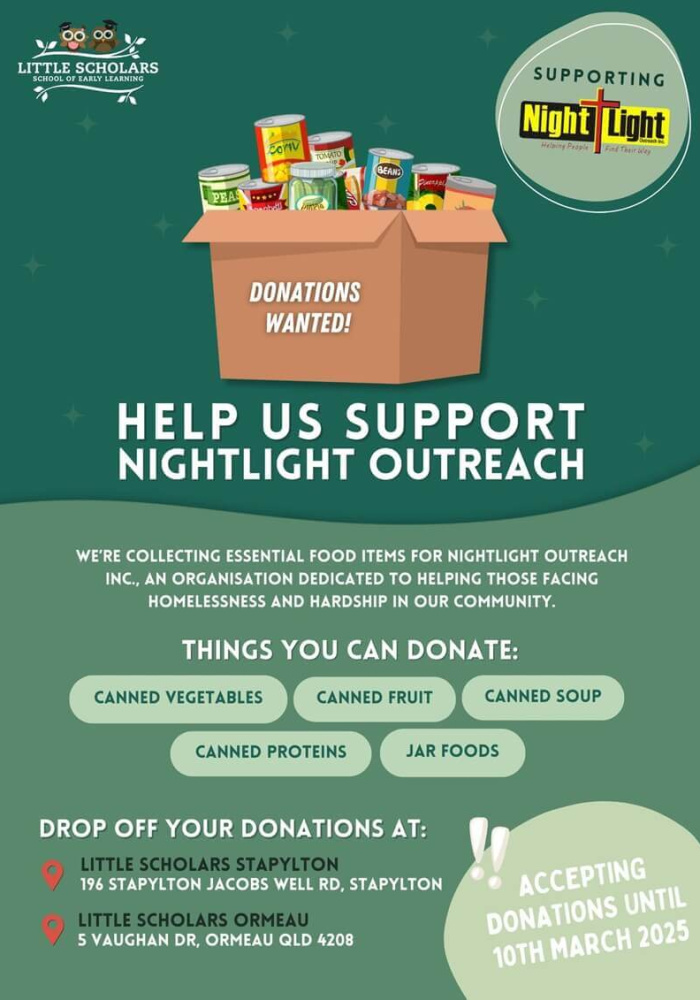
Our North Gold Coast campuses, we came together to support Nightlight Outreach, collecting essential food items to help those facing homelessness and hardship
March – Connection & Collaboration
March brought together our families and the community for our beloved annual Little Scholars Camp Out!
Families enjoyed an evening under the stars, where our children and families enjoyed BBQ’s and roasting marshmallows, some were treated to reptile shows, face painting and even fire twirlers.
We also had a special meeting with our Children’s Rights Council in our Nerang campus, empowering our little scholars to have a voice in shaping their learning environments.
April – Learning & Growth (plus some holiday treats!)
April was a month dedicated to professional growth and shared learning. Our annual Learning & Development Day brought together hundreds of educators and leaders from all 17 of our Little Scholars campuses for a weekend of collaboration and inspiration.
We also celebrated Easter across our campuses. Our studios were filled with joy, crafts, and Easter themed activities
May – Milestones & Moments of Gratitude
May was a month full of celebrations, achievements and professional development:
Our Ashmore team participated in Conversational Reading Professional Development, enhancing their expertise in language-rich learning.
Many of our Little Scholars support office team members attended the Baby Give Back High Tea, raising funds and awareness for local families in need.
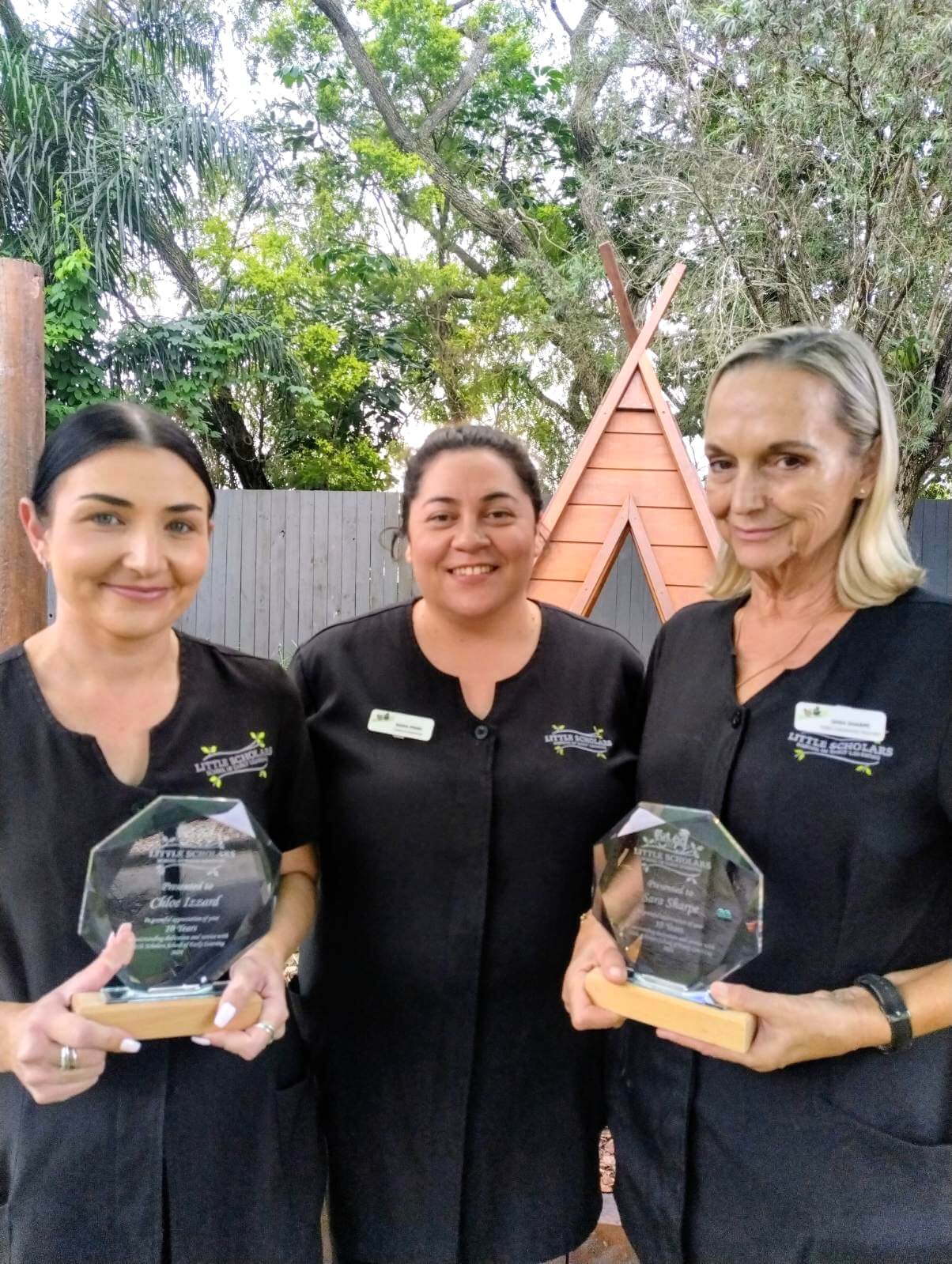
Three of our long-standing team members — Chloe, Sara, and Skye— were honoured with 10-year plaques. Each member joined us as part of the founding team at Little Scholars Yatala.
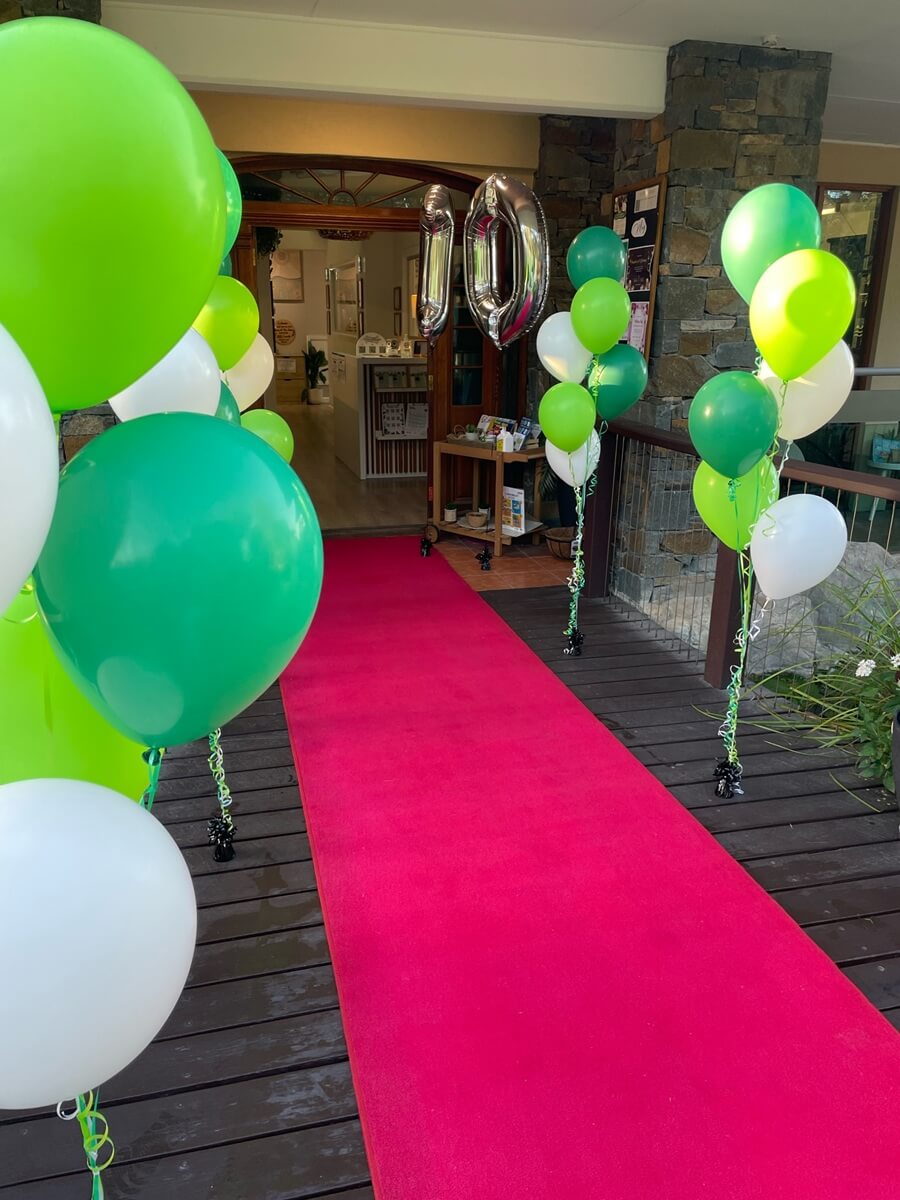
Our Stapylton campus celebrated a massive milestone, its 10th birthday!
We ended the month with heart-warming Mother’s Day celebrations across all campuses.
June – Expanding Our Reach
In June, we proudly opened Little Scholars Karalee, our very first centre in the Ipswich community! This opening marked a new chapter in our mission to provide exceptional early learning experiences across South East Queensland.
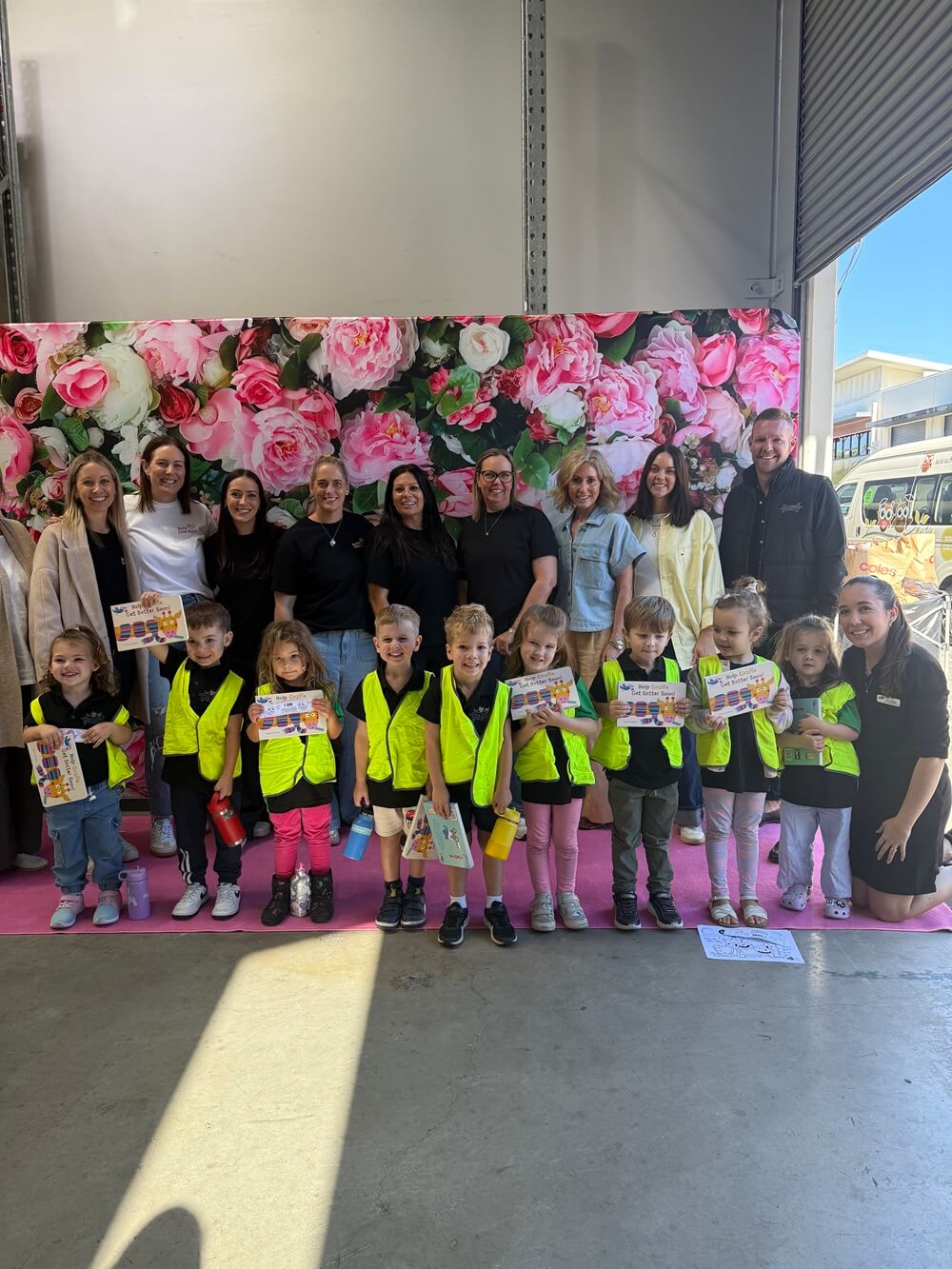
Our team also raised vital funds for Baby Give Back Giving Day, continuing our strong commitment to community support. We exceeded last years fundraising efforts, and raised over a massive $75,000! Our campuses really put the FUN in fundraising. Each centre came together with some creative fundraising events, from paint & sip and “pie in the face” events to the traditional bake sales and raffles.
July – Celebrating Culture & Connection
July was a month of culture, learning, and community.
We celebrated NAIDOC Week with special activities, including a visit from the Nerang children to our Support Office, where they gifted Jae beautiful handmade clapsticks — a symbol of unity and respect.
Families and educators came together for our Community Picnic in the Park, a day of connection, laughter, and togetherness.
August – Curiosity & Celebration
August was a massive month bursting with imagination and discovery:
Our campuses brought stories to life during Book Week, with costumes and creativity everywhere you looked.
We hosted the first-ever Little Scholars Science Fair, where children proudly showcased their experiments and discoveries.
At the science fair, we also unveiled our brand-new, Australian-First Virtual Reality learning program – Wondernest VR!
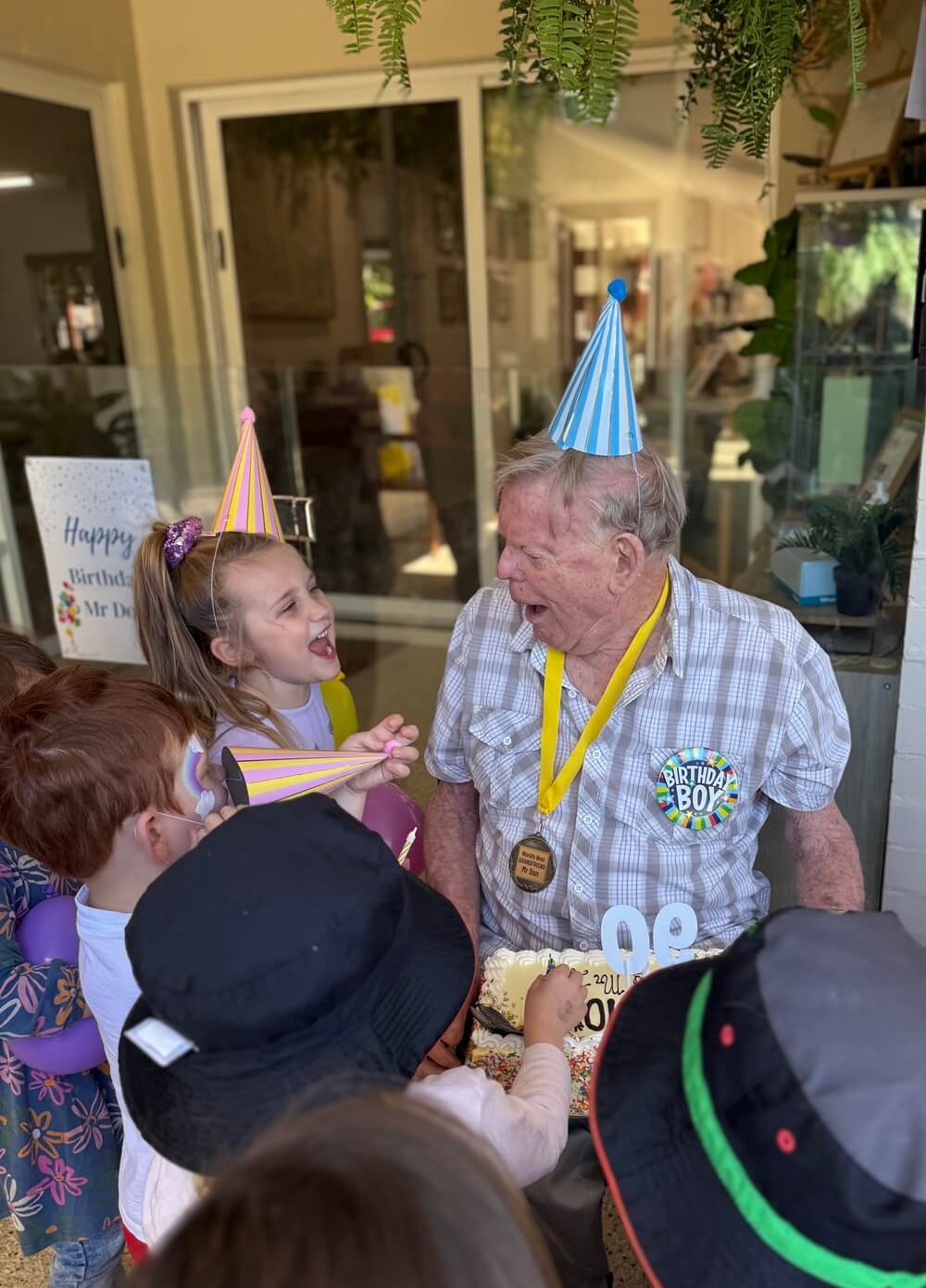
Our intergenerational program celebrated a very special milestone — Mr Don’s 90th birthday!
Leaders from across Little Scholars gathered for our Leadership Retreat, a two-day event focused on growth, reflection, and connection.
September – Achievements & Adventure
September was a time for both recognition and fun:
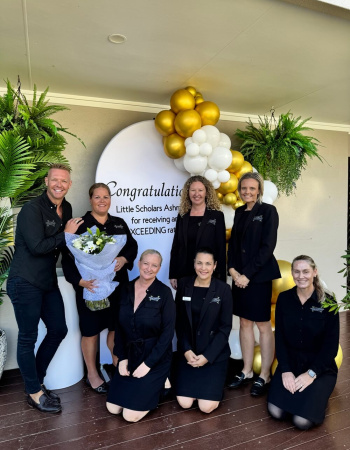
Little Scholars Ashmore achieved an Exceeding rating in their Assessment & Rating — a well-deserved celebration for an outstanding team.
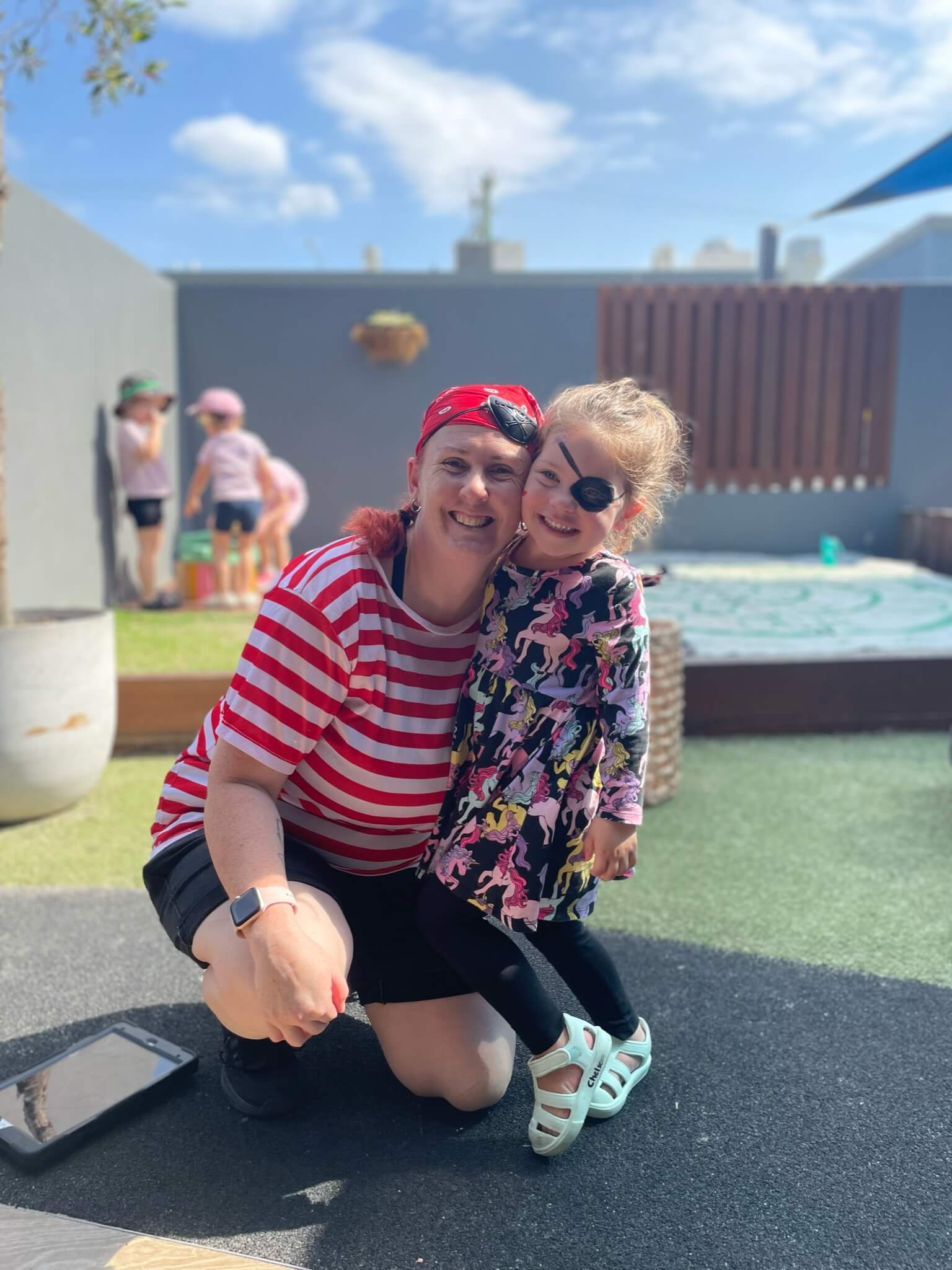
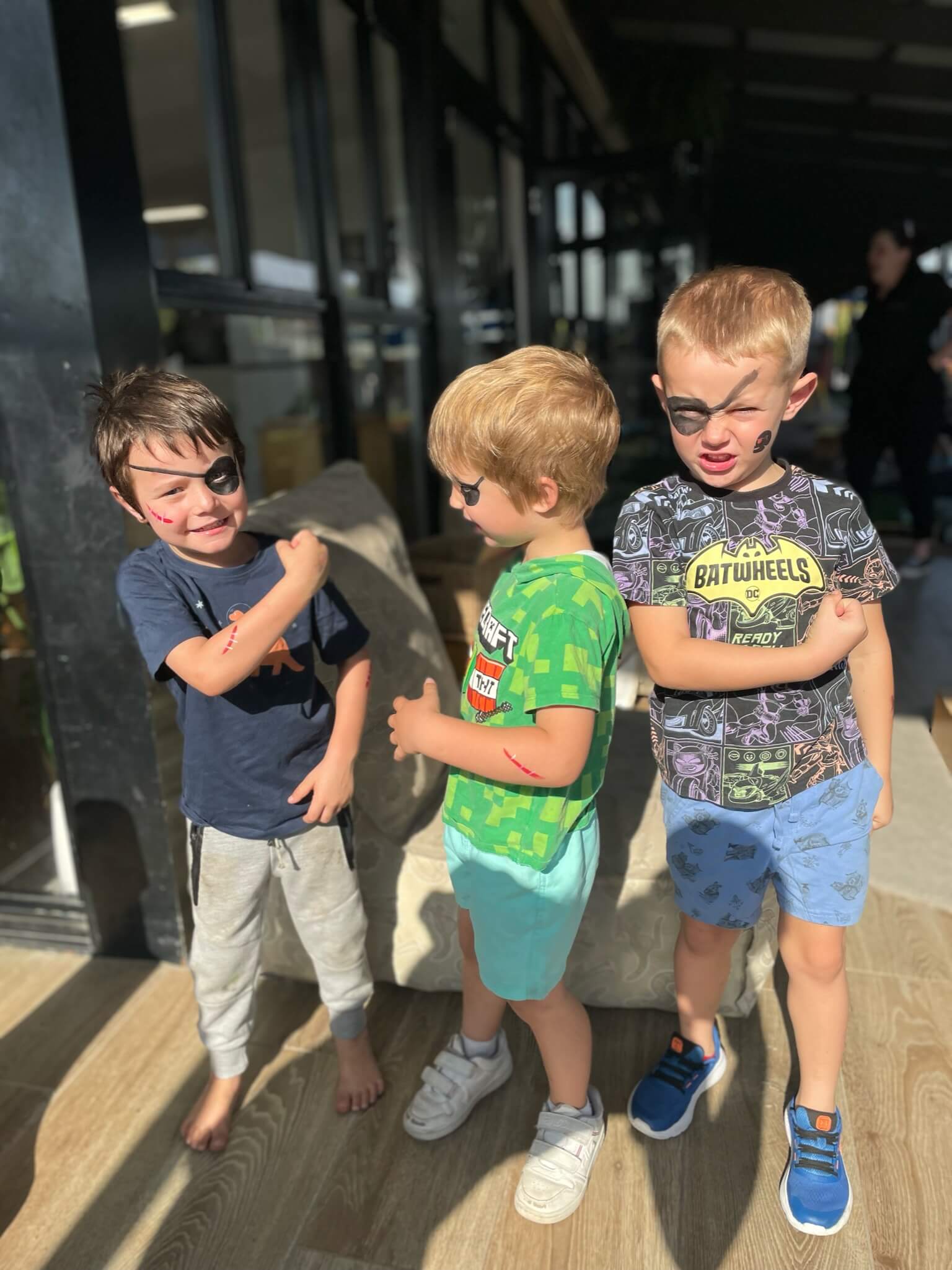
We also enjoyed Talk Like a Pirate Day, where classrooms came alive with imaginative play and hearty “Arrr!”s.
October – Out of This World Learning
October was filled with excitement and exploration:
Little Scholars Parkwood earned an Exceeding rating during their Assessment & Rating visit — another fantastic accomplishment!
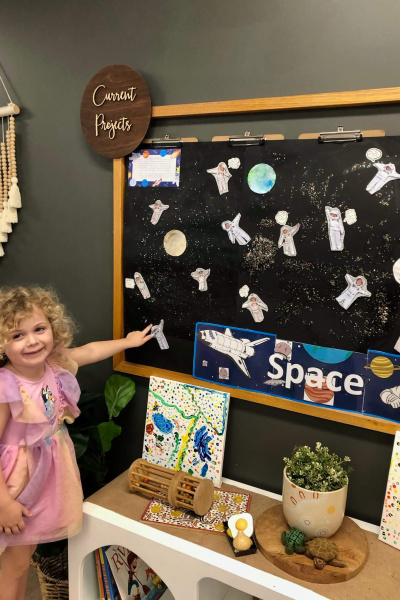
Children across campuses explored the universe during Space Week, sparking curiosity and creativity.
We wrapped up the month with our always-fun Halloween celebrations, full of costumes, laughter, and community spirit.
November – Celebrations and Growing Together
November brought reflection and gratitude.
Our campuses celebrated Grandparents Day, welcoming families into our centres for a day of stories, songs, and shared laughter.
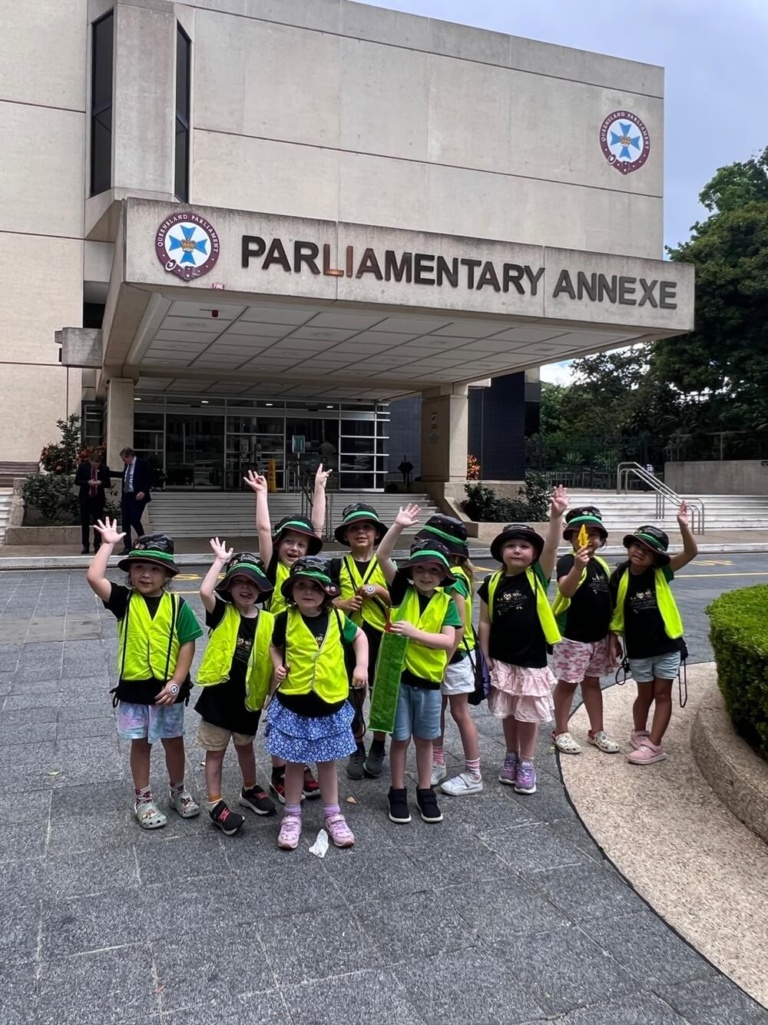
The children from Little Scholars George Street visited Parliament House, where they joined Netball Queensland’s “go for growth” event learning, exploring, and playing alongside leaders and athletes.
Little Scholars staff Christmas party! Over 400 staff from across our 17 centres came together for a night of fun and celebration at The Star Gold Coast.
December – A Joyful Finish
We closed out the year with festive Christmas celebrations across all campuses. From campus Christmas parties to Christmas-themed craft, December was filled with joy, gratitude, and friendships — the perfect way to end a wonderful year.
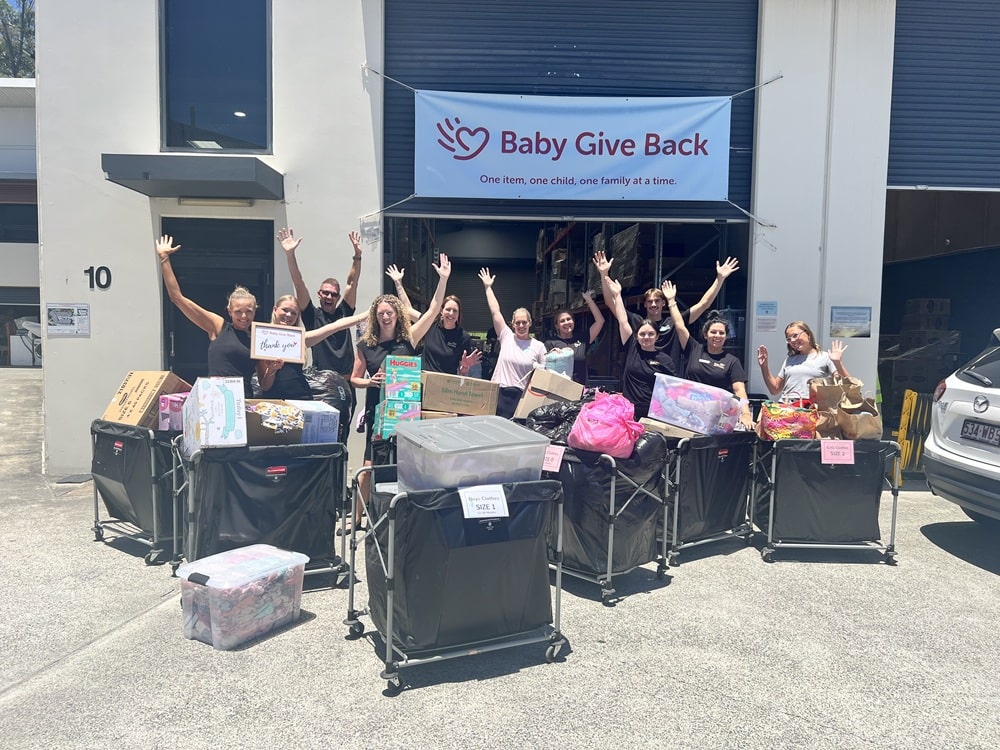
December was also a powerful reminder of what makes our Little Scholars community so special. As the year came to an end, our families, educators and children joined together in a truly generous effort to support Baby Give Back, an organisation that provides essential items to children and families who are doing it tough.
Because of the incredible kindness shown across our Little Scholars campuses, we collected more than 680 kilograms of much-needed items. These donations will help support over 200 children and their families, offering comfort and relief when it is needed most. Every nappy, toy, book and piece of clothing represents a small act of care that will make a genuine difference in a child’s life.
What touched us the most was the way our community approached this initiative. Parents, educators and children spent time sorting donations and packing items, and many families used the opportunity to talk with their little ones about kindness and helping others. Moments like these show our children what community really looks like, and how even the smallest actions can have a big impact.
We are incredibly proud of what we achieved together in December. Your generosity reflects the heart of Little Scholars and our commitment to giving every child the best possible start in life.
Thank you to everyone who contributed, participated and encouraged their children to be part of something meaningful. You helped make December a month filled with compassion, connection and genuine community spirit.
Looking Ahead to 2026
2025 was a year of milestones, learning, and community. We’re deeply grateful to our dedicated educators, our supportive families, and — most of all — our incredible little scholars who inspire us every single day.
Here’s to another year of discovery, growth, and happiness in 2026!
At Little Scholars, our commitment has always been to deliver the highest standard of early education and care — and this year, we are thrilled to recognise three of our campuses that have been officially rated Exceeding during their 2025 Assessment & Rating visits, joining our growing list of ‘exceeding’ campuses! These results reflect the dedication, passion, and professionalism of our educators, as well as our commitment to creating exceptional early learning environments.
Our 2025 Exceeding-Rated Campuses
Little Scholars Nerang — Exceeding (February 2025)
In February, our Nerang campus was recognised for its warm, inclusive community and its rich, play-based learning program. This Exceeding rating highlights the incredible work of the team, who cultivate an environment where every child feels valued, supported, and inspired.
Little Scholars Ashmore — Exceeding (September 2025)
Our Ashmore campus proudly achieved its Exceeding rating in September. Known for its inviting learning spaces and strong educator-family relationships, Ashmore continues to set the benchmark for quality practice and meaningful learning experiences.
Little Scholars Parkwood — Exceeding (October 2025)
In October, Parkwood earned its Exceeding rating — a reflection of its engaging educational programs, nurturing educators, and commitment to children’s wellbeing. The team’s dedication to going above and beyond in all areas shines through in this achievement.
An Exceeding rating signifies that a service is not only meeting the National Quality Standards but consistently surpassing expectations across quality areas — from educational programming and relationships with children, to health, safety, leadership, and family partnership.
Why These Achievements Matter
For families, these results offer confidence and reassurance: your children are learning, growing, and thriving in environments that exceed national expectations. For our teams, these achievements reflect their unwavering dedication to providing the very best early learning experience possible.
Why We’re Celebrating
These results affirm the hard work and heart our educators bring to their roles — and the trust families place in Little Scholars each day. We are incredibly proud of all our Little Scholars campuses — and deeply grateful to our educators, children, and families who make these communities so special.
Want to experience the exceeding difference?
Find your nearest Little Scholars campus and book a tour today!
At the core of Little Scholars School of Early Learning lies a strong foundation built on four pillars: Contribute, Grow, Inspire, and Learn. Embracing these pillars, Little Scholars believes in a philosophy centered around understanding the purpose behind everything they do. Their focus is on nurturing children’s holistic development, encompassing social, cognitive, emotional, physical, and moral aspects. One of the fundamental elements of the Contribute pillar is Little Scholars’ meaningful partnership with Baby Give Back.
As a Southeast Queensland charity dedicated to assisting vulnerable babies, children, and families in the local community, Baby Give Back ensures that every child has an equal start in life. On 10 June 2025, they will be holding their annual fundraising event, the Baby Give Back Giving Day.l As a proud sponsor, all donations from our Little Scholars community will be TRIPLED in the lead-up to Giving Day. You can donate here.
Modest start
The charity began after founder Carly Fradgley, a lawyer at the time, had completed her family and wanted to pass along her baby items that were still in great condition. Carly began collecting items and connecting with agencies, and her garage quickly became a makeshift storage shed for the donations received. Quickly growing, Baby Give Back moved into a warehouse and Carly now works full time for Baby Give Back as CEO.
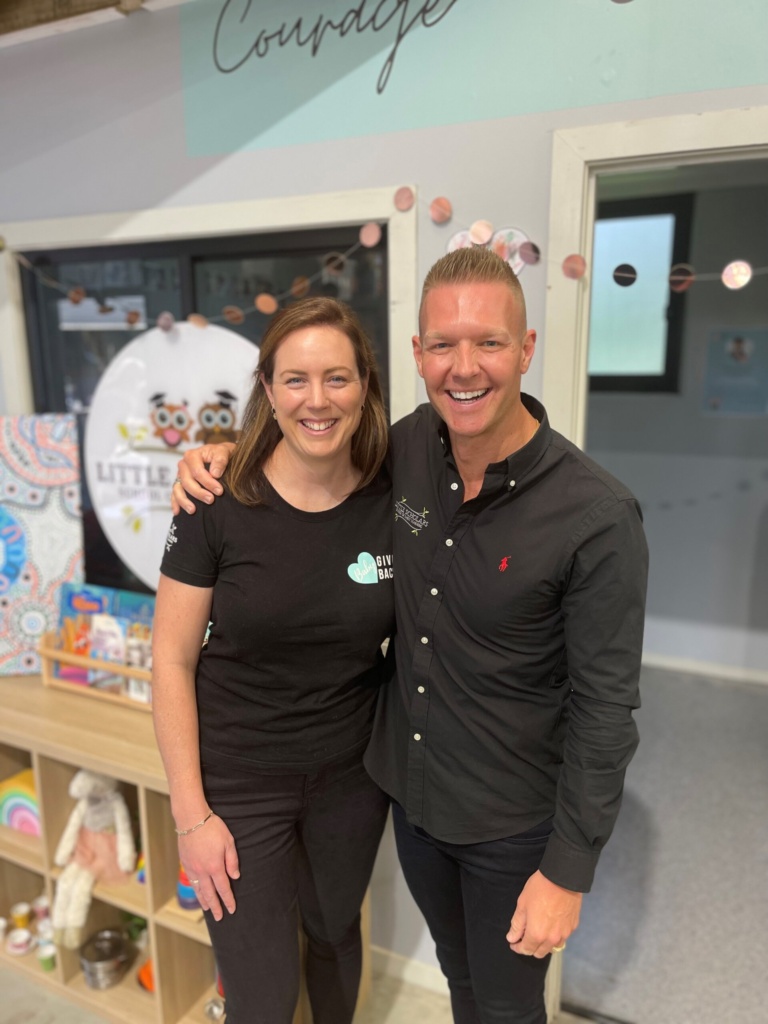
Carly Fradgley, Baby Give Back founder with Jae Fraser, Little Scholars founder
The charity collects, besides funds, items from clothing to nappies, cots, car seats, prams and more. There is a thorough process to ensure that every item they collect is safe, clean and in great condition, to meet the needs of each family’s needs and circumstances. The need is big in the local community.
In 2024, their impact was BIG. Baby Give Back distributed over 5,800 clothing boxes, providing clean and recycled clothing to children in need. 2,214 Safe Start Boxes were distributed giving vulnerable families the essentials for a safe start in life. This was all achieved with the help of 646 volunteers, who have dedicated their time to help baby give back support local families in crisis.
While families need support for a variety of reasons, one of the biggest issues they face is domestic and family violence. In 2023, 42% of the nearly 10,000 children Baby Give Back helped were affected by domestic and family violence, and that still remains a top issue in the current year.
Perfect partnership
Little Scholars and The Scholars Group founder Jae Fraser first heard about the plight of Baby Give Back in 2019.
When Jae married that year, he and his partner requested no wedding gifts, but rather, asked their guests to each bring a new toy for a child in need. They didn’t know exactly where they would donate them, but their friend suggested Baby Give Back. That began a beautiful friendship.
“Our guests were so generous, and after we connected with Carly and her volunteers, we knew we wanted to help. Our personal gift drive inspired us to do the same thing with our campuses that Christmas,” says Jae. “It’s the perfect partnership.”
Carly agrees. She says she was emotional to see the gifts roll up.
“When Jae turned up at our warehouse with a car and trailer both overflowing with new gifts, I cried. It was so overwhelming to see so many wonderful gifts and know that I could jump on the phone to the caseworkers who thought their families would miss out,” she says. “There were more tears when caseworkers came to collect gifts with many of them telling me that these gifts would be the only things that the children would receive – they weren’t extras, it was all they would have.”
The toy drive was perhaps a little too successful for the small charity, as they ran out of storage room along with their essential items! Now, their focus is back to where it always was, ensuring deserving families have what they need.
Now, Little Scholars and Baby Give Back partner together over several fundraising events each year, and the wider Little Scholars community pitches in as well. Little Scholars employees and families donate gently used items at each of the 17 Little Scholars campuses.
To learn more about Baby Give Back and how to help, visit: babygiveback.org
“We have built a great partnership with Little Scholars over the last 7 years on a foundation of shared values in both of our organisations striving to give children the best possible start to life,” Carly says.
“The financial support from Little Scholars has been crucial to our ability to keep the doors open through some really rough times,” Carly adds. “They also coordinate collections of the donations we need across the year. In addition to financial support, Little Scholars sponsor our t-shirts for volunteers allowing us to provide these free of charge and the Family Packs that are given to every family we support, letting them know that the support comes from the community with compassion.”
Children helping children
The children and community love Little Scholars and are thrilled to help. All 17 campuses hosted individual fundraising events to support Baby Give Back ahead of its annual June Giving Day.
“The parents have been amazing with supporting our fundraisers,” says Nat Carey, Deception Bay campus manager.
Children at every campus participated in bake sales, sausage sizzles, art exhibits and gold coin events to raise as much as they can for their peers in need.
“While community service is part of the national framework that childcare campuses follow, it’s more than that”, says Alison Carney, campus manager of Little Scholars Ormeau Village campus.
“By engaging in charity events such as Baby Give Back’s Giving Day and all year round, and other events in the community, we not only contribute to the well-being of others but also shape the hearts and minds of our children, encouraging a generation empowered to create a more compassionate and inclusive world.”
At Little Scholars, everything we do is guided by the four pillars that shape our philosophy: Learn, Grow, Inspire, and Contribute. These values are more than just words – they form the foundation of how we nurture children, support families, empower educators, and engage with our community. Each year, we honour four outstanding team members who bring these pillars to life through our annual ‘Pillar Awards’. This celebration recognises those who consistently go above and beyond – not only in their daily roles but in the way they lead, uplift others, and create a lasting impact.
While all our educators embody the spirit of Little Scholars, this year’s award recipients have stood out for their remarkable contributions in one pillar each – earning them the well-deserved title of our 2025 champions of Learn, Grow, Inspire, and Contribute.
"Inspire" Pillar Awards Winner
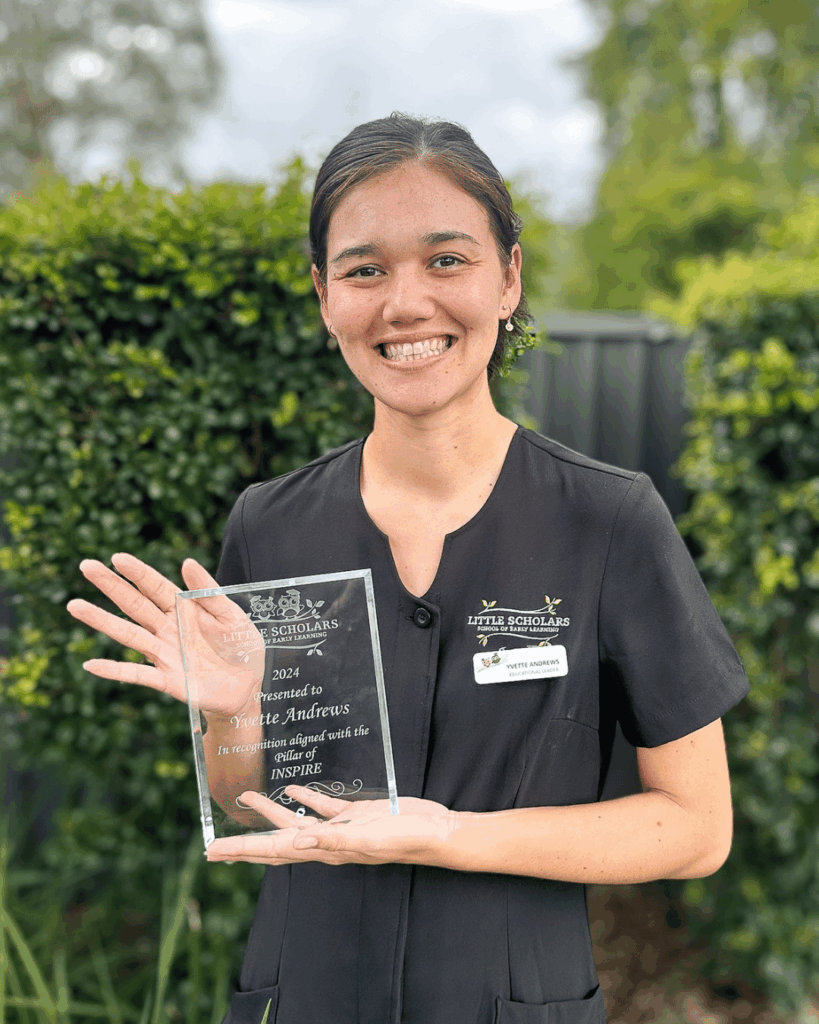
Yvette Andrews
Yvette Andrews from Little Scholars Burleigh is the recipient of the ‘Inspire’ Pillar Award for 2025.
Yvette was nominated for her ability to lead with intention, encourage reflective practice, and consistently support those around her to think deeply about the impact they have on young children’s lives.
How long have you been an educator, Yvette? I started in 2010 so have been working in early childhood for 15 years now!
What made you pursue a career in early childhood education? To play! I was a really energetic 20 year old so I really just wanted to play with the children.
What does winning the award mean to you?
It reminds me that what I’m doing is meaningful and the effort I’m putting in isn’t going unnoticed.
What do you like about working for Little Scholars? I get to work in an environment with people I can make a difference with – building an environment where everyone wants to contribute and celebrate being amazing educators, and helping support amazing little humans.
"Contribute" Pillar Awards Winner
Hannah Megginson
Hannah Megginson from Little Scholars Parkwood is the recipient of the ‘Contribute’ Pillar Award for 2025.
As a Lead Educator, Sustainability Officer, and now 3rd In Charge at Little Scholars Parkwood, Hannah consistently goes above and beyond, contributing not only to the care and education of children, but to the support of her team and the overall growth of her centre.
How long have you been an educator and how long with Little Scholars?
I have been an early childhood educator for 14 years.
What made you pursue a career in early childhood education?
I have always loved watching children learn and grow, they have such unconditional love for others and can be pretty funny too.
What does winning the award mean to you?
It means so much to be recognised for my hard work and commitment to the children that I care for.
What do you like about working for Little Scholars?
I get to work in an environment with people I can make a difference with – building an environment where everyone wants to contribute and celebrate being amazing educators, and helping support amazing little humans.
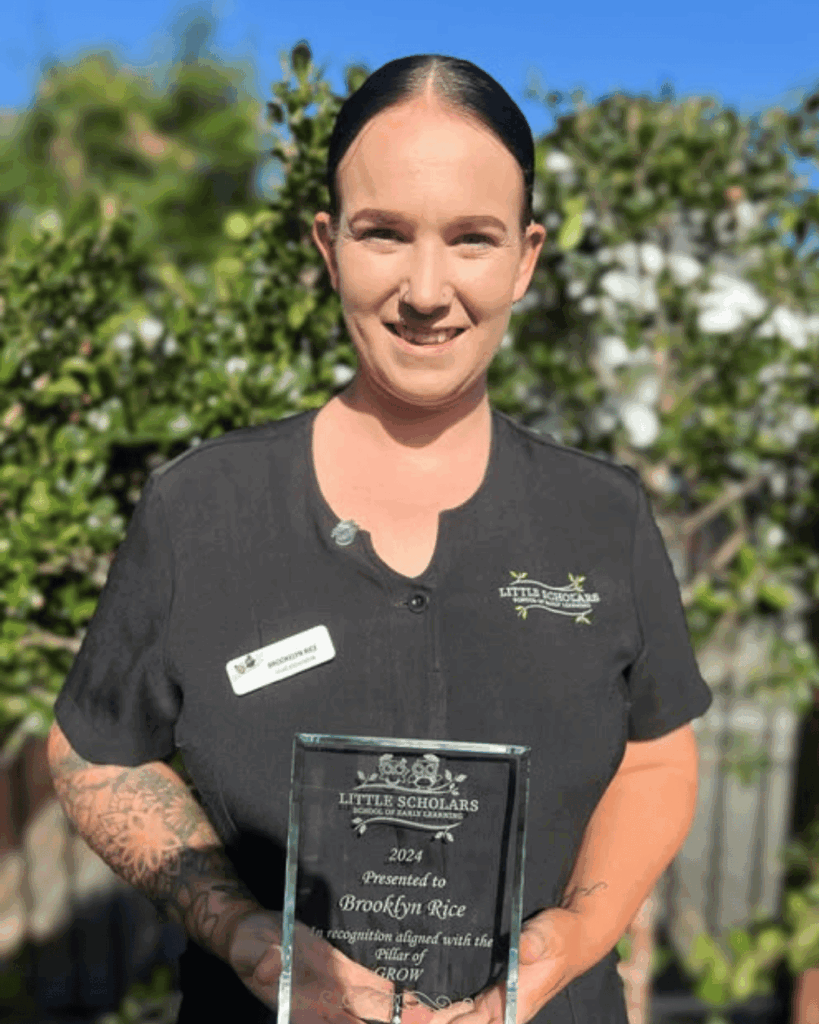
Brooklyn has shown incredible growth in her role as Lead Educator in the Senior Kindy room at Little Scholars Pacific Pines. Over the past six months, she’s transformed the space into a nurturing and engaging environment, supported her peers with openness and care, and built strong connections with families and children alike.
How long have you been an educator and with Little Scholars? I started my educator journey 2.5 years ago with Little Scholars.
What made you want to become an educator? I have a deep passion for helping children grow and develop. The ability to make a positive impact on their lives, guiding them through their early years and watching them blossom.
What does winning the award mean to you? Winning this award means that my efforts and dedication have been recognised and appreciated. It serves as validation for the hard work, passion and care I put into my role as an educator. It’s not just about the recognition but the reminder that what I do truly makes a difference in the lives of the children I work with. It inspires me to continue growing, learning, and striving to be the best I can be.
What do you like about working with Little Scholars? I enjoy working with Little Scholars because is aligns with my values and allows me to grow both personally and professionally. They are so supportive and there’s a shared commitment to making a positive impact on the lives of the children in our care. Working here also provides me with the opportunity to make a meaningful difference, knowing that I’m apart of something larger that values both education and the wellbeing of the children.
"Learn" Pillar Awards Winner
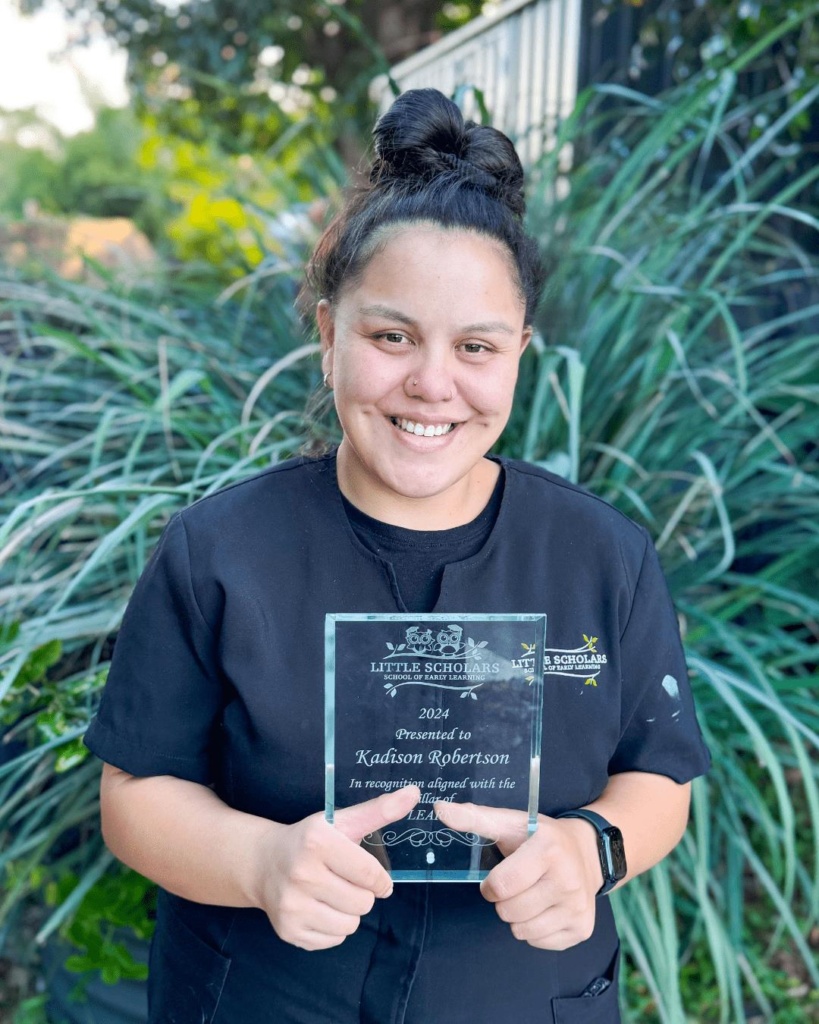
Kadison Robertson
Kadison Robertson from Little Scholars Ashmore is the recipient of the ‘Learn’ Pillar Award for 2025.
Kadi is a seasoned educator whose extensive knowledge and experience make her a trusted source of wisdom and support. Always eager to engage in professional development, she consistently offers guidance and encouragement to those around her. Through her passion, others witness the true magic of teaching and learning through play.
As Little Scholars celebrates its milestone decade of educating and caring for South East Queensland children we met up with Jae Fraser, the founder of Little Scholars, to hear his memories and reflection of the past 10 years operating Little Scholars School of Early Learning! For a bit of background on Jae, he’s spent more than half his life educating young children.
After years working in the early learning and care sector, starting as a trainee and working his way up to early childhood teacher and campus manager, Jae eventually became general manager of Australia’s largest ASX-listed childcare company. But he felt a constant pull to do things differently. This drive led him to purchase his first Little Scholars campus, a run-down campus in Yatala. Ten years later, Little Scholars now educates more than 7,000 children across 16 campuses and employs more than 600 staff.
From the beginning, he wanted to offer what no one else did. The result for families who are enrolled with the Little Scholars School of Early Learning are innovative offerings such as chef-prepared take home meals for busy parents who don’t have time to cook, as well as our Family Time program that offers specialist appointments as well as dental and haircuts so families can use their free time together. Little Scholars was one of the first to introduce Bush and Beach Kinder in Queensland, all of this as well as first-class education and care in beautiful spaces to play and learn.
Jae, why did you leave a successful general manager career to start your own early learning service?
As a passionate teacher, I never thought I would find myself in a corporate role as a general manager of a company with more than 500 centres and 6,500 staff, but I loved every moment of it, especially the people I had the pleasure of working alongside. I’d always felt a deep conviction about early learning. It’s absolutely more than a career, it’s my calling. I was incredibly proud of the work we did in my previous role, but I kept dreaming of something that could be even more child-centered, community-focused, and creatively enriching.
I wanted to create something different, something that families and educators hadn’t seen before, a space where children could explore, get messy, learn about kindness, and discover the world on their own terms, environments that . I had a vision to create an early learning centre unlike anything in the market—an elevated, high-quality experience where every environment is thoughtfully designed to inspire wonder, nurture growth, and offer a truly exceptional foundation for young learners.
Little Scholars was born from that vision. I didn’t leave because anything was missing per se, but rather because I knew there was something special, we could create that could go beyond the traditional expectations in early childhood education. Little Scholars was my chance to bring that vision to life fully.
Can you describe the feelings you had between quitting your job and opening Little Scholars? And was it stressful balancing both roles initially?
Opening the Yatala campus was exhilarating but incredibly intense (and so so stressful). In those first few months, I was wrapping up my role as general manager, while putting everything I had into Little Scholars at Yatala. It was chaotic, but the kind of chaos where every long day, every sleepless night, felt like it had real purpose. There were times when I felt that I had taken on too much and was I ever going to get there?
When I eventually stepped away from my GM role to focus solely on Little Scholars, it was already showing the spark of what it could become. People were resonating with what we were building, a place where families felt at home and children felt empowered, and that was everything I’d hoped for.
What are some memories of support you received in those early days ?
We started with nothing but a dream, pouring all our savings into opening that first campus; with limited funds, we did everything ourselves – cooking, cleaning, gardening, renovating, and managing every detail to bring our vision to life while building a new business from the ground up. Honestly, I’ll never forget those early days. Family, friends, our new team, and even complete strangers chipped in, offering hands-on support, encouragement, and assurance. Andrew was there by my side constantly, and the team that joined early on was absolutely invaluable – they believed in Little Scholars right from the start. Local families and businesses welcomed us, and that sense of community support really set the tone for everything we’ve done since.
I also remember families telling us that they drove past four other services, to come to Little Scholars – they loved it that much and so grateful for what we were creating for their children. Little Scholars became a destination early learning facility, a place families were willing to travel to because of our never-ending commitment to education and our philosophy of learning through play, where every experience is designed to ignite curiosity, joy, and a lifelong love of learning.
What was the scariest part of that time?
The scariest part was wondering if this dream was something I could actually bring to life. If I could truly build a place where children would feel that they belonged and where parents felt absolute trust. Another was the relentless hours, working 15-16 hours a day, seven days a week, with barely enough funds to keep us going. I was constantly worried about whether we’d ever make it. We were now employers, responsible for our team’s livelihoods, knowing they depended on us to help pay their rent and mortgages. On top of that, there was the pressure of delivering on every promise I’d made, ensuring that our vision didn’t just stay a dream, but that the outcomes we set out to achieve would truly come to life.
There were days I’d wake up worrying about all the unknowns: ‘Will families see the value in what we’re doing? Will children thrive here the way I envision?’ But every time I walked into the Yatala campus and saw the smiles on those little faces, it reaffirmed that we were on the right path.
Do you remember when you started to feel, ‘oh my goodness, this might just work’?
I remember when the moment I thought, ‘Oh my goodness, this might just work,’ so vividly. I mean, each Monday morning, after a weekend spent making improvements, we’d see the amazement on the children’s faces, the excitement in the educators’ eyes, and the families’ appreciation for what we were building. But the real turning point was our Open Day. Over 500 people came through, and the response was overwhelming! Families were captivated by the environment and everything we had created.
One of my friends, who had just come to visit, ended up taking enrolment fees on the EFTPOS machine because people were lining up, eager to be a part of it. Seeing that level of enthusiasm and belief in what we were doing was when I realised this dream was resonating with others in a big way.
I watched children running into the campus with huge grins, so excited to start their day, and I thought, ‘we’re onto something.’ Families would tell me how their children talked about their teachers, their new friends, and the garden we’d planted together. That’s when I knew this wasn’t just a service, it was really becoming a meaningful part of people’s lives. And even 10 years later, that feeling never gets old.
Are there early-days memories you haven’t shared before?
Oh, there are so many memories from those early days! I remember the late nights spent painting walls and bike tracks, filling sandpits, washing buses, planting gardens and laying turf until my hands were blistered. It wasn’t glamorous work, but it was honest and heartfelt, and every effort meant we were creating a place that was genuinely ours to share.
One memory that’s always close to my heart is my best friend Mel bringing her little boy into the campus on weekend to help while we were still setting up. He’d toddle around, exploring every corner as if he were inspecting our progress, and his joy and curiosity reminded me of exactly why we were doing this. Countless weekends were spent working alongside friends and family, all of us taking a quick break in the playground, enjoying a Yatala Pie before moving on to the next task.
Those moments of shared effort and laughter laid the foundation for everything Little Scholars stands for today.
Another of my biggest dreams in starting Little Scholars was to make it possible for educators to become teachers without facing the same struggles I did coming from humble beginnings. I always hoped that one day I’d be in a position to support others on that journey. I’ll never forget the day an educator at Yatala mentioned they wanted to study to become a teacher but couldn’t afford it. In that moment, I was able to look them in the eye and say, ‘I’ll fund your study and support you every step of the way to help you become a teacher.’ That educator is still with us today, teaching at our Yatala campus, and their journey is a constant reminder of what Little Scholars is truly about.
Where do you see Little Scholars in the next 10 years?
Looking back, it’s incredible to think that five campuses once felt like a dream, and now, with over 17, we’re just getting started. In the next 10 years, I see Little Scholars as a leading light in early childhood education, not through size or numbers, but through our commitment to quality and impact. We’re dedicated to refining what we do best, focusing on the growth and development of every child, and ensuring our teams have the support and professional opportunities to grow their careers and reach their potential. We’ll also continue to participate in meaningful research and projects to improve the educational journey and outcomes for children, even beyond Little Scholars. Our goal is to deepen our connections with families and communities, staying true to our heart-driven purpose to create spaces where each child feels seen, heard, and genuinely valued.
It’s about holding onto what makes Little Scholars special and continually raising the bar in early learning.
The children, educators, staff and families are celebrating Little Scholars George Street receiving an Exceeding result in the National Quality Standards (NQS) Assessment and Rating recently.
Situated in the heart of Brisbane’s bustling central business district, Little Scholars George Street provides exceptional early learning and care for 108 children. Its unique location places children just steps away from some of Brisbane’s most iconic cultural spaces, including the Queensland State Library, Brisbane Square Library, Queensland Museum, and the Gallery of Modern Art.
Excursions like these, which pique children’s curiosity and understanding of the world, are just some of the unique offerings from Little Scholars George Street.
As Little Scholars approaches its 10th anniversary of serving South East Queensland families, the children, and the educators, are the heart of what makes this exceeding campus so special.
“Our team is incredibly dedicated to providing the best early education experience for our little scholars,” says Jae Fraser, founder of Little Scholars. “The Exceeding rating is a testament to their hard work, innovation, and commitment to the children’s development. They consistently go above and beyond to create a nurturing environment where each child can thrive, while also supporting families by making Little Scholars a true home away from home.”
Early education led by our little scholars, family and our community
Little Scholars’ Collective Curriculum emphasises how much of its educational experiences are child led, and this was noted in George Street’s assessment.
“Educators and service leaders actively sought the perspectives, opinions, and voices of children, families, and the community,” the assessment noted.
The assessment went on to say the George Street team demonstrated a strong, ongoing commitment to meaningful, authentic, and regular engagement to inform the program.
It highlighted the collaboration Little Scholars has with families and the community supported educators in designing and implementing programs that promoted belonging, valued each person’s unique contribution, and created a sense of wellbeing and calm throughout the service.
George Street team demonstrated a strong, ongoing commitment to meaningful, authentic, and regular engagement to inform the program.
An example of this approach is the Children’s Council, a key initiative at all Little Scholars campuses, including George Street. The Council, composed of children, their early childhood teacher, and educational leader, meets monthly to gather feedback on the children’s kindergarten experience and empower them to participate in decisions affecting their campus. The child-led meetings occasionally veer off-topic, but they offer invaluable insights into the children’s interests and perspectives. Understanding how busy its families are, Little Scholars George Street goes the extra mile to ease parents’ daily challenges. The campus offers free parking, rare in the heart of Brisbane, along with a valet service where a caring staff member greets children and escorts them to the campus.
Additional support offered to families includes a daily breakfast bar, take-away meals to simplify dinner time, and quarterly date nights, giving parents the opportunity to reconnect while their children enjoy an evening of fun with friends.
“Given our proximity to government departments, law firms, and entertainment venues, we know our parents have demanding schedules,” Jae explains. “That’s why we’re committed to providing these additional services that truly make a difference in their daily lives.”
Campus pride of accomplishment
Amy Robertson, campus manager of Little Scholars George Street can barely contain her excitement, and says she’s proud of her staff, who she believes always goes above and beyond.
“Our recent assessment and rating at George Street has highlighted the exceptional quality of care and education our campus provides. We are proud to receive an exceeding rating, a testament to the dedication and professionalism of our educators,” says Amy.
“This achievement has been warmly received by our families, with one parent expressing, ‘We always knew the campus was exceeding, it’s gratifying to see the staff receive this well-deserved recognition from the Department,’” she adds.
Little Scholars George Street’s Exceeding rating reflects the hard work and dedication of its entire community, and it highlights the exceptional quality of early education and care provided at this remarkable campus.
At Little Scholars, we have four pillars that underpin everything that we do at Little Scholars – for our children, families, educators, and our community.
As part of our annual awards, we have four awards dedicated to those Little Scholars’ values – learn, grow, inspire and contribute. This year, while our award-winning educators certainly personify all four pillars, but with their unique special skills and achievements, we’ve declared one clear winner for each pillar.
Learn Pillar award winner
Tiahla Jones
Tiahla at our Ashmore campus was named winner of the Pillar Award in the Learn category because she stepped up to become a lead educator, and she is happy to keep learning from her peers and further her education in the sector.
How long have you been an educator? Four years
What made you pursue a career in early childhood education?
I feel like it was supposed to be as it all fell into place. I just came out of a casual job seeking for a new career journey and a job at Little Scholars Ashmore popped up. I applied for it and received the role the exact same day.
What’s the most rewarding and most challenging parts of your role? Watching their personalities blossom from a very young age, celebrating their personal developmental milestones with the children and building amazing relationships with families.
The most challenging part would be watching the children you have taught over the years move on to big school. We miss them so much!
What does winning this award mean to you? Winning my award has meant the world to me, it makes me feel as though my progression and my achievements as an educator are noticed and valued.
Tahlia’s nomination
“Tiahla is always putting her hand up to learn new skills,” says Elise, campus manager for Little Scholars Ashmore.
“She is eager to grow from her peers, and will ask for help and support to build on her knowledge as an educator.”
Tiahla finished her Cert III and was keen to study her Diploma right away, Elise says.
“Tiahla has a bright future as an early childhood educator, as she values the importance of professional and personal growth through learning and collaborative partnerships.”
Inspire Pillar award winner
Keeva Reddish
Keeva is an educator at Little Scholars Redland Bay South and is the recipient of an Inspire Little Scholars Pillar Award 2024.
How long have you been an educator, Keeva?
I have been an educator since 2016, so eight years now and have been with Little Scholars Redland Bay South since January 2023.
What made you pursue a career in early childhood education? When I first started in early childhood education, I was studying an accounting degree, I quickly came to realise that I wanted to focus on my early childhood career. I fell in love with the children, how incredible they are and how much they could teach me. It wasn’t just the children that I fell in love with but also the challenges and limitless knowledge I could acquire and learn from to be the best educator possible.
What’s the most rewarding and most challenging parts of your role? The most challenging part of my role is that I want to spend as much time as possible with each individual child everyday teaching them and learning from them but there is not always enough time. The most rewarding part of my job is watching the children hit all their goals and the excitement they display when they see us or accomplish goal. Mentoring and supporting other educators and seeing how far they have come in their journey is another rewarding aspect always leaving me feeling proud of their accomplishments.
What does winning this award mean to you? I was so shocked to receive this award, as I just turn up to work each day to do my best to support and guide both the children and educators. It felt so good to know that what I do each day is being noticed. It definitely makes you feel like you are doing a great job. To be recognised for the support and guidance I provide was so special and my heart felt full of love for my team. To me it cemented the fact that I am becoming the educator I always wanted to be
Keeva’s nomination
In Keeva’s nomination from Redland Bay South campus, it said, “Keeva is an educator who truly embodies each of the little scholars core pillars.
However, it is Keeva’s ability to inspire those around her, that is one of the most outstanding qualities. Keeva invests in mentoring those around her, inspiring their abilities to grow as educators utilising her existing knowledge and ability to learn more through professional development, to inspire each person to grow to full potential.”
Contribute Pillar Award
Claire Muir
Claire is the educational leader at Little Scholars Nerang campus and has been awarded the 2024 Contribute pillar award.
How long have you been an educator and how long with Little Scholars?
I have been an early childhood educator for 18 years and with Little Scholars for nearly six years.
What made you pursue a career in early childhood education?
I’m not quite sure when I decided this was the path I wanted to take as I feel like it’s been my career goal since I was little. I still remember the way one of my kindergarten teachers, Miss Anderson, made me feel. She was fun, caring, and knowledgeable. I wanted to be that for someone and help children to learn in their own time and style. I liked the idea of being able to help shape the minds of little ones and set them up to be kind, respectful humans.
What are the most rewarding and most challenging parts of your role?
As educational leader within my campus, the most rewarding part of my role is watching both the children and educators flourish and grow as humans. It fills me with so much pride to watch the children reach their milestones and celebrate their successes with them as much as it does when educators gain new skills that help them in their professional career.
My biggest challenge is saying goodbye to the children as they venture off on their next journey into formal schooling. It happens each year but never gets easier to see them go after watching them grow and develop over the years.
What does winning this award mean to you?
Winning this award makes me feel like I am on the right path to creating what I hoped to. It reinforced the fact that I am in the right career and doing the right things to help create a better future and bring our campus closer to our local communities. I feel so proud to be recognised as the 2024 contribute pillar winner.
Claire’s nomination
Renee, campus manager, said, “Claire has remarkable attributes and will contribute to anything and everything you can throw at her.
She is passionate about supporting others and always willing to participate in any type of event, including her own professional growth.
Claire is dedicated within our Little Scholars family and her years with us is another wonderful example of her contribution to our sector.”
Grow Pillar Award
Stefenie Cunningham
Stefenie, an educator at our Yatala campus, has remarkable attributes and we’re told her growth as an educator has been propelled by her enthusiasm to contribute, learn and inspire her team and go above and beyond not only for children, but families as well.
How long have you been an educator and with Little Scholars?
I have been an educator with Little Scholars for three years.
When you started, what was it about the role that made you want to stay in the sector?
When I was completing my work experience at the Yatala campus, I loved the relationships I was building with the children and I could see the impact educators had on the children.
What’s the most rewarding and most challenging parts of your role? The most rewarding part of my role is building such strong relationships with the children. The most challenging part is because I am so use to the younger age group, when I’m with the older children, I have to adjust my teaching style and interactions to their age groups.
What did being recognised for the Grow award mean to you? It was really special because it really made me see how far I’ve come since being a 16 year old school based trainee. My confidence with the children and families, as well as my knowledge on child development has strengthened so much. I am a completely different educator and the fact that my leadership team can see and recognise it, it is a very special feeling.
Stef’s nomination
Stef at our Yatala campus was named winner of the Pillar Award in the Grow category because she’s grown from a trainee at the campus just a few years ago to now full time educator.
Sasha, campus manager at Little Scholars Yatala had this to say:
“Stef! What a superstar you are, and what a year you have had! From completing your Cert III as a school based trainee to jumping straight into full time work with us and then to go straight to studying your Diploma, nothing can stop you from achieving your goals, and we are so proud of how far you have come and the growth that you have achieved.”
Let us hold your hand and help looking for a child care centre. Leave your details with us and we’ll be in contact to arrange a time for a ‘Campus Tour’ and we will answer any questions you might have!
"*" indicates required fields
Come and see the Little Scholars difference
Let us hold your hand and help looking for a child care centre. Leave your details with us and we’ll be in contact to arrange a time for a ‘Campus Tour’ and we will answer any questions you might have!
"*" indicates required fields
Pram Pals
Fill in the form to join your local Pram Pals mums and bubs walk